

Arabian Post Staff -Dubai
Jordan’s armed forces said on Monday that its air defence systems intercepted eight missiles that entered the kingdom’s airspace at dawn. The military said the missiles were destroyed before they posed a threat to civilians or property, and no injuries were reported at the two bases Iran said it targeted.
Iran’s Islamic Revolutionary Guard Corps said its ballistic missiles were directed at the King Hussein and Al-Azraq bases in Jordan in retaliation for the American strike. The Guard claimed the operation targeted technical and repair infrastructure and areas used for fighter aircraft. Those claims of damage were not independently confirmed, while US officials said there were no reported casualties or significant damage at American facilities.
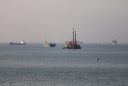
The exchange followed a US attack on two launchers operated by Iran’s Revolutionary Guard on Larak Island, a small Iranian island overlooking shipping lanes in the Strait of Hormuz. US Central Command said the launchers were being prepared to fire rockets carrying sea mines into the waterway.
Captain Tim Hawkins, a Central Command spokesperson, said American forces had observed preparations for the launches and acted against what Washington described as an imminent threat to commercial shipping. He said US forces were “monitoring the area closely and remain prepared to protect the free flow of commerce through this essential waterway”.
Central Command later described the operation as “limited, precise action” intended to stop Iranian forces from laying additional mines. It said Iran had created the threat that prompted the strike, while Tehran rejected that account and denounced the attack as aggression against Iranian territory.
Iranian authorities said the US strike caused deaths and injuries among military personnel and civilians, but did not publish a verified casualty figure. Iran’s Foreign Ministry said its subsequent attacks on American bases were carried out in self-defence. The Revolutionary Guard warned that further attacks on Iran would draw stronger retaliation.
The confrontation broke a pause in publicly acknowledged direct US attacks on Iran dating to late July. It also shifted attention back to the Strait of Hormuz, where military operations, attacks on shipping and restrictions on navigation have disrupted one of the world’s most important energy corridors during the continuing conflict.
Washington said last week that US forces had completed clearing mines from the main international shipping lanes through the strait. President Donald Trump subsequently warned that vessels involved in laying new mines would be destroyed, while his administration said American forces were protecting commercial traffic through the channel.
The White House said nearly 1,500 commercial vessels carrying about 750 million barrels of crude had moved through the strait under US protection and that Gulf oil exports had recovered to about two-thirds of pre-operation levels. Those figures form part of Washington’s assertion that it has restored access to shipping lanes despite Iran’s continued challenge to US control of the waterway.
Tehran has disputed the American description of conditions in Hormuz and has maintained that Washington cannot dictate navigation through waters bordering Iran. Iranian Foreign Minister Abbas Araghchi has also challenged US claims about the volume of oil traffic passing through the strait, accusing Washington of seeking to influence energy markets.
The renewed military action comes as the Trump administration simultaneously intensifies economic pressure on Tehran. The US Treasury last week announced additional measures targeting financial channels it says support Iran, including action against a UAE-based banking operation and sanctions on an official linked to Bank Melli.
Sunday’s exchange therefore combined two central points of friction between the countries: Iran’s ability to threaten maritime traffic around Hormuz and Washington’s determination to use military force when it believes mines or launch systems could endanger shipping.
Also published on Medium.
Follow Arabian Post
Select Arabian Post as your preferred source on Google and MSN News for trusted business news and Arab politics and updates.




