

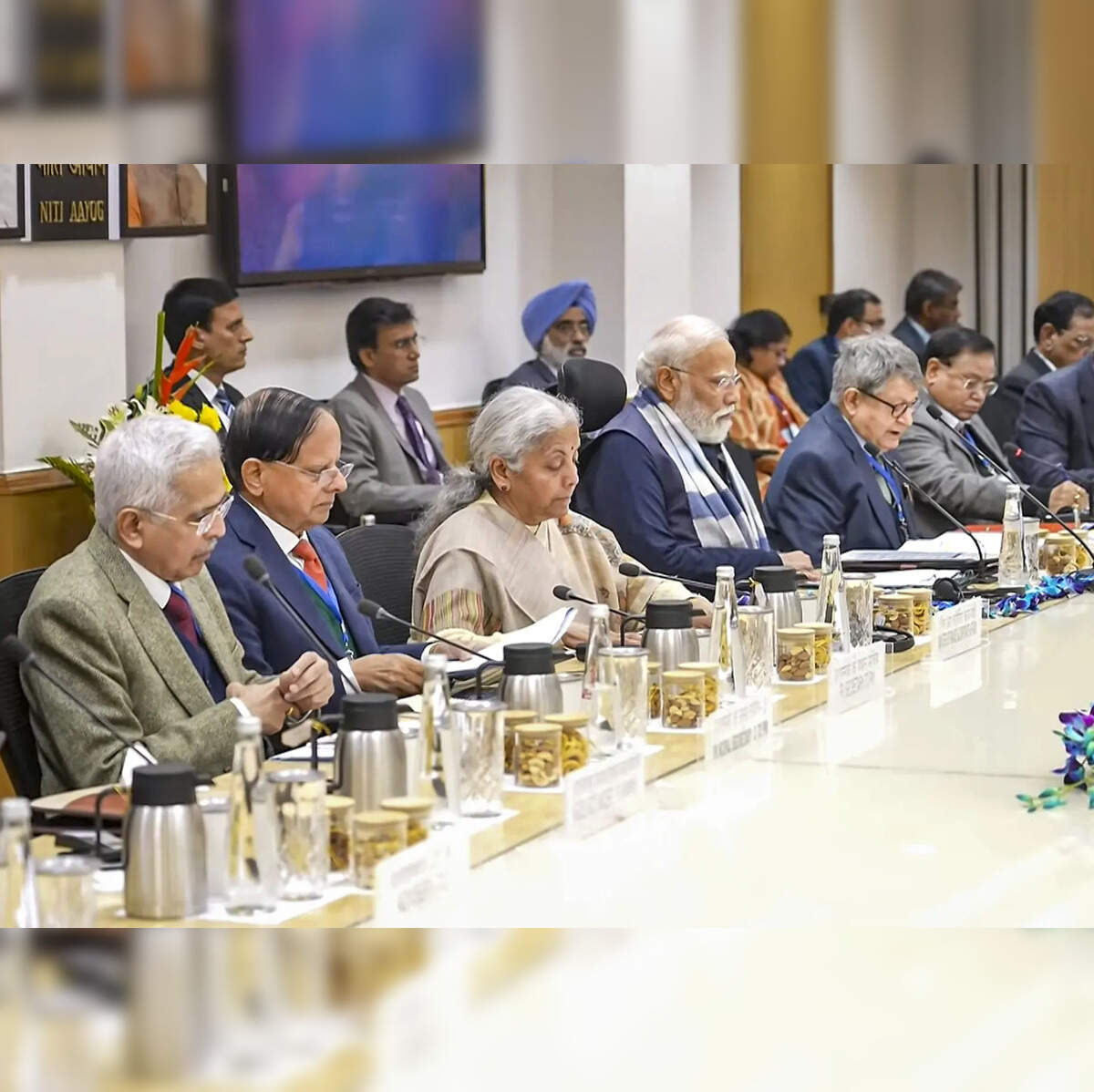
When India’s finance minister Ms Nirmala Sitharaman rises to present the 7th Union Budget on February 1, a record of sorts, the moment will carry an uncommon weight. This is no routine fiscal exercise, no mere balancing of columns and commas. Instead, the budget is being cast — by industry leaders, economists and global investors alike — as a potential inflection point for the world’s fifth-largest economy.
The external pressure is unmistakable. Former U.S. President Donald Trump’s return to aggressive tariff politics has rattled global trade, revived protectionist instincts, and unsettled export-driven economies across Asia. The internal expectation is even sharper. In New Delhi’s policy corridors and corporate boardrooms, a phrase once reserved for history textbooks has resurfaced: a 1991 moment.
That year, facing an acute balance-of-payments crisis, Prime Minister P.V. Narasimha Rao and Finance Minister Dr. Manmohan Singh dismantled India’s tightly controlled socialist-era economy, opening it to global capital and competition. The reforms reshaped India’s destiny for three decades.
Today, India is not in crisis — but many argue it stands at a crossroads just as consequential. Trump’s tariffs, aimed at forcing manufacturing back onto American soil, have upended global supply chains at a time when companies were already reassessing China-centric production. For India, the disruption is double-edged.
On one hand, higher tariffs threaten India’s exports to the U.S., its largest trading partner. On the other, they accelerate the global search for alternative manufacturing hubs — a search India has long aspired to lead.
“Tariffs change incentives overnight,” said a senior executive at a European industrial conglomerate with plants across Asia. “The real question is whether India can move beyond being a China alternative and become a true export platform for third markets — Africa, West Asia, Latin America — without getting trapped in U.S.-China crossfire.”
Indian policymakers believe the answer lies in a deeper, more confident opening of the economy — one that goes well beyond production-linked incentives and headline reforms.
According to officials familiar with budget discussions, the government is weighing measures that would allow foreign manufacturers to produce in India, export freely to third countries, retain a share of export earnings domestically, and operate under simplified tax and customs regimes. The goal: reduce pressure on the capital account deficit while embedding India more firmly into global manufacturing networks. If executed, it would mark a decisive shift — from import substitution to export-led integration.
India’s capital account deficit remains a structural vulnerability. Imports — particularly energy, electronics and advanced manufacturing inputs — continue to outstrip exports. While the rupee has been relatively resilient, it remains exposed to dollar strength and global monetary tightening.
The budget is expected to tackle this imbalance on multiple fronts. Economists anticipate signals on further corporate tax rationalisation, customs duty simplification and stronger bilateral investment protections. For foreign investors, predictability — not incentives — remains the most valuable currency.
“The focus is not speculative capital,” said a former Reserve Bank of India official. “It’s long-term factories, exports, jobs and tax revenues. That’s how you sustainably narrow the fiscal, current account and capital deficits.”
A successful export push would also dampen imported inflation, strengthen the rupee and reduce India’s dependence on volatile global capital flows — an increasingly urgent priority as financial conditions tighten worldwide.
One of the budget’s quieter but potentially transformative undercurrents lies in India’s evolving approach to global finance. Through platforms such as BRICS and the Shanghai Cooperation Organisation, India has been cautiously expanding local-currency trade arrangements and alternative settlement mechanisms. Officials avoid the term “de-dollarization,” but the strategic intent is unmistakable: reduce exposure to currency shocks, sanctions risk and dollar volatility.
“Dollar dominance is not ideological — it’s a risk concentration problem,” said an Indian trade negotiator involved in multilateral talks. “Even settling a portion of trade in partner currencies lowers transaction costs and improves resilience.”
Such mechanisms, if scaled prudently, could ease pressure on foreign exchange reserves and give policymakers greater monetary autonomy — without triggering geopolitical backlash.
Yet no budget can succeed on macroeconomic ambition alone. India’s political economy demands tangible relief for households strained by years of inflation and uneven income growth.
Government employees, pensioners and salaried workers are closely watching for signs of pay revisions, arrears and tax relief — direct cash in hand that could revive consumption without expanding subsidies. Economists argue this is one of the most efficient ways to stimulate demand.
Senior citizens, a rapidly expanding demographic, are also in focus. Analysts expect targeted tax incentives for retirement savings, higher interest thresholds on senior deposits, and inflation-linked instruments designed to protect fixed incomes from rising healthcare and living costs.“These aren’t populist giveaways,” said an economist advising a parliamentary panel. “They restore purchasing power, dignity and confidence — and they have strong multiplier effects.”
Private sector employees and ordinary consumers may also see calibrated tax relief, designed to nudge discretionary spending while preserving fiscal discipline. The challenge, however, is formidable. India’s fiscal deficit, though on a consolidation path, leaves little room for excess. Any ambitious opening of the economy must be matched by credible plans to broaden the tax base, improve compliance and accelerate asset monetisation.
Government officials insist growth itself is the most powerful deficit reducer. A larger GDP expands revenues, improves debt ratios and creates political space for reform. Sceptics warn of implementation risks — from state-level bottlenecks to regulatory inertia. But supporters argue Prime Minister Narendra Modi, now in his third term, faces fewer electoral constraints and has repeatedly shown willingness to pursue structural change, from insolvency reform to digital tax infrastructure.
Comparisons with 1991 demand caution. Rao and Singh acted under duress; today’s India operates from relative strength. Foreign exchange reserves are ample, banks are healthier, and growth outpaces most major economies. Yet history suggests transformative reform often requires a catalyst. Trump’s tariff shock, by destabilising the old trade order, may have provided precisely that.
Whether this budget becomes a footnote or a turning point will depend less on the finance minister’s speech than on what follows — the rules notified, the doors actually opened, the capital actually deployed.
For now, anticipation runs high. In corporate boardrooms, trading floors and foreign capitals, the same question echoes: Is India about to unveil an economy not seen before — confident enough to open wide, disciplined enough to balance its books, and ambitious enough to reshape its place in the global order?
If it does, this budget may be remembered not as an annual ritual — but as the moment India chose, once again, to bet on the power of reform. (IPA Service)
The article 2026-27 Budget Offers Modi Govt A Great Opportunity To Reshape Strategy appeared first on Latest India news, analysis and reports on Newspack by India Press Agency).