

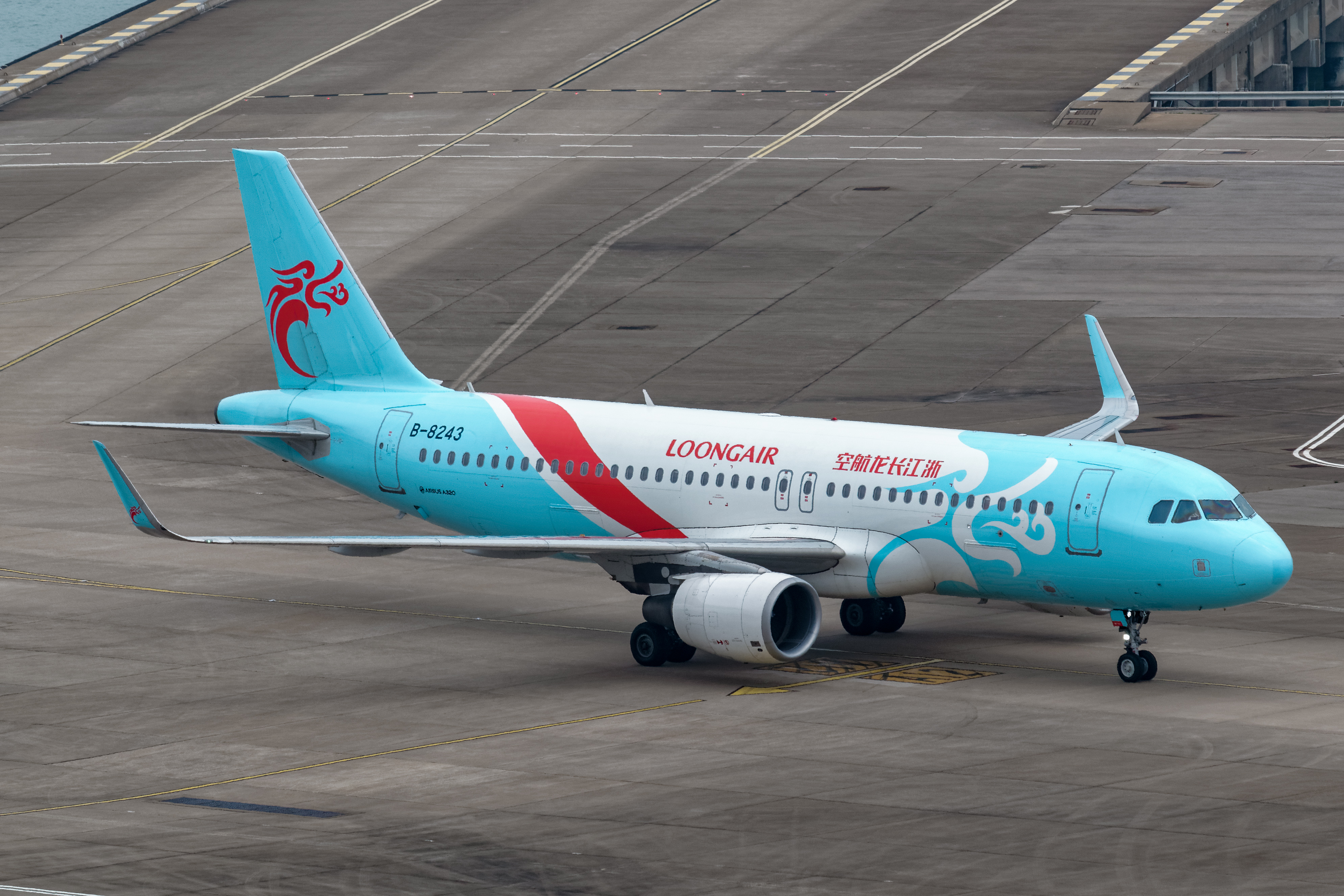
Emirates has signed an interline agreement with China’s Loong Air, widening its access to 22 additional destinations across the mainland and strengthening its competitive position in one of the world’s most strategically important aviation markets.
The arrangement, effective immediately, enables Emirates passengers to connect beyond its existing gateways in Hangzhou, Shenzhen and Hong Kong onto Loong Air-operated domestic services. The added cities span eastern, northeastern, southern, central and southwestern regions, broadening coverage in a country where international carriers are recalibrating capacity amid shifting demand patterns.
Under the interline framework, travellers booking through Emirates can purchase a single ticket that combines long-haul flights from Dubai with onward domestic sectors operated by Loong Air. Checked baggage will be transferred through to final destinations, streamlining journeys that previously required separate bookings or additional transfers.
Emirates currently operates services to Beijing and Shanghai, and in 2023 added Shenzhen and Hangzhou as part of its post-pandemic rebuilding of China capacity. The new arrangement effectively multiplies its footprint without committing aircraft to additional mainland routes, a strategy that reduces operational risk while preserving network relevance.
Loong Air, based in Hangzhou and formally known as Zhejiang Loong Airlines, operates a fleet comprising Airbus narrowbody aircraft and serves a network of domestic destinations as well as select international points in Asia. The carrier has steadily expanded from its eastern China base, capitalising on demand from secondary and tertiary cities that are increasingly integrated into global supply chains.
For Emirates, the agreement reflects a broader push to strengthen connectivity across Asia through commercial partnerships. Interline and codeshare deals allow long-haul operators to extend their networks into markets where regulatory constraints, slot limitations or fleet economics make direct service impractical. Executives at the Dubai-based airline have consistently described China as a priority growth market, citing trade flows, tourism and student travel as key demand drivers.
The China aviation sector has undergone significant change since border controls were lifted in early 2023. Domestic traffic rebounded strongly, while international capacity has returned more gradually, affected by aircraft redeployment, geopolitical tensions and variations in travel recovery across regions. Mainland carriers have restored substantial domestic networks, creating opportunities for foreign airlines to tap into those systems via partnerships.
Hangzhou and Shenzhen, two of the three connecting points in the agreement, sit at the heart of dynamic economic corridors. Hangzhou anchors Zhejiang province’s export-driven manufacturing base and technology sector, while Shenzhen is a global electronics and innovation hub bordering Hong Kong. By funnelling traffic through these cities, Emirates gains access to business and leisure travellers originating far beyond Beijing and Shanghai.
Hong Kong, although operating under a distinct aviation regime, remains a major gateway into southern China. Emirates has served Hong Kong for decades, and the interline link provides an additional layer of connectivity for passengers heading into mainland destinations without routing through northern hubs.
Industry analysts note that Gulf carriers have historically relied on sixth-freedom traffic, carrying passengers between Asia and Europe, Africa or the Americas via their Middle Eastern hubs. As competition intensifies and bilateral air service agreements evolve, partnerships within large domestic markets such as China can help sustain load factors and yield management.
The agreement also underscores how secondary Chinese cities are gaining prominence. Government policy has encouraged the development of regional airports and air services to support economic diversification. Rising household incomes and high-speed rail expansion have reshaped travel patterns, but aviation remains essential for long-distance connections across China’s vast geography.
Emirates has invested heavily in product differentiation, operating Boeing 777 aircraft on its China routes with a mix of premium and economy cabins tailored to business and leisure segments. By offering onward access to 22 additional cities, the airline strengthens its appeal to corporate clients and freight forwarders seeking integrated solutions. China remains a central node in global trade networks, and belly-hold cargo capacity on passenger flights continues to play a significant role.
The interline model stops short of a full codeshare, where flight numbers are shared and deeper commercial integration occurs. However, it can serve as a stepping stone towards more comprehensive cooperation if demand justifies it and regulators approve further alignment.
China’s aviation market is projected by industry bodies to become the world’s largest over the coming decade in terms of passenger numbers. Despite cyclical pressures and geopolitical uncertainty, long-term fundamentals such as urbanisation, tourism growth and international business ties continue to underpin expansion.
Follow Arabian Post
Select Arabian Post as your preferred source on Google and MSN News for trusted business news and Arab politics and updates.




