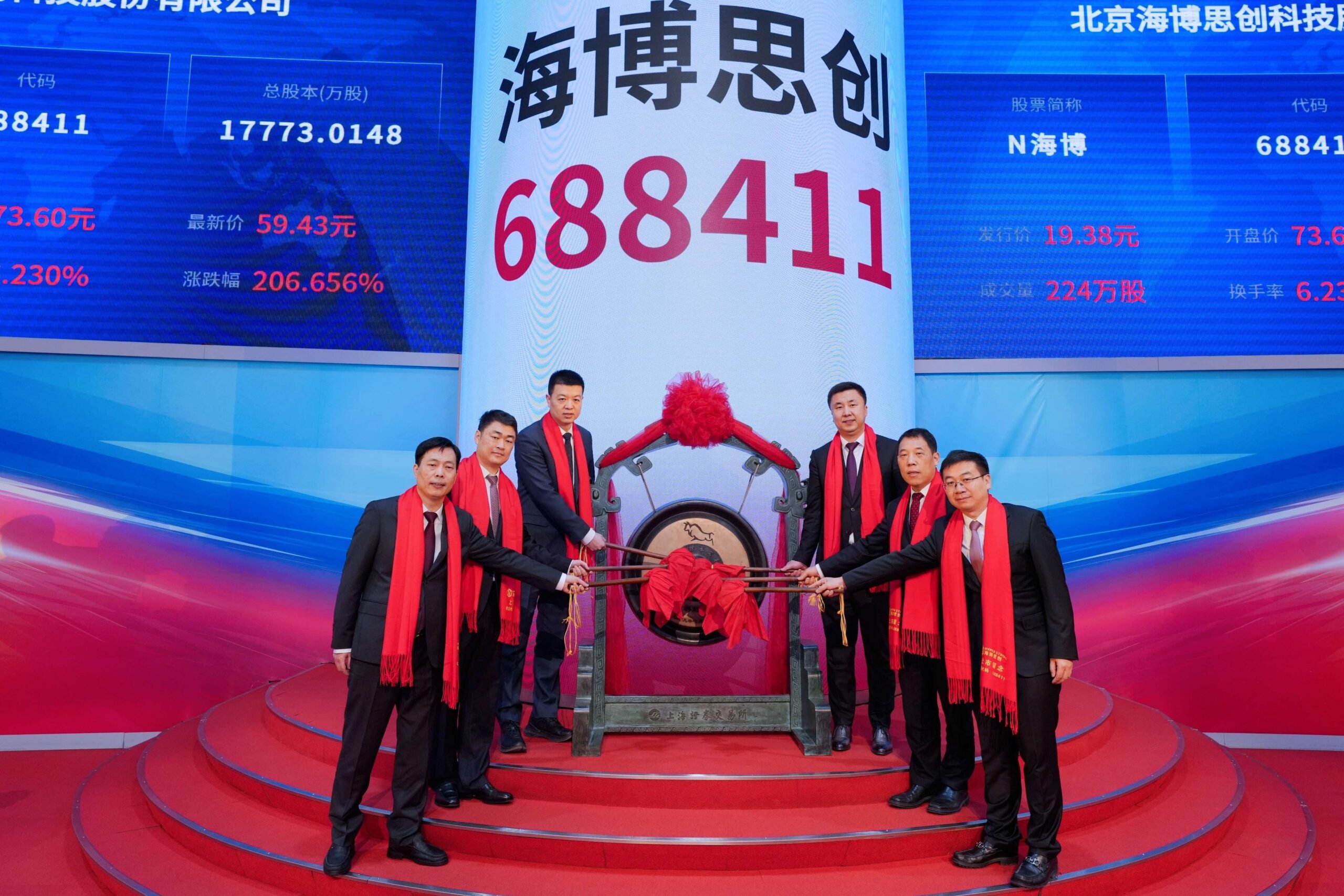
Beijing HyperStrong Technology, one of the country’s biggest battery energy-storage system suppliers, expects shipments to more than double in 2026 as utilities, renewable developers and industrial customers accelerate orders at home and overseas. The company is projecting deliveries of about 70 gigawatt-hours this year, up from 26 gigawatt-hours in 2025, according to comments published on April 6, a jump that underscores how quickly large-scale storage is moving from a supporting technology to a central piece of power infrastructure.
The forecast places HyperStrong among the more aggressive corporate voices in a market that has expanded far beyond its earlier role of smoothing short bursts of solar and wind volatility. Storage is now being bought to stabilise grids, capture cheap midday renewable power, support evening peaks and back up electricity-hungry data centres. Global spending on batteries for power-sector storage is set to reach about $66 billion in 2025, reflecting the scale of investment now flowing into the sector.
HyperStrong’s position helps explain why its target is drawing attention. The company says it has been ranked among the top three global battery energy-storage system integrators and has held a Tier 1 standing with BloombergNEF since 2024. It also says it is the top integrator in China’s mainland market by cumulative installed and contracted project capacity. On its own figures, it has deployed more than 50GWh across more than 400 projects after being founded in 2011.
Demand inside China remains the first pillar of that growth story. The country’s clean-power build-out has been so rapid that storage is becoming essential to absorb output and protect grid reliability. Government data showed wind and solar capacity reached 1.84 billion kilowatts in 2025, accounting for 47.3% of total installed power capacity and overtaking thermal power for the first time. Separate official data showed installed new-type energy storage reached 136 million kilowatts in 2025, after already topping 70 million kilowatts in 2024.
Policy has also shifted in ways that improve the commercial case for storage. Earlier concerns that many projects were being built faster than they could be profitably used have given way to a more market-based system in which capacity payments, peak pricing and wider power-sector reforms are strengthening returns. Analysts have said those changes, combined with subsidies in some provinces, helped turn storage into a far more investable business. That domestic backdrop matters because it gives manufacturers and integrators a large home market from which to scale.
Overseas demand forms the second pillar. Chinese storage suppliers have benefited from orders tied to renewable expansion, ageing grids and the electricity needs of AI-linked data centres in North America, Europe and the Middle East. HyperStrong has been widening its footprint in Europe and said in March that it had projects across 15 countries there. The company has also been visibly pushing its international profile through industry events in Europe and the Americas, a sign that it sees export growth as more than a side business.
Competition, however, is unlikely to ease. China’s battery and clean-tech industries have shown how quickly rapid capacity growth can feed price wars and margin pressure. Rival suppliers ranging from CATL and BYD to other storage specialists are expanding at speed, while trade frictions and policy shifts abroad could complicate the export story. At the same time, technology is moving on: lithium-ion remains dominant for daily cycling, but sodium-ion and longer-duration storage systems are being pushed for specific use cases, especially where mineral costs, safety or duration become bigger factors.
Follow Arabian Post
Select Arabian Post as your preferred source on Google and MSN News for trusted business news and Arab politics and updates.