NEW DELHI: India’s demand for electricity for running household air conditioners is estimated to expand nine-fold by 2050 and will exceed total power consumption in the whole of Africa today, the International Energy Agency (IEA) said on Tuesday.
In its latest World Energy Outlook, IEA said India will see the largest energy demand growth of any country or region in the world over the next three decades.
It projected India’s energy supply to rise from 42 exajoules (EJ) in 2022 to 53.7 EJ in 2030 and 73 EJ in 2050 under stated policies scenarios and 47.6 EJ by 2030 and 60.3 EJ by 2050 as per announced pledges.
Oil demand is seen rising from 5.2 million barrels per day (bpd) in 2022 to 6.8 million bpd in 2030 and 7.8 million bpd in 2050 under stated policies scenario. Under announced pledges, this demand is seeking 6.2 million bpd in 2030 and 4.7 million bpd in 2050.
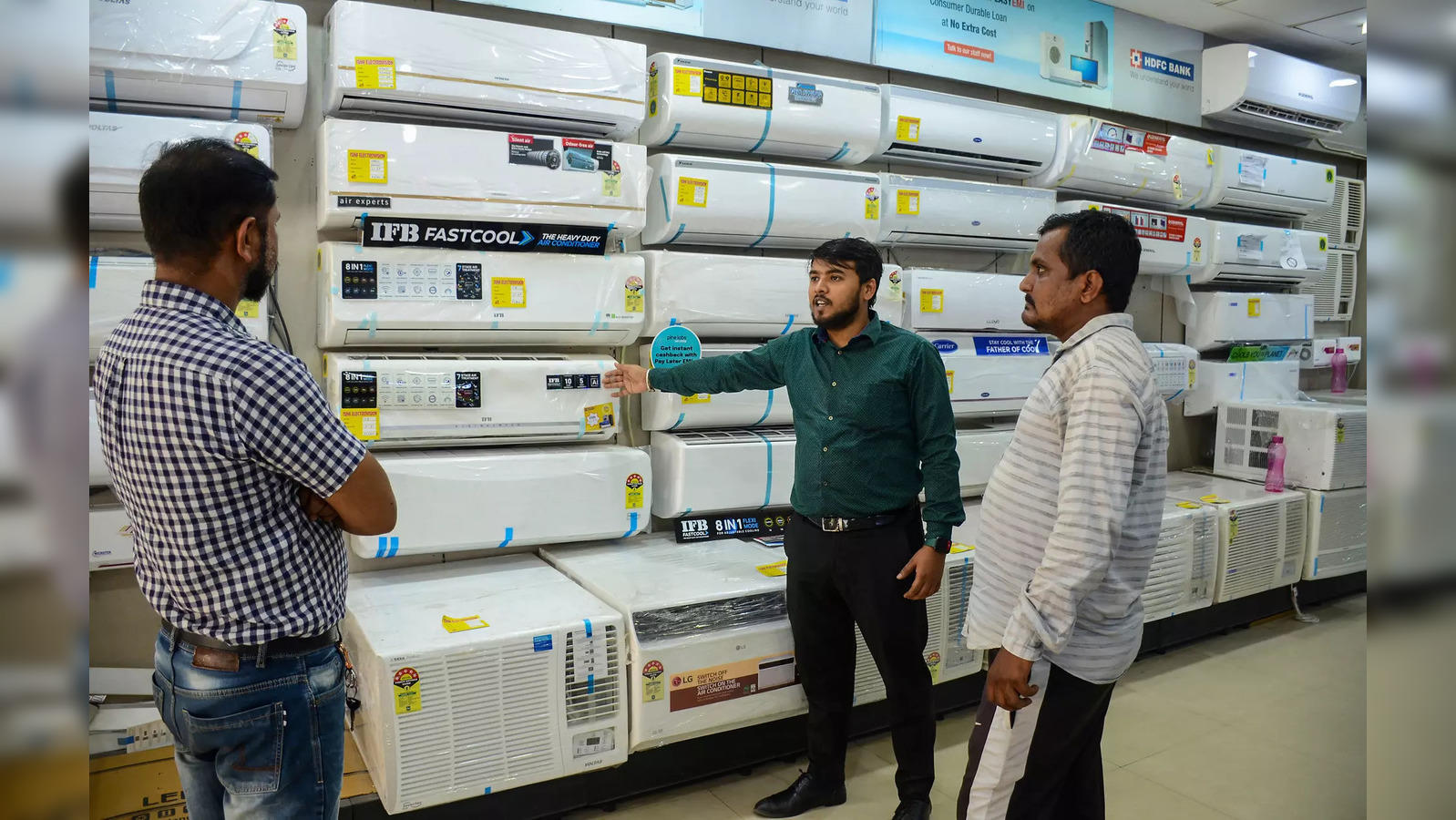
IEA said over the past five decades, India witnessed over 700 heatwave events, which have claimed over 17,000 lives. Fuelled by its geographic and meteorological conditions, air conditioner ownership in India has been steadily rising with growing incomes, tripling since 2010 to reach 24 units per 100 households.
“The impact of cooling needs on electricity consumption is already clear,” the Paris-based agency said.
“Electricity demand is sensitive to temperatures, and in India’s case there is a sharp increase in demand as temperatures cross the 25-degree Celsius threshold.
Electricity consumption due to space cooling increased 21 per cent between 2019 and 2022, and today nearly 10 per cent of electricity demand comes from space cooling requirements.
“Household air conditioner ownership is estimated to expand ninefold by 2050 across the IEA scenarios, outpacing the growth in ownership of every other major household appliance including televisions, refrigerators and washing machines,” it said.
“Residential electricity demand from cooling increases ninefold in the Stated Policies Scenario (STEPS) by 2050..
IEA said by 2050, “India’s total electricity demand from residential air conditioners in the STEPS exceeds total electricity consumption in the whole of Africa today.
In the Announced Pledges Scenario (APS), however, electricity demand for air conditioners is nearly 15 per cent lower in 2050 as it is in the STEPS as a result of increased use of energy-efficient air conditioners and thermal insulation in buildings. “This reduction itself is larger than the total electricity generation by several countries today, such as that of the Netherlands”.
The growth in ownership and use of air conditioners and other cooling equipment is one of the key drivers of the increase in peak electricity demand in India.
In the STEPS, peak electricity demand rise around 60 per cent from the 2022 level by 2030 and cooling accounts for nearly half of this increase.
In the APS, however, the implementation of building codes, the use of more efficient appliances and the adoption of demand response measures enable the same cooling needs to be met with less energy. This reduces peak electricity demand growth by nearly one-quarter compared to the STEPS. Given that the electricity system is sized to meet peak demand, lower peak demand helps to lower electricity investment needs and system costs.
Although solar PV matches well with daytime cooling needs, cooling demand is also significant in India during the late evening and at night.
“Lowering cooling demand through energy efficiency policies therefore reduces the need for investment in batteries or expensive standby generation capacity, and thus helps to integrate renewables more cost effectively,” IEA said.
IEA said India is moving into a dynamic new phase in its energy development marked by a long-term net zero emissions ambition, increased regulatory sophistication, a focus on clean energy deployment, and the creation of domestic clean energy technology supply chains.
Recognising the potential to transform its energy sector and reduce the import burden of fossil fuels while reducing CO2 emissions, India has announced a net zero emissions target by 2070, and has put in place policies to scale up clean energy supply and clean technology manufacturing.
“While clean energy investment in India more than doubles in the STEPS by 2030 from around USD 60 billion in 2022, investment needs to nearly triple by the end of this decade to be on a trajectory to meet its net zero emissions target, which is reflected in the APS,” it said.
Although India’s population growth has slowed to reach replacement levels, its urban population increases by 74 per cent and per capita income triples by 2050. Industrial output expands rapidly, for example through a tripling of output of iron and steel, and doubling of cement, plus there is a ninefold increase in residential air conditioner ownership by 2050.
“As a result, demand for oil and natural gas increases in the STEPS by nearly 70 per cent between 2022 and 2050, while coal demand increases by 10 per cent, even as solar PV makes inroads into electricity generation. As a result, India’s annual CO2 emissions still rise nearly 30 per cent by 2050, which is one of the largest increases in the world,” the outlook said.
In the APS, the increase in clean energy investment changes the outlook. In the STEPS, solar provides nearly 45 per cent of total generated power by 2050; in the APS, it crosses 50 per cent. In both the STEPS and APS, India achieves its target of 50 per cent non-fossil power generation capacity by 2030.
Clean energy investment in the APS over and above those in the STEPS also drives faster growth in electromobility, low-emissions hydrogen, grid expansions and other clean energy infrastructure.
“As a result, India’s annual CO2 emissions fall sharply in the APS by over 40 per cent from current levels by 2050, even though its GDP quadruples over this period,” it added.
Source: Business Standard
The post India’s Power Demand For ACs To Exceed Total Consumption Of Africa: IEA first appeared on Latest India news, analysis and reports on IPA Newspack.
Follow Arabian Post
Select Arabian Post as your preferred source on Google and MSN News for trusted business news and Arab politics and updates.