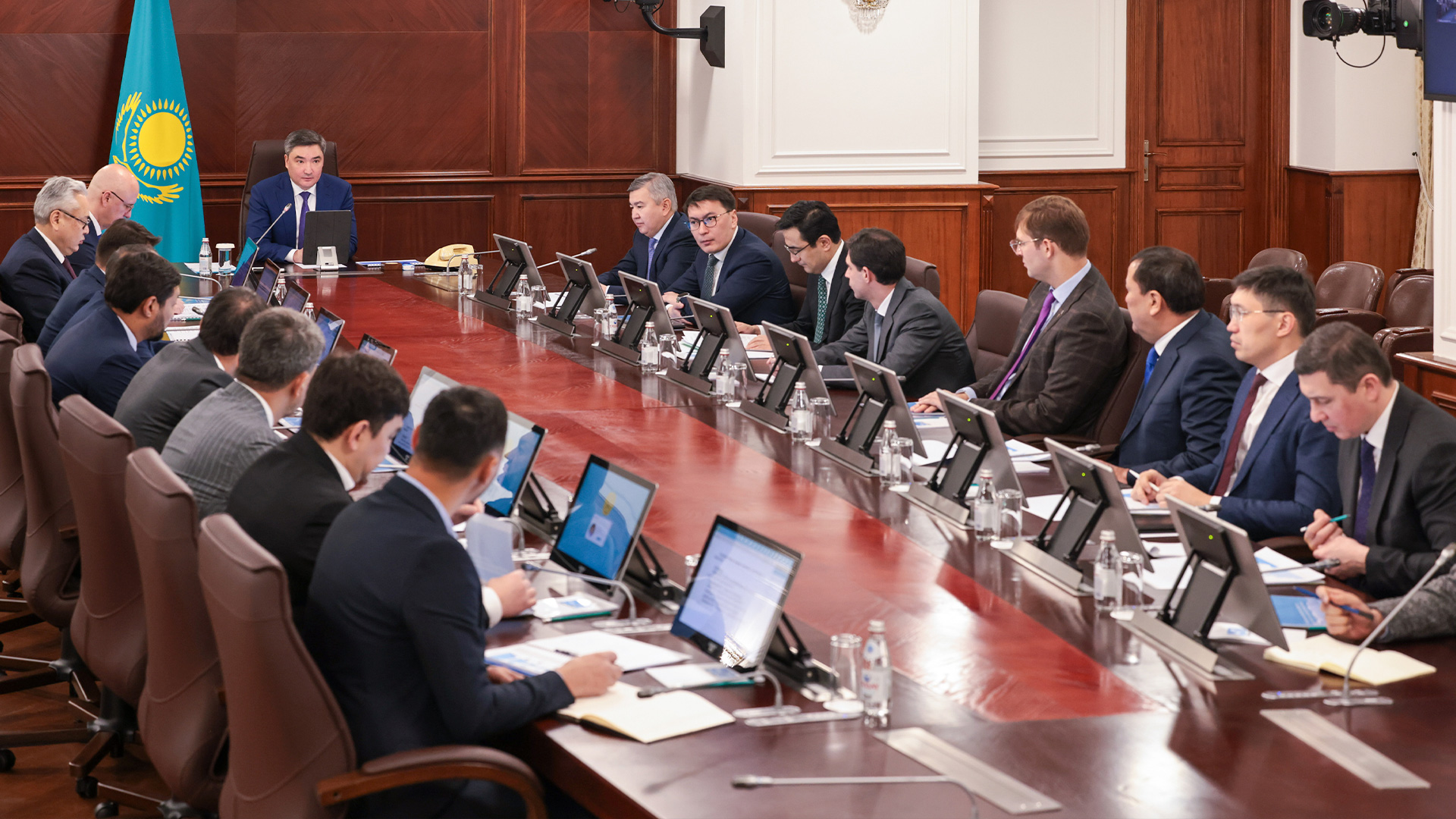
Kazakh authorities have initiated the establishment of a national digital-asset reserve fund valued at between US$500 million and US$1 billion, drawing in part on virtual assets seized or repatriated from abroad. The country’s central bank governor, Timur Suleimenov, stated in a London-based interview that the fund will steer clear of direct cryptocurrency holdings, instead placing capital into exchange-traded funds and shares in firms tied to digital assets. The aim is to have operational readiness by year-end or early January.
The planned vehicle is part of a broader push by the government and financial regulators to formalise the role of digital assets within the national economy. President Kassym‑Jomart Tokayev previously called for a dedicated State Fund of Digital Assets and draft legislation for a digital-asset law in his address to the legislature, signalling targets for implementation in 2026. Meanwhile, the central bank’s deputy governor, Berik Sholpankulov, confirmed to parliament that the fund will receive seized crypto assets from criminal proceedings and may also draw on portions of gold and foreign-exchange reserves.
Analysts note that the decision reflects a cautious yet strategic approach: by investing in regulated instruments such as ETFs rather than acquiring tokens directly, Kazakhstan aims to capture value from the digital-asset ecosystem while limiting exposure to price volatility, custody risks and regulatory ambiguity. The fund’s structure may serve as a model for other states exploring sovereign digital-asset exposure.
The initiative also aligns with Kazakhstan’s existing digital-finance agenda. The government has launched the Alem Crypto Fund, a state-backed vehicle that purchased the BNB token of the Binance network through a local partnership, marking one of the first publicly disclosed state-level digital-asset investments in the country. This fund, managed under the Astana International Financial Centre framework, is viewed as a precursor to the larger sovereign reserve vehicle. Kazakhstan has also announced plans for a so-called “CryptoCity” special zone in the Alatau region, intended to embed digital-asset payments, Web3 businesses and new financial-technology infrastructure.
The use of seized assets as a funding source underscores the interplay between regulatory enforcement and strategic investment. Kazakhstan’s law-enforcement agencies reported shutting down 130 unlicensed crypto exchanges suspected of money-laundering activity and seizing virtual assets worth US$16.7 million. These confiscated assets are earmarked for the fund according to public filings.
Financial-market participants view the reserve fund as serving multiple potential roles: diversification of state reserves, hedging against inflation or currency risk, and positioning Kazakhstan as a regional hub for digital-asset finance. One market strategist noted that “sovereign states are increasingly treating digital-asset exposure as part of long-term strategic reserve management rather than purely speculative allocation.”
Nevertheless, the plan is not without challenges. The absence of a clear regulatory framework for digital assets remains an obstacle: although legislation is under development, the timing and specific provisions are still vague. Market observers highlight that without robust custody, auditing and governance mechanisms, the sovereign reserve could prove vulnerable to volatility or operational failures. Further, the reliance on indirect exposure—through ETFs and equities—limits the fund’s upside in the event of a digital-asset price surge, while still subjecting it to broader capital-market risks.
Arabian Post – Crypto News Network
Follow Arabian Post
Select Arabian Post as your preferred source on Google and MSN News for trusted business news and Arab politics and updates.