


Global investment firm KKR has acquired a minority stake in ADNOC Gas Pipeline Assets LLC, reinforcing its commitment to Middle East energy infrastructure. ADNOC retains full operational control and ownership of the pipelines.
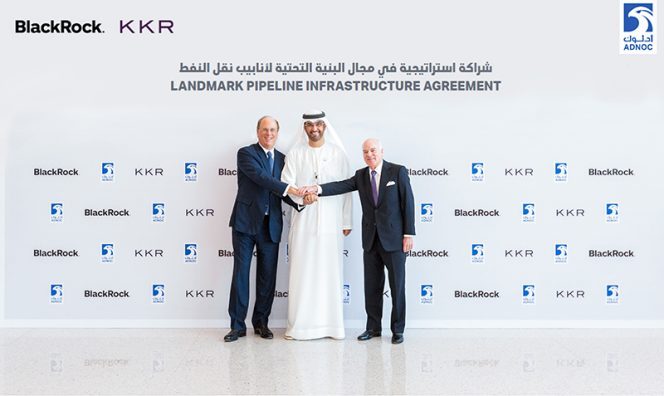
KKR’s move builds on longstanding ties with Abu Dhabi’s national energy group. In 2019, KKR and BlackRock acquired a portion of ADNOC’s oil pipeline business in a landmark deal; that investment was later sold to Abu Dhabi’s Lunate fund. KKR’s repeat foray into ADNOC’s gas infrastructure marks a further bet on strategic energy partnerships in the Gulf.
Under the new arrangement, KKR will inject capital through its managed accounts to support long-duration, stable-yield assets. Legal advisers Gibson Dunn handled the transaction for KKR. The exact size of the stake and financial terms remain confidential.
This latest investment aligns with a broader trend across Gulf oil nations to monetise energy transmission assets via minority stakes while preserving domestic operational control. Saudi Aramco, for instance, sealed an $11 billion leaseback deal covering parts of its Jafurah gas infrastructure this year. In Kuwait, the national oil company is reportedly evaluating similar leaseback models for its crude pipelines.
The pipeline network under ADNOC Gas Pipeline Assets spans key infrastructure connecting upstream production points to domestic off-takers across the UAE. While ownership remains with ADNOC, the infusion of institutional capital enhances financial flexibility for further expansion and modernization.
Earlier this year, the Italian gas infrastructure operator Snam sold its stake in ADNOC’s gas pipelines to Lunate, continuing a shift of foreign-owned shares back into regional hands. The deal was consistent with Snam’s goal of refocusing investments within Europe.
KKR, which oversees more than $90 billion in global infrastructure assets, has actively expanded its footprint across energy and digital infrastructure in the region. Its recent backing of Gulf Data Hub, a data-centre platform spanning the UAE and Saudi Arabia, underscores a strategy to straddle both energy and digital sectors.
Appointing former US General David Petraeus as its Middle East chairman, KKR has in recent years bolstered senior leadership to tap institutional investment flows into the Gulf. The firm’s approach combines global capital deployment with partnerships in national strategic sectors.
This development may also reflect growing investor confidence in Abu Dhabi’s energy strategy amid evolving global demand and transition pressures. Demand for natural gas as a bridging fuel continues to underpin pipeline network value, especially within regional integrated markets prioritising energy security and decarbonisation pathways.
Follow Arabian Post
Select Arabian Post as your preferred source on Google and MSN News for trusted business news and Arab politics and updates.






