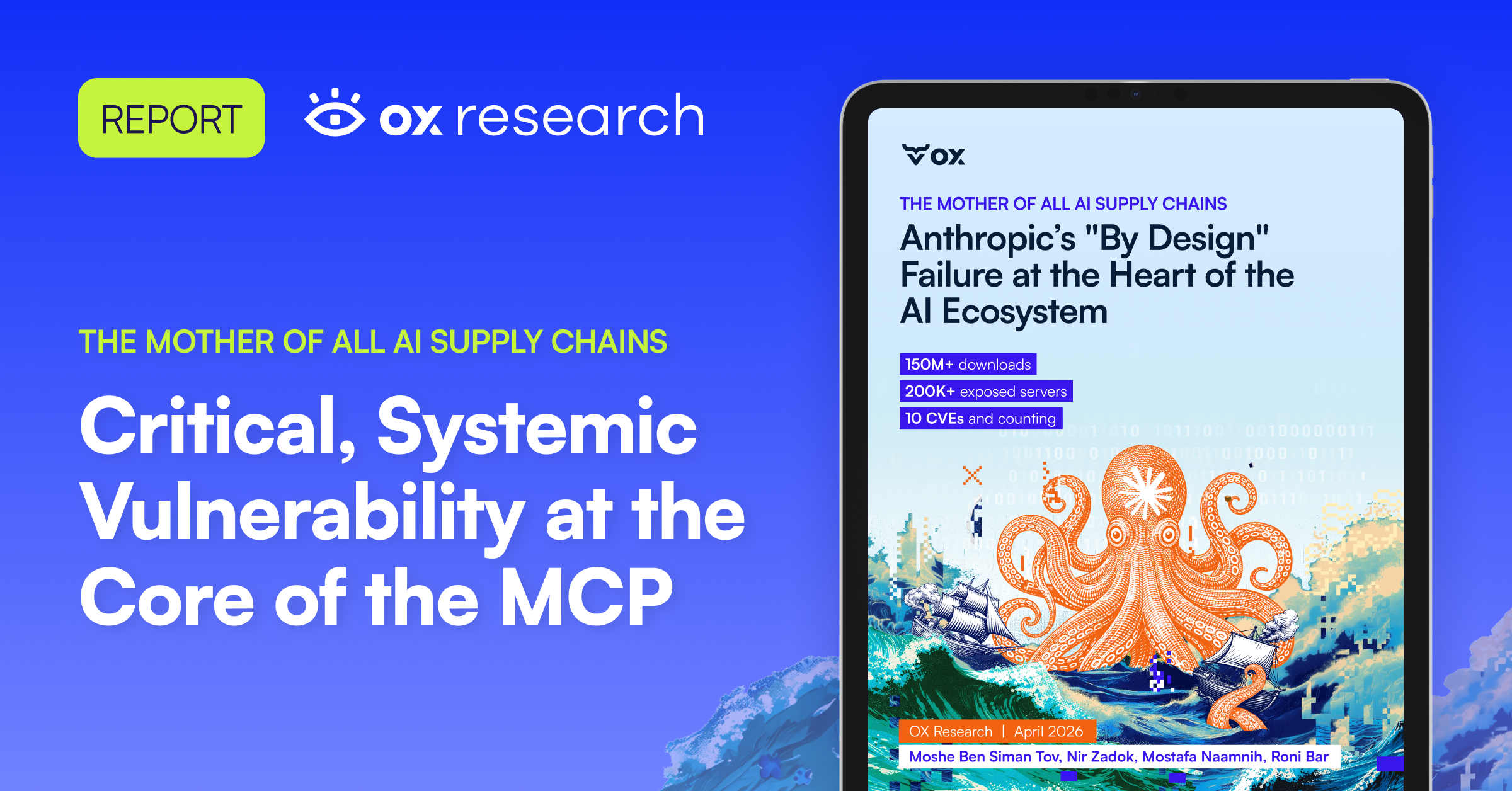
Anthropic’s Model Context Protocol, a fast-growing standard used to connect AI models with external tools and data, has come under intense scrutiny after security researchers disclosed a critical weakness that they say can open the door to arbitrary remote code execution across a broad swathe of the AI software stack.
The issue, published on April 15, centres on how MCP implementations handle STDIO-based server configurations and command execution paths. Researchers argue the flaw is not a narrow bug in a single product but a deeper architectural weakness that can be inherited by multiple software development kits and downstream products. They say the exposure stretches across more than 150 million software package downloads, over 7,000 internet-accessible MCP servers and as many as 200,000 deployed servers, though the exact number of systems actually vulnerable in production is harder to verify because deployments vary widely.
At stake is more than the compromise of one tool. MCP has become a common way for AI assistants, coding agents and enterprise automation systems to interact with repositories, local files, browsers, internal databases and other business applications. If a malicious actor can manipulate those interactions to trigger command execution, the result could include theft of API keys, access to chat histories, extraction of proprietary data and deeper movement through corporate networks. In heavily automated development settings, the damage could spread quickly through connected systems.
The researchers behind the disclosure said they identified the problem across official MCP software development kits in multiple programming languages, including Python, TypeScript, Java and Rust, and traced impacts into a growing ecosystem of third-party tools. A series of CVEs has already been assigned to affected implementations and associated products, with patches issued in some cases. Security specialists following the matter say that while individual fixes may reduce immediate risk, the broader argument is whether the protocol’s default behaviour leaves too much room for unsafe execution patterns.
Anthropic’s position appears more measured than the alarm raised by the researchers. The company has indicated that some of the behaviour described is consistent with how MCP is designed to operate, placing emphasis on developer awareness, user consent and implementation safeguards. That distinction matters. In traditional software security, a flaw is often treated as a defect to be eliminated at source. In this case, the dispute is also about responsibility: whether the protocol itself should prevent dangerous command paths by default, or whether those controls should sit with developers and operators deploying MCP-based systems.
That debate lands at a sensitive moment for the AI industry. MCP has been promoted as an open standard that can make agentic systems more interoperable and efficient. Anthropic has also said the protocol has been moved into a broader open-governance setting under the Linux Foundation’s Agentic AI Foundation, reflecting an effort to present MCP as shared infrastructure rather than a proprietary layer tied to one company. But open standards can scale weaknesses as quickly as they scale innovation. A design choice copied across many implementations can become a systemic security problem if hostile actors find reliable ways to weaponise it.
The timing is especially awkward because MCP and AI agent frameworks are moving from experimentation into enterprise use. Banks, software firms, consultancies and internal platform teams are using agent tools to retrieve documents, write code, query systems and automate workflows. Each new connector expands usefulness, but it also enlarges the attack surface. Security analysts have been warning for months that agent systems collapse old trust boundaries by allowing prompts, configurations and connectors to influence actions that were once tightly controlled by human operators.
Academic and industry research has already pointed to this wider pattern. Studies examining MCP-style deployments have found that protocol-level design choices can amplify attack success rates by making tool invocation, context sharing and cross-system interaction easier to abuse. The concern is no longer confined to prompt injection as a nuisance or data leakage as a side effect. The more serious fear is that agent ecosystems are normalising execution pathways that can be turned into full compromise when security assumptions fail.
Follow Arabian Post
Select Arabian Post as your preferred source on Google and MSN News for trusted business news and Arab politics and updates.