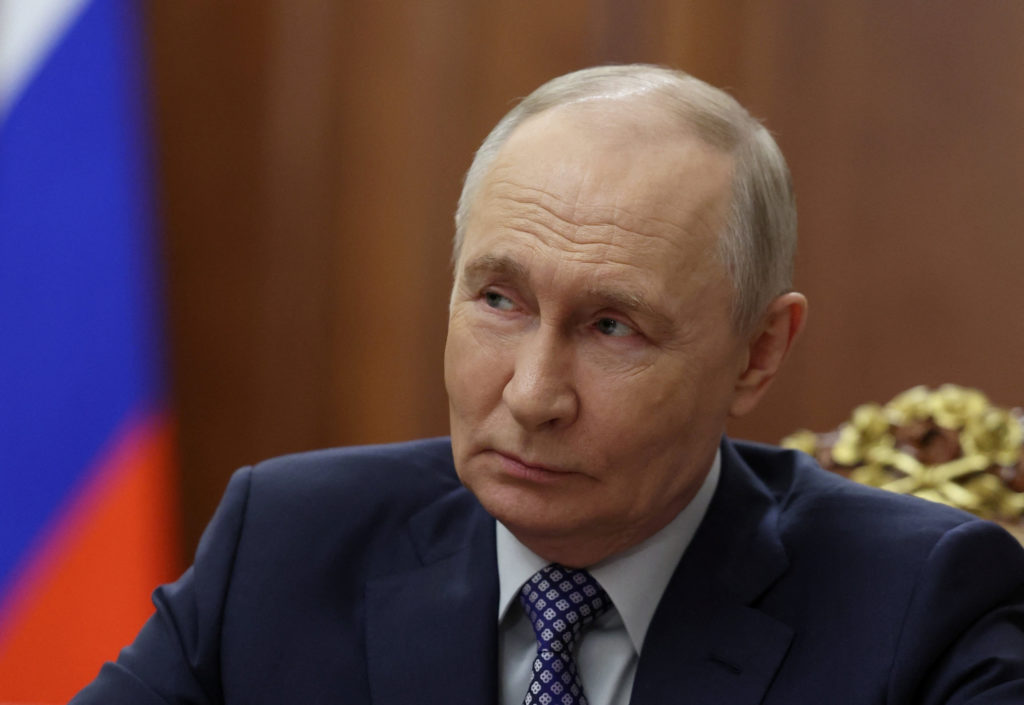
Russia said on Thursday that President Vladimir Putin had ordered a temporary ceasefire in Ukraine over Orthodox Easter, casting the move as a humanitarian gesture and urging Kyiv to follow suit, even as both sides remained deeply sceptical that any holiday pause would materially change the course of the war.
The Kremlin said Russian forces were to halt combat operations from 4 p. m. on Saturday, April 11, until the end of Sunday, April 12, when Orthodox Christians in both countries mark Easter. Moscow said Defence Minister Andrei Belousov had been instructed to implement the order across the front while keeping troops prepared to respond to what it called possible provocations or violations by the Ukrainian side.
The announcement came after Ukrainian President Volodymyr Zelenskyy had floated his own proposal for a limited Easter pause, focused on halting strikes on energy infrastructure during the holiday. Kyiv had said the idea was conveyed through the United States, which has continued to act as an intermediary in contacts aimed at testing whether a broader ceasefire might be possible. Reuters and AP both reported that Ukraine had previously signalled it was prepared to reciprocate if Russia stopped its attacks.
For all the language of restraint, the truce was announced against the backdrop of continued violence and a long record of failed battlefield pauses. Only days earlier, Russian attacks in southeastern Ukraine killed civilians in the Dnipropetrovsk region and Kherson, according to Ukrainian officials, reinforcing Kyiv’s argument that Moscow’s declarations should be judged against events on the ground rather than diplomatic wording. Russia has consistently denied deliberately targeting civilians.
That history explains the guarded response likely to greet the Kremlin’s statement. Last year, a short Easter ceasefire announced by Moscow quickly unravelled, with each side accusing the other of repeated violations. The precedent has left officials and analysts wary of reading too much into narrowly timed truces that coincide with religious holidays but stop short of any verified, enforceable mechanism for de-escalation across a front line stretching roughly 1,250 kilometres.
The timing is also politically significant. Russia has continued to insist that any full ceasefire must be tied to a wider settlement on territorial and security issues, while Ukraine has argued that a genuine halt in hostilities should come first and be broad enough to build confidence for negotiations. That gap has narrowed little despite rounds of outside mediation and public statements from both capitals saying they remain open to some form of ceasefire under the right conditions.
For Putin, the Easter order offers several advantages at once. It allows the Kremlin to present Russia as responsive to religious symbolism shared across the Orthodox world, and to signal, particularly to audiences abroad, that Moscow is not opposed in principle to pauses in fighting. It also shifts immediate pressure on to Kyiv by inviting Ukraine either to match the move or risk being portrayed by Russian officials as unwilling to suspend hostilities even briefly.
For Zelenskyy, the calculation is more complicated. Ukraine has publicly supported the idea of temporary restraint around Easter, especially with regard to energy infrastructure, but Kyiv has repeatedly argued that Russian declarations cannot be separated from battlefield conduct. Ukrainian officials have said that any pause must be real, reciprocal and verifiable, not simply a unilateral announcement that leaves room for competing interpretations once fighting resumes or alleged violations begin to mount.
The broader military picture also clouds the significance of the truce. The war is now in its fifth year, and neither side has shown readiness to soften its core demands. Russia continues pressing offensives while seeking diplomatic terms favourable to its territorial claims. Ukraine, facing sustained pressure along multiple sectors, has tried to preserve Western support while arguing that any pause lacking security guarantees would only give Moscow time to regroup.
Follow Arabian Post
Select Arabian Post as your preferred source on Google and MSN News for trusted business news and Arab politics and updates.