

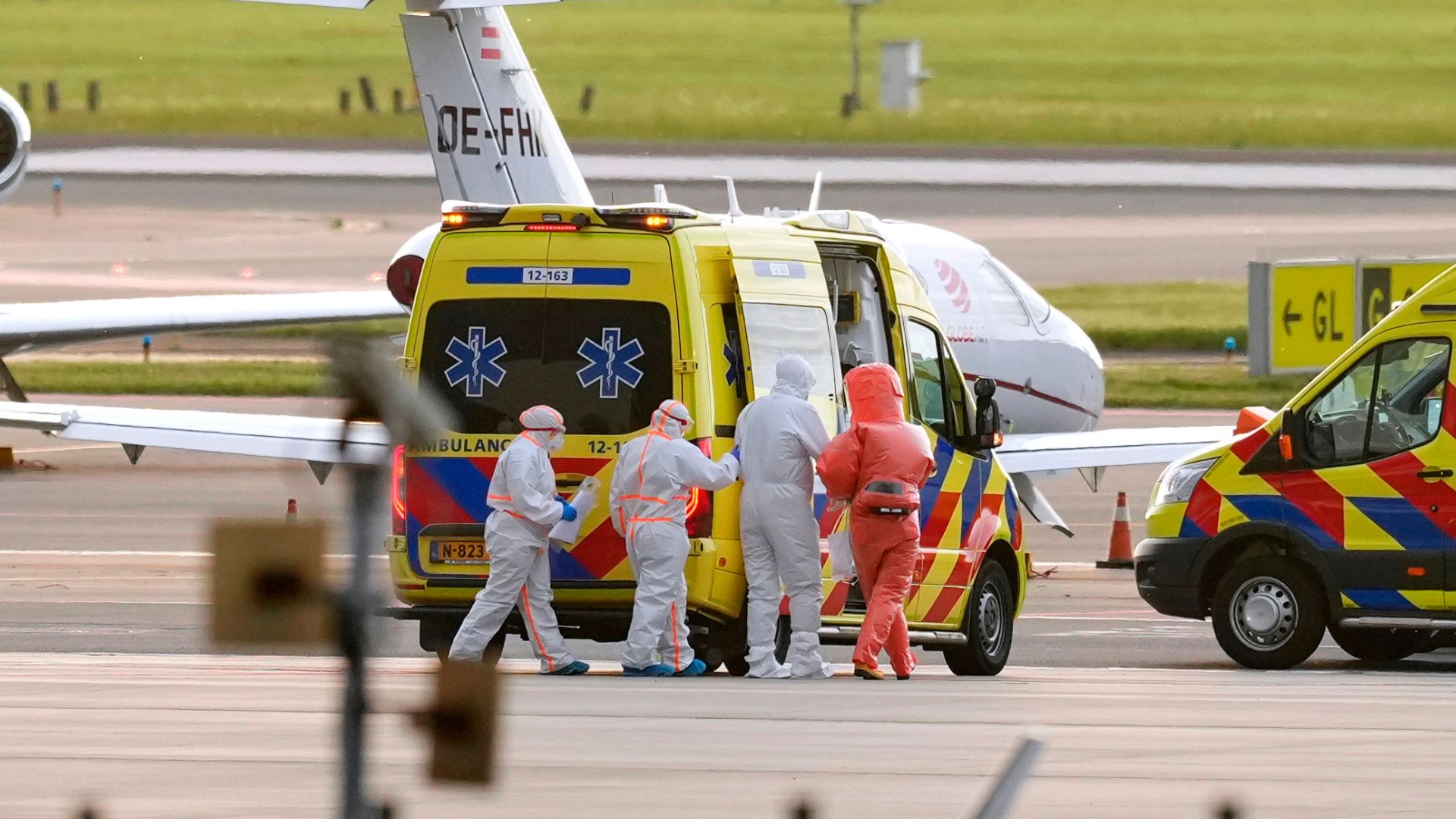
Seventeen Americans exposed to hantavirus aboard the MV Hondius have landed in Omaha for medical assessment and monitoring, after an international evacuation from the Canary Islands brought a deadly cruise-linked outbreak under United States supervision.
One passenger tested mildly positive for Andes virus, a hantavirus strain capable of causing severe respiratory illness, while another showed mild symptoms and was awaiting further evaluation. The infected passenger, who had no symptoms at arrival, was separated under biocontainment protocols and taken to the Nebraska Biocontainment Unit. The remaining passengers were moved to the National Quarantine Unit at the University of Nebraska Medical Center, the only federally funded facility of its kind in the country.
The aircraft arrived at Eppley Airfield in the early hours of Monday, ending a carefully controlled transfer from Tenerife, where the Dutch-flagged expedition vessel had been anchored after a cluster of severe respiratory illness emerged among passengers and crew. Medical teams, federal health officials and local authorities coordinated the landing, transport and intake process to limit risk while allowing clinicians to conduct fresh assessments.
The outbreak has drawn attention because the Andes strain is unusual among hantaviruses. Most hantavirus infections are linked to contact with infected rodents, including exposure to urine, droppings or saliva. Andes virus, however, has been documented in rare cases to spread between people, typically after close and prolonged contact with a symptomatic patient. Health authorities have stressed that the risk to the wider public remains very low.
The MV Hondius left Ushuaia, Argentina, on April 1 for an expedition route that included Antarctica, South Georgia, Tristan da Cunha, Saint Helena and Ascension Island. The ship carried 147 passengers and crew from 23 countries. The precise source of exposure remains under investigation, with attention focused on possible contact with infected rodents or contaminated environments during travel before or during the voyage.
By May 8, international health authorities had recorded eight cases linked to the vessel, including six laboratory-confirmed infections and two probable cases. Three people had died, placing the case fatality ratio at 38 per cent among the known cluster. Several patients were hospitalised in South Africa, the Netherlands and Switzerland as authorities across multiple countries traced contacts and arranged repatriation or monitoring.
The chronology of illness suggests the outbreak began weeks before the ship reached the Canary Islands. The first probable case involved an adult male who boarded the vessel on April 1 after travel in Argentina, Chile and Uruguay, developed symptoms on April 6 and died on board on April 11. A close contact later became ill, disembarked at Saint Helena, deteriorated while travelling through South Africa and died on April 26. Other cases were identified among passengers and staff after symptom onset in late April and early May.
Health officials have not advised panic. Hantavirus does not spread with the ease associated with airborne pandemic viruses, and transmission usually requires specific exposure conditions. The main concern is the severity of illness once symptoms develop. Early signs can include fever, muscle aches, chills, gastrointestinal symptoms and fatigue, followed in some cases by cough, shortness of breath and rapid respiratory decline.
The Omaha response reflects lessons from earlier high-risk infectious disease operations, including Ebola and Covid-era repatriations. The National Quarantine Unit is designed to house people who may have been exposed to high-consequence pathogens, while the adjacent biocontainment facility can provide specialised care for patients requiring stricter isolation. The separation of the positive passenger from other evacuees is intended to reduce any theoretical risk during the incubation period.
Monitoring will include clinical checks, symptom screening and follow-up testing where medically indicated. Health agencies are expected to classify passengers by exposure risk, with some potentially completing observation in Nebraska and others allowed to continue monitoring under local health supervision elsewhere. International guidance has pointed to extended monitoring because hantavirus symptoms may take weeks to appear after exposure.
Follow Arabian Post
Select Arabian Post as your preferred source on Google and MSN News for trusted business news and Arab politics and updates.




