

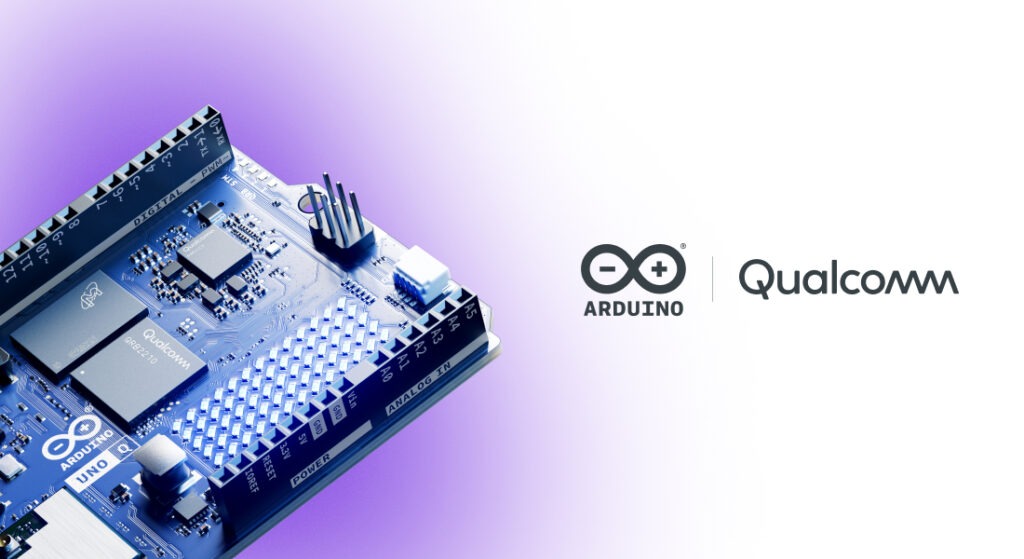
Qualcomm has confirmed its acquisition of Arduino, the Italian open-source electronic prototyping platform used by more than 33 million developers worldwide, in a move intended to deepen the chipmaker’s stake in edge computing and AI development.
Under terms not disclosed publicly, Arduino will retain its brand, tools and mission, while joining Qualcomm’s broader technology and development ecosystem. As part of the deal, the two firms unveiled the UNO Q, a hybrid board combining a Linux-capable Qualcomm Dragonwing processor with a real-time STM32 microcontroller, along with a new integrated development environment, App Lab, designed to bridge traditional microcontroller development and AI workflows.
Qualcomm frames the acquisition as a way to give its silicon and AI stack direct access to a vast and active global developer community. The company sees Arduino’s reach as an accelerating channel for embedding its technology into robotics, Internet of Things devices, industrial automation and prototyping ecosystems.
Analysts note that the pairing of Arduino’s ease of use and community momentum with Qualcomm’s depth in processing, connectivity and AI intellectual property could reshape how embedded devices evolve. The UNO Q board is pitched to support real-time control tasks and advanced AI models — a design that attempts to collapse the barrier between microcontroller systems and more compute-intensive platforms.
The acquisition follows Qualcomm’s earlier moves in the AI and edge domain, including its purchase of generative AI firm Movian and its intent to acquire Alphawave IP to bolster infrastructure and AI toolchains. This deal underscores a larger pivot by Qualcomm away from a pure mobile chipset identity into an integrated platform player across hardware, software, and developer engagement.
Within the Arduino ecosystem, reactions are mixed. Many developers welcome the promise of tighter integration with advanced silicon, better access to resources and faster migration paths from prototype to product. Others express caution: when a large corporation subsumes an open-source entity, fears emerge of gradual commercialization, licensing changes or a shift in priorities away from the educational and hobbyist base. Past instances in the tech industry show that maintaining community trust is a delicate balance.
To date, Qualcomm has asserted support for continued openness: the company says Arduino will keep support for multiple microcontroller and processor vendors and maintain its independent identity. But skeptics point to Qualcomm’s historically cautious approach to open-source drivers and its leverage over IP to wonder whether the long-term direction can avoid creeping constraints.
Competition in this domain is heating up. Companies like Raspberry Pi, Espressif, Microchip and STMicro still dominate the landscape of boards and microcontrollers. But few have the scale of both a thriving developer ecosystem and a high-end silicon pipeline. Qualcomm’s move may force rivals to rethink how they appeal to both hobbyist and enterprise segments.
For regulators, the acquisition is not expected to spark immediate scrutiny, given Arduino’s non-profit roots and Qualcomm’s already expansive footprint. However, oversight may emerge when the integration deepens, especially in markets sensitive to open hardware or national security controls over AI and connectivity infrastructure.
Follow Arabian Post
Select Arabian Post as your preferred source on Google and MSN News for trusted business news and Arab politics and updates.



