Arabian Post Staff -Dubai

Riyadh’s property landscape is being re-engineered at pace as public investment, private capital and planning reforms converge, with a multi-year pipeline spanning transport, data infrastructure and construction altering how the city builds, works and lives. The shift is being underpinned by the acceleration of Vision 2030, which is redirecting demand across offices, homes, retail and hospitality while seeding new growth in AI infrastructure and transit-led urbanism.
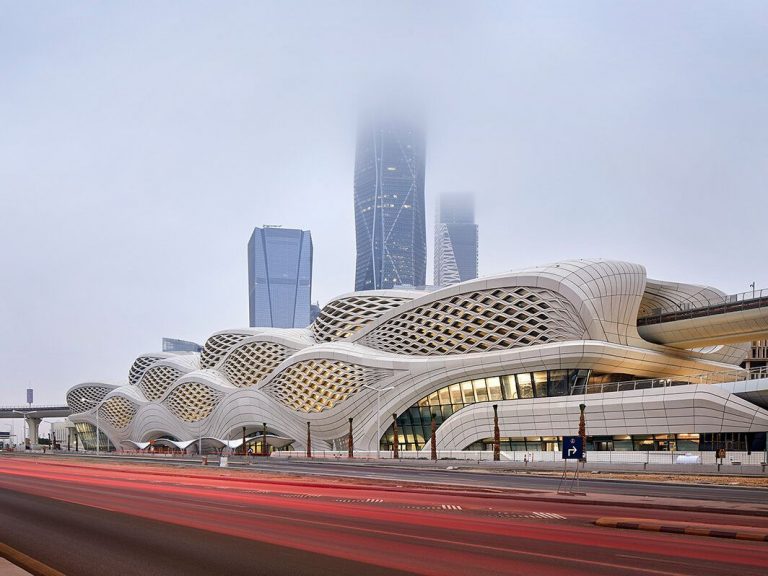
At a closed-door client roundtable in Riyadh, senior executives from JLL and market participants set out how three headline drivers are reshaping the capital’s trajectory: the roughly $22 billion Riyadh Metro, a 2.7-gigawatt data-centre development pipeline, and a construction market valued near $100 billion. Together, they are rebalancing land use, accelerating absorption and raising expectations on quality, sustainability and connectivity.
The metro’s phased delivery is proving catalytic. Developers and occupiers are recalibrating location decisions around stations, pushing Transit-Oriented Development from concept to execution. Office demand is tilting toward transit-served districts where firms can widen talent catchments and compress commute times, while mixed-use schemes are intensifying around nodes to capture footfall and dwell time. Participants said this is translating into stronger pre-leasing in well-connected submarkets and a clearer hierarchy between assets that integrate mobility and those that do not.
Office markets, long dominated by single-use buildings, are seeing a bifurcation. Prime stock that meets international specifications—energy efficiency, flexible floorplates and smart-building systems—continues to command interest from multinational tenants expanding regional hubs. Secondary assets face pressure to reposition, with refurbishment and conversion emerging as viable strategies as occupiers demand wellness features and hybrid-work flexibility. The net effect has been a tightening of Grade A availability in select corridors alongside a growing pipeline of upgrades elsewhere.
Residential demand is broadening in both price points and formats. Policy support for home ownership, combined with population growth and household formation, is lifting take-up in master-planned communities that offer amenities and proximity to employment clusters. Build-to-rent is gaining traction among institutional investors seeking stable income, while higher-density schemes near metro lines are attracting young professionals. Industry voices cautioned that affordability must be managed carefully to ensure supply keeps pace with demand across income bands.
Retail is being reshaped by experience-led formats rather than pure expansion. Flagship malls and high-street destinations anchored by dining, entertainment and cultural programming are outperforming, while neighbourhood centres aligned to daily needs remain resilient. Operators are sharpening omnichannel strategies, using physical space for brand immersion and fulfilment. Hospitality, meanwhile, is benefiting from a deepening events calendar and business travel linked to government initiatives and corporate relocations, with investors favouring upper-midscale and lifestyle brands that can scale quickly.
A less visible but equally powerful force is digital infrastructure. The 2.7-GW data-centre pipeline reflects surging demand for cloud, AI and sovereign data capacity. This is spawning a new asset class with distinct site requirements—power availability, cooling, fibre and zoning—often located on the urban fringe yet increasingly tied to logistics and innovation districts. Market participants noted spillover effects for industrial land values and for office districts that house AI and software teams.
Construction activity at scale is testing delivery capacity. While the $100 billion market underscores opportunity, it also elevates execution risk tied to labour, materials and timelines. Developers are responding with modular construction, deeper supply-chain partnerships and earlier contractor engagement to protect schedules. Sustainability standards are rising in parallel, with energy-efficient designs and water stewardship becoming baseline expectations rather than differentiators.
Also published on Medium.
Follow Arabian Post
Select Arabian Post as your preferred source on Google and MSN News for trusted business news and Arab politics and updates.