

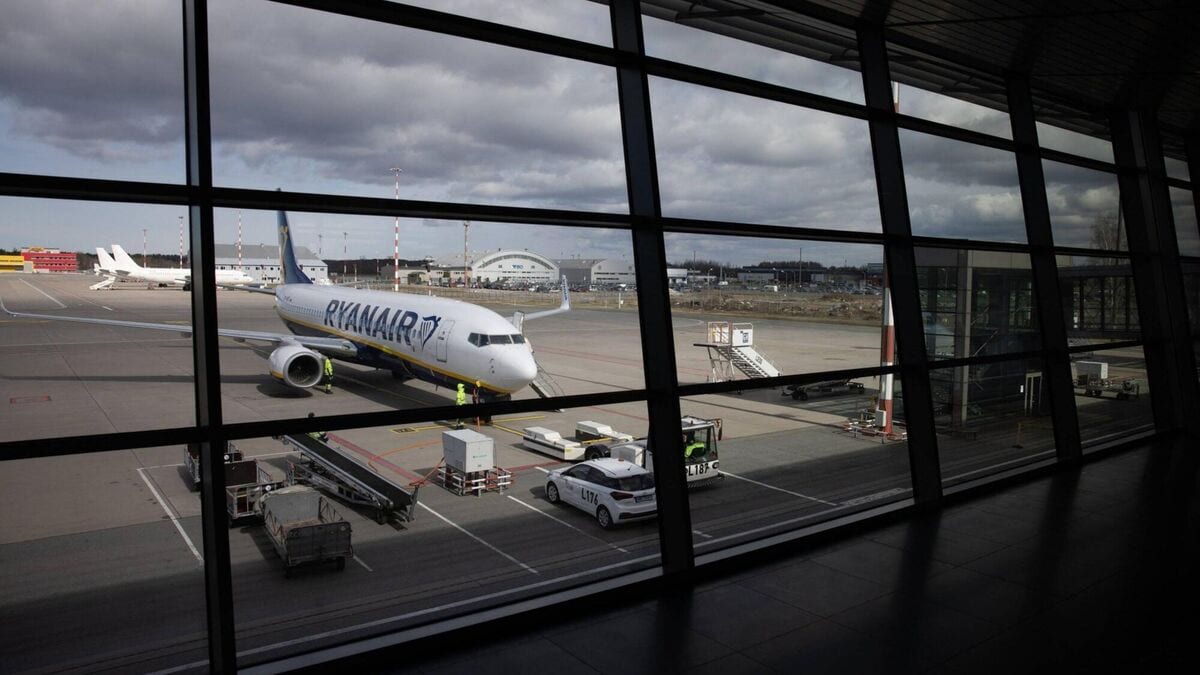
Ryanair has warned that jet fuel supplies into Europe could come under pressure from May if the US-Israeli war with Iran continues, with chief executive Michael O’Leary saying as much as a quarter of the airline’s fuel could be at risk during May and June if disruption around the Strait of Hormuz is not resolved by the middle or end of April.
The warning, made on April 1, comes as Europe’s largest airline by passenger numbers said it had not cut any flights because its fuel position is secure for now. O’Leary nonetheless said the longer the conflict lasts, the greater the threat to supply and the stronger the chance of materially higher fares across the market, especially for carriers with less protection against rising oil prices.
At the centre of the concern is the Strait of Hormuz, the narrow shipping lane linking Gulf producers to global energy markets. Reuters reported that Barclays estimates a prolonged closure could remove 13 million to 14 million barrels a day from world supply, while the bank said roughly a fifth of global oil and liquefied natural gas flows had been trapped by the disruption. That is a scale large enough to spill quickly from crude into refined products such as diesel and aviation fuel.
For airlines, jet fuel matters more than headline crude prices. Reuters reported that Singapore jet fuel traded above $222 a barrel on March 27, more than double the level seen on February 27 before the conflict escalated. That surge helps explain why airline executives are focusing not only on oil benchmarks but on the availability and pricing of the refined fuels needed to keep schedules intact during the peak northern summer season.
Ryanair has some insulation. The carrier said in January that it had hedged about 80 per cent of its jet fuel needs for the financial year ending March 2027, based on a crude price of $67 per barrel. That leaves it better placed than weaker or less-hedged rivals to absorb a sudden spike, although it does not eliminate exposure entirely if physical shortages worsen or if the remaining unhedged portion becomes significantly more expensive.
O’Leary has also linked the fuel backdrop to pricing power. Reuters reported that he expects summer fares to rise by more than 3 per cent year on year, citing a mix of capacity constraints and higher oil prices hitting less well-hedged competitors. That suggests the market effect may extend beyond Ryanair’s own balance sheet, with tighter industry supply and elevated operating costs reinforcing upward pressure on ticket prices across European aviation.
The broader energy warning has been echoed by the International Energy Agency. Its executive director, Fatih Birol, said oil supply disruptions from the Middle East would worsen in April and begin to hit Europe’s economy, adding that more than 12 million barrels had already been lost since the conflict began. Birol said the main concern was now the shortage of jet fuel and diesel, which had already affected Asian markets and was expected to reach Europe in April or May.
That timing is crucial for airlines. European carriers are entering a period when aircraft utilisation rises, leisure routes fill, and operational slack becomes harder to find. Even limited shortages in fuel delivery can ripple into scheduling, airport logistics and pricing. Ryanair has not announced cancellations, and O’Leary’s comments stop short of predicting them, but his warning indicates that the risk has moved from a distant macro concern to a live operational issue for the sector.
The geopolitical backdrop also matters because the current strain is not confined to one producer or one route. Reuters reported that about 40 key energy assets in the Middle East have been damaged since the war began, while Birol described the present oil and LNG shock as more severe than the oil crises of 1973 and 1979 and the loss of Russian gas volumes after the 2022 invasion of Ukraine combined. Such language points to a disruption with consequences well beyond airline earnings.
Follow Arabian Post
Select Arabian Post as your preferred source on Google and MSN News for trusted business news and Arab politics and updates.




