Nvidia has indicated that its era of large-scale equity investments in leading artificial-intelligence developers may be drawing to a close, with chief executive Jensen Huang saying the company is unlikely to make further major financial commitments to OpenAI or Anthropic as both firms move closer to potential public listings. Speaking at a technology and telecom conference in the United States, Huang said Nvidia’s existing stakes in the […]
Artificial intelligence designed to audit software security has identified 22 vulnerabilities in Mozilla’s Firefox browser within a two-week testing period, highlighting the growing role of automated systems in discovering complex flaws in widely used digital infrastructure. The findings emerged from experiments involving the Claude artificial intelligence model, developed by the company Anthropic, which was tasked with analysing the Firefox codebase for weaknesses. Security researchers said the AI […]
Tension between Silicon Valley’s artificial-intelligence developers and defence officials has surfaced again as Anthropic chief executive Dario Amodei re-engages in discussions with the Pentagon over potential collaboration on advanced AI systems. The renewed talks follow a disagreement that underscored deep divisions over the role of powerful generative AI models in military applications and the ethical boundaries technology companies seek to maintain. Dialogue between Anthropic and the US […]
Arabian Post Staff -Dubai Emirates Auction has joined the Edge of Life campaign as a strategic partner in an effort aimed at helping rescue five million children from severe hunger, strengthening a humanitarian initiative designed to mobilise resources and support global programmes targeting malnutrition and food insecurity. The campaign brings together humanitarian organisations and philanthropic partners working to address the escalating crisis of childhood hunger, particularly across […]
OpenAI’s expanding work with the United States military has ignited a wave of criticism among sections of its user base, with some subscribers cancelling ChatGPT plans and shifting to rival platform Claude, citing concerns over artificial intelligence ethics and safety. The controversy follows confirmation that OpenAI is collaborating with US defence agencies on projects involving cybersecurity and the responsible deployment of advanced language models. The company has […]
OpenAI chief executive Sam Altman confirmed that the company has reached a strategic agreement with the U. S. Department of War to deploy its artificial intelligence models on the ministry’s classified network, signalling a major shift in the technology sector’s engagement with national security infrastructure and government contracts. The contract embeds safety principles that bar mass domestic surveillance and fully autonomous weapon-control, reflecting a delicate balance between […]
OpenAI has secured an unprecedented $110 billion investment commitment from Amazon, Nvidia and SoftBank, propelling the artificial intelligence company into what could be the largest private funding round in history and sharply intensifying competition in the AI sector. The financial injection comes as the developer of the ChatGPT generative AI platform prepares for a potential public offering later this year and looks to expand its global infrastructure […]
Anthropic has declined to proceed with a revised artificial intelligence contract offered by the US Department of Defense, citing concerns that changes to the agreement would weaken safeguards tied to its core safety commitments and restrictions on military applications. The San Francisco-based company, founded by former OpenAI executives including Dario Amodei and Daniela Amodei, confirmed it would not accept amendments to a previously negotiated arrangement that it […]
Bill Gates apologised to employees of the Gates Foundation for his past meetings with convicted sex offender Jeffrey Epstein, telling staff he “took responsibility for his actions” while maintaining he saw nothing illicit during their interactions. A spokesperson for the philanthropic organisation confirmed that Gates addressed the issue during a town hall meeting, acknowledging that his association with Epstein had caused harm to the foundation’s reputation and […]
Anthropic’s Claude Code, an AI-driven coding agent that autonomously reads, writes and executes software instructions from a user’s terminal or browser interface, is accelerating change across the software development industry and unsettling traditional players in legacy computing and cybersecurity. The tool, which has transitioned from research preview to widespread adoption in developer communities, now integrates security scanning and parallel agent workflows that can handle complex development […]
By Nantoo Banerjee The global AI impact summit 2026 in Delhi, last week, couldn’t have come at a more appropriate time when the world continues to be somewhat skeptical about adoption of Artificial Intelligence (AI), its limitations and potential consequences. Thanks to the pioneering effort by firms such as Nvidia, Microsoft, Google, Amazon, Meta and […]
Centralised control of artificial intelligence is facing a serious challenge as decentralised networks gather pace, promising to dilute the dominance of technology giants and open development to a broader community of users and developers. For much of the past decade, cutting-edge AI models have been built and deployed by a handful of well-funded companies with access to vast computing infrastructure and proprietary data. Firms such as OpenAI, […]
DeepSeek has expanded the context capacity of its flagship large language model by a factor of ten and pushed its knowledge cut-off forward to May 2025, sharpening competition in China’s fast-moving artificial intelligence sector as rival Zhipu introduced a new model aimed at enterprise and developer markets. The Hangzhou-based company said the upgrade enables users to process far longer documents and multi-step prompts in a single session, […]
Saudi Arabia’s state-owned artificial intelligence company Humain has committed $3 billion to Elon Musk’s AI venture xAI as part of a substantial funding round conducted just before the startup was brought under the umbrella of his space technology firm SpaceX. The deal immediately positioned Humain as a significant minority shareholder, with its equity in xAI converted into SpaceX shares after the acquisition, the company said. The transaction […]
By T N Ashok At the center of Bharat Mandapam, the chiselled, lotus-shaped convention complex that has become the theatre for India’s global ambitions, Prime Minister Narendra Modi stood for a “family photo” that looked less like a diplomatic formality and more like a merger of Silicon Valley and the Westphalian order. To his left […]
OpenClaw, a widely used open-source autonomous AI assistant, has pushed out version 2026.2.17 with expanded capabilities that include support for Anthropic’s latest Claude Sonnet 4.6 model and enhancements across messaging platforms and automation workflows. The update, made available by lead developer Peter Steinberger on February 17, 2026, was designed to address user demand for broader model integration and improved context handling, but it arrives as the software […]
Anthropic has enabled its Claude artificial intelligence system to edit files directly within software development environments, marking a significant escalation in the race to build autonomous coding agents capable of handling complex engineering tasks with limited human intervention. The capability allows Claude to read, modify and write code across structured repositories, moving beyond code suggestions in chat windows to targeted alterations inside live projects. Developers can grant […]
India has emerged as the second-largest market globally for Claude, the generative artificial intelligence model developed by US-based start-up Anthropic, underscoring the country’s expanding influence in the global AI ecosystem.
Debjani Ghosh, who leads Anthropic’s operations and policy engagement in India, said the scale of adoption by developers, enterprises and start-ups has placed the country just behind the United States in terms of usage and integration of Claude’s models. She described India as a “strategic growth engine” for the company, citing strong demand from sectors including financial services, healthcare, education and software development.
Anthropic, founded in 2021 by siblings Dario Amodei and Daniela Amodei, has positioned Claude as a competitor to models from OpenAI and Google. The company has attracted substantial backing from Amazon and Google, with Amazon committing up to $4 billion as part of a strategic partnership to integrate Claude into Amazon Web Services infrastructure. The funding has enabled Anthropic to expand globally, with India becoming a focal point due to its developer base and digital economy.
India’s prominence in the AI adoption cycle reflects broader structural factors. The country has one of the world’s largest pools of software engineers, a fast-growing start-up ecosystem, and a government push towards digital public infrastructure. Enterprises across banking and fintech have begun embedding generative AI tools to automate compliance checks, summarise documents and enhance customer interaction. In healthcare, pilot projects are under way to use AI systems for clinical documentation and triage support, while education technology platforms are deploying AI-driven tutoring tools.
Ghosh indicated that India’s market dynamics differ from those of Western economies. Cost sensitivity and the need for scalable deployment across diverse languages and devices have shaped how enterprises experiment with large language models. Claude’s emphasis on constitutional AI — a framework designed to make outputs safer and more aligned with human values — has resonated with corporate clients concerned about regulatory risk and reputational exposure.
Regulatory considerations are central to the AI conversation in India. The Ministry of Electronics and Information Technology has signalled its intent to craft a framework that balances innovation with safeguards against misinformation, bias and misuse. While India has not enacted a standalone AI law, policy discussions have intensified around data governance and algorithmic accountability. Companies operating in the country must also comply with the Digital Personal Data Protection Act, which imposes obligations on data fiduciaries and processors.
Industry analysts note that India’s large English-speaking population has historically accelerated the adoption of global technology platforms. However, the next phase of growth in AI is expected to depend on multilingual capabilities. Claude’s ability to handle multiple languages is seen as an advantage in a country with 22 constitutionally recognised languages and hundreds of dialects. Developers are increasingly testing generative models for vernacular content generation and customer support.
Competition in the Indian market is intensifying. OpenAI’s ChatGPT has built a strong user base, while Google has integrated its Gemini models into productivity tools and cloud services. Domestic start-ups are also entering the field, building foundation models trained on local datasets. Analysts say that enterprise adoption, rather than consumer usage alone, will determine long-term market leadership.
Anthropic’s expansion strategy in India includes partnerships with cloud providers and enterprise software companies. By leveraging Amazon Web Services’ presence in major Indian cities, Claude is being offered as part of broader digital transformation packages. Ghosh emphasised that collaboration with academic institutions and start-up incubators is another priority, with the aim of fostering responsible AI research and skills development.
The rapid uptake of generative AI has also raised concerns. Experts warn of the risks of hallucinations, data leakage and overreliance on automated systems. In financial services, regulators have cautioned against using AI outputs without human oversight. Cybersecurity specialists highlight the potential for AI tools to be misused for phishing or deepfake generation. Anthropic has sought to address such issues by embedding guardrails into its models and conducting external safety evaluations.
Anthropic has entered a dispute with the United States Department of Defense over the proposed military use of its flagship artificial intelligence system, Claude, underscoring a widening rift between Silicon Valley’s safety-first rhetoric and Washington’s expanding appetite for advanced AI in national security. The San Francisco-based company, founded in 2021 by former OpenAI researchers including chief executive Dario Amodei and president Daniela Amodei, has built its brand […]
Blackstone’s private equity fund tailored for wealthy investors registered a hefty net 20 per cent return last year, propelled by strategic investments tied to artificial intelligence platforms and infrastructure, according to financial industry figures. The performance marks one of the strongest showings across alternative asset strategies targeting individual high-net-worth portfolios amid a broader industry push to deliver private markets access beyond institutional clients. The Blackstone Private Equity […]
China’s Z. ai has propelled its artificial intelligence ambitions into the global spotlight with the launch of GLM-5, a 744-billion-parameter open-source large language model that stands toe-to-toe with leading Western counterparts and underscores Beijing’s drive for technological self-sufficiency. Released on 11 February by the company formerly known as Zhipu AI, GLM-5 combines advanced architecture with broad hardware compatibility and permissive licensing, signalling a shift in the global AI landscape.
The GLM-5 model, built on a mixture-of-experts framework and trained on an expanded dataset of roughly 28.5 trillion tokens, is designed for multifaceted tasks including coding, reasoning and agentic operations. Z. ai reports that the model’s performance on internal benchmarks approaches that of leading proprietary systems such as Anthropic’s Claude Opus 4.5, and on certain tests it outperforms Google’s Gemini 3 Pro. Its permissive MIT licence allows unrestricted commercial use and adaptation, making GLM-5 one of the most accessible frontier AI models available to developers and enterprises worldwide.
A standout feature of GLM-5 is its independence from American semiconductor technology. Trained and deployable on domestic Chinese chips from manufacturers like Huawei Ascend, Moore Threads, Cambricon and Kunlunxin, the model sidesteps reliance on high-end Nvidia GPUs that are constrained under US export controls. Z. ai’s use of the MindSpore AI framework further embeds the model within a Chinese software ecosystem, emphasising self-reliant technological development. This strategy exemplifies a broader push within China’s AI sector to mitigate the impact of external trade restrictions and build robust, locally supported infrastructures.
Market reception underscored the impact of GLM-5’s launch: Z. ai’s shares surged nearly 29 per cent on the Hong Kong Stock Exchange following the announcement, reflecting investor optimism about the company’s competitiveness and growth prospects. Industry analysts note that GLM-5’s arrival comes amid an acceleration of model releases and chip optimisation efforts by several Chinese AI firms, signalling more intense competition on both domestic and international fronts.
Benchmarks published by Z. ai highlight GLM-5’s strengths and limitations. On software engineering evaluations, the model achieved a score of 77.8 per cent on the widely referenced SWE-bench Verified suite, trailing slightly behind Claude Opus 4.5’s 80.9 per cent but outperforming other notable systems in agentic and multitask contexts. The architecture’s efficient handling of long-context sequences—up to 200 000 tokens—positions GLM-5 for applications requiring extensive reasoning over lengthy inputs.
GLM-5’s low cost of deployment also enhances its appeal. Analyses of pricing data suggest inference can cost around US $1 per million tokens, a fraction of the fees charged by some proprietary APIs, potentially lowering barriers for startups and research teams seeking cutting-edge language modelling without prohibitive expenditure. The MIT licence further expands this accessibility by granting broad rights to adapt and deploy the underlying model weights in commercial and research settings.
Despite its technical achievements and open licensing, experts caution against over-interpretation of benchmark results as definitive proof of superiority. Performance under controlled test conditions does not always translate to uniformly strong real-world applications, particularly in generative and reasoning tasks where robustness and safety remain critical hurdles. Some observers also warn that differences between self-reported evaluations and independent assessments could emerge as the model is adopted more widely.
GLM-5’s emergence reflects broader trends within China’s AI ecosystem, where domestic firms and chipmakers are increasingly synchronised in advancing cutting-edge technologies. Industry developments suggest that model and hardware optimisation efforts are happening in near tandem, with architecture adaptations and inference support enabling faster incorporation of new Chinese semiconductor products. These developments sit against a backdrop of regulatory frameworks that increasingly emphasise the alignment of AI systems with government objectives, including content governance and cybersecurity considerations.
Documents released by the United States Justice Department have revealed how Jeffrey Epstein’s web of influence extended into India, underscoring the disgraced financier’s sustained efforts to cultivate relationships with prominent figures across business, politics and academia long before his arrest and death. The files, unsealed as part of litigation connected to Epstein associate Ghislaine Maxwell, include exchanges indicating contact between Epstein and Anil Ambani over a period […]
HONG KONG SAR – Media OutReach Newswire – 2 February 2026 – CPA Australia has today submitted a set of forward-looking recommendations for consideration in the Hong Kong SAR Government’s 2026-27 Budget. With an estimated HK$0.9 billion fiscal deficit for 2025–26 and solid fiscal reserves of HK$653 billion, CPA Australia propose a series of policy measures under the theme of “Power Hong Kong’s Growth” focusing on four pillars:
Connecting China and global markets to power growth
Strengthening Hong Kong as a global trade and wealth hub
Diversifying the economy and boosting workforce competitiveness
Raising living standards for a healthier and liveable city
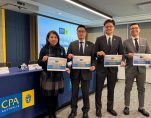
(from left to right) Ms Karina Wong, Divisional Councillor and Deputy Chair of Taxation Committee of CPA Australia Greater China; Mr Janssen Chan, Co-Chair of Taxation Committee; Mr Anthony Lau, Co-Chair of Taxation Committee of CPA Australia Greater China; Mr Adam Chiu, Member of Taxation Committee of CPA Australia Greater China
Connecting China with global markets and powering Hong Kong’s future economic engine
CPA Australia emphasises that Hong Kong must reinforce its position as the premier gateway connecting China with global markets. As China’s 15th Five Year Plan places greater focus on high-quality opening up, Hong Kong is uniquely positioned to help Chinese enterprises expand overseas while attracting foreign direct investment into the Mainland through Hong Kong. Strengthening this gateway function will be critical to driving the city’s next phase of economic growth.
Mr Anthony Lau, Co-Chair of CPA Australia’s Greater China Taxation Committee stated,
“Developing a unified and coherent tax incentive framework for Corporate Treasury Centres (CTC) and regional headquarters (RHQ) would further strengthen Hong Kong’s appeal as a base for multinational operations. In addition, the effectiveness of re-domiciliation has attracted many overseas companies to move their legal domicile to Hong Kong. As there is no clear guidance on whether re-domiciliation will trigger Mainland tax liabilities and tax reporting obligations, we recommend the Hong Kong Government engages with the Mainland tax authorities to clarify that no actual transfer of assets occurs during the process, and therefore no Mainland tax should arise.”
“We also recommend advancing market connectivity measures such as allowing a tax deduction specifically for IPO-related expenses for companies that list on the Main Board of the HKEX, and continuing to enhance existing cross boundary financial mechanisms such as introducing an IPO Connect scheme.”
A streamlined approach would reduce complexity, improve tax certainty and encourage overseas and Mainland enterprises to centralise management, financing and strategic functions in Hong Kong.
CPA Australia also highlights the importance of positioning the Northern Metropolis as a flagship cross‑border innovation zone that will drive Hong Kong’s future growth. Mr Lau said, “To support the infrastructure development, we suggest the Government adopts forward‑looking financing tools that ease pressure on public finances. These may include issuing bonds targeted at with an estimate amount for example USD2 billion at different maturity to international investors, and providing a tax exemption for bond holders on interest income and trading profits derived from bonds issued for Northern Metropolis infrastructure projects, whether issued by the government or the private sector.
“To attract leading innovation and technology enterprises to the zone, we further recommend broadening the scope of qualifying R&D expenditures to include activities outsourced to related parties based and operating in other cities within Greater Bay Area. This reflects the increasingly integrated nature of cross boundary innovation and supply chains.”
Strengthening Hong Kong as a global trade centre and a hub for wealth retention
Hong Kong’s long‑standing role as a free, open and trusted trading and financial gateway remains central to its international relevance.
Ms Karina Wong, Deputy Chair of the Greater China Taxation Committee said, “Hong Kong should build on its unique status as a global trading centre by strengthening the free trade port regime and expanding support for high-value commodity trading, which would help diversify the city’s economic base and enhance market depth. Qualifying commodity items such as silver and rare-earth materials remain outside the current scope, the qualifying list needs to be reviewed regularly, with sufficient legislative flexibility, to ensure timely updates in response to market developments. The Government could also consider whether the scope should extend beyond physical trades and incidental income to cover derivative driven transactions, which form a significant part of global commodities activity.”
A stronger family office ecosystem is central to reinforcing Hong Kong’s role as Asia’s preferred hub for wealth management and succession planning. “We recommend introducing a preferential 8.25 per cent profits tax rate for Single Family Office, Multi Family Offices (MFOs) and fund managers to enhance Hong Kong’s competitiveness relative to other regional wealth management centres.
“Aligning the permissible investment asset classes under the family office tax concession regime with those under the Capital Investment Entrant Scheme (CIES) would also streamline operations, provide greater investment flexibility and further strengthen Hong Kong’s appeal among global wealth owners managing long term capital,” added Ms Wong.
Modernising Hong Kong’s philanthropy framework would encourage a more caring and compassionate community and strengthen the city’s appeal to long-term capital. “The generous donations supporting residents and the reconstruction of Wang Fuk Court show that Hong Kong is a caring city. To encourage greater philanthropic participation, we suggestremoving the current 35 per cent cap on cash donation deductions and allowing a full 100 per cent deduction, while introducing a 300 per cent enhanced deduction for contributions to designated funds, such as the Community Care Fund and Disaster Relief Fund. This would direct more resources toward areas of social need.
“These reforms will strengthen Hong Kong’s ecosystem for trade, wealth management and philanthropy, helping the city attract and retain long term capital and strengthen Hong Kong’s competitive edge,” Ms Wong said.
Diversifying the economy and enhancing workforce competitiveness
As advanced economies accelerate digital transformation and adopt emerging technologies, Hong Kong’s long-term competitiveness will depend on the city’s ability to scale innovation, raise productivity and strengthen the capacity of its workforce and enterprises.
“We propose to relaunch a revamped Technology Voucher Programme to help businesses, in particular SMEs, accelerate digitalisation and adopt artificial intelligence (AI) solutions that enhance efficiency and competitiveness.
“Strengthening R&D related tax incentives is equally important in driving innovation, therefore we propose increasing the cap for the highest rate of the R&D super tax deduction by raising the threshold for the 300 per cent deduction on qualifying R&D expenditure from HK$2 million to HK$4 million.” said Mr Janssen Chan, Co‑Chairperson of CPA Australia’s Greater China Taxation Committee.
SMEs remain the backbone of Hong Kong’s economy, yet many continue to face cost pressures and increasing competition.
“We recommend raising the cap under the two-tier profits tax regime for concessional 8.25 per cent half-rate from HK$2 million to HK$4 million of assessable profits. Extending the SME Financing Guarantee Scheme beyond March 2026 is another move that would ease operating pressures for smaller businesses and encourage reinvestment,” added Mr Chan.
By raising the two-tier profits tax cap, extending financing support and retooling tech programmes for AI adoption, the Government can give SMEs the room to grow and strengthen their long-term resilience.
Raising living standards and building a healthier and more liveable city
Mr Adam Chiu, member of the Greater China Taxation Committee, said the Budget should introduce targeted tax and subsidy measures that deliver practical support to households while encouraging healthier and more productive lifestyles.
“To provide direct relief to taxpayers, we recommend maintaining the 100 per cent salaries tax rebate on the 2025/26 final salaries tax, capped at HK$6,000. This would help offset rising living costs and support disposable income, particularly for middle‑income earners. We also propose introducing a tax deduction of up to HK$60,000 for working families who employ domestic helpers specifically to care for children, elderly family members or persons with special care needs. This would help ease caregiving pressures, support labour‑force participation.” Mr Chiu said.
He added that lifelong learning and skills upgrading are increasingly important in a rapidly evolving economy. “To enable individuals to undertake more advanced or specialised training, including in emerging areas such as AI, we recommend increasing the subsidy ceiling under the Continuing Education Fund to HK$30,000 per eligible applicant, and increasing the cap on the self-education tax deduction to HK$150,000 per year. To promote physical wellbeing, we also propose a tax deduction of up to HK$2,000 for sports‑related expenses.”
“By supporting working families, encouraging lifelong learning and promoting healthier lifestyles, these measures can collectively enhance quality of life and help build a more resilient and inclusive Hong Kong,” Mr Chiu said.
CPA Australia believes these recommendations will strengthen Hong Kong’s ability to engage more effectively with global markets, enhance its competitiveness as an international financial and business hub, and improve quality of life for residents. Taken together, these measures will help ensure Hong Kong is well positioned for a more sustainable, innovation driven and inclusive future.
Hashtag: #CPAAustralia
The issuer is solely responsible for the content of this announcement.
About CPA Australia
CPA Australia is one of the largest professional accounting bodies in the world, with more than 176,000 members in over 100 countries and regions, including more than 22,500 members in Greater China. Our core services include education, training, technical support and advocacy. CPA Australia provides thought leadership on issues affecting the accounting profession and the public interest. We engage with governments, regulators and industries to advocate policies that stimulate sustainable economic growth and have positive business and public outcomes. Find out more at cpaaustralia.com.au
Pentagon negotiations with Anthropic have stalled amid a dispute over restrictions the company has embedded to prevent autonomous targeting and domestic surveillance, throwing uncertainty over a proposed defence AI contract valued at about $200 million and sharpening fault lines in Washington’s approach to military automation. Senior defence officials have pressed Anthropic to relax safeguards that block its models from selecting or engaging targets without human authorisation and […]





 cpaaustralia.com.au




