General Motors has agreed to pay $220 million to settle allegations that it improperly collected and sold motorists’ driving behaviour and location data to commercial brokers, allowing insurance companies to use the information when determining premiums. The agreement, announced on October 29, involves a bipartisan coalition of attorneys general representing 35 US states and the District of Columbia. It requires the Detroit-based carmaker to obtain explicit consumer […]
General Motors will transfer its stock market listing from the New York Stock Exchange to Nasdaq on November 17, aligning its market identity with an expanding emphasis on artificial intelligence, autonomous driving and software-driven vehicles. The Detroit-based automaker announced the decision on Tuesday, confirming that its shares will continue trading on the NYSE until November 16 before moving to the Nasdaq Global Select Market. The company will […]
Tata Motors has crossed the minimum acceptance threshold for its takeover of Iveco Group, with provisional tender results giving its acquisition vehicle an 89.42% holding in the Italian commercial vehicle manufacturer, excluding treasury shares.
The results, announced by Iveco on Monday and disclosed by Tata Motors on Tuesday, show that shareholders tendered 238,157,212 shares before the offer closed on 26 October. Those acceptances represent 87.81% of Iveco’s total common share capital, exceeding the revised 80% minimum required for the transaction to proceed.
The 89.42% figure is calculated after excluding the 4,868,597 shares held in Iveco’s treasury. It represents the prospective ownership of TML CV Holdings B. V., the Tata Motors acquisition subsidiary, rather than a completed transfer of the shares. Settlement remains subject to confirmation of the provisional results and satisfaction or waiver of other offer conditions.
Iveco said the final results and the status of outstanding conditions would be published by 29 October, before trading begins. Payment for shares accepted during the initial tender period is scheduled for 30 October, when ownership will transfer against the agreed cash consideration if the conditions are met.
The acquisition vehicle offered €14.40 for each share, valuing the 238.16 million tendered shares at approximately €3.43 billion. The overall offer has been valued at about €3.9 billion, making the transaction Tata Motors’ largest overseas acquisition since its purchase of Jaguar Land Rover in 2008.
The acceptance threshold was initially fixed at 95%, but fell automatically to 80% following a resolution approved by Iveco shareholders at an extraordinary general meeting on 16 October. That decision provided a mechanism for completing the transaction without securing acceptances from nearly every shareholder.
The lower requirement proved important as the tender period approached its deadline. Although the preliminary level of support comfortably exceeds 80%, it remains below the original 95% target. The final ownership structure will depend partly on the number of additional shareholders accepting the offer during a second window. Any subsequent steps towards full ownership or delisting will depend on the applicable procedures and the level of shares ultimately acquired.
Iveco has scheduled that reopening for five trading days, from 2 November to 6 November, subject to confirmation of the initial results and the remaining conditions. Investors who tender during the additional period are expected to receive payment on 13 November at the same €14.40 price.
Tata Motors raised its cash offer by 30 euro cents a share on 9 October, from €14.10, after the acquisition timetable was extended. The revised price applied to all shares tendered during the initial period, including those submitted before the increase was announced.
The takeover covers Iveco’s commercial vehicle operations, including trucks and buses, but excludes its defence business, which is being separated. The proposed combination would give Tata Motors a much larger manufacturing and distribution presence in Europe while bringing Iveco’s established commercial vehicle brands into the wider group. The deal would also broaden the range of vehicles and markets served by the combined commercial vehicle operations.
Iveco’s board had unanimously recommended that shareholders accept the offer. Its largest shareholder, Exor, which held approximately 27.06% of the common shares and 43.19% of voting rights when the offer was launched, had committed to tender its holding and support the necessary shareholder resolutions.
The transaction nevertheless drew opposition from investment firm Petrus Advisers, which argued that the original price undervalued Iveco and failed to reflect sufficiently the potential benefits of combining the businesses. The increase to €14.40 did not eliminate the importance of shareholder participation in meeting the formal acceptance condition.
Tata Motors managing director and chief executive Girish Wagh described the revised price as the company’s best and final offer before the tender deadline. The company had indicated that a substantial proportion of shareholders might submit their acceptances close to the closing date, a pattern reflected in the final provisional tally.
The offer began on 7 September after Italy’s market regulator, Consob, approved the offer document earlier that month. BNP Paribas’s Italian branch coordinated the collection of acceptances and supplied the provisional figures disclosed by Iveco.
Iveco said the acquisition vehicle had not purchased any common shares outside the tender offer between publication of the offer document on 4 September and the closing date. The company’s treasury holding accounted for approximately 1.80% of its issued common share capital.
Thailand has attracted 35 advanced materials investment proposals worth approximately $690 million as demand for artificial intelligence hardware, electric vehicles and clean-energy equipment encourages manufacturers to expand local production.
The Thailand Board of Investment (BOI) said on Saturday that applications submitted between 2023 and the first half of 2026 totalled 23.5 billion baht. The proposed projects cover specialised components and industrial materials used in electronics, batteries, electric motors and hydrogen technologies.
The figures represent investment applications rather than completed expenditure. The agency did not provide a breakdown of project approvals, construction schedules or the amount already invested, leaving the pace at which the proposed capacity will become operational unclear.
Narit Therdsteerasukdi, secretary-general of the BOI, said domestic production of sophisticated materials could reduce dependence on imports and allow Thai suppliers to participate in higher-value international manufacturing networks. The agency wants to develop industries supplying essential inputs rather than relying principally on assembly operations.
The applications include multilayer ceramic capacitors, graphite films used for heat management, engineered ceramics, neodymium magnets, materials for batteries and fuel cells, and specialised glass and quartz fabrics used in printed circuit boards. Nanomaterials for precision manufacturing are also represented.
Such products are important to increasingly powerful computing equipment. Multilayer ceramic capacitors help regulate electrical power in electronic circuits, while graphite films dissipate heat generated by densely packed components. The BOI said a high-end AI server can contain as many as 30,000 ceramic capacitors, illustrating the scale of demand associated with advanced computing infrastructure.
Among the companies identified by the agency, Taiwan’s Fultech Fiber Glass produces glass fabrics for circuit boards, including higher-performance varieties suitable for AI servers. Jones Tech manufactures synthetic and natural graphite films designed to transfer heat away from electronic devices.
Other projects target electric transport and energy storage. BGN Thai produces coated foils for lithium-ion batteries, while Phinis Well manufactures neodymium magnets used in electric motors. Xinyuan Graphite supplies bipolar plates for hydrogen fuel cells, extending the range of technologies covered by the investment pipeline.
CoorsTek Advanced Materials, part of the US-based ceramics group CoorsTek, has invested in engineered ceramics used in automotive pressure sensors and silicon nitride balls for hybrid bearings. Those bearings have applications in electric vehicles and wind turbines. Golden Egret Cemented Carbide produces tungsten carbide powders for precision cutting tools.
Thailand already hosts established electronic component manufacturers, including Japan’s Murata Electronics and Kyocera AVX Components. The BOI cited these operations as part of the industrial base supporting the proposed expansion into more specialised upstream production.
The announcement follows broader growth in investment applications for technology-intensive industries. BOI figures released for the first half of 2026 showed total applications rising 37 per cent from a year earlier to approximately 1.47 trillion baht across 1,299 projects. Digital infrastructure, including data centres, accounted for a substantial share of the total.
Those economy-wide figures are separate from the 23.5 billion baht advanced materials pipeline, which covers applications accumulated over a longer period. Comparing the two as if they represented the same reporting window would overstate the scale of the materials industry’s immediate expansion.
The government’s electronics strategy has also focused on printed circuit boards, a manufacturing segment closely linked to AI servers and communications equipment. Authorities announced approvals for further expansion by three circuit-board manufacturers involving more than $668 million in investment, with over 5,000 additional jobs expected from those projects.
Electric vehicle manufacturing provides another source of potential demand. BOI data published in September placed cumulative approved investment across Thailand’s electric vehicle supply chain at approximately $4.59 billion through August, covering vehicle assembly, batteries and key components. That total concerns a different investment category and should not be added to the newly disclosed applications without checking for overlap.
Narit said the agency would continue supporting research, technology development and workforce training alongside investment promotion. Its stated objective is to increase the share of advanced materials and components manufactured domestically for regional and international customers.
The investment drive also reflects Thailand’s efforts to attract suppliers serving multiple industries, rather than individual product categories. Manufacturers of specialised materials can potentially supply electronics, automotive and renewable-energy customers through overlapping production capabilities and established distribution networks.
The BOI calculated the dollar equivalent of the latest proposals using an exchange rate of approximately 33.76 baht to the US dollar. The agency, established in 1966, administers investment promotion for both domestic and foreign businesses.
BANGKOK, THAILAND – Media OutReach Newswire – 24 October 2026 – Makers of the capacitors, magnets and battery materials inside AI servers and electric vehicles (EVs) are lining up to invest in Thailand. Since 2023, they have filed 35 advanced materials projects worth about $690 million (23.5 billion baht) with the Thailand Board of Investment (BOI), the government’s investment promotion agency. Surging demand for AI, EVs, and clean energy is pushing global suppliers to build upstream capacity in the country.
Mr. Narit Therdsteerasukdi, Secretary General of the Thailand Board of Investment (BOI)
The projects, filed through the first half of 2026, cover multilayer ceramic capacitors (MLCCs), thermal graphite films, high-performance ceramics, battery and fuel-cell materials, neodymium magnets, glass and quartz fabrics for printed circuit boards, and nanomaterials for precision manufacturing. Together they mark a shift for one of Southeast Asia’s largest economies from downstream assembly toward the high-value materials on which future industries are built.
In AI computing and clean energy, lighter, more heat-resistant and more conductive materials determine how well devices perform. MLCCs are essential components in products from smartphones to AI servers, and a single high-end server can use up to 30,000 of them.
“The world is moving toward products that are smaller and lighter, yet stronger and more efficient,” said Mr. Narit Therdsteerasukdi, Secretary General of the Thailand Board of Investment. “Producing advanced materials in Thailand is key to building sustainable industrial capacity, reducing reliance on imports, and opening the door for Thai companies to join higher-value supply chains.”
Thailand is already a production base for leading component makers, including Japan’s Murata Electronics, which holds more than 35 percent of the global MLCC market, and Kyocera AVX Components, the world’s top tantalum capacitor maker. Among the new projects, Taiwan’s Fultech Fiber Glass makes glass fabric for printed circuit boards, including high-performance grades for AI servers. Jones Tech produces synthetic and natural graphite films that carry heat away from electronic devices.
Beyond electronics, the projects strengthen supply chains for electric vehicles, batteries, and clean energy, from BGN Thai’s coated foils for lithium-ion batteries and Phinis Well’s neodymium magnets for EV motors to Xinyuan Graphite’s bipolar plates for hydrogen fuel cells.
CoorsTek Advanced Materials, a subsidiary of US-based CoorsTek — a global leader in engineered ceramics for the semiconductor and aerospace industries — has invested in producing ceramics for automotive pressure sensors and silicon nitride balls for hybrid bearings in EVs and wind turbines. Golden Egret Cemented Carbide is making tungsten carbide powders for precision cutting tools, reinforcing Thailand’s base for high-precision manufacturing.
“The advanced materials industry taking root in Thailand today is the foundation of tomorrow’s supply chains in electronics, EVs, batteries, and clean energy,” Mr. Narit said. “The BOI will keep building this investment base, strengthening upstream materials and components, and supporting R&D, technology, and workforce development, to move Thailand from downstream to upstream production and make it the region’s advanced materials hub.”
Note: USD conversions are based on the Bank of Thailand’s average selling rate of approximately 33.76 baht per USD.
The issuer is solely responsible for the content of this announcement.
Thailand Board of Investment (BOI)
Established in 1966, the Thailand Board of Investment (BOI) has spent six decades promoting high-value investment from both foreign and Thai investors, strengthening the country’s competitiveness and driving its transition toward a sustainable, balanced new economy.
Investment Services Center — PR Section, Office of the Board of Investment (BOI)
HANOVER, GERMANY – Media OutReach Newswire – 16 September 2026 – JAC Motors is making its second appearance at IAA Transportation At Hall 12, Stand C08. The line-up is headlined by the European premiere of the electric van SUNRAY PRO. JAC Motors’ commercial vehicle business is moving beyond vehicle supply to become a partner in Europe’s green logistics ecosystem—supporting the electrification of European commercial fleets and delivering low-carbon, intelligent solutions for urban logistics in Europe.
Press Conference: For Greener Cities, NOW!
On Press Day, 14 September, JAC Motors held a press conference at its booth under the theme “For Greener Cities, NOW!,” presenting four electrified models to the European market. Partners, fleet operators, and trade media from Germany, France, Spain, Italy, Poland, and other countries attended.
At the press conference, Oscar Yu, General Manager of JAC International, stated that Europe is a key market in the company’s global expansion. JAC commercial vehicles are already present in Germany, Spain, France, Norway, Denmark, Sweden, and Switzerland, with a target of full European coverage by 2028. Since IAA Transportation 2024, JAC has established one subsidiary in Europe and built a localised marketing and service system covering 13 countries, including 8 regional strategic partners, over 50 authorised sales outlets, and more than 100 after-sales service outlets. In Spain, JAC holds a 41% market share in the medium-duty electric truck segment, ranking first. (Source: Spanish Directorate-General for Traffic (DGT) registration data, Jan–Jun 2026.)
The solutions JAC offers European customers go beyond the vehicles themselves. JAC’s subsidiary in Italy serves as a regional parts centre, covering warehousing, service and technical support, customer operations, and marketing. On financing, JAC has partnered with Santander and others to offer finance leasing, operating leasing, PCP (Personal Contract Purchase)/TCM (Trade Cycle Management), and flexible instalment plans, covering needs from fleets to individual users. On complete vehicle solutions, JAC works with bodybuilder partners such as Infore Environment to cover refrigerated transport, municipal sanitation, rescue, and other specialist applications.
The press conference also showcased JAC’s progress in Europe: JAC Motors Italy is now operational, the German dealer network is taking shape, and the parts logistics system already covers all of Germany. As JAC’s European business gradually moves from building its footprint to day-to-day operations, the atmosphere of conversations at this year’s booth has changed noticeably compared with 2024. Conversations at the booth now go straight to operations: Is the range enough? How long does charging take? Can this vehicle save the fleet money?
Looking ahead, JAC will continue to advance product introduction and channel expansion, targeting full coverage of the European market by 2028, participating in Europe’s urban green logistics transition with a complete electrified product portfolio and localised service capabilities.
Hashtag: #JACMOTORS
The issuer is solely responsible for the content of this announcement.
Arabian Post Staff -Dubai Saudi Arabia has identified about 114 million tonnes of mineralised ore containing rare earth elements and promising uranium concentrations at the Jabal Sayid project in Madinah, Energy Minister Prince Abdulaziz bin Salman has announced. Prince Abdulaziz disclosed the estimate on Monday during the 70th General Conference of the International Atomic Energy Agency in Vienna, placing the find at the centre of Riyadh’s drive […]
Arabian Post Staff -Dubai CycloTech is advancing an unconventional air-taxi concept that replaces exposed horizontal propellers with barrel-shaped CycloRotors capable of directing thrust through 360 degrees. The four-seat design, configured for a pilot and three passengers, has been projected to travel about 85 kilometres, remain airborne for 40 minutes and cruise at 150 kilometres per hour. Those figures remain development targets rather than certified performance data from […]
New Delhi and Bamako have opened a structured export forum aimed at expanding bilateral trade, drawing investment into priority sectors and giving businesses from both countries a clearer route into West African and South Asian markets.
The inaugural India–Mali Forum for the Promotion of Exports was held in Bamako under the theme “Reinforcing Trade and Strategic Partnerships”, bringing together senior officials, export agencies and about 30 business leaders from India. The two-day initiative marks an attempt to move commercial engagement beyond commodity flows and towards sector-specific projects in cotton, mining, energy, pharmaceuticals, agro-processing, health and education.
The forum was jointly organised by Mali’s Ministry of Industry and Trade, the Embassy of India in Bamako and the Malian Agency for the Promotion of Exports. It was presided over by Mali’s Transition Government Prime Minister, Major General Abdoulaye Maïga, with the delegation from India led by Amit Kumar, Joint Secretary for FT-Africa in the Department of Commerce. Dr N. Nandakumar, Ambassador of India to Mali, represented the mission through the proceedings.
Bilateral trade crossed $326.61 million in 2025–26, a 55 per cent increase over the previous financial year. Mali’s exports to India include raw cotton, finished leather, cashew, lead, gum arabic and sesame. India’s exports to Mali include pharmaceuticals, cotton fabrics, two-wheelers, three-wheelers and bicycles. Officials see the current trade base as narrow but expandable, particularly because Mali’s global exports stand at about $4 billion and its untapped export potential in the market of India is estimated at nearly $3.96 billion.
The Duty-Free Tariff Preference Scheme has been a central driver of trade growth, offering least developed countries preferential access to the market of India. For Mali, the scheme provides a policy opening at a time when Bamako is seeking to diversify export destinations and reduce dependence on raw commodity shipments. For New Delhi, the forum fits a wider push to deepen commercial links with Africa through trade facilitation, capacity building and private-sector participation.
Business-to-business, business-to-government and government-to-government meetings formed the operational core of the forum. Exhibition stands featured products from both countries, including tractors and vehicles manufactured by Sonalika, Mahindra and Tata Motors. The format was designed to connect firms with regulators, identify bankable projects and address procedural bottlenecks that often slow trade between developing markets.
Mali presented ready-made business plans to potential investors and placed emphasis on agro-industry, shea processing, mining-linked services, renewable energy and social infrastructure. The country is seeking more value addition in cotton and agricultural commodities rather than relying mainly on exports of raw or semi-processed products. Cotton remains a significant sector for Mali, while shea, sesame, cashew and gum arabic offer scope for processing, branding and direct export partnerships.
Pharmaceuticals emerged as another key area. Mali sought quicker registration of approved products from India, a move that could expand access to affordable medicines and medical supplies. Health and education infrastructure were also discussed as areas where companies and institutions could provide services, equipment and training support.
The mining dimension is more complex. Mali is one of Africa’s leading gold producers and is working to tighten oversight of its precious metals trade after identifying large gaps between declared exports and import data reported by partner countries. A new state entity has been created to centralise and regulate precious-substances flows, reflecting Bamako’s effort to capture more value from gold and reduce informal trade. Industrial mines export about 60 tonnes of gold annually, while artisanal mining employs nearly 2 million people across hundreds of sites.
Security remains a central concern for investors. Mali has faced instability and militant violence, and economic assets have been among the risks flagged by foreign governments and companies. Earlier this year, security concerns stalled participation by government-backed firms from India in a Russian-backed lithium exploration project in Mali. That episode underlined the challenge of matching mineral ambitions with investor confidence.
General Motors has moved deeper into the power business by enabling vehicle-to-grid functions for some electric-vehicle customers, positioning its bidirectional EV fleet as a distributed energy resource while pursuing sodium-ion batteries for grid-scale storage. The announcement, made at GM Empower 2026 in San Francisco, centres on a software update that expands the capability of GM’s vehicle-to-home energy system. The update allows eligible users to send electricity from […]
VinFast plans to restart construction of its electric vehicle manufacturing complex in North Carolina this year, even as the Vietnamese automaker reported a deeper quarterly loss driven by rising costs tied to expansion, marketing and production ramp-ups.
The company said the project in Chatham County will move forward after earlier delays tied to supply-chain adjustments and financing decisions. The facility, once completed, is expected to anchor VinFast’s ambitions in the United States market, producing electric sport utility vehicles and battery packs aimed at competing with established global manufacturers.
The announcement came alongside financial results that showed losses widening in the final quarter of the year as the company continued investing heavily in overseas manufacturing capacity and global sales networks. VinFast, part of Vietnam’s conglomerate Vingroup, has been expanding aggressively beyond Southeast Asia in a bid to gain a foothold in one of the world’s largest electric-vehicle markets.
Chief executive Le Thi Thu Thuy said the company remained committed to its strategy of building a manufacturing presence close to customers in key markets. Executives argue that local production in the United States will help VinFast reduce logistics costs, navigate tariff regimes and qualify for incentives tied to domestic manufacturing under US clean-energy policies.
The North Carolina facility represents one of the most significant foreign manufacturing investments announced by a Vietnamese company. Plans call for an initial production capacity of around 150,000 vehicles annually once the site becomes operational. The project also includes battery production facilities and a supplier ecosystem expected to attract component manufacturers to the region.
Construction began after the project was announced with strong backing from state authorities, who offered incentive packages to attract the investment. Delays followed as the company reviewed construction schedules and adjusted financing strategies while global demand for electric vehicles experienced uneven growth. VinFast has now indicated work will restart this year as preparations move into the next phase.
The company’s financial statements showed that aggressive expansion continued to weigh on profitability. VinFast has been spending heavily on vehicle development, dealer networks, charging infrastructure partnerships and marketing campaigns in North America and Europe. These investments have expanded operating losses even as vehicle deliveries increased.
VinFast’s product portfolio currently includes several electric SUVs, including the VF 6, VF 7, VF 8 and VF 9 models, which target different segments of the global market. Early deliveries in the United States began with the VF 8, while additional models are being introduced gradually as the company builds service and distribution networks.
Industry analysts say VinFast’s strategy mirrors that of other emerging electric-vehicle manufacturers that are prioritising market share and brand recognition over short-term profitability. Building manufacturing capacity in major markets is seen as essential for competing with established automakers and benefiting from incentives tied to local production.
Global demand for electric vehicles continues to grow, though the pace has moderated in some markets as higher interest rates and infrastructure challenges influence consumer purchasing decisions. Established manufacturers including Tesla, General Motors and Ford have adjusted production plans in response to evolving market conditions, while new entrants continue pushing forward with long-term investments.
VinFast’s push into the United States comes as competition intensifies across the electric-vehicle sector. Chinese manufacturers have rapidly expanded production capacity and export volumes, while European and North American automakers are investing billions of dollars in battery technology and electric platforms.
Executives at VinFast argue that the company’s vertically integrated model, which includes battery development and vehicle production within the broader Vingroup ecosystem, gives it flexibility to adapt to changes in supply chains and technology. The company has also explored partnerships with technology firms and battery specialists as it scales manufacturing.
North Carolina officials have described the planned factory as a potential economic catalyst for the region, with expectations of thousands of jobs and the development of an automotive supply chain around the plant. Infrastructure upgrades and workforce training programmes are being planned alongside the project as authorities prepare for construction to accelerate.
VinFast’s global expansion forms part of Vietnam’s broader push to develop advanced manufacturing industries capable of competing internationally. The country has emerged as a major hub for electronics production, and policymakers have encouraged the growth of domestic companies capable of expanding into high-technology sectors such as electric mobility.
Financial markets have watched VinFast closely since its public listing in the United States, where its share price has experienced sharp swings amid changing investor expectations about the pace of growth in the electric-vehicle sector. Investors have been assessing the company’s ability to scale production, expand deliveries and narrow losses as global competition intensifies.
Lucid Motors has begun rolling out Apple CarPlay and Android Auto compatibility to owners of the Lucid Gravity through a phased over-the-air software update, marking a notable step in the electric-vehicle maker’s effort to strengthen its in-car digital ecosystem. The update enables drivers to connect their smartphones directly to the Gravity’s infotainment system, allowing access to navigation, messaging, music and other mobile applications from the vehicle’s display. […]
Wayve has secured more than $1bn in fresh capital as it accelerates plans to bring fully autonomous vehicles to public roads in Britain, marking one of the largest single funding rounds for a European artificial intelligence company. The London-based start-up said it had raised $1.05bn in a round led by Japan’s SoftBank Group, with participation from Nvidia and Microsoft. The deal values the company at about $11bn, […]
Mercedes-Benz USA has recalled nearly 12,000 electric sport utility vehicles in the United States after identifying a defect in high-voltage battery cells that could trigger a fire, either while driving or when parked. The recall covers 11,895 EQB vehicles across three variants: 1,708 EQB 350 4Matic models from the 2022 to 2024 model years, 3,674 EQB 250+ units from 2023 and 2024, and 6,513 EQB 300 4Matic […]
Arabian Post Staff -Dubai Abu Dhabi has test-launched the country’s first hybrid rocket developed entirely within the UAE, signalling a significant advance in its ambition to build an indigenous space technology base. The Technology Innovation Institute confirmed that the rocket’s propulsion system was fully designed, manufactured, integrated and operated by Emirati engineers, a development officials described as a pivotal step towards sovereign launch capability. The suborbital test, […]
A humanoid robot with a deliberately unsettling face has shown a new way machines can learn the mechanics of speech, using a mirror and online video rather than human instruction. The system, known as EMO, learned to move its silicone lips with greater accuracy by observing its own facial movements and then analysing how people speak in video clips. Developed by researchers at Columbia University’s engineering school, […]
HONG KONG SAR – Media OutReach Newswire – 22 January 2026 – This news release is made by Johnson Electric Holdings Limited (“Johnson Electric” or the “Company” and together with its subsidiaries, the “Group”) for the business operations and selected unaudited financial information of the Group for the nine months ended 31 December 2025.
The Group’s sales for the nine months ended 31 December 2025 were US$2,726 million compared to US$2,730 million for the same period in the previous financial year, a decrease of approximately US$4 million. Exchange rate movements had a favourable impact of US$40 million on the Group’s sales during the period.
Sales of Automotive Products Group (“APG”)
APG’s sales for the nine months ended 31 December 2025 were US$2,301 million, a decrease of US$14 million or 1% compared to the same period in financial year 24/25. Excluding currency effects, APG’s sales decreased by US$49 million or 2%.
The division’s sales changes by region, excluding currency effects, were as follows:
Nine months ended 31 December 2025
Asia-Pacific
6%
Decrease
Europe, the Middle East and Africa
1%
Decrease
Americas
1%
Increase
Total
2%
Decrease
In Asia-Pacific, sales decreased by 6%, driven by pricing adjustments implemented to remain competitive and weaker demand for non-domestic car brands in China, which has historically been a strong market for APG. This was partially offset by growth in sales to domestic car brands. Sales of products for thermal management, steering and closure applications, together with oil pumps decreased, partially offset by increased sales of products for braking, vision and transmission applications.
In Europe, the Middle East and Africa (“EMEA”), sales decreased by 1%. Sales of products for closure, vision and thermal management applications decreased, mitigated by increased sales of oil pumps, powder metal components and other products for transmission applications.
In the Americas, sales increased by 1%. Sales of powder metal components, oil pumps and products for thermal management applications increased, largely offset by decreased sales of products for braking and engine and fuel management applications due to the phasing out of certain programs.
Sales of Industry Products Group (“IPG”)
IPG’s sales for the nine months ended 31 December 2025 were US$425 million, an increase of US$10 million or 2% compared to the same period in the previous financial year. Excluding currency effects, IPG’s sales increased by US$5 million or 1%. The overall performance reflects a mixed regional picture, shaped by varying market and customer dynamics.
The division’s sales changes by region, excluding currency effects, were as follows:
Nine months ended 31 December 2025
Asia-Pacific
1%
Decrease
Europe, the Middle East and Africa
6%
Increase
Americas
2%
Decrease
Total
1%
Increase
In Asia-Pacific, sales decreased by 1%, primarily due to significant price competition affecting both IPG and some of its customers in certain product segments. Consequently, sales of products for food and beverage, floor care and printer applications decreased. This was largely offset by increased sales for lawn and garden, medical and data centre cooling applications.
In EMEA, sales increased by 6%, driven by a combination of inventory replenishment by certain customers following their consumption of previous inventory surpluses, as well as the launch of new products. This resulted in increased sales of products for lawn and garden, and heating applications and flexible printed circuits. This was partially offset by a decrease in sales of products for beverage applications.
In the Americas, sales decreased by 2% mainly due to the combined effects of reduced demand from certain customers and some programs reaching end of life. This resulted in decreased sales of products for ventilation and surgical applications. This was partially offset by stronger sales of piezo motors and piezo motion subsystems, which benefited from strong demand for high-precision equipment for semiconductor manufacturing and medical drug-dosing systems.
Chairman’s Comments on Sales Performance and Outlook
Commenting on the Group’s sales performance and near-term outlook, Dr. Patrick Shui-Chung Wang, Chairman and Chief Executive, said: “Johnson Electric’s sales for the financial year to date have remained stable, reflecting generally subdued macroeconomic conditions and high levels of uncertainty related to geopolitics and US trade policies. Based on current trading conditions and customer orders, full-year Group sales are expected to be broadly similar to the prior year. In this environment, Johnson Electric remains focused on executing its strategy to deliver long-term value through innovation, operational excellence, and a resilient global supply chain.”
Cautionary Statement
Shareholders and potential investors in the Company are reminded that the information provided in this news release, including information related to the expected outlook for the full year, is based on the Group’s unaudited internal records and management accounts. This information has not been reviewed or audited by the Company’s auditors.
Shareholders and potential investors should exercise caution when dealing or investing in the shares of the Company.
Hashtag: #JohnsonElectric
The issuer is solely responsible for the content of this announcement.
About Johnson Electric Group
The Johnson Electric Group is a global leader in electric motors, actuators, motion subsystems and related electro-mechanical components. It serves a broad range of industries including Automotive, Liquid Cooling, Robotic Joints, Smart Metering, Business Equipment, Ventilation, Home Automation, Large Appliances, Power Tools, Medical Devices and Lawn & Garden Equipment. The Group is headquartered in Hong Kong and employs over 30,000 individuals in over 20 countries worldwide. Johnson Electric Holdings Limited is listed on The Stock Exchange of Hong Kong Limited (Stock Code: 179). For further information, please visit: www.johnsonelectric.com.
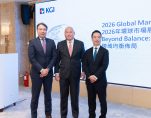
HONG KONG SAR – Media OutReach Newswire – 13 January 2026 – Today, KGI has released its 2026 Global Market Outlook, covering markets in the US, Mainland China, Hong Kong, Taiwan, and Singapore.
(From left) James Chu, Chairman at KGI Securities Investment Advisory; James Wey, Head of International Wealth Management at KGI; Cusson Leung, Chief Investment Officer at KGI
After a turbulent year of trade disruptions and policy uncertainty under President Trump, investors face new questions. China has unveiled its 15th Five-Year Plan, as policymakers aim to support domestic growth amid global challenges. The market outlook for 2026 is shaped by interest rate decisions, economic resilience, and shifting international dynamics.
Under this backdrop, we propose the “LEAD” strategy for 2026:
Liquidity Shift
Earnings Focused
Adding Credit
Diversified Assets
Cusson Leung, Chief Investment Officer at KGI, says: “Looking ahead to 2026, investors can adopt a LEAD strategy: L stands for Liquidity Shift, benefiting from a weakening US dollar and interest rate cuts, with funds expected to flow to non-US dollar and Asian currencies; E stands for Earnings Focused, focusing on earnings growth to support valuations and allocating to US, European, and Japanese stocks; A stands for Adding Credit, locking in the credit of leading companies and increasing holdings of A-rated investment grade bonds; and D stands for Diversified Assets, responding to the upward trend in both stocks and bonds by including alternative assets to optimize asset allocation.”
Macro & US Markets The US economy will experience a more pronounced downturn in 4Q25, which will extend into 1H26, and this will have a negative impact on consumption, slowing investment activity. Nevertheless, AI-driven productivity gains should provide some support, with US GDP growth in 2026 forecast at 2.2%. The eurozone will see moderate growth, with Germany benefiting significantly from fiscal expansion and economic improvement. Japan’s economy will strengthen on domestic demand, aided by additional fiscal stimulus. China has demonstrated resilience under trade protectionism in 2025. With inflation risks easing and labor market risks rising, the US Fed cut the interest rates in September 2025, with a total reduction of 75 bps in 2025, followed by an additional 50-75 bps in 2026.
Regarding US stocks, AI-driven productivity gains and cost reductions should sustain solid profitability, with S&P 500 earnings projected to grow by 13.55% year-on-year (YoY) in 2026. However, higher risk premiums may cap valuation upside, leading us to project a year-end target of 7,650 points. Market performance will reflect risk-driven declines in 1Q26, stabilize and recover in 2Q26, and rally significantly around the midterm elections in 4Q26. By sector, among AI-related themes we favor technology, semiconductors, utilities (on higher power demand), machinery for advanced manufacturing, and industrial REITs. Non-AI beneficiaries include aerospace and defense (on higher military spending), pharmaceuticals (on tariff benefits), and capital market segments (supported by active investment banking). As for fixed income, US economic weakness and Fed rate cuts will drive Treasury yields lower, with 10-year yields expected to fall to 3.5-3.7% by 2Q26. We recommend allocating to US Treasuries or high-rated investment-grade corporate bonds in 1H26, then rotating into high-yield bonds in 2H26 as policy rates and economic conditions reach a bottom.
James Chu, Chairman at KGI Securities Investment Advisory, says:“AI is triggering a new productivity revolution, supporting economic growth and strengthening corporate earnings. While the US economy is expected to slow, a recession remains unlikely, and the short-term impact of tariff policies should gradually fade by the first quarter of 2026. Although the Fed may shift from cutting rates at every meeting to cutting at alternating meetings, the overall environment remains a rate-cutting cycle. In a non-recession backdrop, lower interest rates should continue to support equity market performance.”
Mainland China and Hong Kong Markets In terms of the macroeconomy, with the conclusion of trade agreements among many countries, risks have subsided. However, due to external drag, China’s GDP growth is expected to slow slightly to 4.6% in 2026. In 2026, investors should focus on four key areas for Hong Kong and mainland China markets: (1) In the consumption sector, domestic demand continued to be the core growth driver, contributing more than half of GDP. As the “trade-in” effect diminishes, the central government is expected to implement the “15th Five-Year Plan” and economic conference plans, launching a new round of subsidies covering culture, entertainment, and sports to continuously boost consumer spending. (2) In the financial market, risk appetite has increased. Given the narrowing spread between bond yields and fixed deposit rates, large amounts of savings are flowing into the capital market seeking returns. The fundamentals of the banking and insurance industries have bottomed out, and the credit structure is accelerating its shift from real estate to supporting the real economy. (3) Regarding the issue of “anti-involution,” the PPI remains weak, and capacity reduction has become a focus. Compared to 2015, this round involves more downstream private enterprises and needs to consider employment, presenting greater challenges. While industry consolidation is expected to be lengthy, the impact is controllable and beneficial for long-term healthy development. (4) Regarding new quality productive forces, this will replace real estate and infrastructure as the main investment focus. Digital infrastructure supports AI and embodied intelligence, and humanoid robots are expected to see commercialization in 2026, “iPhone moment.” Leading companies with core technological autonomy in innovative drugs will enjoy higher valuation premiums.
Overall, we are optimistic on Hang Seng Index. We expect the Federal Reserve’s interest rate cuts to drive fund inflows to the Hong Kong and mainland stock markets. Based on an upward revision of the forward PE ratio to 13.5x and 8% earnings growth, we set a target of 30,000 points for the Hang Seng Index by the end of 2026, representing a potential upside of approximately 14%. As confidence recovers, the investment style is expected to shift from defensive to growth stocks. Recommended 12 stocks: XPeng Motors (9868), UBTECH (9880), Tencent Holdings (700), Alibaba (9988), China Hongqiao (1378), AIA Group (1299), Ping An Insurance (2318), China Merchants Bank (3968), Akeso Biopharma (9926), Pop Mart (9992), Tencent Music (1698), and Sino Land (83).
Cusson Leung, Chief Investment Officer at KGI, says: “2026 marks a crucial turning point for the Chinese economy. While the market anticipates GDP growth to slow to 4.6%, “new quality productive forces,” resembling humanoid robots, is taking over as a new growth engine. The most critical signal in the market is the “awakening” of idle cash—massive savings are flowing from low-interest fixed deposits to the capital market seeking returns. With risk appetite returning and policy support intensifying, now is the time to shift investment strategies from “defensive” to “growth.” Driven by both valuation repair and earnings growth, we are optimistic that the Hang Seng Index will reach 30,000 points, and the allocation value of Hong Kong and mainland China stocks has reappeared.”
Taiwan Market Compared to the dot-com era bull run, which lasted almost five years, the current AI frenzy has been around for about three years, suggesting that the uptrend is still in its middle phase and could extend through 2026.
AI plays are trading at high PEs, such valuations are backed by strong fundamentals. In fact, the PEG ratio of Taiwan’s AI supply chain has yet to surpass 1x. We estimate that aggregate earnings of AI plays will grow by 21% YoY in 2026, following impressive upticks of 35% in 2024 and 43% in 2025. AI stocks now account for more than 60% of TAIEX earnings, and with the ongoing AI arms race, overall TAIEX earnings growth is projected to accelerate from 14% in 2025F to 20% in 2026.
Although the AI frenzy should keep the bull market intact, volatility will rise in tandem due to: (1) substantial cumulative gains, and the fact that valuations are approaching historic highs; (2) policy and political uncertainty surrounding the US midterm elections; and (3) potential changes in the US Fed’s rate-cut pace. We expect the TAIEX to repeat a “smile-curve” pattern, featuring continued strength in 1Q26, followed by healthy corrections in 2Q-3Q26 before closing the year with a renewed upswing.
We think investors need to pay attention to two major themes. The first is a broad-based product spec upgrade trend across the AI supply chain, which will drive the industry into a new growth phase, with beneficiaries including foundries, GPU and ASIC designers, advanced packaging (such as CoWoS), and ODMs, as well as testing interfaces, memory, thermal solutions, CCL, ABF substrates, PCBs, switches, and power component suppliers amid strong AI computing demand and ongoing GPU platform upgrades. The second is diversification and defensive asset allocation. Innovations in consumer electronics, such as foldable iPhones and smart wearables, will provide growth opportunities, while companies with resilient domestic demand and stable high dividend yields offer a balanced strategy combining growth and income. Overall, investors should strike a balance between growth and resilience against volatility in their portfolios, in the face of market fluctuations.
James Chu, Chairman at KGI Securities Investment Advisory, says:“The solid earnings growth driven by AI and still reasonable valuations form a strong foundation for the ongoing bull market in Taiwanese equities. With AI adoption accelerating across enterprises and consumers, demand for computing power is rising rapidly. Yet supply remains constrained by chip and power bottlenecks, meaning hardware suppliers are likely to face continued shortages through 2026. Taiwan’s AI supply chain is set to remain a key beneficiary, particularly those tied to next-generation specification upgrades.”
Singapore Market In 9M25, the overall performance of Singapore’s economy was better than expected as the global trade tensions eased after the US pivoted on its reciprocal tariffs and reached deals with its major trading partners. The manufacturing, wholesale trade and finance & insurance sectors remained the growth pillars of the Singapore economy, and each sector delivered decent growth. In particular, manufacturing’s growth has been robust, driven by the electronics, transport engineering and biomedical manufacturing clusters. The full year outlook is upbeat, as the growth momentum shall continue till the end of the year.
Looking ahead, the global economic outlook for 2026 suggests slower GDP growth for most of Singapore’s key trading partners, including China and the Eurozone, largely due to the impact of US tariffs, which will temper demand for Southeast Asian exports, though US growth is expected to remain resilient from AI investment. Consequently, Singapore’s outward-oriented sectors, particularly manufacturing and trade-related services, are projected to expand at a slower pace than in 2025, although the electronics and related sectors will benefit from AI demand, while some precision engineering and biomedical output may moderate domestically, the construction sector is set to grow, but consumer-facing sectors are likely to remain subdued. However, the relatively low interest rates and continuous government support shall buffer the impact of the slowdown, and the capital market will still benefit from the upward re-rating catalysts.
Chen Guangzhi, Head of Research at KGI Singapore, says: “Thanks to trade de-escalation and the AI wave, Singapore experienced significant economic expansion in 2025. Proactive government initiatives turbo-charged the equity bull run, and this strong momentum is expected to deliver an optimistic economic outlook for 2026.” Hashtag: #KGI #MarketOutlook
The issuer is solely responsible for the content of this announcement.
KGI
KGI* has been a leading financial institution in Asia since 1997. Our scope of business encompasses wealth management, brokerage, fixed income, and asset management. We are committed to offering a comprehensive range of financial products and services to corporate, institutional, and individual clients throughout Asia. Backed by KGI Financial Group, we have a robust footprint in Asia, covering Taiwan, Hong Kong, Singapore, Indonesia, and Thailand^.
*KGI refers to KGI Asia Limited and its affiliates. ^an investee enterprise of KGI Securities, not a subsidiary.
DISCLAIMER
All the information contained in this document is not intended for use by persons or entities located in or residing in jurisdictions which restrict the distribution of this document by KGI Asia Limited (“KGI”), or any other affiliates of KGI. Such information shall not constitute investment advice, or an offer to sell, or an invitation, solicitation or recommendation to subscribe for or invest in any securities, insurance or other investment products or services nor a distribution of information for any such purpose in any jurisdiction. In particular, the information herein is not for distribution and does not constitute an offer to sell or the solicitation of any offer to buy any securities in the United States of America, or to or for the benefit of United States persons (being residents of the United States of America or partnerships or corporations organised under the laws of the United States of America or any state, territory or possession thereof). All the information contained in this document is for general information and reference purpose only without taking into account of any particular investor’s objectives, financial situation or needs and may not be redistributed, reproduced or published (in whole or in part) by any means or for any purpose without the prior written consent of KGI. Such information is not intended to provide any legal, financial, tax or other professional advice and should not be relied upon in that regard.
All investments involve risks. The prices of securities fluctuate, sometimes dramatically. The price of a security may move up or down, and may become valueless. It is as likely that losses will be incurred rather than profit made as a result of buying and selling securities.
Bond investment is NOT equivalent to a time deposit. It is NOT protected under the Hong Kong Deposit Protection Scheme. Bondholders are exposed to a variety of risks, including but not limited to: (i) Credit risk – The issuer is responsible for payment of interest and repayment of principal of bonds. If the issuer defaults, the holder of bonds may not be able to receive interest and get back the principal. It should also be noted that credit ratings assigned by credit rating agencies do not guarantee the creditworthiness of the issuer; (ii) Liquidity risk – some bonds may not have active secondary markets and it would be difficult or impossible for investors to sell the bond before its maturity; (iii) Interest rate risk – When the interest rate rises, the price of a fixed rate bond will normally drop, and vice versa. If you want to sell your bond before it matures, you may get less than your purchase price. Do not invest in bond unless you fully understand and are willing to assume the risks associated with it. Please seek independent advice if you are unsure.
You are advised to exercise caution and undertake your own independent review, and you should seek independent professional advice before making any investment decision. You should carefully consider whether investment is suitable in light of your own risk tolerance, financial situation, investment experience, investment objectives, investment horizon and investment knowledge.
No representation or warranty is given, whether express or implied, on the accuracy, adequacy or completeness of information provided herein. In all cases, anyone proposing to rely on or use the information contained herein should independently verify and check the accuracy, completeness, reliability and suitability of the information. Simulations, past and projected performance may not necessarily be indicative of future results.
Information including the figures stated herein may not necessarily have been independently verified, and such information should not be relied upon in making investment decisions. None of KGI, its affiliates or their respective directors, officers, employees and representatives will be liable for any loss or damage of any kind (whether direct, indirect or consequential losses or other economic loss of any kind) suffered or incurred by any person or entity due to any omission, error, inaccuracy, incompleteness or otherwise, or any reliance on such information. Furthermore, none of KGI, its affiliates or their respective directors, officers, employees and representatives shall be liable for the content of information provided by or quoted from third parties.
Members of the KGI group and their affiliates may provide services to any companies and affiliates of such companies mentioned herein. Members of the KGI group, their affiliates and their directors, officers, employees and representatives may from time to time have a position in any securities mentioned herein.
Apple’s next-generation CarPlay, unveiled for market release in 2025 through a high-profile partnership with Aston Martin, has entered showrooms with ambitions that go far beyond dashboard mirroring, yet its wider rollout is encountering resistance from parts of the global car industry that see strategic and commercial risks in the software’s reach. The updated CarPlay system is designed to extend across multiple vehicle screens, integrating deeply with core […]
Cars sold across major markets are harvesting vast amounts of personal data from drivers and passengers without clear consent, fuelling a widening debate over privacy, ownership and the limits of digital surveillance in everyday transport. As vehicles become rolling computers, regulators and consumer advocates warn that protections have failed to keep pace with the speed and scale of data collection embedded in modern mobility. Vehicles equipped with […]
Rivian has begun deploying a major software update that introduces Universal Hands-Free Driving across supported highways, alongside expanded digital key functionality on both iOS and Android devices, marking a significant step in the electric vehicle maker’s push to narrow the software gap with more established rivals. The update, delivered over the air to owners of the R1T pickup and R1S SUV, enables drivers to operate their vehicles […]
With over 50 years of global innovation and 34 years of local experience, Somfy is a trusted partner for outdoor screens that can handle Singapore’s unpredictable weather. SINGAPORE – Media OutReach Newswire – 19 November 2025 – Singapore’s tropical climate presents significant challenges to outdoor comfort. Sudden rain, high winds, and humidity can impact the performance and safety of conventional shading systems. Somfy, a global leader in […]
Matein Khalid Critical minerals have become a national security priority for GCC states as China has weaponised its dominance over supply chains, refining capacity and magnet production. These materials, including lithium, nickel, cobalt, tin, tungsten, vanadium and germanium, are essential for defence systems such as Lockheed’s F-35 stealth fighters, Raytheon’s hypersonic missiles and General Dynamics’ Virginia-class submarines, as well as civilian applications in advanced semiconductors, electric vehicles, […]
Households may soon welcome a new occupant. Robotics firm 1X Technologies has opened pre-orders for its humanoid home assistant model, NEO, signalling a push into consumer domestic robots. The Palo Alto and Norway-based company lists the unit at about US$20,000, with deliveries slated to begin in 2026. The robot is pitched to perform household chores such as folding laundry, organising shelves, fetching items and greeting guests. 1X […]




 https://www.boi.go.th/en/index/





 https://www.linkedin.com/company/kgi-hongkong/
 https://www.facebook.com/KGI.HongKong?mibextid=JRoKGi&rdid=a4NoCGXY72nFghtQ&share_url=https%3A%2F%2Fwww.facebook.com%2Fshare%2F15kKKLreMr%2F%3Fmibextid%3DJRoKGi#

 https://www.instagram.com/kgi.hongkong?igsh=MTI5ems1ZzNlZ3YyMQ==