Arabian Post Staff -Dubai Gold, silver and platinum prices pushed to record levels at the close of the year, extending a powerful rally driven by geopolitical strains, a softer US dollar and thin trading conditions that magnified price swings across commodities markets. Spot gold climbed as much as 1.6% on Friday to trade above $4,540 an ounce, a level unseen before, while spot silver for immediate delivery […]
After decades of quiet, Can Gio is awakening on Vietnam’s southern coast, as fresh investment and grand designs breathe new life into the once-remote district of Saigon.
HO CHI MINH CITY, VIETNAM – Media OutReach Newswire – 27 December 2024 – Six months after the groundbreaking of a 2,870-hectare coastal urban project backed by Vingroup, Vietnam’s largest private conglomerate, Can Gio, once seen as a forgotten corner of Ho Chi Minh City, is now emerging as a new growth engine for Vietnam’s southern metropolis.
Vinhomes Green Paradise: A Hidden Gem Poised to Shine in Vietnam’s Real Estate Market.
Breaking Isolation
For years, Can Gio was often left out of the city’s rapid development. Surrounded by dense forests and accessible mainly by ferry, it remained a world apart. Now, that is beginning to change.
Six months ago, the large-scale land reclamation project officially started construction. Locals call it a “game changer” that awakened a land long left behind. Along the coast that once lay quiet, a vast construction site has emerged, with heavy machinery working day and night. “I was very surprised by the speed,” said Prof. Pham Van Song, president of the Mien Dong University of Technology, noting that hundreds of hectares have already been filled and stabilized within months.
The project, developed by Vingroup through its real estate arm Vinhomes, represents one of the group’s most ambitious coastal developments, part of a long-term vision to extend Ho Chi Minh City’s urban footprint toward the sea. With billions of U.S. dollars in investment, it combines housing, tourism, and modern infrastructure within a single master plan that anchors Can Gio’s transformation.
Complementing this project, a series of major infrastructure works are also reshaping the district. By the end of 2025, the Phu My Hung–Can Gio high-speed railway, designed to reach 350 kilometers per hour, is expected to begin construction, linking the area to the city’s southern urban core. In 2026, the long-awaited Can Gio Bridge will break ground, cutting the journey to the city center to around 45 to 60 minutes.
At the same time, the Rung Sac interchange, with an investment of 3,000 billion VND (about 120 million U.S. dollars), will connect Can Gio directly with the Ben Luc–Long Thanh Expressway. Expected to be completed in 2028, it will link Can Gio with both the Southwest and Southeast regions, including Long Thanh International Airport.
In addition, a sea-crossing expressway between Can Gio and Vung Tau, 50 meters wide and proposed by Vingroup, would stretch across the sea for more than 10 kilometers. The plan envisions a wide eight-lane road that could reduce travel between Can Gio and Vung Tau to under 15 minutes, creating a strategic connection between the two coastal economies.
These efforts fit within a broader regional plan that combines road, rail, water, and sea transport. Another key project is the Can Gio International Transshipment Port, covering 571 hectares with an investment of 50,000 billion VND. The port is designed to become a new symbol of Vietnam’s maritime economy, with its first phase scheduled to begin operations in 2027 and full completion before 2045.
“A Single Project Ignites the South”
According to Prof. Pham Van Song, the rise of Can Gio is a natural development, especially with the involvement of Vingroup through its Vinhomes Green Paradise project. He believes that Can Gio is moving from an ecological area on the fringe of development to a new center of growth. “All modes of transportation will be available in Can Gio,” he said. “The district’s GRDP will grow rapidly in line with ongoing construction and investment. Both the number of residents and visitors will surge. Local people will be the first to directly benefit from these projects, and their lives will become increasingly prosperous.”
The changes are already drawing attention from investors. Dinh Minh Tuan, southern regional director of Batdongsan.com.vn, said the number of searches related to Can Gio has tripled since the beginning of the year. After the Vinhomes Green Paradise project broke ground, property interest in the district doubled again. “Just one single project has heated up the entire southern market,” he said.
Experts say this follows a familiar pattern. In the 1990s, Nguyen Van Linh Boulevard helped turn southern Ho Chi Minh City into a thriving area and drew nearly two million residents. In the 2010s, the completion of the Thu Thiem Tunnel and Bridge attracted more than one million people to the city’s east. “Investors who followed the infrastructure development wave then saw huge gains,” Tuan noted. “Can Gio now stands at a similar starting point, but with a stronger push.”
With a population of about 80,000, Can Gio has long faced a single challenge: lack of connectivity. But, “with the series of large-scale investments now under way, Can Gio is expected to grow faster than many of the city’s earlier new urban areas,” said Tuan. Hashtag: #Vinhomes
Infleqtion has secured a $2 million contract from the United States Army to develop artificial intelligence systems that can navigate and make decisions in environments where communications are degraded, denied or entirely unavailable, underscoring the military’s accelerating interest in edge-based AI for future operations. The award focuses on advancing autonomous navigation and sensing technologies that can function without constant access to cloud computing or satellite links. For […]
IonQ has confirmed plans to deliver a next-generation 100-qubit quantum computing system to South Korea, reinforcing the company’s push into Asia’s accelerating quantum ecosystem and extending a strategic partnership with the Korea Institute of Science and Technology Information. The deployment is positioned as a milestone for the country’s national research infrastructure, giving scientists and industrial users local access to higher-capacity trapped-ion quantum hardware designed for advanced simulations and algorithm development.
The system is scheduled to be installed at facilities operated by Korea Institute of Science and Technology Information, which manages high-performance computing resources for universities, laboratories and government programmes. IonQ said the platform will integrate with existing supercomputing assets, enabling hybrid classical-quantum workflows that are increasingly seen as the most practical near-term use of quantum machines. Officials involved in the project describe the installation as part of a broader effort to ensure domestic capability in a field viewed as strategically significant for science, security and economic competitiveness.
For IonQ, the agreement deepens a relationship that began with earlier access to its systems through cloud services and collaborative research. The 100-qubit platform represents a step up from earlier machines made available to Asian partners, with IonQ highlighting gains in algorithmic performance driven by longer coherence times and high-fidelity gates inherent to its trapped-ion approach. The company argues that these characteristics allow useful problem sizes to be tackled with fewer physical qubits than some rival architectures.
The project comes as South Korea accelerates state-backed investment in quantum science. Government roadmaps call for expanded talent development, dedicated funding lines for hardware and software, and closer links between public laboratories and industry. KISTI’s role as a national computing hub makes it a focal point for these ambitions, with the new system expected to support work ranging from materials discovery and chemistry to optimisation and machine learning. Researchers anticipate that local access will shorten development cycles compared with reliance on overseas cloud resources.
IonQ executives frame the delivery as part of a long-term regional strategy rather than a one-off sale. Asia has become a key battleground for quantum providers as countries seek sovereign capabilities while remaining connected to global research networks. China, Japan and South Korea are all funding large-scale programmes, and regional universities are increasing output in quantum algorithms and error-mitigation techniques. By embedding hardware within national facilities, vendors aim to secure early loyalty among researchers who may later influence commercial adoption.
Competition in the sector is intensifying. Superconducting-qubit systems from established technology firms and photonic approaches backed by start-ups are all vying for attention, each claiming advantages in scalability or manufacturability. IonQ’s bet on trapped ions prioritises precision and stability, though critics note challenges in scaling to very large numbers of qubits. The company counters that its roadmap focuses on algorithmic qubits and error-corrected performance rather than raw counts, a metric increasingly favoured by parts of the research community.
The South Korean installation also reflects a broader trend toward hybrid computing. Rather than replacing classical supercomputers, quantum systems are being linked to them to tackle specific sub-problems where quantum effects offer potential speed-ups. KISTI engineers are working on software layers to manage job scheduling and data movement between systems, an area seen as critical to extracting value from early quantum machines.
Commercial implications are closely watched. South Korean conglomerates in electronics, chemicals and logistics have signalled interest in quantum applications, and access to domestic hardware could encourage pilot projects. Analysts caution that widespread industrial impact remains some distance away, but note that early experimentation helps firms build expertise ahead of future breakthroughs.
Storm scientists warn that the world’s oceans are now fuelling hurricanes and typhoons of a strength that strains the limits of existing classification systems, as deep layers of unusually warm water enable cyclones to intensify far beyond historical norms. Measurements from satellites, autonomous floats and research vessels show that pockets of heat extending hundreds of metres below the ocean surface are becoming more widespread. These subsurface hot […]
Labour demand across the United Arab Emirates is on course to rise by more than one million roles by the end of the decade, with technology positions accounting for a growing share of new hiring as digital transformation accelerates across government and the private sector. The outlook, drawn from labour market modelling and workforce data cited in a new ServiceNow study, points to sustained growth driven by artificial intelligence adoption, cloud migration, cybersecurity needs and large-scale public investment programmes.
The report estimates that the UAE currently supports about 8.5 million jobs across its economy, of which roughly 169,000 are technology-focused roles. While this represents only a small fraction of total employment, the pace of change is expected to intensify as organisations automate processes, modernise legacy systems and respond to new regulatory and security requirements. Analysts tracking the Gulf labour market say the country’s ambition to position itself as a global hub for digital services, advanced manufacturing and knowledge industries is translating into long-term workforce demand rather than short hiring cycles.
Economic planners have prioritised sectors that combine high productivity with export potential, including financial technology, health technology, clean energy systems, logistics platforms and smart infrastructure. Programmes aligned with national digital strategies are encouraging public bodies and state-linked firms to move services online, adopt AI-enabled decision tools and integrate data across departments. Each of these shifts creates secondary demand for software developers, data engineers, cloud architects and IT service managers, while also reshaping non-technical roles that require digital fluency.
ServiceNow’s analysis suggests that technology roles are expanding faster than overall employment growth, even as traditional sectors such as retail, hospitality and construction continue to add jobs. Employers surveyed for the study reported difficulty filling specialised digital roles, particularly in cybersecurity operations, enterprise platform management and AI workflow design. These shortages are contributing to wage premiums for experienced professionals and increased investment in training pipelines.
Education providers and corporate academies have responded by scaling certification programmes, apprenticeships and mid-career conversion schemes. Universities in the UAE have expanded computer science and engineering intakes, while partnerships with global technology firms aim to align curricula with enterprise needs. Industry observers note that demand is not limited to coders; roles in product management, digital compliance, IT service delivery and change management are growing as organisations seek to embed technology into core operations.
Demographics and migration policy also shape the employment outlook. The UAE’s ability to attract skilled expatriates remains a central factor in meeting talent requirements, particularly for niche technical expertise that takes years to develop. Long-term residency options and sector-specific visas have helped stabilise the workforce, reducing turnover in high-demand roles. At the same time, localisation initiatives encourage employers to invest in training citizens for private-sector technology careers, broadening the domestic talent base.
Beyond pure technology positions, the report highlights a rise in hybrid jobs that combine domain knowledge with digital skills. In banking, compliance specialists increasingly work alongside data analytics teams; in healthcare, clinicians are expected to engage with digital records and AI-assisted diagnostics; in energy and utilities, engineers manage sensor-driven systems and predictive maintenance platforms. This blending of skills expands the effective footprint of the tech workforce beyond headline job titles.
Regional competition for talent is intensifying as neighbouring economies pursue similar diversification strategies. Salaries, quality of life and career progression prospects are key differentiators, according to recruitment firms operating in the Gulf. The UAE’s mature infrastructure, regulatory clarity and concentration of multinational headquarters continue to attract professionals, though employers face pressure to offer flexible working arrangements and clear upskilling pathways.
CachyOS is moving beyond its reputation as a desktop-focused Arch-based Linux distribution by outlining plans for a hardened server image aimed at improving performance, security and operational stability in production environments. The initiative, confirmed by the project’s developers in community briefings and development notes, signals an effort to position CachyOS as a credible option for administrators seeking finely tuned Linux systems without extensive manual optimisation. Known primarily […]
SINGAPORE – Media OutReach Newswire – 26 December 2025 – Z.ai has released GLM-4.7, the latest version of its open-source large language model, ahead of Christmas, as the company steps up efforts to position its models for real-world software development and production use.
The new model is designed around practical engineering workflows, with a focus on long-running task execution, stable tool calling, and multi-step reasoning, capabilities that have become increasingly important as developers deploy large language models in complex, agent-based systems.
Compared with its predecessor, GLM-4.6, GLM-4.7 shows notable gains in code generation, complex reasoning, and agent execution. According to Z.ai, the model delivers more consistent and controllable performance over extended tasks, while producing cleaner and more concise language output, addressing a common weakness in many open-source models.
To evaluate performance in realistic settings, Z.ai tested GLM-4.7 on 100 practical programming tasks in production-like environments such as Claude Code, spanning front-end, back-end, and command-execution scenarios. The company said GLM-4.7 achieved higher task completion rates and greater stability than GLM-4.6, and has since been adopted as the default model for its GLM Coding Plan.
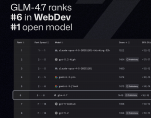
Benchmark results also place GLM-4.7 among the strongest open-source models currently available. It scored 67.5 on BrowseComp and 87.4 on τ²-Bench, the latter marking a new high for open-source systems. In coding-focused evaluations, including SWE-bench Verified and LiveCodeBench v6, its overall performance approaches that of Claude Sonnet 4.5. In Code Arena’s large-scale blind evaluation, which aggregates votes from more than one million comparisons, GLM-4.7 ranked first among open-source models.
The model is available through the BigModel.cn API and has been integrated into Z.ai’s full-stack development platform, according to the company. As open-source models take on a more prominent role in the global technology ecosystem, Z.ai’s progress offers a clear indication of how such systems may continue to evolve, and what they might enable next.
In partnership with SBS, Australia’s multicultural and multilingual public broadcaster, Coca-Cola delivered a 24-hour Christmas Day broadcast of heartfelt carols and messages of gratitude, bringing Filipino families closer to loved ones working in Australia this festive season.
SYDNEY, AUSTRALIA – Media OutReach Newswire – 26 December 2025 –For millions of Overseas Filipino Workers (OFWs), Christmas carries a quiet longing: another year spent celebrating from thousands of miles away. This year, Coca-Cola set out to bring the warmth of home back to them through SoundOfHome.FM, a 24-hour Christmas broadcast that turned Australia’s airwaves into a powerful audio love letter from families in the Philippines, connecting people across thousands of miles.
The holiday season is meant to be joyful, yet for many OFWs, the weight of distance can dim the spirit they work so hard to sustain for others. Grounded in the global Christmas insight that “the pressures of the holidays steal the Christmas spirit from the true givers,” Coca-Cola sought to uplift these unsung heroes in a way that only Coca-Cola could: through the familiar, comforting Sounds of Home.
More than an airwave takeover, SoundOfHome.FM became an emotional conduit, a continuous stream of Caroloke (carol + karaoke), touching dedications, and heartfelt messages of gratitude recorded by families across the Philippines dedicated for the loved ones they miss every day. It allowed love to travel across oceans in the most human way possible.
“This initiative comes from a place of deep respect for the people who give so much of themselves from far away, a recognition of their immense, yet quiet sacrifices,” shared Francis Izon Reyes, Coca-Cola Marketing Director for ASEAN & South Pacific. “We know that during the holidays, the distance and not being with family can feel heavier than ever. With SoundOfHome.FM, we wanted to bring a moment of comfort, a small piece of home to Filipinos overseas – a familiar voice, a favourite carol, something to remind them that their sacrifice, love, and dedication are seen, valued, and deeply appreciated. That is the real spirit of Christmas, and we are honoured to help bring it to life.”
The groundwork started weeks before Christmas Day, where Coca-Cola brought the Philippines together through a nationwide Caroloke Caravan —visiting key cities and major Pasko (Christmas) Festivals to help families record personalised messages and carols. From children singing their parents’ favourite Christmas songs to spouses whispering the ‘thank you’ they’ve held onto all year, each message carried profound emotional weight.
Families also had access to a digital platform where they could upload dedications remotely. A unique notification system ensured OFWs received personalised alerts inviting them to tune in once their family’s message was scheduled to air, guaranteeing the moment would reach its intended recipient.
The 24-hour broadcast went on air from 6pm on Christmas Eve to 6pm on Christmas Day, bringing festive cheer to listeners throughout the broadcast. It was a day of celebration and nostalgia, a reminder that even when ocean separate families, the sound of home can still find a way.
Coca-Cola also released a powerful Christmas film titled, ‘Sound of Home’. Filmed across Australia, it captures real, authentic reactions from OFWs as they hear their families’ voices mid-shift: a mechanic wiping away tears inside a garage, a convenience store clerk stunned into silence, a kitchen hand breaking into a smile that says everything. These moments reveal a simple truth — sometimes, hearing someone you love is enough to feel home again.
Reyes added, “Our simple wish is that with this project, we hope we were able to bring even a moment of warmth to those spending Christmas far from home. If the Sound of Home helped one person feel remembered even for a few seconds, then we’ve done something meaningful this season.”
Nikhil Panjwani, Executive Creative Director Ogilvy @WPP OpenX, the creative agency supporting the campaign, commented, “Christmas is about togetherness, but for millions of OFWs, it’s defined by distance. SoundOfHome.FM was our way of using something as simple as radio to bring families closer — if only for a moment — on a day when it matters most. We couldn’t shorten the distance — but we did close the silence with a 24-hour love letter, in audio form.”
The Sound of Home initiative reinforces the Coca-ColaTM brand’s longstanding belief in the power of human connection. By uplifting those who give so much of themselves during the holidays, Coca-Cola celebrates the real magic of Christmas — the simple yet profound moments that bring us back to one another.
Even when families are oceans apart, the feeling of home can still find its way through.
Watch the Sound of Home film on YouTube or visit SoundOfHome.FM to learn more. Follow us on Facebook and Instagram to get the latest news about the brand.
Hashtag: #Coca-Cola
The issuer is solely responsible for the content of this announcement.
About Coca-Cola ASEAN & South Pacific
The Coca-Cola Company (NYSE: KO) is a total beverage company with products sold in more than 200 countries and territories. Our company’s purpose is to refresh the world and make a difference. The Coca-Cola ASEAN and South Pacific (ASP) operating unit serves 25 diverse countries across Southeast Asia, Australia, New Zealand, and the Pacific Islands. We offer a diverse portfolio of great-tasting beverages including sparkling beverages, water, juices, dairy, nutrition, sports, and tea. We’re constantly transforming our portfolio, from reducing sugar in our drinks to bringing innovative new products to market. We seek to positively impact people’s lives, communities, and the planet through water replenishment, packaging recycling, sustainable sourcing practices, and carbon emissions reductions across our value chain.
Together with our bottling partners, we help bring economic opportunity to local communities across the region.
WPP Open X is a bespoke global agency model created in November 2021 for The Coca-Cola Company that’s integrated at its core and unprecedented in its scale. Our work spans across over 200 brands in 195 countries and provides access to the entire agency network and the best talent, capabilities and resources in and outside of WPP. Combining scale and agility, WPP Open X supercharges creativity and is a multiplier for growth and innovation.
SINGAPORE – Media OutReach Newswire – 26 December 2025– Apical continues to reinforce its commitment to preventing and reducing stunting by prioritising women’s health in Cilincing subdistrict, North Jakarta. Through its business unit, PT Asianagro Agungjaya (PT AAJ), Apical collaborated with the Cilincing Community Health Centre (Puskesmas Cilincing) to implement community-based programmes focused on women’s health and early stunting prevention.
The initiative was launched on 15 December 2025 at the RW 03, RW 09 and RW 10 community offices within the Cilincing public housing complex. Targeting women of reproductive age, the programme was designed as a preventive effort to raise awareness and improve access to essential health services, particularly reproductive health, as a foundation for healthy families and future generations.
Apical’s CSR Manager, Sugiantoro, said the collaboration reflects the company’s long-term, preventive approach to public health. “We believe that healthy women are the pillars of strong families and a key force in shaping healthy communities. Through PT AAJ’s involvement, we aim to create tangible impact by prioritising early prevention, rather than focusing solely on treatment,” he said.
A key focus of the initiative was the early detection of cervical cancer, a serious but largely preventable disease when identified through routine screening and timely intervention. Services provided included IVA screening (visual inspection with acetic acid) and HPV (human papillomavirus) testing.
Dr Kezia Ivana from the Cilincing Community Health Centre explained that IVA and HPV screenings are effective methods for detecting cervical cancer at an early stage.
“Early detection allows us to identify the virus that causes cervical cancer sooner, significantly reducing the risk of disease progression. When detected early, the chances of recovery are very high. However, if left undetected, cervical cancer can lead to severe pain, abnormal bleeding, kidney and urinary tract disorders, swelling of the legs, and fertility problems that may prevent women from having children,” she said.
Apical’s participation in this initiative aligns with the company’s 5Cs philosophy that whatever it does must be good for the Community, Country, Climate and Customer, and only then will it be good for the Company, which underpins its commitment to inclusive and sustainable growth. Through partnerships with local stakeholders, Apical, a member of the RGE group of companies founded by Sukanto Tanoto, continues to support government efforts to address stunting while contributing to improved social and women’s health outcomes, particularly in communities surrounding its operational areas. Hashtag: #RGE #Apical #CSR #Stunting #Indonesia #Women #Health #Communities
The issuer is solely responsible for the content of this announcement.
About Apical
Apical is a leading vegetable oil processor with an expanding global footprint. Our vertically integrated mid-stream refining and value-added downstream processing makes us an integral supplier that supports the needs of various industries namely food, feed, oleochemicals and renewable fuel, including sustainable aviation fuel (SAF) which enables a great reduction of CO2 emissions.
With integrated assets in strategic locations spanning Indonesia, China and Spain, Apical operates numerous refineries, oleochemical plants, renewable fuel plants and kernel crushing plants. Through joint ventures and strategic partnerships, Apical also has processing and distribution operations in Brazil, India, Pakistan, Philippines, Middle East, Africa, USA and Vietnam.
Apical’s growth is built on the foundations of sustainability and transparency, and motivated by our strong belief that we can contribute to a circular economy for a more meaningful impact, even as we continue to grow our business and deliver innovative solutions to our customers.
Japan’s MONJI+—A WebOps Enablement Platform Inspired by Voices from 77 Countries—Launches Its English Edition
OSAKA, JAPAN – Media OutReach Newswire – 24 December 2025 – ALAKI Inc., celebrating its 15th anniversary, has officially launched the English edition of MONJI+, an evolution of its 2018-born feedback tool MONJI β, now reimagined as a comprehensive WebOps Enablement Platform.
Alongside its free plan, available indefinitely, MONJI+ begins its full-scale expansion into the ASEAN market, helping teams elevate their website operations. In addition, a free Academic Edition is now offered to educational institutions to foster the next generation of web and IT talent.
A Platform Born from 77 Countries of Real-World Insight
Since its launch in Japan in 2018, MONJI β has been adopted by web agencies, corporations, and advertising firms worldwide—across 77 countries and regions—streamlining feedback workflows for website management and development.
In everyday website operations, teams often face:
Feedback scattered across tools and channels
Miscommunication between internal teams and agencies
Unclear priorities that fail to drive results
Knowledge loss when members change
Valuable learnings buried and forgotten
MONJI+ connects creation, publishing, maintenance, and optimization into a single workflow—eliminating silos and enabling all members to move forward toward shared goals.
Since its official launch in Japan in January 2025, MONJI+ has rapidly spread among enterprises and educational institutions. It is increasingly adopted as a practical standard among agencies and in-house teams, improving productivity and measurable outcomes.
Responding to Global Voices – Official Launch of the English Edition
During forums and seminars held alongside the Expo 2025 Osaka, Kansai, Japan, ALAKI engaged with government representatives and industry leaders from around the world.
The feedback was clear: inefficiencies in website operations, lack of improvement cycles, and a shortage of web marketing expertise are universal challenges. But one issue stood out above all—the shortage of skilled web and IT professionals.
Some governments even requested that MONJI+ contribute to national web/IT talent development, not just productivity gains. Following the Expo, inquiries from multiple countries confirmed the demand, prompting the official release of the English edition of MONJI+.
Confidence from SWITCH 2025, and a Vision for What’s Next
As part of its ASEAN expansion, ALAKI visited SWITCH 2025 (Singapore Week of Innovation & Technology), held from October 29–31. Through dialogues with government agencies, corporations, startups, and academic institutions, the importance of website operations productivity and digital talent development was reaffirmed.
Insights from leading ASEAN web and IT innovators will continue to shape the evolution of MONJI+.
Key Benefits of MONJI+
Eliminate inefficiencies and dependency on individuals—enhancing both productivity and performance in website operations.
Workflow Efficiency: Centralize feedback and progress tracking to prevent oversights
Error Reduction: Detect typos automatically with AI proofreading
Results-Oriented: Integration with analytics tools helps identify improvement areas instantly
Team Collaboration: Share real-time updates across internal and external members
Knowledge Building: Use the Wiki feature to retain expertise and reduce training costs
The Future of “Agentic WebOps” — Powered by Data and AI
MONJI+ evolves beyond a simple management tool—it becomes an AI-driven partner that learns from operational data to support human decision-making and creativity.
Our vision: a human-in-the-loop “Agentic WebOps” environment that helps teams achieve outcomes with AI-assisted decision support.
Available AI Features:
AI typo and error detection for feedback
AI chatbot assistance
Upcoming AI Features (Examples):
Content suggestion and creation
Feedback trend analysis and improvement recommendations
Design assistance
Webpage performance analysis and enhancement
Customer Success Stories
Global Marketing Agency (Singapore): “Sharing the same interface greatly improved collaboration across our international offices.”
Web Production Agency (Japan): “Centralized feedback management accelerated delivery times by roughly 30%.”
E-commerce Company (Japan): “By linking with an analytics tool, we identified key improvement areas instantly—our conversion rate increased by over 20%.”
Recruitment Platform (Japan): “With AI detecting typos automatically, our job listing checks became faster and more reliable.”
Vision Video – ‘Pride and Hope for the Web Industry’
Discover how MONJI+ envisions the future of website operations.
“Website operations shouldn’t be about chasing scattered messages—it should be about generating results that matter. With MONJI+, we unify feedback, workflow, and analytics, while AI suggests the next strategic move. Our mission is to help ASEAN teams reach outcomes faster and more reliably.”
— Yuji Yamauchi, Founder & CEO, ALAKI Inc.
Getting Started
Getting started is easy, with no credit card required. MONJI+ aims to be the shared foundation for website operations, accessible to everyone.
Forever-Free Plan: Access essential functions without time limits
30-Day Free Trial: Experience all features in a live environment
Free “Academic Edition” for Educational Institutions
To empower the next generation of web and IT professionals, MONJI+ offers an Academic Edition free of charge to universities, vocational schools, and online programs. Students and educators can experience real-world website operations, gain practical skills, and collaborate through shared projects.
Stricter municipal requirements for private schools and learning facilities across Saudi Arabia have been issued by the Ministry of Municipalities and Housing, widening oversight of environmental quality, safety standards and urban planning as the kingdom continues to reshape its education landscape.
The updated framework applies to nurseries, kindergartens, schools and large educational complexes, covering private educational buildings established on land zoned for education as well as facilities built on government land leased to the private sector. It also extends to education facilities developed on plots allocated for commercial use, bringing a broader range of premises under a single municipal rulebook.
These revised rules aim to raise school standards, officials familiar with the changes say, by aligning environmental and safety benchmarks with national urban development goals. Municipal authorities will now assess new and existing private education facilities against clearer criteria for site suitability, building design, infrastructure access and community impact, with the stated objective of improving learning environments while reducing planning conflicts in fast-growing urban areas.
Environmental quality features prominently in the requirements. Schools and learning centres must meet stricter controls on waste management, ventilation, natural lighting and noise mitigation, particularly in densely populated districts. Municipal inspectors are expected to pay closer attention to how campuses manage traffic flow during peak hours and how outdoor spaces are designed to minimise heat exposure, reflecting broader sustainability priorities embedded in local planning codes.
Safety standards have also been expanded, with new specifications for emergency exits, fire prevention systems, accessibility for students with disabilities and safe pedestrian access. Facilities operating on leased government land will be subject to the same technical checks as those on privately owned plots, removing earlier ambiguities over compliance responsibilities between landlords and operators.
Urban planning considerations mark a significant shift in how private education projects are approved. The requirements link school licensing more tightly to neighbourhood zoning plans, population density and existing public services. Education facilities built on commercially zoned land must now demonstrate compatibility with surrounding uses, including retail and office developments, and show how student movement will be separated from heavy traffic and delivery routes.
Education sector specialists note that the changes reflect a growing emphasis on coordinated urban growth rather than piecemeal approvals. Private schooling has expanded rapidly over the past decade, particularly in major cities such as Riyadh and Jeddah, driven by demographic growth and rising demand for international curricula. Municipal authorities have faced mounting pressure to ensure that this expansion does not strain infrastructure or compromise safety.
Operators are being given clearer guidance on minimum plot sizes, building heights and setbacks, as well as requirements for green spaces and recreational areas. While the rules do not prescribe specific architectural styles, they emphasise functional design and durability, encouraging materials and layouts that support long-term use and lower maintenance costs.
For existing schools, the requirements introduce a phased compliance approach. Facilities already in operation will be required to align with the new standards within defined timeframes, with municipalities expected to prioritise critical safety and environmental upgrades. Education providers that fail to meet key benchmarks could face restrictions on licence renewals or limits on student capacity until deficiencies are addressed.
Private education investors and school operators are assessing the commercial implications. Some developers see higher upfront costs, particularly for projects planned on commercial land where redesigns may be needed to meet zoning compatibility rules. Others argue that clearer standards reduce regulatory uncertainty and improve asset quality over time, making compliant schools more attractive to parents and financiers.
The rules also intersect with broader national reforms aimed at improving quality of life and diversifying the economy under long-term development strategies. By tightening oversight of private education facilities, authorities are signalling that growth in the sector must be matched by higher standards of safety, sustainability and urban integration.
Municipal officials say enforcement will rely on closer coordination with education regulators to avoid duplication and ensure consistent interpretation of requirements. Digital permitting systems are expected to play a larger role in tracking compliance and scheduling inspections, although detailed implementation guidance is still being rolled out at the local level.
By Umesh Sangaralingam The influx of private capital into Middle East markets is securing the region’s place as an evolving global investment hub. With sovereign wealth funds, institutional investors, family offices, and fund managers all increasing allocations, capital commitments are increasing at scale—but it’s not an equal field of opportunity for private investment firms in the region. Capital isn’t the sole defining factor that’s separating private […]
Thailand is moving quickly to reshape the digital map of Southeast Asia, with a surge in data centre construction and artificial intelligence investment shifting the country from a long-standing data transit role to a regional convergence point. New facilities clustered around Bangkok, Chonburi and the Eastern Economic Corridor are altering traffic flows, shortening latency across borders and drawing cloud, AI and content providers seeking scale outside established hubs.
The expansion reflects a change in how data moves across the region. Historically, much east-west traffic between South Asia, Greater China and the Pacific routed through Singapore before fanning out. With hyperscale campuses multiplying in Thailand, workloads are increasingly being processed and stored closer to end users, easing congestion and improving resilience. Network operators say the shift is visible in peering arrangements and cross-border fibre utilisation, with Bangkok emerging as a preferred interconnection point.
Policy has been a key driver. Authorities have offered investment incentives, fast-tracked permits and clarified power and land-use rules to attract large campuses. Grid upgrades and new renewable capacity have been prioritised to address the energy intensity of AI-ready facilities. The strategy aligns with a broader push to anchor higher-value digital services domestically, from cloud platforms and analytics to language models and industry-specific AI tools.
Global technology firms are responding. Cloud providers including Google, Microsoft and Amazon Web Services have expanded or announced investments to serve regional customers from Thai infrastructure, while chipmakers and systems integrators are working with local partners to deploy accelerated computing suited to AI training and inference. Industry executives cite Thailand’s central geography, improving power availability and maturing regulatory environment as decisive factors.
Domestic players are also scaling up. Telecom operators and property developers have formed joint ventures to build carrier-neutral sites, while energy companies are pairing data centres with solar and gas assets to stabilise supply. Universities and research institutes are increasing AI programmes to address talent gaps, with a focus on data engineering, cybersecurity and model governance. The goal is to ensure that infrastructure growth translates into local capability rather than pass-through capacity.
Competition across the region remains intense. Singapore retains strengths in finance, regulation and dense interconnection, but land and power constraints have pushed expansion elsewhere. Malaysia and Indonesia are adding capacity to serve fast-growing domestic markets, while Vietnam is drawing manufacturing-linked digital workloads. Against that backdrop, Thailand is positioning itself as a neutral aggregation point serving multiple neighbours within ASEAN, balancing scale with proximity.
Connectivity improvements underpin the shift. New submarine cable routes landing on both coasts, alongside terrestrial links to neighbouring countries, are diversifying paths and reducing dependence on a single choke point. Operators say this redundancy matters as enterprises distribute AI workloads across regions for cost, performance and regulatory reasons. Financial services, e-commerce and media firms are increasingly adopting multi-cloud strategies that favour locations offering reliable interconnection.
AI demand is shaping design choices. Facilities are being built with higher power densities, advanced cooling and space for accelerated hardware to support model training, while edge nodes closer to population centres handle inference and latency-sensitive tasks. This layered approach is changing how content delivery, language services and real-time analytics are deployed across Southeast Asia.
SINGAPORE – Media OutReach Newswire – 24 December 2025 – Woodfibre LNG recently marked 2025 as a year of significant progress across construction, environmental protection and community partnerships, as the project moved deeper into its development phase toward delivering responsibly produced Canadian liquefied natural gas to global markets.
Over the past year, the project advanced from planning into visible, on-the-ground execution. Major construction milestones included the pouring of foundations for key modules, continued progress on marine piling, and further implementation of modular construction techniques designed to reduce on-site footprint while accelerating delivery timelines.
These advancements were achieved through close collaboration with project partners, suppliers and contractors, and in partnership with the Sḵwx̱wú7mesh Úxwumixw (Squamish Nation).
In 2025, Woodfibre LNG, a member of the RGE group of companies founded by Sukanto Tanoto, continued to operate its floatel workforce accommodation solution, designed to minimise pressure on local housing and community services. As of November, two floatels were in active operation, providing high-quality, safe and comfortable living conditions for the project workforce while supporting construction efficiency.
Environmental protection remained a central focus throughout the year. The project’s Marine Mammal Monitoring Programme, which includes hydroacoustic monitoring, exclusion zones and shore-based observation posts, delivered measurable outcomes by enabling real-time operational decisions, including pauses to marine activities when marine mammals entered exclusion areas.
In parallel, remediation of legacy materials from the former pulp mill site continued, with hundreds of thousands of tonnes of historical waste removed. These efforts have contributed to improving site conditions for both local communities and marine and terrestrial ecosystems in Howe Sound.
Woodfibre LNG’s Operator Training Programme, delivered in partnership with the Squamish Nation Training and Trades Centre and the British Columbia Institute of Technology (BCIT), progressed throughout the year. The programme’s first cohort of graduates transitioned into full-time roles, supporting the development of long-term, skilled local employment opportunities linked to the project.
Through its Community Partnership Programme (CPP), Woodfibre LNG continued to invest in local communities across the Sea-to-Sky corridor. In 2025, the programme surpassed $1 million in total grants since its inception, supporting initiatives in sports, healthcare, emergency services, arts and culture, and youth development.
Luke Schauerte, CEO of Woodfibre LNG, said, “2025 has been a year of significant progress for Woodfibre LNG. We are proud of what our team and partners have accomplished together and look forward to building on this momentum in the year ahead.”
With more than half of the project’s development now complete, Woodfibre LNG remains focused on advancing construction safely and responsibly, while maintaining strong partnerships with Indigenous communities, local stakeholders and regulators.
As the project looks ahead to 2026, Woodfibre LNG continues its work toward delivering lower-carbon, responsibly produced Canadian energy to international markets.
The issuer is solely responsible for the content of this announcement.
About Woodfibre LNG
The Woodfibre LNG Project is owned by Woodfibre LNG Limited Partnership, owned 70 per cent by Pacific Energy Corporation (Canada) Limited and 30 per cent by Enbridge Inc. The Woodfibre LNG facility is being built on the site of the former Woodfibre pulp mill site, which is located about seven kilometres southwest of Squamish, B.C. Woodfibre LNG will source its natural gas from Pacific Canbriam Energy, a Canadian company with operations in Northeastern British Columbia. Pacific Canbriam is an industry leader in sustainable natural gas production. Woodfibre LNG and Pacific Canbriam Energy are subsidiaries of Pacific Energy Corporation Limited. Woodfibre LNG is the first industrial project in Canada to recognise a non-treaty Indigenous government, Sḵwx̱wú7mesh Úxwumixw (Squamish Nation), as a full environmental regulator.
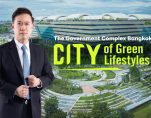
BANGKOK, THAILAND – Media OutReach Newswire – 23 December 2025 – Dhanarak Asset Development Co., Ltd. (DAD), the state-owned enterprise responsible for managing Thailand’s Government Complex, has announced the successful transformation of the site into a pioneering green and walkable urban prototype, positioning it as a model for sustainable government-led city development.
City of Green Lifestyles by Dr. Nalikatibhag Sangsnit
Under the leadership of Dr. Nalikatibhag Sangsnit, President of DAD, the multi-year redevelopment program reimagines state-owned land, one that treats public land not as a bureaucratic perimeter, but as shared civic infrastructure that prioritizes people, health, and nature.
Dr. Nalikatibhag Sangsnit, DAD’s President
“For decades, government districts in Thailand were designed to manage paperwork, not people,” Nalikatibhag said. “We wanted to reverse that logic. A city, especially a city owned by the state, must first work for human life: how people walk, how they rest, how they breathe, and how they coexist with nature in their daily routines.”
Before-and-after comparison of Government Complex Bangkok after its green redevelopment
From Bureaucratic Grey to Green Living
The centrepiece of the initiative is the newly opened 5.1-rai landscaped connector between Buildings B and C, a site that once functioned primarily as a traffic corridor and noise buffer. The area has been transformed into a pedestrian-friendly green passage linking offices, transit access points and communal spaces within the Government Complex.
Designed as urban infrastructure, a climate buffer reduces heat, improves water absorption and supports daily movement across the site. It also opens previously restricted government land to wider public use, blurring the boundary between administrative space and the city around it.
The project aligns with Thailand’s broader sustainability frameworks, including environmental, social and governance (ESG) principles and the government’s bio-circular-green (BCG) economic model. Design features focus on expanding tree canopy, increasing permeable surfaces and creating flexible areas that can support exercise, informal gatherings and community activity.
A Scalable Blueprint for State-Led Urban Transformation
Over the past six years, DAD has increased green spaces within the Government Complex by more than 47 rai, and when combined with adjacent landscaped zones, the total reaches over 138 rai, creating one of northern Bangkok’s largest continuous public green areas.
Nalikatibhag describes the City of Green Lifestyles concept not as a one-off redevelopment, but as a template for future public-sector land use, particularly in rapidly urbanising Asian cities where governments remain among the largest landowners.
“This is about proving that sustainability is not an added cost or a branding exercise,” he said. “When green infrastructure is designed as part of the system, when it improves health, reduces stress, lowers energy demand and invites public use, it becomes economically rational and socially inevitable. The role of the state is not only to regulate cities, but to set an example of how cities should be lived in.”
Global Recognition for Innovation
DAD’s sustainability efforts have earned international acclaim. In 2025, the company became the only public-sector organisation to win the Asia-level International Innovation Awards for two consecutive years, recognising its Government Complex Smart City initiative and the GCC Super Application, a digital platform integrating transport, navigation, and public services within the complex.
The awards, selected from more than 160 entries across 30 countries, underscore Thailand’s growing leadership in sustainable and technology-driven public sector transformation.
Redefining the Role of the State in City-Making
Unlike large-scale urban megaprojects, the Government Complex Bangkok initiative relies on system-based, incremental transformation, repurposing existing assets instead of acquiring new land. Urban policy analysts note that this approach provides a scalable blueprint for other governments managing extensive real estate portfolios.
“A government city should not feel separate from everyday life,” Dr. Nalikatibhag said. “If public space eases the intensity of daily life, improves health and restores a sense of balance between people and nature, then governance itself becomes more humane.”
The issuer is solely responsible for the content of this announcement.
Dhanarak Asset Development Co., Ltd.
Dhanarak Asset Development Co., Ltd. is a state-owned enterprise under Thailand’s Ministry of Finance, responsible for managing and developing the Government Complex and related assets. DAD is committed to advancing sustainable, human-centered urban development and creating models for environmentally and socially responsible government infrastructure.
Taraf, the real estate arm of Yas Holding, has entered a strategic development partnership with Masdar City to deliver Fay Hills, a 153-acre residential masterplan positioned at the centre of Abu Dhabi’s flagship sustainable urban district. The project reflects a broader shift in the capital’s property market towards low-carbon living, wellness-focused design and long-term community planning. Located within Masdar City, Fay Hills is planned as four interconnected […]
Boeing has appointed Omar Arekat as vice-president for the Middle East, Gulf and North Africa, a senior leadership move that places a long-serving regional executive at the helm of one of the company’s most strategically important markets. The appointment comes as aircraft demand across the region continues to be shaped by fleet expansion, widebody replacement cycles and sustained defence procurement.
Arekat, who will be based in Dubai, takes charge of Boeing’s commercial and defence engagement across a region where the aerospace group employs more than 700 people and supports over 30 commercial airline customers alongside 12 armed forces. His remit covers government relations, industrial partnerships, customer support and business strategy across markets ranging from the Gulf to North Africa.
The leadership change underscores Boeing’s intention to maintain continuity in a region that has long been central to its widebody sales, particularly for long-haul aircraft. Airlines in the Gulf operate some of the world’s largest fleets of twin-aisle jets, while carriers in North Africa are increasingly modernising fleets to support tourism recovery and regional connectivity. Defence ties, including fighter aircraft, rotorcraft, training systems and sustainment contracts, also form a significant pillar of Boeing’s regional presence.
Arekat is widely regarded within the industry as a seasoned regional hand. Before taking on the vice-presidential role, he held senior commercial positions within Boeing’s Middle East operations, working closely with airline leadership teams, civil aviation authorities and defence ministries. His career has been closely tied to the region’s aviation growth story, particularly the expansion of hub-based carriers and the emergence of maintenance, repair and overhaul ecosystems in the Gulf.
Boeing’s Middle East footprint extends beyond sales offices. The company has invested heavily in training, engineering and supply-chain partnerships, working with local firms on aerostructures, composites and advanced manufacturing. These initiatives are often framed as part of national industrial diversification strategies pursued by several Gulf states, where aerospace has been identified as a priority sector.
The appointment takes place against a complex commercial backdrop for Boeing globally. The manufacturer continues to navigate production stabilisation, regulatory scrutiny and supply-chain constraints, particularly in its narrowbody programmes. While these issues have been most visible in North America, their implications are closely watched by Middle East carriers, many of which have large order backlogs and tightly planned delivery schedules.
Industry analysts note that leadership continuity and strong regional relationships are especially important for Boeing in this market. Gulf airlines tend to place large, long-term orders, often timed around major fleet renewals or network expansion phases. Any disruption to deliveries can have cascading effects on capacity planning, route launches and leasing strategies, making senior-level engagement critical.
Defence remains another key dimension of Boeing’s regional strategy. Several armed forces across the Middle East and North Africa operate Boeing platforms, including fighter aircraft, transport planes, helicopters and surveillance systems. The company’s regional leadership is typically involved in government-to-government frameworks, offset arrangements and long-term sustainment planning, areas that require deep familiarity with local regulatory and security environments.
Arekat’s appointment also reflects a broader trend among global aerospace firms to elevate executives with strong regional expertise rather than rotating leadership from headquarters. This approach is seen as a way to navigate increasingly complex geopolitical, regulatory and industrial landscapes, particularly in regions where aviation policy, defence procurement and industrial strategy are closely intertwined.
Boeing has indicated that the Middle East and North Africa will remain a growth priority over the coming decade, driven by air traffic growth above the global average and continued investment in defence modernisation. The company’s market outlooks have consistently pointed to strong demand for both single-aisle aircraft, supporting intra-regional travel, and widebodies for long-haul connectivity linking the region to Asia, Europe and the Americas.
SINGAPORE – Media OutReach Newswire – 22 December 2025 – In today’s fast evolving job market, traditional qualifications alone are no longer sufficient to guarantee career longevity. Employers increasingly value agility, digital fluency, and continuous learning qualities that micro credentials deliver in concise, impactful ways.
Why Micro-Credentials Matter
Micro credentials are short, focused courses designed to equip professionals with in demand skills quickly. Unlike full degree programs, they enable learners to upskill or reskill without disrupting their careers. For industries shaped by rapid technological change such as digital marketing, artificial intelligence (AI), cybersecurity, and sustainability, these credentials are becoming essential for staying relevant.
According to the World Economic Forum’s Future of Jobs Report 2025, 39% of workers’ core skills will change by 2030, and 59% of the global workforce will need reskilling to meet evolving demands. This shift, driven by automation, AI, and sustainability imperatives, makes continuous learning a necessity rather than an option.
Micro credentials bridge this gap by offering industry aligned, stackable learning experiences that can be completed in weeks rather than years. Research indicates that employers are 72% more likely to hire candidates with micro credentials, as these certifications validate practical, job ready skills.
SIM’s Commitment to Career Readiness
SIM Global Education (SIM GE) is at the forefront of lifelong learning, responding to the urgent need for professionals to stay competitive in a rapidly changing economy. Through its Centre for Micro-Credentials (CMC), SIM offers a curated portfolio of short, stackable courses designed to deliver future-ready skills in high-demand areas such as digital marketing, AI, cybersecurity, and sustainability.
These programs are industry-aligned and developed in consultation with employers and global education partners to ensure relevance and practical application. Each course provides actionable knowledge that learners can immediately apply in their roles, making them ideal for busy professionals seeking quick, impactful upskilling.
A distinctive feature of SIM’s micro-credential ecosystem is the integration of digital badges. These secure, verifiable credentials contain metadata about the achievement, issuer, and criteria. Learners can showcase these badges on platforms like LinkedIn, signalling to recruiters and employers that they possess specialized expertise in emerging fields. This visibility supports skill-based hiring, a growing trend among organizations seeking demonstrable competencies rather than just academic qualifications.
SIM also emphasizes flexibility and accessibility. Courses are delivered in bite-sized formats, often online or blended, allowing learners to progress at their own pace without disrupting their careers.
The Bottom Line
Micro-credentials represent a strategic shift in preparing for the future of work. As industries evolve rapidly, the ability to adapt, upskill, and demonstrate verified competencies is essential. Degrees provide a foundation, but they often lack the agility to keep pace with emerging technologies.
SIM’s micro-credential programs offer flexibility, relevance, and recognition, enabling professionals to stay competitive in a skills-driven economy. Learners can customize pathways, focus on areas like AI, cybersecurity, or sustainability, and earn digital badges that employers value in skill-based hiring.
Micro-credentials help professionals future-proof their careers, ensuring resilience amid automation and digital transformation. For organizations, they build a workforce that is agile and ready for tomorrow’s challenges.
The issuer is solely responsible for the content of this announcement.
About SIM Global Education
SIM Global Education (SIM GE) is a leading private education institution in Singapore and the region. We offer more than 140 academic programmes ranging from diplomas and graduate diploma programmes to bachelor’s and master’s degree programmes with some of the world’s most reputable universities from Australia, Canada, Europe, United Kingdom, and the United States. SIM GE’s cohort is made up of 16,000 full- and part-time students and adult learners, of which approximately 36% are international students hailing from over 50 countries.
SIM GE’s holistic learning approach and culturally diverse learning environment aim to equip students with knowledge, industry skills and employability competencies, as well as a global perspective to succeed as future leaders in a fast-changing, technologically driven world.
For more information on SIM Global Education, visit sim.edu.sg
Oil prices advanced in early Asian trade on Monday after United States authorities intercepted an oil tanker off the coast of Venezuela in international waters, reinforcing concerns over supply risks linked to enforcement actions in key producing regions. Brent crude futures gained 44 cents, or 0.73%, to $60.91 a barrel by 0141 GMT, while U. S. West Texas Intermediate rose 40 cents, or 0.71%, to $56.92. The […]
President His Highness Sheikh Mohamed bin Zayed Al Nahyan held talks with American entrepreneur Elon Musk, focusing on advances in artificial intelligence and emerging technologies and how cross-border collaboration can accelerate innovation with practical benefits for societies and economies. The meeting underscored Abu Dhabi’s ambition to position itself as a global hub for advanced technology while engaging with influential private-sector leaders shaping the future of AI, […]
Arabian Post Staff -Dubai Abu Dhabi-based Modon Holding PSC has entered the United States residential property market through a new joint venture to build a 54-storey tower on the Hudson waterfront, marking a strategic push by the developer to diversify earnings and deepen exposure to mature, dollar-denominated real estate markets. The company said it has partnered with US developer Related Companies and Jersey City firm Panepinto […]
Arabian Post Staff -Dubai Italy’s Saipem has clinched a multi-billion-dollar offshore engineering, procurement, construction and installation contract from QatarEnergy LNG, marking one of the largest project awards in the global energy services sector and reinforcing Doha’s long-term expansion plans for liquefied natural gas production. The Milan-based engineering group said the overall value of the contract is about $4 billion, with Saipem’s share estimated at roughly $3.1 billion. […]
Matein Khalid The Indian equity markets have experienced one of Asia’s most frenetic IPO bonanzas in 2024-25 even if no less than 50% of all new flotations are now trading below their offer price. Despite the decline of the Indian rupee’s new low against the dollar beyond 91 and Dalal Street’s underperformance relative to my fave emerging markets Argentina, Poland and Brazil in 2025, the macro omens […]





 https://vinhomes.vn/en














 https://www.facebook.com/DhanarakAssetDevelopment/