News related to
Researchers

Apple is preparing to equip the iPhone with a more visually intelligent assistant as it integrates a new artificial intelligence model, known as Ferret-UI, into the software foundation of iOS 18. The development marks a shift in how Siri may interpret and respond to what appears on a user’s screen, enabling more precise app navigation, icon recognition and contextual understanding. The Ferret-UI model, introduced through Apple’s machine […]

Urban smog and industrial emissions are amplifying the intensity of fire tornadoes in major wildfire zones, with scientists warning that polluted air is contributing to atmospheric conditions that favour the formation of violent, spinning columns of flame. Fire tornadoes, or “fire whirls”, arise when intense heat from large blazes interacts with unstable air, generating rotating updrafts that can stretch hundreds of metres high. While such phenomena have […]

Starbucks Corp’s India venture is accelerating store openings and introducing new menu innovations, including protein foam coffee, as it deepens its bet on the world’s most populous country even while losses widen. Tata Starbucks Pvt., the 50:50 joint venture between Starbucks Corporation and Tata Group, plans to prioritise scale over short-term profitability, according to chief executive Sushant Dash. The strategy underscores a long-term view of India as […]

United States import tariffs have largely been paid by domestic businesses and households rather than foreign exporters, according to a growing body of economic research, sharpening debate in Washington over the long-term costs of trade protection. Studies by Federal Reserve economists and leading academic institutions show that the bulk of duties imposed during the trade disputes of the past decade were passed through to American importers in […]

A new artificial intelligence system developed by Chinese researchers, known as DeepRare, is poised to transform the diagnosis of rare diseases by offering significantly higher accuracy and transparent reasoning than conventional methods. DeepRare, built on a multi-agent architecture incorporating large language models and specialised analytical tools, processes complex clinical information — from free-text symptom descriptions to genetic test results — and generates ranked diagnostic hypotheses paired with […]

DeepSeek has expanded the context capacity of its flagship large language model by a factor of ten and pushed its knowledge cut-off forward to May 2025, sharpening competition in China’s fast-moving artificial intelligence sector as rival Zhipu introduced a new model aimed at enterprise and developer markets. The Hangzhou-based company said the upgrade enables users to process far longer documents and multi-step prompts in a single session, […]

Ethereum co-founder Vitalik Buterin has set out a proposal to integrate artificial intelligence into decentralised autonomous organisations, arguing that carefully designed “AI stewards” could strengthen governance while preserving privacy and resisting coercion. Buterin’s concept centres on deploying AI agents within DAO frameworks to assist with proposal analysis, moderation and vote verification, while relying on cryptographic safeguards such as zero-knowledge proofs and secure multi-party computation to shield voter […]

Advertisements

Scientists at the University of Oxford have unveiled a technique that could accelerate charging times and extend the lifespan of lithium-ion batteries by exposing how a largely overlooked component behaves at the nanoscale. By making polymer binders inside battery electrodes visible under advanced imaging, the team has identified manufacturing adjustments that cut internal resistance by as much as 40 per cent, a shift that may translate into […]

Mayo Clinic Platform is positioning the Gulf as a proving ground for a new generation of data-driven healthcare, with its chief operating officer Maneesh Goyal outlining plans to expand the organisation’s digital ecosystem and deploy two flagship offerings, Orchestrate and Insights, across the region. Speaking on the sidelines of World Health Expo Dubai 2026, Goyal said the future of medicine will be shaped less by individual hospitals […]

By T N Ashok At the center of Bharat Mandapam, the chiselled, lotus-shaped convention complex that has become the theatre for India’s global ambitions, Prime Minister Narendra Modi stood for a “family photo” that looked less like a diplomatic formality and more like a merger of Silicon Valley and the Westphalian order. To his left […]

The article India Positions Itself As The AI World’s Third Pole Under PM Modi’s Active Leadership appeared first on Latest India news, analysis and reports on Newspack by India Press Agency).

SINGAPORE – Media OutReach Newswire – 19 February 2026 – GLM-5, newly released as open source, signals a broader shift in artificial intelligence. Large language models are moving beyond generating code snippets or interface prototypes toward building complete systems and carrying out complex, end-to-end tasks. The change marks a transition from so-called “vibe coding” to what researchers increasingly describe as agentic engineering.

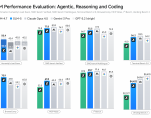
LLM Performance Evaluation: Agentic, Reasoning and Coding

Built for this new phase, GLM-5 ranks among the strongest open-source models for coding and autonomous task execution. In practical programming settings, its performance approaches that of Claude Opus 4.5, particularly in complex system design and long-horizon tasks requiring sustained planning and execution.

The model rests on a new architecture aimed at scaling both capability and efficiency. Its parameter count has expanded from 355bn to 744bn, with active parameters rising from 32bn to 40bn, while pre-training data has grown to 28.5trn tokens. These increases are paired with advances in training methods. A framework called Slime enables asynchronous reinforcement learning at a larger scale, allowing the model to learn continuously from extended interactions and improve post-training efficiency. GLM-5 also introduces DeepSeek Sparse Attention, which maintains long-context performance while cutting deployment costs and improving token efficiency.

Benchmarks suggest strong gains. On SWE-bench-Verified and Terminal Bench 2.0, GLM-5 scores 77.8 and 56.2, respectively, the highest reported results for open-source models, surpassing Gemini 3 Pro in several software-engineering tasks. On Vending Bench 2, which simulates running a vending-machine business over a year, it finishes with a balance of $4,432, leading other open-source models in operational and economic management.

These results highlight the qualities required for agentic engineering: maintaining goals across long horizons, managing resources, and coordinating multi-step processes. As models increasingly assume these capabilities, the frontier of AI appears to be shifting from writing code to delivering functioning systems.

Chat & Official API Access

Z.ai Chat: https://chat.z.ai
GLM Coding Plan: https://z.ai/subscribe?utm_source=pr&utm_medium=press&utm_campaign=launch

Open-Source Repositories

GitHub: https://github.com/zai-org/GLM-5
Hugging Face: https://huggingface.co/zai-org/GLM-5

Blog
GLM-5 Technical Blog: https://z.ai/blog/glm-5
Hashtag: #ZAI

The issuer is solely responsible for the content of this announcement.

Arabian Post Staff -Dubai Multidisciplinary consultancy Khatib & Alami has formalised an agreement with Ajman University to establish an endowed academic chair in Artificial Intelligence and Machine Learning, marking a strategic partnership aimed at advancing research, innovation and industry collaboration in the United Arab Emirates. The agreement, signed in Dubai, will see Khatib & Alami fund a dedicated academic position focused on developing applied research in AI […]

OpenClaw, a widely used open-source autonomous AI assistant, has pushed out version 2026.2.17 with expanded capabilities that include support for Anthropic’s latest Claude Sonnet 4.6 model and enhancements across messaging platforms and automation workflows. The update, made available by lead developer Peter Steinberger on February 17, 2026, was designed to address user demand for broader model integration and improved context handling, but it arrives as the software […]

Arabian Post Staff -Dubai   China’s Belt and Road Initiative recorded $213.5 billion in engagement during 2025, the highest annual level since its launch more than a decade ago, as a wave of construction contracts and energy investments reshaped the geographic balance of the programme and propelled the Middle East into the top ranks of recipients. Data compiled in the China Belt and Road Initiative Investment Report […]

Arabian Post Staff -Dubai United Arab Emirates is advancing an ambitious programme to use laser pulses in clouds in an effort to increase rainfall, positioning the desert nation at the forefront of experimental weather modification as it seeks long-term water security. Scientists at the Technology Innovation Institute, the applied research arm of Abu Dhabi’s Advanced Technology Research Council, are testing ground-based laser systems designed to influence the […]

Traces of hazardous metals have been identified in bananas and other staple crops grown in areas affected by Brazil’s 2015 mining disaster, raising concerns about long-term food safety and the exposure of young children to lead and cadmium. Researchers examining farmland along the Rio Doce basin, where tailings from the collapse of a Samarco dam spread across hundreds of kilometres, found that toxic elements embedded in contaminated […]

Europe has strengthened its push for technological sovereignty with the launch of the Euro Q Exa quantum computing system in Munich, marking a significant addition to the continent’s developing high-performance computing network. Unveiled on 12 February at the Leibniz Supercomputing Centre, part of the Bavarian Academy of Sciences and Humanities, Euro Q Exa is designed to integrate quantum processors into Europe’s broader supercomputing ecosystem. The system forms […]

Abu Dhabi University has surpassed 5,000 research papers indexed in Scopus, marking a significant milestone in its academic development and signalling the institution’s expanding footprint in global scholarship. The university confirmed that the achievement was recorded through its Office of Research and Sponsored Programmes, which oversees research strategy, funding partnerships and publication performance. Scopus, operated by Elsevier, is among the world’s largest abstract and citation databases of […]

Researchers tracking more than 400 toddlers have found no evidence that receiving an mRNA COVID-19 vaccine during or just before pregnancy increases the risk of autism spectrum disorder or developmental delays, offering what clinicians describe as strong reassurance for expectant mothers. The large prospective study, conducted across multiple clinical centres and involving detailed follow-up assessments of infants born during the pandemic, examined speech and language development, motor […]

Mozilla has issued an emergency update to its Firefox browser to address a critical heap buffer overflow vulnerability in the libvpx video codec library, urging users and organisations to apply the patch without delay. The fix, delivered through version 147.0.4 of Firefox and corresponding patches for the Extended Support Release branches, closes a flaw tracked as CVE-2026-2447 that could be exploited without user interaction on vulnerable builds […]

Electrons confined within self-assembled phosphorus chains have been shown to move in a strictly one-dimensional manner, marking a significant advance in condensed matter physics and nanomaterials research. The breakthrough offers a rare experimental confirmation of behaviour long predicted by theory and points to a pathway for engineering materials whose electronic states can be tuned simply by adjusting atomic spacing. The international research team demonstrated that phosphorus atoms, […]

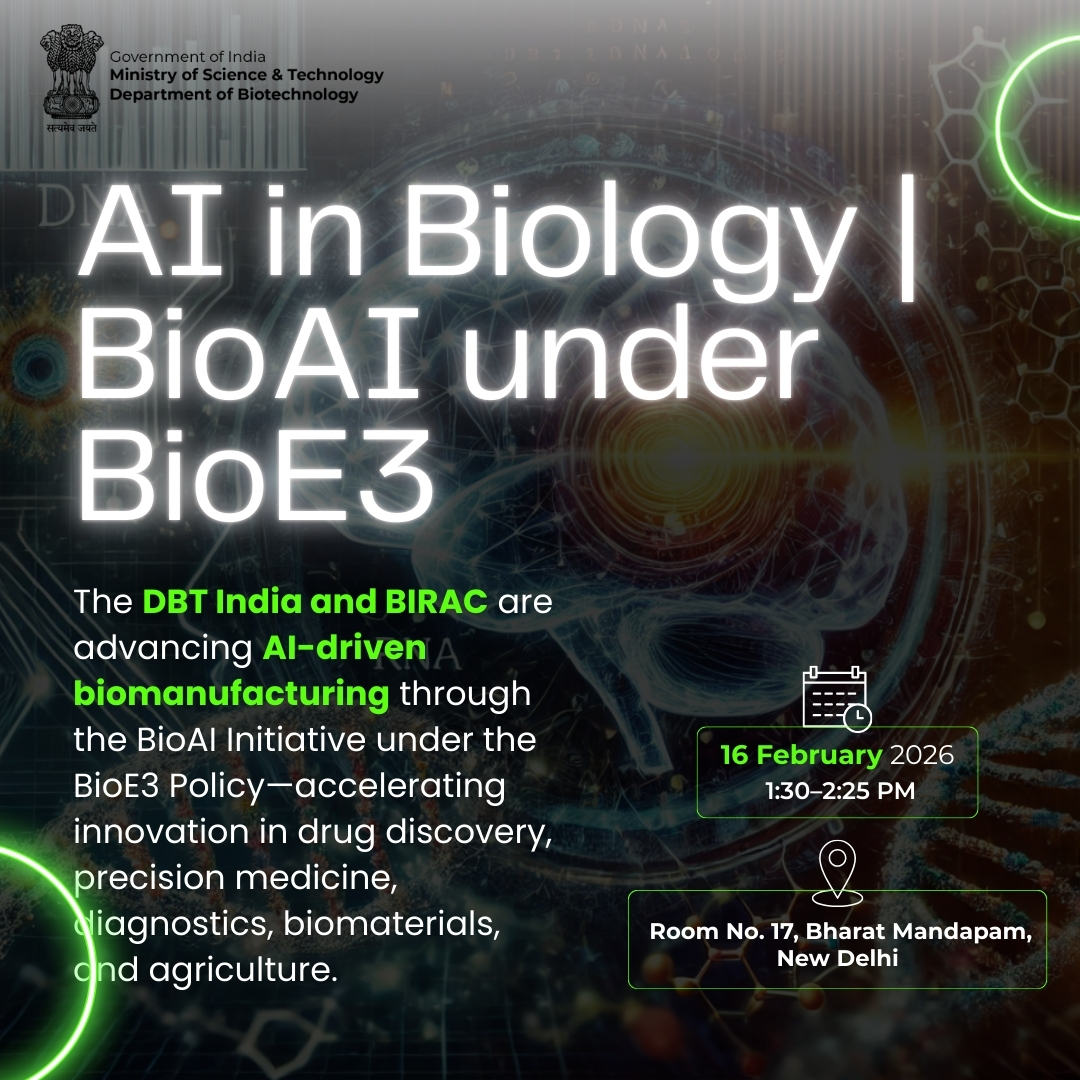
Artificial intelligence is being positioned as a catalytic force in reshaping biomanufacturing, with policymakers, scientists and industry leaders outlining a roadmap that blends computational power with biological science to accelerate drug discovery, industrial enzymes and sustainable materials. Discussions at the India AI Impact Summit placed BioAI at the centre of a strategy aimed at using genomics, in-silico modelling and closed data loops to build scalable and trusted production systems.

The convergence of AI and biology has moved from laboratory experimentation to commercial ambition. India’s biotechnology sector, valued at over $80 billion and targeting significant expansion by the end of the decade under the BioE3 policy framework, is seeking to harness machine learning tools to shorten development cycles that traditionally take years. Speakers at the summit argued that AI-enabled simulation and predictive modelling can reduce trial-and-error experimentation in fields ranging from vaccine development to precision fermentation.

BioAI refers to the integration of artificial intelligence techniques with biological data, particularly genomic sequencing, proteomics and metabolic engineering. The approach relies on large datasets and advanced algorithms capable of identifying patterns invisible to conventional research methods. Advances in protein structure prediction, including breakthroughs in computational biology over the past few years, have demonstrated how neural networks can model complex molecular interactions with remarkable accuracy.

At the summit, researchers described how generative AI systems are being trained to design novel proteins and enzymes tailored for industrial use. By feeding genomic datasets into predictive algorithms, scientists can simulate biological pathways in silico before conducting physical experiments. This method reduces costs and speeds up scaling, particularly in biopharmaceutical production and alternative protein manufacturing.

Government representatives outlined plans to expand national AI infrastructure to support such applications. IndiaAI Mission initiatives include the creation of high-performance computing resources and domain-specific data repositories to ensure that biotech firms and research institutes have access to secure and interoperable datasets. Officials emphasised that trust frameworks and regulatory clarity would be essential to encourage private investment while safeguarding data privacy and biosafety standards.

Industry leaders echoed that sentiment, highlighting that biomanufacturing requires rigorous validation. Unlike digital products, biological outputs interact with living systems, making quality control paramount. AI-driven feedback loops—where laboratory results continuously refine algorithms—were presented as a mechanism to maintain reliability while scaling up production. Data integrity, traceability and auditability were recurring themes, reflecting global debates about AI governance.

The global context underscores the strategic significance of BioAI. The United States and European Union have invested heavily in synthetic biology and AI-assisted drug discovery. China has also advanced computational genomics and large-scale fermentation capabilities. Analysts note that countries able to combine AI talent with robust biotech ecosystems stand to capture a growing share of the global bioeconomy, projected by several industry reports to exceed $4 trillion over the coming decade.

India’s strength in information technology services and pharmaceutical manufacturing offers a foundation for this convergence. The country is a major supplier of generic medicines and vaccines, supported by a network of research institutions and startups. By integrating AI tools into these value chains, stakeholders believe production timelines can be compressed and new therapeutic molecules identified with greater precision.

Academic voices at the summit stressed the importance of interdisciplinary training. Biologists must understand algorithmic thinking, while data scientists need grounding in molecular biology. Collaborative platforms linking universities, startups and established pharmaceutical firms were proposed to ensure knowledge transfer and talent development. Investment in computational biology curricula and shared research facilities is seen as critical to sustaining momentum.

Ethical considerations formed part of the dialogue. AI models trained on genomic data raise questions about consent, ownership and equitable benefit sharing. Experts argued for transparent governance structures aligned with international norms, noting that trust is fundamental when dealing with health-related information. Regulatory agencies are exploring how to evaluate AI-generated biological designs within existing approval pathways.

Private sector participation is accelerating. Venture capital funding in biotech startups leveraging machine learning has grown steadily, reflecting confidence in AI-assisted discovery platforms. Companies are experimenting with digital twins of biological systems, enabling simulation of fermentation processes before industrial deployment. Such capabilities can enhance efficiency and reduce resource consumption, aligning with sustainability goals.

Sustainability featured prominently in discussions on biomanufacturing. AI-optimised microbes can produce bio-based chemicals and materials that substitute fossil-derived inputs. Precision fermentation techniques, guided by predictive analytics, may lower energy use and waste. As global supply chains face pressure to decarbonise, the combination of AI and biotechnology is viewed as a pathway to cleaner industrial production.

Participants also highlighted challenges. High-quality biological datasets remain fragmented, and interoperability across laboratories is uneven. Ensuring cybersecurity in research networks is another concern, given the sensitivity of genetic information. Scaling laboratory successes to commercial volumes demands capital expenditure and regulatory compliance that can deter smaller enterprises.


Cyber security researchers are warning that built-in “Summarise with AI” buttons and AI-generated share links are being exploited to covertly plant malicious instructions inside artificial intelligence assistants, creating a new class of threat capable of distorting recommendations on health, finance and security matters. The technique, described by Microsoft as “AI recommendation poisoning”, centres on prompt injection attacks that subtly bias what large language models treat as trusted […]

Arabian Post Staff -Dubai Red Sea Museum will open a major exhibition titled Sunken Treasures: The Maritime Heritage of the Red Sea on February 25, running until May 29, 2026, placing centuries of seafaring history at the centre of Saudi Arabia’s expanding cultural agenda. Organised by the Museums Commission under the Ministry of Culture, the showcase is set to feature artefacts recovered from shipwrecks, navigational tools, archival […]

VISHNU RAJA
RYO YAMADA
HITORI GOTOH
IKUYO KITA