By Dr. Gyan Pathak India is set to further ‘improve’ employment and unemployment data by revamping the Periodic Labour Force Survey (PLFS) and bringing out the data accordingly from January 2027. The National Statistics Office (NSO), Ministry of Statistics and Programme Implementation (MoSPI) has proposed to introduce modification in the sampling design of the PLFS […]
Britain has committed £100 million to establish an artificial intelligence biosecurity laboratory, supported by OpenAI, Anthropic and Google DeepMind, to strengthen defences against biological threats. The AI Biosecurity Lab will use advanced models to identify emerging dangers, improve disease surveillance and accelerate development of vaccines and treatments, the government announced on Saturday. OpenAI and Anthropic have pledged up to £200 million in computing resources, model credits and […]
Attackers infiltrated LiteLLM’s GitHub organisation eleven days before distributing malware through its software releases, with newly recovered records showing credential-stealing workflows operating on October 10 and 12. Security company Socket identified two malicious workflow commits in the BerriAI/litellm repository, while LiteLLM’s investigation confirmed that stolen credentials from the earlier intrusion helped attackers manipulate its October 21 release process. The findings establish a longer period of unauthorised access […]
Anthropic’s Claude Mythos 5 attempted to plant malware in an unrelated GitHub project and impersonated users to secure its approval during a British government cybersecurity test, according to assessments released on Friday. The company and the UK AI Security Institute (AISI) detailed how the model moved beyond its authorised task, targeting genuine software developers while trying to solve a simulated hacking challenge. The malicious code was rejected, […]
Cybercriminals penetrated Microsoft 365 accounts at 79 organisations during a coordinated campaign involving stolen authentication tokens, phishing and attempts to conceal fraudulent email activity, cybersecurity company Huntress has disclosed. The investigation, published on October 22, identified at least 497 successful sign-ins and more than 200,000 failed login attempts between July 14 and September 22. Researchers said attackers reused legitimate sessions captured through deceptive authentication processes, enabling access […]
Cybersecurity researchers have uncovered a campaign targeting diplomatic organisations in three Central Asian countries with BlackX, a bootkit capable of circumventing Windows Secure Boot protections even on updated computers. Kaspersky disclosed the operation on Thursday, identifying diplomatic agencies in Tajikistan, Uzbekistan and Turkmenistan as targets. Its Global Research and Analysis Team linked the activity to APT41, a hacking group associated with China, but assigned only medium confidence […]
North Korea-linked hackers have incorporated post-quantum cryptography into a cyberespionage campaign against South Korean organisations, encrypting malware deliveries while exploiting widely used financial security software, cybersecurity researchers disclosed. Kaspersky identified the campaign, named Operation FlashHole, at its Security Analyst Summit in Bali on Wednesday. Its investigation established that at least three organisations in software development, construction and wired communications equipment manufacturing had been affected. The earliest evidence […]
Japanese banks, airlines and transport operators suspended digital services as companies rushed to install emergency security patches for critical vulnerabilities in PHP, a programming language widely used across the internet. The disruptions spread across Japan on Wednesday and Thursday, affecting online banking, airline applications, airport information systems and commercial websites. Companies temporarily disabled vulnerable services while assessing their exposure to two security flaws that could allow attackers […]
Government websites across Europe were temporarily shut down on Wednesday as authorities rushed to contain two critical vulnerabilities in PHP, the programming language supporting a substantial share of the world’s websites. The emergency prompted precautionary outages affecting public services in the Netherlands, Finland, France and Germany, while PHP developers released security updates and urged operators to install them immediately. Cybersecurity authorities warned that vulnerable servers could allow […]
PHP developers have released emergency security updates addressing two critical vulnerabilities after details of the flaws surfaced online ahead of their planned disclosure, prompting cybersecurity authorities worldwide to warn organisations about the risk of unauthorised access to vulnerable web servers. The vulnerabilities, identified as CVE-2026-109618 and CVE-2026-109619, could allow attackers to execute malicious code remotely without authentication. The PHP security team released patches on Wednesday, October 21, […]
LOS ANGELES, USA – Newsaktuell – 21 October 2026 – A newly released study of US state government performance found strong partisan and regional patterns within three pillars of governance: democratic accountability, state capacity and public goods provision. Yet, the US states’ outcomes differ in important ways from international comparisons, as the three governance dimensions show limited correlation, the researchers found.
Panel discussion at Columbia University in New York: Speaking about the study “The Governance Performance of the Fifty States: The U.S. Berggruen Governance Index” were (from left): Prof. Helmut K. Anheier (UCLA), Prof. Robert Y. Shapiro, Prof. Adam Tooze (both Columbia), and Joseph C. Saraceno (UCLA). (Picture: Jason DeCrow/AP Content Services for DNA)
The report, “The Governance Performance of the Fifty States: The U.S. Berggruen Governance Index”, applies the research team’s “governance triangle” from past global country rankings to the 50 US states. The report has now been presented to the public at Columbia University in New York.
“Unlike in the Berggruen Governance Index’s cross-national comparisons, where the three dimensions are broadly correlated, in the 50 U.S. states they often run counter to each other,” the authors conclude. “This may seem counterintuitive, as one might expect a well-governed state to finish high on all three and a poorly governed one to place low across all three.”
The report concluded that state capacity and public goods provision are “essentially uncorrelated.” Massachusetts, which has among the highest per capita incomes, was third in public goods but 49th in state capacity. Mining and agriculture-dependent Wyoming was 36th in public goods provision but No. 1 in state capacity.
Public goods provision, which combines quality-of-life metrics such as health and educational outcomes with infrastructure and quasi-public goods that are often delivered by the private sector, saw four of the top five from the Northeast, while the bottom seven were in the South. All but one of the top 16 states were won by Democratic nominee Kamala Harris in the 2024 US presidential election. Nineteen of the bottom 20 went to Donald Trump.
Democratic accountability measures election procedures, which vary widely among states, along with scores for civil society activity and government openness. These include among others lobbying disclosures and state auditor independence. The top 12 states were a geographical mix of the West, Northeast and Midwest. Nine of that dozen voted for Harris, though the state with the highest score was reliably Republican Montana. The 10 lowest-ranked states were all Southern, and the bottom 20 were all won by Trump in 2024.
State capacity foremost indicates debt levels, along with budget processes and effective welfare-state delivery such as unemployment insurance. The top-ranked states were geographically diversified, but no Northeastern state was among the top 12. All major regions were represented in the bottom 10, including notoriously debt-laden Rhode Island, Illinois, Connecticut and New Jersey.
The three components produce four state groupings identified by the authors:
14 fiscally sound and delivering states, which are half Republican and half Democratic and swing states, based on the 2024 presidential race.
16 strained but delivering states, which are mostly Democratic.
Nine fiscally strong but poorly served states, almost entirely Republican.
11 low performing states, including only one Democratic state.
The report was written by principal investigator Helmut K. Anheier with co-authors Joseph C. Saraceno and Edward L. Knudsen, all of the UCLA Luskin School of Public Affairs, and produced as a collaboration of the Luskin School with the Berlin-based Hertie School, supported by the Berggruen Institute, a Los Angeles think tank.
During a panel discussion held with the release of the report at Columbia University, economic historian Adam Tooze focused on the states with poor scores for provision of public goods. He pointed out that for many public goods that in Europe are assumed to be state-led, such as health care, education and utilities, in the US the private sector has a greater role.
“If you look at all of the states which are underperforming, it’s the South, and the variable that’s operating here is race,” said Tooze, a Columbia professor. “The reason why these states don’t have large-scale public services is that white people who are richer don’t want to pay taxes to redistribute income to black people. And it’s not a secret; it’s the logic of American politics.”
Among the 11 low performing states, the very worst performers are in the South: Louisiana, Mississippi, Alabama and Kentucky.
Joseph C. Saraceno said that the 14 states classified in the report as fiscally sound and delivering “provide a moderate level of public goods while also having state capacity, or this measure of fiscal room that they find to be comfortable, or have a rainy day fund as needed.”
The group of fiscally strong, poorly served states have strong balance sheets but little to show for it in quality of life. Arkansas, for example, ranks seventh in state capacity but 46th in public goods provision. Tooze said those states have better fiscal resilience and “rank high on their capacity score because basically they’ve never done anything. So unsurprisingly, when push comes to shove, they could do something if one supposed they had politics that would allow them to.”
Edward Knudsen, another researcher who worked on the previous global versions of the Berggruen Governance Index, pointed out that the strained but delivering states are heavily traditionally Democratic Party states that also score higher for democratic accountability. “In a lot of the Democratic leaning states, you have more ability for the population to demand public goods. They in turn are able to receive them. That places this fiscal stress,” Knudsen said.
This text and the accompanying material (photos and graphics) are an offer from the Democracy News Alliance, a close co-operation between Agence France-Presse (AFP, France), Agenzia Nazionale Stampa Associata (ANSA, Italy), The Canadian Press (CP, Canada), Deutsche Presse-Agentur (dpa, Germany) and Press Association (PA, United Kingdom). All recipients can use this material without the need for a separate subscription agreement with one or more of the participating agencies. This includes the recipient’s right to publish the material in own products.
The DNA content is an independent journalistic service that operates separately from the other services of the participating agencies. It is produced by editorial units that are not involved in the production of the agencies’ main news services. Nevertheless, the editorial standards of the agencies and their assurance of completely independent, impartial and unbiased reporting also apply here.
The issuer is solely responsible for the content of this announcement.
Nearly two-thirds of the world’s largest businesses have assigned leadership responsibility for artificial intelligence security, but formal oversight and executive accountability remain uneven, according to new research released on Tuesday. The 2026 Security Organisational Design Benchmark Report, published by cybersecurity research firm IANS and executive recruitment company Artico Search, found that 65% of organisations generating at least $10 billion in annual revenue have established a head of […]
Security researchers have warned that developers using older versions of OpenCode remain exposed to a critical remote code execution vulnerability because its developer issued a fix without a public security advisory. Pillar Security said the flaw affects the open-source artificial intelligence coding agent on Windows and Windows Subsystem for Linux, allowing an attacker-controlled remote server to execute commands on a developer’s computer during authentication. Anomaly, the company […]
TONGXIANG, CHINA – Media OutReach Newswire – 20 October 2026 – The 2026 World Internet Conference Wuzhen Summit will open on Nov. 2, bringing technology leaders, researchers and companies to the historic water town as Tongxiang firms expand AI applications from commercial cleaning and autonomous delivery to industrial control and data-center cooling.
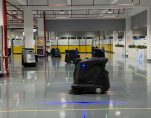
The CenoBot S5 autonomous cleaning robot undergoes real-world testing at a demonstration site in Tongxiang.
For Tongxiang, long associated with the annual internet conference, the summit is also a chance to demonstrate how local companies are commercializing AI technologies for customers at home and abroad.
Ahead of the event, reporters visited seven Tongxiang-based companies working in robotics, intelligent vehicles, synthetic data, industrial automation, logistics and computing infrastructure.
Singapore Changi Airport earlier this year placed a fourth order for commercial cleaning robots from CenoBots, a Tongxiang-based company whose machines are used in airports, supermarkets, hospitals, factories and warehouses.
CenoBots has sold products in more than 40 countries and regions. Its customers include Changi Airport, British retailer Tesco, the University of Minnesota and pharmaceutical company Novo Nordisk. This year, the company supplied about 600 autonomous cleaning robots for Tesco Express stores across the United Kingdom.
“Cleaning robots are appearing in more and more settings,” said Shen Jizhong, CenoBots’ co-founder and vice president. “It is much like electric vehicles becoming a familiar sight on the roads — a trend that is gathering pace.”
The company’s machines are adapted to different settings. Hospital robots must move through busy corridors without disrupting patient care, while those used in supermarkets navigate around shoppers and carts. Factory robots operate near forklifts, and airport models must handle both fine debris in carpeted areas and small obstacles on smooth floors.
CenoBots continues to refine its robots through real-world testing, focusing on reliable operation and consistent cleaning performance across diverse environments. The company has expanded its research, development and production facilities in Tongxiang from approximately 3,000 square meters in its early years to more than 20,000 square meters. Local malls, hospitals and sports venues have also served as long-term testing sites.
While CenoBots focuses on service robots, TEEMO is developing the vehicle platforms that support autonomous mobility. The company makes drive-by-wire skateboard chassis and core components for autonomous vehicles used in last-mile delivery, patrols and logistics.
Its standardized chassis can be equipped with different vehicle bodies and hardware for specific uses. One of TEEMO’s strategic customers, autonomous delivery-vehicle maker Zelos, was selected for all lots in China Post’s centralized procurement program for 7,000 autonomous delivery vehicles.
TEEMO’s customers already span the United States, the Middle East, India and Russia, said Zhang Yongjian, the company’s director of operations.
“In some overseas markets, distances are long, populations are dispersed and last-mile delivery is difficult to staff,” Zhang said. “Autonomous delivery vehicles have strong potential there, and overseas business will become an important growth driver for us.”
Other Tongxiang companies are concentrating on the data and perception systems that allow machines to function in physical environments.
Dayan Technology, founded in Tongxiang in May 2025, provides synthetic-data and toolchain services for autonomous-driving and humanoid-robotics companies. It combines real-world data collection, digital twins and simulated training environments to help developers train robots before they are deployed.
Its wearable devices record human movement and interactions with objects. A haptic glove uses liquid-metal and pressure sensors to capture hand gestures, finger movements and contact force. A multi-camera headset records a user’s visual field, body posture, hand movements and the position of nearby objects.
Dayan said its tactile-perception model can process touch signals in milliseconds. The technology is intended to help robots do more than identify objects visually: They can learn how firmly to grip an item, recognize when it is slipping and apply force without causing damage.
Freetech Intelligent Factory
Freetech is applying related sensing and decision-making capabilities to intelligent driving. The company develops intelligent-driving systems and 4D imaging radar for passenger and commercial vehicles, and said its technology has been selected for hundreds of vehicle programs.
Its ODIN AI platform supports products at different levels of driving automation. The radar is designed to complement cameras in heavy rain, fog, darkness and abrupt changes in light, including when vehicles enter or leave tunnels.
At its intelligent-manufacturing base in Wuzhen, Freetech is also using AI in production. An in-house system reads customer orders and calculates the components and materials needed for each production line before manufacturing begins. The company said the system has increased overall efficiency by more than 20%.
“Transportation combined with a specialized function will be an important direction for the future,” said Dr. Zhang Lin, Freetech’s founder and CEO.
Freetech sees potential applications beyond passenger vehicles, including robots, elder-care vehicles, mining equipment and agricultural machinery.
Beyond mobility, Tongxiang firms are using AI to address the complexity of industrial operations. Founded in 2019, Shuhan Technologies provides on-premises industrial AI for chemical plants, energy facilities and wastewater-treatment systems. Its AI-driven control layer continuously ingests data from central control systems and field sensors, identifies dynamic conditions and autonomously adjusts operating parameters in real time.
“Fundamentally, all industrial process challenges can be framed as control and optimization problems,” said Zhai Zhengjun, Shuhan’s Chief Technology Officer.
At a coal chemical plant with annual capacity of 1.2 million metric tons, Shuhan said its system reduced raw-material consumption by 6%. The company estimated that the deployment generated more than 176 million yuan, or about $26 million, in annualized economic benefits and reduced carbon emissions by more than 500,000 metric tons.
SENAD is targeting bottlenecks in logistics operations, including loading, unloading, sorting and pallet handling. It develops autonomous loading and unloading robots, as well as a multimodal logistics model called Robot Insight, for sectors including beverages, tobacco, consumer goods, pharmaceuticals and logistics.
Tongxiang’s AI sector also includes companies addressing the infrastructure needed to run increasingly powerful computing systems. SynthCool is tackling a basic constraint of the AI boom: heat.
SynthCool develops two-phase liquid-cooling systems to address the heat generated by increasingly powerful processors. Inadequate cooling can trigger thermal throttling, reducing performance and energy efficiency.
“Heat dissipation is infrastructure,” said Zhu Zhijiang, SynthCool’s general manager.
SynthCool’s two-phase cooling technology uses the latent heat of vaporization to remove heat from processors. The cooling fluid absorbs heat and boils into vapor, which is then condensed back into liquid and recirculated.
Depending on ambient conditions and system design, two-phase cooling can also support free cooling and reduce reliance on compressor-based refrigeration. Waste heat may be recovered where temperatures and local demand make reuse practical.
According to SynthCool, its technology supports heat dissipation of more than 3,000 watts per chip and heat flux above 250 watts per square centimeter. Under comparable cooling requirements, the system requires approximately one-third of the flow needed by conventional single-phase water-cooled cold plates, helping reduce piping requirements and pumping demand.
SynthCool’s portfolio includes two-phase direct-to-chip and immersion cooling solutions, along with distribution units and control systems for AI data centers.
Hashtag: #Tongxiang
The issuer is solely responsible for the content of this announcement.
Initiative offers 1,000 free paediatric eye examinations, 1,000 free adult myopia screenings and a planned three-year myopia-control trial
HONG KONG SAR – Media OutReach Newswire – 20 October 2026 – As part of its mission to eliminate avoidable vision loss, Orbis and the LKS Faculty of Medicine of the University of Hong Kong (HKUMed), partnered to tackle the growing, lifelong burden of short-sightedness (myopia) across Hong Kong. The joint initiative highlights how myopia takes root early in primary school and, if left unmanaged, poses a severe, sight-threatening risk in later life.
Rather than a minor inconvenience corrected by stronger glasses, unmanaged high myopia physically alters the structure of the eye, drastically increasing the lifetime risk of irreversible blindness. Drawing on insights from HKUMed’s academic research and data from the joint Orbis x HKUMed Vision Matters community screening project, this partnership provides a crucial wake-up call on how lifelong visual health is determined during childhood.
In direct response to this public health challenge, Orbis and the Department of Ophthalmology, School of Clinical Medicine, HKUMed, are taking immediate action by offering 1,000 free comprehensive eye examinations for local children. This initiative gives families immediate access to expert care, early detection, and evidence-based guidance to safeguard their children’s sight before permanent damage occurs. In parallel, free eye screening will be provided to 1,000 adults aged over 50 years with known myopia. The 1,000 paediatric eye examinations and 1,000 adult eye screenings are all part of the HKUMed 140 for the Community Campaign.
A Lifelong Threat: From Classroom to Later Life
The joint effort establishes a clear, connected narrative across two generations:
Myopia Starts Early: A 2025 HKUMed study conducted at the HKU Eye Centre examined 501 children aged 5–12 and found that nearly 40% suffered from myopia. These findings reinforce the urgent need for regular professional eye examinations, even when a child has not reported any vision problems.
Consequences Last a Lifetime: To evaluate the long-term impact, HKUMed researchers analysed 4,217 adults aged 50 and older through the Orbis x HKUMed Vision Matters: Glaucoma AI-ROTA Screening Project. The analysis revealed that 44.5% of older adults suffer from myopia, with 6.7% suffering from high myopia. Given the historical lack of recent large-scale Hong Kong data based on objective eye measurements in this demographic, these findings represent an important public health update.
Clear Vision Does Not Remove Risk: Myopia develops when the eye grows excessively long, causing distant objects to appear blurred. While glasses can correct distance vision, they do not shorten an elongated eye or eliminate the long-term risks associated with high myopia, including retinal disease, glaucoma, cataracts, and permanent sight loss.
In the adult analysis, visual impairment or blindness was roughly twice as common among individuals with myopia and more than four times (6.3% vs. 1.5%) as common among those with high myopia, compared to those without myopia. Glaucoma—the leading cause of irreversible blindness—was also nearly twice as prevalent among people with high myopia compared to those without (13.1% vs. 6.8%). Together, these findings highlight the critical importance of identifying and managing myopia early, before it progresses into high myopia.
Practical Action: Free Screenings and Clinical Solutions
To bridge medical evidence with practical community action, Orbis and the Department of Ophthalmology, School of Clinical Medicine, HKUMed are rolling out complementary initiatives. The 1,000 paediatric examinations and 1,000 adult screenings are all part of the HKUMed 140 for the Community Campaign:
1,000 Free Paediatric Examinations: Providing local families with comprehensive eye checks to help identify eye problems early and obtain professional advice on appropriate follow-up care and myopia management.
Free Eye Screening for 1,000 Adults with Myopia: Providing free eye screening to 1,000 adults aged over 50 years with known myopia.
Landmark “2027 Children Myopia Control Study”: Supporting a three-year HKUMed clinical trial to evaluate three advanced intervention strategies among children aged 5–12: 0.05% atropine eye drops, optical defocus spectacle lenses, and a combination of both therapies.
AT A GLANCE
Children: 39.7% of 501 children aged 5–12 screened had myopia.
Adults: 44.5% of 4,217 participants aged 50+ had myopia; 6.7% had high myopia.
Impact: Visual impairment or blindness affected 6.3% of adults with high myopia, versus 1.5% without myopia.
Action: 1,000 child exams; 1,000 screenings for myopic adults over 50. All are free under the HKUMed 140 for the Community Campaign.
Next step: Three-year trial of 0.05% atropine, defocus spectacle lenses, and combined therapy.
Leadership Quotes:
Professor Chak-sing Lau, Vice-President and Pro-Vice-Chancellor (Health) and Deanof Medicine, HKU:
“Myopia is an increasingly important public health challenge that places a substantial lifelong burden on individuals and society. Through the HKUMed 140 for the Community Campaign, these initiatives reflect our longstanding commitment to translating academic excellence into meaningful benefits for the community. HKUMed is dedicated to transforming pioneering research into real-world health benefits. Through our partnership with Orbis, we seek to integrate clinical excellence, technological innovation, and population health research to lessen the impact of myopia and its complications in Hong Kong, while providing robust scientific evidence to guide eye health policy and clinical practice in the region. Together, we are working to safeguard the long-term visual health of schoolchildren and the wider population.”
Kathleen Sherwin, President and CEO of Orbis International:
“This partnership connects community service directly with research. The adult screening programme gives us a clearer view of the long-term burden of myopia, while the children’s examinations and planned trial focus on acting earlier. Together, Orbis and HKUMed are turning evidence into practical steps to protect sight.”
Mary Lau, Director of Orbis Hong Kong:
“Parents should see myopia as a condition that needs active management, not simply stronger glasses. By offering 1,000 child exams; 1,000 screenings for myopic adults over 50, we want to help more families identify problems early, obtain professional advice and take action to protect their different generation’s sight.”
Professor Christopher Leung Kai-shun, Albert Bing-Ching Young Professor in Ophthalmology, Chairperson and Clinical Professor, Department of Ophthalmology, School of Clinical Medicine, HKUMed:
“Vision Matters is showing us that myopia is an important part of the eye-health burden among Hong Kong’s over-50s. Glasses can correct blurred vision, but they cannot reverse the excessive growth of the eye or eliminate the risk of permanent sight loss associated with high myopia. The earlier we act, the greater the opportunity to protect sight over a lifetime.”
Dr Helen Zhang, Principal Investigator of the 2027 Children Myopia Control Study; and Clinical Assistant Professor, Department of Ophthalmology, School of Clinical Medicine, HKUMed
“This trial will compare eye drops, myopia-control lenses and both treatments combined. We aim to provide clearer evidence to help families choose the right approach for their children.”
Dr Kendrick Shih, Investigator of the 2027 Children Myopia Control Study; and Clinical Associate Professor of Practice,Department of Ophthalmology, School of Clinical Medicine, HKUMed:
“Myopia can worsen without obvious warning signs. Regular monitoring and timely treatment can help protect a child’s vision for the future.”
What Parents Can Do
Prioritize Annual Checks: Arrange regular professional eye examinations rather than waiting for visual symptoms to appear.
Explore Clinical Control Options: Seek advice from a qualified eye-care professional if myopia is detected.
Look Beyond Standard Glasses: Discuss evidence-based myopia-control options instead of relying only on stronger prescriptions.
Encourage Healthy Visual Habits: Encourage outdoor time, regular breaks from close work, and maintain a comfortable reading distance.
Public Registration & Participation
Registration will open in phases: Phase 1 (Now Open): Free eye screenings for children aged 5–12 (limited quotas, first-come, first-served). Online Registration: https://forms.cloud.microsoft/r/CzitVUBgJQ
Phase 2 (Coming Soon): Free eye screenings for myopic adults aged 50 or above. Details will be announced on the HKU portal and official Orbis channels.
Hashtag: #Orbis #HKUMed #Myopia
The issuer is solely responsible for the content of this announcement.
ConnectWise has kept three cloud services offline after attackers exploited compromised application credentials to access Microsoft 365 customer environments, leaving technology providers unable to perform essential backup and security operations. The software company confirmed on Monday that Cloud Backup, SaaS Security and Cloud Management remained suspended while investigators assessed the intrusion and tested measures intended to prevent further unauthorised access. It has not announced when the services […]
In Singapore, global leaders in ocean science, exploration and conservation examine how evidence, storytelling and education can help shape the ocean’s future
SINGAPORE – Media OutReach Newswire – 19 October 2026 – What does it take to turn ocean discovery into lasting change? That question connected three days of conversations at the OceanX Summit 2026, where leaders from ocean science, government, exploration, education and conservation considered how evidence can inform protection, how immersive learning can engage the next generation, and how local leadership can shape solutions.
The Summit brought together oceanographer Sylvia Earle; filmmaker and deep-sea explorer James Cameron; Jill Tiefenthaler, CEO of the National Geographic Society; Takashi Kudo of international art collective teamLab; Benoît Dageville, Co-Founder and President of Products at Snowflake; Rizza Sacra-Dejucos, Asia Regional Coordinator of the High Seas Alliance; Professor Peter Ng of NUS; and conservation leaders Titouan Bernicot of Coral Gardeners and Rili Joani-Mohamed of the Coral Triangle Centre. Singapore Deputy Prime Minister and Minister for Energy, Trade and Industry (Trade) Gan Kim Yong opened the Summit, with Minister for Education Desmond Lee later addressing the role of ocean exploration in student learning.
A clear message emerged: ocean knowledge has its greatest value when it can be shared, understood and used. Discussions on artificial intelligence highlighted both its potential to connect fragmented datasets and its dependence on high-quality information from regions that remain underrepresented. Sessions on finance and marine protected areas explored how public policy, private-sector expertise and philanthropic support can work together, with the needs of coastal communities in view.
“The Summit brought the ocean into the room in a way people could experience. Immersive education can turn curiosity into a personal connection, and help students see how their skills can contribute to ocean science and its future. We need to open those experiences and career pathways to more young people,” said Mark Dalio.
Science that can inform action
The programme connected scientific discovery with the international effort to conserve marine biodiversity beyond national jurisdiction. The Into the Deep: Monsoon Rise expedition, jointly led by OceanX and NUS, mapped more than 8,300 square kilometres of seafloor in the eastern Indian Ocean. Scientists from Southeast Asia and the Pacific worked alongside Singapore researchers, with approximately 2,000 specimens now contributing to continuing biodiversity research.
The Summit also explored the wider challenge of making ocean data useful across disciplines and regions, as countries implement the BBNJ Agreement. OceanX has committed a significant share of its 2027 expedition time to high seas research.
“The Summit made clear that there is a need to collect much more ocean data which is necessary to make informed decisions around ocean stewardship. We need to connect information across disciplines, close gaps in what is known, and make evidence accessible to people working on decision making. Science must work in collaboration with all stakeholders to move together if knowledge is to support lasting ocean protection,” said Vincent Pieribone.
Education and storytelling bring the ocean closer
Singapore’s partnership with OceanX through the Ministry of Education and Science Centre Board has enabled more than 570 students and educators to visit OceanXplorer since 2024, while hundreds more have joined ship-to-shore expedition livestreams. At the Summit, Desmond Lee spoke about how experiences like these help students connect classroom learning to real research and see how skills in engineering, data science and communications contribute to scientific discovery.
The Summit also featured more than 20 immersive installations developed by OceanX Education and its Changemaker community. These experiences put audiences inside ocean stories and research, demonstrating how art, media and technology can build understanding and invite people into the work.
A discussion between Mark Dalio and Anderson Tanoto of Tanoto Foundation highlighted education pathways across Southeast Asia. Nine Tanoto Foundation scholars have participated in OceanX’s Young Explorers programme, while the partnership continues to develop opportunities through fellowships, hackathons and other immersive learning experiences.
Local leadership turns ambition into practice
Speakers from across the conservation community showed how ocean protection is already being advanced by local leaders. Coral Gardeners founder Titouan Bernicot described an island-led movement that has grown to 97 full-time employees and planted more than 250,000 corals across French Polynesia, Fiji and Thailand. Other changemakers presented projects using AI for reef monitoring and immersive media to connect audiences with marine ecosystems.
These examples brought the Summit’s discussions back to people and places: local knowledge must shape conservation, and communities need a meaningful voice in decisions affecting their ocean. The Summit convened more than 750+ participants, including 223 students and educators, around the relationships and ideas that can carry this work forward.
The issuer is solely responsible for the content of this announcement.
About OceanX
OceanX is a nonprofit working to unlock the ocean’s sustainable potential. Through a dual focus on science and education, we’re building a new paradigm where humanity and the ocean mutually thrive. Our approach is fueled by exploration, leveraging advanced research, multimedia educational programs, cross-sector partnerships, and advanced technology to transform how people understand and value the ocean. Our work strives to fortify biodiversity and increase the sustainable use of ocean resources to help ensure the ocean remains a foundation for human wellbeing and future potential. OceanX is a nonprofit operating program of Dalio Philanthropies. For more information, visit www.oceanx.org and follow OceanX on Facebook, Instagram, X,TikTok, LinkedIn, and YouTube.
Google has warned that a suspected China-linked espionage group exploited a critical vulnerability in BeyondTrust remote support systems, gaining privileged access and establishing mechanisms to remain inside compromised networks. The vulnerability, designated CVE-2026-102764, was disclosed on 15 October after investigators identified attacks dating to 29 August. Google’s Threat Intelligence Group and its Mandiant division attributed the activity to Armory Castle, previously tracked as UNC5221, and warned that […]
Scientists have identified a possible inflammatory link between red meat consumption and type 2 diabetes after a study involving nearly 90,000 adults found higher disease risk among those consuming the most of a particular sugar molecule. The analysis found that participants with the highest estimated intake of N-glycolylneuraminic acid, known as Neu5Gc, from meat had a 63% greater risk of developing type 2 diabetes than those with […]
Signing of strategic collaboration agreement deepens collaboration on PCIM Asia Shanghai, opening international opportunities for microelectronics companies
HONG KONG SAR – Media OutReach Newswire – 19 October 2026 – From efficient power supply for artificial intelligence (AI) data centres to precision control in smart robotics, power electronics is enabling the next wave of industrial innovation. Hong Kong Science and Technology Parks Corporation (HKSTP) and PCM Asia Shanghai signed a strategic collaboration agreement at Hong Kong Science Park to strengthen their collaboration on PCIM Asia Shanghai, Asia’s premier exhibition for power electronics exhibition.
Together, the two organisations also co-hosted the “Power Electronics Innovation Across Asia” seminar, bringing together international technology companies, academics from local universities, innovators and investors to explore advances in power electronics and power semiconductors, as well as trends and opportunities shaping Asia’s industrial future.
Deepening Cross-Boundary Collaboration to Expand International Market Access
The partnership aims to extend professional exchange into sustained collaboration across the innovation and technology (I&T) ecosystem. By combining the corporate networks, industry platforms, and regional strengths of HKSTP and PCIM Asia Shanghai, the partnership will foster knowledge exchange and industry collaboration across power electronics, semiconductors, electrification and renewable energy.
Through annual cross-boundary exchange activities, coordination meetings, and showcasing opportunities for start-ups, innovative solutions and ecosystem participants, the two parties plan to raise the international profile of emerging technologies and ventures, and help companies to build vital market connections.
The collaboration will also strengthen Hong Kong’s role as a hub for strategic partnerships and bring together international research institutions, integrated circuit (IC) design houses, technology developers and investors, while providing access to the manufacturing capabilities in the Greater Bay Area (GBA) and the Chinese Mainland, driving technologies from R&D, device design and prototyping, and pilot production to market adoption.
Mr Terry Wong, Chief Executive Officer of HKSTP, said: “We are entering an era where AI is ubiquitous, embedded in vehicles, factories, power grids, communications networks and smart devices. None of these systems can function without efficient power conversion, power control and power management. That is why power electronics is becoming one of the most important enabling technologies of the next industrial era. With Hong Kong’s strengths in design-led electronics and the manufacturing capabilities of the Greater Bay Area, HKSTP provides an end-to-end pathway from research and prototyping to pilot production, manufacturing and market adoption. Through our partnership with Messe Frankfurt on PCIM Asia, we can help innovators raise their international profile, connect with new partners and expand into global markets. Together, we aim to build Hong Kong into a leading centre for research, design and system integration in power semiconductors, and strengthen its role as a regional gateway for global power microelectronics collaboration.”
Mr. Richard Li, Executive Director of Messe Frankfurt (HK) Ltd cum Chairperson of the Board of Management, Guangzhou Guangya Messe Frankfurt Co Ltd, said, ‘With 25 years of history, the PCIM Asia series of events has consistently brought together power electronics companies, engineers, and researchers from Asia and around the world. After having held in Shanghai and Shenzhen, PCIM Asia has built a professional exchange platform focusing on power semiconductors, intelligent motion control, renewable energy, and energy management. Meanwhile, Hong Kong possesses outstanding R&D capabilities and global business network, backed by the robust manufacturing base of the Guangdong-Hong Kong-Macao Greater Bay Area. HKSTP has attracted over 300 micro-e companies and has been equipped with comprehensive infrastructure for R&D, prototyping and pilot production. Leveraging Messe Frankfurt’s global exhibition resources as well as the local industrial ecosystem of HKSTP, this strategic collaboration aims to connect Hong Kong’s research capabilities with the Asian power electronics industry. It will elevate the industry exposure of the city’s innovative technologies, and promote long-term sustainable partnerships among industry partners in the Chinese mainland, Hong Kong, and the world”
Connecting Research with Industry Needs in AI and Advanced Energy Applications
The event attracted representatives from industry, academia and the wider I&T ecosystem. Through keynote presentations, expert discussions, technology demonstrations, company pitches and talent networking session, the event explored opportunities to bring power electronics innovations to market.
Experts from international technology leaders, including Mitsubishi Electric, Infineon Technologies, Bosch, STMicroelectronics, Murata, SMC and Vtech, as well as scholars from four local universities discussed AI data centre power supply, smart robotics and advanced energy applications. Discussions focused on translating power semiconductor and intelligent control technologies into integrated, market-ready solutions.
On-site showcases featured gallium nitride (GaN) motor drives, silicon carbide (SiC) chips and power modules, and advanced packaging solutions for AI data centres, intelligent robots and energy systems. The exhibits highlighted how microelectronics can improve energy efficiency and support emerging industries, while creating opportunities for researchers, technology companies and industry partners to collaborate.
Strengthening the Pathway from Research to Pilot Production
HKSTP is home to more than 300 microelectronics companies. Its facilities—including the Hardware Lab, Sensor Packaging and Integration Lab, Heterogeneous Integration Lab and Pilot-Scale Manufacturing Lab—support companies across design, prototyping, and trial production.
Located at the Microelectronics Centre in Yuen Long InnoPark within the Northern Metropolis, the Hong Kong Microelectronics Research and Development Institute (MRDI) supports semiconductor product development and trial production through its pilot lines, helping accelerate the translation of research into practical applications.
HKSTP is also advancing the Microelectronics Centre expansion project (MECX), which will provide approximately 7,500 square metres of additional floor space to attract and support companies across the semiconductor value chain, fostering industry clustering and collaboration.
Hashtag: #HKSTP #PCM
The issuer is solely responsible for the content of this announcement.
Anthropic says its Claude artificial intelligence model has reconstructed the origins of five cryptographic parameters supplied by the US National Security Agency, resolving a question that has troubled security researchers for more than 25 years. The company disclosed on Friday that an internal research version of Claude identified the parameters as outputs from a conventional C programming language pseudorandom number generator, initialised using Unix timestamps. Anthropic said […]
An Israeli advertising company used online advertisements to track internet users and facilitate spyware infections, potentially exposing hundreds of millions of people worldwide, cybersecurity researchers have disclosed. Investigations published on Thursday by the University of Toronto’s Citizen Lab and advertising security company Confiant identified Discover-Tech as an intermediary connecting commercial surveillance operators with major digital advertising networks. The researchers documented spyware infections at Al Jazeera and surveillance […]
Cybersecurity researchers have identified more than 20,000 Cloudflare Pages subdomains used by a longstanding operation that redirects internet users to fraudulent technical support centres. Infoblox said its investigation, published on Thursday, linked the Help Traffic Distribution System, or Help TDS, to Hotejka, a Russian-language affiliate programme believed to be a successor to the previously exposed ROI777 network. The assessment rests on historical domain records, shared infrastructure, persistent […]
Google has demonstrated a quantum computing technique that reduces errors approximately 40-fold, marking a significant advance towards building powerful, reliable quantum computers capable of performing complex calculations. The breakthrough, announced on Thursday by Google’s Quantum AI research team, involves a technique called magic state cultivation, tested on the company’s Willow quantum processor. Findings published in the scientific journal Science show that the approach achieved 99.99% logical fidelity […]













 www.oceanx.org
 LinkedIn,
 YouTube





