News related to
Riyadh

The Middle East’s aviation market is poised for an extraordinary expansion, according to Airbus’s Global Market Forecast 2025. The region, currently experiencing rapid economic growth and a surge in travel demand, is expected to see its in-service fleet more than double over the next two decades. The forecast reveals that the fleet will increase from 1,480 aircraft in 2024 to 3,700 by 2044, driven by both the […]

Saudi Crown Prince Mohammed bin Salman arrived in Washington on Tuesday for his first official visit since 2018, marking a significant milestone in US-Saudi relations. The visit is set against the backdrop of a complex diplomatic landscape, one that has seen fluctuating ties between the two nations in recent years. The Crown Prince’s return to the White House follows a period of tension under President Joe Biden’s administration, which had openly criticised the Kingdom’s human rights record and distanced the US from the Saudi leadership.

Under Biden’s presidency, relations between Washington and Riyadh reached a nadir, especially after the murder of journalist Jamal Khashoggi in 2018, a crime widely attributed to the Crown Prince, though he denies any personal involvement. Biden’s stance was clear: he aimed to reassess US relations with Saudi Arabia, placing emphasis on human rights and security policies. However, the trajectory of US-Saudi relations changed dramatically with the arrival of President Donald Trump in 2017.

During Trump’s tenure, the US-Saudi relationship experienced a marked shift, primarily driven by shared strategic and economic interests. In 2018, Trump’s visit to Riyadh helped to reset relations, with the Kingdom committing to invest $600 billion in the US over a four-year period. This pledge included investments in infrastructure, technology, and energy projects, bolstering the economic ties between the two nations and reaffirming the strength of their partnership.

The current visit by the Crown Prince is seen as a continuation of this reset, highlighting the importance of economic collaboration and security coordination between the US and Saudi Arabia. In particular, the two countries share key interests in the Middle East, such as counterterrorism efforts and stability in the region, particularly concerning Iran’s increasing influence and its nuclear ambitions.

During his visit, Crown Prince Mohammed is expected to meet with President Joe Biden, along with other senior officials, to discuss a range of issues. While human rights will likely remain a topic of conversation, the focus of the visit is expected to be on strategic cooperation in areas such as energy, defence, and regional security. A key part of the talks is likely to centre around energy policy, particularly as the world grapples with rising oil prices and energy security concerns exacerbated by the war in Ukraine.

Energy is a central pillar of the relationship between the two countries. Saudi Arabia, as one of the world’s largest oil producers, has long played a crucial role in global energy markets. The Kingdom’s ability to influence oil production levels has made it an indispensable partner for the US, which continues to rely on energy imports and stability in the oil market. As the world moves toward cleaner energy solutions, Saudi Arabia has also signalled its intention to diversify its economy and reduce its dependence on oil exports. In this context, discussions about investment in renewable energy projects and technological partnerships are likely to be on the agenda.

Security cooperation, too, will be high on the list of priorities during the Crown Prince’s visit. Saudi Arabia’s security concerns, particularly regarding Iran’s nuclear ambitions and the ongoing conflict in Yemen, are central to the Kingdom’s foreign policy. The US has been a key ally in providing military support, including arms sales and joint military exercises. However, the Biden administration has expressed concerns about the scale of arms deals with Saudi Arabia, especially in light of the war in Yemen and the humanitarian crisis it has caused. Despite these concerns, the strategic necessity of maintaining a strong defence relationship remains a key point of discussion.

The meeting comes at a pivotal moment in global geopolitics. The US and Saudi Arabia are both facing the challenge of navigating a shifting world order, characterised by growing tensions with China and Russia, and increasing instability in the Middle East. While Biden’s administration has sought to balance human rights with strategic concerns, the importance of the US-Saudi relationship cannot be overlooked. The outcome of this visit could lay the foundation for the future of US-Saudi ties, particularly as the global energy landscape continues to evolve and new geopolitical challenges emerge.

Saudi Arabia’s Ministry of Communications and Information Technology’s Center of Digital Entrepreneurship has successfully concluded the Multiverse Summit 2025, which was held in Silicon Valley, United States. This landmark event highlighted the Kingdom’s ongoing commitment to advancing digital innovation and fostering a global digital ecosystem. The summit, which brought together industry leaders, innovators, and government officials, served as a platform to explore the convergence of cutting-edge technologies, […]

Greenlogue/AP Riyadh will host the 21st Session of the United Nations Industrial Development Organization General Conference from 23–27 November 2025, gathering representatives from all 173 member states alongside business leaders, investors and civil-society actors under the banner of inclusive, sustainable industrial transformation. The event, branded as the “Global Industry Summit 2025”, aims to reposition industrialisation at the heart of global efforts to meet the Sustainable Development Goals, […]

Saudi Arabia’s two leading technology infrastructure firms, HUMAIN and DataVolt, have entered a strategic partnership aimed at creating a multi-gigawatt-scale data-centre pipeline designed to support high-intensity artificial-intelligence workloads within the Kingdom. The alliance seeks to mobilise capacity on a scale rarely seen in the Middle East and forms a significant step in the country’s broader ambition to become a global AI hub. HUMAIN, a state-backed AI company […]

A field of 73 thoroughbreds are set to line up at Meydan Racecourse in Dubai for the opening evening of the 2025-26 Dubai Racing Carnival, with seven races and a total prize purse of AED 1.33 million. The fixture marks the beginning of a five-month season which culminates with the landmark 30th edition of the Dubai World Cup on 28 March 2026. Trainers and jockeys boasting international […]

The Public Investment Fund and Jones Lang LaSalle Saudi Arabia Company Limited announced a memorandum of understanding to deepen collaboration in Saudi Arabia’s real-estate sector. The agreement, inked during the Future Investment Initiative in Riyadh, lays out a strategic partnership aimed at leveraging PIF’s infrastructure ambitions and JLL’s global real-estate expertise.

Under the MoU, PIF and JLL intend to focus on critical areas such as market-insight generation, valuation services, project-management frameworks and talent development within the real-estate industry. The goal is to increase private-sector participation, accelerate technology adoption in property development and support the transformation of Saudi Arabia’s built environment.

PIF’s local real-estate strategy positions the fund as a driver of urban innovation, economic diversification and quality-of-life enhancements in line with Vision 2030. As head of PIF’s Local Real Estate Investment Division, Saad Alkroud signed the agreement alongside Sue Aspre y Price, EMEA CEO and global head of Portfolio Services, Work Dynamics at JLL.

Real-estate activity in Saudi Arabia has come under the spotlight as the economy looks beyond oil and prioritises new sectors such as urban development, tourism and infrastructure. Data from real-estate-consultant estimates show that rents and purchase-prices have surged in major urban areas, prompting policymakers to explore responsive measures. Once largely dominated by public-sector investment, the market is shifting toward private-sector engagement — a key objective in the MoU. The agreement signals JLL’s commitment to the Kingdom, where the firm already has operations and plans to expand offerings in valuations, asset management and advisory services.

Execution will be critical. While the MoU is non-binding, it lays the foundation for joint initiatives to build local capacity, deploy digital and prop-tech solutions and drive more efficient project delivery. For JLL the partnership offers a fast-growing real-estate market with the backing of a sovereign investor. For PIF it opens global know-how and operational discipline in property-sector value chains. Analysts observe that the real-estate sector must contend with affordability pressures, consumer-demand dynamics and a need for asset-liability management frameworks in a transitional economy.

The collaboration also supports the broader push for sustainability in built-environment projects. As PIF steers giga-projects and landmark initiatives, JLL’s experience in global sustainability standards and ESG frameworks may be applied to help the Kingdom meet international benchmarks and investor expectations. According to the official statement, acceleration of new-technology adoption and fostering of local talent were emphasised as pillars of growth.

Industry watchers point out that the significance lies not just in the signing but in implementation. The proof will be in how swiftly joint programmes roll out, how private-sector engagement increases and how efficiently project pipelines convert into deliverables. The agreement comes at a time when Saudi policymakers are intensifying efforts to unlock private capital for real-estate, logistic and urban-development assets, with PIF central to that agenda.

With Saudi Arabia targeting a home-ownership rate of 70 per cent and major urban developments underway, the PIF-JLL alliance could become a cornerstone of the real-estate-ecosystem overhaul. Effective governance, transparency and strong monitoring mechanisms will be needed to ensure the partnership delivers the intended economic and social outcomes.

Advertisements

Dubai-listed developer Emaar Properties is sharpening its global expansion strategy by placing a stronger emphasis on India while exercising caution over entry into China’s troubled housing market, according to chief executive and founder Mohamed Alabbar.

Alabbar told the Future Investment Initiative conference in Riyadh that India would be “our next big step,” citing two decades of operations in the country and significant growth potential. He emphasised that, while Emaar remains “very interested in China,” it is holding off until the market shows clear signs of recovery, noting that “it is a different world. Let them recover.”

The directive comes after Emaar posted strong financial results: net profit jumped 25 per cent to AED 18.9 billion last year and rose a further 34 per cent in the first half of 2025, conditions that Alabbar says position the firm to target large market acquisitions rather than start-ups abroad. Emaar’s land-bank footprint already spans more than 1.87 billion sq ft globally, including a 122 million sq ft stake in India and around 175 million sq ft outside the UAE.

In India the driver is rising urbanisation, youthful demographics and a housing deficit that Emaar believes it is well placed to address. Alabbar signalled that the company is pursuing joint-venture partnerships with local groups rather than divesting its Indian operations, dismissing reports of a sale to one of the country’s major conglomerates. By contrast, China presents multiple headwinds including a pronounced housing market slump: new-home prices in 63 out of 70 major Chinese cities fell in September, reflecting a 0.4 per cent month-on-month drop and a 2.2 per cent year-on-year fall.

Analysts say Emaar’s bifurcated strategy makes sense in the context of broader market dynamics. India’s economy is forecast to grow about 6.7 per cent in fiscal 2025-26, according to a Reuters poll, while China is projected to expand by roughly 4.8 per cent amid real-estate weakness. Alabbar noted that the company sees China’s environment as “still suffering with their housing problem, but they’ll come up with it,” stating that Emaar wants to be ready rather than reactive.

Emaar’s preferred mode of overseas expansion appears to be acquiring significant stakes in existing developers, upgrading business models and rolling out its integrated real-estate offering rather than green-field launches. “Maybe you go and buy a majority stake in a developer and then change the way they do business … or maybe they already do good business and we learn from them,” Alabbar explained. That approach aligns with Emaar’s low net debt, elevated cash position and willingness to invest in large markets such as the US, Europe and China.

Critics caution that while India holds promise, foreign developers often face regulatory, land-title and partner-alignment risks. Emaar’s long-standing Indian venture, launched in 2005, endured partner disputes and execution delays, a history that Alabbar acknowledged when he said “we’ve been there 20 years. That’s big for us.” He further noted that successful growth in India depends on selecting the proper location and product mix. Meanwhile, China’s structural property problems are deep-rooted: unsold inventory and falling valuations continue to impair home­buyer confidence, raising questions about the timing of any major developer expansion into the market.

Saudi Arabia’s flagship New Murabba project is poised to become a major investment hub, with plans to attract capital in technology, real estate, and construction sectors. Michael Dyke, the CEO of New Murabba, announced the initiative at the Fortune Global Forum in Riyadh, marking a significant step forward in the kingdom’s diversification strategy.

Launched in 2023 by Crown Prince Mohammed bin Salman, the New Murabba project is part of Saudi Arabia’s broader Vision 2030, aimed at reducing the nation’s reliance on oil revenues by fostering new industries and boosting economic growth. The initiative aims to transform the heart of Riyadh into a sprawling mixed-use urban area, poised to redefine the cityscape with a mix of residential, commercial, and entertainment offerings.

The project will cover an area of 19 square kilometres, positioning it as one of the largest urban developments globally. Its scale is unprecedented, making it one of the most ambitious projects in Saudi Arabia’s recent history. The new district is expected to accommodate over 100,000 residents and create hundreds of thousands of jobs in various sectors, significantly contributing to Riyadh’s economic development.

One of the key areas that Dyke highlighted during his speech at the forum is the focus on technology. The New Murabba project aims to integrate cutting-edge technological innovations into its design and infrastructure. The development will feature smart city technologies, including AI-driven systems for traffic management, energy conservation, and public services. Moreover, the project is expected to foster a thriving ecosystem for tech startups and established companies, making it an attractive destination for both domestic and international tech investors.

The project’s real estate and construction sectors will also play a pivotal role. With residential spaces, luxury hotels, office towers, and retail outlets planned, the project is designed to meet the needs of a diverse range of residents, businesses, and tourists. This focus on mixed-use developments aims to create a self-sustaining urban area, with a heavy emphasis on sustainability and green architecture. Additionally, the construction phase alone is expected to generate significant economic activity, providing a substantial number of jobs in the kingdom’s building sector.

New Murabba’s strategic location within Riyadh further boosts its potential as a central business and cultural district. It will be positioned in close proximity to key landmarks, including the King Abdulaziz Historical Centre and the King Saud University, enhancing its accessibility and making it a focal point for both locals and visitors. The project’s proximity to the King Khalid International Airport is also expected to make it a prime location for international businesses, especially in the tech and tourism industries.

The Saudi government’s backing of the New Murabba initiative signals a strong commitment to its diversification efforts. As part of the Vision 2030 programme, the kingdom is looking to foster a more sustainable and diversified economy, moving away from its dependence on oil exports. This development aligns with broader trends in urbanisation across the Middle East, where large-scale projects are shaping the future of cities and driving economic change.

The investment opportunities presented by New Murabba are expected to attract a wide range of investors from various sectors. For real estate developers, the sheer scale of the project represents an unparalleled opportunity. For technology firms, the integration of smart city technologies offers a unique environment in which to develop and test innovative solutions. Meanwhile, the construction sector stands to benefit greatly from the demand for infrastructure and buildings, with the long-term potential for growth in both residential and commercial spaces.

With the Saudi government’s push for private sector involvement, the New Murabba project is expected to be a catalyst for further investments in the kingdom. The involvement of international investors and companies will be crucial to its success, with the project acting as a gateway to other opportunities within Saudi Arabia’s growing economy.

Riyadh is advancing its push into artificial intelligence, sidestepping some of the previous fanfare around the massive urban-megaproject Neom, and signalling a new strategic pivot by its sovereign wealth arm Public Investment Fund. The fund is repositioning to attract global AI investment, deepen partnerships with major tech players and harness data-centre infrastructure at scale.

The kingdom’s leadership is steering resources away from grand construction ambitions to technology-driven growth. The newly formed Humain — a PIF-backed AI company — was launched in May with the mission of establishing Saudi Arabia as a global hub for AI. The firm plans to build advanced data centres, cloud services and one of the world’s most powerful Arabic large-language models.

Strategic deals have followed. U. S. chip-maker Nvidia has agreed to ship some 18,000 Blackwell chips to Saudi Arabia to support a 500-megawatt data-centre facility coordinated by Humain. PIF and international analysts say the move reflects a shift in focus: less emphasis on sprawling “giga-projects” of construction, more on the digital-infrastructure layer that underpins a future knowledge-economy.

Globally, transformative AI applications — from generative-AI language models to edge computing in industries — require vast compute power, energy and state coordination. PIF’s governor Yasir Al‑Rumayyan has said the kingdom is well-placed, given its energy resources and large-scale capital, to become a “hub outside the U. S.” for AI development. Analysts suggest the pivot acknowledges market realities: mega-cities like Neom have proved slower to materialise than envisaged, while digital-economy bets offer faster, more measurable returns.

The megacity Neom and its flagship component – The Line – have faced scepticism over timelines, cost-overruns and foreign investor pull-back. Executive reshuffles in Neom’s leadership and recalibrated investment priorities have signalled the shift. Meanwhile, PIF has begun trimming the proportion of its portfolio allocated to global investments — moving foreign-allocation toward 18 per cent from previous targets — to double-down on domestic strategic sectors like AI.

The investment case for Saudi Arabia is sizeable. Humain aims to tap into the Arab-language market of over 450 million people, while deploying data-centre capacity measured in gigawatts. Academic and industry voices say the kingdom has already built one of the strongest AI-ready physical infrastructures in the Middle East: multiple super-computers, data centres and training programmes are in motion. On the human-capital front, programmes to train 20,000 data/AI experts by 2030 are underway through partnerships with international firms such as Microsoft, Accenture and Huawei Technologies.

For global tech firms and investors, Saudi Arabia’s offer now centres around “sovereign AI infrastructure” rather than purely construction or real-estate play. The deal with Nvidia is seen as precedent-setting: Nvidia’s CEO told reporters that AI infrastructure is “essential infrastructure” akin to power and internet. Moreover, the shift aligns with the kingdom’s broader strategic framework Vision 2030 — which seeks to reduce oil-dependence and build a diversified economy.

Nevertheless, risks remain. Observers caution that the AI ambition is spectacular in scale yet faces operational and regulatory challenges — from data-governance to talent retention and ideological scrutiny. The push may also attract geopolitical scrutiny given the involvement of U. S. technology in Saudi infrastructure. The earlier mega-project model illustrates how bold vision can be slowed by delivery hurdles.

Riyadh — The inaugural edition of FIBO Arabia drew a total of 12,399 participants from regional and international markets to the three-day expo at the Riyadh Front Exhibition & Conference Center, signalling a notable step in Saudi Arabia’s push to define itself as a wellness and fitness hub in the Middle East.

The event, held under the theme “For a Strong and Healthy Society” and aligned with the kingdom’s Vision 2030 agenda, was conducted under the strategic partnership of the Ministry of Investment, the Ministry of Sport and the Ministry of Health. More than 80 exhibitors from around 18 countries participated, while attendees were presented with more than 50 industry-leading speakers across live arenas and conference forums.

One of the centre-piece announcements was the launch of the first Fitness Sector Development Report for the Kingdom, spearheaded by the Ministry of Sport in collaboration with advisory firm CAA Portas. The report projects the domestic fitness industry could expand to a value of SAR 15.5 billion by 2030, driven by policy reforms, investor interest and a growing consumer base.

International brands such as Technogym, Life Fitness, Keiser Corporation and Therabody featured in the line-up, underscoring the global interest in the kingdom’s wellness market. The conference programme included global fitness strategist Herman Rutgers and Morgan Stanley’s Alexey Naumov among its headline speakers.

Speakers and industry insiders described the event as a sign that the Gulf region is moving into a higher gear in terms of wellness infrastructure, investment and consumer engagement. “The success of FIBO Arabia’s inaugural edition reflects both the strength of Saudi Arabia’s wellness economy and the appetite for innovation, collaboration and growth across the industry,” said Vasyl Zhygalo, Managing Director of RX Middle East and Emerging Markets.

A particularly prominent feature of the expo was its emphasis on inclusivity and community participation. Female-led sessions and anecdotes of women athletes such as Nelly Attar — recognised as the first Arab woman to climb K2 — and Saudi fitness professional Rawan Al Saadi featured in discussions on access, empowerment and facility design. Meanwhile, event organisers hosted a variety of live arenas: a Performance Arena, a Strength Arena, a Tech Arena, a Calisthenics Arena, and a Group Fitness Arena powered by Les Mills.

Business-to-business networking and investment matchmaking were core to the strategy. The ecosystem included gym operators, wellness technology firms, nutrition solution providers and investors seeking access to opportunities in the region. One panel commented on how the kingdom’s younger demographic, rising female participation, and regulatory support combine to make the market appealing. The Fitness Sector Development Report cites private-sector expansion and policy reform among the key growth drivers.

Notably, the event’s timing and format reflect a regional pivot from traditional oil-led growth toward wellness, lifestyle and economy diversification. Saudi Arabia’s commitment to developing its ecosystem was underscored through both government support and the presence of global industry players. Industry experts observed that the applied technology, live experiences and cross-border brand involvement distinguish FIBO Arabia from earlier regional trade shows in the fitness sector.

Visitor figures of 12,399 set a baseline for the event’s future editions. The organisers have already announced that FIBO Arabia will return to the same venue from 29 September to 1 October 2026.

Apparel Group and Arabian Alesaar Group have struck a retail alliance to introduce 24 international brands across more than 9,000 sqm at the forthcoming Al Shubaily Grand Mall in Saudi Arabia. The agreement positions the partners to capture demand in one of the region’s fastest-growing markets and expands Apparel Group’s strategic footprint in the Kingdom.

Under the partnership, Apparel Group will bring a mix of fashion, lifestyle, beauty and F&B brands including Calvin Klein, Tommy Hilfiger, Birkenstock, Skechers, Crocs, Levi’s, Charles & Keith, Rituals, Tim Hortons, and Cold Stone Creamery among others. The range spans apparel, footwear, beauty and food & beverage, combining merchandise that appeals across categories. The deal is intended to dovetail with Saudi Arabia’s retail and tourism ambitions.

Apparel Group already has a significant presence in the Kingdom. It recently opened three new R&B outlets in Dhahran, Riyadh Gallery and Nakheel Mall — bringing the total number of R&B stores to 165 across the Middle East and India. The Nakheel location covers 2,500 sqm, making it one of the largest in Riyadh. The R&B concept covers men’s, women’s and children’s wear, footwear, accessories and home products. The expansion underscores the group’s goal of penetrating deeper into the Saudi market.

Chief Executive Officer Neeraj Teckchandani commented that the tie-up with Arabian Alesaar represents a strategic milestone in the group’s Saudi journey and will enable customers to engage with brands that combine global appeal with local relevance. He reiterated that Apparel Group is prioritising experiential retail, mall partnerships and omnichannel integration in its growth plan.

Market watchers see the deal as aligned with the accelerating growth of Saudi retail infrastructure. Analysts note that more than 30 new malls are in development across the Kingdom over the next few years, creating opportunities for global retail brands and investors. Apparel Group has earlier signed MoUs with mall developers such as Point and Mall of Dhahran to secure anchoring positions in new properties.

The partnership also reflects Apparel Group’s broader regional expansion strategy. The group now operates over 2,300 stores across 14 countries, representing more than 85 brands. It has been actively signing new labels in fashion, beauty, home and F&B segments to diversify its portfolio and diminish reliance on any single category.

Gulf Cooperation Council states are positioning themselves to tap into the projected $2 trillion global sports tourism market by 2030, with a new PwC Middle East study underlining the region’s evolving role from event host to year-round destination.

According to the report Game on for the GCC – Turning sporting ambition into lasting tourism impact, the region already boasts world-class events such as the 2022 FIFA World Cup in Qatar and a string of Formula 1 races, and now aims to leverage that prestige to build sustained tourism flows.

The global sports tourism market is estimated to account for 10 percent of all tourism spending and is expected to surpass $2 trillion by 2030. GCC nations are racing to convert episodic sporting moments into immersive fan experiences, integrated visitor journeys and continuous attraction pipelines.

Saudi Arabia is emerging as the region’s most aggressive investor in sport, with projections that its domestic sports economy may grow from about $8 billion to $22.4 billion by 2030—creating around 39,000 jobs and adding over $13 billion to GDP. The Kingdom’s Vision 2030 reforms emphasise sports as a diversifier of its oil-dependent economy.

Across the GCC, national governments, sovereign wealth funds, private investment and public-private partnerships are converging. According to PwC’s Global Sports Survey 2024, the Middle East now commands 24 percent of global sports investments, a notable shift in capital flows toward the Gulf.

To sustain momentum, the report argues, GCC states must go beyond marquee events and build a resilient sports tourism ecosystem. That means aligning infrastructure, regulation, destination branding, transport and hospitality standards—not just for big events but for ongoing seasonal and niche attractions.

Qatar’s experience is instructive. The 2022 World Cup is estimated to have generated between $2.3 billion and $4.1 billion in tourism spending and broadcast revenues, contributing $1.6 billion to $2.4 billion in GDP impact. But the challenge is to retain visitor engagement in non-World Cup years.

In that respect, the PwC analysis calls for “sport-led destinations” combining competition, culture and entertainment. The aim is to extend visitor stays, unlock repeat visitation and cross-sell other forms of tourism—heritage, wellness, sustainability and cultural experiences.

Women’s sports are emerging as a key growth frontier. In the GCC, 85 percent of sports executives expect double-digit growth in women’s sports revenues over the coming years. Investment in female participation, media rights and sponsorship is viewed as critical to widening the revenue base.

Yet several constraints loom. Many Gulf states rely heavily on imported talent in event operations, face seasonal desert climates, and must balance aggressive development with long-term maintenance costs. Ensuring accessibility, connectivity and visa ease are also essential for maintaining global appeal.

One forward move: GCC officials have greenlit a Schengen-style unified tourist visa scheme to allow seamless travel across member states—an effort aimed at boosting cross-border “bleisure” travel and strengthening regional integration of tourism flows.

Meanwhile, event diversification is underway. Saudi Arabia recently launched the Esports Nations Cup, with the inaugural edition slated for Riyadh in November 2026, expecting participation from over 100 nations and some 1,500 players across multiple titles. The country’s wider gaming and esports strategy is aligned with broader youth, technology and cultural industry goals.


Saudia’s inaugural direct passenger flight from Riyadh to Moscow landed on Friday at Sheremetyevo airport, signalling a new chapter in Saudi–Russian air connectivity. The airline plans to operate three weekly round-trip services, integrating tourism, business and diplomatic traffic between the two capitals.

The launch positions Saudia alongside Flynas, which commenced direct operations between Riyadh and Moscow’s Vnukovo airport in August with three weekly flights. Flynas is also slated to begin a Jeddah–Moscow route come December. The twin developments reflect a concerted push by both states to deepen bilateral ties through aviation links.

The Riyadh–Moscow air bridge is underpinned by the Saudi Tourism Authority and the Air Connectivity Program, designed to promote cross-border mobility and support Saudi Vision 2030. Saudia officials say ticketing and scheduling are aligned to accommodate business travellers, diplomats and leisure tourists. The route’s launch was celebrated in both capitals, where it was honoured with a water cannon salute at Sheremetyevo and a gala in Moscow attended by diplomatic representatives and aviation executives.

Russia has experienced a surge in travellers from Saudi Arabia. In 2024, over 52,400 Saudis visited Russia, a leap from just 9,300 the previous year, following Moscow’s August 2023 e-visa reform that enabled Saudis easier access. Likewise, Russian visitors to the Kingdom have grown steadily, aided by anticipatory visa liberalisation and reciprocal travel facilitation efforts.

Russian Foreign Minister Sergey Lavrov, during talks with his Saudi counterpart, described the launch as an enabler of “tourist exchanges and business contacts,” citing that growing demand warranted direct air links. On the ground, Sheremetyevo’s scheduling system already lists flights to Riyadh beginning mid-October, operating up to five times weekly.

The timing dovetails with a broader recalibration in Saudi foreign policy and energy diplomacy. The personal rapport between Crown Prince Mohammed bin Salman and President Vladimir Putin has been instrumental in facilitating cooperation within the OPEC+ framework. Cooperation in trade, energy and security has steadily flourished in recent years, and aviation ties now offer a tangible bridge between economies.

Saudia’s fleet expansion and network strategy underscore that the Moscow link is more than symbolic. The airline now serves over 100 destinations across four continents, with plans to expand to 145 destinations by 2030. Performance figures underscore ambition: in the first half of 2025, Saudia carried 17.5 million passengers and operated 100,000 flights.

The route is expected to spur ancillary sectors. Saudi tour operators are preparing Russia-focused packages including Moscow, St Petersburg, and beyond, while Russian travel agencies are packaging Saudi cities and pilgrimage circuits. Pilgrim traffic is especially significant: the Moscow launch could funnel more Russian pilgrims directly to Mecca or Medina via Riyadh.

Saudi Arabia’s sovereign wealth fund, the Public Investment Fund, has scaled back work on a number of planned share sales inside the kingdom, people with knowledge of the matter said, indicating shifting strategy amid weak valuations and soft investor appetite. Bloomberg first reported the development, and its reporting aligns with assessments in market commentary. Executives and advisers close to the red-sea fund say that a subdued climate […]

Riyadh — DataVolt, in partnership with the Energy & Water Academy and Innovatics, has inaugurated the Kingdom’s first industry-integrated National Diploma in Data Science and AI, embedding real-world projects into foundational training for Saudi talent. The diploma carries full approval from the Technical and Vocational Training Corporation and College of Excellence, and is granted endorsement by the Ministry of Communications and Information Technology alongside support from the […]

Riyadh has unveiled a bold draft plan to permit all non-resident foreign investors direct access to the main Saudi stock market, eliminating the need for the current Qualified Foreign Investor framework and abolishing swap agreements. The Capital Market Authority has opened a 30-day public consultation on the proposal, which, if adopted, would mark a major liberalisation in the Kingdom’s capital markets.

Under the draft, non-resident investors would no longer need to satisfy eligibility thresholds currently required for QFI status, and would be permitted to hold shares in listed companies in their own names. The plan would also phase out swap arrangements that allow foreign parties to obtain economic exposure to Saudi stocks without holding legal title. The consultation period runs until 31 October 2025.

The CMA says the changes aim to broaden the investor base, increase liquidity and attract a wider pool of capital. Foreign holdings in the main market had already reached SAR 412 billion by mid-2025, comprising more than 471 percent growth from SAR 72 billion in 2015. Non-resident capital under the QFI regime, combined with swap exposure, totals over SAR 528 billion.

The QFI system currently imposes strict entry criteria — one requirement is minimum assets under management of SAR 1.875 billion. QFIs also enjoy direct ownership and voting rights, whereas swap-based investors operate indirectly. Under the rules, non-resident foreign investors face a cap of 10 percent in any listed firm, while aggregate foreign ownership in a company is capped at 49 percent. Swap contracts are legally structured to grant economic benefits without formal shareholding rights under the depositary centre system.

Market analysts say lifting QFI restrictions could lower barriers for small and mid-sized international asset managers that presently cannot meet the QFI thresholds. “This is a structural shift — it moves Saudi from a screened-access regime to an open one,” commented a Gulf region investment strategist. Observers note, however, that tightening surveillance, settlement and disclosure mechanisms will be essential to managing risks of volatility and capital flight.

Under the draft, swap accounts held by foreign investors would need to be converted to direct shareholding accounts within a transition period of up to 12 months. The CMA also proposes adjustments to reporting, market conduct and corporate governance rules to ensure fairness.

The consultation draft aligns with broader reforms introduced in 2025, including simplification of account opening for some foreign investor categories, especially GCC-residents or overseas investors with prior residency in the region. That move had already signalled a gradual loosening of restrictions.

Equity markets in the Gulf contrast in openness. The UAE and Qatar allow broader foreign participation, while Saudi’s incumbent QFI plus swap structure has long been viewed as more restrictive. Proponents of liberalisation contend that full direct access may raise Saudi’s appeal as a regional hub and deepen cross-border portfolio flows.

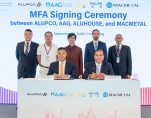
HONG KONG SAR – Media OutReach Newswire – 1 October 2025 – Aluminium Products Company (ALUPCO), an aluminum extrusion producer in Saudi Arabia and Asia Aluminum Group (AAG), a leading Hong Kong aluminum extrusion manufacturer with a production base in Mainland China, signed an agreement on September 29 in Hong Kong. The partnership will form three joint ventures, including AAG member companies AluHouse and MacMetal, With a […]

Matein Khalid The old adage that stock markets swing between fear and greed has been borne out by the mixed performance of Saudi Arabia’s Tadawul All Share Index over the first nine months of 2025. A turning point came on Wednesday September 24 when the Tadawul staged its biggest single-day rally since 2020, after a Capital Market Authority board member signalled that the 49 percent foreign ownership cap on Saudi equities […]

Matein Khalid Wall Street’s strong bid is skating on macro thin ice as a government shutdown that reflects the toxic polarization in Congress looms. The latest PCE data shows that Powell’s fear for a tariff related uptick in inflation was well founded and Fed funds futures have narrowed the odds of a December rate cut to only 60%, which is perfectly rational given that the US economy […]

Washington’s plan to sharply raise the cost of H-1B visas—the key route for skilled overseas professionals into the United States—has consequences far beyond immigration policy. It signals a potential reallocation of talent, capital and innovation that could redefine where the next wave of technology growth takes place. If the US prices out the world’s top engineers, data scientists and entrepreneurs, those individuals will gravitate toward regions offering […]

By Salah Uddin Shoaib Choudhury Bangladesh is entering one of the most dangerous phases of its history. At the centre of this looming crisis is the unelected regime of Muhammad Yunus, which is presenting itself abroad as democratic and reformist while systematically dismantling the country’s defence and intelligence structure. Behind the veneer of Nobel fame and global endorsements lies a far darker reality: Yunus’ growing alignment with […]

ROSHN Group, a Public Investment Fund-backed real estate developer, has launched home sales for the fifth phase of the SEDRA community in northern Riyadh, offering updated designs and expanded amenities as part of a push to meet growing demand. The new release includes more than 44 percent of the phase dedicated to open spaces and public amenities, featuring running routes, cycle paths, and landscaping built around a […]

Saudi Arabia’s AI company Humain is engaged in detailed negotiations with leading private equity and investment firms, including Blackstone Inc. and BlackRock Inc., over a major funding alliance aimed at strengthening its data centre infrastructure and other AI-related operation capacities. Key participants say the deal size could run into the billions of dollars. Humain, which is wholly owned by the Public Investment Fund and chaired by Crown […]

VISHNU RAJA
RYO YAMADA
HITORI GOTOH
IKUYO KITA