Just in:
Geely’s i-HEV Intelligent Hybrid Technology Offers a New Direction Vision for Gasoline-Powered Vehicles // Private varsities bill all set to face the axe // UK air traffic outage inflicted £33m financial losses // Xi Jinping Preparing For A Trilateral Summit With Trump And Putin At APEC Summit On Nov 18-19 // CR Longdation Aethereal Cybersecurity × Global Cybersecurity Alliance (GCSA) Join Hands to Establish the “AI and Cybersecurity Research Centre” // Kochi police detain two actors over bid to honey trap doctor // Dubai boat show confirms international shipyard line-up for November // Cloudflare unveils Zero Wire vulnerability intelligence service // APT29-linked campaign exploits outdated Apple and Android software // e-Crime Bureau Signs Cybersecurity Partnership With Smart Africa, Reinforcing Its Global Expansion // Emaar approves Development buyout ahead of planned delisting // Hong Kong mandates crypto transaction disclosures to tax authorities // OpenAI identifies 948 Linux privilege escalation flaws using AI // Miss Universe Hong Kong Jen Zhou Departs for Puerto Rico to Compete in the 75th Miss Universe World Final // Fast Just Got Fastest: STING Energy Boost™ Celebrates Kimi Antonelli’s Formula 1® World Championship and the Fan Energy Behind It // Trump’s Iran War Has A Share Of Contribution To His Midterm Debacle // After Reaching 7 Million Users in the Philippines, Skyro Launches Transparent Cash Loans in Malaysia // Ta’ziz finalises $1.39bn funding for Ruwais industrial facilities // Emirates Group records AED 4.1 billion half-year profit // Geely’s i-HEV Intelligent Hybrid Technology Offers a New Direction for Gasoline-Powered Vehicles //

News related to
Trump

A ballistic missile launched by Iran struck the Tel Aviv Stock Exchange building in Ramat Gan on 19 June 2025, inflicting substantial structural damage in the heart of Israel’s financial district. This incident occurred amid a coordinated barrage that also hit key civilian infrastructure elsewhere, including Soroka Medical Centre in Be’er Sheva, intensifying already volatile regional tensions.

Sirens wailed across central and southern Israel as air defence systems engaged waves of inbound missiles. Between 20 and 30 ballistic projectiles were reported, an escalation surpassing previous exchanges earlier this monthꟷnotably those on 15 and 16 June, which injured dozens and damaged residences in Tel Aviv, Bat Yam and Haifa. This latest salvo targeted multiple urban areas, with at least 32 civilians confirmed wounded by Magen David Adom teams, some in serious condition.

The stock exchange structure, known as Birsa, sustained extensive facade damage and shattered windows, with parts of surrounding offices impacted. Video footage circulated online showing debris falling from upper floors into streets below. Emergency crews were deployed immediately to evacuate employees and assess structural integrity, though no fatalities were reported at the site.

In parallel, Soroka Medical Centre at Be’er Sheva—Israel’s principal hospital serving around one million residents with more than 1,000 beds—was also struck. Footage and eyewitness reports confirmed significant damage: roof collapse in some wards, shattered glass across corridors and injuries among both patients and medical staff. Hospital officials imposed strict access controls, advising the public to avoid the area as emergency protocols were activated.

Israel’s air-defence systems, including Iron Dome and Arrow batteries, intercepted many of the missiles but failed to prevent all impacts. Some missiles penetrated defences and struck densely populated neighbourhoods, damaging residential high-rises and injuring civilians. This pattern marks a troubling shift. Previous intercepts had been more successful, but the latest strikes have underscored vulnerabilities in urban protection.

The missile offensive came as retaliation for Israel’s strikes on Iranian nuclear facilities. Earlier on 19 June, Israeli aircraft reportedly struck the heavy-water reactor at Arak and a related plutonium-production component, in what the Israeli government called efforts to disrupt Tehran’s nuclear capabilities. Iran’s state media countered that the reactor had been evacuated in advance and there was no radiation leak.

Prime Minister Benjamin Netanyahu publicly condemned the missile strikes on Israel’s financial hub and its hospital network, accusing Iran’s leadership of targeting civilians and vowing that Tehran “will pay the full price”. Defence officials say that Iran deployed over 25 missiles targeting Israeli urban centres during this wave.

Humanitarian services are stretched thin. Magen David Adom paramedics reported at least 32 people with injuries ranging from shock and minor shrapnel wounds to serious trauma in Be’er Sheva and Tel Aviv. Hospitals near strike zones have diverted critically ill patients and limited admissions to emergencies, raising concerns over the continuity of essential health services.

Economically, the assault on the stock exchange reverberated across markets. While share trading has continued, operational disruptions occurred as staff evacuated and investigations into building safety commenced. Analysts note that the financial centre embodies Israel’s economic resilience, but warn that repeated infrastructure targeting injects uncertainty into investor sentiment.

As missiles fly in both directions, global powers are watching warily. US President Donald Trump indicated possible military support for Israel pending internal approval, while European leaders called for restraint and emphasised the potential for diplomatic channels. The International Atomic Energy Agency has voiced alarm over Iran’s uranium enrichment practices, now exacerbated by military confrontations sparked by retaliatory airstrikes.

Israeli authorities warn that this may be Iran’s most sustained attack yet, burning through long-range arsenal previously reserved for strategic military targets. Intelligence assessments suggest Iran is deploying missiles intensively—over 400 since the conflict’s escalation—though only a fraction have struck urban centres.

With civilian infrastructure clearly in the crosshairs, the stakes are escalating dangerously. Analysts warn that further strikes on hospitals, markets or cultural institutions may invite stronger Israeli countermeasures, potentially widening the conflict. For now, cities remain on high alert as missiles continue to disrupt daily life and rattle the foundations of an already tense Middle East.

U.S. President Donald Trump has appealed directly to the House of Representatives to pass the GENIUS Act—a bipartisan stablecoin regulation bill cleared by the Senate—without any amendments or delays, stressing that it will position the country as the “undisputed leader” in digital assets.

The Senate passed the bill on 17 June with a decisive 68‑30 vote, supported by senators from both parties. It introduces stringent rules for stablecoin issuance, including full backing of coins with liquid reserves and monthly disclosures of reserve compositions, alongside audit and Treasury oversight provisions. Trump openly praised the legislation, calling it “pure genius” and urging House Republicans to advance a “clean” version so it reaches his desk before Congress breaks for its August recess.

Major market players reacted positively. The approval spurred significant gains in related equities: shares of Circle Internet, issuer of the USDC stablecoin, surged between 16% and 27%, reflecting investor optimism for regulatory clarity and mainstream token adoption.

The GENIUS Act’s framework mandates that only permitted issuers—such as banks or federally approved payment companies—may issue stablecoins for U.S. users. It requires a one‑to‑one reserve ratio in U.S. dollars or Treasuries and monthly public disclosures about reserve composition. Additionally, it introduces safeguards for consumer protection and bankruptcy protocols prioritising stablecoin holders. Large issuers will have to undergo annual audits, and the bill prohibits stabilecoin ownership by Congress members, though it excludes the President and Vice President.

While Trump’s endorsement reflects his broader pro-crypto pivot—underscored by investments like Bitcoin, policy appointments, and support from his digital-assets advisory council—critics have flagged potential conflicts of interest. Trump and his family hold substantial stakes in crypto ventures including World Liberty Financial and its USD1 stablecoin, having earned tens of millions in 2024. Critics stress that exemption of the President from the bill’s conflict-of-interest ban leaves a loophole that some fear could be exploited.

Senators on both sides celebrated the bill. Republican sponsor Bill Hagerty described it as a “paradigm-shifting development” that moves the U.S. toward global leadership in crypto. Senate Banking Chair Tim Scott described it as “the most significant digital assets legislation ever to pass the U.S. Senate”. Treasury Secretary Scott Bessent projected that the bill could expand the stablecoin market to $3 trillion‑plus by decade’s end.

Nonetheless, the path ahead is not without hurdles. Some Democrats, including Elizabeth Warren, Jeff Merkley and others, raised objections during Senate negotiations, warning the bill could grant a “super‑highway for corruption” and fails to curtail potential for big tech firms entering the stablecoin market. Senate negotiators incorporated numerous amendments to secure support, but key concerns remain unresolved.

Oil markets surged on Tuesday and Wednesday as escalating military exchanges between Iran and Israel sparked investor anxiety. Brent crude futures climbed approximately 2.1 per cent to $74.79 a barrel by 12:02 GMT, while US West Texas Intermediate settled near $73.19—following intraday swings exceeding 2 per cent gains and drops. The gains were driven by soaring geopolitical concerns after Israel bombed Iran’s South Pars gas field—shared with Qatar—igniting a fire that prompted Iran […]

Senior officials in Washington have quietly activated contingency plans for military strikes against Iranian nuclear facilities, marking a dramatic shift in US posture amid escalating Israeli–Iranian hostilities. According to multiple reports, including Bloomberg and Reuters, the White House and Defence Department are preparing the operational infrastructure needed to engage Tehran directly.

President Donald Trump, speaking on 18 June outside the White House, offered only ambiguity: “I may do it. I may not do it… nobody knows what I’m going to do.” Meanwhile, senior US generals, defence secretaries and intelligence chiefs are said to be readying federal agencies for a possible weekend strike. Forces in the Middle East have been repositioned; aircraft and ships have been moved from bases such as Al‑Udeid in Qatar and Bahrain’s Fifth Fleet port to reduce vulnerabilities.

Sources indicate that the primary target could be Iran’s underground Fordow uranium enrichment plant — a hardened bunker facility situated within a mountain and long deemed beyond Israel’s military reach without US bunker‑busting capacity. With Israel continuing airstrikes on Iran as part of ‘Operation Rising Lion’, analysts assess that a US strike would dramatically escalate the conflict.

Within the White House, debate is intensifying. The New York Times and Washington Post report that Trump, influenced by hawkish advisors such as Senator Lindsey Graham and defence chiefs, has signed off on strike plans but is awaiting final approval. His delay aims to allow Iran a final diplomatic window — offering a chance to curb uranium enrichment before force is used.

Opposition persists even within Trump’s own camp. A divide between hawks, advocating for decisive action, and MAGA-aligned isolationists, including Vice President Vance and media figure Tucker Carlson, highlights the internal tug-of-war shaping presidential decision‑making. Trump has underscored this dynamic: advisors like Gen. Dan Caine and CIA Director John Ratcliffe have pressed for a more aggressive stance, while isolationists urge restraint.

Politically, the administration faces calls for a formal congressional mandate. Critics argue the Constitution requires authorisation for military action beyond self‑defence; proponents counter the urgency of neutralising Iran’s perceived nuclear threat demands swift action.

Diplomacy continues in parallel. The UK, France and Germany are convening in Geneva to press Iran on de-escalation — a track the US has distanced itself from. Tehran has responded with warnings to Washington, promising strong retaliation if US forces become involved.

Markets have reacted with caution. Observers note fears of a broader Middle East conflict, amplified oil price volatility, and rising inflationary risks tied to increased military spending. Central banks, notably the Federal Reserve and Bank of England, must weigh geopolitical shocks alongside inflation outlooks.

On the ground, Israeli airstrikes have continued across Iran, targeting nuclear infrastructure including Arak and Natanz, with over 1,100 sites reportedly struck since mid‑June. Iran has launched multiple missile barrages at Israeli territory; civilian casualties are said to be in the hundreds on both sides.

The timing of any US strike remains uncertain. Sources cite a possible weekend window, with final orders likely to be issued at the last moment. Pentagon leadership, including SecDef Hegseth and Gen. Caine, are expected to have operational control, while the president retains final authority.

As conflicting pressures swirl — military readiness, strategic diplomacy, domestic political debates — all eyes are on whether President Trump will strike at Iran’s underground sites or continue hedging amid rising global risk.

Matein Khalid The deployment of 30 US air-fueling tankers to the Middle East strongly suggests that Trump has decided to escalate the war with Iran with an American led strike on the underground nuclear site at Fordo. Since the B-2 Spirit super bombers would need tankers to refuel their fighter escort. Ali Khamenei’s tweet threatening America was precisely the wrong message to send to Trump at a […]

Cost estimates suggest manufacturing and assembling an iPhone entirely in the United States would push retail prices well beyond current norms, potentially reaching up to USD 3,500. Analysts point to steep labour costs, the absence of a mature electronics supply chain, and existing tariffs as primary drivers behind the inflation. Bill of materials for an iPhone 16 Pro is around USD 550, with assembly and testing adding approximately USD 30 when […]

Oil surged on Wednesday amid escalating friction between Iran and Israel, with Brent crude topping $76.60 and West Texas Intermediate reaching roughly $75.10 a barrel. Market momentum was powered by rising fears over supply chain vulnerabilities in the Middle East, even though core oil infrastructure remains largely intact and operational. The escalation entered its sixth day as both nations exchanged strikes. President Trump has intensified U.S. military […]

Advertisements

Matein Khalid There is precious little good news to emerge from the Middle East since the IDF launched its spectacular blitzkrieg and leadership decapitation strike against Iran’s nuclear asset and military/intelligence elite last Friday. This weekend was grim with Iran’s ballistic missile strike on Haifa and Tel Aviv with even a real miss on the IDF command and control complex in Kirya. Netanyahu’s boast that he would […]

The U.S. Senate has enacted the GENIUS Act, the first-ever federal framework for regulating dollar‑pegged stablecoins, with a decisive 68–30 bipartisan vote on 17 June 2025. Eighteen Democrats joined Republicans in supporting the legislation, which now advances to the House and is expected to reshape Washington’s digital asset rules.

The bill mandates that stablecoin issuers back tokens with liquid assets such as U.S. Treasuries, require regular financial disclosures and adhere to anti‑money‑laundering measures. It grants banks the authority to issue stablecoins, while explicitly restricting executive branch officials and legislators from sharing in their profits—a direct response to concerns over conflicts of interest.

A surge in crypto-sector investment in political campaigns appears to have shifted momentum. Industry spending topped $119 million in support of pro‑crypto congressional candidates during the 2024 cycle. Lobbyists then intensified efforts to engage Democratic lawmakers, viewed as essential for reaching the 60-vote threshold in the evenly divided Senate.

Internal communications among Democratic operatives reveal strategic alignment with crypto backers. In a private group chat described in reporting by the Lever, coalition members acknowledged that, despite ethical concerns, opposing the industry would be “political suicide.” One member reportedly observed that any amendment targeting Trump‑family conflicts would be “DOA,” suggesting token amendments offered for optics rather than impact.

Legislators including Senator Elizabeth Warren have voiced misgivings, arguing that the bill inadequately shields consumers or addresses risks associated with big‑tech or foreign‑issued stablecoins. She contends it grants too much leeway to the likes of former President Donald Trump’s crypto ventures, such as the Trump memecoin and World Liberty Financial.

The crypto lobby’s efforts have extended beyond campaign funding to retention of influential political operatives. Coinbase, for instance, recently appointed veteran Democratic strategist David Plouffe to its advisory board, joining a roster of insiders from both parties. Observers note this reflects crypto’s emerging status as a “politically competitive” constituency.

The political dynamic has shifted decisively. As AP reports, Democrats are balancing distrust of Trump-linked crypto enterprises with newfound recognition of the sector’s electoral influence. Backing the GENIUS Act became for many a strategic necessity, notwithstanding deep ideological resistance to deregulation.

The Senate vote occurred amid broader legislative discussions. The CLARITY Act—aimed at clarifying agency jurisdiction across the SEC and CFTC—is under consideration in the House Financial Services Committee. Some lawmakers propose merging the stablecoin and authority-defining bills, though others caution it could delay the GENIUS Act’s passage.

Crypto industry leaders view the GENIUS Act as a critical precursor to more comprehensive legislation. Ledger’s Head of Global Policy, Seth Hertline, described the Senate’s action as “a political bellwether” for the sector’s broader legislative agenda.

The bill’s passage also intersects with Trump’s personal crypto interests. His family’s stablecoin projects have sparked accusations of profiteering and lobbying for relaxed oversight. Critics warn that current legislative safeguards fall short of preventing conflicts of interest.

The next phase lies in the House, where Republican leadership must reconcile the Senate’s GENIUS Act with its own STABLE Act or integrate it into broader regulatory plans. Some Republicans advocate adding provisions to limit central bank digital currency initiatives, though such measures may complicate Senate approval.

Major stablecoin issuers such as Tether and Circle —together controlling over $200 billion in supply—stand to gain regulatory clarity and legitimacy if the GENIUS Act becomes law. Recent moves by major corporates, including JPMorgan’s planned stablecoin on Coinbase’s Base chain and indications that Amazon and Walmart are exploring token issuance, signal growing private‑sector enthusiasm.

As the House deliberates, questions remain whether the Senate’s bipartisan vote marks the start of a fully fleshed-out U.S. crypto regulatory regime—or the culmination of a high-stakes battle between policy integrity and political pragmatism.

Coinbase has formally requested approval from the U.S. Securities and Exchange Commission to offer tokenised equities in the country. The scheme would let users buy and trade digital tokens representing company shares, potentially enabling 24/7, faster, and lower-cost equity trading by leveraging blockchain technology. If successful, Coinbase could directly compete with established brokerages such as Robinhood and Charles Schwab.

This strategic initiative marks a pivotal expansion beyond crypto into traditional financial markets. Coinbase’s chief legal officer Paul Grewal described the push as a “huge priority,” emphasising the potential to establish a regulated framework for tokenised securities. To proceed, the company is seeking a “no-action letter” or an exemptive relief from the SEC—mechanisms that would allow official clearance to operate without enforcement action.

The tokenisation of shares aims to reduce transaction costs, accelerate settlement and expand market accessibility. Proponents believe that blockchain-based equities could revolutionise trading. However, global regulators have flagged challenges including low secondary-market liquidity and absence of unified global standards.

Coinbase’s renewed interest follows a prior attempt to introduce a tokenised version of its own stock at the time of its 2020 direct listing—an effort ultimately blocked by the SEC. Now, with the SEC’s evolving crypto task force and indications of a more favourable regulatory environment under the Trump-appointed leadership of acting chair Mark Uyeda, Coinbase envisages a window of opportunity.

Institutional enthusiasm appears to be rising, with CFO Alesia Haas noting that prior regulatory obstacles—“brick walls,” as she put it—may now be negotiable. CEO Brian Armstrong similarly asserted the potential for round-the-clock trading innovation and applauded engagement with the SEC’s crypto task force.

Despite this optimism, regulatory hurdles remain. Coinbase is not registered as a broker-dealer, and any platform facilitating trading in tokenized equities must satisfy existing legal requirements. The SEC had previously sued Coinbase in 2023, alleging the company operated an unregistered brokerage—a lawsuit later dismissed in 2025 under the Trump-appointed SEC leadership.

If granted a no-action letter, Coinbase would gain regulatory assurance that trading tokenised equities is compliant under current laws—a reassurance deemed critical to advance institutional adoption in the sector. Some industry commentators suggest that while tokenised equities are gaining traction internationally, U.S. regulatory clarity is key to unlocking broader institutional uptake.

Globally, exchanges like those operated by Kraken are already piloting tokenised shares—known as xStocks—in international markets outside the U.S.. These moves reflect a broader shift: analysts such as Colin Butler of Polygon have predicted tokenised real‑world assets could reach a market potential of up to $30 trillion in the long term.

Within the U.S., Coinbase has sought to shape the regulatory conversation. In March, the company submitted 36 detailed recommendations to SEC Commissioner Hester Peirce, articulating a blueprint for distinguishing between digital commodities and digital securities, and calling for secondary-market clarity. The SEC also hosted roundtable discussions earlier this year with industry participants on asset tokenisation, including former Coinbase counsel Alex Zozos.

Securing approval would align Coinbase with a mosaic of international initiatives exploring tokenised share trading, potentially enabling U.S. investors to trade equities with crypto-like efficiency. Yet adoption remains tied to demonstration of adequate liquidity, interoperability, and regulatory consistency—areas where global standards are still evolving.

While no timing for product rollout has been disclosed, Paul Grewal stressed that obtaining a no-action letter is essential to injecting confidence into institutional investors, paving the way for a new class of regulated digital securities.

By Nitya Chakraborty Israeli missile strikes against Teheran and Iran’s counter offensive entered its fifth day on June 17 Tuesday with U.S. President Donald Trump dramatically cutting short his stay in Canada for G-7 meeting for Washington indicating that he would be busy in peace moves in the next few hours for organizing a ceasefire […]

President Donald Trump has called for the immediate evacuation of Tehran, warning that Iran “cannot have a nuclear weapon” after a series of escalating military exchanges with Israel. He issued the statement via Truth Social while attending the G7 summit in Canada, then departed early to convene his national security team. The growing hostilities, now entering a fifth day, have provoked market turbulence, prompted military deployments, and […]

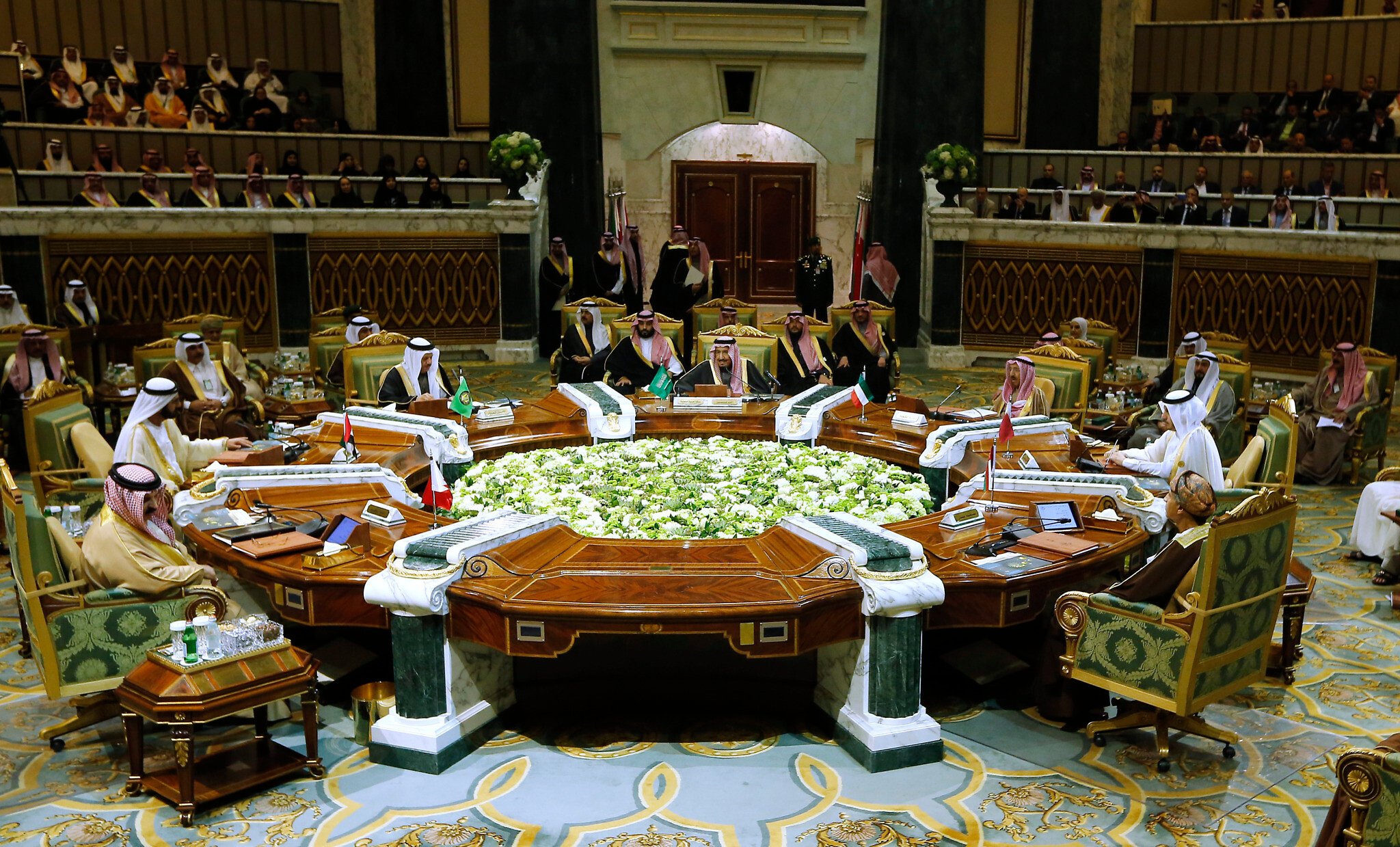
Gulf states have entered a heightened state of alert amid intensifying hostilities between Israel and Iran, as regional leaders warn the confrontation risks dragging the Gulf into a wider, destabilising war.

Leaders of the Gulf Cooperation Council convened an emergency ministers’ meeting chaired by Kuwaiti Foreign Minister Abdullah Al‑Yahya, with Secretary‑General Jassim Al‑Budaiwi declaring the situation had deteriorated into “extremely dangerous and unprecedented escalation,” and entering “full alert” mode to monitor environmental and radiological conditions across member states. He emphasised that continued military strikes, particularly near nuclear sites, would threaten regional infrastructure, health and economies.

Gulf diplomats have condemned the Israeli bombardment of Iranian territory and called on all parties to halt operations and return to dialogue. The council’s Emergency Management Centre is implementing precautionary measures across environmental and radiological sectors, reflecting concern over inbound radiological fallout.

Analysts from the Gulf warn that the strategic vulnerability of Gulf waterways such as the Strait of Hormuz and Bab al‑Mandab makes the region highly exposed to spill‑over from the Iran‑Israel clash. S&P Global Ratings has revised its assessment of regional sovereign risk higher, citing threats to oil exports, transport routes, tourism, capital flows and banking sector resilience in Gulf countries.

Commentators such as Abdulaziz Sager of the Gulf Research Center caution Gulf states are risking sovereignty, infrastructure and public trust unless the conflict is diplomatically defused. He urged activation of regional mediation channels to prevent Gulf countries from being drawn into military exchanges.

Gulf economists emphasise the economic ramifications: disruptions to global supply chains, escalated insurance costs, rising oil prices and capital flight could erode financial stability. While banks have adequate buffers, prolonged conflict could dent business confidence and growth across Gulf economies.

Diplomatic efforts are also underway within the Gulf. Oman and Qatar are spearheading ceasefire talks between Tehran and Washington as a pathway to stabilisation, with Iran open to rejoining nuclear discussions should Israeli strikes cease. Gulf leaders are leveraging their neutrality and communication channels with both Israel and Iran to broker a pause in hostilities.

Within Gulf societies, governments are working to reassure citizens. Public communications in Qatar confirm that radiation levels remain within safe thresholds, while Kuwait’s military affirms that missile trajectories affecting Iran and Israel pose no risk to its airspace.

The reaction within Iran’s sphere of influence appears measured. Unlike prior incidents, allied non‑state actors such as Hezbollah and Yemen’s Houthis have yet to launch retaliatory strikes, suggesting Iran is tempering its response amid Gulf diplomatic pressure.

US diplomacy remains a complex factor. Washington has escalated military readiness by dispatching aerial refuelling assets and an aircraft carrier strike group to the region, yet has stopped short of intervening directly. President Trump has verbalised support for diplomatic channels and warned against Iran acquiring nuclear arms, while signalling that Iran had expressed willingness to end hostilities.

Gulf monarchies are striving to balance neutrality and economic stability. They maintain diplomatic ties with both Iran and Israel while amplifying calls for restraint. Experts caution that escalatory miscalculations could shatter this delicate equilibrium, potentially sparking wider engagement and drawing Gulf states into direct confrontation.

The Trump Organisation has unveiled Trump Mobile, featuring a $499 gold-hued T1 smartphone and a monthly “47 Plan” priced at $47.45. Designed to target conservative consumers disenchanted with mainstream providers, the offering promises an American‑branded telecommunications package with US‑based customer support and domestically produced handsets. Donald Trump Jr and Eric Trump introduced the venture on 16 June 2025 at Trump Tower, emphasising the use of US‑made phones […]

Issuing its first formal financial move beyond social media, Truth Social’s parent, Trump Media & Technology Group, has filed an S‑1 registration statement with the U.S. Securities and Exchange Commission to launch a Bitcoin and Ethereum exchange‑traded fund under the Truth Social brand. The application outlines plans to list the fund on NYSE Arca, although ticker symbols and fee structures have yet to be disclosed.

NYSE Arca initiated the process on 3 June 2025 by submitting a Form 19b‑4 on behalf of TMTG and partner Yorkville America Digital, seeking approval to list the dual‑crypto ETF. The S‑1 filing followed on 5 June and provides deeper insights into structure and risk disclosures. The filings initiate the standard dual‑review process; the SEC has a 45‑day window for initial decision and up to 240 days for final approval.

The prospectus confirms that the fund will hold spot Bitcoin and Ethereum—the first dual‑crypto vehicle under the Truth Social banner. Physical custody of assets will be handled by Foris DAX Trust Company, affiliated with Crypto.com, which will also serve as execution agent and liquidity provider. Yorkville America Digital, a Florida‑based asset manager that emphasises “Made‑in‑America” digital‑asset products, is named as the sponsor.

Eric Balchunas, senior ETF analyst at Bloomberg Intelligence, noted the risk disclosures reference President Trump’s crypto‑favourable posture—highlighting regulatory shifts, the SEC’s newly launched crypto task force, and a strategic U.S. Bitcoin reserve executive order—marking the first time an ETF filing openly tied a sitting president’s actions to fund risk.

The launch is part of a broader the strategic pivot by Truth Social into financial services. Earlier this year, Trump Media announced a $2.5 billion Bitcoin treasury initiative and submitted trademark applications under its Truth.Fi brand for various crypto‑focused products. The move aligns with similar industry trends—11 spot Bitcoin ETFs have been approved since January 2024 by providers including BlackRock, Fidelity and Grayscale—a venue drawing billions in investor capital.

Yet the dual‑crypto ETF enters a saturated market, and analysts caution that without distinctive value, it may not draw substantial flows despite its political branding. Market watchers observe that assets under management in competing spot Bitcoin ETFs are heavily concentrated—with BlackRock’s IBIT holding approximately $69 billion, followed by Fidelity’s fund at around $21 billion.

The filings also highlight potential conflicts of interest. Yorkville America has financial ties with TMTG, including advising on Truth.Fi and investing in both the firm’s stock and private placement used to bolster the Bitcoin treasury. The application explicitly acknowledges these links may pose risks to investors.

Timing is politically significant, with the SEC’s current leadership under Paul Atkins perceived as taking a more crypto‑friendly stance. SEC deregulation efforts under President Trump’s administration also form part of the context.

Should the ETF be approved, it will enable investors to gain regulated exposure to Bitcoin and Ethereum—devoid of managing digital wallets or crypto‑exchange accounts—via traditional brokerage channels. The fund is poised to calculate daily net asset values, with intraday quotations updated every 15 seconds and comprehensive transparency on holdings, premiums and discounts.

However, regulatory clarity remains pending. Absent from the filings are critical operational details, including ticker symbols, expense ratios and seed capital levels. Until the S‑1 becomes effective, the ETF cannot be marketed to investors.

This marks a strategic landmark in Truth Social’s quest to diversify beyond digital media. Its expansion into crypto finance brings together political influence, regulatory momentum and mainstream investor demand, potentially reshaping its corporate identity. At stake is the fund’s ability to carve a credible and competitive space among established crypto‑ETF leaders.

By Nantoo Banerjee With the country’s consumer price inflation rate hovering around 3.20 percent in the last two years, the Reserve Bank of India’s latest decision to cut the bank rate by 50 basis points, the third consecutive reduction since February this year, may be understandable. However, it seems to have come at the wrong […]

Leaders at the 51st G7 summit convening in Kananaskis, Canada, are confronting an abrupt surge in hostilities between Israel and Iran, marked by intensified airstrikes, rising civilian casualties, and mounting diplomatic tensions. With missile barrages and pre‑emptive assaults already claiming hundreds of lives, the summit agenda has shifted dramatically, prioritising strategies to contain the conflict and avert a broader regional war.

Israeli forces launched “Operation Rising Lion” on 13 June, targeting Iran’s nuclear, ballistic missile, and military infrastructure—including key command centres and Iranian Revolutionary Guard facilities around Tehran—and killed high‑ranking officials and scientists. Iran retaliated with a wave of over 270 missiles, deploying new tactics that overwhelmed Israel’s air defences and struck densely populated urban areas such as Tel Aviv and Haifa. As of 16 June, at least five Israelis were killed and more than 100 injured in the latest overnight strikes. Iranian health authorities report a death toll of at least 224, predominantly civilians, and over 1,200 wounded.

The rapid escalation has introduced fresh complexity to international diplomacy. U.S. President Donald Trump vetoed an Israeli proposal to target Iran’s Supreme Leader Ayatollah Ali Khamenei, emphasising that such action would only inflame the situation. Trump has also signalled the possibility of brokering a deal, suggesting Iran “must make a deal before there is nothing left” and voicing optimism that peace negotiations could emerge from this crisis.

European leaders are urging urgent collective action. German Chancellor Friedrich Merz asserted at the summit that unity is essential to prevent Iran’s nuclear ambitions, uphold Israel’s right to self‑defence, curb escalation, and open diplomatic channels. He indicated that measures could include sanctions, and emphasised cooperation with regional actors such as Oman to reduce tensions with Iran and Yemen’s Houthi rebels. Meanwhile, Ursula von der Leyen and Emmanuel Macron deployed diplomats to press for negotiation, although Macron’s optimism about a swift resolution contrasts with ongoing military deployment in the region.

Britain has signalled readiness to support Israel with defensive and civil aid while advocating restraint. Prime Minister Keir Starmer has reinforced diplomatic engagement with Trump, Netanyahu, and Gulf leaders, and authorised RAF Typhoon jets as a contingency against potential Iranian threats to UK bases. Nonetheless, Iran has dismissed ceasefire calls while military operations continue.

Canada, hosting the summit, has abandoned the traditional joint communiqué, opting instead for chair’s summaries to manage discord—particularly over trade and Middle East policy—between the U.S. and other participants. Canadian Prime Minister Mark Carney emphasised the summit focus on peace, security, supply chains, and jobs—prioritising a co‑ordinated response to the Israel‑Iran crisis.

G7 officials are crafting a unified statement urging Iran to halt its nuclear programme and Israel to pause expansive military action, signalling tangible diplomatic pressure backed by clear consequences for non‑compliance. However, persistent disagreements across the bloc—over trade, relations with Russia, and climate policy—complicate efforts to forge a consensus.

Regional actors are mobilising diplomatic channels. Qatar and Oman are reportedly engaged in shuttle diplomacy to de‑escalate the conflict. Simultaneously, Iran‑backed groups, including militias in Iraq and Houthis in Yemen, are extending hostilities across front lines, prompting concern that the confrontation may metastasise into a wider regional war.

The humanitarian fallout is grave. Large‑scale displacement is underway as Iranians flee Tehran after warnings issued by Israeli forces to civilians near weapons facilities. Hospitals in northern provinces are stretched, while the Iranian Red Crescent has launched mobile clinics to address urgent needs. Energy markets have also reacted sharply: Brent crude prices spiked as Gulf insecurity intensified.

Analysts warn the conflict risks triggering retaliatory terror attacks in the West and disrupting global energy security. The G7 faces a pivotal test: coordinating military readiness, civilian protection, sanctions, nuclear non‑proliferation, and active diplomacy, all while preserving internal unity amid geopolitical divisions.

Iran launched a coordinated attack using ballistic missiles and combat drones against Israel, marking a significant intensification of hostilities and signalling a tactical shift in its military posture. A new guided ballistic missile—named ‘Haj Qassem’ after the late Major‑General Qasem Soleimani—was deployed alongside swarms of drones, striking central Israel including Tel Aviv and Haifa. Iranian state media described the operation as a hybrid assault, showcasing advanced navigation capabilities […]

Donald Trump’s financial disclosure for the 2024 calendar year reveals more than $600 million in gross income and at least $1.6 billion in assets, offering a detailed window into the former president’s expansive business empire and the diversification of his revenue streams. The filing, submitted on 13 June 2025, highlights a sharp rise in earnings derived from cryptocurrency ventures, numerous golf and hospitality properties, global licensing agreements, and an […]

Dr Imran Khalid “We made a great deal with China. We’re very happy with it.” So declared President Donald Trump in his familiar tone of triumphant ambiguity on June 11, fresh off what was touted as a breakthrough agreement to restore a trade truce between the United States and China. But if history has taught us anything, it is that “done deals” in the Trumpian lexicon tend […]

By Nitya Chakraborty On Thursday June 12, Indian diplomacy under the Prime Minister Narendra Modi reached its lowest ebb when India abstained in the United Nations General Assembly from a vote on a resolution demanding an immediate, unconditional and permanent ceasefire in Gaza. The 193 member UN general assembly passed the resolution overwhelmingly with 149 […]


U.S. Securities and Exchange Commission chair Paul Atkins has formally withdrawn several cryptocurrency-focused rule proposals initiated under former chair Gary Gensler, representing a decisive shift in regulatory strategy.

At the centre of the SEC’s action are two major proposals: amendments to Exchange Act Rule 3b‑16, which sought to classify decentralized finance protocols as securities exchanges, and the implementation of enhanced custody requirements under the Investment Advisers Act for client crypto assets. The withdrawal, confirmed on 13 June 2025, reflects a broader deregulatory drive under the current administration.

Rule 3b‑16 had been poised to expand the SEC’s definition of “exchange” to include systems bringing together buyers and sellers of securities via smart contracts and other DeFi mechanisms. The proposal would have subjected many decentralised platforms to full regulatory oversight, unsettling industry participants and drawing criticism from blockchain developers and legal experts. Many in the crypto sector argued the move would permanently conflate DeFi infrastructure with traditional securities exchanges, hampering innovation.

The custody rule aimed to require investment advisers to deposit all client crypto assets with “qualified custodians” such as banks or registered broker‑dealers. That would have effectively sidelined many crypto-native custodians that don’t meet these standards. Proponents cited the need for robust safeguards, while opponents warned the rule would force clients into a narrow pool of custodians and increase costs.

The SEC’s withdrawal announcement emphasised that it will not pursue finalisation of these proposals and may “consider new rulemaking in the future.” The reversals are part of a broader retreat from Gensler-era initiatives, including planned ESG reporting mandates and cybersecurity obligations. Acting chair Mark Uyeda had suspended both the DeFi exchange and custody rules in March, and this withdrawal gives that decision official effect.

Market reaction was swift. Coinbase’s chief legal officer, Paul Grewal, declared on X that the agency had scrapped “3b16, qualified custodian, and all other unfinished Gensler rule proposals.” Crypto platforms welcomed the rollback, viewing it as a reaffirmation of self‑custody and decentralised financial innovation.

Institutional stakeholders also voiced support. Brian Laverdure, Senior VP of Digital Assets and Innovation Policy at ICBA, noted the agency’s publication had “withdraws several NPRMs” including definition of “exchange” changes and safeguarding rules, sending confidence ripples through community banks and investment advisers.

The shift in posture follows President Donald Trump’s commitment to reducing regulatory burdens on markets. In tandem, SEC staff and FINRA dismantled a long-standing 2019 joint statement on broker‑dealer custody of digital asset securities on 15 May, paving the way for regulated intermediaries to offer crypto custody services under established rules.

The SEC’s deregulatory drive is echoed in recent comments from Uyeda, who in March announced the agency might scrap or significantly amend crypto custody rules introduced during the previous administration. He emphasised a pivot towards “effective and cost‑efficient regulations that respect the limits of our statutory authority”.

Critics caution that this pivot could expose clients to risks. While standards for DeFi governance, custodial integrity, and cybersecurity remain under voluntary frameworks, there are concerns that stripping formal oversight could open institutional and retail investors to vulnerabilities. Legal analysts predict renewed debate over the SEC’s authority to classify new financial structures as securities.

DeFi proponents, for their part, argue the withdrawal presents an opportunity. With regulatory certainty withdrawn, startups and developers may double down on innovation, integrating hybrid compliance models that rely on decentralised autonomy rather than central oversight. Meanwhile, traditional custodians and broker‑dealers are expected to enter the crypto space more aggressively, now freed from the obligation of specialist “qualified custodian” status.

Remaining questions include whether Congress will move to impose legislative frameworks on digital assets and whether the SEC will pursue fresh proposals under a different legal theory. Commissioner Hester Peirce has signalled support for further dialogue and interpretative guidance, reinforcing a more incremental, consultative regulatory model.

The SEC is now scheduled to hold stakeholder forums and public consultations in the coming months. Industry watchers are closely tracking these developments to assess whether the rollback represents a long-term deregulatory reorientation or a temporary reprieve preceding fresh oversight efforts.

Foxconn’s latest customs data confirms that from 1 March to 31 May 2025, an overwhelming 97 per cent of all iPhones assembled in India were destined for the United States, totalling $3.2 billion in exports—nearly double the 50 per cent average seen throughout 2024. May alone accounted for almost $1 billion, the second‑highest monthly export value ever recorded—just behind March’s $1.3 billion. This sharp shift reflects Apple’s concerted effort to navigate escalating U.S. tariffs targeting Chinese […]

By Nitya Chakraborty More than a month after the pause of India’s Operation Sindoor on May 10 at 5 PM, time has come to state it in candid terms that our Prime Minister’s doctrine of New Normal in respect of relations with Pakistan has failed to convince the major global powers. While strongly defending India […]
VISHNU RAJA
RYO YAMADA
HITORI GOTOH
IKUYO KITA
Just in:
TVM –Mangaluru Vande Bharat claims top spot // Geely’s i-HEV Intelligent Hybrid Technology Offers a New Direction Vision for Gasoline-Powered Vehicles // Miss Universe Hong Kong Jen Zhou Departs for Puerto Rico to Compete in the 75th Miss Universe World Final // Geely’s i-HEV Intelligent Hybrid Technology Offers a New Direction for Gasoline-Powered Vehicles // The “1st Greater Bay Area Health and Longevity Summit & Awards Ceremony” concludes successfully in Macao // After Reaching 7 Million Users in the Philippines, Skyro Launches Transparent Cash Loans in Malaysia // Oil advances towards $100 as tanker attacks persist // Private varsities bill all set to face the axe // CR Longdation Aethereal Cybersecurity × Global Cybersecurity Alliance (GCSA) Join Hands to Establish the “AI and Cybersecurity Research Centre” // Xi Jinping Preparing For A Trilateral Summit With Trump And Putin At APEC Summit On Nov 18-19 // Millions Of Indians May Soon Be Deprived Of Government Assistance // Meraas showcases five residential zones at Dubai Design Week // e-Crime Bureau Signs Cybersecurity Partnership With Smart Africa, Reinforcing Its Global Expansion // Kochi police detain two actors over bid to honey trap doctor // Emaar approves Development buyout ahead of planned delisting // Dubai boat show confirms international shipyard line-up for November // Ousted top Kochi cop gets IG post // UK air traffic outage inflicted £33m financial losses // Technology shares plunge as Nasdaq enters correction // Asia Left Behind: Ten international companies have yet to report delivering on their cage-free egg pledges across the region //