News related to
Trump

Oil prices have shifted sharply this week, with demand forecasts now under pressure from escalating trade tensions fuelled by fresh tariffs. Brent crude is trading in the high‑60s per barrel, while benchmark WTI hovers around mid‑60s, reflecting growing investor caution. Analysts point to revised supply and demand projections as indicators of a changing market landscape.

An International Energy Agency monthly report has cut its global oil‑demand growth forecast for 2025 to 700,000 bpd, the slowest pace since 2009 outside the pandemic, down from 720,000 bpd last month. The downgrade reflects weaker consumption in emerging markets and a cooling US‑China trade outlook. Supply continues to outpace demand as OPEC+ ramps up production; global output in June rose by about 950,000 bpd to reach 105.6 mbpd.

The IEA notes the oil market remains technically in surplus, with inventories building globally—even as regional stock draws persist. Oil runs at refineries have slowed, particularly in the US and China, enabling downward revisions in demand projections. Enverus Intelligence Research offers a counter‑view, pointing to balanced OECD inventories and sustained summer demand north of 1 mbpd, which may support higher prices.

The US Energy Information Administration expects US crude oil production to plateau at roughly 13.4 mbpd in 2025, dropping modestly later this year as lower prices curb drilling activity. Despite this, producers remain vulnerable to profit erosion unless prices stabilise in the $65–70 range.

President Trump’s trade moves have reignited fears of another global trade war, with new tariff letters dispatched to Brazil, South Korea, Japan, the Philippines and others this week. Threats of 50% duties on exports such as copper, semiconductor components and auto parts are weighing heavily on commodity‑linked equity markets and raising recession risk concerns. Oil prices dropped more than 2% on Thursday as benchmark futures responded to the potential hit to economic growth.

While some market participants remain in “wait‑and‑see” mode, given Trump’s unpredictability and history of policy reversals, the overarching effect is to dampen demand forecasts. Onyx Capital’s head of research, Harry Tchilinguirian, cautions against overreaction but acknowledges that tariffs are adding to inflationary pressures and may reinforce Federal Reserve caution.

Geopolitical flashpoints in the Middle East continue to influence sentiment. Oil surged in June as Iran threatened to close the Strait of Hormuz, which handles almost 20% of world oil shipments, but prices eased once the waterway remained open. Meanwhile, Saudi Arabia raised official prices to consumers, citing strong demand in China’s post‑pandemic recovery, though refiners are reporting margin squeezes.

Financial institutions have started to reflect this shifting environment in their projections. A Reuters‑polled group of 40 analysts revised Brent average forecasts for 2025 to $67.86 per barrel—up marginally from May—while predicting demand growth of only around 730,000 bpd. JP Morgan cut its annual Brent estimate to $66, citing rising OPEC+ output and sluggish consumption. TD Economics trimmed its forecast further, expecting 2025 WTI to average near $62, warning of sustained downward pressure from trade risk and oversupply.

Two factors loom large over the coming months. First, the path of trade tensions: further tariff escalations or retaliatory actions could erode industrial activity and fuel sales. Second, OPEC+ strategy: with the bloc unconstrained in raising output, additional production could overwhelm tepid demand, pushing prices below current levels. The IEA projects supply growth for 2025 at 2.1 mbpd, while demand is seen rising just 700 kbpd.

On the financial front, hedge fund positioning has turned cautious, registering the sharpest drop in bullish sentiment since February. Traders are forecasting narrower price ranges ahead, with elevated volatility as tariff developments hit market headlines.

Forward‑looking forecasts remain mixed. EIA projects Brent to average $68.89 in 2025 and $58.48 in 2026, marking a seasonal decline. Enverus suggests the upside remains intact if demand holds steady, especially with summer driving season underway. Market watchers also note that rising gas‑to‑oil switching costs, refinery restarts and diminished spare capacity could temper price declines.

China’s consumption is also under scrutiny. While Beijing seeks to stimulate growth through fiscal and monetary tools, investor sentiment remains fragile. Saudi’s decision to push prices higher was based on perceived strengthening in Chinese demand, but many analysts caution that any slow‑down could rapidly tip the balance.

Emerging long‑term trends offer some balance. IEA’s long‑term outlook suggests oil demand will continue rising through the late 2020s, driven by non‑OECD economies and slower clean‑energy adoption, delaying peak demand beyond 2030. Nonetheless, short‑term price direction seems firmly tied to macroeconomic risks and geopolitical dynamics.
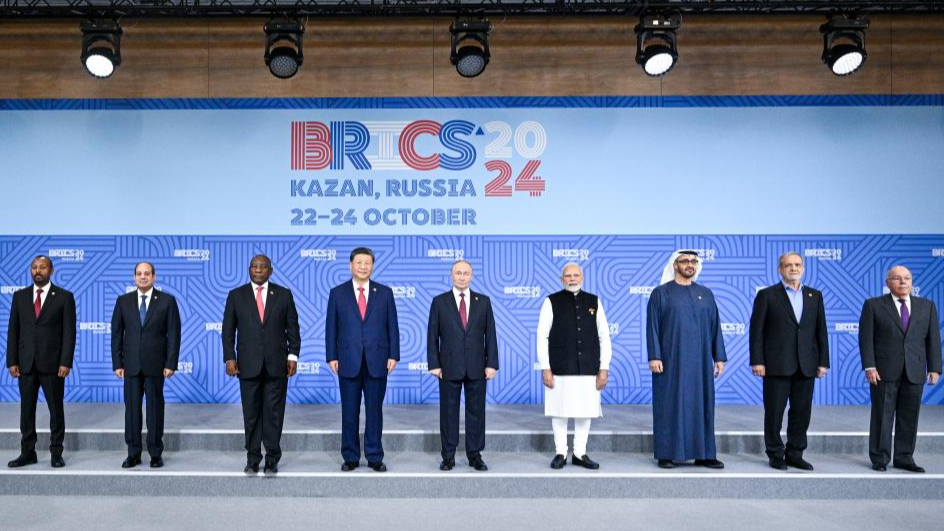
Nigeria’s foreign minister, Yusuf Tuggar, has accused the United States of mounting significant pressure on African countries to accept deported Venezuelans, including individuals released directly from US prisons—a demand Nigeria says it cannot meet given its own domestic challenges. Speaking from Brazil at the BRICS summit on 11 July, Tuggar emphasised that with a population of roughly 230 million and pressing socio-economic issues, Nigeria cannot shoulder such responsibilities. The […]

U. S. consumers now contend with an effective tariff rate exceeding 20%, marking the steepest level observed since the early 1900s, according to estimates by the International Chamber of Commerce following the latest round of import levies introduced under President Trump’s administration. This escalation stems from a newly implemented baseline tariff of 10%, supplemented by selective duties—up to 50% on copper and 200% on pharmaceuticals—pushing the overall […]

By Prakash Karat The infamy that the Narendra Modi government’s foreign policy has earned in the recent period, is something that cannot be understated. On June 13, the United Nations General Assembly adopted a resolution moved by Spain calling for an immediate and unconditional ceasefire in Gaza. The resolution accused Israel of using “starvation of […]

Matein Khalid I had flagged Nvidia in this platform as a must own chip stock on the eve of the AI revolution just before its historic Q2 earnings call in May 2023. Fast forward two years and Nvidia earnings are up 10X while its share price is up 8X since my post as it flirts with a $4 trillion market cap that awaits if the shares trade at […]

Russian Deputy Foreign Minister Sergei Ryabkov stated on Thursday that BRICS is not an “anti‑American” bloc and will reject any “language of threats and manipulation.” This assertion followed U. S. President Donald Trump’s announcement that countries adopting what he termed “anti‑American policies” aligned with BRICS would face an extra 10 per cent tariff. Ryabkov emphasised BRICS’ focus on dialogue and constructive engagement, not confrontation. He underscored that the group […]

By Nitya Chakraborty The 17th BRICS summit held in Brazil on July 6 and 7 has helped in partially restoring the image of the Indian Prime Minister Narendra Modi as the defender of the interests of Global South against the increasing attacks on the political and economic interests of the developing nations by the United […]

Advertisements

XI’s BICKS NO-SHOW: STRATEGIC SHIFT OR SILENT WARNING? CHINESE SYMBOLISM ON CONFIDENCE IN FULL PLAY M A Hossain In the realm of global politics, symbolism matters almost as much as substance. President Xi Jinping of China has decided not to attend this year’s BRICS summit which will be held in Rio de Janeiro. This is the first time President Xi will not be at the summit since […]

U. S. President Donald Trump has announced a sweeping 50 % tariff on copper imports, jolting commodity markets and triggering sharp moves across financial sectors. Copper futures in the United States surged to record highs, while international benchmarks in London and Shanghai retreated under mounting uncertainty surrounding shipment logistics and timing. At a Cabinet meeting, Trump confirmed the unprecedented levy, citing national security and a desire to bolster […]

U. S. former President Donald Trump has warned that any nations aligning with the BRICS bloc’s efforts to challenge the U. S. dollar will face a 10 % tariff, set to take effect by 1 August unless a deal is struck. Speaking at a Cabinet meeting and in a post on his Truth Social platform, Trump characterised BRICS’ currency ambitions as tantamount to “destroying the dollar,” likening such […]

Dubai’s ultra‑luxury real estate market surged in April to June 2025, with transactions for homes priced above $10 million reaching US $2.6 billion, a 37 % rise from the previous quarter and a 63 % increase year‑on‑year, according to London‑based researcher Knight Frank. The emirate recorded 143 such deals in Q2, up from fewer in Q2 2024, underscoring its dominance in the global super‑prime segment. Palm Jumeirah held its status as the top destination […]

Sterling’s recent rally has little to do with the UK economy suddenly outperforming expectations. It has everything to do with the dollar falling out of favour. When the pound hit $1.365 this week—its strongest level since early 2022—it was a flashing red signal that international investors are losing faith in the greenback. Let’s not pretend this is about interest rates. The Federal Reserve is still holding firm, […]

TikTok is preparing a standalone version of its app for U. S. users, slated for launch on 5 September 2025, as part of its strategy to comply with the U. S. law mandating a sale or ban of its American operations. The current app will remain functional until March 2026, although officials say this date is subject to change. Under the Protecting Americans from Foreign Adversary Controlled […]

Elon Musk stated that his newly formed America Party will officially support Bitcoin, branding traditional fiat currency as “hopeless.” He responded succinctly on X to a user asking whether his party would embrace the flagship cryptocurrency: “Fiat is hopeless, so yes.” Musk’s announcement aligns with the party’s broader platform of fiscal conservatism, deficit reduction and modernisation of government, which is packaged alongside calls for balanced budgets and […]

By Nantoo Banerjee It is difficult to believe that India, the world’s fourth largest economy by gross domestic product (GDP) and a major military power, ranks below even the tiny states of Kuwait and Greece when it comes to defence spending as a percentage of GDP. Considering the tricky geo-political situation in the south Asian […]

Dubai Land Department has formalised an agreement with global cryptocurrency firm Crypto. com to establish a blockchain‑driven ecosystem enabling property purchases and sales using digital currencies. The memorandum of cooperation, signed on 6 July, aims to streamline investor verification, custody and settlement processes while advancing real estate tokenisation—supporting the emirate’s Real Estate Strategy 2033 and its AED 1 trillion transaction goal. At the heart of the partnership is the […]

OPEC+ has opted to raise oil production by approximately 548,000 barrels per day in August, marking a sharp departure from earlier plans and surprising markets worldwide. The move, confirmed in a brief video conference, is projected to accumulate a surplus towards the close of the year, potentially eroding revenues for both OPEC members and higher-cost producers, including US shale firms.

With Brent crude prices slipping over 1% to around $67.50 and West Texas Intermediate falling to the mid‑$65 range, the group’s decision has already begun to ripple through markets. The scale of the increase is unprecedented compared to prior months—more than 130% larger than April’s hike and substantially above the 411,000 bpd rise earlier this summer.

Leaders within OPEC+ signalled that this shift reflects a strategic pivot: from defending elevated prices to asserting market share. Saudi Arabia, the group’s dominant force, spearheaded the increase, while also raising premiums for Arab Light crude sold to Asian markets—a move widely interpreted as a signal of confidence in near-term demand.

Analysts emphasise that current market structure is supportive of absorbing this surge. UBS’s Giovanni Staunovo remarked that “the oil market remains tight, suggesting it can absorb additional barrels,” though he cautioned about potential headwinds from macroeconomic uncertainties and lingering trade tensions in the next 6–12 months. Similarly, Reuters reporting notes that the decision followed assessments of low inventories and healthy economic indicators.

US President Donald Trump, whose administration has repeatedly lobbied for lower fuel costs domestically, is widely seen as a direct beneficiary of this policy. OPEC+ officials framed the increase as responsive to US pressure, with Saudi Arabia effectively stepping into a balancing role ahead of diplomatic visits.

Nevertheless, market watchers warn of mounting risks. RBC Capital projects that around 80% of the voluntary cuts—a total of 2.2 million bpd—will be reversed by September, hinting at oversupply. Financial institutions such as Morgan Stanley anticipate Brent could slide below $60 by early 2026, while ING and Barclays have also trimmed their forecasts in response to expanding inventories.

Geopolitical variables add further complexity. Though Middle Eastern tensions have eased since the brief flare‑up between Israel and Iran, any resurgence in conflict could inject volatility into the supply outlook. Moreover, internal cohesion within OPEC+ remains fragile, with nations such as Kazakhstan and Iraq reportedly exceeding quotas in recent months.

US domestic production continues its ascent, as data shows output from shale and other sources has hit record levels—adding to potential global gluts. The prospect of elevated US tariffs and slowing economic momentum could further suppress demand, amplifying price pressures.

Even so, OPEC+ remains optimistic in the short run. Saudi Arabia’s decision to lift regional premiums and analysts’ assessments of supportive market conditions reinforce this stance.

As this enlarged supply enters the market, price-sensitive producers such as US shale operators may face tighter margins. Global capitals will closely follow whether OPEC+ sustains this production path or retreats in the face of a deepening surplus.

President Vladimir Putin has asserted that Russia provided crucial support to the American colonists during their fight against Great Britain, claiming it supplied weapons and financial assistance to back their independence struggle. Speaking in a phone conversation with former President Donald Trump, Putin described Russia’s involvement as part of an “actual” effort to help the fledgling United States. Putin’s declaration places the spotlight on historical narratives amid […]

Elon Musk has announced the formation of the “America Party”, marking a definitive rupture with Donald Trump. The billionaire declared the project via a post on X, stating the party is “formed to give you back your freedom” and emerged in response to overwhelming support—by a two‑to‑one margin—expressed through a poll on his platform. This move comes after Musk condemned Trump’s “One Big Beautiful Bill”—a sweeping $3.3 trillion […]

By Nitya Chakraborty On the eve of the 17th BRICS Summit scheduled at Rio de Janeiro in Brazil on July 6 and 7, the ongoing discussions among the senior officials of the member countries for the preparation of the draft joint declaration from the Summit, are showing big divergence of views on the two major […]

JD. com and Ant Group have formally submitted proposals to the People’s Bank of China seeking approval for yuan-pegged stablecoin issuance, marking a key step in Beijing’s efforts to internationalise its currency. Ant Group is also preparing licence applications in Hong Kong and Singapore to deploy offshore renminbi stablecoins beyond mainland China.

The push comes after the Hong Kong legislature enacted a stablecoin licensing framework on 21 May 2025, with regulations taking effect from August. Under the new rules, issuers of Hong Kong dollar–referenced digital tokens must secure authorisation from the Hong Kong Monetary Authority. JD. com has suggested beginning issuance in Hong Kong before piloting operations in Chinese free-trade zones—a phased approach that has been met with encouraging feedback from regulators.

The strategic backdrop for this development includes a decline in the yuan’s share of global payments to 2.89% in May—the lowest in nearly two years—while dollar-pegged stablecoins control approximately 99% of the market. Former Bank of China deputy head Wang Yongli cautioned that unless yuan-based solutions gain traction, China could risk lagging behind if cross-border payments remain less efficient than dollar-denominated cryptocurrency options.

Ant Group’s global strategy is already in motion. Ant International aims to apply for licences under the new Hong Kong regime from 1 August, and then proceed to Singapore and Luxembourg. Meanwhile, JD. com intends to seek approvals in multiple major currency jurisdictions, citing ambitions to reduce cross-border settlement costs by up to 90% and speed up transaction times to under 10 seconds.

Hong Kong’s stablecoin ordinance emphasizes reserve management, redemptions and robust risk controls, operating on the principle of “same activity, same risks, same regulation”. The region’s new LEAP framework is designed to nurture asset tokenisation and stablecoin issuance, compelling global players to participate.

Remaining constraints on audience trust and onshore–offshore integration persist. China’s strict capital controls may hinder scalable adoption of offshore yuan stablecoins, and questions remain over transparency in reserve backing, redemption mechanisms, and potential surveillance—echoing critiques levelled against e‑CNY, China’s domestic central bank digital currency.

Nonetheless, analysts argue that successfully launching an offshore yuan stablecoin could enhance digital renminbi’s global footprint without conflicting with mainland crypto restrictions. It would offer exporters an alternative to dollar-linked tokens and deepen the yuan’s digital payment infrastructure.

President Trump’s support for dollar-pegged stablecoin regulation in the United States has accelerated momentum overseas. China’s tech giants appear intent on ensuring the yuan remains a competitive currency in the next-generation digital economy.

Key stakeholders, including Morgan Stanley and Crypto HK, suggest that Hong Kong could function as a vital testbed, providing a bridge between mainland policy and the global crypto market.

With licence windows opening this August and multi-jurisdictional applications in progress, the ball is now in the court of global financial regulators. Approval of these proposals could mark a significant shift in digital finance, elevating the yuan’s status in the evolving ecosystem of global trade and finance.

United States authorities have implemented a sweeping array of sanctions targeting companies, vessels and networks that facilitate clandestine oil exports from Iran. The Treasury’s Office of Foreign Assets Control moved to freeze assets and prohibit transactions by an Iraqi-led smuggling group and its associated Iranian “shadow fleet.” Simultaneously, the State Department added further designations aimed at restricting Tehran’s access to critical oil revenues. The Treasury identified a […]

OpenAI will lease approximately 4.5 gigawatts of data centre power from Oracle under a $30 billion‑per‑year agreement set to begin delivering revenue in Oracle’s fiscal year 2028. This significant capacity boost forms part of the expansive “Stargate” initiative—an AI infrastructure venture launched in January aiming to deploy up to $500 billion globally. Oracle plans to construct and expand multiple U. S. data centres to support this deal, including enhancements to its […]

Matein Khalid Both Israel and the US were careful not to target Iran’s oil export terminal at Kharg Island, a major reason why Brent crude trades at 68 and not 100. It is ironic that Iran’s oil output is now 5.1-MBD (this figure includes condensates and gas to liquids), its exact amount in 1978, the last year the Shah ruled from his Peacock Throne. There is no […]

VISHNU RAJA
RYO YAMADA
HITORI GOTOH
IKUYO KITA