News related to
flags

KUALA LUMPUR, MALAYSIA – Media OutReach Newswire – 22 July 2025 – ARCHIDEX 2025 wasn’t just an exhibition—it was a statement. AUPU, a global leader in home comfort tech, solidified its position as an innovator at the 24th edition of Kuala Lumpur’s premier architecture and design show, with a showcase that underscored its strategic focus on solving regional lifestyle pain points. The brand’s success hinges on three […]

Greenlogue/AP ACWA Power has forged multi-party preliminary agreements with European energy giants to assess exporting renewable energy and green hydrogen from Saudi Arabia to Europe via the India–Middle East–Europe Economic Corridor. The accords aim to explore large-scale project feasibility and develop cross-border transmission corridors. The MoUs were signed in Riyadh on 20 July during a Renewable Energy and Green Hydrogen Export Workshop presided over by the Ministry of Energy. […]

HONG KONG SAR – Media OutReach Newswire – 21 July 2025 – Chengdu Kanghua Biological Products Co., Ltd. (Stock Code: 300841.SZ) announced that Shanghai Healthcare M&A Fund (“the M&A Fund”) intends to acquire the Company through a strategic agreement. Leveraging its substantial resource and financial strength, the M&A Fund plans to support Kanghua Biological’s established product portfolio, accelerate sales of its mature products, and develop industry synergies […]

Dubai’s real estate market achieved a landmark surge during the first half of 2025, with transactions climbing 26 per cent to 125,538 and total value reaching AED 431 billion—an increase of 25 per cent year‑on‑year. The performance underscores the emirate’s growing appeal to both local and international investors.

Investor activity gathered notable momentum, with approximately 94,700 individuals completing transactions worth AED 326 billion—39 per cent more than a year earlier. Of this group, 59,075 were first‑time investors, injecting AED 157 billion and marking both a growth in investor numbers and value. UAE residents constituted 45 per cent of this cohort, signalling effective measures to convert renters into homeowners.

Women also bolstered the market’s resilience, executing nearly 35,000 transactions worth AED 73.2 billion. Meanwhile, foreign investors led contributions at AED 228 billion, with Arab and GCC nationals contributing AED 28.4 billion and AED 22.6 billion respectively.

Residential and luxury segments showed marked performance. Al Barsha South Fourth recorded the highest transaction volume, followed by Al Yalayis 1 and Wadi Al Safa 5. In terms of value, Dubai Marina topped the list with AED 25.1 billion, followed by Business Bay, Burj Khalifa zone, and Palm Jumeirah.

ValuStrat’s H1 property index reported that unbuilt villas now command values 66 per cent above their 2014 peaks and 175 per cent above post‑pandemic levels. Apartment prices rose 1.1 per cent month‑on‑month, translating to annual growth of 20 per cent, notably in The Greens, Dubai Silicon Oasis, Dubailand Residence Complex, Palm Jumeirah, and Town Square—all exhibiting capital gains of over 22 per cent.

Parallel to sales growth, rental price inflation decelerated mid‑year: by May, annual residential rent increase eased to 8.5 per cent from 14.3 per cent in January. Cavendish Maxwell attributed this moderation to the delivery of approximately 9,300 new units in Q1 and the introduction of the “New Smart Rental Index,” which is influencing both landlord expectations and market dynamics.

Mortgage activity reflected evolving buyer preferences. Data from DXB Interact indicates a 38 per cent rise in loan volume, although total mortgage value dipped by 8 per cent—signalling a shift towards cash purchases or smaller financing commitments. Off‑plan sales stood strong at 64,907 transactions, with a total value of AED 209.1 billion. Resale transactions numbered 34,150, valued at AED 119.7 billion.

Amid this buoyancy, caution flags exist. Fitch Ratings warns of potential double‑digit price corrections—up to 15 per cent—in late 2025 and 2026, due to an expected supply surge of around 210,000 units. The agency nevertheless noted that banks and developers have reduced exposure and are poised to manage potential adjustments.

Planning authorities have responded proactively. Dubai intends to add 73,000 homes in 2025, targeting a total of 300,000 new units by 2028—efforts aimed at aligning supply with investor momentum and population growth. Meanwhile, ongoing state‑led consolidation of developers, regulatory improvements under the Economic Agenda D33, and the Dubai Real Estate Strategy 2033 continue to underpin structural confidence.

As forecasted by ValuStrat, property price growth may moderate but remain positive—potentially adding another 10 per cent by the end of 2025 as market dynamics evolve. The challenge now lies in balancing supply expansion, evolving mortgage behaviour, and price stability to sustain long‑term viability for investors and residents alike.

Foreign institutional investor activity has slowed, but India’s equity market is gaining a new level of sophistication thanks to the rapid emergence of long‑short strategies among domestic analysts. With regulatory approval of the Specialised Investment Fund route and increasing recognition of sell‑side research, analysts in India are setting new standards, outperforming peers in major global markets.

At the centre of this shift are flagship long‑short funds, enabled by an April amendment that allowed mutual funds to engage in both long and short equity positions via the SIF framework. Industry leaders such as ICICI Prudential, SBI, Quant and ITI Mutual Funds are among the first to roll out these products. This structural innovation, viewed by asset managers as a game‑changer, allows strategic hedging and enhanced alpha generation in volatile conditions.

Jatinder Pal Singh, CEO of ITI Mutual Fund, identifies the move as a watershed moment: “We see a lot of potential in this category similar to what we have seen in alternative investment funds…”. Quantitative and hedge fund entrants—AlphaGrep, Abakkus and Carnelian—are also applying for SIF licences, signalling a rising tide of systematic strategies.

The surge in long-short offerings emerges against a backdrop of changing investor sentiment and derivative market structures. While proprietary traders and retail continue to dominate derivatives trading—accounting for 52.3% and 33.6% respectively—domestic institutional participation remains minimal at just 0.2%. The launch of these funds is expected to usher in broader institutional adoption, reducing reliance on speculative flows.

Simultaneously, foreign players are reassessing their exposure. Citigroup downgraded Indian equities to “neutral” citing stretched valuations and slower earnings growth. Bank of America has flagged valuation concerns as part of seven headwinds to near‑term market performance, though it remains bullish on India’s long‑run structural strengths. Morgan Stanley echoes this optimism, describing the market as undervalued and promising for patient investors.

At the nexus of these developments, sell‑side analysts play a pivotal role. Their long‑short models provide more nuanced insights, enabling differentiated strategies compared to conventional long‑only approaches. This evolution mirrors practices in advanced markets, where close analyst coverage is integral to informed decision‑making.

International observers are taking note. Carson Block, known for his critical research into Chinese markets, is considering launching a long‑short or long‑only fund in India, citing opportunities in corporate transparency and leveraging tax-friendly jurisdictions like GIFT City. His interest signals growing confidence in the depth and potential of India’s equity ecosystem.

The broader equities landscape reflects these shifts. Foreign institutional investors are ramping up bearish positions in derivatives, signalling caution amid valuation concerns and global uncertainties. Concurrently, new equity supply is expanding, with a surge in IPOs and share sales reflecting a 14% rise in benchmark indices over the preceding six months. Analysts warn that without strong institutional demand, this wave may trigger volatility.

Experts argue the timing could not be better for long‑short funds. As valuations plateau and geopolitical uncertainty remains — including Middle East tensions affecting crude prices — the ability to manage risk through hedging becomes decisive. Fund managers are betting that structured strategies will better manage these headwinds.

At the same time, India’s growing affluent class—from double‑digit income growth to rising equity allocation—adds tailwinds. Wealth managers like 360 One are expanding advisory services amid rising assets under management, reflecting the country’s broader push toward financial sophistication. The development of long‑short funds aligns with these trends, offering differentiated solutions to high‑net‑worth investors seeking yield in uncertain markets.

Yet challenges remain. Institutional engagement in derivatives must scale meaningfully to support product viability. Regulators and market infrastructure will need to adapt, ensuring transparency and risk‑management frameworks keep pace. Moreover, investor education is critical; long‑short strategies are complex and require a clear understanding of leverage, margin risk and counterparty exposures.

Nonetheless, the direction is clear: Indian equity markets are transitioning from conventional long‑only investing to embrace multi‑directional strategies, leveraging deep local research and structural innovation. With the SIF framework opening doors for long‑short funds, analysts are stepping into roles once reserved for global peers. As Citi tones down enthusiasm and global investors tread cautiously, India’s analysts are sharpening tools that could redefine the domestic landscape—and perhaps export this model abroad.

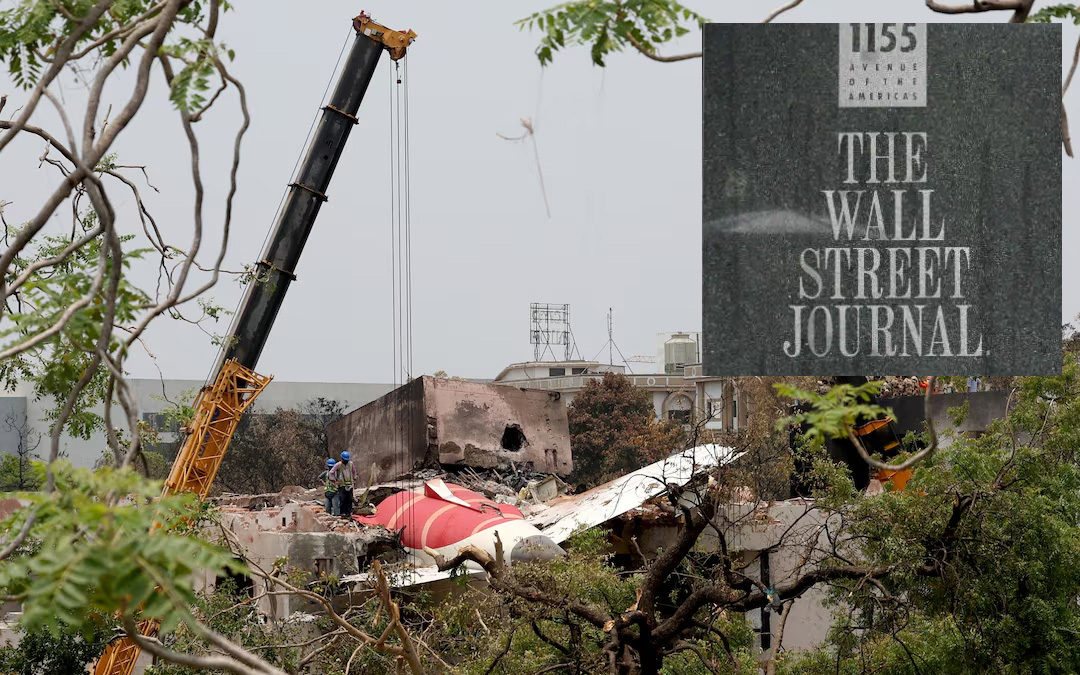
By K Raveendran The Wall Street Journal’s report on the Ahmedabad Air India crash has triggered a storm of controversy not only for what it suggests but also for what it deliberately avoids. The claim that the crash, which took 260 lives, may have been caused by the senior pilot unintentionally or mistakenly putting the […]

Abu Dhabi investment giant IHC has finalised the acquisition of eFunder, the digital invoice-financing platform, marking a decisive move into fintech for small and medium enterprises. The platform has been renamed Zelo and is targeting a $250 billion shortfall in SME credit across the Middle East and North Africa. It converts outstanding invoices into cash within 24–48 hours, and has already processed more than 9,000 transactions, deploying over $200 million in funding.

The deal enhances IHC’s strategy to diversify its portfolio into high-growth financial technologies. Zelo will now operate under IHC’s fintech and future-economy division, reinforcing Abu Dhabi’s ambitions as a leading regional hub for digital finance. According to the Abu Dhabi Global Market’s Financial Services Regulatory Authority, Zelo holds a full operating licence, enabling rapid scale across construction, logistics, healthcare, industrial services, and oil and gas industries.

Zelo’s founders, Deepak Sekar and Dhanush Arjun, launched the platform in August 2020 with a mandate to improve access to working capital for SMEs. It gained full FSRA regulatory approval after obtaining in-principle licence in early 2021. The platform achieved more than $100 million in financing across 6,000 transactions during its initial phase, before surpassing $200 million through 9,000-plus deals.

IHC chief executive Syed Basar Shueb emphasised the strategic importance of the acquisition: “SMEs are the backbone of a diversified and future‑ready economy. Through our strategic acquisition of Zelo, we are proud to support a platform that solves one of the most fundamental barriers facing SMEs, access to timely working capital.” He added the rebrand signals “a confident new chapter… aligned with IHC’s long‑term vision of building smart, scalable solutions and dynamic value networks that deliver real and lasting economic impact”.

Dhanush Arjun, CEO of Zelo, reinforced this message, stating: “Zelo exists to eliminate the wait. The wait for payments, the wait for growth, the wait for opportunity. … With IHC’s strategic backing, we’re accelerating that future.” He stressed that converting approved invoices into liquidity within 24–48 hours allows SMEs to avoid the cash flow bottlenecks that often hamper growth.

A study by the World Bank indicates that SMEs in emerging markets often wait between 60 and 120 days to receive invoice payments, inhibiting their capacity to expand or invest in new ventures. IHC’s acquisition directly addresses this challenge by offering digital-first funding with underwriting powered by AI-driven risk scoring and performance analysis.

Regional analysts observe that IHC’s move comes amid intensifying competition in the MENA fintech landscape. State-backed investors and sovereign wealth funds have been increasingly backing financial‑technology startups to accelerate digital transformation. The acquisition strengthens IHC’s position alongside peers in Abu Dhabi and Dubai, including Mubadala’s fintech interests and ADQ-backed projects.

IHC’s publicly listed status on the Abu Dhabi Securities Exchange and its recent earnings report highlighted a strategic pivot towards non‑oil sectors—spanning fintech, AI platforms, decarbonisation, and reinsurance. Zelo’s integration underscores this shift, offering synergies with IHC’s digital economy ambitions.

Within its ADGM base, Zelo plans to roll out new revenue‑based finance products, addressing future receivables in addition to existing invoice financing. The platform aims to expand its geographic footprint beyond the UAE, eyeing expansion into other MENA markets with acute SME credit gaps.

Zelo’s backers include both institutional and private-sector investors. Prior to acquisition, it closed a US$16.5 million Series A round led by IHC in September 2024, secured a multi‑year credit commitment, and earned recognition as a “Future 100 Startup” by the Ministry of Economy and a Deloitte Rising Star.

Market commentators describe this phase as a potential inflection point for fintech in the region. “Invoice finance is one of the fastest routes to unlocking SME potential, and Zelo is well‑positioned,” said a senior analyst. “With IHC’s capital and ecosystem support, rapid scaling is likely.”

Zelo’s existing performance traces a compelling upward curve—it started by funding e-commerce merchants and delivery‑aggregator vendors, then expanded to broader commercial invoices. Its AI‑based underwriting and automated platform enable pre‑approval decisions within 10 minutes and deployment in under 48 hours.

Other regional platforms, such as Dubai’s Beehive and Finvolve, have adopted peer‑to‑peer and supply‑chain financing models. Zelo’s integration through a major listed conglomerate differentiates it through access to IHC’s expansive corporate network and potential for cross‑sector collaboration across its portfolio.

IHC’s LinkedIn statement confirmed completion of the acquisition and rebrand, affirming the company’s commitment to “fintech innovation and SME enablement across the UAE”. The platform’s regulatory credentials, track record and ambition illustrate why it emerged as the firm’s fintech flagship.

Analysts expect Zelo to deepen its product scope in the coming months, potentially introducing dynamic funding and revenue finance solutions. They anticipate that further geographical rollout across GCC and North African markets could begin in early 2026, leveraging ADGM’s regulatory passporting as the platform scales beyond domestic boundaries.


Advertisements

Shapoorji Pallonji has inaugurated its maiden international residential project, Imperial Avenue, in Downtown Dubai, solidifying its presence in the competitive global luxury real estate market. The completion of the 45-storey tower, a prominent addition to Dubai’s skyline, signals the formal entry of the 158-year-old construction conglomerate into the high-end overseas property development sector. With the Building Completion Certificate granted by Dubai’s Real Estate Regulatory Authority, the company […]

OpenAI is preparing to unveil a web browser embedded with its flagship ChatGPT interface and “Operator” AI agent, marking a strategic shift directly targeting Google’s Chrome dominance. The forthcoming browser, expected within weeks, promises to streamline browsing by enabling conversational queries, task automation and form-filling without navigating multiple sites, according to Reuters. The browser is built atop Chromium, the open-source foundation behind Chrome, Edge and Opera, ensuring […]

Greenlogue/AP Morocco is embarking on an ambitious project to construct a 500 megawatt data centre powered entirely by renewable energy in Dakhla, Western Sahara, according to digital transition minister Amal El Fallah Seghrouchni. The facility aims to bolster the protection and localisation of sensitive data infrastructure, reinforcing the kingdom’s drive to establish itself as a key digital hub for Africa. The announcement positions the Dakhla centre as a state-owned flagship in […]

A UAE delegation, under the leadership of Omran Sharaf, Assistant Foreign Minister for Advanced Science and Technology, has completed visits to the Netherlands and Belgium aimed at expanding strategic collaboration in R&D and critical advanced technologies. The two-day mission centred on forging partnerships in areas including AI, space, health and nanoelectronics.

Sharaf, who oversaw the Emirates Mars Mission and now leads the UAE’s science diplomacy efforts, engaged Dutch counterparts such as Vice Minister Michiel Sweers and Cyber Affairs Ambassador Ernst Noorman. Meetings with Erwin Nijsse and Harm van de Wetering from the ministries of innovation and space respectively focussed on aligning the UAE’s science ambitions with Dutch expertise.

A highlight was a high-level roundtable featuring public and private stakeholders, where both sides discussed collaborative initiatives in artificial intelligence, space tech, biotechnology and broader scientific research. Key Dutch institutions – including TNO, Deltares, ASML and Eindhoven University of Technology – were visited to explore joint applied research programmes spanning water management, semiconductor innovation and university- industry linkages.

The delegation’s mission concluded with a visit to the imec headquarters and labs in Leuven, Belgium. Imec, a globally recognised centre for nanoelectronics and digital innovation led by CEO Luc Van den Hove, is home to over 5,500 researchers and reported revenue of €846 million in 2022. The UAE delegation toured imec’s facilities to investigate potential partnerships involving semiconductor research, AI hardware and future communications.

Beyond institutional visits, UAE participants included Nouf Al Hameli, Science and Technology Adviser to Sharaf’s ministry, alongside representatives from EDGE Group, Dubai Future Foundation, MGX, G42 and the Technology Innovation Institute under the Advanced Technology Research Council. Their presence signals a cross‑sector push to integrate government, defence, private sector and academic R&D capabilities.

The timing of the visit aligns with Europe’s ambition to build technological autonomy. In May, EU officials emphasised the importance of domestic AI chip production to strengthen technological sovereignty. The UAE, keen on diversifying its tech ecosystem, stands to benefit from Dutch and Belgian strengths in microelectronics, photonics and applied AI.

Analysts note that such collaboration is consistent with a UAE strategy that blends national ambition with international partnerships. Sharaf himself has deep domain credibility: a former board member of the UAE Space Agency and chair of the UN Committee on the Peaceful Uses of Outer Space, he led the Emirates Mars Mission, forging global R&D alliances with institutions in the US and Europe.

While official communiqués framed the visits in diplomatic and institutional terms, sources familiar with discussions highlighted potential next steps: co-funded research programmes, joint innovation labs, and student exchange schemes in semiconductor and AI development.

Experts caution, however, that cross-border R&D frameworks require careful alignment. Differences in intellectual property regimes, export controls, and standard-setting processes between the UAE, EU and Belgium must be navigated for meaningful cooperation. Partners are expected to elaborate memoranda of understanding, agreeing on joint funding protocols and industry-academia mechanisms.

UAE’s delegation marks a strategic shift: away from transactional acquisition of tech, and towards co-development through knowledge ecosystems. In engaging flagship institutions like ASML and imec, and government bodies in The Hague, the UAE signals a move to deepen scientific diplomacy alongside its broader economic diversification goals.

U. S. consumers now contend with an effective tariff rate exceeding 20%, marking the steepest level observed since the early 1900s, according to estimates by the International Chamber of Commerce following the latest round of import levies introduced under President Trump’s administration. This escalation stems from a newly implemented baseline tariff of 10%, supplemented by selective duties—up to 50% on copper and 200% on pharmaceuticals—pushing the overall […]

MACAU – Media OutReach – 12 July 2025 – Japanese leading sportswear brand DESCENTE celebrates the grand opening of its new flagship store at Galaxy Promenade on July 11th. Located in one of Macau’s most vibrant and well-trafficked shopping districts, the new flagship store reflects the area’s “Healthy Lifestyle” positioning. With a design language that blends performance functionality and future aesthetics, DESCENTE aims to offer a sophisticated, […]

Nigeria has secured a $747 million syndicated loan, led by Deutsche Bank, to fund the initial 47.47‑kilometre phase of its flagship coastal highway spanning from Victoria Island to Eleko Village in Lagos. The Ministry of Finance confirmed the financing on Wednesday, marking a record for road infrastructure funding in the country. Lenders in the syndicate include First Abu Dhabi Bank, African Export‑Import Bank, Abu Dhabi Exports Office, ECOWAS […]

Samsung has launched a new generation of Galaxy AI features embedded directly on its smartphones, combining cutting‑edge intelligence with enhanced privacy safeguards. Designed to rival Apple Intelligence and Google Gemini, Galaxy AI now performs tasks such as voice‑to‑text, photo editing, call transcription and real‑time translation entirely on device—only resorting to anonymised cloud support for complex jobs, thus protecting personal data. At the heart of this shift is […]

DoubleDown Interactive has struck an agreement to acquire Hamburg-based WHOW Games GmbH for €55 million, plus up to €10 million in performance-linked earn‑outs, in a move to deepen its foothold in Europe’s expanding social casino market. The transaction, financed from existing cash reserves, is slated to finalise in the third quarter of 2025. The licensing deal, part of a Share Purchase and Transfer Agreement with Azerion Tech Holding B. […]

SHENZHEN, CHINA – Media OutReach Newswire – 8 July 2025 – Smart home innovator Proscenic is kicking off Prime Day 2025 with one of its biggest sales yet, offering up to 40% off its top-rated vacuums on Amazon from July 8–11 (CEST). With prices starting at just €89, customers can upgrade their summer cleaning routine with powerful, easy-to-use devices designed for every home. In addition to the […]

Dubai‑based hospitality firm Tashas Group is entering a rapid new phase of expansion across the Middle East and South Africa, with founder Natasha Sideris spearheading a strategy that balances boutique charm with accelerated growth. Operating 40 venues in five countries—including 18 in South Africa, 17 across the UAE, three in Saudi Arabia, and single locations in Bahrain and the UK—the group plans to open a further 15 […]

European luxury houses are experiencing a marked shift, with faltering Chinese demand prompting a strategic pivot toward alternative markets and refined brand positioning. According to Bain & Co, global personal luxury goods sales are projected to contract by 2–5 per cent in 2025, following a €364 billion market in 2024, suggesting prolonged headwinds in China and weakened consumer confidence across key economies. Concurrently, LVMH reported a 5 per cent decline in fashion and leather goods, while Kering’s Gucci saw a 24 per cent slump in Q3 2024—underscoring the drag from Chinese spending.

Amid this slowdown, brands are accelerating efforts to broaden geographic reach. McKinsey projects that the US luxury market will grow by 4–6 per cent annually through 2027—outpacing China and Europe—and emerging regions such as the Middle East, Latin America and Southeast Asia are gaining traction as bright spots. Evidence of reorientation is visible: LVMH is expanding its US production capacity, and Kering, Hermès and Prada are intensifying investment in North America.

Not all brands are equally affected. Brunello Cucinelli, less exposed to Chinese consumption, disclosed robust sales forecasts—upgrading its annual growth outlook to 11–12 per cent based on strong European demand and continued traction among ultra-high-net-worth clients. Hermès, too, has weathered the storm, maintaining sales growth while peers grapple with revenue declines.

The luxury slowdown in China is rooted in multiple structural challenges. Economic growth has softened below 5 per cent, real estate woes persist, and shifting demographic trends have eroded consumer sentiment. Simon‑Kucher reports that many Chinese consumers are becoming cost-conscious, displaying a polarization between aspirational and high-end luxury buyers, and embracing domestic brands as alternatives. Particularly, cultural shifts—such as “luxury shame”—have fuelled a move toward discretion and frugality in visible consumption.

Although major international houses such as Chanel and Dior continue to engage Chinese consumers through culturally attuned storytelling—launching region‑specific collections and targeted local campaigns—some smaller brands have shuttered stores in mainland China, acknowledging a recalibration of in‑market commitment.

Domestic luxury players are also benefitting from this transition. Laopu Gold, a jewellery brand rooted in traditional Chinese symbolism, has doubled same‑store sales and quadrupled online revenue this year, with a market valuation exceeding HK$170 billion, thereby challenging European incumbents—though its international footprint remains limited.

Global brands recalibrating their China approach are employing a range of strategic pivots: tighter inventory control to avoid discounting and preserve brand equity; stimulant-focused aspirational campaigns; and product diversification into understated luxury or second-hand luxury to resonate with new consumer segments. The second‑hand luxury market in China alone has grown at an annual rate exceeding 30 per cent since 2020.

Europe itself remains central to the luxury ecosystem, as evidenced by European markets holding nearly half of Armani’s revenues in 2024—an increase relative to Asia Pacific’s diminished share—while the group strategically channels investment into flagship stores and digital-commerce. Cost control, brand consistency, and quality-focused messaging have become priorities as demand becomes more selective.

Globally, brand strategies are evolving with renewed emphasis on sustainability, resilience and storytelling. Price hikes once driven by so‑called “greedflation” are now tempered, with average increases forecast at 3.5 per cent in 2025—lower than peak levels—and justified by genuine craftsmanship and material innovation. Product lines are being refined: leather goods, jewellery and beauty segments are poised for stronger performance, while deeper integration of sustainability and consumer‑centric narratives is prioritised.

Brands are also investing in localisation in other markets and exploring omnichannel retail strategies. Digital-owned channels, experiential stores, and culturally sensitive campaigns are being deployed to engage consumers in tier‑2 and tier‑3 urban centres, particularly in Asia outside China.

European luxury houses are at a strategic inflection point: with the decline in Chinese demand now measurable, success hinges on geographic rebalancing, product portfolio refinement, inventory discipline and culturally resonant marketing. The winners will be those able to preserve brand prestige while adapting to economic reality and evolving consumer psychology across diverse global markets.

Automobili Lamborghini has launched its Temerario model and its GT3 variant as limited-edition digital collectibles, paving the way for a blend of automotive prestige and Web3 innovation. Set to debut in Wilder World, a metaverse platform, the digital Temerarious will also be available via OpenSea and Lamborghini’s proprietary Fast ForWorld ecosystem, with minting beginning on 11 July at $300 each. The Italian marque’s venture comes amidst a […]

Elon Musk stated that his newly formed America Party will officially support Bitcoin, branding traditional fiat currency as “hopeless.” He responded succinctly on X to a user asking whether his party would embrace the flagship cryptocurrency: “Fiat is hopeless, so yes.” Musk’s announcement aligns with the party’s broader platform of fiscal conservatism, deficit reduction and modernisation of government, which is packaged alongside calls for balanced budgets and […]

KUALA LUMPUR, MALAYSIA – Media OutReach Newswire – 7 July 2025 – Kenanga Investment Bank Berhad (“Kenanga Group” or “The Group“), Malaysia’s no. 1 issuer of structured warrants, proudly announces the launch of its first-ever Hang Seng China Enterprises Index (“HSCEI“) structured warrants – HSCEI-CAA and HSCEI-HBA – and Hang Seng TECH Index (“HSTECH“) structured warrants – HSTECH-C30 and HSTECH-H27 – under its flagship brand, NagaWarrants by […]

Primrose Capital Management has obtained in‑principle approval from the Financial Services Regulatory Authority of Abu Dhabi Global Market, marking the inception of its journey toward a full Financial Services Permission. The clearance paves the way for the Singapore‑based quantitative trading firm to establish a regulated presence in the UAE’s leading international financial centre, offering data‑driven investment products to regional institutional investors and family offices. Approval from the […]

Global tourism is projected to reach 30 billion trips by 2034 and contribute $16 trillion to world GDP, growing 1.5 times faster than the global economy, according to the World Economic Forum’s latest report. Amid this surge, Saudi Arabia is emerging as a pivotal force, ranking the second fastest-growing tourism destination and leading global investments in innovation, infrastructure, and sustainability The WEF report, Travel and Tourism at a Turning […]

VISHNU RAJA
RYO YAMADA
HITORI GOTOH
IKUYO KITA