News related to
flags

China has issued a bold action plan to propel its electronic information manufacturing industry through 2025 and 2026, targeting sustained growth in industrial output, revenue, and technological capability as it seeks to strengthen its position in the global technology arena.

The plan, jointly issued by the Ministry of Industry and Information Technology and the State Administration for Market Regulation, sets forth a target of roughly 7 per cent average annual growth in industrial output across major segments—including computer, communications, and electronic equipment manufacturing. Revenue growth across related sub-sectors such as lithium batteries, photovoltaics and components is projected to exceed 5 per cent per annum.

Authorities further anticipate that by the close of 2026, the electronic information manufacturing category will retain its status as the largest among China’s 41 key industrial sectors in both revenue and export share. Ambitious local targets aim to elevate five provinces to over 1 trillion yuan in annual manufacturing revenues, with the server industry aiming to surpass 400 billion yuan.

Beyond output and revenue, the plan calls for accelerated equipment modernisation and the development of high-end, intelligent, and eco-friendly production lines. Central to this strategy is the creation of internationally competitive industry bases and specialised clusters serving smaller enterprises.

This industrial blueprint emerges amid broader national efforts to invigorate advanced manufacturing. In August, authorities unveiled new financial guidelines, integrating structural monetary instruments and “green channels” for critical technology firms, aimed at spurring innovation and easing access to capital for integrated circuits, industrial software, medical equipment and advanced materials. Concurrently, China continues to pursue consolidation within its semiconductor sector—though merger negotiations have encountered obstacles, reflecting legal, valuation and fragmentation challenges.

Observers note that China’s renewed emphasis on domestic capability complements longer-standing ambitions under industrial strategies such as “Made in China 2025”, which have driven progress in robotics, solar technology, electric vehicles and rail systems, yet left persistent weaknesses in semiconductors and aerospace.

The current two-year action plan appears to reinforce this trajectory by tying industrial upgrading to environmental standards and smart manufacturing. Provincial authorities are being pressed to deliver on revenue milestones, while the focus on intelligent and eco-friendly production signals an effort to align with global sustainability trends and elevate manufacturing sophistication.

This approach also reflects the government’s response to external pressure, including export controls and trade friction, by targeting resilience and self-sufficiency. By prioritising hubs and clusters, China aims to decentralise innovation and drive inclusive industrial progress across regions, not just within flagship firms or coastal areas.

The twin objectives of maintaining international leadership and building more advanced, cleaner industrial capacity are central to this strategy. As China moves into the mid-2020s, its success will depend on execution—not just on paper targets, but on implementation, regional mobilisation, talent development, and the ability to absorb and apply new technologies at scale.

Truecaller has unveiled a bold upgrade to its caller identification service, introducing AI‑driven context that helps users understand not only who is calling but why — delivering a richer, real‑time calling experience. The newly released feature instantly provides AI summaries of user feedback, flags suspected scams, identifies likely spam, and even classifies the nature of calls — such as delivery, customer support or insurance — as the […]

Barloworld has concluded an internal examination and submitted a voluntary self‑disclosure report to the U. S. Department of Commerce’s Bureau of Industry and Security, acknowledging apparent breaches of U. S. export control rules—while confirming no violations of U. S. sanctions were identified. The probe focused on the company’s Russian subsidiary, Vostochnaya Technica, responsible for distributing Caterpillar machinery in Siberia. The investigation unearthed potential export control infractions, although […]

DWF Ventures, the investment arm of Web3 market‑maker DWF Labs, has delivered a detailed evaluation of $WLFI, World Liberty Financial’s newly issued utility token. Published via X, the analysis emphasises $WLFI’s integration into World Liberty’s broader ecosystem and its potential as a key enabler in connecting traditional finance with on‑chain liquidity. Unlike World Liberty’s $TRUMP memecoin, $WLFI is purpose‑built to power the upcoming “WLFI super app”, which will streamline access through web wallets and bank on‑ramps, and underpin planned lending and borrowing services.

The report highlights the success of the USD1 stablecoin—backed by short‑term US Treasuries and cash equivalents—which now commands a market capitalisation approaching $2.5 billion and enjoys listings on major exchanges such as Binance and Coinbase. These developments have significantly boosted investor attention toward the $WLFI token.

World Liberty has raised approximately $500 million across two funding rounds by selling about a quarter of its 100 billion token supply. Among its backers are DWF Labs itself and crypto figure Justin Sun, while ALT5 Sigma has outlined a $1.5 billion treasury strategy centred around $WLFI. DWF Ventures expects that the token could soon be integrated by several DeFi protocols, including Falcon Finance, Ethena and Mantle.

Importantly, DWF Ventures positions $WLFI’s launch as more than a token debut; it sees the initiative as a structural pivot that could catalyse institutional adoption and facilitate compliant capital onboarding—possibly even drawing interest from sovereign investors.

But $WLFI’s entry into the market has triggered concerns. Reports reveal technical difficulties involving the Lockbox contract, intended to unlock 20 percent of token allocations for early investors, which have left many users unable to activate the mechanism. Pre‑market trading responded with a 40 percent drop, raising doubts about launch readiness. Coupling these issues with the political profile of its founders, the token has become entangled in financial and reputational risks.

Indeed, WLFI’s connection to the family of the former president has cast a shadow over its market potential. The token’s political dimensions have already affected diplomatic engagements—such as withdrawals from the Bitcoin Asia 2025 conference—and prompted ethical criticism over conflicts of interest.

Broader scrutiny of World Liberty Financial underscores such tensions. Investigations have revealed that the Trump family commands a substantial share of revenue from token sales and that governance design reflects unusual centralisation for a DeFi project. Further concerns relate to self‑dealing practices: for instance, ALT5 Sigma—a firm acquired by World Liberty—purchased $750 million worth of WLFI tokens. As part of this arrangement, its leadership includes Eric Trump and WLFI co-founder Zach Witkoff, a structure that regulators and critics view as raising red flags.

Ethics experts warn that such close ties between ruling office, private enterprise and foreign investment could undermine democratic safeguards. The New Yorker, for one, described the venture as stretching the norms of political ethics, with World Liberty seen by some as a mechanism for influence through token‑based access channels.

The $WLFI launch is clearly more than a token generation event—it is shaping into a test case for the nexus of politics, finance and regulation in the emerging Web3 era.

Apple has moved three MacBooks—the MacBook Air, the MacBook Pro and the MacBook Pro —to its obsolete products list. This change ends all hardware service support, including repairs and parts availability. Meanwhile, the iPhone 8 Plus has been reclassified as vintage, extending its limited repairability for up to two more years, depending on parts availability. Apple’s classification system allows only battery service for obsolete MacBooks up to ten years after discontinuation—subject to […]

A new AI-driven system developed by researchers at the University of Colorado Boulder is screening open-access publications for signs of predatory behaviour, and has already flagged more than 1,000 questionable titles. The AI platform combs through metadata—such as website design, domain registration, editorial board listings, grammar quality and citation patterns—to identify red flags. From a sample of about 15,200 journals, the system initially marked over 1,400 as […]

MACAU SAR – Media OutReach Newswire – 1 September 2025 – In a landmark move to deepen regional ties and expand its international footprint, Galaxy Entertainment Group (hereinafter as “GEG”) proudly announces the opening of a new overseas office in Singapore. This strategic initiative marks a new chapter in GEG’s growth trajectory and underscores its commitment to promoting Macau as the “World Centre of Tourism and Leisure” […]

Advertisements

Dubai is poised to welcome a wave of new educational institutions in the 2025–26 academic year, with 25 private schools, early childhood centres, and universities slated to open their doors. This initiative is designed to add more than 11,700 school seats and 2,400 places at early childhood centres, significantly expanding learning options for families across the emirate.

Investors continue to express strong confidence in Dubai’s education sector. The new openings include six private schools offering a diversity of curricula—ranging from British to American and International Baccalaureate styles—16 early childhood centres, and three internationally renowned universities. These developments align closely with Dubai’s Education 33 strategy, which aims to elevate the emirate as a global centre for quality education and to boost its socio-economic growth.

The higher education expansion includes flagship additions: the Indian Institute of Management Ahmedabad, the American University of Beirut, and Fakeeh College for Medical Sciences. IIM Ahmedabad stands out with its global presence and reputation for top-tier business and management programmes, AUB holds a strong international ranking, and Fakeeh College brings expertise in medical sciences to the Dubai education landscape.

GEMS Education is also making headlines with the upcoming launch of the GEMS School of Research and Innovation in August 2025. Situated in Dubai Sports City, this school is being billed as Dubai’s most expensive to date, with a build cost of approximately US$100 million. It will follow the British National Curriculum and focus heavily on artificial intelligence, offering world-class facilities including an Olympic‑standard 50‑metre swimming pool and helipad. School fees are expected to be the highest in the country.

Regulatory oversight remains a critical component of Dubai’s educational expansion. The Knowledge and Human Development Authority has approved a 2.35 per cent Education Cost Index for tuition fee adjustments in for-profit private schools for 2025–26, based on audited financials. The ECI covers teacher and staff salaries, support services, and facility rentals. Established institutions—those operating for over three years—may apply for fee increases up to this limit, subject to KHDA review and quality assurance criteria.

This expansion comes amid growing enrolment demands. Sources suggest that student numbers across the UAE’s K‑12 segment are expected to rise sharply, with a forecast of over 150,000 new students by 2027. By 2040, higher education enrollment is also expected to more than double, necessitating an additional 10–15 branch campuses to cater to demand.

Dubai’s private education sector currently encompasses 331 early childhood centres, 233 private schools, and 44 higher education institutions. The forthcoming additions will further diversify program offerings and increase accessibility across the education spectrum.

Beyond capacity, this expansion reinforces strategic priorities. The new institutions are expected to support Dubai’s ambition to scale up educational tourism, foster a generation equipped for future-facing sectors, and reinforce its status as a major global economic and educational hub.

Nigeria’s energy shortfall continues to constrict economic potential, affecting millions of homes and businesses, prompting a call from Ronald Adams—Chairman of the off‑grid impact fund All On and Managing Director of Shell Nigeria Exploration and Production Company —for substantial private investment to close the gap. Addressing business leaders at the Lagos Chamber of Commerce and Industry’s 2025 International Business Conference & Expo, Adams highlighted that over 80 million Nigerians lack […]

Sui Network and Alibaba Cloud have unveiled an artificial intelligence‑powered coding assistant for the Move programming language, embedded directly within ChainIDE to enhance developer experience from the outset.

An AI assistant has been introduced into ChainIDE, Sui’s flagship development environment, enabling developers to generate Move code through natural language prompts in English, Chinese and Korean. The assistant provides intelligent autocompletion, real‑time security checks, automated documentation and readily available templates—features engineered to smooth out common roadblocks in smart contract development.

This integration aligns with the growing convergence of AI and blockchain innovation, offering a unified environment where developers can focus more on creativity and less on syntax or language barriers.

Market reception has been positive. The SUI token’s price climbed between one and 2.1 percent following the announcement, reaching approximately $3.44, signalling investor confidence despite a generally bearish crypto climate.

Behind the integration lies a broader strategy to lower entry barriers for Move developers—particularly non-English speakers, who constitute a significant portion of the global Web3 community. By offering multilingual support, the tool opens the door for wider participation across Asia and beyond.

Industry observers suggest that this could translate into increased developer engagement and boosted ecosystem activity. The intelligent tooling is expected to streamline dApp deployment, reduce development cycles and yield more robust, secure code—even for newcomers to blockchain development.

Emerging data underscores this potential. Preliminary reports indicate a possible 40 percent uplift in developer activity within the Sui ecosystem, alongside rising application deployment and on‑chain usage. When combined with enhanced tooling and cloud infrastructure from Alibaba Cloud, this surge can help catalyse a flywheel effect: more developers, more dApps, more users, stronger demand for SUI through gas fees and staking.

Alibaba Cloud contributes more than software. The alliance includes node infrastructure support and enterprise‑grade scalability capabilities, reinforcing the network’s ability to handle higher transaction volumes and support institutional use cases.

Security remains a key consideration. The assistant’s real‑time vulnerability detection helps flag potential issues such as reentrancy risks or inefficiencies before deployment. Yet concerns persist about overreliance on AI-generated code, emphasising the importance of combining automation with developer oversight.

Institutional momentum continues to build. Swiss custodial services and SUI‑centric investment vehicles have entered the ecosystem, signalling growing trust. Meanwhile, developer outreach events in financial hubs such as Hong Kong, Singapore and Dubai are helping showcase Sui’s AI‑enhanced toolkit to enterprises and Web3 innovators.

Al Ghurair Mobility has sealed a landmark agreement with Dongfeng Motor Corporation to bring the premium electrified automotive brands MHero and Voyah into the Kingdom of Saudi Arabia. The accord positions Al Ghurair Mobility as the exclusive regional partner responsible for the brands’ launch and rollout, in line with the country’s strategic shift towards sustainable mobility.

The deal was formalised during a signing ceremony attended by John Iossifidis, Group CEO of Al Ghurair Mobility; Oscar Rivoli, CEO of Motors at Al Ghurair Mobility; and Qiu Xiaojun, CEO of Dongfeng’s Overseas Marketing Division. This collaboration underscores a union of Al Ghurair’s regional stature with Dongfeng’s technological innovations.

Voyah, launched in 2021, represents Dongfeng’s vision for luxury electric mobility. Its flagship models—Voyah FREE SUV and Voyah DREAM MPV—are distinguished by elegant aesthetics, extended range capabilities, and advanced driver-assist functions, targeting buyers seeking a refined alternative to traditional luxury marques.

Meanwhile, MHero, introduced in 2022, draws from Dongfeng’s heritage in rugged, military-grade engineering. Its models, such as the MHero 1 and MHero 2, marry off-road prowess with electrified powertrains and premium comfort, offering a distinctive proposition within luxury off-road SUVs.

Industry analysis suggests this move aligns with a broader three‑year strategic partnership between Dongfeng and Al Ghurair, aimed at establishing the brands across the Gulf region. The agreement signifies Dongfeng’s growing commitment to the Middle East market and is designed to dovetail with Saudi Arabia’s Vision 2030 agenda, which prioritises sustainable development and diversification.

For Saudi consumers, the arrival of MHero and Voyah promises a novel blend of luxury, performance, and eco‑friendly technology. Al Ghurair Mobility is expected to support these brands through not only sales and marketing infrastructure but also after‑sales service and technical support, leveraging its established regional presence.

The venture underlines both a strategic and symbolic development in Saudi Arabia’s automotive sector. The availability of high-end electric and hybrid vehicles—backed by major regional players—signals the Kingdom’s evolving consumer preferences and its commitment to transforming the mobility ecosystem.

HANOI, VIETNAM – Media OutReach Newswire – 28 August 2025 – VinFast has officially handed over a special fleet of Lạc Hồng 900 LX vehicles, built to serve international heads of state, to Vietnam’s Ministry of Foreign Affairs at the celebration of the 80th anniversary of Vietnam’s National Day (September 2, 1945 – September 2, 2025). The Lạc Hồng 900 LX is a limited-edition flagship model that […]

Major players and startups are racing to establish dominance in India’s quick‑commerce landscape, where urban consumers now expect deliveries within minutes. Blinkit, Zepto, Instamart, Amazon Now, BigBasket Now and others are expanding rapidly, focusing both on speed and diversification beyond groceries, even as questions mount over sustainability.

Blinkit, the q‑commerce arm of Eternal, delivered a sharp uplift in adjusted revenue for the first quarter of 2025, reaching ₹71.67 billion—a year‑on‑year increase of more than 70 per cent. However, soaring expenses, largely driven by aggressive discounting and the rapid build‑out of “dark stores,” pulled net profit down by nearly 90 per cent to ₹250 million. Blinkit continues to lead in the segment, delivering groceries and essentials within 10 minutes across more than 30 cities.

Zepto, founded in 2021 by Aadit Palicha and Kaivalya Vohra, has built a dense network of dark stores across ten metropolitan areas and operates over 250 stores as of 2024. Its valuation has surged past $5 billion, underpinned by a leap in FY24 revenue to ₹4,454 crore.

Swiggy’s Instamart continues recalibrating its business, shifting from its origins in restaurant delivery to prioritising ultra-fast delivery of grocery and everyday items in a broader consumer market.

Global giants are also aggressively entering the fray. Amazon’s “Now” 10‑minute delivery service, first piloted in Bengaluru, has now rolled out across select New Delhi pin codes. Flipkart, backed by Walmart, has likewise deployed its rapid‑delivery offering in the country. Competition has intensified, with both global and domestic players vying to own consumer mindshare.

Market projections suggest explosive growth: quick‑commerce has scaled from about $300 million in 2022 to $7.1 billion in 2025, with forecasts projecting a staggering $40 billion by 2030. Growth is being fuelled not only by metro usage, but also by demand in tier‑2 and tier‑3 cities, which have accounted for 60 per cent of new e‑retail customers since 2020.

To support this infrastructure leap, commercial property heights are shifting downwards—hyperlocal warehousing is surging in both major metros and smaller cities. Platforms are converting underused urban spaces—like basements and small plots—into rapid fulfilment hubs to meet expectations of 10‑ to 15‑minute deliveries.

Still, financial caution flags are being raised. Gopal Srinivasan, chairman of TVS Capital Funds, has warned that India’s quick‑commerce boom may be a “passing fad,” sustained mainly by private equity and venture capital rather than sustainable economics. Industry observers point to sharp increases in customer acquisition costs, shrinking margins, and low consumer loyalty if discounts and free delivery models are scaled back.

The origins of the model lie in a consumer demand for ultra‑fast replenishment, transforming smartphones into virtual marketplaces not just for staples, but festive goods, personal care items, apparel and electronics—especially during cultural festivals like Raksha Bandhan.

A financial corridor is emerging beneath the digital storefronts: hyperlocal logistics operators such as Xpressbees, already present in over 4,500 service centres and 250 hubs by March 2025, are becoming critical partners to power the last‑mile challenge.

Traditional players are also adapting. BigBasket, owned by Tata Digital, has introduced a 10‑minute food delivery service in Bengaluru, including offerings from Tata Starbucks and IHCL’s Qmin platform.

BANGKOK, THAILAND – Media OutReach Newswire – 27 August 2025 – Thai Cement Manufacturers Association (TCMA) successfully hosted its flagship event, the “2025 TCMA Technical Conference and Exhibition” from 21-22 August 2025 at Hotel La Casetta by Toscana Valley, Khao Yai. The event brought together key figures from the Thai cement industry, global organizations, and leading innovators/ technology providers to exchange insights and strengthen collaboration to accelerate […]

Strengthening its ecosystem, Shopee connects affiliates and brands to help shoppers enjoy Lagi Murah and Lagi Cepat deals. KUALA LUMPUR, MALAYSIA – Media OutReach Newswire – 26 August 2025 – For the first time Shopee’s flagship event, Shopee House, welcomed affiliates from every channel, including Shopee Live, Shopee Video, and YouTube Shopping, at its headquarters in Kuala Lumpur last weekend. The two-day activation brought together 500 top-performing […]

HONG KONG SAR – Media OutReach Newswire – 25 August 2025 – On August 25, 2025, Lens Technology (300433.SZ, 06613.HK) released its 2025 half-year financial report, highlighting robust growth driven by advancements in AI terminals, smart vehicles, humanoid robots, and an accelerated global expansion strategy. Through continuous innovation and expanded production capabilities, the company is well-positioned to seize opportunities in emerging markets while delivering sustained value to […]

MACAU SAR – Media OutReach Newswire – 25 August 2025 – Galaxy Macau™’s world-class Galaxy Arena is proud to announce the renewal of its three-year strategic partnership with TMElive, extending its existing three-year run of its successful partnership. Under the newly extended agreement, both parties will continue supporting Macau’s quality development in culture and tourism and presenting multifaceted musical spectacles to music lovers, by leveraging shared resources […]

VSING Central Flagship Store Officially Opens in Central HONG KONG SAR – Media OutReach Newswire – 25 August 2025 – Worldgate Global Logistics Ltd (“Worldgate” or the “Company”, together with its subsidiaries, the “Group”; HKEx: 8292) proposes to change the name of the Company to “VSING Limited”, in order to establish a new corporate image and identity, as well as to better reflect the business focus and […]

Highlighting five years of success, the destination continues to elevate its appeal through a comprehensive marketing strategy and the ongoing addition of world-class luxury brands. BANGKOK, THAILAND – Media OutReach Newswire – 22 August 2025 – Siam Premium Outlets Bangkok, Thailand’s first and only premium outlet destination, proudly marks its 5th anniversary. The milestone highlights the success of its comprehensive business strategy that spans marketing, customer engagement […]

Implementing the Core Strategy of “Single Brand, Multi-Categories, Diversified Channels” | Excelling Through Professionalism, Strengthening Strategic Foundations FINANCIAL HIGHLIGHTS In the first half of the year, the Group recorded the following operating results: – Revenue rose by 3.3% to RMB14,817 million; gross profit margin declined by 0.4 percentage points to 50% – Net operating cash inflow was RMB2,411 million – Net profit attributable to equity holders was […]

SINGAPORE – Media OutReach Newswire – 21 August 2025 – CNA, the global news and current affairs brand of Mediacorp, is offering a new service which allows businesses and brands from around the world to seamlessly publish their media releases in a dedicated section on its flagship website, cna.asia, via its very first partner, Media OutReach Newswire. This new third-party paid content service offers businesses unprecedented access […]

Key highlights include: The Integrated Facility Management Control Tower (IFMCT) unifies over 20 standalone building systems into a single AI-powered command centre and is poised for wider implementation, with plans to expand across Hongkong Land’s regional portfolio. The transition from reactive to proactive maintenance, powered by AI health analytics, has significantly reduced servicing frequency. 66% of work orders have been automated, boosting operational efficiency and reducing disruptions. […]

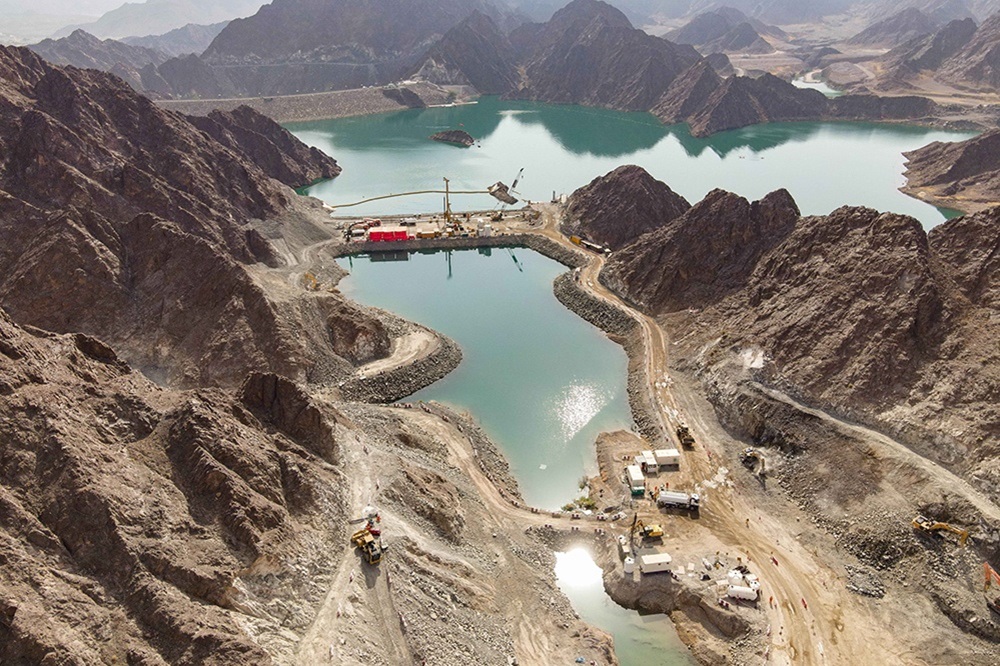
Dubai has begun trial operations of its pumped-storage hydroelectric plant in Hatta, delivering electricity into the city’s grid. The facility, which has already generated more than 17,900 MWh during testing, will free up surplus power beyond Hatta’s 39 MW local demand for export. Emirates 247 cites HE Saeed Mohammed Al Tayer, MD & CEO of the Dubai Electricity and Water Authority, confirming the start of electricity exports from the plant during his site visit.

The Hatta plant boasts a 250 MW generation capacity, 1,500 MWh of storage, and is designed to last up to 80 years—backed by a Dh1.42 billion investment. Underground construction includes two 110-tonne water valves, a command-and-control centre and an upper dam spanning 210,000 sqm, built with compressed concrete walls measuring 72 m and 37 m high.

DEWA’s scheme aligns closely with emirate-wide initiatives under the Clean Energy Strategy 2050 and the Net-Zero Carbon Emissions Strategy 2050, which aim for 100 percent clean energy supply by mid-century.

Trial operations of this pioneering project began earlier in the year, with operational tests launched in January 2025. DEWA confirmed the plant was 96.82 percent complete around that time and anticipated beginning energy exports in April 2025.

The hydropower station employs a cyclic system: during off-peak hours, clean electricity from the Mohammed bin Rashid Al Maktoum Solar Park is used to pump water from the lower reservoir to the upper dam. When demand spikes, water flows back through a 1.2 km tunnel, converting stored potential energy into kinetic energy to drive turbines. The conversion process delivers electricity to the grid in as little as 90 seconds, with a turnaround efficiency of 78.9 percent.

Hatta lies roughly 140 km south-east of central Dubai in the Hajar Mountains. The project includes an innovative design featuring two 125 MW Francis-type pump turbines capable of reversible operation—a technical solution by a consortium led by ANDRITZ Hydro, STRABAG and ÖZKAR, contracted in 2019.

This pumped-storage facility is the first of its kind in the Gulf region and a flagship example of how heat-resistant hydropower systems may outperform large-scale battery storage in desert climates.

During his visit, Al Tayer toured the station’s subterranean power station, inspected the upper dam’s compressed concrete walls, and oversaw functional tests of the pumping and generation mechanism. The station’s speedy response time and storage efficiency are designed to bolster Dubai’s grid resilience while reducing reliance on fossil fuel generation.

Dubai’s Burj Khalifa illuminated the night sky on Friday, August 15, 2025, with the vibrant hues of the Indian flag—saffron, white, and green—to commemorate India’s 79th Independence Day. The world’s tallest building became a beacon of unity and cultural pride, drawing large crowds of Indian expatriates and residents who gathered to witness the spectacular light show.

The Indian Consulate in Dubai confirmed that the display commenced at 7:50 PM local time, marking the occasion with a visual tribute that resonated deeply with the Indian community in the UAE. The illumination was accompanied by the instrumental rendition of India’s national anthem, “Jana Gana Mana,” amplifying the emotional significance of the moment.

Spectators, many of whom were capturing the event on their smartphones, expressed their pride and joy through cheers and applause. The display not only celebrated India’s independence but also underscored the strong and enduring ties between India and the United Arab Emirates. Social media platforms were abuzz with videos and messages, with many sharing the experience and extending their Independence Day wishes.

The Burj Khalifa’s annual tribute to India’s Independence Day has become a cherished tradition, symbolising the deep-rooted friendship between the two nations. This gesture is part of a broader initiative where the UAE’s landmarks light up in the colours of various countries’ flags to honour their national days, reflecting the UAE’s commitment to fostering international camaraderie and cultural appreciation.

In addition to the Burj Khalifa’s illumination, the Indian missions in the UAE organised flag-hoisting ceremonies and cultural events to mark the day. The Indian Consulate in Dubai held its flag-hoisting ceremony at 6:30 AM, while the Indian Embassy in Abu Dhabi conducted theirs at 7:15 AM, accommodating the early morning hours to avoid the intense summer heat. These ceremonies were attended by members of the Indian community, dignitaries, and friends of India, all coming together to celebrate the nation’s journey towards independence and its achievements over the years.

The celebrations were further enriched by cultural performances showcasing India’s diverse heritage, including traditional dances, music, and art exhibitions. These events provided an opportunity for attendees to connect with their cultural roots and share in the collective pride of India’s progress and unity.

VISHNU RAJA
RYO YAMADA
HITORI GOTOH
IKUYO KITA