More than a thousand malicious plug-ins capable of siphoning cryptocurrency wallet data and sensitive credentials have been identified on OpenClaw’s ClawHub platform, raising fresh concerns over the security of decentralised software marketplaces and the speed at which harmful code can spread through developer ecosystems. Security researchers examining ClawHub said they had flagged 1,184 so-called “skills” that appeared designed to harvest SSH keys, private wallet information and other […]
Arabian Post Staff -Dubai Dubai’s Museum of the Future has welcomed more than five million visitors since opening its doors on 22 February 2022, marking a milestone that underscores its growing role as a global platform for innovation, science and cultural dialogue. Situated along Sheikh Zayed Road, the torus-shaped landmark has become one of the city’s most recognisable institutions, blending immersive exhibitions with research-driven initiatives. Officials said […]
OpenAI has announced a sweeping expansion of its global education strategy by forging deep partnerships with a group of India’s most influential higher education institutions to embed artificial intelligence tools, training and research into campus life and academic workflows. The initiative, unveiled in New Delhi this week, aims for institutional transformation by offering enterprise-grade AI access and structured integration support across disciplines including engineering, management, health sciences and creative industries.
The programme brings together six premier universities — Indian Institute of Technology Delhi, Indian Institute of Management Ahmedabad, All India Institute of Medical Sciences New Delhi, Manipal Academy of Higher Education, University of Petroleum and Energy Studies and Pearl Academy — under a coordinated effort to build AI fluency and responsible usage skills for students, faculty and staff. The roll-out will provide secure access to ChatGPT Edu, detailed onboarding programmes, faculty training and discipline-specific implementation guidance aligned with institutional policies.
This shift marks a deliberate departure from ad-hoc access to consumer AI tools toward embedding artificial intelligence as an academic backbone to teaching, research, evaluation and campus operations. OpenAI’s Head of Education for India and Asia Pacific, Raghav Gupta, said the collaboration reflects a broader need to close the gap between what AI tools are capable of and how they are actually used. He referenced projections that by 2030 a significant portion of core skills relied upon by workers globally will be redefined by AI, underscoring the urgency for deep institutional readiness.
At IIT Delhi, the partnership will focus on engineering-led innovation and applied research, integrating AI capabilities into project-based learning, coding, simulations and prototype development. The institute also plans OpenAI-supported hackathons and ‘Industry Days’ designed to link student innovation with India’s manufacturing and deep-technology ecosystem. IIM Ahmedabad intends to embed AI fluency into core management education — spanning strategy, finance, operations and public policy — with scope for certification pathways backed by the collaboration.
All India Institute of Medical Sciences New Delhi is positioning AI as a tool for medical education and clinical training, exploring applications in clinical documentation, simulation-based learning and evidence synthesis. Officials at the institute said prioritising safe, ethical deployment of AI in clinical settings will be critical to maintaining educational and professional standards. Manipal Academy of Higher Education will pursue multidisciplinary AI literacy across engineering, health sciences and business programmes, while UPES and Pearl Academy will tailor integration to applied innovation and creative workflow environments respectively.
OpenAI’s strategy extends beyond campuses to partnerships with major education technology platforms, including upGrad, PhysicsWallah and HCL GUVI. These collaborations aim to launch structured courses on AI fundamentals and practical ChatGPT applications targeting students and early-career professionals who are not formally enrolled in partner institutions. The move reflects a growing industry recognition that AI skills must be scaled across the broader learner base, not just within elite universities.
Experts in education and technology policy see this initiative as part of a larger global trend where leading artificial intelligence firms are moving from consumer-oriented models toward institutional engagement that shapes long-term adoption and usage norms. By embedding AI literacy into the frameworks of higher education, these alliances could influence curriculum design, research priorities and the preparation of graduates for an AI-driven economy.
Industry analysts note that India’s higher education system represents one of the world’s largest talent markets, with millions of students entering the workforce each year. Integrating advanced AI tools into academic settings could enhance learning outcomes, deepen research capacity and create new pathways for innovation across sectors. However, some critics caution that rapid adoption must be matched with robust ethical and governance frameworks to address concerns around data privacy, academic integrity and equitable access to technology.
While OpenAI estimates that this phase of the initiative will directly benefit over 100,000 students, educators and administrators across its core partner institutions over the coming year, independent observers emphasise that the broader impact will depend on how well universities and ed-tech partners can operationalise the technology within existing academic structures. They point to the need for ongoing investment in faculty development, infrastructure and policy frameworks that ensure AI augments rather than disrupts pedagogical goals.
Arabian Post Staff -Dubai Multidisciplinary consultancy Khatib & Alami has formalised an agreement with Ajman University to establish an endowed academic chair in Artificial Intelligence and Machine Learning, marking a strategic partnership aimed at advancing research, innovation and industry collaboration in the United Arab Emirates. The agreement, signed in Dubai, will see Khatib & Alami fund a dedicated academic position focused on developing applied research in AI […]
OpenClaw, a widely used open-source autonomous AI assistant, has pushed out version 2026.2.17 with expanded capabilities that include support for Anthropic’s latest Claude Sonnet 4.6 model and enhancements across messaging platforms and automation workflows. The update, made available by lead developer Peter Steinberger on February 17, 2026, was designed to address user demand for broader model integration and improved context handling, but it arrives as the software […]
Europe has strengthened its push for technological sovereignty with the launch of the Euro Q Exa quantum computing system in Munich, marking a significant addition to the continent’s developing high-performance computing network. Unveiled on 12 February at the Leibniz Supercomputing Centre, part of the Bavarian Academy of Sciences and Humanities, Euro Q Exa is designed to integrate quantum processors into Europe’s broader supercomputing ecosystem. The system forms […]
Singapore’s drive to harness artificial intelligence as an engine of economic growth is entering a decisive phase marked by abundant ambition and clear signs of strain across company ranks. Government fiscal policy and private-sector deployment are converging on AI, but weak data infrastructure, skills gaps and uneven returns are tempering expectations even as enterprises escalate investments and policy support grows.
Last week, the nation’s Budget for the 2026 fiscal year unveiled a suite of measures aimed at elevating AI adoption across multiple industries. Prime Minister and Finance Minister Lawrence Wong confirmed the establishment of a National AI Council, to be chaired by himself, tasked with coordinating research, regulation and investment to align public and private interests in developing AI capability. The plan also includes National AI Missions focused on advanced manufacturing, connectivity and logistics, finance and healthcare, sectoral areas where government and business leaders see the most potential for productivity gains and value creation. The budget expands fiscal incentives with enhanced tax deductions for AI-related expenditures over the next two assessment years and widened grant schemes to support adoption, workforce training and enterprise transformation. Leaders of major consultancies said these measures signal a shift from experimentation to enterprise-scale adoption and give firms a clearer pathway to embed AI into core operations.
Despite this policy momentum, data from industry surveys and corporate research paint a more nuanced picture of utilisation and outcomes. Adoption of AI tools in Singapore is now near universal among larger firms, with about 96 per cent reporting some level of use. But a significant gap remains between deployment and measurable returns on investment. Only a minority of organisations consider themselves leaders in achieving strong, sustained ROI, indicating an emerging disconnect between AI deployment at scale and operational readiness to turn it into business value. Executives widely acknowledge that sprawling and complex data environments, coupled with cybersecurity concerns, are contributing to operational friction and risks that constrain potential gains.
Private forecasts and vendor research suggest that enterprises are committed to accelerating AI spending even as returns lag. Surveys of business leaders show average investments in AI of around SG$18.9 million, with expectations for investment growth of roughly 38 per cent over the next two years and ROI projections rising to an average of 29 per cent during the same period. Yet analysts note that these returns will depend significantly on firms’ ability to bridge gaps in data readiness and workforce capability. Many Singapore companies acknowledge limited internal training, fragmented data integration and widespread informal use of ungoverned AI tools, all of which undermine robust enterprise-level strategy and governance structures.
Structural issues are as salient as technical ones. Industry leaders point to weaknesses in reliable data foundations and the need for stronger leadership alignment to embed AI into strategic operations rather than relegated to pilot projects or isolated business functions. Senior executives contend that competitive advantage over the coming decade will be determined less by technology choice and more by how effectively organisations build hybrid human-AI teams and integrate AI into everyday workflows.
Talent acquisition and retention also feature prominently in conversations around Singapore’s AI trajectory. Advanced AI, cloud and cybersecurity skills are in high demand globally and Singapore is no exception, with firms reporting difficulty scaling teams with the specialised expertise needed to support complex AI systems. This talent shortage both drives up costs and slows the pace at which organisations can absorb and leverage new technologies.
Cloud infrastructure and advanced digital foundations are another determinant of success. Financial services institutions in Singapore, for example, are among the most advanced globally in cloud adoption, with a majority running core workloads in cloud or hybrid environments that facilitate large-scale AI deployment. This infrastructure supports use cases ranging from compliance and risk management to fraud detection and transaction monitoring. However, budget constraints, talent gaps and integration challenges remain headwinds even in these relatively strong pockets of adoption.
Commentators outside the corporate sphere emphasize the importance of inclusive growth, noting that small- and medium-sized enterprises must not be left behind in the national AI push. Business federation and consultancy leaders warn that without targeted support for smaller firms to sustain, not just adopt, AI technologies, widening capability divides could undermine broader economic innovation and productivity goals.
Researchers tracking more than 400 toddlers have found no evidence that receiving an mRNA COVID-19 vaccine during or just before pregnancy increases the risk of autism spectrum disorder or developmental delays, offering what clinicians describe as strong reassurance for expectant mothers. The large prospective study, conducted across multiple clinical centres and involving detailed follow-up assessments of infants born during the pandemic, examined speech and language development, motor […]
Nigeria has launched a sweeping industrial policy aimed at restarting idle factories, boosting domestic manufacturing and positioning Africa’s largest economy as a competitive production hub in global supply chains. Federal authorities say the framework is designed to tackle long-standing structural weaknesses that have undermined output, including erratic power supply, limited access to long-term finance, foreign exchange volatility and infrastructure gaps. Manufacturing accounts for less than 10 per […]
India has emerged as the second-largest market globally for Claude, the generative artificial intelligence model developed by US-based start-up Anthropic, underscoring the country’s expanding influence in the global AI ecosystem.
Debjani Ghosh, who leads Anthropic’s operations and policy engagement in India, said the scale of adoption by developers, enterprises and start-ups has placed the country just behind the United States in terms of usage and integration of Claude’s models. She described India as a “strategic growth engine” for the company, citing strong demand from sectors including financial services, healthcare, education and software development.
Anthropic, founded in 2021 by siblings Dario Amodei and Daniela Amodei, has positioned Claude as a competitor to models from OpenAI and Google. The company has attracted substantial backing from Amazon and Google, with Amazon committing up to $4 billion as part of a strategic partnership to integrate Claude into Amazon Web Services infrastructure. The funding has enabled Anthropic to expand globally, with India becoming a focal point due to its developer base and digital economy.
India’s prominence in the AI adoption cycle reflects broader structural factors. The country has one of the world’s largest pools of software engineers, a fast-growing start-up ecosystem, and a government push towards digital public infrastructure. Enterprises across banking and fintech have begun embedding generative AI tools to automate compliance checks, summarise documents and enhance customer interaction. In healthcare, pilot projects are under way to use AI systems for clinical documentation and triage support, while education technology platforms are deploying AI-driven tutoring tools.
Ghosh indicated that India’s market dynamics differ from those of Western economies. Cost sensitivity and the need for scalable deployment across diverse languages and devices have shaped how enterprises experiment with large language models. Claude’s emphasis on constitutional AI — a framework designed to make outputs safer and more aligned with human values — has resonated with corporate clients concerned about regulatory risk and reputational exposure.
Regulatory considerations are central to the AI conversation in India. The Ministry of Electronics and Information Technology has signalled its intent to craft a framework that balances innovation with safeguards against misinformation, bias and misuse. While India has not enacted a standalone AI law, policy discussions have intensified around data governance and algorithmic accountability. Companies operating in the country must also comply with the Digital Personal Data Protection Act, which imposes obligations on data fiduciaries and processors.
Industry analysts note that India’s large English-speaking population has historically accelerated the adoption of global technology platforms. However, the next phase of growth in AI is expected to depend on multilingual capabilities. Claude’s ability to handle multiple languages is seen as an advantage in a country with 22 constitutionally recognised languages and hundreds of dialects. Developers are increasingly testing generative models for vernacular content generation and customer support.
Competition in the Indian market is intensifying. OpenAI’s ChatGPT has built a strong user base, while Google has integrated its Gemini models into productivity tools and cloud services. Domestic start-ups are also entering the field, building foundation models trained on local datasets. Analysts say that enterprise adoption, rather than consumer usage alone, will determine long-term market leadership.
Anthropic’s expansion strategy in India includes partnerships with cloud providers and enterprise software companies. By leveraging Amazon Web Services’ presence in major Indian cities, Claude is being offered as part of broader digital transformation packages. Ghosh emphasised that collaboration with academic institutions and start-up incubators is another priority, with the aim of fostering responsible AI research and skills development.
The rapid uptake of generative AI has also raised concerns. Experts warn of the risks of hallucinations, data leakage and overreliance on automated systems. In financial services, regulators have cautioned against using AI outputs without human oversight. Cybersecurity specialists highlight the potential for AI tools to be misused for phishing or deepfake generation. Anthropic has sought to address such issues by embedding guardrails into its models and conducting external safety evaluations.
Arabian Post Staff -Dubai Abu Dhabi has test-launched the country’s first hybrid rocket developed entirely within the UAE, signalling a significant advance in its ambition to build an indigenous space technology base. The Technology Innovation Institute confirmed that the rocket’s propulsion system was fully designed, manufactured, integrated and operated by Emirati engineers, a development officials described as a pivotal step towards sovereign launch capability. The suborbital test, […]
Nvidia’s chief executive officer, Jensen Huang, will not attend the India AI Impact Summit scheduled to begin in New Delhi on February 16, the company confirmed over the weekend, citing “unforeseen circumstances” that prevent his planned trip. Nvidia said it remains committed to participating in the five-day event and will instead dispatch a senior leadership delegation to represent its interests at the summit, which is positioned as a global forum on artificial intelligence, semiconductors and technology policy.
Huang’s absence removes one of the most high-profile speakers from a programme that is expected to bring together global leaders, technology executives and policymakers. Nvidia has been at the centre of international attention this year as its graphics processing units and specialised chips have powered significant advances in AI model training and deployment worldwide. Despite his cancellation, the company’s executive vice-president Jay Puri is set to lead Nvidia’s delegation in New Delhi.
The India AI Impact Summit has been framed by its organisers as a strategic platform for discussions on AI’s impact on economies, governance, and society. With over 20 heads of government and multiple chief executives from major technology firms slated to take part, the absence of Nvidia’s CEO is unlikely to derail the summit’s broader agenda but does shift attention to the array of other leaders expected on stage. Summit organisers have emphasised that the event will focus on actionable frameworks for AI governance and international cooperation rather than immediate regulatory commitments.
India’s push to host the summit reflects the growing emphasis placed on its AI ecosystem, both domestically and internationally. The event at Bharat Mandapam is intended to spotlight innovation, human capital and collaborative initiatives that leverage artificial intelligence for economic and social development. Heads of state from Europe, Asia and Africa, as well as senior executives from leading technology companies, are planning to contribute to sessions addressing ethical AI, inclusive growth, and public-private partnerships.
Nvidia’s statement confirmed that Huang will not be able to travel to India at this time, but stopped short of elaborating on the specific reasons for the change in plans. The company’s leadership team reiterated its support for the summit’s objectives and expressed confidence in the delegation’s ability to engage constructively with participants across sectors. Nvidia’s central role in the global AI supply chain — particularly through its GPUs, which underpin much of the world’s AI compute infrastructure — has made its presence significant at forums shaping the future of the industry.
For many tech observers, Huang’s decision underscores the intense demands on executives at the helm of firms that are pivotal to AI’s evolution. As Nvidia continues to navigate a landscape marked by rapid technological change, supply chain pressures and geopolitical scrutiny, its leadership choices are closely watched by investors, partners and policymakers alike. The company has maintained that its strategic focus on AI remains undiminished, even as senior personnel adjust their engagement in global events.
The summit is expected to feature a range of high-level engagements, including discussions on AI’s implications for labour markets, national competitiveness, and regulatory cooperation among nations. Organisers have highlighted sessions aimed at bridging gaps between emerging markets and established technology hubs, while also addressing concerns about safety, privacy and equitable access. Participants will include chief executives from major AI and cloud-computing firms, senior government officials from participating countries, and representatives of international organisations.
Despite the absence of Nvidia’s CEO, interest in the India AI Impact Summit remains strong among industry stakeholders. Discussions are slated to explore how public-sector frameworks can align with the dynamic pace of innovation in the private sector, with particular emphasis on fostering trust and transparency in AI systems. The summit’s agenda also places emphasis on skills development, research collaboration, and the role of AI in addressing societal challenges such as healthcare, climate and education.
Executives attending the summit will face intense scrutiny from delegates keen to understand how technology firms plan to balance commercial imperatives with ethical responsibilities. As governments around the world refine their approaches to AI governance, the outcomes of deliberations at gatherings such as the India AI Impact Summit could inform future policy frameworks and cross-border cooperation on technology standards and norms.
Arabian Post Staff -Dubai Mohammed Bin Rashid School of Government convened policymakers, academics and technology leaders in Dubai to examine how governments can prepare societies for the rapid workforce shifts driven by artificial intelligence, positioning the emirate at the centre of a wider regional debate on skills, productivity and social stability. The dialogue, held at the school’s headquarters, served as an official pre-summit event for the AI […]
First-Ever Attack-Defence Simulation Aligns with Real Corporate Needs Setting a New Benchmark for Local Cybersecurity Competitions
HONG KONG SAR – Media OutReach Newswire – 13 February 2026 – As cyberattacks grow increasingly complex, cybersecurity has become a critical domain of global concern and a talent shortage. According to the latest “Hong Kong Cybersecurity Outlook 2026” released by the Hong Kong Computer Emergency Response Team Coordination Centre (HKCERT) under the Hong Kong Productivity Council (HKPC), nearly 30% of the 622 surveyed enterprises still lack dedicated cybersecurity staff. Specifically, only 26% of SMEs have a dedicated cybersecurity role, significantly lower than the 59% of large enterprises, reflecting a gap in resource allocation and technology adoption among SMEs.
Now in its sixth year, “HKCERT Capture The Flag Challenge” continues to attract top cybersecurity talents from Hong Kong and beyond, showcasing the capability and vitality of the next generation of local and international cybersecurity professionals.
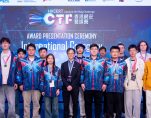
To cultivate practical talent for the cybersecurity sector, the sixth “HKCERT Capture The Flag Challenge 2025” (HKCERT CTF Challenge) was successfully organised by the Digital Policy Office (DPO), HKPC, and HKCERT. This year’s competition was elevated to the first-ever adoption of an attack–defence mode, closely replicating the network setup of real enterprises. Participants experienced first-hand hacking techniques, system vulnerability analysis, threat intelligence gathering, and coordinated response in a simulated real-world environment. Through completing multiple tasks within a limited time, the competition also allowed them to break through the traditional classroom theoretical framework, gain practical experience and build confidence. The event attracted around 1,940 young contestants, an increase of nearly 40% from last year’s 1,385 participants, reaching a record high for the competition. Contestants included teams from Hong Kong, Chinese Mainland, Asia, and Europe, fostering cross-regional exchange and collaboration. In the finals, three local teams and one overseas team were awarded gold prizes in the Secondary School, Tertiary Institution, Open Category, and International Category respectively, while Sing Yin Secondary School received the “Best School Award”. The full list of awardees is available on the event website.
Participants Share Practical Experience Integrating AI into Attack and Defence The competition was well received by contestants for its innovative format and realistic offensive and defensive environment, offering a valuable platform for learning and exchange. The winning team in the International Category, W&M, commented, “Our members are from Shanxi, Guangdong and Beijing. This was our first time competing together in the HKCERT CTF Challenge. The atmosphere and experience of the finals were excellent. The tasks were centred on an attack‑defence simulation, requiring us to find all vulnerabilities while patching our own systems and attacking other teams at the same time. Some vulnerabilities were discovered and exploited by other teams first, which kept the scores very close and made the competition incredibly tense and exciting”.
They added, “During the competition, we also applied lots of AI techniques for assistance, such as applying AI to analyse vulnerabilities and refine attack methods. In the future, AI may play a deeper role in areas like vulnerability detection and code analysis, but for now it cannot be fully relied upon—human oversight is still essential”.
HKCERT CTF Challenge has now been held for six consecutive years, with its scale expanding annually and participants showing continuous growth. Many secondary school students gain their first hands‑on exposure to cybersecurity through the competition and connect with university mentors, helping them shape their academic and career paths. Several past participants have gone on to compete in local and international events, committing to a future in the cybersecurity field. Beyond attracting overseas talent to exchange ideas in Hong Kong, HKCERT continues to build connections between cybersecurity professionals in Hong Kong and Chinese Mainland. Top‑performing teams can gain direct entry into equivalent finals in Chinese Mainland. For example, participants from the previous HKCERT CTF Challenge 2024 advanced directly to the finals of the “Greater Bay Area Cup Cybersecurity Challenge”, where they secured the top four places in the Hong Kong and Macao category. This also provided local contestants with access to world‑class cybersecurity techniques, effectively promoting cross‑regional elite collaboration and talent development.
Finals Format Upgraded: Attack-Defence Mode Mirrors Real Enterprise Operations The finals were comprehensively upgraded this year. In addition to increase the overall technical difficulty, the competition introduced an attack‑defence format for the first time that closely mirrors real enterprise cybersecurity operations. Teams played dual roles—both attackers and defenders—in an environment created with reference to the real-world systems. The tasks simulated incident response and live attack-defence scenarios commonly encountered in the cybersecurity field. Within a limited timeframe, participants had to do penetration testing, exploit vulnerabilities and attack, while patching their own systems and monitoring threats in real time against attacks from other teams. This parallel attack‑defence setup reflects actual workflow patterns in the industry, effectively training participants’ analytical abilities and adaptability under pressure. Through hands‑on practice in a likely enterprise environment, contestants developed multifaceted, industry‑aligned capabilities—laying a solid foundation for their future careers in cybersecurity.
Ms Candy CHAN, Assistant Commissioner (Project Governance and Cybersecurity) of the DPO, highlighted the DPO’s commitment to enhancing Hong Kong’s cyber resilience, with one of its key initiatives being the nurturing of the next generation of cybersecurity professionals. She emphasised that the DPO has been collaborating closely with academia and industry partners to foster a robust talent pipeline and build a safer digital environment in Hong Kong. She noted that this year marks the sixth edition of the HKCERT CTF Challenge, which has grown into one of Hong Kong’s most respected and anticipated cybersecurity competitions over the years. Beyond being a contest of technical prowess, the Challenge serves as a dynamic platform for networking, knowledge exchange and community building among the new generation of cybersecurity experts.
Ir Samson SUEN, General Manager of Digital Trust and Transformation Division of HKPC, stated, “HKCERT CTF Challenge has consistently aimed to build an international platform for technical exchange. Through high-intensity simulated contests, we enhance participants’ cyber defence skills and promote cross-regional interaction among emerging cybersecurity talents. This cultivates a new generation of globally competitive professionals in Hong Kong and strengthens the local talent pipeline. This year’s finals first introduced a simulation of real-world cybersecurity operations, enabling teams to experience both offensive and defensive roles in a recent cybersecurity team. This hands-on approach is crucial for developing practical skills and incident response capabilities”.
Fostering Cybersecurity Awareness Across All Sectors of Society To further enhance cybersecurity awareness across the community, HKCERT has partnered with the DPO and the Cyber Security and Technology Crime Bureau of The Hong Kong Police Force, to launch the “Building a Secure Cyberspace 2026” campaign to promote cybersecurity awareness. The initiative includes various educational activities, such as an “AI-Generated Four-Panel Comic”contest, which encourages the public to make good use of AI tools while strengthening their understanding of cybersecurity. At the corporate governance level, HKCERT will publish a series of practical guidelines addressing emerging risks —such as AI applications and supply chain security—highlighted in the “Hong Kong Cybersecurity Outlook 2026”, to support business in establishing a robust protection framework. In particular for AI governance, the guidelines will offer actionable recommendations covering AI system security assessments, compliance rules for employees using public AI platforms, controls over sensitive data input, and methods for monitoring and defending against AI‑assisted attacks. These resources aim to help enterprises systematically enhance their cyber resilience across governance, technology, and awareness.
As Hong Kong accelerates the development of innovation and technology and advances its digital economy, strengthening cyber defence capabilities has become a key talent need. HKCERT will continue to support businesses and the public through incident response, security guidance, and cybersecurity awareness programmes. The HKCERT CTF Challenge continues to play a vital role in nurturing local talent, fostering cross-regional collaboration, and advancing public education. By enhancing the overall level of protection, the competition contributes to the sustainable development of the digital economy and reinforces Hong Kong’s long‑term competitiveness.
The seventh edition of HKCERT CTF Challenge will be held in November 2026, featuring more innovative attack-defence challenges and continuing to set up an international category to provide local contestants with a platform for technical exchange with top teams from Hong Kong, Chinese Mainland, and overseas. Registration opens in September 2026, with finalists competing in the live finals in February 2027.
Hashtag: #HKCERT
The issuer is solely responsible for the content of this announcement.
About Hong Kong Productivity Council
The Hong Kong Productivity Council (HKPC) is a statutory body established in 1967, dedicated to enhancing the productivity and competitiveness of Hong Kong enterprises through world-class applied R&D, innovative technology services, and integrated manufacturing solutions. As a market-oriented, international R&D organisation, HKPC leverages its deep expertise and extensive industry experience in key areas such as AI, advanced manufacturing, life and health technology, green technology and new energy to drive new industrialisation and support the growth of emerging and future industries.
HKPC focuses on addressing businesses challenges and industrial technology needs, promoting the full integration between technological and industrial innovation. Through technology transfer, product innovation, intellectual property protection and commercialisation of R&D outcomes, the Council fosters collaboration with the local business community as well as top global R&D institutions, delivering added value to industries and advancing the development of new productive forces. HKPC’s world-class R&D achievements have been widely recognised over the years, winning an array of local and overseas accolades, reinforcing Hong Kong’s role as an international innovation and technology centre and a smart city.
To help enterprises capitalise on Hong Kong’s strengths in international connectivity to expand into global markets, HKPC offers comprehensive overseas expansion services tailored to critical areas including product development, technology, manufacturing, and management, enabling businesses to successfully go global from Hong Kong.
HKPC is also committed to providing timely and practical support to SMEs and startups with timely and practical , assisting them in accessing Government funding programmes. Through its FutureSkills training initiatives, HKPC helps both industry and academia stay ahead in latest digital and STEM technologies, nurturing a future-ready talent pool for Hong Kong.
For more information, please visit HKPC’s website: www.hkpc.org/en.
Arabian Post Staff -Dubai Child Digital Safety Council has held its first meeting, marking the start of a coordinated national drive to protect children online while supporting their cognitive and social development in an increasingly connected environment. Officials said the council will serve as a central platform to align regulatory oversight, policy design and public awareness campaigns under a single framework. The inaugural session brought together representatives […]
HONG KONG SAR – Media OutReach Newswire – 11 February 2026 – AD-Linkage, in collaboration with Alibaba AITIC, has successfully concluded its second AI-themed bootcamp at Alibaba’s headquarters in Shenzhen. Held over two consecutive days from February 7 to 8, 2026, the program attracted 20 participants from various industries in Hong Kong, focusing on “AI-Driven Automated Marketing and AI Agent Implementation” and enabling attendees to experience the real-world application potential of AI agents in business scenarios.
The bootcamp was closely aligned with the latest developments in AI, centering on how AI Agents and AI RAG (Retrieval-Augmented Generation) can be applied to content marketing and workflow automation. The curriculum unpacked the three-layer architecture of “Tools – Intelligence – Automation,” helping learners understand the practical path from using a single AI tool to building enterprise-level intelligent automation systems.
In the hands-on sessions, participants used Xiaohongshu (Little Red Book) marketing as the core scenario. They practiced leveraging Kimi and DeepSeek for viral topic discovery and trend analysis, designed structured prompts to generate on-brand copy and short video scripts, and completed visual assets with tools such as Jimeng AI and Canva. Over the two-day program, participants also learned how to use N8N to build automated Xiaohongshu workflows, including scheduling the scraping of trending content, storing data in Lark Base, triggering AI for secondary content creation and sensitive word detection, and using browser automation tools for multi-account scheduled posting—ultimately constructing a fully operational system for “Content Factory + Scheduling + Data Feedback.”
Driving a New Mode of Flexible Learning: Pioneering CEF-Subsidized Hybrid Courses
AD-Linkage also announced that it has become the first training institution in Hong Kong to offer courses that are both accredited by the Hong Kong Council for Accreditation of Academic and Vocational Qualifications (HKCAAVQ) and subsidized by the Continuing Education Fund (CEF) under a hybrid learning model. The programs are designed in a hybrid format, with part of the classes delivered via live online teaching and the remainder conducted through in-person classroom sessions. Learners attend at scheduled times either through an online classroom or by joining on-site, combining interactive online learning with face-to-face instruction to provide more flexible study options for working professionals.
Through structured live online sessions combined with in-person workshops, learners are guided by instructors to master theoretical frameworks and then participate in case discussions and practical exercises in the classroom, turning what they have learned into actionable solutions for real work scenarios. As these programs are listed as CEF-recognized courses, eligible learners can apply for government subsidies to lower their financial barrier to further study and continuously enhance their AI and digital transformation skills. Education providers interested in adopting a hybrid online–offline teaching model are welcome to contact AD-Linkage’s curriculum design consultancy team and visit: https://bit.ly/3ZxJNq3 for more information.
Management on Future Vision and AI Training Strategy
“By launching HKCAAVQ-accredited and CEF-subsidized hybrid learning programs, we aim to respond to the time and cost constraints faced by working professionals in Hong Kong, enabling more practitioners to master core AI and digital transformation capabilities in a more flexible way,” said Horace, Founder and Course Director of AD-Linkage. “At the same time, we hope to set a practical example for combining online and offline hybrid teaching in Hong Kong, and to help drive the wider adoption of such models across the local education and training sector.”
He added, “The AITIC bootcamp held at Alibaba’s Shenzhen headquarters focused on turning technologies such as AI Agents, AI RAG and automated workflows into practical skills that can be immediately applied to real business scenarios. Participants were not just learning theory; they were building fully functional automated marketing systems with their own hands, truly converting AI into a productivity tool for their organizations.”
About AD-Linkage and Upcoming Programs
AD-Linkage is a professional training institution dedicated to serving working professionals and corporate clients in Hong Kong. Its programs cover practical areas including digital marketing, AI applications and new media marketing. With a core philosophy of “practice-oriented and industry-aligned,” AD-Linkage designs courses that combine online theoretical learning with offline case studies and hands-on workshops via a hybrid teaching model, accommodating the busy schedules of working adults while ensuring that learning outcomes can be directly applied at work.
AD-Linkage is also actively expanding local and international partnerships, including collaborating with organizations such as Alibaba AITIC to host AI-themed bootcamps and corporate exchange activities. The institution continues to introduce the latest AI technologies and commercial application cases into Hong Kong, helping more professionals and SMEs seize opportunities in digitalization and intelligent transformation.
The next program co-organized by AD-Linkage and Alibaba AITIC will focus on “Building AI Assistants,” guiding learners from the application level to the stage of creating their own AI assistants. Participants will learn how to design, deploy and optimize AI assistants tailored to their specific business scenarios. For enquiries and registration, please visit: https://cef.ad-linkage.com/
Hashtag: #AD-Linkage
The issuer is solely responsible for the content of this announcement.
Amazon has outlined plans to channel up to $200 billion into artificial intelligence-focused data centres, networking and custom silicon through 2026, a scale of spending that would rank among the largest infrastructure pushes ever undertaken by a technology company. The investment, disclosed across earnings briefings and regulatory filings, is aimed at expanding Amazon Web Services capacity as customers accelerate the deployment of generative AI models and data-intensive […]
Khalifa University of Science and Technology and the Institute of Energy Economics Japan have convened the 2026 UAE–Japan Industry-Academia Collaboration Steering Board meeting in Abu Dhabi, bringing senior policymakers, researchers and industry executives together to accelerate joint work across energy systems, advanced materials and industrial decarbonisation.
The closed-door session, hosted by Khalifa University of Science and Technology with Institute of Energy Economics Japan, reviewed progress under a multi-year framework that links laboratory research to commercial deployment. Participants focused on aligning research priorities with national transition goals in the United Arab Emirates and Japan while ensuring that projects move beyond pilot stages into scaled industrial use.
University officials said the meeting sharpened governance around joint programmes that span hydrogen value chains, grid resilience, carbon management and next-generation manufacturing. The steering board assessed ongoing work on hydrogen carriers and utilisation pathways, including ammonia and synthetic fuels, alongside studies on carbon capture, utilisation and storage that integrate process design with life-cycle analysis. Industry representatives pressed for faster timelines and clearer pathways to demonstration, citing capital discipline and the need for predictable policy signals.
Energy systems dominated the agenda as both countries seek to balance security, affordability and emissions goals. Japan’s import-dependent energy mix and the UAE’s role as a major producer and exporter create complementary incentives for collaboration, delegates noted. Research teams presented updates on high-efficiency electrolysers, advanced catalysts and thermal management, with an emphasis on reducing costs and improving durability under desert and maritime operating conditions.
Another thread centred on digitalisation and artificial intelligence in energy operations. Joint projects are examining how data-driven optimisation can cut losses across generation, storage and transmission, and how digital twins can accelerate plant design and maintenance. Academic leaders argued that co-developed datasets and shared testbeds are essential to attract industrial partners and ensure interoperability across markets.
Advanced materials and manufacturing featured prominently, reflecting interest from automotive, aerospace and heavy-industry partners. Researchers outlined progress in lightweight alloys, composites and coatings designed to withstand extreme temperatures while lowering energy intensity. Industry participants flagged workforce readiness as a bottleneck, urging expanded exchange programmes and co-supervised doctoral tracks to build skills that translate quickly to factory floors.
The steering board also reviewed funding structures and intellectual property frameworks. Both sides reaffirmed commitments to balanced IP arrangements that protect proprietary know-how while enabling publication and talent development. Officials highlighted the importance of predictable co-funding cycles to keep multi-year research teams intact and to de-risk private investment in demonstration assets.
Abu Dhabi’s role as host underscored the emirate’s ambition to serve as a convening hub for applied research and industrial partnerships. Delegates toured university laboratories and pilot facilities to evaluate readiness for scale-up, with particular attention to safety standards and integration with industrial sites. Discussions touched on regulatory alignment and standards development, areas seen as critical to shortening time-to-market for cross-border technologies.
Japanese participants emphasised the value of long-term academic partnerships in sustaining innovation during market cycles. They pointed to the need for rigorous techno-economic assessments to guide policy and investment decisions, and for transparent metrics to track emissions impacts across supply chains. UAE counterparts highlighted the opportunity to test solutions at scale and under demanding conditions, offering feedback loops that can refine designs before global deployment.
Beyond energy, the meeting explored collaboration in water-energy nexus research, climate-resilient infrastructure and systems engineering for smart cities. Presentations examined desalination efficiency, waste-to-value pathways and the integration of distributed resources, reflecting broader industrial interests in sustainability and circularity.
Abu Dhabi-based technology group G42 has signed a $1bn framework cooperation agreement with a Vietnamese consortium led by FPT Corporation and Viet Thai Group, marking one of the largest cross-border technology collaborations aimed at building sovereign artificial intelligence and cloud infrastructure in Southeast Asia. The agreement sets out a multi-year plan to deploy large-scale cloud capacity across three data centre locations in Vietnam, alongside the development of […]
Quantum computing is emerging as a strategic lever for India’s ambition to secure a leading role in the global technology order, with Andhra Pradesh Chief Minister N. Chandrababu Naidu arguing that early investments and coordinated policy could reshape the country’s IT and industrial landscape. Speaking in Amaravati, Naidu said quantum technologies had the potential to redefine computing power, cybersecurity, materials science and drug discovery, placing India at a critical juncture as global competition accelerates.
Naidu’s remarks came as Andhra Pradesh positions itself as a focal point for quantum research and commercialisation through its Quantum Valley initiative, which aims to bring together academic institutions, global technology firms and startups on a single platform. The programme is designed to move beyond theoretical research and translate quantum science into deployable applications, an area where many countries are racing to gain first-mover advantage.
Quantum computing differs fundamentally from classical computing by using quantum bits, or qubits, that can exist in multiple states simultaneously. This allows certain calculations to be performed exponentially faster, opening pathways in optimisation problems, climate modelling, financial risk analysis and cryptography that are currently beyond reach. Governments in the United States, China and the European Union have committed billions of dollars to quantum research, viewing it as both an economic and national security priority.
Naidu said India’s strength lay in its deep pool of engineering talent and its established position in information technology services, but warned that relying solely on legacy software models would leave the country vulnerable as the technology cycle shifts. He argued that quantum computing, when combined with artificial intelligence and advanced semiconductors, could create a new technology stack in which India could compete at the highest level rather than remain a downstream adopter.
The Andhra Pradesh government has pitched Quantum Valley as a long-term ecosystem rather than a single project. Plans include dedicated research facilities, incentives for private investment, and partnerships with universities and multinational technology companies working on quantum hardware, algorithms and error correction. Officials involved in the programme say the aim is to create an environment similar to established innovation clusters, where research, talent and capital reinforce one another.
India’s broader policy environment has also begun to align with these ambitions. The national quantum mission, approved by the Union government, outlines funding for quantum computing, communications and sensing over the coming years, with a focus on building indigenous capabilities. Research groups at institutions such as the Indian Institute of Science and several Indian Institutes of Technology are already active in quantum algorithms and materials research, while startups are exploring niche applications in logistics, finance and healthcare.
Industry analysts note that quantum computing remains at an early stage globally, with practical, large-scale systems still years away. Current machines are limited by qubit stability and error rates, and most commercial use cases are experimental. However, the pace of progress has intensified, with steady advances in hardware architectures and hybrid models that combine classical and quantum computing. Countries that invest early in skills and research infrastructure are expected to gain disproportionate benefits once the technology matures.
Naidu acknowledged these challenges, stressing that quantum computing should be approached as a marathon rather than a sprint. He said sustained investment, patient capital and close collaboration between government, academia and industry would be essential to avoid fragmented efforts. He also emphasised the importance of education and workforce development, arguing that quantum science should be integrated into advanced engineering curricula to build a pipeline of specialised talent.
Abu Dhabi is preparing to introduce electric seaglider services across the emirate by 2028, positioning the technology as a new pillar in its transport and tourism strategy after a multi-agency agreement signed on Friday set the framework for development, regulation and investment. The accord brings together the Department of Culture and Tourism – Abu Dhabi, the Abu Dhabi Investment Office, the Integrated Transport Centre operating as Abu […]
Ushering in a new chapter featuring a four-hand gastronomic symphony by Chefs from Culinary Class Wars Season 2
HONG KONG SAR – Media OutReach Newswire – 6 February 2026 – DBS Bank (Hong Kong) Limited (“DBS Hong Kong”) is thrilled to announce the second season of DBS ARTable, an exclusive event meticulously curated for our esteemed clientele. Coinciding with the city’s most vibrant art season in March, DBS ARTable 2026 will offer an elevated prelude to this annual celebration of artistic mastery and gastronomy.
Jun Lee, Executive Chef of Seoul’s two-Michelin-starred restaurant Soigné (left) and Yun Na-ra, Owner & Chef of Yunjudang Brewmaster (right)
Building on the strong momentum of its inaugural year, the upcoming edition promises an even more refined and harmonious dialogue of visual and gastronomic arts. The culinary journey at DBS ARTable 2026 will ascend to new heights with an extraordinary 4-hand dining experience curated by two acclaimed chefs from “Culinary Class Wars Season 2” – Jun Lee, Executive Chef of Seoul’s two-Michelin-starred restaurant Soigné and Yun Na-ra, Owner & Chef of Yunjudang Brewmaster.
DBS ARTable, presented by Tatler, is a flagship initiative under the bank’s “DBS Culinary Delights”, catering to the aspirational preferences of its wealth clients. DBS remains dedicated to offering unparalleled experiences that blend sophisticated advisory with personal touches.
Hashtag: #DBS
The issuer is solely responsible for the content of this announcement.
About DBS
DBS is a leading financial services group in Asia with a presence in 19 markets. Headquartered and listed in Singapore, DBS is in the three key Asian axes of growth: Greater China, Southeast Asia and South Asia. The bank’s “AA-” and “Aa1” credit ratings are among the highest in the world.
DBS provides a full range of services in consumer, SME and corporate banking. As a bank born and bred in Asia, DBS understands the intricacies of doing business in the region’s most dynamic markets. DBS is committed to building lasting relationships with customers, as it banks the Asian way. Through the DBS Foundation, the bank creates impact beyond banking by uplifting lives and livelihoods of those in need. It provides essential needs to the underprivileged, and fosters inclusion by equipping the underserved with financial and digital literacy skills. It also nurtures innovative social enterprises that create positive impact.
With its extensive network of operations in Asia and emphasis on engaging and empowering its staff, DBS presents exciting career opportunities. For more information, please visit www.dbs.com.
Arabian Post Staff -Dubai Jordan-based education technology company Alefredo has acquired United Kingdom tutoring firm Tutor House, marking its formal entry into the UK market and accelerating its push to build a hybrid learning platform spanning Europe, the Middle East and Africa. The deal brings Alefredo a network of more than 30,000 vetted tutors across multiple subjects and age groups, significantly expanding its reach beyond its home […]
Arabian Post Staff -Dubai National Bank of Kuwait used the Kuwait Oil & Gas Show and Conference 2026 to underline its role as a leading financier to the energy value chain, engaging with policymakers, producers, service companies and investors as Kuwait accelerates long-term plans to modernise hydrocarbons infrastructure while managing the transition to lower-carbon operations. Held over three days in Kuwait City, the biennial industry gathering drew […]





 www.hkpc.org/en