Andhra Pradesh Chief Minister N. Chandrababu Naidu has warned that India’s rapid economic expansion is failing to satisfy the expectations of young people, highlighting a challenge for Prime Minister Narendra Modi even as he reaffirmed confidence in his coalition partner’s leadership.
Naidu, whose Telugu Desam Party is central to the governing alliance in New Delhi, said economic progress was visible but had not translated sufficiently into opportunities matching the ambitions of a younger generation. His comments brought the question of employment and living standards into focus as policymakers emphasise the country’s robust growth figures.
The chief minister’s intervention is politically significant because Modi relies on coalition partners to sustain his parliamentary majority. Naidu has remained a prominent supporter of the prime minister while pursuing investment, infrastructure and job creation in Andhra Pradesh, where economic development is a major priority for his administration.
His assessment distinguishes between the overall pace of expansion and the benefits experienced by individuals entering the labour market. Rising output does not automatically produce enough secure, well-paid positions for graduates and other jobseekers, particularly when investment is concentrated in sectors that employ relatively few workers.
Naidu nevertheless maintained that Modi was best placed to lead the country through its economic and political challenges. That combination of support and concern underscores the pressures facing the ruling alliance: sustaining confidence in its leadership while responding to demands for tangible improvements in household prospects.
The warning comes as the economic outlook remains strong. Moody’s Ratings this week raised its forecast for growth in the financial year ending March 2027 to 7%, from 6.5%, citing resilient domestic demand, investment and the economy’s ability to withstand disruptions to energy supplies.
The ratings agency also identified inflation, an uneven monsoon and tighter monetary conditions as risks. Those pressures matter to households because higher living costs can erode the gains from rising incomes, even when aggregate economic indicators continue to improve.
Official figures showed gross domestic product expanding 7.8% from a year earlier in the April-June quarter. Manufacturing, investment and consumer spending supported activity, but the headline measure does not establish how evenly the benefits are distributed among workers, regions and age groups.
Employment prospects have become particularly sensitive for educated young people. Competition for government posts, the cost of qualifications and uncertainty surrounding recruitment examinations have contributed to public frustration. The challenge extends beyond the number of jobs available to their quality, stability and suitability for applicants’ skills.
Modi’s government has sought to address those concerns through programmes promoting manufacturing, entrepreneurship, skills development and investment. The prime minister has repeatedly presented young people as central to his ambition of transforming India into a developed economy by 2047.
During his Independence Day address in August, Modi outlined measures involving technology, innovation and expanded economic opportunities. He pointed to the growth of the startup ecosystem and a research fund intended to encourage innovation, while urging young people to participate in the country’s development.
The government’s emphasis on technology also raises questions about the changing nature of work. Artificial intelligence offers potential gains in productivity and new business activity, but it may also alter recruitment in services and other industries that have traditionally offered entry-level employment to graduates.
For Andhra Pradesh, the debate has direct implications. Naidu’s administration has placed emphasis on attracting private investment and developing infrastructure, seeking to create employment while strengthening the state’s economic base. Translating announced projects into operating businesses and sustained hiring remains an important test of that strategy.
The Telugu Desam Party’s position within the national coalition gives Naidu a platform to raise such concerns without breaking with the government’s broader economic agenda. His remarks do not amount to a rejection of the growth strategy, but they place greater weight on whether its results can be felt by younger citizens.
India’s policymakers must also contend with differences between labour markets. Large cities can attract investment and skilled workers, while smaller towns and rural districts often offer fewer formal employment options. Such disparities complicate efforts to ensure that national growth produces broadly shared opportunities.
The central government has promoted training and enterprise initiatives alongside infrastructure spending, arguing that these measures can expand the range of work available. Their effects depend partly on private employers’ willingness to invest and recruit, and on whether training matches the skills businesses require.
Nvidia has introduced GR00T 2, an artificial intelligence model designed to teach robots physical tasks using videos of people and demonstrations collected from other machines, potentially reducing the amount of robot-specific training needed for industrial automation. The company unveiled the system at the Conference on Robot Learning in Austin, Texas, on Monday, alongside simulation software and evaluation tools intended to improve robotic manipulation. Nvidia says GR00T 2 […]
The full 2027 MICHELIN Guide Thailand Selection reaches record-high numbers with 507 entries, including 53 MICHELIN-Starred establishments. Marking both the Guide’s 10th edition in Thailand and the centenary of the MICHELIN Star, the 2027 edition reflects the evolution, resilience, and extraordinary potential of the country’s culinary industry.
The newly released Guide features 2 Three MICHELIN Stars, 10 Two MICHELIN Stars, 41 One MICHELIN Star, 151 MICHELIN Bib Gourmand, and 303 MICHELIN-Selected dining venues.
This edition highlights the decentralization of Thailand’s food scene and the unprecedented strength of regional markets, with the first-ever MICHELIN-Starred restaurant in Chiang Mai and the first-ever Two-MICHELIN-Starred restaurant in Phuket.
BANGKOK, THAILAND – Media OutReach Newswire – 10 November 2025 – Michelin today unveiled the MICHELIN Guide Thailand 2027 at the MICHELIN Guide Restaurant Ceremony Thailand, marking two significant milestones: the Guide’s landmark 10th edition in the country and the centenary of the MICHELIN Star. Reflecting a decade of evolution in Thailand’s vibrant culinary landscape, the latest selection features a record-high total of 507 dining establishments − including 2 Three MICHELIN Stars (both retaining their status), 10 Two MICHELIN Stars (3 promotions), 41 One MICHELIN Star (5 newcomers and 5 promotions), 151 MICHELIN Bib Gourmand (26 newcomers), and 303 MICHELIN-Selected entries (40 newcomers).
Gwendal Poullennec, International Director of the MICHELIN Guide commented: “With more than 500 establishments featured in the selection − including over 50 MICHELIN-Starred restaurants, the 2027 edition marks a significant milestone in the MICHELIN Guide Thailand’s journey. Celebrating the Guide’s 10th edition in Thailand and the centenary of the MICHELIN Star, first introduced in 1926, the selection reflects the remarkable evolution of Thailand’s culinary industry, driven by the passion, creativity, and resilience of its culinary professionals, as well as the country’s extraordinary gastronomic potential.”
Insights into Thailand’s Evolving Gastronomic Landscape
According to Mr. Poullennec, Thailand’s gastronomic scene has evolved from a trend-driven market into a mature and diverse culinary ecosystem. Excellence now extends far beyond the capital, with star-rated restaurants flourishing across the country and showcasing the strength of regional dining destinations.
Chefs are demonstrating greater confidence and individuality, while international restaurant groups continue to establish roots in Thailand and embrace local ingredients. This year’s selection introduces new cuisine types to the star-rated roster, while Thai chefs are increasingly exploring regional traditions, indigenous ingredients, and closer ties with local producers.
Techniques such as fermentation, aging, and natural umami extraction have become common tools for building flavor, while more thoughtful ingredient use reflects growing resourcefulness. Beyond fine dining, chefs are also finding success through more accessible formats and increasingly sophisticated beverage programs.
Guided by both experienced chefs and emerging talent, Thailand continues to strengthen its culinary identity while embracing global influences, reinforcing its position as one of the world’s most compelling gastronomic destinations.
Sorn and Sühring Reaffirm Their Excellence with Three MICHELIN Stars
In the 2027 MICHELIN Guide Thailand edition, the prestigious Three-MICHELIN-Star category remains unchanged with 2 entries: Sorn, where Chef Supaksorn “Ice” Jongsiri showcases the depth and diversity of Southern Thai cuisine through meticulously researched recipes and exceptional local ingredients, and Sühring, where twin chefs Thomas and Mathias Sühring continue to impress with their refined interpretation of modern German cuisine rooted in family traditions.
3 Restaurants Promoted to Two MICHELIN Stars, Including a Historic First for Phuket and Thailand’s Regional Dining Scene
The Two-MICHELIN-Star category welcomes 3 new additions, all promoted from the One-MICHELIN-Star status. A milestone achievement comes from PRU, which becomes the first restaurant in Phuket and the first outside Bangkok & Surrounding Provinces to earn Two MICHELIN Stars.
▪ Bangkok & Surrounding Provinces:
Blue by Alain Ducasse, a restaurant that stays true to the spirit of French fine dining, interweaving Southeast Asian ingredients with Mediterranean flair and a fresh, lighter, international perspective, complemented by the seasonal “Delight Collection” of creative small desserts.
Mia, a restaurant offering storytelling-driven modern European cuisine with Asian influences, where dishes such as the hybrid sourdough brioche carry personal significance beyond their culinary craft.
▪ Phuket
PRU, a restaurant crafting modern Thai cuisine with a strong sense of place, championing mindfulness through farm-grown ingredients, trusted Thai suppliers, and a commitment to fermentation, preservation and responsible practices, exemplified by its signature “King of the Fruits” pairing durian with caviar and sea grapes.
10 Restaurants Join the One-MICHELIN-Star Selection, Including Chiang Mai’s First-Ever MICHELIN-Starred Restaurant
Among the 10 new One-MICHELIN-Star entries, 5 are newcomers joining the Guide for the first time, while the other 5 are promoted from the MICHELIN-Selected category.
Promoted from MICHELIN-Selected to One MICHELIN Star, Belén by Paulo Airaudo becomes the first-ever MICHELIN-Starred restaurant in Chiang Mai. Meanwhile, Phuket records its strongest MICHELIN Star showing to date, with one newcomer, Omemo, and one promoted restaurant, Jaras, joining the One-MICHELIN-Star selection.
▪ Bangkok & Surrounding Provinces
Liana, a restaurant where dishes are inspired by European seasons, combining local produce, a lighter take on French techniques, and neatly layered flavors and textures, with desserts among the highlights.
MACHRI, a restaurant where chef reinterprets a royal Thai menu inspired by King Rama V’s 1897 European food diary, combining deep historical research and French technique while preserving authentically Thai flavors, highlighted by mackerel with roasted chili paste and sticky rice, and pigeon red curry samrap.
THARN, a concept-led restaurant presenting a refined tasting menu inspired by Thai cuisine from Sukhothai to Rattanakosin, juxtaposing cultural references with authentic flavors, carefully sourced ingredients, and Thai GI products.
The China House by Chef Fei, a refined Cantonese restaurant offering thoughtfully creative dishes marked by precise seasoning, clean flavors and assured technique, highlighted by roasted chicken with flax seeds that lend a subtle nuttiness to the crisp skin and juicy flesh.
▪ Phuket
Omemo, a restaurant offering a contemporary take on classic Swiss cuisine through balanced, well-structured Alpine dishes, featuring house-made sausages, potato rösti and fondue-inspired specialties, with meat and cheese at the heart of the menu and the full experience menu offering the best insight into its culinary narrative.
The other 5 One-MICHELIN-Star recipients promoted from the MICHELIN-Selected category are:
▪ Bangkok & Surrounding Provinces
Duet by David Toutain, a restaurant presenting a creative, delicate, and distinctly plant-forward seasonal tasting menu that balances land and sea, complemented by a carefully curated zero-proof drink pairing.
I-SANG, a modern Korean restaurant that fuses Korean roots with Thai produce through a concise tasting menu, featuring Eo-Mandu crafted from local catfish, perilla oil Guksu, and crispy crab, a playful riff on Korean fried chicken.
Sartoria by Paulo Airaudo, a restaurant presenting a modern Tuscan menu centered on fresh pasta and seasonal produce, blending Italian staples with Thai ingredients, highlighted by Duck Cappelletti filled with local duck confit and Basilico built around black-pepper ganache.
▪ Chiang Mai
Belén by Paulo Airaudo, a restaurant bringing refined energy to Chiang Mai’s dining scene, elevating local ingredients through sharp European technique, with a smooth and effortlessly moreish Goat’s Cheese Flan paired with seasonal fruits among the highlights.
▪ Phuket
Jaras, a restaurant offering a seasonal tasting menu shaped by home-grown produce, regional ingredients, and a zero-waste approach, highlighted by the Jorang featuring prawn and Thai curry sauce with crispy textures and aromatic herbs.
Five MICHELIN Special Awards Recognize Exceptional Professionals
Alongside its restaurant selection, the MICHELIN Guide presents its Special Awards to honor the exceptional talent, passion and craft behind dining experiences that stay with guests long after the final course. These awards recognize outstanding professionals at MICHELIN-recommended restaurants who elevate the gastronomic experience, while celebrating the diversity and appeal of careers across the hospitality industry.
MICHELIN Service Award
The MICHELIN Service Award aims to recognize and celebrate skilled and talented professionals who significantly enhance the guest experience. This year’s award, presented by the Tourism Authority of Thailand, honors Chanyawi Mukmaneerattanapon of hom, a MICHELIN-Selected restaurant in Phuket.
An essential pillar of her team in Phuket since its earliest days, Ms. Mukmaneerattanapon is celebrated for her remarkable consistency, steadfast commitment, and genuinely attentive approach to service. Even when managing multiple tables, she remains proactive, fluid, and intuitive, making every guest feel effortlessly cared for. Her longevity, unwavering professional standards, and deeply personal touch exemplify the true essence of hospitality; while her grace, poise, and dedication set a high benchmark for the industry.
MICHELIN Opening of the Year Award
The MICHELIN Opening of the Year Award recognizes an individual or team behind a dining venue that has opened within the past 12 months and made a notable impact on the local gastronomic scene through a creative degustation concept and distinctive culinary approach. This year’s award, presented by UOB, is bestowed upon Kongwuth Chaiwongkachon of Taang, a MICHELIN-Selected restaurant in Bangkok.
Since opening in June, Taang has made an immediate impression on Bangkok’s dining landscape. Led by Chef Kongwuth, a native of Chiang Rai, this intimate counter experience explores the historical caravan trade routes of northern Thailand and its neighboring regions, tracing how ingredients, people, and food cultures have influenced one another over centuries. Combining brilliant storytelling with exceptional cooking, the restaurant offers a remarkably nuanced exploration of northern Thai cuisine and has quickly become one of the city’s most exciting and talked-about new openings.
MICHELIN Mentor Chef Award
Honoring chefs whose unwavering dedication to nurturing the next generation has made a lasting impact on the culinary industry, the 2027 MICHELIN Mentor Chef Award, presented by WP Energy, is bestowed upon Arnaud Dunand-Sauthier of Maison Dunand, a One-MICHELIN-Star restaurant in Bangkok.
Originally from Chambéry in the Savoie region of France, Chef Arnaud brought a wealth of French culinary expertise to Thailand over a decade ago. Beyond his culinary achievements, he has played a profound role as a mentor to both Thai and international talent, nurturing young professionals from commis to sous chef and fostering long-term growth within his teams. Today, his former protégés lead MICHELIN-Starred kitchens in Europe, run acclaimed establishments in France, and head major restaurant concepts across Thailand − reflecting his unwavering commitment to developing people, empowering the next generation, and building a lasting culinary legacy.
MICHELIN Young Chef Award
Recognizing a young chef who has demonstrated a unique personality and distinctive identity through their culinary creations over the past 12 months, this year’s MICHELIN Young Chef Award is bestowed upon Natdanai Kitkorsup of lob-baan, a MICHELIN Bib Gourmand restaurant in Phuket.
Born and raised in Phuket, Chef Natdanai returned to his home region after honing his craft in leading kitchens across Bangkok – including a Two-Michelin-Star restaurant – before continuing his journey at acclaimed establishments in Phuket. His cooking reflects a profound respect for native ingredients, rich traditions, and authentic flavor profiles, blending regional heritage with refined contemporary technique. Showing impressive maturity and a style firmly rooted in his home region, Chef Natdanai stands out as a young talent helping to bring Phuket’s local cuisine forward.
MICHELIN Sommelier Award
Highlighting the skills, knowledge, and passion of talented sommeliers within the industry, this year’s MICHELIN Sommelier Award is bestowed upon Charles Elie-Rodenstein of Cannubi by Umberto Bombana, a One-MICHELIN-Star restaurant in Bangkok.
Originally from Alsace in France, Mr. Elie-Rodenstein is a multilingual sommelier whose exceptional international journey across France, Monaco, Japan, and Thailand has shaped a deep global perspective. Knowledgeable and confident, he curates inspiring wine selections and offers thoughtful recommendations. What sets him apart is his warm, approachable manner, making the world of wine engaging and accessible; while his natural enthusiasm, professionalism, and personal touch elevate the entire dining experience.
CLICK HERE to download images of the from the MICHELIN Guide Restaurant Ceremony Thailand 2027.
The MICHELIN Guide Thailand 2027 at a Glance:
2 Three MICHELIN Stars
10 Two MICHELIN Stars (3 promoted from One MICHELIN Star)
41 One MICHELIN Star (5 new, 5 promoted from MICHELIN-Selected)
151 MICHELIN Bib Gourmand (26 new)
303 MICHELIN-Selected (40 new)
Mindful Voices
Mindful Voices is a new MICHELIN Guide platform that brings together inspirational figures from across the hospitality industry. Designed as an editorial space, it gives chefs, hoteliers and winemakers the opportunity to share their stories and pioneering practices with their peers and with audiences around the world.
Gwendal Poullennec, International Director of the MICHELIN Guide, says, “Mindful Voices will give a platform to all those who are rewriting the rules in their respective fields. This new framework draws directly from what our inspection teams witness firsthand: encounters and experiences that are transforming how things are done and that deserve to be shared. Staying true to its identity and values, the MICHELIN Guide will amplify and give full resonance to these voices from the worlds of gastronomy, hospitality and wine so that they can be heard, wherever they may be.”
The chef invited on stage as a Mindful Voice at the MICHELIN Guide Restaurant Ceremony Thailand 2027 is Chef Chudaree ‘Tam’ Debhakam ofBaan Tepa, a Two-MICHELIN-Star restaurant in Bangkok. At Baan Tepa, Chef Tam elevates her farm-to-table ethos through a polished seven-course Thai tasting menu. The experience begins in the kitchen, immediately immersing guests in the restaurant’s thoughtful sense of place. For each course, the team presents trays of featured ingredients, from seasonal fruits to vegetables and herbs, offering a vivid glimpse into the produce that shapes the menu. Traditional curries, flavors and techniques are reimagined with deft precision, creativity and harmony throughout. She remains committed to mindful gastronomy, from thoughtful local sourcing to minimizing kitchen waste.
Learn more about the new Mindful Voices initiative here.
The issuer is solely responsible for the content of this announcement.
About Michelin:
Michelin is building a world-leading manufacturer of life-changing composites and experiences. Pioneering engineered materials for more than 130 years, Michelin is uniquely positioned to make decisive contributions to human progress and to a more sustainable world. Drawing on its deep know-how in polymer composites, Michelin is constantly innovating to manufacture high-quality tires and components for critical applications in demanding fields as varied as mobility, construction, aeronautics, low-carbon energies, and healthcare. The care placed in its products and deep customer knowledge inspire Michelin to offer the finest experiences. This spans from providing data- and AI-based connected solutions for professional fleets to recommending outstanding restaurants and hotels curated by the MICHELIN Guide. Headquartered in Clermont-Ferrand, France, Michelin is present in 175 countries and employs 122,600 people. (www.michelin.com).
HONG KONG SAR – Media OutReach Newswire – 6 November 2026 – The 75th Miss Universe World Final will take place on 24 November 2026 at the José Miguel Agrelot Coliseum in San Juan, Puerto Rico. Marking the historic diamond anniversary of the pageant, this year’s edition brings together delegates from over 120 countries and territories. Crowned Miss Universe Hong Kong in September 2026, Jen Zhou has completed her domestic preparations and will depart for Puerto Rico next week to embark on three weeks of official competition events, preliminary evaluations, and cross-cultural exchanges.
A Multifaceted Background Spanning Film, Finance, and Broadcast Journalism
Raised in Hong Kong and an alumna of Hong Kong International School (HKIS), Zhou demonstrated creative and academic excellence early on, receiving concurrent admission offers from the Acting Department of Beijing Film Academy and the School of Cinematic Arts at the University of Southern California (USC). She went on to complete dual degrees from USC’s School of Cinematic Arts and the Marshall School of Business.
Following graduation, Zhou entered international corporate finance, working at UBS for nearly three years before pursuing and earning a Master’s degree in Journalism from Columbia University in New York. She currently works as an English-language television feature host in Hong Kong, a bilingual content creator, and a commercial model. Having previously placed as a finalist in both Miss Asia and Miss Hong Kong, Zhou won the Miss Universe Hong Kong title in September 2026, securing her credential to represent the city on the global stage.
“The Miss Universe competition is not only one of the world’s preeminent pageants, but also a vital platform for spotlighting female leadership, cultural diversity, and global engagement,” Zhou stated. “Representing Hong Kong at this diamond anniversary edition is a tremendous privilege. I hope to present to the world the resilience, professionalism, and cultural confidence that define Hong Kong’s emerging generation.”
Rigorous Competition Preparation and Community Philanthropy
To prepare for the global arena at the José Miguel Agrelot Coliseum—a venue accommodating up to 18,000 spectators—the Hong Kong delegation designed a rigorous training regimen for Zhou. The curriculum emphasized international runway technique, multi-camera staging, and simulated on-stage Q&A sessions to sharpen public speaking under pressure.
In tandem with performance coaching, Zhou prioritized community advocacy throughout her intensive preparation period. In late October, she volunteered at a community kitchen in Sham Shui Po, Kowloon, joining local volunteer teams to prepare and distribute hot meals and essential supplies to elderly residents and unhoused individuals. Zhou and her team also provided direct funding for meal ingredients, integrating civic engagement into her pre-pageant journey.
Showcasing Local Design: Evening Gown Craftsmanship and Cultural Heritage
The official Miss Universe schedule features rigorous sartorial standards across welcome receptions, philanthropic galas, preliminary judging, the national costume presentation, and the grand final.
Bespoke Evening Gown: Tailored by an acclaimed Hong Kong fashion designer, Zhou’s competition gown integrates Hong Kong’s East-meets-West architectural silhouettes, urban dynamism, and traditional Lingnan textile craftsmanship into its fabric and tailoring.
Cultural Heritage Exchange: For the traditional gift-exchange ceremony involving over 120 participating delegations, the team selected handcrafted cultural keepsakes reflecting Hong Kong’s heritage, designed to share the city’s unique cultural narrative with global representatives.
Official Schedule for the 75th Miss Universe World Final
Key competition milestones at the José Miguel Agrelot Coliseum include:
National Costume Show: 21 November 2026
Preliminary Competition: 22 November 2026
Grand Final: 24 November 2026
Hashtag: #MissUniverseHongKong #MissUniverse
The issuer is solely responsible for the content of this announcement.
About Miss Universe Hong Kong
Miss Universe is among the world’s most enduring and widely followed international competitions, engaging delegates from more than 120 countries and territories annually. Miss Universe Hong Kong selects and mentors accomplished women with strong academic credentials, global communication skills, and social commitment to represent Hong Kong internationally, fostering intercultural dialogue and enhancing the city’s global profile.
About the 75th Miss Universe World Final
The 75th Miss Universe World Final will convene on 24 November 2026 at the José Miguel Agrelot Coliseum in San Juan, Puerto Rico. Celebrating 75 years of leadership and international pageantry under the “Diamond Edition” banner, the event brings together global delegates demonstrating leadership, stage presentation, and public advocacy.
Bureau’s Middle East hub in Dubai to mobilise Gulf partners in driving initiatives under the partnership
COMO, ITALY / DUBAI, UAE / ACCRA, GHANA – African Media Agency – 5 November 2026– e-Crime Bureau, an ISO/IEC 27001-certified cybersecurity consulting firm, and the Smart Africa Secretariat have signed a Memorandum of Understanding (MoU) to strengthen cybersecurity innovation and capacity development across Africa.
Signed on November 2, 2026, in Accra, on the sidelines of the 15th Africa Internet Governance Forum (AfIGF), the agreement establishes collaboration across three areas: people, processes and technology.
The firm’s Middle East hub will drive initiatives under the MoU by bringing Gulf partners into the partnership, leveraging the region’s fast-growing emerging technology and cybersecurity ecosystem, including technology companies, innovation centres, investors, government-led digital transformation and national cybersecurity initiatives. Through these partnerships, the firm aims to channel Gulf expertise, technologies and investment into programmes that strengthen Africa’s cybersecurity capabilities.
Speaking at the signing ceremony, Mr. Lacina Koné, Director General and CEO, Smart Africa, said: “Through our collaboration with e-Crime Bureau, we aim to strengthen cybersecurity expertise and advance the protection of critical digital infrastructure across the continent. ”
The partnership follows e-Crime Bureau’s global restructuring, anchored by hubs in Europe, the Middle East and Africa, building on 15 years of experience to serve clients across international markets.
The Middle East hub leads business development and service delivery and anchors the firm’s engagement with Gulf partners; the Europe hub focuses on standards, certifications, regulatory best practices, research, innovation and technology partnerships, and coordinates development partner engagements; while the African hub focuses on talent & skills development and project execution.
Dr. Albert Antwi-Boasiako, Executive Chairman of e-Crime Bureau, said: “Our expansion, and our partnership with Smart Africa, marks a new era for the Bureau. With global hubs in Europe, the Middle East and Africa, we serve as a bridge that connects expertise, talent, experience, insights and technology.”
This partnership brings together Smart Africa’s cybersecurity work, e-Crime Bureau’s expertise and the strengths of the Gulf’s technology and cybersecurity ecosystem to advance cybersecurity innovation and capability development across Africa.
Hashtag: #e-CrimeBureau
The issuer is solely responsible for the content of this announcement.
About e-Crime Bureau
e-Crime Bureau is a global cybersecurity consulting firm operating across Europe, the Middle East and Africa, combining technical expertise and practical experience to help clients anticipate threats, respond proactively and build lasting resilience. https://www.e-crimebureau.com/
The UAE plans to invest between Dh150 billion and Dh200 billion in its energy sector by 2030, Energy and Infrastructure Minister Suhail bin Mohammed Al Mazrouei said at ADIPEC 2026 on Monday, linking the spending to national security and rising electricity demand. Speaking during a ministerial panel in Abu Dhabi, Al Mazrouei said geopolitical uncertainty, expanding industrial activity and the power requirements of artificial intelligence and data […]
OpenAI chief executive Sam Altman met senior Samsung executives in South Korea on Saturday as the companies pursue cooperation on artificial intelligence infrastructure amid mounting pressure on global memory chip supplies. Samsung said approximately 50 executives from its electronics, financial services and biotechnology businesses attended the meeting at its human resources development centre in Yongin, south of Seoul. The discussions focused on how artificial intelligence could transform […]
Ridger Delivers MUX Private AI Deployment to Shum Wong & Co., Solicitors in Hong Kong
SINGAPORE – Media OutReach Newswire – 30 October 2026 – Ridger, an AI infrastructure company, today announced the official delivery of its MUX private AI solution to Shum Wong & Co., Solicitors in Hong Kong. The solution features MIMO, the world’s first AI-native storage system, making Shum Wong & Co., Solicitors the first law firm in Hong Kong Northern Metropolis to deploy it.
Representatives from Ridger, Shum Wong & Co., Solicitors, xFusion, and Richee at the delivery ceremony for the first MUX private AI deployment in Hong Kong Northern Metropolis.
Representatives from Ridger, Shum Wong & Co., Solicitors, xFusion, and Fadada’s RicheeAI team attended the delivery ceremony. During the event, Ridger presented the firm with the “Global AI Pioneer Law Firm” certificate in recognition of its forward-looking investment in private AI infrastructure.
The solution brings together AI-native storage and compute infrastructure, a dedicated large language model (LLM) environment, and AI applications tailored to legal workflows. Operating entirely within the firm’s own security perimeter, it marks a significant step toward enabling Hong Kong’s legal profession to harness the productivity of generative AI while safeguarding client data and meeting compliance requirements.
About the Deployment
In space-constrained Hong Kong, Ms. Careen H.Y. Wong, Founding Partner of Shum Wong & Co., Solicitors and Vice President of The Law Society of Hong Kong, set aside room in the Firm’s latest office in the Northern Metropolis for a standard equipment rack, ready for on-premise AI. It is more than a space decision: it reflects her view of the future of legal services—that while harnessing AI to improve efficiency, a firm must retain control of its data and technology boundaries, so that sensitive materials are always properly protected.
Under the engagement, Ridger built a privately owned, independently operable AI foundation for Shum Wong & Co., Solicitors, comprising high-performance storage and data infrastructure optimized for AI workloads, together with a dedicated LLM platform over which the client retains full control of model weights and the inference environment. The platform supports use cases including contract review and risk flagging, legal research and case-law retrieval, large-scale document review in due diligence, drafting and multilingual translation of legal documents, and internal Knowledge Base question answering. It also provides role-based access control, tiered permissions, comprehensive audit trails and content provenance to meet enterprise-grade governance requirements.
Called MUX, the private solution lets the firm begin with no barrier and without capital-intensive build-out or a dedicated server room, scaling on demand; it natively supports Hong Kong’s common law system and integrates seamlessly with existing systems such as email, document management and calendar, embedding AI into lawyers’ daily work. MUX can be ordered directly through Ridger’s website (https://ridger.tech), out of the box.
The delivery reflects the collaboration of legal expertise, AI infrastructure, compute platforms and industry applications: Shum Wong & Co., Solicitors defined the requirements for data confidentiality and on-premise deployment from its actual practice; Ridger provided the end-to-end MUX solution and led its design and integration; xFusion supplied the FusionXpark local AI compute platform and technical support; and Fadada provided the Richee Legal AI Agent Platform, leveraging specialized AI agents and skills to support lawyers in their daily work and improve workflow efficiency. Ridger notes that while an AI model determines capability for a moment, AI infrastructure determines long-term competitiveness.
Why Private AI Matters for the Legal Sector
1. Safeguarding client confidentiality and legal professional privilege
Client materials, transaction documents and dispute information handled by law firms are protected by legal professional privilege (LPP) and strict professional duties of confidentiality. Disclosure to third parties—including public cloud services—may be treated as a waiver of privilege, causing it to be lost and the materials to become disclosable in subsequent proceedings. Private deployment keeps storage, processing and inference entirely within the firm’s own environment, with no disclosure to external providers, preserving privilege and confidentiality at source.
2. Embedding data sovereignty and regulatory compliance
The solution aligns with Hong Kong’s Personal Data (Privacy) Ordinance (Cap. 486) and is designed with reference to the Privacy Commissioner’s “Checklist on Guidelines for the Use of Generative AI by Employees” and the “Model Framework on AI: Personal Data Protection,” as well as The Law Society of Hong Kong’s 2024 position paper on the impact of AI on the legal profession and the Manifesto on “Legal Ethical Code of Conduct Regarding the Deployment of AI.” It embeds the principles of lawfulness, transparency, traceability, interpretability, security and appropriate human oversight into a unified AI governance framework.
For a firm handling cross-border work, the same private environment also addresses the requirements of the major jurisdictions: for Mainland China, it aligns with the Personal Information Protection Law, the Data Security Law and data-export mechanisms such as security assessments and standard contracts; for Europe, it maps to the EU General Data Protection Regulation (GDPR) and standard contractual clauses; for the United States, it meets the confidentiality and competence duties under the ABA Model Rules of Professional Conduct and Formal Opinion 512 on generative AI. Because data always remains within the firm’s own perimeter, the firm can confidently meet local data-confidentiality and regulatory expectations wherever its clients are based.
3. Eliminating the hidden risk of “shadow AI”
Where a firm offers no convenient, approved AI tool, individual lawyers may turn to consumer-grade public chatbots for work, creating “shadow AI” that sits outside IT and compliance visibility—unapproved, unlogged and unaudited, with unknown data flows and no clear accountability. MUX channels that demand into a single, visible, auditable controlled environment, giving lawyers the efficiency they want while bringing every use under the institution’s governance and oversight.
4. Keeping institutional knowledge within the firm
The case law, templates and practical know-how accumulated by a firm are core competitive assets. A private platform continuously refined on the firm’s own corpus keeps these assets within the institution and compounds their value over time, rather than depositing them with an external vendor.
5. Ensuring control and business continuity
Private deployment insulates the firm from external API changes, model versioning, service outages or shifts in vendor strategy, giving it full control over capabilities, upgrade timing, cost and availability — a foundation for durable, long-term AI adoption.
Executive Quotes
“For industries built on trust and confidentiality, such as the law, the value of AI should never come at the price of data sovereignty,” said Ray Hu, General Manager Asia-Pacific Region of Ridger. “Private deployment lets a firm turn generative AI into auditable, governable and sustainable productivity without crossing confidentiality lines. We are proud to set this benchmark with Shum Wong & Co., Solicitors”
Ray Hu, General Manager Asia-Pacific Region, Ridger
“In Hong Kong, office space is scarce and precious, but data sovereignty is worth setting aside a place for. Building our own AI infrastructure lets us embrace AI while always safeguarding our clients’ trust and the boundaries of our profession.”
The issuer is solely responsible for the content of this announcement.
Ridger Company Limited
Ridger is a technology company focused on data and storage infrastructure for the AI era. The company provides private, high-performance AI infrastructure and solutions that enable enterprises to deploy and run large models and AI applications within their own security perimeter. Through its proprietary storage and data management technologies, Ridger helps clients safeguard data sovereignty, security and compliance while fully realizing the business value of artificial intelligence.
JOHANNESBURG, SOUTH AFRICA – Media OutReach Newswire – 28 October 2026 – On October 27, ahead of the BAIC FOTON Africa Partners Conference, BAIC FOTON inaugurated its Africa Regional Training Center in South Africa and held its first training session. CEO Lu Zhenghua, BAIC FOTON International President Wu Zongtian, other leaders and local partners attended.
As global commercial vehicle competition intensifies, international growth requires strong products and manufacturing as well as professional full-lifecycle service. BAIC FOTON’s growing African lineup creates diverse sales, maintenance and technical-support needs, making local talent development essential. Since early 2026, the company has delivered nearly 100 specialized training sessions in key markets, including heavy-duty truck engine disassembly in Argentina, all-electric bus fault diagnosis in Türkiye, and one-day intensive training for five rotating groups in Uruguay. The programs turn headquarters’ technical standards into practical frontline diagnostic and repair skills.
Lu Zhenghua said the center will support Africa’s regional operating system and deeper localization by connecting technical standards, service experience and local team capabilities, while improving coordination among product supply, after-sales support and talent development. Wang Zhuozhong, VP of BAIC FOTON INTERNATIONAL, introduced the center’s background and development plan. Local partners discussed service cooperation, support for service providers and future opportunities.
Centered in South Africa and serving the wider continent, the center will share technical standards and service experience and help dealers improve spare-parts stocking, maintenance processes and response efficiency, advancing standardized, professional services.
The 900-square-meter facility allocates 450 square meters each to theoretical and practical training. A 140-square-meter classroom seats 80, and a 35-square-meter classroom seats 24. Offices and rest areas support five practical zones: complete vehicles, engines, transmissions, electrical and electronic systems, and new-energy vehicles. The facility supports training across BAIC FOTON’s product range and job roles.
After touring the center, Lu Zhenghua and his delegation met local dealers and customers to discuss regional business. African dealers welcomed its contribution to local talent and service capability, and looked forward to deeper technical and business cooperation.
Building on local manufacturing in South Africa, BAIC FOTON is integrating manufacturing, spare-parts supply, after-sales support and professional training. It will continue working with African partners to deepen internationalization and localization and promote high-quality growth across the continent.
Hashtag: #BAICFOTON
The issuer is solely responsible for the content of this announcement.
ISC2 plans to convene its new Cyber-AI Workforce Coalition in November, with initial employment toolkits targeted for spring 2027 as artificial intelligence reshapes cybersecurity jobs and recruitment. Chief executive Scott Beale outlined the timetable during the organisation’s Security Congress in Denver on 26 October, saying the coalition would bring employers, technology companies and workforce specialists together to establish clearer descriptions of emerging security roles. Some companies could […]
Microsoft has opened a voluntary departure programme to approximately 60,000 employees across four countries, offering severance support as the technology group adjusts staffing across several major businesses. The initiative, announced on Monday, covers eligible workers in the United States, United Kingdom, Canada and India. It encompasses more than a quarter of Microsoft’s global workforce, although the company has not specified how many departures it expects. Amy Coleman, […]
Overnight AI challenge saw 60 participants tackle a series of challenges using OpenAI Codex, with Kay Hng Quek taking the top prize
SINGAPORE – Media OutReach Newswire – 26 October 2026 – Coupang, a Seattle-based technology company that serves customers in 190 countries and territories, co-hosted an overnight AI hackathon, AI Grand Prix Singapore 2026 (“AI Grand Prix“) with OpenAI. It was presented by Elev8, with Carousell Group as venue partner.
Held from 24 to 25 October 2026 at Carousell Campus, the overnight AI Grand Prix brought together 60 participants, selected from a pool of 150 applicants, to tackle a series of challenges that tested their technical skills, creativity and ability to solve problems under pressure. All participants competed in individual challenges and formed 14 teams for the group challenge. Engagement remained strong through the night, with participants continuing to work on their solutions into the early hours.
From Challenge to Working Solution
Unlike a traditional hackathon centred on a single problem statement, the AI Grand Prix was a multi-challenge competition, requiring them to adapt their approach as the competition progressed. Using OpenAI Codex, participants were tasked with three distinct challenges: Game Hack, which focused on developing creative AI-powered games; Spot the Mismatch, a technical challenge to identify discrepancies in AI-generated product descriptions, images and prices; and Group Hack, in which 14 teams developed AI-powered shopping experiences and solutions. Performance across the challenges was assessed collectively to determine the overall rankings.
Taking the top spot was Kay Hng Quek, who demonstrated strong, consistent problem-solving skills across different technical challenges. He received the Champion’s Builder Kit, a special first-place award comprising a Mac mini, DJI Mic 3 and Elgato Stream Deck Plus, designed to support continued experimentation and creation as an AI builder.
A total of US$13,000 in OpenAI API credits was shared among the winners and OpenAI subscription benefits were also provided to all participants, alongside unlimited Codex usage resets during the event to encourage experimentation with different ideas and approaches. The top 10 participants are scheduled to attend an exclusive networking dinner on 26 October with leadership and technical representatives from Coupang and OpenAI, offering an opportunity to exchange ideas and experiences in building with AI.
Xin Fu, VP of Engineering at Coupang (left), and winner Kay Hng Quek (right)
“AI Grand Prix was an incredible opportunity to push myself beyond my comfort zone and explore what’s possible with AI. The variety of challenges encouraged us to think creatively, adapt quickly and approach problems from different perspectives. What made the experience even more rewarding was being surrounded by talented, passionate builders who shared ideas and inspired one another. I’m grateful to have been part of such an exciting community, and especially for Jerel, my cofounder, who brings out the best in me,” said Kay Hng Quek, overall champion of AI Grand Prix Singapore 2026.
“Technology and innovation are at the heart of how we create better experiences for our customers, and we see tremendous potential for AI to further transform the future of commerce. Singapore is home to an exciting community of engineers and researchers, and we are thrilled to co-host this event with OpenAI to provide a platform for them to come together, experiment and innovate with AI,” said Xin Fu, VP of Engineering at Coupang.
Derrick Choi, Head of Applied AI, Codex (APAC) at OpenAI, said, “AI is changing how software is built, giving developers new ways to accelerate the journey from concept to product. The AI Grand Prix highlighted the breadth of Singapore’s developer community. It was a great opportunity to give builders a chance to try different approaches with Codex and explore how they could use it to tackle real-world problems.”
The AI Grand Prix marks Coupang’s first event with OpenAI and underscores its continued investment in building the future of commerce with AI, while leveraging Singapore’s position at the heart of Southeast Asia’s technology ecosystem.
Hashtag: #Coupang
The issuer is solely responsible for the content of this announcement.
About Coupang
Coupang is a technology and Fortune 150 company listed on the New York Stock Exchange (NYSE: CPNG) that provides retail, restaurant delivery, video streaming and fintech services to customers around the world under brands that include Coupang, Eats, Play, Rocket Now and Farfetch. It operates in over 190 countries and territories around the world.
SINGAPORE – Media OutReach Newswire – 26 October 2026 – Programme choice, fees, university recognition and career prospects are often among the first considerations when students compare higher education options. For students who may require accessibility support, however, another practical question can be equally relevant: whether they will be able to participate effectively in learning and campus life once they enrol. Accessibility in higher education extends beyond physical infrastructure. It can include how students access learning, participate in classes and assessments, navigate the campus, and communicate individual requirements to their institution.
In Singapore, the Enabling Masterplan 2030 (EMP2030) sets out the national vision of becoming a more inclusive society by 2030. Its 29 recommendations span three strategic themes, including strengthening support for lifelong learning. One of its stated aspirations is for persons with disabilities to have greater access to lifelong learning opportunities and resources by 2030. Against this backdrop, SIM Global Education (SIM GE) is highlighting why accessibility should form part of the conversation when students and families evaluate their higher education choices.
Accessibility considerations can begin before classes start
Students who anticipate requiring accessibility support may benefit from raising their needs before beginning their studies, rather than waiting until an issue emerges during the semester. SIM GE encourages students with disabilities to contact its Student Development team early to explore accessibility services, including where formal documentation or a diagnosis may not yet be available. The institution works with its partners to reduce barriers in academic and non-academic areas.
Early discussion does not mean that every requested arrangement will automatically apply. SIM GE notes that available access arrangements depend on the university associated with the student’s programme. This is particularly relevant when comparing programmes delivered in collaboration with different university partners. Students may therefore need to understand how accessibility arrangements apply to the specific qualification they are considering, rather than assuming that the same provisions apply across all programmes.
Physical accessibility forms one part of the student experience
The physical environment remains an important consideration, particularly for students with mobility or other access requirements. SIM’s current campus accessibility provisions include ramps for building access, automatic sliding doors at the main entrances to Blocks A and B, stair lifts, accessible toilets and parking spaces, Braille on lift buttons and lift service at the overhead bridge opposite the campus. SIM also acknowledges on its accessibility information page that gaps in physical accessibility may still exist and provides a channel for students to raise barriers they encounter while navigating the campus.
For prospective students, this suggests that a campus visit can serve a purpose beyond viewing lecture theatres and recreational facilities. Students with particular accessibility requirements may also use the opportunity to understand how they would move between classrooms, student services, study spaces and other frequently used parts of the campus.
An accessible campus alone does not necessarily make the overall learning experience accessible. UNESCO has highlighted that students with disabilities can face barriers to higher education that extend beyond physical access, including barriers associated with learning environments and participation. It has called for broader collaboration to strengthen inclusion and equity within higher education.
For institutions, this places attention not only on facilities but also on how teaching and learning respond to different student needs. In 2026, SIM’s Centre for Teaching & Learning introduced a training series aimed at helping lecturers better understand and respond to students with special needs and diverse learning profiles. The initiative forms part of SIM Academic Division’s professional development efforts around more inclusive classroom practices.
Such efforts reflect a wider consideration for students choosing where to study: whether accessibility is addressed only through physical facilities or is also considered in the learning environment.
Programme-specific arrangements need to be understood early
Accessibility requirements can differ considerably between students. They can also be affected by programme structures, assessment requirements and the policies of the relevant awarding institution. SIM GE therefore advises early contact so that students can explore what accessibility services may be relevant to their individual circumstances. Its published guidance makes clear that available access arrangements are dependent on the university for the programme concerned.
For students and families comparing higher education options, practical considerations may include identifying who coordinates accessibility support, how early requirements should be raised, whether arrangements involve the institution, the awarding university or both, and what process applies if a student’s needs change during the course of study. Establishing these details before enrolment can provide greater clarity about what support may be available and what steps a student may need to take.
Accessibility is becoming part of the broader inclusion agenda
Singapore’s approach under EMP2030 places lifelong learning within the broader national effort to enable persons with disabilities to participate more fully in society. The Government’s 2025 updates to the Masterplan also included work to increase the availability of accessible training courses, alongside initiatives to create more inclusive physical and social environments.
Higher education institutions form one part of that wider learning ecosystem.
For prospective students, choosing a university will continue to involve considerations such as academic quality, programme fit, cost and future opportunities. For those who require accessibility support, understanding the learning environment and available support arrangements can provide another important piece of information before making that decision.
SIM GE’s position is that these conversations are better started early. By understanding what support is available, how it applies to a particular programme and where potential barriers may exist, students can make a more informed assessment of whether a learning environment meets their needs before their university journey begins.
The issuer is solely responsible for the content of this announcement.
About SIM Global Education
SIM Global Education (SIM GE) is a leading private education institution in Singapore and the region. We offer more than 170 academic programmes ranging from diplomas and graduate diploma programmes to bachelor’s and master’s degree programmes with some of the world’s most reputable universities from Australia, Canada, Europe, United Kingdom, and the United States. SIM GE’s cohort is made up of 17,000 full- and part-time students and adult learners, of which approximately 41% are international students hailing from over 50 countries.
SIM GE’s holistic learning approach and culturally diverse learning environment aim to equip students with knowledge, industry skills and employability competencies, as well as a global perspective to succeed as future leaders in a fast-changing, technologically driven world.
For more information on SIM Global Education, visit www.sim.edu.sg
Home Minister Ramesh Chennithala has assured stringent action against those responsible for fatal road accidents, irrespective of their family connections, following the death of a scooter rider struck by a Mercedes-Benz allegedly driven by a judge’s 17-year-old son in Ernakulam. Chennithala’s assurance on Sunday came…
BANGKOK, THAILAND – Media OutReach Newswire – 24 October 2026 – Agoda, an online travel platform that is part of Booking Holdings, has its largest office worldwide in Bangkok, with more than 4,500 staff — over half its global workforce. The Bangkok team develops software algorithms, artificial intelligence, and data analytics that help drive the platform, which offers accommodations in more than 200 countries and territories.
Agoda has received investment promotion from the Thailand Board of Investment (BOI) for International Business Center activity. Agoda’s Bangkok base underscores Thailand’s potential to become a tech talent hub.
Mr. Narit Therdsteerasukdi, Secretary General of the BOI, visited the office at the One Bangkok complex and met Agoda Chief ExecutiveOmri Morgenshtern and senior management. The Bangkok site serves as Agoda’s Global Tech & Operations Hub, with systems developed in Thailand deployed across a platform that lists more than 6 million properties in 39 languages. The company employs more than 8,000 people in 25 markets.
More than half of the Bangkok staff are Thai, while about 2,000 foreign specialists come from more than 80 countries. Roles range from software engineering, data science and AI to product management, marketing and international business management.
“Thailand has a deep pool of skilled people in data analytics, IT and communications, engineering and business management, and an open work culture where people of many nationalities collaborate well,” Mr. Narit said. “Combining Thai and foreign expertise allows the company to place complex, high value-added activities in Thailand while creating opportunities to transfer knowledge, upgrade skills, and build the country’s tech ecosystem over the long term.”
Agoda’s foreign experts get help with visas and work permits in one place. The BOI, the Immigration Bureau, and the Department of Employment facilitate both through the Thailand Investment and Expat Service Center, a one-stop service at One Bangkok, where Agoda’s office is also based. That helps experts from around the world join Thai teams quickly and conveniently. It suits a business that constantly trains, coordinates, and travels internationally.
Agoda also runs a talent pipeline with Thai universities. Its Tech Camp Day, held three times a year, brings in more than 100 students per session, and its internship program takes more than 500 students a year from over 10 universities. More than 20 percent of interns have gone on to join the company.
“Working at a global technology company gives Thai professionals exposure to the standards, tools, and working methods of international teams,” Morgenshtern said. “That experience can be carried into new businesses, startups, and the upgrading of companies across industries, spreading knowledge and supporting Thailand’s long-term economic growth.”
“A global company like Agoda choosing Thailand as its main base for high-skilled technology work is an example of success in attracting investment driven by people and knowledge,” Mr. Narit said. “These investments create high-value jobs and give Thais the chance to work with experts from around the world. The skills they gain today will help them build new businesses and develop the country in the years ahead.”
The issuer is solely responsible for the content of this announcement.
Thailand Board of Investment (BOI)
Established in 1966, the Thailand Board of Investment (BOI) has spent six decades promoting high-value investment from both foreign and Thai investors, strengthening the country’s competitiveness and driving its transition toward a sustainable, balanced new economy.
Investment Services Center – PR Section, Office of the Board of Investment (BOI)
Madhya Pradesh has placed a proposed ₹6,200 crore advanced semiconductor packaging facility at the centre of its investment strategy as Chief Minister Mohan Yadav unveiled fresh technology commitments at the Semiconductor Summit 2026 in Indore.
The two-day summit, inaugurated on Friday at the Brilliant Convention Centre, attracted investment proposals worth approximately ₹5,800 crore, potentially generating more than 10,000 jobs. Separately, five companies received letters of intent for land allocation covering projects valued at ₹9,625 crore.
The proposed semiconductor facility, involving Paras Semiconductors, a subsidiary of Paras Defence and Space Technologies, represents one of the state’s largest identified investments in advanced chip packaging. The company signed a memorandum of understanding with the state government on July 22 for a greenfield outsourced semiconductor assembly and testing plant.
The project is planned for the Indore-Ujjain corridor, where the government has identified approximately 50 acres for development. Its proposed capabilities include advanced packaging technologies associated with increasingly complex semiconductor devices, although commercial production schedules and confirmed manufacturing capacities remain undisclosed.
Advanced packaging allows multiple semiconductor components to be integrated within compact assemblies, improving communication between chips and potentially reducing power consumption. Technologies involving three-dimensional integration are particularly relevant to artificial intelligence accelerators, high-performance computing and specialised processors.
The proposed plant has been described as incorporating sophisticated packaging and testing capabilities. However, claims that it will become India’s first operational 3D artificial intelligence chip packaging facility remain dependent on implementation, technical specifications and the commissioning of competing projects.
Yadav said the summit demonstrated growing interest among technology companies in establishing manufacturing, research and engineering operations in Madhya Pradesh. More than 1,000 delegates participated, including representatives from Japan, South Korea, Taiwan and Sweden.
The investment proposals announced during discussions included ₹1,800 crore from Spintronics AI Semiconductors for phased development and ₹1,200 crore from Lalwala Industries for semiconductor manufacturing and chip design activities.
Other prospective investors included companies operating in electronics manufacturing, semiconductor design, healthcare technology and associated services. The government indicated that the proposals would require further approvals and implementation agreements before their anticipated employment benefits could materialise.
Among the five companies receiving land allocation letters, Cytech RE proposed a ₹6,415 crore hyperscale data centre with a capacity of 50 megawatts at Ganga Malanpur in Gwalior. The project represents the largest individual investment covered by those letters.
Una Ecosystems proposed a ₹2,000 crore lithium-cell manufacturing facility in Bhopal, while Auriga IT Solutions outlined a ₹500 crore global capability centre in Indore. Meena Circuits and Kaynes Electronics proposed electronics manufacturing investments of ₹400 crore and ₹310 crore respectively.
These investments extend beyond semiconductor fabrication and packaging, reflecting the government’s broader effort to attract data infrastructure, electronics manufacturing and technology services. The distinction is significant because the aggregate investment figures announced at the summit encompass several industrial categories rather than semiconductor production alone.
Yadav also announced plans for a Semiconductor Centre of Excellence and a separate Centre of Excellence for Photonics and Quantum Technologies. Both institutions are intended to support research, chip design, innovation and specialised workforce development.
The Madhya Pradesh State Electronics Development Corporation exchanged memoranda of understanding with five institutions, including SEMI India, Semiconductor Laboratory in Mohali and the Electronics Sector Skills Council of India.
The agreements cover technical collaboration, training, research and industry engagement. Their implementation is expected to involve cooperation between government agencies, academic institutions and private companies seeking access to specialised semiconductor expertise.
The state’s Semiconductor Policy 2025 offers financial incentives for eligible projects, including capital assistance and subsidised electricity. Officials have presented these measures as instruments for attracting investment into a sector requiring substantial initial expenditure and dependable infrastructure.
Yadav assured participating companies of administrative assistance, including streamlined approvals, single-window clearances and access to electricity supplies. He also identified the Indore-Ujjain Economic Corridor as a priority location for semiconductor packaging, electronics manufacturing and chip design.
Seven additional companies received letters of intent for office accommodation at the Electronics Complex in Pardesipura, Indore. Their proposed activities include semiconductor design, engineering services, research, artificial intelligence applications and electronics development.
The allocations cover approximately 44,816 square feet and carry projections of 1,280 employment opportunities. Among the beneficiaries are ADT Semiconductors, Spintronics AI Semiconductors, H-Semi Products and Truechip Solutions.
The summit’s programme includes technical discussions on semiconductor supply chains, advanced packaging, fabless chip design, photonics, quantum technologies and workforce requirements, alongside exhibitions involving more than 50 participating companies.
Exploring Emerging Opportunities in AI, Smart Supply Chain Management, ESG and Sustainability
Free Admission Open for Public Registration Now
HONG KONG SAR – Media OutReach Newswire – 24 October 2026 – Amid the reshaping of global supply chains, the rapid advancement of artificial intelligence (AI) technologies, and the rise of emerging industries such as the low-altitude economy, the logistics industry is entering a new wave of smart transformation. Organised by the Hong Kong Productivity Council (HKPC) and funded by the Logistics Promotion Funding Scheme (LPFS) under the Maritime and Aviation Training Fund of the Transport and Logistics Bureau of the HKSAR Government, LogTech Expo 2026 will take place on 29 October(Thursday) at the InnoCentre in Kowloon Tong. Under the theme “Smart-Driven Transformation, Leading the Future of Logistics”, the Expo will bring together more than 50 logistics, supply chain and innovation and technology enterprises, alongside logistics industry leaders and experts, to share insights through a series of forums and discussions. The event will provide a one-stop platform for the industry to stay abreast of the latest logistics technology trends and developments. Admission is free, and online registration is now open.
As one of the major annual events in Hong Kong’s logistics technology sector, the Expo will feature the latest applications and achievements in smart logistics. From AI and big data analytics, smart warehousing and robotics, and automated supply chain management systems, to cross-border e-commerce logistics, green logistics, new energy transportation and drone delivery solutions, visitors will be able to experience first-hand how technology is reshaping logistics operations and helping enterprises enhance efficiency and competitiveness.
Renowned Enterprises and Organisations Showcase the Entire Smart Logistics Value Chain This year’s Expo will bring together renowned brands and organisations from the logistics and technology sectors, including SF Supply Chain, Hong Kong Customs and Excise Department, Hongkong Post, Auto-ID Technology, HSM Industrial Solution, Tradelink, GS1 Hong Kong, ShipAny and Axis Communications, showcasing innovative solutions that support digital transformation and intelligent operations across the logistics industry. Visitors can explore the following technology zones:
AI and Data Applications Zone: Leveraging AI, big data and automation technologies to enhance logistics planning and operational efficiency;
Smart Warehousing and Robotics Zone: Showcasing intelligent sorting systems, automated warehousing and robotics solutions;
Smart Supply Chain and Digital Platform Zone: Featuring WMS, TMS and digital supply chain management systems;
Cross-border E-commerce and Delivery Zone: Showcasing innovative models in global fulfilment and smart delivery;
ESG and Green Logistics Zone: Focusing on new energy transportation, carbon reduction technologies and sustainable logistics development;
Low-Altitude Economy Zone: Exploring emerging applications such as drones and last-mile delivery solutions.
Visitors will not only be able to learn how innovative technologies are applied in real-world business scenarios but also engage directly with solution providers and industry experts to explore opportunities for collaboration and transformation.
10 Thematic Seminars and Sharing Sessions Focus on the Future of Logistics In addition to the exhibition, the Expo will feature 10 thematic forums and technical sharing sessions covering key industry topics including AI, supply chain digitalisation, cross-border e-commerce, the low-altitude economy and logistics innovation.
The opening seminar, “Smart Tools for Logistics: Practical AI Applications and Insights”, will be moderated by Ryan IP, Vice President and Executive Director of the Public Policy Institute of Our Hong Kong Foundation, and feature a panel comprising Professor Kee-hung LAI, Head of the Department of Logistics and Maritime Studies and Chair Professor of Shipping and Logistics at The Hong Kong Polytechnic University; Sunny HO, MH, JP, FCILT, Executive Director of the Hong Kong Shippers’ Council; Keno Tai-yip CHEUNG, President of The Chartered Institute of Logistics and Transport in Hong Kong; and Suki CHEUNG Shuk-ming, Chief Executive Officer of MG Ship. Together, they will discuss how AI can enhance logistics operational efficiency, drive supply chain digitalisation, and support Hong Kong’s development as a smart logistics hub.
In addition, experts from organisations including Profit Sky International Industrial, ShipAny, Tradelink, Axis Communications and GS1 Hong Kong will share real-life business cases, enabling visitors to gain deeper insights into digital twins, cross-border e-commerce, supply chain visibility and AI applications in logistics.
Promoting Cross-sector Collaboration to Shape the Future of Logistics The Expo is supported by more than 20 industry organisations, including the Airport Authority Hong Kong, Cathay Cargo, Hong Kong Shippers’ Council, Hong Kong Logistics Association, Chartered Institute of Logistics and Transport in Hong Kong, Cyberport and the Logistics and Supply Chain MultiTech R&D Centre. It serves as an effective platform for industry exchange and business matching, fostering innovative collaboration and industry upgrading.
Admission is free. Logistics practitioners, supply chain professionals, manufacturers, e-commerce businesses, technology solution providers, academics, and members of the public interested in the development of logistics technology are welcome to attend.
The issuer is solely responsible for the content of this announcement.
About the Hong Kong Productivity Council
The Hong Kong Productivity Council (HKPC) is a statutory body established in 1967, dedicated to enhancing the productivity and competitiveness of Hong Kong enterprises through world-class applied R&D, innovative technology services, and integrated manufacturing solutions. As a market-oriented, international R&D organisation, HKPC leverages its deep expertise and extensive industry experience in key areas such as AI, advanced manufacturing, life and health technology, green technology and new energy to drive new industrialisation and support the growth of emerging and future industries.
HKPC focuses on addressing businesses challenges and industrial technology needs, promoting the full integration between technological and industrial innovation. Through technology transfer, product innovation, intellectual property protection and commercialisation of R&D outcomes, the Council fosters collaboration with the local business community as well as top global R&D institutions, delivering added value to industries and advancing the development of new productive forces. HKPC’s world-class R&D achievements have been widely recognised over the years, winning an array of local and overseas accolades, reinforcing Hong Kong’s role as an international innovation and technology centre and a smart city.
To help enterprises capitalise on Hong Kong’s strengths in international connectivity to expand into global markets, HKPC offers comprehensive overseas expansion services tailored to critical areas including product development, technology, manufacturing, and management, enabling businesses to successfully go global from Hong Kong.
HKPC is also committed to providing timely and practical support to SMEs and startups with timely and practical, assisting them in accessing Government funding programmes. Through its FutureSkills training initiatives, HKPC helps both industry and academia stay ahead in latest digital and STEM technologies, nurturing a future-ready talent pool for Hong Kong.
For more information, please visit HKPC’s website: www.hkpc.org/en.
An attack on King Fahd International Airport in Dammam killed one person and injured eight others, Saudi Arabia’s civil aviation regulator confirmed on Thursday, as Washington ordered non-essential diplomatic personnel and their families to leave the kingdom. The General Authority of Civil Aviation said the airport was targeted on Wednesday evening, October 21. The person killed was a resident of Saudi Arabia, while the eight injured people […]
In Singapore, global leaders in ocean science, exploration and conservation examine how evidence, storytelling and education can help shape the ocean’s future
SINGAPORE – Media OutReach Newswire – 19 October 2026 – What does it take to turn ocean discovery into lasting change? That question connected three days of conversations at the OceanX Summit 2026, where leaders from ocean science, government, exploration, education and conservation considered how evidence can inform protection, how immersive learning can engage the next generation, and how local leadership can shape solutions.
The Summit brought together oceanographer Sylvia Earle; filmmaker and deep-sea explorer James Cameron; Jill Tiefenthaler, CEO of the National Geographic Society; Takashi Kudo of international art collective teamLab; Benoît Dageville, Co-Founder and President of Products at Snowflake; Rizza Sacra-Dejucos, Asia Regional Coordinator of the High Seas Alliance; Professor Peter Ng of NUS; and conservation leaders Titouan Bernicot of Coral Gardeners and Rili Joani-Mohamed of the Coral Triangle Centre. Singapore Deputy Prime Minister and Minister for Energy, Trade and Industry (Trade) Gan Kim Yong opened the Summit, with Minister for Education Desmond Lee later addressing the role of ocean exploration in student learning.
A clear message emerged: ocean knowledge has its greatest value when it can be shared, understood and used. Discussions on artificial intelligence highlighted both its potential to connect fragmented datasets and its dependence on high-quality information from regions that remain underrepresented. Sessions on finance and marine protected areas explored how public policy, private-sector expertise and philanthropic support can work together, with the needs of coastal communities in view.
“The Summit brought the ocean into the room in a way people could experience. Immersive education can turn curiosity into a personal connection, and help students see how their skills can contribute to ocean science and its future. We need to open those experiences and career pathways to more young people,” said Mark Dalio.
Science that can inform action
The programme connected scientific discovery with the international effort to conserve marine biodiversity beyond national jurisdiction. The Into the Deep: Monsoon Rise expedition, jointly led by OceanX and NUS, mapped more than 8,300 square kilometres of seafloor in the eastern Indian Ocean. Scientists from Southeast Asia and the Pacific worked alongside Singapore researchers, with approximately 2,000 specimens now contributing to continuing biodiversity research.
The Summit also explored the wider challenge of making ocean data useful across disciplines and regions, as countries implement the BBNJ Agreement. OceanX has committed a significant share of its 2027 expedition time to high seas research.
“The Summit made clear that there is a need to collect much more ocean data which is necessary to make informed decisions around ocean stewardship. We need to connect information across disciplines, close gaps in what is known, and make evidence accessible to people working on decision making. Science must work in collaboration with all stakeholders to move together if knowledge is to support lasting ocean protection,” said Vincent Pieribone.
Education and storytelling bring the ocean closer
Singapore’s partnership with OceanX through the Ministry of Education and Science Centre Board has enabled more than 570 students and educators to visit OceanXplorer since 2024, while hundreds more have joined ship-to-shore expedition livestreams. At the Summit, Desmond Lee spoke about how experiences like these help students connect classroom learning to real research and see how skills in engineering, data science and communications contribute to scientific discovery.
The Summit also featured more than 20 immersive installations developed by OceanX Education and its Changemaker community. These experiences put audiences inside ocean stories and research, demonstrating how art, media and technology can build understanding and invite people into the work.
A discussion between Mark Dalio and Anderson Tanoto of Tanoto Foundation highlighted education pathways across Southeast Asia. Nine Tanoto Foundation scholars have participated in OceanX’s Young Explorers programme, while the partnership continues to develop opportunities through fellowships, hackathons and other immersive learning experiences.
Local leadership turns ambition into practice
Speakers from across the conservation community showed how ocean protection is already being advanced by local leaders. Coral Gardeners founder Titouan Bernicot described an island-led movement that has grown to 97 full-time employees and planted more than 250,000 corals across French Polynesia, Fiji and Thailand. Other changemakers presented projects using AI for reef monitoring and immersive media to connect audiences with marine ecosystems.
These examples brought the Summit’s discussions back to people and places: local knowledge must shape conservation, and communities need a meaningful voice in decisions affecting their ocean. The Summit convened more than 750+ participants, including 223 students and educators, around the relationships and ideas that can carry this work forward.
The issuer is solely responsible for the content of this announcement.
About OceanX
OceanX is a nonprofit working to unlock the ocean’s sustainable potential. Through a dual focus on science and education, we’re building a new paradigm where humanity and the ocean mutually thrive. Our approach is fueled by exploration, leveraging advanced research, multimedia educational programs, cross-sector partnerships, and advanced technology to transform how people understand and value the ocean. Our work strives to fortify biodiversity and increase the sustainable use of ocean resources to help ensure the ocean remains a foundation for human wellbeing and future potential. OceanX is a nonprofit operating program of Dalio Philanthropies. For more information, visit www.oceanx.org and follow OceanX on Facebook, Instagram, X,TikTok, LinkedIn, and YouTube.
Chief executives must take direct responsibility for artificial intelligence transformation rather than leave it to technology departments, Keystone chief executive Jeff Marowits has argued, as the advisory firm expands its international operations and investment in executive AI capabilities. His emphasis on leadership comes as businesses confront a widening gap between experimenting with AI tools and changing how their organisations operate. Keystone is positioning its advisory services around […]
CHENGDU, CHINA – Media OutReach Newswire – 18 October 2026 – ISYUN, a leading professional Chinese trendy hair dyeing brand, officially announced today that renowned versatile artist and global icon Victoria has been appointed as its Global Brand Ambassador. Marking a milestone strategic move in the brand’s history, this partnership reflects a deep synergy between both parties’ commitment to professional excellence and modern fashion philosophy. The collaboration signifies ISYUN’s accelerated global expansion pace, bringing high-quality at-home hair dyeing and care solutions to the worldwide market, while delivering a brand-new, professional home-styling choice to beauty consumers across Southeast Asia.
China’s Professional Hair Care Brand ISYUN Announces Victoria song as Global Brand Ambassador, Accelerating Global Expansion with Strategic Focus on Southeast Asia
For consumers across Southeast Asia and beyond, Victoria is widely recognized as an influential Asian artist boasting immense popularity and public affinity. Having debuted early in her career as the leader of the top-tier girl group f(x), she established a profound fan base and widespread public recognition throughout Southeast Asia, backed by her solid performance skills, refreshing yet sophisticated personal image, and distinct style identity. Throughout her career, Victoria has consistently approached her artistic endeavors with a rigorous and professional attitude, expanding her footprint into diverse fields including acting, music, and fashion. By continually pushing her own boundaries across Asia, she has cemented her status as a powerhouse of both substance and aesthetic style through her exceptional fashion expression and steady delivery of high-caliber work. Whether effortlessly pulling off sharp, sophisticated professional looks or interpreting dynamic, trendy styles, her daring spirit to break boundaries and pursue meticulous detail perfectly aligns with ISYUN’s brand DNA of “Professionalism, Fashion, and Texture,” while echoing the brand’s dedicated craftsmanship in the hair-coloring sector. As Global Brand Ambassador, Victoria will join hands with ISYUN to champion the brand philosophy of “One Step Closer to Hair Color Freedom,” enabling more consumers—including those in Southeast Asia—to experience the convenience and joy of salon-quality hair care at home.
A Decade of Professional Excellence and Omni-Channel Growth Since its inception in 2013, ISYUN has consistently focused on addressing the core pain points of consumers’ at-home hair coloring experiences, deeply cultivating the niche sector of trendy hair dyes while dedicating itself to creating professional, cutting-edge hair-coloring products tailored to Asian skin tones. Over the past decade, the brand has maintained deep insights into the personalized hair color demands of diverse consumer groups, keeping pace with global beauty trends to continuously expand its trendy color matrix. Currently encompassing six major color families with over twenty distinct shades—ranging from versatile everyday brown tones to highly personalized trendy hues—the brand fully satisfies expression needs across varying scenarios and styles.
Driven by stable product quality and an exceptional user experience, ISYUN has earned widespread recognition and affection from millions of young consumers in the Chinese market. In terms of channel layout, the brand has built an integrated omni-channel sales network: its offline footprint has successfully entered over 10,000 mainstream trendy retail stores nationwide, covering core consumer touchpoints, while its online presence maintains a leading position within the hair-dye category across major e-commerce platforms, backed by sustained sales leadership and stellar user reputation. Furthermore, ISYUN serves as the exclusive official designated professional hair care brand for the China Fashion Week, a testament to its industry-wide product acclaim.
Get Victoria’s Look: Catching the Trend with the All-New “Oxygen Cool Brown” In tandem with the global ambassador announcement, ISYUN is concurrently launching the exact hair color worn by Global Brand Ambassador Victoria: the “Oxygen Cool Brown.” Addressing the industry-wide pain point where traditional hair dyes cause damage during coloring, ISYUN’s product development has always centered on the core concept of “Hair Dyeing and Care in One.” Utilizing the brand’s proprietary essential oil special blending technology, plant-derived extracts such as argan oil, jojoba seed extract, and camellia seed oil are packaged in independent capsules, ready to be poured and mixed directly into the color cream during application. This delivers a simultaneous dyeing and conditioning experience that leaves hair smooth and lustrous post-application, effectively taming frizz and ameliorating post-dye dryness.
The newly introduced “Oxygen Cool Brown” shade—matching Victoria’s stunning hair look—is crafted precisely around the product’s superior color-rendering advantages. The translucent cool brown base blended with natural misty undertones flatters all skin tones while brightening overall complexion, seamlessly adapting to both daily commuting and leisure gatherings as a versatile, high-end, yet practical trendy color. Accompanied by an elegant floral fragrance, the product comprehensively optimizes the at-home coloring sensory experience, breaking public stereotypes regarding pungent chemical odors associated with hair dyes.
Tapping into the Booming Southeast Asian Beauty Market In recent years, Southeast Asia’s beauty and personal care market has experienced continuous expansion, with the rise of younger consumer cohorts driving rapid growth in personalized cosmetic demands. Among these segments, at-home hair care products have emerged as a prominent growth driver in the Southeast Asian market, favored for their operational flexibility, high cost-performance ratio, and diverse stylistic expressions. Simultaneously, Southeast Asian consumers are raising their expectations for hair-dye formulations: demanding both precise color rendering optimized for Asian skin tones and integrated nourishing properties to minimize hair damage. ISYUN’s launch of its global ambassador strategy—exporting mature hair-dye and care portfolios to international markets—precisely meets the soaring demand for professional at-home hair solutions across Southeast Asia.
A senior spokesperson for ISYUN stated, “Signing Victoria as our Global Brand Ambassador marks a vital milestone in our journey toward broader international markets. Victoria’s professional attitude and fashion influence enable us to precisely connect with our core consumer demographic, infusing fresh, trendy vitality into the brand. Leveraging her cross-cultural influence across Southeast Asia, ISYUN will more efficiently engage local youth demographics and communicate our core professional ethos and product value.”
Looking Ahead: Expanding Global Horizons Looking ahead, ISYUN will continue to collaborate with Global Brand Ambassador Victoria to uphold its brand DNA of “Professionalism, Fashion, and Texture,” continually sharpening its product competitiveness and color innovation. The brand remains committed to delivering diverse hair-coloring solutions that integrate trendiness with deep nourishment, bringing the founding vision of “One Step Closer to Hair Color Freedom” to life. As its global footprint steadily expands, ISYUN will continue monitoring the hair characteristics and aesthetic demands of consumers across different global regions, continuously optimizing its offerings to bring professional, convenient, and healthy at-home hair care experiences to more consumers worldwide, collectively exploring new frontiers in home hair-styling aesthetics.
Hashtag: #ISYUN
The issuer is solely responsible for the content of this announcement.
Arabian Post Staff -Dubai Saudi Arabia’s next Media Forum will take place in Riyadh from February 1 to 3, 2027, under the patronage of King Salman bin Abdulaziz Al Saud, organisers have confirmed. Mohammed bin Fahad Al-Harthi, president of the Saudi Media Forum, reiterated the dates during a reception on the sidelines of MIPCOM, the international television and entertainment industry market in Cannes, France. The gathering brought […]
BANGKOK, THAILAND – Media OutReach Newswire – 16 October 2026 – Access to nutritious food remains a critical part of food security. In Thailand, around one in 10 children under five lives in severe child food poverty, while national data show that 13% of children under five are stunted and 7% are underweight, underscoring that food security is not only about having enough food, but also about ensuring consistent access to safe and nutritious diets.
Against this backdrop, Charoen Pokphand Foods Public Company Limited (CPF), in partnership with the Charoen Pokphand for Rural Lives’ Development Foundation, is expanding the “Eggs for Next Gen” program, a long-running school nutrition initiative, to 1,030 schools across Thailand, with 12 new schools joining this year. The expansion builds on nearly four decades of efforts to help children gain regular access to fresh eggs as a source of quality protein, while enabling schools to establish sustainable food production.
Launched in 1989, the program goes beyond providing food for school lunches. Participating schools receive support including poultry houses, equipment, laying hens and feed, together with technical knowledge in animal health, farm management, sanitation, production planning and egg management. Students and teachers gain practical agricultural skills, while schools can use eggs for meals and manage surplus production to generate revolving income that helps sustain future production cycles.
The initiative had reached 1,030 schools across 74 provinces, benefiting more than 229,502 students, 17,447 academic staff and2,690 communities. More than523 persons with disabilitieshave also participated in the programme, which targets approximately28 million eggs per production cycle.
Eggs for Next Gen reflects CPF’s broader view that food security depends not only on producing enough food, but on making nutritious food consistently available, accessible and sustainable over time. By helping schools produce fresh eggs locally, the programme brings quality protein closer to children, supports healthier diets, and builds practical knowledge and capabilities that allow schools to maintain food production beyond a single cycle. In this way, the initiative moves beyond short-term food support toward stronger food self-reliance at the school and community level.
As a global integrated agro-industrial and food company with operations and investments across 17 countries and products distributed in more than 50 countries, CPF advances its “Kitchen of the World” vision by placing food security at the heart of its sustainability strategy. Its global presence helps expand access to food for consumers worldwide, while its approach goes beyond producing sufficient food to strengthen quality and food safety, nutrition, responsible production and sustainable supply chains. Together, these efforts support a more resilient and sustainable food system capable of serving people over the long term.
Kobboon Srichai, Head of Corporate Affairs and Investor Relations at CPF, said:
“For CPF, food security means ensuring that people can access food that is safe, traceable and affordable today and in the future. To achieve this, we need to strengthen the entire food system, from production to access. By combining technology and automation, strong partnerships, and advances in biotechnology and nutrition, we can improve both the quality and resilience of the food system. Eggs for Next Gen demonstrates how these capabilities can be translated into practical impact, improving children’s access to quality nutrition while helping schools and communities build greater food self-reliance over the long term.”
With the program now expanding to 1,030 schools, CPF continues to translate its food expertise into practical action. Supporting healthier children, stronger communities and a more resilient and sustainable food system.
Asia-Pacific economic growth is expected to slow over the next two years despite a powerful boost from artificial intelligence investment, the International Monetary Fund warned on Thursday.
The IMF forecast regional expansion of 4.8 per cent in 2026, compared with 5 per cent last year, followed by a further slowdown to 4.4 per cent in 2027. Its latest estimate for this year nevertheless represents a substantial upgrade from the 4.4 per cent projected in April.
The revised outlook reflects sharply contrasting pressures across Asia. Demand for semiconductors, data centres and other technology equipment has strengthened exports and investment, while higher energy costs linked to the Middle East conflict have squeezed economies dependent on imported fuel.
The fund warned that a reversal in AI investment or technology share valuations could undermine growth disproportionately because Asian manufacturers occupy central positions in global electronics supply chains. Higher sovereign borrowing costs and prolonged disruption to energy supplies present additional threats.
Emerging and developing Asian economies are projected to grow 5.1 per cent this year, down from 5.6 per cent in 2025, before slowing to 4.9 per cent next year. Advanced regional economies are expected to expand 3.2 per cent in 2026, compared with 2.5 per cent last year, then moderate to 2 per cent in 2027.
The IMF upgraded forecasts for South Korea, Taiwan and Hong Kong, where demand linked to AI infrastructure has lifted manufacturing and exports. China and India also received upward revisions, although countries facing higher inflation without equivalent technology gains have experienced weaker growth projections.
Krishna Srinivasan, director of the IMF’s Asia and Pacific Department, said at the fund’s annual meetings in Bangkok that technology exports had accelerated sharply during the first half of 2026. Demand for chips and investment in data centres were important contributors, alongside stronger trade within the region.
He said economies had responded to energy disruptions by diversifying fuel suppliers, reducing consumption, increasing alternative energy use and drawing down inventories. Governments had also introduced measures intended to contain inflation, protect incomes and prevent supply shortages.
Those adjustments have not eliminated the unequal effects of the energy shock. Bangladesh, Cambodia and Laos are among the fuel-importing economies with limited direct exposure to the AI investment boom and comparatively restricted financial resources to absorb further pressure.
The IMF urged monetary authorities to maintain price stability as expensive energy threatens to push inflation expectations higher. It cautioned that central banks could face difficult decisions if weaker growth coincides with persistent price pressures, particularly where currencies and capital flows respond to changes in global interest rates.
Fiscal policy should focus on vulnerable households and businesses rather than costly blanket subsidies, the fund indicated. Elevated public debt and higher bond yields reduce governments’ ability to sustain broad support programmes without increasing financial risks.
The regional assessment comes as investors reassess the durability of spending on AI infrastructure. Asian technology shares suffered steep losses on Thursday, with South Korea’s benchmark stock index falling nearly 8 per cent and Japan’s Nikkei dropping about 5 per cent amid concerns over US inflation and borrowing costs.
The fund also identified concentrated stock market valuations and increased investor leverage as potential sources of instability. A sharp repricing could affect financing conditions and confidence even in economies where orders for technology products remain comparatively strong.
Separately, the IMF expects China’s growth to slow from 5 per cent in 2025 to 4.5 per cent this year and 4 per cent in 2027. It has called for stronger domestic demand and fiscal measures to counter deflationary pressures, rather than continued reliance on external sales.
Beyond financial markets, the fund highlighted employment challenges associated with technological change. Srinivasan said its research found employer demand for jobs more exposed to AI had declined by 10 per cent, although that effect appeared to have stabilised as employers sought workers with relevant skills.
The IMF recommended addressing youth unemployment and skills mismatches, strengthening social protection and improving energy security through diversification and renewable supplies. It also supported deeper regional trade integration as governments seek to preserve access to markets despite tariff barriers.
The regional outlook additionally identified a severe El Niño episode as a potential disruption to agriculture, fisheries and hydropower generation, with possible consequences for food and electricity prices across vulnerable economies, particularly in countries heavily reliant on imported energy.


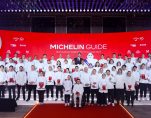

 https://guide.michelin.com/th/en
 https://www.facebook.com/MichelinGuideAsia
 https://www.instagram.com/michelinguide
 https://www.youtube.com/MICHELINGuideAsia









 https://www.linkedin.com/company/ridger/