News related to
lifts

SINGAPORE – Media OutReach Newswire – 26 October 2026 – Programme choice, fees, university recognition and career prospects are often among the first considerations when students compare higher education options. For students who may require accessibility support, however, another practical question can be equally relevant: whether they will be able to participate effectively in learning and campus life once they enrol. Accessibility in higher education extends beyond physical infrastructure. It can include how students access learning, participate in classes and assessments, navigate the campus, and communicate individual requirements to their institution.

In Singapore, the Enabling Masterplan 2030 (EMP2030) sets out the national vision of becoming a more inclusive society by 2030. Its 29 recommendations span three strategic themes, including strengthening support for lifelong learning. One of its stated aspirations is for persons with disabilities to have greater access to lifelong learning opportunities and resources by 2030. Against this backdrop, SIM Global Education (SIM GE) is highlighting why accessibility should form part of the conversation when students and families evaluate their higher education choices.

Accessibility considerations can begin before classes start

Students who anticipate requiring accessibility support may benefit from raising their needs before beginning their studies, rather than waiting until an issue emerges during the semester. SIM GE encourages students with disabilities to contact its Student Development team early to explore accessibility services, including where formal documentation or a diagnosis may not yet be available. The institution works with its partners to reduce barriers in academic and non-academic areas.

Early discussion does not mean that every requested arrangement will automatically apply. SIM GE notes that available access arrangements depend on the university associated with the student’s programme. This is particularly relevant when comparing programmes delivered in collaboration with different university partners. Students may therefore need to understand how accessibility arrangements apply to the specific qualification they are considering, rather than assuming that the same provisions apply across all programmes.

Physical accessibility forms one part of the student experience

The physical environment remains an important consideration, particularly for students with mobility or other access requirements. SIM’s current campus accessibility provisions include ramps for building access, automatic sliding doors at the main entrances to Blocks A and B, stair lifts, accessible toilets and parking spaces, Braille on lift buttons and lift service at the overhead bridge opposite the campus. SIM also acknowledges on its accessibility information page that gaps in physical accessibility may still exist and provides a channel for students to raise barriers they encounter while navigating the campus.

For prospective students, this suggests that a campus visit can serve a purpose beyond viewing lecture theatres and recreational facilities. Students with particular accessibility requirements may also use the opportunity to understand how they would move between classrooms, student services, study spaces and other frequently used parts of the campus.

Inclusive learning extends beyond campus infrastructure

An accessible campus alone does not necessarily make the overall learning experience accessible. UNESCO has highlighted that students with disabilities can face barriers to higher education that extend beyond physical access, including barriers associated with learning environments and participation. It has called for broader collaboration to strengthen inclusion and equity within higher education.

For institutions, this places attention not only on facilities but also on how teaching and learning respond to different student needs. In 2026, SIM’s Centre for Teaching & Learning introduced a training series aimed at helping lecturers better understand and respond to students with special needs and diverse learning profiles. The initiative forms part of SIM Academic Division’s professional development efforts around more inclusive classroom practices.

Such efforts reflect a wider consideration for students choosing where to study: whether accessibility is addressed only through physical facilities or is also considered in the learning environment.

Programme-specific arrangements need to be understood early

Accessibility requirements can differ considerably between students. They can also be affected by programme structures, assessment requirements and the policies of the relevant awarding institution. SIM GE therefore advises early contact so that students can explore what accessibility services may be relevant to their individual circumstances. Its published guidance makes clear that available access arrangements are dependent on the university for the programme concerned.

For students and families comparing higher education options, practical considerations may include identifying who coordinates accessibility support, how early requirements should be raised, whether arrangements involve the institution, the awarding university or both, and what process applies if a student’s needs change during the course of study. Establishing these details before enrolment can provide greater clarity about what support may be available and what steps a student may need to take.

Accessibility is becoming part of the broader inclusion agenda

Singapore’s approach under EMP2030 places lifelong learning within the broader national effort to enable persons with disabilities to participate more fully in society. The Government’s 2025 updates to the Masterplan also included work to increase the availability of accessible training courses, alongside initiatives to create more inclusive physical and social environments.

Higher education institutions form one part of that wider learning ecosystem.

For prospective students, choosing a university will continue to involve considerations such as academic quality, programme fit, cost and future opportunities. For those who require accessibility support, understanding the learning environment and available support arrangements can provide another important piece of information before making that decision.

SIM GE’s position is that these conversations are better started early. By understanding what support is available, how it applies to a particular programme and where potential barriers may exist, students can make a more informed assessment of whether a learning environment meets their needs before their university journey begins.

References:

  1. Ministry of Social and Family Development — Enabling Masterplan 2030 – https://www.msf.gov.sg/what-we-do/enabling-masterplans/emp2030
  2. Ministry of Social and Family Development — EMP2030 Strategic Themes. – https://www.msf.gov.sg/what-we-do/enabling-masterplans/strategic-themes
  3. SIM Global Education — Student Accessibility – https://www.sim.edu.sg/degrees-diplomas/life-at-sim/student-care
  4. SIM Global Education — Student Care – https://www.sim.edu.sg/degrees-diplomas/life-at-sim/student-care
  5. SIM — Academic Development – https://www.sim.edu.sg/academics/teach
  6. UNESCO — Breaking Barriers in Higher Education for Students with Disabilities. Discusses accessibility and inclusion challenges faced by students with disabilities in higher education – https://www.unesco.org/en/articles/breaking-barriers-higher-education-and-students-disabilities

Hashtag: #SIMGlobalEducation #SIMGE

The issuer is solely responsible for the content of this announcement.

About SIM Global Education

SIM Global Education (SIM GE) is a leading private education institution in Singapore and the region. We offer more than 170 academic programmes ranging from diplomas and graduate diploma programmes to bachelor’s and master’s degree programmes with some of the world’s most reputable universities from Australia, Canada, Europe, United Kingdom, and the United States. SIM GE’s cohort is made up of 17,000 full- and part-time students and adult learners, of which approximately 41% are international students hailing from over 50 countries.

SIM GE’s holistic learning approach and culturally diverse learning environment aim to equip students with knowledge, industry skills and employability competencies, as well as a global perspective to succeed as future leaders in a fast-changing, technologically driven world.

For more information on SIM Global Education, visit

TONGXIANG, CHINA – Media OutReach Newswire – 20 October 2026 – The 2026 World Internet Conference Wuzhen Summit will open on Nov. 2, bringing technology leaders, researchers and companies to the historic water town as Tongxiang firms expand AI applications from commercial cleaning and autonomous delivery to industrial control and data-center cooling.

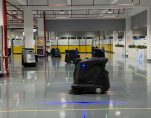
The CenoBot S5 autonomous cleaning robot undergoes real-world testing at a demonstration site in Tongxiang.

For Tongxiang, long associated with the annual internet conference, the summit is also a chance to demonstrate how local companies are commercializing AI technologies for customers at home and abroad.

Ahead of the event, reporters visited seven Tongxiang-based companies working in robotics, intelligent vehicles, synthetic data, industrial automation, logistics and computing infrastructure.

Singapore Changi Airport earlier this year placed a fourth order for commercial cleaning robots from CenoBots, a Tongxiang-based company whose machines are used in airports, supermarkets, hospitals, factories and warehouses.

CenoBots has sold products in more than 40 countries and regions. Its customers include Changi Airport, British retailer Tesco, the University of Minnesota and pharmaceutical company Novo Nordisk. This year, the company supplied about 600 autonomous cleaning robots for Tesco Express stores across the United Kingdom.

“Cleaning robots are appearing in more and more settings,” said Shen Jizhong, CenoBots’ co-founder and vice president. “It is much like electric vehicles becoming a familiar sight on the roads — a trend that is gathering pace.”

The company’s machines are adapted to different settings. Hospital robots must move through busy corridors without disrupting patient care, while those used in supermarkets navigate around shoppers and carts. Factory robots operate near forklifts, and airport models must handle both fine debris in carpeted areas and small obstacles on smooth floors.

CenoBots continues to refine its robots through real-world testing, focusing on reliable operation and consistent cleaning performance across diverse environments. The company has expanded its research, development and production facilities in Tongxiang from approximately 3,000 square meters in its early years to more than 20,000 square meters. Local malls, hospitals and sports venues have also served as long-term testing sites.

While CenoBots focuses on service robots, TEEMO is developing the vehicle platforms that support autonomous mobility. The company makes drive-by-wire skateboard chassis and core components for autonomous vehicles used in last-mile delivery, patrols and logistics.

Its standardized chassis can be equipped with different vehicle bodies and hardware for specific uses. One of TEEMO’s strategic customers, autonomous delivery-vehicle maker Zelos, was selected for all lots in China Post’s centralized procurement program for 7,000 autonomous delivery vehicles.

TEEMO’s customers already span the United States, the Middle East, India and Russia, said Zhang Yongjian, the company’s director of operations.

“In some overseas markets, distances are long, populations are dispersed and last-mile delivery is difficult to staff,” Zhang said. “Autonomous delivery vehicles have strong potential there, and overseas business will become an important growth driver for us.”

Other Tongxiang companies are concentrating on the data and perception systems that allow machines to function in physical environments.

Dayan Technology, founded in Tongxiang in May 2025, provides synthetic-data and toolchain services for autonomous-driving and humanoid-robotics companies. It combines real-world data collection, digital twins and simulated training environments to help developers train robots before they are deployed.

Its wearable devices record human movement and interactions with objects. A haptic glove uses liquid-metal and pressure sensors to capture hand gestures, finger movements and contact force. A multi-camera headset records a user’s visual field, body posture, hand movements and the position of nearby objects.

Dayan said its tactile-perception model can process touch signals in milliseconds. The technology is intended to help robots do more than identify objects visually: They can learn how firmly to grip an item, recognize when it is slipping and apply force without causing damage.

Freetech Intelligent Factory

Freetech is applying related sensing and decision-making capabilities to intelligent driving. The company develops intelligent-driving systems and 4D imaging radar for passenger and commercial vehicles, and said its technology has been selected for hundreds of vehicle programs.

Its ODIN AI platform supports products at different levels of driving automation. The radar is designed to complement cameras in heavy rain, fog, darkness and abrupt changes in light, including when vehicles enter or leave tunnels.

At its intelligent-manufacturing base in Wuzhen, Freetech is also using AI in production. An in-house system reads customer orders and calculates the components and materials needed for each production line before manufacturing begins. The company said the system has increased overall efficiency by more than 20%.

“Transportation combined with a specialized function will be an important direction for the future,” said Dr. Zhang Lin, Freetech’s founder and CEO.

Freetech sees potential applications beyond passenger vehicles, including robots, elder-care vehicles, mining equipment and agricultural machinery.

Beyond mobility, Tongxiang firms are using AI to address the complexity of industrial operations. Founded in 2019, Shuhan Technologies provides on-premises industrial AI for chemical plants, energy facilities and wastewater-treatment systems. Its AI-driven control layer continuously ingests data from central control systems and field sensors, identifies dynamic conditions and autonomously adjusts operating parameters in real time.

“Fundamentally, all industrial process challenges can be framed as control and optimization problems,” said Zhai Zhengjun, Shuhan’s Chief Technology Officer.

At a coal chemical plant with annual capacity of 1.2 million metric tons, Shuhan said its system reduced raw-material consumption by 6%. The company estimated that the deployment generated more than 176 million yuan, or about $26 million, in annualized economic benefits and reduced carbon emissions by more than 500,000 metric tons.

SENAD is targeting bottlenecks in logistics operations, including loading, unloading, sorting and pallet handling. It develops autonomous loading and unloading robots, as well as a multimodal logistics model called Robot Insight, for sectors including beverages, tobacco, consumer goods, pharmaceuticals and logistics.

Tongxiang’s AI sector also includes companies addressing the infrastructure needed to run increasingly powerful computing systems. SynthCool is tackling a basic constraint of the AI boom: heat.

SynthCool develops two-phase liquid-cooling systems to address the heat generated by increasingly powerful processors. Inadequate cooling can trigger thermal throttling, reducing performance and energy efficiency.

“Heat dissipation is infrastructure,” said Zhu Zhijiang, SynthCool’s general manager.

SynthCool’s two-phase cooling technology uses the latent heat of vaporization to remove heat from processors. The cooling fluid absorbs heat and boils into vapor, which is then condensed back into liquid and recirculated.

Depending on ambient conditions and system design, two-phase cooling can also support free cooling and reduce reliance on compressor-based refrigeration. Waste heat may be recovered where temperatures and local demand make reuse practical.

According to SynthCool, its technology supports heat dissipation of more than 3,000 watts per chip and heat flux above 250 watts per square centimeter. Under comparable cooling requirements, the system requires approximately one-third of the flow needed by conventional single-phase water-cooled cold plates, helping reduce piping requirements and pumping demand.

SynthCool’s portfolio includes two-phase direct-to-chip and immersion cooling solutions, along with distribution units and control systems for AI data centers.

Hashtag: #Tongxiang

The issuer is solely responsible for the content of this announcement.

SINGAPORE – Media OutReach Newswire – 30 September 2026 – Se7en Friday Pte Ltd, an event management company in Singapore, provided show-calling services for the National Day Parade 2026 (NDP 2026) at the National Stadium on 9 August. The company fielded four experienced show-callers across three months of planning and rehearsals leading up to show day. It also planned and ran the appreciation event held after the parade for the participants, volunteers, and crew behind the production.

NDP 2026 returned to the National Stadium for the first time since 2016 and played to a capacity crowd of about 42,000, the largest National Day Parade audience in a decade. Staged under the theme “Majulah Singapura, Go Beyond!”, the show ran across six chapters on an arrow-shaped stage measuring 162 metres long and 74 metres at its widest, served by six stage lifts and eight tunnel entrances and exits. More than 2,600 performers and 36 artistes took part alongside 32 marching contingents and 1,271 civilian participants, according to the NDP 2026 organising committee. The production carried 1,654 entertainment lighting fixtures and over 170 special effects machines, and featured NDP’s first indoor drone display, in which 300 drones flew 30 metres above a stadium floor occupied by performers.

Show-calling is the discipline that commits all of that to a single running order. Working from a cue script, the show-caller calls each segment change, performer entry, lighting state, audio cue, video roll and effect in sequence over headset to the crews and stage managers executing them. What separates a parade from a corporate show is that there is no reset. The running order cannot be paused or restarted, so a late cue does not delay the show. It puts the performers, the drones, the lighting, and the broadcast feed out of alignment with one another for as long as it takes to recover. Se7en Friday’s show-callers worked through the full rehearsal ladder, including the combined rehearsals, the two National Education shows, and the previews on 25 July and 1 August, building and testing the cue stack and the contingency calls for weather, timing overruns, and equipment faults. This same level of show control and precision underpins Se7en Friday’s work in dinner and dance event management and large-scale corporate productions.

The appreciation event that followed the parade was planned and run by the same team, covering catering, event decoration, master of ceremonies services, and the games and segments that made up the programme. Because the team producing it had worked the production from planning through to show day, the event was built by people who knew the schedule the participants had been keeping. For the organisers, it also placed a single supplier in charge of both the show-calling and the appreciation event, rather than a second vendor briefed from scratch once the parade was over.

Henry Tan, Events and Managing Director at Se7en Friday, said the engagement was decided in rehearsal.

“A show this size is not difficult because it is big, it is difficult because nothing waits. If a cue lands a second late, the performers, the drones, and every light in the building are a second out of alignment, and there is no way to take it back. So most of the work happened in the stadium in the weeks before, building the cue stack and deciding in advance what we would do if something went wrong, which meant that on the night there was nothing left to decide. The appreciation event was the other half of it. For months everybody on this project had been working to somebody else’s cue, and that was the one evening the people who built the show got to sit down and be looked after.”

The same cue scripting, stage management, and rehearsal practice apply to the company’s commercial work at a smaller scale. Se7en Friday runs conference and seminar event management, dinner and dance events, product launches and openings, family days and retreats, and livestreamed and hybrid events, using an in-house production team with its own warehousing and logistics fleet and full-time crew.

The NDP engagement is the largest application to date of the production discipline Se7en Friday applies to its corporate work. The company continues to operate from Singapore, serving government ministries, statutory boards, and corporate accounts. The direction Tan has set out is for the company to continue operating as a single production partner across the full run of an event, from cue scripting and technical delivery through to the events that follow it, rather than as a supplier engaged for one component of a programme.
Hashtag: #Se7enFriday


The issuer is solely responsible for the content of this announcement.

About Se7en Friday

Founded in 2015, Se7en Friday Pte Ltd is a Singapore-based corporate event management company with more than 10 years of industry experience. The company has delivered over 5,200 events across more than 20 industries for clients including the Ministry of Defence, the Ministry of Foreign Affairs, the Ministry of Health, the Singapore Civil Defence Force and the Ministry of Culture, Community and Youth, alongside statutory boards and Fortune 500 corporations. Its services span conferences and seminars, product launches and openings, dinner and dances, family days and retreats, and livestreamed, virtual and hybrid events, supported by an in-house production team, company-owned warehousing and a logistics fleet. Se7en Friday is bizSafe Level 3 certified, a certified Safe Event SG organiser, and the exclusive carrier of L-Acoustics professional audio systems in Singapore.

Arabian Post Staff -Dubai Unilever Egypt has commissioned a new Sunsilk shampoo production line at its Mashreq Personal Care factory in 6th of October City, raising the plant’s annual production capacity by 20% and directing the additional output entirely to export markets. The line is the 13th at the factory and forms part of the consumer goods group’s expansion of manufacturing in Egypt. The facility currently sends […]

Tesla’s Bitcoin holdings moved close to the $1 billion mark after the cryptocurrency’s sharp weekly advance added about $122.6 million to the market value of the electric-vehicle maker’s position without any fresh purchase. The company held 11,509 bitcoin at the end of June, its latest regulatory filing shows, matching the balance tracked on-chain by blockchain intelligence platform Arkham. At a Bitcoin price of about $86,700, that position […]

Arabian Post Staff -Dubai Saudi Arabia’s Civil Defence declared the danger over in Riyadh and Al-Kharj early on Saturday after a second overnight round of emergency alerts warned residents of a potential threat. The General Directorate of Civil Defence said the all-clear applied to the capital and Al-Kharj governorate and urged citizens and residents to continue following official safety instructions. The update followed warnings transmitted through the […]

Arabian Post Staff -Dubai Oil prices rose on Tuesday as renewed attacks on Saudi Arabia and the continued shutdown of the kingdom’s East-West pipeline kept traders focused on the risk of further disruption to Middle East crude supplies. Brent crude climbed $1.24 to $106.93 a barrel, while US West Texas Intermediate gained $1.29 to $102.65 in Asian trading. The move followed another wave of Houthi attacks on […]

Advertisements

Arabian Post Staff -Dubai Saudi Arabia’s Government Expenditure and Projects Efficiency Authority has activated flynas under the unified framework agreement for government ERCAB travel, widening the airline choices available to public-sector entities and eligible travellers. The activation lifts the number of airlines participating in the government travel arrangement to four, with flynas joining Saudia, flyadeal and Riyadh Air. EXPRO said the addition is intended to improve flexibility, […]

Metaplanet has cut the potential share pool attached to its Series 10 stock acquisition rights by 41.1%, reducing possible issuance to 188.19 million shares after shareholders challenged the dilution created by the executive compensation structure. The Tokyo-listed bitcoin treasury company said on September 11 that it would lower the number of shares underlying each Series 10 right from 696 to 410. The change reduces the aggregate potential […]

Arabian Post Staff -Dubai Dubai World Central will open its second runway by the end of 2027, marking the next major infrastructure step in Dubai’s plan to shift aviation growth to Al Maktoum International Airport and build capacity for as many as 260 million passengers a year. Dubai Airports chief executive Paul Griffiths confirmed the timetable during an international media briefing, saying development of DWC was proceeding […]

OpenAI has temporarily stopped new subscriptions and upgrades to its $200-a-month ChatGPT Pro tier as demand for its new GPT-6 Astra model strains computing capacity. The restriction, introduced on September 10, applies to new sign-ups for the Pro $200 plan, also called Pro 20X, and to users seeking to move to it from Free, Go, Plus or the lower-priced Pro $100 tier. Existing Pro $200 subscribers can […]

Arabian Post Staff -Dubai Alpha Dhabi Holding has doubled its capital commitment to the Mubadala Capital-managed MICAD Credit joint venture to $1 billion and raised its ownership stake to 40 per cent from 20 per cent, expanding its exposure to global private credit. The Abu Dhabi Securities Exchange-listed investment group said the revised partnership agreement also broadens MICAD Credit JV’s mandate beyond its existing US and European […]

  • Jungheinrich marks 25 years of presence in Singapore, as country’s backbone for material flow of goods and a driver of sustainable intralogistics solutions, with more than 7,000 machines in the market and over 100 warehouse solutions implemented
  • Jungheinrich Singapore established itself as one of the few full-liner suppliers of material handling equipment and solutions in the country, and the pioneer of electrification, with an estimate market share of 25% in electrified machines
  • Milestone marked with an anniversary dinner on 28 August 2026, attended by Guests of Honour: Thomas Motak, Deputy Head of Mission of the Federal Republic of Germany to Singapore, and Nadine Despineux, Member of the Board of Management, Chief Sales Officer, Jungheinrich

SINGAPORE – Media OutReach Newswire – 31 August 2026 – Jungheinrich, a global leader in sustainable material handling solutions, celebrated 25 years of presence in Singapore as country’s backbone for material flow of goods and a driver of sustainable intralogistics solutions, with more than 7,000 machines in the market and over 100 total warehouse solutions implemented.

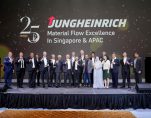
Jungheinrich Singapore celebrates 25 years of material flow excellence, marking the milestone with Managing Director, Singapore and Malaysia, Benedict Kothe; Guest of Honour Thomas Motak, Deputy Head of Mission of the Federal Republic of Germany to Singapore; Jungheinrich Chief Sales Officer Nadine Despineux; and key industry leaders and guests.

On 28 August 2026, Jungheinrich celebrated this silver jubilee with an anniversary gala dinner at Pan Pacific Orchard Singapore, graced by Guests of Honour: Thomas Motak, Deputy Head of Mission of the Federal Republic of Germany to Singapore, and Nadine Despineux, Member of the Board of Management, Chief Sales Officer, Jungheinrich, alongside key attendees such as, Manojit Acharya, Vice President – Asia Pacific & Managing Director, India, Benedict Kothe, Managing Director, Singapore and Malaysia, Jungheinrich, Jens Rübbert, President of the European Chamber of Commerce, Singapore, Soo Haw Yun, Vice President, Global Enterprises, Singapore Economic Development Board, and the various Jungheinrich teams, customers and partners in the APAC region.

A special toast was raised to mark Jungheinrich Singapore’s 25-year journey and its evolution into a strategic hub for Asia-Pacific (APAC). Established on 21 February 2001 as the first country unit in APAC, Jungheinrich Singapore is now part of a regional network spanning eight country units and 14 partner companies, supported by over 1,500 employees. The Singapore operation oversees key regional functions including training, automation, dealer management, sales, customer service and human resources, with the APAC spare parts distribution centre also based here.

Jungheinrich has also established itself as one of the few full-liner suppliers of material handling equipment and solutions in Singapore, offering warehouse trucks, racking, automation, digital solutions and customer service all under one roof. The Singapore team, comprising of 150 employees, works closely with Jungheinrich’s partners across APAC, supporting the company’s regional reach and market development.

Over the past 25 years, Jungheinrich Singapore has pioneered the adoption of electric material handling equipment in the country, with an estimated 25% share of the electrified machines market. Its team of 50 technicians strive to provide industry-benchmark service, supporting the logistics sector’s shift towards more efficient and professional operations. In recognition of its innovation and education initiatives, Jungheinrich Singapore was named Supply Chain Innovator of the Year (CSR) at the prestigious Supply Chain Asia Awards 2025, and has also achieved Great Place To Work® Certified™ status.

Notably, Jungheinrich Singapore was the first in APAC to open a Jungheinrich Experience Centre, established in May 2024, to showcase product innovation and illustrate how material flow interacts within a warehouse setting. The centre has since welcomed visitors including Kuehne & Nagel, Supply Chain Asia, the German Embassy in Singapore, and a slew of students from Republic Polytechnic (Singapore) and the University of St. Gallen (Switzerland).

Jungheinrich Singapore has also played an active role in supporting the local community, serving as the official logistics sponsor for the annual National Day Parade for 2 consecutive years in 2025 and 2026, deploying electric forklifts, pallet trucks and reach trucks to help distribute close to 250,000 fun packs to spectators. The organisation also donated warehouse trucks to support Willing Hearts and Food Bank Singapore in their operations, and provided pallet jacks and forklifts for the United Buddy Bears Exhibition at Gardens by the Bay in September 2025, which marked the 60th anniversary of diplomatic ties between Singapore and Germany.

Since 2024, Jungheinrich Singapore and Malaysia have jointly run the “The Environment Wins Twice” campaign with Animal Projects & Environmental Education (APE) Malaysia, planting a tree for every electric forklift sold, and as of 2025, 455 trees have been planted, turning each sale into a tangible contribution to reforestation while supporting Jungheinrich’s global sustainability commitments.

While Southeast Asia’s warehouse automation market is projected to nearly double from US$0.87 billion in 2025 to US$1.95 billion by 2032, and Singapore’s land and labour constraints driving to demand for smarter, space-efficient solutions, Jungheinrich sees significant opportunities for further growth in the region.

Looking ahead, Jungheinrich Singapore will focus on developing localised automation solutions, expanding the rollout of AntOn by Jungheinrich, and introducing sustainable material handling solutions tailored to customers across APAC. Building on the launch of its first electric van in July 2025, the organisation is also targeting a fully green-energy service fleet by 2030, supporting its commitment to Carbon Neutrality by 2030 for Scope 1 emissions.

“As we celebrate 25 years in Singapore, we are proud of the strong foundation we have built with 150 intralogistics experts who support our customers across industries. Our journey has been defined by innovation, partnership, and a commitment to improving material flow efficiency. Looking ahead, we remain focused on helping businesses enhance productivity, increase warehouse safety and quality, and achieve sustainable growth through advanced material handling solutions,” said Benedict Kothe, Managing Director, Singapore and Malaysia, Jungheinrich.

“We congratulate Jungheinrich on 25 years in Singapore. Over the years, Jungheinrich has grown its Singapore operations into a strategic APAC hub, driving initiatives such as automation, innovation, and sustainability. We look forward to deepening our partnership with Jungheinrich as it contributes to Singapore’s logistics sector and develops solutions for the region,” said Soo Haw Yun, Vice President, Singapore Economic Development Board.

As Jungheinrich Singapore enters its next chapter, the organisation remains committed to supporting customers’ growth with innovative, sustainable and increasingly automated material handling solutions.Hashtag: #Jungheinrich #Manufacturing #Logistics


The issuer is solely responsible for the content of this announcement.

Jungheinrich Singapore

As one of the world’s leading providers of material handling solutions, Jungheinrich has advanced the development of innovative, sustainable products and solutions for material flows for more than 70 years. The family-owned, listed business generated revenue of €5.5 billion in the 2025 financial year with a workforce of over 21,000, and service and sales companies across 42 countries. In APAC, the company has established eight country units and over 14 partner companies, supported by over 1,500 employees. Established in Singapore in 2001, Jungheinrich Singapore marks its 25th anniversary in 2026 as the company’s strategic hub for the region.

Find out more at .

India’s hotel industry is expected to strengthen in the second half of FY27 as robust domestic leisure travel, improving corporate demand, weddings and a seasonal recovery in international arrivals support occupancy and room rates.

A sector assessment by PhillipCapital said the April-June quarter had already shown resilience despite geopolitical disruptions, with industry occupancy rising by two to four percentage points from a year earlier. Average room rates increased 6-8 per cent, while revenue per available room, or RevPAR, advanced 11-13 per cent.

The brokerage expects business conditions to improve further during the October-March period, helped by a heavier wedding calendar, stronger meetings, incentives, conferences and exhibitions activity and higher international travel during the traditional peak season. Corporate travel, which was softer earlier in the year amid uncertainty linked to the West Asia conflict, has also shown signs of gradual recovery.

Limited additions to room supply in key markets are expected to give operators continued pricing power if demand strengthens as projected. That imbalance between demand and new capacity has been an important support for average room rates across several major destinations and is likely to remain favourable through the second half of the financial year.

The outlook is consistent with ICRA’s projection that hospitality industry revenues will rise 7-9 per cent year on year in FY27, following an estimated 9-12 per cent increase in FY26. The ratings agency expects pan-India premium hotel occupancy to remain at 72-74 per cent, broadly unchanged from FY26, while average room rates for premium hotels rise to Rs 8,600-8,800 from Rs 8,200-8,500.

Domestic travellers remain the principal source of demand and have helped cushion the industry from weaker foreign arrivals and disruptions to international air routes. ICRA estimated occupancy at 66-68 per cent during the first two months of FY27, compared with 62-64 per cent a year earlier, while average room rates were estimated at Rs 7,800-8,000 against Rs 7,500-7,700.

Leisure destinations have generally performed better than business-focused hotels during the opening months of the year. Indian Hotels Company reported strong demand across its domestic portfolio, with revenue from operations within India rising during the June quarter and leisure markets contributing significantly to growth.

Other listed hotel operators have also reported positive RevPAR trends, though performance has varied by city, customer mix and exposure to international guests. The sector’s recovery in the first quarter was more occupancy-led than in earlier periods, when sharp increases in room rates were the dominant driver of revenue growth.

Demand from corporate customers is expected to become more supportive as travel budgets normalise and business activity strengthens. Bengaluru, Hyderabad and Delhi have shown firmer room rates in parts of the second quarter, aided by technology, global capability centre and broader corporate travel demand.

International traffic remains a key variable. Foreign tourist arrivals were hit earlier by disruptions associated with the conflict in West Asia, but the Ministry of Tourism’s data portal indicates arrivals during 2026 have begun to show year-on-year improvement in available updates. A seasonal rise from October would add higher-paying international travellers to the domestic base.

Wedding demand is also expected to provide a material lift. Hotels typically benefit not only from room bookings during large celebrations but also from food and beverage, banquet and event revenue, making the wedding calendar an important contributor during the second half.

Meetings and exhibition business is another area expected to improve as companies resume travel and events. Stronger MICE demand can lift weekday occupancy at city hotels, complementing leisure traffic that is often concentrated around weekends, holidays and destination markets.

Risks to the outlook remain. A prolonged escalation in West Asia could again disrupt international travel and corporate spending, while inflation could weigh on discretionary consumption. ICRA has said these factors remain monitorable even though domestic demand has so far limited the direct impact on the sector.

Dubai’s facility management market is no longer defined by who has the largest workforce or the longest service menu. The stronger question is which operating model best matches the asset. A master community, five-star hotel, commercial tower, warehouse and residential portfolio can all require integrated FM, but the balance between engineering, manpower, technology, soft services, energy performance and governance will differ. That is why the best provider […]

Azad Mirza Nearly six months into the US-Israel war on Iran, the Strait of Hormuz has become less a shipping lane than a rhetorical battlefield. This week that theatre reached a new pitch: Donald Trump posted an AI-generated map on Truth Social labelling the waterway “NEW US Territory,” insisting the strait is “open and operating” […]

The article Hormuz: Trump’s territorial bravado and Iran defiance appeared first on Latest India news, analysis and reports on Newspack by India Press Agency).

Arabian Post Staff -Dubai Mubadala Investment Company has increased its stake in Aldar Properties to 28.03 per cent, deepening its exposure to one of Abu Dhabi’s largest listed property groups as the developer expands its residential, commercial and recurring-income businesses. The Abu Dhabi sovereign investor raised its holding from 27.01 per cent through Mamoura Diversified Global Holding, its wholly owned subsidiary. The additional shares were accumulated through […]

  • New 20,000 sqm facility will more than triple Kuehne+Nagel’s Container Freight Station capacity in Cambodia
  • Strategic location strengthens cross-border connectivity between Cambodia, Thailand and Vietnam
  • Expanded facility supports customers in the consumer goods industry

PHNOM PENH, CAMBODIA – Media OutReach Newswire – 13 August 2026 – Kuehne+Nagel has invested in a new Container Freight Station (CFS) in Phnom Penh, Cambodia. Scheduled for completion in June 2027, the facility will provide more than 20,000 sqm of warehouse space, helping customers manage growing trade volumes and move goods more efficiently within Cambodia and across the region.

Cambodia CFS groundbreaking event

Cambodia continues to strengthen its trade infrastructure, with Phnom Penh Autonomous Port handling around 600,000 TEUs and Sihanoukville Autonomous Port approximately 1.3 million TEUs in 2025. Complementing this growth, the new CFS is strategically located near key transport gateways, including both ports, Phnom Penh International Airport and cross-border road links to Thailand and Vietnam, facilitating cargo movements across the country and supporting regional logistics operations.

David Roussiere, Managing Director, Thailand, Cambodia and Myanmar, Kuehne+Nagel, said: “This investment will more than triple our CFS capacity in Cambodia and strengthen our logistics capabilities in the country. With direct access to key transportation gateways and regional trade corridors, the facility will support customers in the consumer good industry as they navigate evolving supply chains and growing trade opportunities across the region.”

Designed for cargo consolidation and handling operations, the new CFS will feature a raised-floor warehouse equipped with loading doors and dock levellers. It will offer a floor loading capacity of five tonnes per square metre and is expected to be certified to ISO 9001, ISO 45001 and ISO 14001 standards.

The facility will also incorporate sustainability features including solar panels, skylight roofing, LED lighting, battery-operated forklifts, water infiltration systems and rainwater management infrastructure.

The investment reflects Kuehne+Nagel’s continued focus on strengthening its logistics infrastructure in high-growth markets and supporting the expansion of regional and international trade.

Hashtag: #Kuehne+Nagel

The issuer is solely responsible for the content of this announcement.

About Kuehne+Nagel

With approximately 88,000 employees across over 1,300 sites in close to 100 countries, the Kuehne+Nagel Group is one of the world’s leading logistics providers. Headquartered in Switzerland and listed on the Zurich stock exchange, it is the global number one in Air and Sea Logistics and holds strong market positions in Road and Contract Logistics. Supporting around 400,000 customers worldwide, the Group draws on its global network, logistics expertise, and data-driven insights to deliver end-to-end supply chain solutions for global companies and industries.

Swedish artificial intelligence start-up Lovable has raised $400 million at a $13.3 billion valuation, doubling its worth in less than a year as demand grows for tools that let employees build software using natural-language instructions. The Series C financing was led by Menlo Ventures and the Scaleup Europe Fund, with participation from investors including Balderton Capital, Carmignac, Tencent, World Innovation Lab and Regent. The transaction lifts Lovable’s […]

Arabian Post Staff -Dubai Dubai Residential REIT posted a 15.1% increase in first-half net profit before property valuation changes and approved an interim cash dividend of AED573.2 million, supported by higher rents, near-full occupancy and additions to its housing portfolio. Net profit before changes in the fair value of investment property reached AED716.5 million for the six months ended June 30, up from AED622.3 million in the […]

Arabian Post Staff -Dubai Saudi billionaire Prince Alwaleed bin Talal has acquired a 5 per cent stake in Lucid Group, investing about $129.5 million as the electric vehicle maker battles heavy losses, weak demand and concerns over its funding needs. A regulatory disclosure showed that Prince Alwaleed beneficially owns roughly 19.5 million Lucid shares. The investment is separate from the controlling interest held by Saudi Arabia’s Public […]

HONG KONG SAR – Media OutReach Newswire – 29 July 2026

2026 Interim Results – Financial Highlights

(Figures for the corresponding period in 2025 are shown in brackets)

  • Consolidated revenue: HK$593 million (HK$ 636 million)
  • Consolidated net loss attributable to equity holders of the Company: HK$189 million (HK$ 249 million)
  • Basic loss per share: 9.28 HK cents (12.23 HK cents)
  • No interim dividend (No interim dividend)

Pacific Century Premium Developments Limited (“PCPD”, SEHK: 00432) announced its interim results for the six months ended June 30, 2026.

The consolidated revenue of PCPD and its subsidiaries (together, the “Group”) amounted to HK$ 593 million, compared to HK$ 636 million for the corresponding period of 2025.

The Group’s consolidated loss attributable to equity holders of the Company for the first six months of 2026 totalled HK$ 189 million, compared to a net loss of HK$249 million for the corresponding period last year. Basic loss per share for the six months ended June 30, 2026 was 9.28 Hong Kong cents, compared to a loss per share of 12.23 Hong Kong cents for the corresponding period of 2025.

The Board of Directors did not declare an interim dividend for the first half of 2026.

For the first half of 2026, the Group delivered encouraging results as we built on our core strengths and benefited from resilient demand across the markets in which we operate. During the period, we also took steps to enhance our portfolio, including the disposals of two investment assets. These initiatives are expected to strengthen the Group’s financial position and reinforce its long-term growth.

Our operations in Japan performed well despite some moderation in tourism demand, shaped by changes in the composition of international visitors and fluctuations in travel demand. Park Hyatt Niseko, Hanazono, our hospitality business in Niseko, Hokkaido, delivered a stable performance with healthy occupancy and room rates, while our ski operations remained a key contributor to the Group’s results. Earnings from our recreational facilities, ski lifts, equipment rentals, “Hanazono EDGE” (a restaurant and entertainment centre) and Niseko International Snowsports Schoolcontinued togrow year-on-year. We will stay focused on establishing Niseko Hanazono Resort as a world-class, all-season luxury destination and remain optimistic about its long-term development.

On March 16, 2026, the Group announced the sale of its entire interest in Pacific Century Place, Jakarta (“PCP Jakarta”) in Indonesia. The transaction, at a total consideration of US$400 million, was completed on June 8, 2026. Notwithstanding the disposal, the Group will continue to provide property management services in respect of PCP Jakarta.

On February 13, 2026, the Group announced the sale of its entire interest in Midtown Niseko. The transaction, at a total consideration of US$80 million, was completed on May 31, 2026.

The Group formed a strategic alliance with Hotel Properties Limited in Singapore to bring a Four Seasons Resort and Branded Residences to Aquella, a large-scale integrated resort development in Phang Nga. The move represents a significant milestone in PCPD‘s long-term vision of transforming Aquella into an integrated resort destination that effortlessly blends luxury living, recreation and exceptional service.

Central Residence by the Park in Hong Kong was launched for sale in January 2026. As at the end of June, 90.9% of the total available units of the luxury residential project had already been sold. The project will be completed in the latter half of 2026.

Mr. Benjamin Lam, PCPD’s Deputy Chairman and Group Managing Director, said: “The first half of 2026 presented a challenging global environment, characterised by geopolitical tensions including the conflict in the Middle East, inflation, trade uncertainties and concerns over monetary policies. Despite the headwinds, global growth was relatively resilient, while international tourism in many parts of Asia continued to perform steadily. The Group’s core markets in Asia generally remained solid during the period. Tourism demand continued to support Japan and Thailand despite a slightly more measured pace of growth. Improving sentiment in Hong Kong’s property market also provided a more favourable backdrop for our luxury residential development.

In the second half of the year, we will continue to enhance the value of our existing assets while positioning the Group to capitalise on opportunities that support our long-term strategy and create value for our stakeholders.”

Hashtag: #PacificCenturyPremiumDevelopments

The issuer is solely responsible for the content of this announcement.

About PCPD

Pacific Century Premium Developments Limited (“PCPD” or the “Group”, SEHK: 00432) is principally engaged in the development and management of premium-grade property and infrastructure projects as well as premium-grade property investments. PCCW Limited (“PCCW”, SEHK: 00008) is the single largest shareholder of the Group.

Arabian Post Staff -Dubai e& UAE has activated 1024QAM modulation on its live commercial 5.5G network, achieving a download speed of 4.58 gigabits per second and marking the first deployment of the technology on an operational mobile network in the region. The Abu Dhabi-based operator recorded 4,587 megabits per second during a live speed test using the Huawei Pura 90s, one of the first smartphones designed to […]

Bitcoin fell below $62,000 in Asian trading as renewed US-Iran hostilities drove oil prices higher, prompting investors to cut exposure to cryptocurrencies and other risk assets. The world’s largest digital token traded near $62,000 after touching an intraday low around $61,700, extending a pullback that spread across Ether, XRP and Solana. Ether hovered near $1,625, while several large alternative tokens lost between 1 and 3 per cent […]

VISHNU RAJA
RYO YAMADA
HITORI GOTOH
IKUYO KITA