By Ashok Nilakantan Ayers WASHIGTON DC: The battle for the Republican Party’s 2028 presidential nomination has effectively begun. But the real contest is not merely about personalities. It is about whether the GOP will perpetuate Trump’s divisive political legacy or reinvent itself before voters deliver another electoral rebuke. The Republican Party is discovering an uncomfortable […]
By Dr. Nilanjan Banik The outcome of the November 3 midterm elections has not got in favour of Mr. Trump. Republicans lost both the House of Representatives and the Senate. For India, however, the outcome of the midterm elections is unlikely to make much of a difference. A Democratic House would not bring a sharp […]
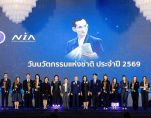
BANGKOK, THAILAND – Media OutReach Newswire – 9 November 2026 – The Ministry of Higher Education, Science, Research and Innovation (MHESI), through the National Innovation Agency (Public Organization) (NIA), hosted the annual National Innovation Day 2026 awards ceremony. The event honors and commemorates the extraordinary innovation visionary, His Majesty King Bhumibol Adulyadej The Great (Rama IX)—revered as the “Father of Thai Innovation”—whose royal initiative, the Klaeng Din (soil aggravation) project, demonstrated pioneering resource management. During the ceremony, the NIA announced the winners of the prestigious National Innovation Awards, celebrating outstanding Thai innovators and forward-thinking organizations across the public, private, and academic sectors whose contributions generate tangible value for institutions, society, and the nation. Concurrently, the ceremony featured the presentation of the Innovation Thailand Awards and the Thai Rice Innovation Awards, both longstanding collaborative initiatives spearheaded by the NIA.
Dr. Krithpaka Boonfueng, Executive Director of the National Innovation Agency (NIA), said that National Innovation Day remains an essential annual forum dedicated to commemorating the royal grace, genius, and enduring innovation legacy of King Bhumibol Adulyadej The Great. The Ministry of Higher Education, Science, Research and Innovation strongly believes that human capital is the cornerstone of building an innovation-driven society. Consequently, the NIA prioritizes workforce upskilling across all generations alongside deploying technology and innovation to mitigate inequality, expand economic opportunities, enhance quality of life, and sharpen national competitiveness. This mission accelerates Thailand’s transition from a mere consumer of technology into a prolific creator of high-value innovation. The event serves not only as a platform to recognize trailblazers, but also as a catalyst to foster widespread awareness, stimulate active technology adoption, showcase Thai ingenuity on the world stage, and collectively advance Thailand toward becoming a sustainable “Innovation Nation.”
“The National Innovation Awards represent the highest distinction in Thailand’s innovation landscape. They celebrate Thai innovators whose pioneering work delivers clear, measurable value to the country, sparking pride and creative momentum across all sectors while elevating our national image as an emerging Innovation Nation,” stated Dr. Krithpaka. “Now in its 22nd year, the competition reflects a rapid leap forward in domestic innovation capability, keeping pace with an evolving global landscape. Historically, more than 6,736 submissions have entered the awards, with over 370 projects recognized, collectively generating an economic, social, and environmental impact valued at over 138 billion baht.”
Dr. Krithpaka highlighted three winning innovations from the 2026 National Innovation Awards that exemplify success across economic, social, and environmental dimensions, underscoring Thai entrepreneurs’ capacity to combine deep technology with commercial viability:
1. BUZZEBEES: Elevating CRM through AI to Boost Marketing Efficiency and Business Growth Developed by Buzzebees Co., Ltd., this end-to-end customer relationship management (CRM) and online engagement platform secured first prize in the Economic category (Large and Medium Enterprise division). Powered by advanced AI algorithms, the platform streamlines customer data management, consumer behavior analytics, and precision-targeted marketing campaigns. It empowers enterprises to connect with target demographics accurately, retain customer bases, and unlock new revenue streams.
The comprehensive suite encompasses loyalty and points-redemption programs, payment and order management workflows tailored for SMEs and restaurants, and e-commerce channel operations, alongside targeted digital media and affiliate marketing powered by a vast influencer and Key Opinion Leader (KOL) network. By leveraging real-time business diagnostics and automated campaign personalization, the platform can deploy fully functional solutions within just five business days—a 20-fold reduction in turnaround time compared to traditional development cycles that often require up to 100 days.
Currently, BUZZEBEES supports over 500 enterprise platforms, more than 1,500 SME and merchant networks, and an aggregate user base exceeding 200 million consumer and distributor accounts. Notable deployments include Tops’ personalized loyalty platform, which serves over 210,000 active users and has processed more than 40 million reward redemptions. In 2025, the company generated over 2 billion baht annually in gross merchandise value (GMV) through international affiliate channels, saved domestic corporations over 600 million baht annually by replacing reliance on foreign enterprise software, posted 2.964 billion baht in total revenue, and created an average of 260 local tech jobs annually.
2. INSPECTRA MMG: Deep-Learning AI for Mammography Analysis Enhancing Breast Cancer Screening Developed by Perceptra Co., Ltd., INSPECTRA MMG captured first prize in the Social category (Large and Medium Enterprise division). The diagnostic-support AI system assists radiologists in interpreting screening mammograms, specifically targeting the diagnostic complexities posed by dense breast tissue—a characteristic prevalent among Asian women that frequently obscures underlying lesions in standard screenings.
Trained on a proprietary dataset of more than 400,000 mammographic images from Thai cohorts, INSPECTRA MMG detects subtle indicators of malignancy to assist clinical decision-making. Deployed in Thai clinical settings for over three years across more than 220,000 processed patient cases, the tool reduces radiologists’ workloads, optimizes diagnostic throughput, and democratizes access to early cancer detection in medically underserved provinces. Validation data submitted by the company demonstrates an impressive Cancer Detection Rate of 97%, validating AI’s efficacy as a clinical decision-support asset while maintaining physician oversight as the ultimate diagnostic authority. Looking ahead, Perceptra plans to expand outreach via mobile mammography screening units for remote communities, implement an annual software-as-a-service (SaaS) subscription model to fund continued R&D, and scale operations into broader Southeast Asian healthcare markets.
3. MyraShell Aroma: Upcycling Marine Shell Waste into Sustainable Luxury Bio-Materials Developed by Manee Mongkol Gems Factory Co., Ltd., “MyraShell Aroma – Sea of Love” won top honors in the Environmental category (Micro & Small Enterprise, and Social Enterprise division). The initiative upcycles discarded green mussel shells sourced from coastal fishing communities into high-value decorative bio-materials under circular economy principles, effectively curbing coastal waste while establishing sustainable secondary income streams for local artisanal fishers.
The innovation isolates nacre (mother-of-pearl) and calcium carbonate fractions from marine shells, formulating them with bio-based binding polymers and precision engineering techniques into durable, aesthetically sophisticated materials suitable for fine jewelry and luxury decor. MyraShell Aroma features a calibrated micro-porous surface that absorbs and disperses fragrances ambiently without electricity, designed for repeated aromatic refills.
The company has expanded its portfolio under the MyraShell and MyraGem brands to supply interior panels, lighting fixtures, and architectural finishes to luxury five-star hospitality brands. Manee Mongkol Gems collaborates with the Chonburi Fisheries Association and the Sawang Pratheep Community Enterprise for ethical raw material sourcing, complete with origin-traceability protocols, and partners with Kasetsart University on material validation with research grant backing from the NIA. The breakthrough gained international acclaim at Milan Design Week at Superstudio Events in Milan, Italy, where the team exhibited a 3×3-meter “Sea of Love” feature wall. Capitalizing on sustainable luxury storytelling, the company is actively expanding its direct export channels across Italy, Germany, France, and Hong Kong.
Supporting Broader Innovation Ecosystems Alongside the flagship honors, the ceremony presented accolades across complementary specialized initiatives:
The 22nd National Innovation Awards: Organized directly by the NIA to honor impact across five dedicated pillars: Economy, Society, Environment, Innovation Communicator, and Innovative Organization. The 2026 edition drew 437 competitive submissions.
The 26th Innovation Thailand Awards: Co-organized with the Science Society of Thailand under the Patronage of His Majesty the King, this initiative fosters youth-led innovation and guides intellectual property toward viable commercialization across two academic tiers: Higher Vocational/Undergraduate and Vocational/Secondary levels (attracting 494 entries).
The 18th Thai Rice Innovation Awards: Co-hosted with the Thai Rice Foundation under Royal Patronage to incentivize high-value product transformation and process innovation across the rice value chain. Awards were conferred across Industrial and Community Enterprise categories, drawing 82 submissions.
Serving as the nation’s “Focal Conductor,” the NIA continues to align with domestic and international partners through its core Groom – Grant – Growth – Global framework. This integrated strategy aims to expand Thailand’s cohort of market-ready innovation-driven enterprises (IDEs), catalyze economic value creation, and fortify national competitiveness to firmly cement Thailand’s standing as an internationally recognized Innovation Nation.
Hashtag: #NIA
The issuer is solely responsible for the content of this announcement.
Brazilian President Luiz Inácio Lula da Silva pledged to safeguard public finances while maintaining social programmes in his first televised address since securing a fourth term, but offered no specific measures to contain rising government debt. Speaking on Sunday, Lula acknowledged concerns over borrowing costs and promised to respect the country’s fiscal rules as his administration prepares for another four years in office. His remarks followed market […]
Opposition Leader Pinarayi Vijayan on Sunday demanded the withdrawal of revised higher education rules allowing certain autonomous colleges to introduce self-financing courses and increase seats without prior government clearance, warning that the changes could encourage commercialisation. The Communist Party of India…
Tesla will dismantle its Cybertruck production line in Texas around the middle of 2027, shifting manufacturing capacity towards its Cybercab autonomous taxi after the electric pickup failed to meet sales expectations. Chief executive Elon Musk said the company would add another production shift to fulfil outstanding Cybertruck orders before removing the line, potentially in June or July next year. His clarification followed an announcement that Tesla would […]
Dubai Electricity and Water Authority (DEWA) and Dell Technologies are exploring closer cooperation on digital infrastructure, artificial intelligence and cybersecurity to improve the resilience of Dubai’s electricity and water services. The discussions, disclosed by DEWA in December 2025, covered technology capable of strengthening electricity networks, improving water distribution and supporting renewable energy integration. They followed separate agreements between Dell and subsidiaries of DEWA’s digital arm on cloud […]
Alphabet’s $15 billion investment plan for Malaysia has brought its expanding artificial intelligence infrastructure budget into sharper focus, as investors assess whether surging spending can translate into sustained earnings and cash flow.
Google announced on 4 November that it would invest the money during 2027 and 2028, developing data centre campuses alongside clean energy, water security and workforce programmes. The commitment comes as parent company Alphabet forecasts capital expenditure of $195 billion to $205 billion for 2026 and a further significant increase next year.
The scale of those commitments is central to the debate surrounding Alphabet shares. Demand for AI computing is accelerating, but building capacity requires substantial upfront expenditure on servers, specialised chips, electricity and facilities. Higher depreciation and operating costs could put pressure on profitability before the investments generate their expected returns.
Alphabet has not disclosed how the Malaysian commitment will be divided between its various projects or how much represents spending already incorporated into its group forecasts. The $15 billion therefore cannot simply be added to its published capital expenditure guidance as an entirely separate obligation.
The company’s third-quarter results nevertheless demonstrate the commercial opportunities supporting its investment programme. Revenue rose 25 per cent to $127.6 billion in the three months ended September, while Google Cloud revenue increased 103 per cent to $30.7 billion. Alphabet reported net income of $26.2 billion and an operating margin of 31.8 per cent.
Management has said cloud demand is stretching available computing capacity. It expects sales of its tensor processing unit systems to expand further in 2027, although using third-party computing resources to bridge supply shortages is expected to weigh on cloud margins in the nearer term.
Alphabet’s financial disclosures show that capital expenditure reached $132 billion during the first nine months of 2026, compared with $63.6 billion in the corresponding period of 2025. Depreciation on property and equipment increased to $22 billion from $15.1 billion over the same periods, illustrating how infrastructure investment is already affecting expenses.
The company also disclosed $130.5 billion in future payments associated with leases not yet commenced, primarily involving data centres and energy infrastructure. Those commitments extend across multiple years and are distinct from the cash capital expenditure recorded during the reporting period.
Google’s Malaysian programme includes additional campuses in Selangor and Negeri Sembilan. Its first campus at Elmina Business Park in Selangor is already operating, while computing capacity there will support a planned Google Cloud region serving enterprise customers.
Ruth Porat, president and chief investment officer of Alphabet and Google, said the expansion would provide computing capacity while adding local power and water resources as operations grow. Google said it would pay for all electricity consumed by its campuses and the direct costs of connecting them to the grid.
The company plans to enable more than one gigawatt of additional clean energy capacity on Malaysia’s national grid. Its initiatives include collaboration with Tenaga Nasional Berhad on new generation projects and exploration of electricity supplies capable of meeting demand throughout the day.
Malaysia’s government has welcomed the investment while emphasising the need for domestic economic benefits. Digital Minister Gobind Singh Deo said on 5 November that he had invited Google to explore further cooperation on AI-enabled cities and AI safety, including support for the Malaysian AI Safety Institute. Details of any additional partnership remain pending.
Google estimates that construction of the new campuses during 2027 and 2028 will contribute an annual average of $1.1 billion to Malaysia’s gross domestic product and support more than 37,000 jobs each year. These are company projections rather than employment or economic outcomes already achieved.
Once operational, the facilities are projected to support more than 9,000 jobs annually, including employment connected to local suppliers and services. Google is working with more than 80 Malaysian entities across construction, engineering, logistics and other activities.
Water management is another element of the expansion. Google has announced river basin restoration initiatives and rainwater harvesting systems for four schools in Selangor. It says independent specialists will audit the water benefits, while site-level consumption figures will be disclosed through environmental reporting.
The company has also outlined four training programmes intended to reach approximately 800,000 people between 2027 and 2031. They cover educators, small businesses, public-sector workers and vocational trainees, including planned data centre training institutes at selected polytechnics in Selangor and Negeri Sembilan.
Arabian Post Staff -Dubai ADNEC Centre Abu Dhabi has won the Middle East’s Best MICE Event Venue 2026 title at the World MICE Awards, adding another international distinction to the capital’s exhibition and conference infrastructure. The award, confirmed by the organisers and announced by ADNEC Group on 6 November, recognises the venue in a category covering meetings, incentives, conferences and exhibitions. The centre is the flagship events […]
Democrats’ victory in both chambers of the US Congress has disrupted the cryptocurrency industry’s Washington agenda, threatening tougher scrutiny of its political relationships and diminishing prospects for legislation sought by digital asset companies. The midterm election result leaves President Donald Trump facing opposition control of the House of Representatives and Senate when the new Congress convenes in January. Democratic lawmakers will gain committee leadership, investigative powers and […]
By K Raveendran Wall Street was waiting for an excuse to punish the technology sector, whose extraordinary valuations had increasingly defied conventional measures of profitability and risk. The sweeping defeat of Donald Trump’s Republicans in the American midterm elections provided the trigger, unleashing a sell-off that exposed the fragility beneath the artificial intelligence boom. Yet […]
NINGBO, CHINA – Media OutReach Newswire – 6 November 2026 – The Ningbo Consensus on Collaborative Development was jointly released by representatives from 15 countries at the main event of the 2026 Global Mayors Dialogue · Ningbo held in Ningbo, east China’s Zhejiang Province, on November 3.
Photo shows the thematic dialogue session at the main event of the 2026 Global Mayors Dialogue· Ningbo.
Held from Nov. 2 to 5 in Ningbo, the 2026 Global Mayors Dialogue · Ningbo, themed “Openness and Connectivity for Shared Opportunities”, has brought together more than 260 participants, including mayors and their representatives from 20 cities of 15 countries, such as France, Italy and New Zealand, as well as representatives of international organizations such as the United Nations Global Compact, business representatives and media professionals.
After in-depth discussions, the representatives agreed on three points of consensus covering deepening industrial cooperation, upholding trade openness and promoting people-to-people exchanges.
They agreed that advancing industrial development through cooperation, creating opportunities through openness, and fostering closer people-to-people ties are important ways to keep pace with economic globalization and promote urban prosperity and people’s well-being.
Participants will build on their respective strengths and resource endowments, identify their comparative advantages and pursue distinctive paths of open development. They will promote complementarity and resource sharing, expand two-way investment, and foster an open, inclusive and mutually beneficial environment for innovation, enabling the sharing of innovation outcomes.
On trade and openness, participants have pledged to firmly uphold the multilateral trading system, strengthen connectivity, facilitate the orderly flow and efficient allocation of production factors, safeguard stable and smooth supply chains, and resolve differences through dialogue.
They have also agreed to deepen exchanges and cooperation in culture, education, healthcare and other fields, improve mechanisms for interaction and expand people-to-people exchanges to foster mutual understanding and closer ties. They called for promoting exchanges and mutual learning among civilizations to overcome estrangement and prevent conflicts.
Looking ahead, participants will continue to promote openness and connectivity and share development opportunities, build new mechanisms for city-to-city cooperation, and strengthen mutual understanding and trust, contributing to the sustainable development of cities worldwide.
Guided by the State Council Information Office, the 2026 Global Mayors Dialogue · Ningbo is co-hosted by the People’s Government of Ningbo Municipality, the Information Office of the People’s Government of Zhejiang Province, and Xinhua News Agency Zhejiang Bureau.
The issuer is solely responsible for the content of this announcement.
OpenAI has pledged to stop using broad confidentiality agreements with public officials negotiating data centre projects, as electoral victories for Democrats intensify scrutiny of artificial intelligence infrastructure across the United States. The ChatGPT developer unveiled a National Community Compact on Thursday, promising greater disclosure of electricity consumption, water use, construction disruption and employment at future computing campuses it owns and operates. The commitments follow Tuesday’s midterm elections, […]
By Nitya Chakraborty On the eve of the ASEAN Summit in Manila scheduled on November 15 to 17, a big pressure has been mounted on India by the member countries of RCEP including China and New Zealand to join the Regional Comprehensive Economic Partnership (RCEP) which was formalized in November 2020 and emerged as the […]
Dubai has outlined the eligibility rules and benefits of its invitation-only Access Club, offering selected repeat visitors a five-year multiple-entry tourist visa and privileges across hotels, shopping destinations and attractions. The programme, developed by the General Directorate of Identity and Foreigners Affairs – Dubai (GDRFA Dubai) and the Dubai Department of Economy and Tourism (DET), will grant five-year memberships through nominations by participating companies and loyalty schemes. […]
The United Democratic Front government has moved towards formally withdrawing the Private Universities Bill, 2025, following presidential clearance sought through the Governor, clearing the way for fresh legislation governing private higher education institutions. The development follows the Legislative Assembly’s Oct…
Arabian Post Staff -Dubai Dubai developer Meraas is presenting its plans to expand residential living at Dubai Design District through an interactive installation at Dubai Design Week, bringing five proposed neighbourhood areas into focus alongside a programme involving international architecture firms. The Meraas Creative Living Space, open from 4 to 8 November, interprets the district’s expanded masterplan through design displays, discussions, workshops and music. Developed with Duette […]
Cyberport Community Cumulative Funding Surpasses HK$74.5 Billion, Welcoming 19 Listed Companies and 2 Unicorns over the Past Year
Cyberport Investors Network (CIN) Celebrates 9th Anniversary, Facilitating Over HK$6 Billion in Cumulative Funding
Cyberport Signs MoUs with Gobi Partners and Thailand’s National Innovation Agency to Unlock Global Growth Corridors
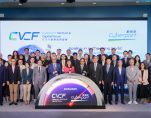
HONG KONG SAR – Media OutReach Newswire – 4 November 2026 – The annual flagship event Cyberport Venture & Capital Forum 2026 (CVCF) officially opened today at Hong Kong Cyberport. The two-day forum, themed “Scaling in a Changing World: Winning the Next Competitive Cycle”, brings together over 80 influential global venture capitalists, entrepreneurs and industry leaders to explore new frontiers in global venture trends, capital rerouting, Enterprise and Agentic AI, One-Person Companies (OPCs), digital assets, frontier technologies, and tokenisation economy, aiming to spotlight Hong Kong’s unique position as a strategic gateway connecting the Chinese Mainland, ASEAN, the Middle East, Central Asia and global innovation and funding networks. The forum also showcases the latest fundraising achievements of Cyberport start-ups.
The forum was inaugurated by Lillian Cheong, Acting Secretary for Innovation, Technology and Industry and Simon Chan, Chairman of Cyberport, and other distinguished guests at the opening ceremony, marking the official start of this global forum.
Lillian Cheong, Acting Secretary for Innovation, Technology and Industry, said “Turning AI potential into sustainable growth requires more than technology. It also requires investment, business expertise and access to markets. This is where today’s forum can make a difference – bringing innovators and investors together to explore emerging technologies, support promising ventures and open doors to new opportunities. The HKSAR Government will continue to strengthen the support that helps promising ventures grow as well its investment to mobilise more private capital, consolidating Hong Kong’s position as an international innovation and technology centre, and as a premier hub for AI.”
Simon Chan, Chairman of Cyberport, said: “In a shifting global capital landscape, Hong Kong’s role as a ‘super-connector’ and ‘super value-adder’ between the Chinese Mainland and the world is more valuable than ever. The cross-border dialogue and partnerships forged here will create fresh opportunities for innovation, investment and collaboration.”
Cyberport Start-ups Show Robust Fundraising as AI and the Agentic Economy Take Centre Stage
Cyberport’s start-ups have demonstrated robust fundraising performance over the past year. Cyberport gathers over 2,400 companies, Cyberport start-ups have raised over HK$74.5 billion in funding. During the year, Cyberport proudly welcomed 19 listed companies and 2 unicorns to its community. Recent high-value fundraising rounds include Finloop, Qupital and Premialab, leverage AI, blockchain and digital assets — reflecting sustained market confidence in these emerging technologies and underscoring Cyberport’s success in fostering their development.
CIN Celebrates 9th Anniversary, Connecting Global Capital with High-Potential Start-ups
As Hong Kong’s digital tech hub, AI accelerator and key incubator, Cyberport actively connects global investors with start-ups through diverse funding channels.
The CIN 9th Anniversary Celebration commemorated a successful nine-year milestone while ushering in a new chapter of leadership, as the chairmanship passed from Hendrick Sin to John Ng. To honour this pivotal handover, Hendrick Sin, Hon. Duncan Chiu, and Cindy Chow were officially designated as Honorary Chairs of CIN in recognition of their distinguished contributions to the ecosystem.
Hendrick Sin, Honorary Chair of CIN; Co-Founder of CMGE Technology Group Limited; Chairman of China Prosperity Capital, stated in his video speech, “CIN has facilitated over HK$6 billion in investments across more than 130 projects since its inception, reflecting strong investor confidence in Cyberport companies. Looking ahead, we will strengthen the quality and depth of our deal flow, enhance structured capital partnerships to broaden access to funding at different growth stages, and deepen our relationships with CVCs, PE firms, family offices and LPs, further diversifying CIN’s investor network. Through these efforts, CIN will continue to connect promising companies with the right capital, expertise and networks needed to scale and succeed.
John Ng, Chairman of CIN, added in his speech, “I’m honoured to be appointed Chairman of CIN. The network has grown to nearly 250 investment firms, an achievement that reflects the tremendous efforts of Hendrick and the CIN team over the past years. Drawing on my background in corporate venture capital and family offices, one of my priorities will be to expand CIN’s network within these communities and take CIN into its next chapter.”
Another key financing channel, CMF, has invested in 30 start-up projects as of September 2026, with total investment including co-investments exceeding HK$2.7 billion and a co-investment ratio of over 1:9.3. Further augmenting ecosystem liquidity, Cyberport, BOCHK Asset Management and BOC Group Investment formed a strategic partnership in May 2026, as well as with Taiping Financial Holdings in Aug 2026 on venture capital funds to back promising Hong Kong I&T start-ups.
Strategic Partnerships to Unlock Global Growth Corridors
At the Forum, Cyberport signed two Memorandums of Understanding (MoUs), with Gobi Partners and with Thailand’s National Innovation Agency (NIA), to solidify global corridors for cross-border expansion.
Cyberport and Gobi Partners signed a Memorandum of Understanding (MoU) to deepen collaboration in nurturing innovation and technology enterprises, facilitating market expansion and investment opportunities, and strengthening the innovation ecosystems of Hong Kong, Asia and the Middle East.
Building on a longstanding partnership, Gobi has invested in more than 24 Cyberport companies, including CMF co-investments. Witnessed by Lillian Cheong, Acting Secretary for Innovation, Technology and Industry, Simon Chan, Chairman of Cyberport, and Chibo Tang, Managing Partner, GBA Team of Gobi Partners, the MoU was signed by Dr Rocky Cheng, CEO of Cyberport, and Fred Li, Managing Director, GBA Team of Gobi Partners.
Meanwhile, Cyberport and Thailand’s National Innovation Agency (NIA) signed an MoU to promote cross-border innovation collaboration, startup development and knowledge exchange in AI, smart city and other digital technologies. It will cover soft-landing and market expansion, business matching, innovation programmes and community engagement, joint events, and proof-of-concept and pilot opportunities. The MoU was witnessed by Lillian Cheong, Acting Secretary for Innovation, Technology and Industry, Simon Chan, Chairman of Cyberport, and Preechaya Panyakrua, Innovation Counsellor of NIA, and signed by Dr Rocky Cheng, CEO of Cyberport, and Dr Krithpaka Boonfueng, Executive Director of NIA.
Decoding the New Playbook for Scaling in the Age of AI
This year’s CVCF programme is organised around three umbrella themes: Mega Trends & AI Frontiers, Regional Market Focus & Global Corridors, and Market Focus & Strategic Capital Dynamics.
Opening the main stage, Mahesh Krishnaswamy, Founder and CEO of Taara, delivered the keynote “The Innovation Playbook: Capitalizing on Moonshots and Faster Cycles in the Age of AI”, sharing how Taara evolved from a radical moonshot into a real-world high-speed optical communications solution — a timely lens on compressed innovation cycles and how breakthrough technology scales.
The forum also brought together venture capital leaders from Gobi Partners, Alumni Ventures, Rasmal Ventures, Primavera Capital, Draper Dragon, Pegasus Tech Ventures, Plug & Play and more to examine AI-driven capital shifts, high-growth corridors across the Middle East, ASEAN and the Greater Bay Area, and how public-private and corporate strategic capital can accelerate tech scale-ups.
Beyond the thought leadership sessions, the event further reinforced Cyberport’s role in connecting capital, innovation and global market opportunities. It also provided a dynamic platform for business matching and startup empowerment. This year’s Founder Pitch attracted strong interest from local and international venture capital firms, enabling startups from early-stage innovators to high-growth scale-ups to present their cutting-edge solutions to investors and ecosystem partners.
Throughout the first day, the event floor featured tailored Investor Matching sessions, dynamic Innovator Showcases featuring elite, high-potential startups across key tech sectors from local and global partner networks, and dedicated Startup Clinics offering practical strategic guidance. Coupled with engaging networking exchanges, Day one concluded on a positive note, reinforcing Cyberport’s ongoing role in connecting capital, innovation, and global market opportunities.
Day two will feature the CVCF’s spotlight event “Agentic Economy Summit”, themed “Intelligent Frontiers, Tokenised Horizons”, featuring a keynote address by Joseph Chan, Under Secretary for Financial Services and the Treasury, and will explore how agentic AI is reshaping business and how digital assets are redefining the way value moves. The summit will examine digital identity, institutional tokenisation, HKD stablecoins, programmable payments and machine-to-machine commerce, alongside the rise of OPCs. Day two also features hands-on startup workshops designed to equip founders with practical playbooks for pitch mastery and market scaling.
For more information on Cyberport Venture & Capital Forum 2026 and the speaker line-up, please visit http://cvcf.cyberport.hk/.
Hashtag: #Cyberport
The issuer is solely responsible for the content of this announcement.
About Hong Kong Cyberport
Wholly owned by the Hong Kong Special Administrative Region (HKSAR) Government, Cyberport is Hong Kong’s digital tech hub and AI accelerator, with a vision to empower industry digitalisation and intelligent transformation, to promote digital economy and AI development, and to foster Hong Kong to be an international AI, innovation and technology (I&T) hub. Cyberport gathers over 2,400 companies, including 30 listed companies and 10 unicorns. 40% of onsite companies’ founders come from 28 countries and regions, while Cyberport companies have expanded to over 36 global markets.
Cyberport, with Hong Kong’s largest AI Supercomputing Centre and AI Lab as the engine, has been building the AI ecosystem with industry-leading AI companies and over 500 AI and data science start-ups. Through development of tech clusters, namely AI, data science, blockchain and cybersecurity, Cyberport empowers industries across smart city and government, banking and finance, digital entertainment, culture and tourism, healthcare, education and training, property management, construction, transportation and logistics, green environment and more, while hosting Hong Kong’s largest FinTech community. Commissioned by the HKSAR Government, Cyberport has implemented proof-of-concept and sandbox schemes, subsidisation for digital tech adoption, industry tech training and start-up incubation, to drive technology R&D, translation and commercialisation, thus propelling digital transformation and intelligent upgrade across industry and society.
Also as “State-level Scientific and Technological Enterprise Incubator” and Hong Kong’s key incubator, Cyberport supports entrepreneurs with funding and office space, extensive networks of enterprises, investors, technology corporations and professional services for business growth and expansion to Chinese Mainland and overseas markets, all-round facilitation for landing in Hong Kong, talent attraction and cultivation, ready as a launchpad to take start-ups in any stages of development to the next level.
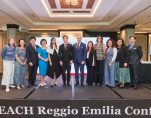
The REACH Reggio Emilia Conference, organised by REACH in partnership with Reggio Children and supported by the Embassy of Italy in Singapore, brought together more than 400 education leaders from 18 countries. EtonHouse and E-Bridge also announced a first-of-its-kind research collaboration with Reggio Children.
SINGAPORE – Media OutReach Newswire – 2 November 2026 – EtonHouse and E-Bridge will deepen their ongoing collaboration with Reggio Children through a new partnership focused on professional learning in infant care and early childhood education. The partnership will deepen this work through regular professional dialogue, research projects and professional learning, connected with Reggio Children and the experience of the infant-toddler centres and pre-schools of Reggio Emilia.
REACH Reggio Emilia Conference 2026 under the theme Education in Complex Times.
The partnership marks an important milestone at the 2026 REACH Reggio Emilia Conference, which opened in Singapore on 30 October 2026. As artificial intelligence transforms how children learn, create and interact with the world, educators are confronting a fundamental question: What kind of future are we preparing children for?
Over two days, from 30 to 31 October, the conference brings together more than 400 educators, school leaders, policymakers, regulators and researchers from Singapore, China, Hong Kong, Malaysia, Indonesia, India, Australia, the wider ASEAN region, South America, the Middle East and Italy.
Senior Minister of State Goh Pei Ming, Ministry of Home Affairs and Ministry of Social and Family Development, attended as the Guest-of-Honour and addressed delegates at the conference.
Singapore participants include representatives from the country’s Anchor Operators, the Early Childhood Development Agency, the Ministry of Social and Family Development and the Ministry of Education, alongside educators, trainers and leaders from across the sector.
Organised by REACH (Reggio Emilia in Asia for Children), part of the EtonHouse Group, in partnership with Reggio Children, which works closely with the municipal infant-toddler centres and pre-schools of Reggio Emilia, Italy, and supported by the Embassy of Italy in Singapore, the conference explores how education can respond to rapid technological change while protecting the deeply human foundations of learning.
Held under the theme “Education in Complex Times: Children, Democratic Cultures and the Role of Childhood in Shaping the Future,” the conference examines how education can nurture the qualities children need to navigate uncertainty: curiosity, creativity, critical thinking, collaboration, agency and the ability to participate meaningfully in their communities.
By connecting international perspectives with regional experience and Singapore’s early childhood leadership, the conference aims to strengthen Singapore’s position as a hub for early childhood excellence, professional exchange, best practice and global educational thinking.
The conference follows renewed international attention on the Reggio Emilia Approach after Her Royal Highness The Princess of Wales visited Reggio Emilia in May 2026 as part of her longstanding work in early childhood development. Her reflections on the importance of nature, creativity and human connection brought to the forefront the significance of an educational philosophy that places children’s rights, relationships and potential at the centre of learning, principles that are especially relevant in today’s complex and rapidly changing world.
Key Conference Initiatives
The conference creates opportunities for participants to engage with:
Global pedagogical thinking, led by educators from Reggio Children and informed by the educational experience of Reggio Emilia.
Regional best-practice exchange, with educators from Singapore and across the region presenting enquiries grounded in their own cultural and educational contexts.
Immersive professional learning, including atelier experiences and school visits, connecting educational philosophy with everyday practice.
Keynote speakers Annalisa Rainieri and Valentina Violi invite delegates to consider how educational environments and pedagogy nurture a childhood that every child deserves. Project-sharing sessions further demonstrate how principles inspired by the Reggio Emilia Approach can be interpreted thoughtfully across different cultures and education systems.
His Excellency Dante Brandi, Ambassador of Italy to Singapore, said:
“Reggio Emilia has given the world far more than a pedagogy—it has given us a way of trusting children as capable, curious protagonists of their own learning. As artificial intelligence reshapes how the youngest generations engage with knowledge, this Italian approach to early childhood education becomes an even more valuable compass. The Embassy of Italy is proud to support a conference that brings this heritage into dialogue with Singapore and the wider region.”
Speaking at the conference, Ms Bipasha Minocha, Chief Executive Officer of REACH, said: “Alongside our ongoing professional learning, we will be embarking on shared research projects with Reggio Children, involving educators from both EtonHouse and E-Bridge.”
She added: “For me, democratic culture lives in the daily choices of a school. Who is listened to? Can an idea change direction because a child has contributed something none of us expected?”
The conference builds on REACH’s longstanding partnership with Reggio Children and follows the Mosaic of Marks, Words, Material exhibition and conference held in Singapore in 2024, further strengthening the city’s role as a centre for educational dialogue and professional learning.
Conference Details: Education in Complex Times: Children, Democratic Cultures and the Role of Childhood in Shaping the Future
Dates: 30–31 October 2026 Venue: METT Singapore, 11 Canning Walk, Singapore 178881 Guest of Honour: Senior Minister of State Goh Pei Ming, Ministry of Home Affairs and Ministry of Social and Family Development Languages: English, Italian and Mandarin Conference information: https://info.reach.edu.sg/2026-reach-conference
The issuer is solely responsible for the content of this announcement.
About REACH-Reggio Emilia in Asia for Children
Founded in 2013 by EtonHouse International Education Group, REACH is a proud member of the Reggio Children International Network and represents Reggio Children in Singapore and China. REACH is committed to innovation, collaboration, and dialogue among educators across Asia while protecting and advocating the Reggio Emilia Approach to Education. Through international conferences, professional development programmes, publications, webinars, study groups etc, REACH advocates for children’s rights and potential, celebrating their ‘100 languages’ of expression.
As a beacon of the Reggio Emilia philosophy in Asia, REACH is committed to transformative education practices that value lifelong learning, reflective practice, and contextual change. It invites educators to join in its journey of growth, innovation, and advocacy for children’s rights in early childhood education.
Founded in 1995 in Singapore, EtonHouse has grown into a global education group with more than 100 schools across eight countries. The Group offers a highly recognised international education pathway from infant care to high school, including the International Baccalaureate, Cambridge, and the Reggio Emilia-inspired approach, all designed to nurture inquiry, creativity, and intercultural understanding. In Singapore, EtonHouse also operates E-Bridge Pre-School, providing high-quality and affordable early childhood education to support local communities. Beyond schools, EtonHouse is deeply committed to community impact through teacher training, philanthropy, and purpose-driven educational initiatives.
The Embassy of Italy in Singapore represents Italy in Singapore and Brunei and supports relations across government, business, culture, education, science and innovation. It promotes Italian excellence while facilitating dialogue and collaboration between Italian and Singaporean institutions, companies and communities.
Italy and Singapore enjoy longstanding diplomatic relations, established shortly after Singapore’s independence in 1965. The Embassy continues to support exchanges that strengthen mutual understanding and deepen cooperation between the two countries.
About Reggio Children
Reggio Children – International Center for the Defence and Promotion of the Rights and Potential of All Children – starting from 1994, promotes and disseminates through professional development initiatives, research projects, consulting work in the educational field, ateliers, exhibitions and publishing the pedagogical and cultural heritage of Reggio Emilia’s Municipal Infant-Toddler Centres and Preschools, known in Italy and throughout the world as the Reggio Emilia Approach®.
The Reggio Children International Network was established in 2006 and is made up of references in the countries which have collaborated longest and in stable ways with Reggio Children on the realisation of initiatives and activities.
By Dr. Gyan Pathak India made “remarkable progress” in reducing poverty, World Bank said in October 2026 report, adding extreme poverty fell to 2.6 per cent who were living on less than $3 a day in 2021 Purchasing Power Parity (PPP) terms. Let Prime Minister Narendra Modi applaud himself, his government, and the Word Bank […]
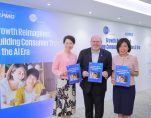
New research from KPMG China and GS1 Hong Kong highlights three key priorities for retailers: building trust in AI, delivering market-specific strategies for the growing silver economy, and strengthening brand confidence across Hong Kong and other cities in the Greater Bay Area
HONG KONG SAR – Media OutReach Newswire – 4 November 2026 – Consumer confidence in artificial intelligence is rising across Hong Kong and other cities in the Greater Bay Area (GBA), but new research from KPMG China and GS1 Hong Kong shows that retailers will need markedly different strategies to convert that confidence into growth. While consumers in other GBA cities show greater openness to personalised experiences and Chinese Mainland brands, Hong Kong consumers place more emphasis on value for money.
The Growth Reimagined: Building Consumer Trust in the AI Era report identifies three themes which have emerged as a roadmap for future growth:
Trusted AI builds consumer confidence: AI can enhance personalisation and speed up service delivery, but privacy, accuracy, transparency and a human touch will determine consumer adoption.
Silver shoppers diverge by market: To capture the growing silver economy, brands must prioritise price in Hong Kong, and brand reputation and engaging experiences in other GBA cities.
The low-cost-only label no longer fits Chinese Mainland brands: Their advances in quality and innovation are forcing competitors to rethink where future brand advantage will come from.
AI trust is rising but a transparency gap persists, creating new opportunities for growth
Trust in AI has risen significantly since last year’s survey. In Hong Kong, 48% of consumers now trust AI at least somewhat, up from 28%, while trust in other GBA cities has increased from 59% to 76%. Yet growing trust has not translated into the same willingness to share personal data: just 10% of Hong Kong consumers who trust AI are comfortable doing so, compared with 32% in other GBA cities.
The difference in AI trust between Hong Kong and other GBA cities is particularly pronounced among silver shoppers, defined in the report as consumers aged above 55. Just 38% of Hong Kong silver shoppers trust AI, compared with 76% in other GBA cities, underscoring the challenge retailers face in building AI confidence among older Hong Kong consumers.
To bridge this gap, retailers in Hong Kong need to demonstrate clear value before asking consumers to share more data, while providing transparency and control over how their data is used. Consumer confidence should extend across the entire retail journey: from payment and product authenticity to returns and customer support. AI should help consumers find what they need more easily, while maintaining accuracy, fairness and access to human support.
Anna Lin, Chief Executive, GS1 Hong Kong, says: “AI is increasingly shaping how consumers discover and evaluate products, and it tends to recommend those backed by data it can readily interpret and trust. Businesses with trusted, standardised product data that is structured for machines to understand and use and traceable to an identifiable source will be best positioned to earn consumer confidence and influence future purchasing decisions.”
The silver economy is not a single consumer market
Across all age groups, value remains a priority for 73% of Hong Kong consumers, compared with 45% in other GBA cities.
When asked to describe their shopping style, 57% of silver shoppers in Hong Kong identify primarily as value shoppers, compared with only 23% in other GBA cities, where brand reputation, at 37%, and shopping experience, at 27%, emerge as their leading considerations.
The findings suggest that age alone is not enough to define the silver shoppers. Retailers looking to capture the opportunities created by the region’s ageing population will need to understand how expectations differ by market, and develop propositions that reflect those differences.
Alice Yip, Partner, Head of Consumer & Retail, Hong Kong SAR, KPMG China, says: “Growth in the silver economy depends on recognising that shoppers’ priorities differ across markets. Hong Kong’s silver shoppers prioritise competitive prices, while those in other GBA cities place greater emphasis on brand reputation and shopping experiences. Capturing this opportunity involves understanding what matters locally and tailoring the retail offer accordingly, rather than treating the silver economy as one uniform market.”
Chinese Mainland speed raises the stakes for Hong Kong and global brands
Chinese Mainland brands are emerging as a stronger force in innovation and speed. In other GBA cities, that progress is already reflected in consumer perceptions: 64% choose them for value for money, 58% for safety and reliability and 50% for brand reputation.
In Hong Kong, however, they are still seen primarily through the lens of value. While 81% of consumers choose Chinese Mainland brands for value for money, fewer cite safety and reliability (39%), higher quality (33%) or brand reputation (31%). Their next opportunity is to turn Chinese Mainland speed and improving quality into stronger brand confidence.
Hong Kong brands retain a clear advantage in trust. Consumers in Hong Kong (74%) and other GBA cities (61%) cite safety and reliability as the leading reason for choosing Hong Kong brands. Among Hong Kong consumers, preference for Hong Kong brands is particularly strong in airlines (78%) and food and beverages (71%).
But trust cannot be taken for granted. As Chinese Mainland brands strengthen their safety and reliability credentials, Hong Kong brands will need to combine their reputation for reliability with greater innovation, sharper value and faster execution.
Anson Bailey, Head of Consumer & Retail, Asia Pacific, KPMG China, says: “Any brand that still sees Chinese Mainland competitors as a low-cost threat is looking in the rear-view mirror. Chinese Mainland speed is now producing better products, sharper design and faster innovation at a scale few markets can match. The real shift is that Chinese Mainland brands are learning to build brand equity at the same pace as they have built scale through value and speed. This is increasingly influencing who can win – not only in the GBA, but in consumer markets worldwide.”
Hashtag: #KPMG #GS1HongKong
The issuer is solely responsible for the content of this announcement.
About KPMG
KPMG in China has offices located in 31 cities with over 14,000 partners and staff, in Beijing, Changchun, Changsha, Chengdu, Chongqing, Dalian, Dongguan, Foshan, Fuzhou, Guangzhou, Haikou, Hangzhou, Hefei, Jinan, Nanjing, Nantong, Ningbo, Qingdao, Shanghai, Shenyang, Shenzhen, Suzhou, Taiyuan, Tianjin, Wuhan, Wuxi, Xiamen, Xi’an, Zhengzhou, Hong Kong SAR and Macau SAR. It started operations in Hong Kong in 1945. In 1992, KPMG became the first international accounting network to be granted a joint venture licence in the Chinese Mainland. In 2012, KPMG became the first among the “Big Four” in the Chinese Mainland to convert from a joint venture to a special general partnership.
KPMG is a global organisation of independent professional services firms providing Audit, Tax and Advisory services. KPMG is the brand under which the member firms of KPMG International Limited (“KPMG International”) operate and provide professional services. “KPMG” is used to refer to individual member firms within the KPMG organisation or to one or more member firms collectively.
KPMG firms operate in 138 countries and territories with more than 276,000 partners and employees working in member firms around the world. Each KPMG firm is a legally distinct and separate entity and describes itself as such. Each KPMG member firm is responsible for its own obligations and liabilities.
About GS1 Hong Kong
GS1 Hong Kong is the local chapter of GS1®, a global, not-for-profit data standards organisation represented in over 120 countries. Through globally recognised standards such as GTIN (barcodes), we enable businesses to identify, capture and share trusted data across physical and digital supply chains, helping them accelerate digital transformation, access global markets, strengthen supply chain resilience and efficiency, and advance transparency, safety and sustainability.
Building on global data standards, GS1 Hong Kong provides solutions including ezTRADE for B2B data exchange, ezTRACK for supply chain traceability, and 1QR, powered by GS1 Digital Link, connecting 2D barcodes to rich product information such as certifications and sustainability data.
The trusted data infrastructure also supports emerging business needs, from trade finance to Scope 3 emissions reporting and ESG compliance. In an AI-driven economy, we provide the foundation for high-quality data that is accurate, visible, linkable, searchable, shareable and traceable.
GS1 Hong Kong supports close to 8,000 corporate members across 20 sectors, including retail and consumer goods, food and beverage, healthcare, apparel and footwear, logistics and ICT.
Arabian Post Staff -Dubai Energy executives and ministers at ADIPEC 2026 called for greater investment in electricity grids, storage and supply chains on Tuesday as artificial intelligence and industrial electrification add pressure to global power systems. The second day of the Abu Dhabi conference concentrated on the infrastructure required to deliver growing volumes of energy reliably, with speakers warning that expanding generation alone would not resolve bottlenecks […]
Arabian Post Staff -Dubai Abu Dhabi’s XRG has agreed to acquire Shell’s 16.67 per cent interest in Australia’s North West Shelf liquefied natural gas project for $1.45 billion, marking its first investment in the country’s LNG industry. The agreement, announced on Tuesday, covers Shell Australia’s non-operated holding in the Woodside Energy-managed development in Western Australia. The base purchase price is subject to customary adjustments, with an additional […]
Kerala University’s recruitment of more than 100 contract teachers has come under scrutiny over allegations that department-wise appointments could bypass mandatory reservation requirements. Interviews for the one-year positions are under way, with a selection list expected shortly. The central dispute concerns whethe…









 https://www.cyberport.hk/en