News related to
unit

Sarvam has partnered with YCP India to help enterprises move artificial intelligence projects from small pilots into structured, organisation-wide deployments aimed at measurable business gains.

The collaboration brings together Sarvam’s full-stack sovereign AI platform and YCP India’s consulting, digital transformation and execution capabilities. The two companies plan to work with businesses on use-case selection, technology integration, change management and deployment across functions where AI can cut costs, improve productivity or strengthen customer engagement.

The partnership comes as companies across sectors are trying to convert interest in generative AI into practical results. Many organisations have tested chatbots, document automation, coding assistants and customer-service tools, but have struggled to scale them because of legacy systems, data-quality issues, compliance concerns and weak alignment with business priorities. Sarvam and YCP India are positioning their alliance as a response to that gap, with an emphasis on deployment rather than experimentation.

Sarvam’s platform covers language, voice and multimodal systems, with a focus on operating conditions in India, including regulatory requirements, data sovereignty and cost-efficient deployment. That positioning is significant for banks, insurers, retailers, healthcare providers, manufacturers and public-facing enterprises that need AI tools capable of working across languages, accents and workflow environments.

YCP India is expected to bring sector knowledge, programme management and strategy advisory support. The company’s role will include helping clients identify high-impact use cases, redesign workflows, manage adoption within teams and ensure that AI deployments are tied to commercial outcomes rather than isolated technology trials.

The partnership will focus on three broad areas. The first is identifying and prioritising AI opportunities that have clear business value. This could include automating customer queries, improving internal knowledge retrieval, digitising documents, supporting frontline staff or building multilingual service channels. The second is co-delivering integrated solutions that connect Sarvam’s technology stack with enterprise systems. The third is joint execution, where YCP teams work with Sarvam engineers to support implementation and change management.

The timing reflects a wider shift in the AI market. Enterprises are moving from proof-of-concept work to production systems, but the transition requires more than access to a large language model. Companies need governance frameworks, reliable data pipelines, security controls, integration with enterprise resource planning and customer relationship management platforms, and clear accountability for outcomes. Without these elements, AI projects risk remaining confined to innovation teams without affecting day-to-day operations.

Sarvam has emerged as one of the key domestic AI companies building models and applications designed for the country’s linguistic and business environment. Its products include speech-to-text, text-to-speech, translation, document digitisation and conversational AI tools. The company has also been associated with broader efforts to develop sovereign AI capabilities, including foundational models built for secure, population-scale use.

The enterprise opportunity is expanding rapidly. The country’s AI market is expected to grow strongly through 2027, supported by enterprise technology spending, a deepening talent base and rising investment in AI-led transformation. Technology services firms and global capability centres are also pushing generative AI into software development, business process management, IT consulting and customer operations.

For Sarvam, the alliance with YCP India could strengthen access to boardroom-level transformation projects, where decisions are shaped by business value, risk controls and execution capacity. For YCP India, the tie-up adds a technology partner focused on locally relevant AI capabilities at a time when clients are demanding practical deployment roadmaps rather than advisory reports alone.

The challenge will be delivery. Enterprises often face fragmented data, uneven digital maturity and uncertainty over how AI should be governed. Regulated sectors also need clarity on privacy, auditability and accountability when automated systems influence customer interactions or internal decisions. The partnership will have to demonstrate that sovereign AI can be not only locally relevant but also robust, secure and commercially competitive against global platforms.

Cost will be another deciding factor. Many businesses are assessing whether AI systems can deliver enough savings or revenue gains to justify investment in infrastructure, integration and training. Sarvam’s emphasis on cost-efficient deployment could appeal to companies that want AI capabilities without depending entirely on expensive global model providers.

Britain has confirmed two hantavirus infections among its nationals and is investigating a third suspected case on Tristan da Cunha, widening the public health response to a deadly outbreak linked to the MV Hondius expedition cruise ship in the South Atlantic. The suspected case involves a British national on the remote UK Overseas Territory, while two other British nationals have already tested positive after being connected to […]

World Liberty Financial’s leadership has moved to contain a wave of online speculation over the Trump-linked crypto venture, with Donald Trump Jr. and chief executive Zach Witkoff insisting the project remains intact even as its legal dispute with Tron founder Justin Sun deepens. Trump Jr., speaking at the Consensus crypto conference in Miami on Thursday, rejected claims that he and other members of the Trump family had […]

HONG KONG SAR – Media OutReach Newswire – 8 May 2026 – Techcombank successfully hosted the Overseas Insurance Talent Roadshow 2026 at the Grand Hyatt Hong Kong, bringing together global insurance professionals and presenting long-term career opportunities in Vietnam’s evolving insurance market.

Global insurance professionals and industry leaders attend Techcombank’s Overseas Insurance Talent Roadshow 2026 in Hong Kong

The event marked the first international debut of two insurance companies within Techcombank’s ecosystem — Techcom Life (life insurance) and Techcom Insurance (non-life insurance). Both entities are positioned to build a new generation of insurance, anchored in data, technology, and customer-centricity.

The roadshow featured senior leadership from across the ecosystem, including Mr. Pranav Seth, Chairman of Techcom Insurance; Mr. Mukesh Pilania, Chief Executive Officer of Techcom Life; and Ms. Veo Nguyen, Chief People Officer of Techcombank, alongside other executives leading key functions in technology, distribution, and product development.

Discussions at the event focused on Vietnam’s economic outlook and the evolving role of insurance in its next phase of development. Speakers highlighted the industry’s transition from traditional, product-led models toward data-driven, technology-enabled, and personalized approaches, with increasing emphasis on customer experience and long-term engagement.

Participants engaged in in-depth exchanges with the leadership team, gaining insights into Vietnam’s insurance landscape as well as a clearer understanding of the vision and long-term aspirations behind Techcombank’s newly established insurance businesses. The sessions reflected growing international interest in Vietnam as a high-potential market undergoing structural transformation.

Techcom Life, the group’s life insurance arm, has demonstrated strong early momentum, achieving a trajectory within six months and ranking No.1 in the bancassurance market in Q1 2026. Meanwhile, Techcom Insurance served over 650,000 customers in 2025 through a nationwide network of 280 branches and more than 3,500 sales professionals, reflecting its growing scale in the non-life insurance segment.

Hong Kong, one of Asia’s leading insurance hubs, is part of Techcombank’s broader international roadmap, following previous engagements in Singapore, the United States, Europe, and Australia.

Techcombank plans to continue the Overseas Insurance Talent Roadshow across additional global markets in 2026, as part of its strategy to attract international talent and support the development of a next-generation insurance ecosystem in Vietnam.
Hashtag: #Techcombank

The issuer is solely responsible for the content of this announcement.

Coinbase users faced prolonged disruption to crypto trading after an Amazon Web Services failure in northern Virginia impaired parts of the exchange’s platform for more than five hours, leaving customers unable to execute some transactions while engineers worked to restore normal access. The outage affected Coinbase’s website, mobile services and Advanced Trade functions, with the exchange reporting degraded performance across key retail and professional trading channels. Coinbase […]

  Dubai South is pressing ahead with its 2026 property delivery programme, signalling that long-term housing demand around Al Maktoum International Airport remains strong despite short-term regional uncertainty. The master-planned city and free zone has placed one of its largest residential construction packages of the year, awarding an AED2 billion contract to Mohammed Abdulmohsin Al Kharafi & Sons for multiple phases of Hayat by Dubai South. The […]

Arabian Post Staff -Dubai Ras Al Khaimah Economic Zone has signed two strategic agreements with MAGRABi Retail Group and Mighty Industrial Park, widening the emirate’s manufacturing base through projects covering retail fit-out production, metal recycling, refining and advanced industrial activity. The agreements were signed during the fifth edition of Make it in the Emirates at ADNEC Centre Abu Dhabi, in the presence of Sheikh Saud bin Saqr […]

Advertisements

Arabian Post Staff -Dubai   Washington’s plan to escort commercial vessels through the Strait of Hormuz has run into an early diplomatic test, after Saudi Arabia and Kuwait were reported to have withheld full operational access before later easing restrictions on U. S. use of bases and airspace. The pause in “Project Freedom,” a U. S.-led effort to restore commercial navigation through one of the world’s most […]

HONG KONG SAR – Media OutReach Newswire – 8 May 2026 – Apple Storage is once again redefining the public’s imagination of self-storage. Located at the Lap Tai Industrial Centre in Tsuen Wan, the group has launched Hong Kong’s first IP-themed concept store, spanning over 10,000 square feet. This new branch seamlessly blends the brand’s exclusive IP characters with lifestyle aesthetics, introducing a premium “Airport VIP Lounge” experience to the storage industry for the first time.

In addition to specialized storage solutions—including dedicated units for clothing, collectibles, books, and bicycle parking—the facility features a groundbreaking VIP Lounge. Customers can enjoy complimentary access to massage chairs and co-working spaces, extending the storage experience into a lifestyle enjoyment. Apple Storage is committed to transforming storage from a utility into an exclusive clubhouse, allowing customers to free up home space while fully immersing themselves in hobbies such as outdoor activities or art collection.

Business-Grade Work Facilities

The branch features a dedicated co-working space equipped with computers, printing facilities, workstations, and charging points. Customers can conveniently handle business or personal administrative tasks, such as printing documents or conducting online research, directly on-site.

Party Room-Style Entertainment

To make the storage process relaxing and enjoyable, Apple Storage has equipped the VIP Lounge with professional massage chairs for immediate post-task stress relief. The Group has upgraded the facilities to rival a “Party Room” environment, featuring billiards, television, and Nintendo Switch consoles. This allows family members to stay entertained while customers manage their storage units at their own pace.

The lounge also includes a spacious communal table, perfect for assembling intricate models or playing board games. Guests can enjoy complimentary coffee and various beverages from the self-service refreshment counter, turning a cold warehouse into a private sanctuary for family time.

Comprehensive Storage Amenities

The facility is equipped with 24-hour support, climate and humidity control, CCTV, smart access control, and regular staff patrols to ensure maximum safety and comfort. Additional amenities such as packing zones, trolleys, and bicycle repair tools are provided for customer convenience. Customers can retreat to the leisure area or VIP lounge whenever they need a break.

Over 120 Branches: Hong Kong’s Leader in Regulatory Compliance

With deep roots in Hong Kong since 2005, Apple Storage has expanded to over 120 branches, serving more than 100,000 customers. Recognizing that safety is always the clients’ top priority, Apple Storage adheres to the highest standards of compliant operations. As an industry leader, Apple Storage maintains close communication with the Buildings Department and the Fire Services Department. Apple Storage takes pride in having the largest network of branches in Hong Kong that have successfully passed inspections by both departments. The Group pledges to continue upgrading fire safety facilities in line with government guidelines to ensure total peace of mind for every customer.

A New Era of Smart Storage: Integrating AI Technology

Apple Storage Group continues to invest heavily in integrating smart technology into its services. Hardware upgrades, including facial recognition systems and smart sensor lighting, have been rolled out across all branches to enhance security and energy efficiency.

On the innovation front, Apple Storage has developed a proprietary Customer Matching System. Utilizing AI data analysis, the system creates tailor-made storage solutions for clients, driving the business toward full digitalization. Currently, the Group is developing an “AI Smart Warehouse” project, which will apply cutting-edge Artificial Intelligence to unit management and customer interaction, signaling a new future for the industry.

Professional & Transparent: One-Stop Moving Team

Apple Storage offers a comprehensive “one-stop” moving and storage service, managed by the Group’s professional brand, APPLE MOVING. The team handles everything from general moving to third-party delivery and pickup. To ensure maximum protection, the team provides packing materials—such as boxes and bubble wrap—in advance of the moving date.

Unlike many local independent movers, Apple Moving operates under a transparent corporate management model. With strict service guidelines and a standardized quoting system, the Group guarantees transparent pricing and strictly prohibits “on-site price hikes” or the solicitation of tips, providing customers with a reliable brand guarantee.

Two Decades of Excellence: Recipient of the “10th Year Award for Hong Kong Service Brand”

Since opening its first branch in 2005, Apple Storage has accompanied Hong Kong families and businesses for over 20 years. Today, with branches in every corner of the city, Apple Storage’s commitment to a “premium environment” and “reliable service” remains unchanged.

The company’s professionalism has earned widespread market recognition, including five consecutive years of Quality Service Certification from the Hong Kong Retail Management Association (HKRMA). In 2026, the Group was honored with the “10th Year Award for Hong Kong Service Brand” by the Hong Kong Brand Development Council. These accolades reflect the trust of over 100,000 customers.

Multi-Brand Synergy: A Comprehensive Storage Ecosystem

The Group’s portfolio includes Apple Storage Premium, U SPACE, Apple Moving, and Apple Wine Cellar, providing a diverse range of integrated storage solutions. From flexible self-storage and professionally managed central storage to door-to-door storage and point-to-point logistics, current services cover every user need.

Apple Storage offers various sizes and specialized units, such as climate-controlled storage for clothing and sneakers, display units for toys, specialized bicycle racks, and flexible shelving units, creating bespoke space solutions for every client.

Driving ESG Strategy for a Green Future

Apple Storage Group has actively implemented ESG (Environmental, Social, and Governance) strategies in recent years. Regarding Environmental Protection, Apple Storage is transitioning to sensor-based energy-saving systems and prioritizing appliances with “Grade 1 Energy Labels.” Apple Storage’s own headquarters has also gone paperless through comprehensive digitalization.

In terms of Social Responsibility, the “Apple Volunteer Team” has collaborated with charities for years to support the underprivileged. Looking ahead, Apple Storage has set clear sustainability goals: a commitment to reduce carbon emissions by 10% within three years and increased investment in philanthropy, including pro-bono moving services and storage space donations. Recently, Apple Storage collaborated with a charity to provide free storage and moving services for residents of Wang Fuk Court, Tai Po, assisting them during their relocation and home clearing process.

Hashtag: #AppleStorage

The issuer is solely responsible for the content of this announcement.

About Apple Storage

With over 120 branches across Hong Kong, Kowloon, and the New Territories, Apple Storage offers professional, compliant, and reliable services. Most branches are conveniently located near MTR stations.

Act Now – Reclaim Your Living Space.
Learn more about our latest offers:
Inquiry Hotline: 8208 9822
WhatsApp:

Wall Street’s biggest financial groups are expanding digital-asset hiring, signalling that blockchain, tokenisation and crypto-linked trading are moving deeper into mainstream finance after years of caution. BlackRock, JPMorgan Chase and Morgan Stanley have advertised a fresh batch of roles tied to digital assets, blockchain engineering, tokenised products, risk controls and wealth-management infrastructure. The openings span senior product posts, software engineering, fraud-risk oversight, programme management and operations strategy, […]

Arabian Post Staff -Dubai Global health officials moved to contain public anxiety over a deadly hantavirus cluster linked to the MV Hondius, a Dutch-flagged expedition cruise ship that sailed from Argentina toward Cape Verde, stressing that the outbreak does not signal the start of another coronavirus-style pandemic. Dr Maria Van Kerkhove, the World Health Organization’s director for epidemic and pandemic preparedness and prevention, said the virus behaves […]

By Dr. Gyan Pathak BJP won the West Bengal election with the most recognizable face leading from the grassroots to the state level against Mamata led TMC is Suvendu Adhikari. He also defeated TMC supremo CM Mamata Banerjee from Bhabanipur Vidhan Sabha constituency. Naturally, he is seen as the most suitable candidate for Chief Minister […]

The article Selecting Chief Minister Of West Bengal Is A Delicate Task For BJP Leadership appeared first on Latest India news, analysis and reports on Newspack by India Press Agency).

Tesla’s China-made electric vehicle sales rose sharply in April, extending a rebound that has strengthened the Shanghai plant’s role as the company’s key export and volume hub.

Deliveries of Model 3 and Model Y vehicles built at Tesla’s Shanghai factory reached 79,478 units in April, including exports to Europe and other overseas markets. The figure was 36% higher than a year earlier, marking a sixth straight month of year-on-year growth, though it was 7.2% lower than March as the market moved through a seasonally softer month after a stronger end to the first quarter.

The April performance signals that Tesla is regaining some stability after a difficult stretch in 2025, when competition, pricing pressure and consumer fatigue weighed on its standing in major electric vehicle markets. Shanghai remains central to that recovery because it supplies the domestic market while also serving as a major export base for Europe, Asia-Pacific and other regions. The plant produces Tesla’s two highest-volume models, leaving its monthly output closely watched as a gauge of both local demand and overseas momentum.

Tesla sold 85,670 China-made vehicles in March, giving it a stronger base heading into the second quarter. April’s decline from that level suggests the rebound remains uneven, but the year-on-year rise points to healthier order flow than at the same point last year. The recovery has been helped by adjustments to production, export allocation and the refreshed Model Y cycle, while Tesla has continued to use financing incentives and targeted promotions to defend its share.

China’s electric vehicle market remains the world’s most competitive, with new energy vehicles accounting for a growing majority of passenger-car retail sales. April industry estimates pointed to new energy vehicle retail sales of about 860,000 units and a penetration rate above 60%, underscoring how quickly battery-electric and plug-in hybrid models are displacing petrol vehicles. That shift benefits Tesla’s broader addressable market, but it also exposes the company to fierce price competition from domestic manufacturers with faster model cycles and wider product ranges.

BYD remains Tesla’s most formidable rival, with a broad line-up spanning mass-market cars, plug-in hybrids, premium models and exports. Geely, Chery, Leapmotor, Xpeng, Li Auto, Nio and Xiaomi are also pressing deeper into the market, competing not only on price but on software, cabin technology, driving-assistance features and charging convenience. Several of these manufacturers are expanding overseas, putting pressure on Tesla in Europe and other export markets that were once more heavily dominated by the US company.

Tesla’s challenge is sharpened by the age of its core passenger line-up. The Model Y and Model 3 remain strong global sellers, but rivals are launching fresh sport-utility vehicles, sedans and compact models at a faster pace. Tesla has been working on lower-cost products and software-led upgrades to protect volumes, but investors and customers are watching closely for evidence that the company can broaden its appeal beyond its two main models.

Europe has become a key test of whether Shanghai’s output can translate into renewed international growth. Tesla sales have improved in several European markets after a weak 2025, helped by stronger demand for electric vehicles and a recovery from earlier supply disruptions. Yet the company faces a more crowded field, with BYD, Xpeng and other manufacturers gaining visibility through competitive pricing, longer equipment lists and expanded dealer networks.

Regulatory approval for advanced driver-assistance technology remains another variable. Tesla’s Full Self-Driving package is central to its long-term positioning, but approvals in China and Europe have moved cautiously. Wider deployment could support margins and brand differentiation, though regulators continue to scrutinise safety, data handling and driver-monitoring requirements. Without a faster software rollout, Tesla’s sales recovery will depend more heavily on vehicle pricing, product updates and production efficiency.

Tesla’s first-quarter global deliveries stood at 358,023 vehicles, with Model 3 and Model Y accounting for 341,893 units. That concentration highlights the importance of Shanghai’s April result: the plant is not merely a regional asset but a major pillar of the company’s global volume strategy. Stronger China-made deliveries can ease pressure on other factories, support export flexibility and help Tesla manage inventory across markets with uneven demand.

Arabian Post Staff -Dubai AE Coin and USDU are developing a regulated digital conversion framework designed to let institutions move between UAE dirham- and dollar-backed payment tokens for settlement, treasury and cross-border use inside the UAE’s tightening virtual-asset rulebook. The initiative is being structured with support from Al Maryah Community Bank, positioning the lender as a key banking infrastructure partner for compliant AED–USD token conversion. The framework […]

Arabian Post Staff -Dubai   Arada has entered the UAE healthcare market by acquiring a majority stake of more than 80 per cent in Reem Hospital, marking a decisive shift by the master developer from residential communities and branded wellness projects into clinical care. The transaction gives Arada control of one of Abu Dhabi’s specialist private healthcare assets and comes with an AED2 billion investment commitment to […]

The five-year extension ensures operational continuity at one of Thailand’s leading container terminals, supporting the country’s expanding role in intra-Asian trade

BANGKOK, THAILAND – Media OutReach Newswire – 7 May 2026 – DP World, through its joint venture Laem Chabang International Terminal Co., Ltd. (LCIT), has secured a five-year concession extension to continue operating the B5 container berth at Laem Chabang Port. The extension comes at a time of increasing intra-Asian trade and evolving supply chain dynamics, reinforcing the port’s role as a critical gateway for Thailand’s economy.

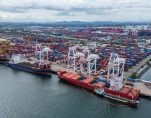
Terminal and yard at Laem Chabang Port

The contract, granted by the Port Authority of Thailand (PAT), will run from May 2026 to April 2031, reinforcing DP World’s central role in bolstering regional trade flows.

LCIT operates both B5 and C3 berths at Laem Chabang, Thailand’s principal deep-sea gateway and the country’s largest container hub supporting international trade. The terminals can accommodate up to four vessels simultaneously along 900 meters of berth length and are supported by 4,420 sqm of on-dock container freight station (CFS) facilities. In 2025, LCIT handled a record 1.936 million twenty-foot equivalent units (TEUs), its highest annual throughput to date, reflecting sustained growth in container volumes.

Glen Hilton, CEO & Managing Director, Asia Pacific, DP World, said: “This concession extension at Laem Chabang Port ensures continuity and service stability for our customers at a time when supply chains face increasing pressure and complexity. As Thailand strengthen its position as a regional trade hub, this extension allows us to continue investing in capacity, efficiency and sustainable operations. Together with our partners at LCIT, we are well positioned to support growing intra-Asia trade and deliver long-term value for customers across the Asia Pacific region.”

This concession will enable continued investment by DP World in operational efficiency and sustainability at Laem Chabang. In 2025, five electric internal transfer vehicles (eITVs) were deployed at LCIT, reducing emissions by approximately 60% compared to diesel alternatives while supporting faster vessel handling. Further upgrades are planned in 2026, including the installation of additional eITVs, electric reach stackers, and an electric empty container handler.

Complementing its operations at Laem Chabang Port, DP World has an integrated logistics network throughout Thailand, including cross-border trucking, landside logistics and freight forwarding. The company also recently launched a rail-connected inland container yard in Khon Kaen with a dedicated thrice-weekly rail shuttle to Laem Chabang, enhancing connectivity for exporters in Thailand’s Northeastern region.

​ These services and solutions aim to strengthen Thailand’s domestic and export trade by enabling the seamless movement of goods and materials from port to domestic hinterlands, and to markets across the wider Asia Pacific region.
Hashtag: #DPWorld


The issuer is solely responsible for the content of this announcement.

About DP World

DP World is reshaping the future of global trade to improve lives everywhere. Operating across six continents with a team of over 125,000 employees, we combine global infrastructure and local expertise to deliver seamless supply chain solutions. From Ports and Terminals to Marine Services, Logistics and Technology, we leverage innovation to create better ways to trade, minimising disruptions from the factory floor to the customer’s door.

In Asia Pacific, DP World employs over 15,000 people across 22 geographies. We operate 17 ports and terminals, complemented by a comprehensive suite of end-to-end supply chain solutions – to connect the region to the rest of the world.

WE MAKE TRADE FLOW

France have been tipped to win the 2026 FIFA World Cup by defeating Spain in the final, with Bank of America analysts placing Kylian Mbappé at the centre of their forecast for the expanded tournament in North America. The projection, based on a survey of 65 respondents across the bank’s Global Research department, gives France its third World Cup title after triumphs in 1998 and 2018. Mbappé […]

Cybersecurity investigators have linked a Microsoft Teams-based credential theft operation to MuddyWater, the state-sponsored threat group associated with Iran’s intelligence apparatus, after an intrusion first presented itself as an ordinary Chaos ransomware attack. The operation, detected in early 2026 and detailed this week, shows how trusted workplace collaboration tools are being turned into entry points for espionage. Attackers used Teams chats and screen-sharing sessions to trick employees […]

Tether is positioning USDT as a core payments and liquidity layer for the Bitcoin economy, with chief executive Paolo Ardoino framing the stablecoin issuer’s strategy as a long-term infrastructure project rather than a conventional crypto trading business. Ardoino has likened the company’s approach to Isaac Asimov’s Foundation series, arguing that durable systems must be built before periods of financial stress expose weaknesses in existing institutions. The comparison […]

Ethereum Foundation has sold another 10,000 ETH to BitMine Immersion Technologies through an over-the-counter transaction, extending a series of treasury sales that has drawn scrutiny from the crypto market as staking withdrawals climb and institutional ETH accumulation intensifies. The latest deal was priced at an average of $2,292.15 per ETH, raising about $22.9 million for the non-profit organisation behind Ethereum’s core development ecosystem. It followed a 10,000 […]

China’s push into humanoid robots is emerging as a new test of its ability to convert industrial policy, supply-chain depth and scale manufacturing into export power, with Morgan Stanley research arguing that the sector could help lift the country’s share of global manufacturing by the end of the decade.

Economists led by Chetan Ahya have drawn a parallel with electric vehicles, where early policy support, component localisation and aggressive production expansion turned China from a fast follower into the world’s dominant exporter. Their research projects China’s share of global manufacturing could rise to 16.5 per cent by 2030, from about 15 per cent now, as advanced automation and embodied artificial intelligence move from demonstration projects into factory and logistics use.

The bullish case rests on China’s widening lead in humanoid robot production. Industry estimates show the country produced about 12,800 humanoid robots in 2025, close to 90 per cent of global output, though the market remains tiny compared with conventional industrial robotics. China also remains the world’s largest industrial robot market, accounting for more than half of global factory robot installations in 2024, with an operational stock above 2 million units.

That foundation matters because humanoid robots require the same manufacturing strengths that supported China’s rise in solar panels, batteries and electric vehicles: precision motors, sensors, actuators, batteries, control systems, machine vision and low-cost assembly. Local companies are building ecosystems around these components, while provincial governments are offering subsidies, industrial parks and procurement support to accelerate commercial deployment.

Beijing has identified humanoid robots as a strategic industry, setting targets for mass production and global leadership while integrating robotics into wider plans for artificial intelligence and advanced manufacturing. The 15th Five-Year Plan framework is expected to place AI-powered robots near the centre of industrial upgrading, although large-scale commercialisation is more likely toward the later part of the plan period than immediately.

The sector’s momentum has drawn major private capital. Start-ups such as Unitree, UBTech, AgiBot and Fourier Intelligence have moved quickly from stage demonstrations to pilot factory and warehouse deployments. Linkerbot, a fast-growing maker of dexterous robotic hands, is seeking a valuation of about $6 billion after building a strong position in high-degree-of-freedom robotic hands used in humanoids and industrial systems. Its modular products point to an important feature of the market: some of the earliest profits may come from components rather than complete humanoid machines.

Automakers and electronics groups are also moving into the field. Xpeng has said humanoid robotics could become a long-term investment area alongside electric vehicles, while other manufacturers are testing robots for inspection, sorting, materials handling and repetitive shop-floor tasks. The logic is clear. China faces an ageing workforce, rising labour costs in coastal manufacturing hubs and growing pressure from tariff barriers. A successful humanoid robotics industry could help preserve competitiveness even as low-cost labour advantages fade.

The export implications are broader than robot sales. If humanoids improve productivity in Chinese factories, they could lower production costs across electronics, machinery, appliances and consumer goods. That would reinforce the country’s position in global supply chains at a time when the United States, Europe and several Asian economies are trying to reduce dependence on Chinese manufacturing. It could also create a new export category in robots, components, software and maintenance services.

Yet the constraints remain substantial. Humanoid robots are still expensive, often have limited battery life and struggle with unstructured environments. Many can perform scripted tasks in controlled settings but fall short when asked to handle the speed, judgement and dexterity of human workers. Even executives in China’s robotics industry acknowledge that factory humanoids remain less efficient than people in many jobs. Safety certification, liability rules, data protection and workplace integration will also affect adoption.

Dependence on high-end chips and advanced software ecosystems is another weakness. US restrictions on AI semiconductors have pushed Chinese firms to localise more hardware, but training and deploying capable embodied AI systems remains compute-intensive. Without steady access to cutting-edge chips, progress may be uneven, particularly in models that require real-time perception, movement planning and continuous learning.

Arabian Post Staff -Dubai Mubadala Investment Company has taken a significant minority stake in Power Factors, deepening Abu Dhabi’s exposure to the software layer of the global renewable energy industry as operators confront larger, more complex and increasingly hybrid clean-power portfolios. The transaction brings Mubadala alongside Vista Equity Partners, the existing investor in Power Factors, and positions the Abu Dhabi-based global investor behind a company whose systems […]

LOS ANGELES, US – Newsaktuell – 7 May 2026 – The newly released 2026 Berggruen Governance Index (BGI) paints a mixed picture of global governance heading into a future of mounting shocks, finding widespread gains in public-goods provision from 2000 to 2023 even as democratic accountability edged down and state capacity showed little overall improvement.

Presentation of the 2026 Berggruen Governance Index: On 6 May in Los Angeles, the following individuals discussed the findings of the study (from left): Vinay Lai (Professor of History, UCLA), Michael Storper (Distinguished Professor of Urban Planning, UCLA), Stella Ghervas (Professor of History, UCLA) and the two authors of the study, Joseph Saraceno and Prof. Helmut Anheier (both from UCLA's Luskin School of Public Affairs). Democracy News Alliance / Jordan Strauss/AP for DNA
Presentation of the 2026 Berggruen Governance Index: On 6 May in Los Angeles, the following individuals discussed the findings of the study (from left): Vinay Lai (Professor of History, UCLA), Michael Storper (Distinguished Professor of Urban Planning, UCLA), Stella Ghervas (Professor of History, UCLA) and the two authors of the study, Joseph Saraceno and Prof. Helmut Anheier (both from UCLA’s Luskin School of Public Affairs). Democracy News Alliance / Jordan Strauss/AP for DNA

The BGI, presented Wednesday by an international group of governance scholars, analyses measurable benchmarks of democratic accountability across 145 countries.

On a 100-point scale, the global score for democratic accountability slipped slightly from 65 in 2000 to 64 in 2023, the most recent data used in the project. The wave of democratisation observed in the closing decades of the last century has stalled in the last 15 years. Democratic accountability fell in 54 countries while it improved in 48 countries.

Yet the BGI — a collaborative project of the Luskin School of Public Affairs at the University of California, Los Angeles (UCLA), Berlin’s Hertie School and the Berggruen Institute, a think tank headquartered in Los Angeles — captures remarkably widespread growth in provision of public goods.

Encompassing healthcare, education, infrastructure, environmental sustainability and conditions to foster employment and rising prosperity, public goods improved in 135 of the countries studied, while declining slightly in just four. The global average jumped from 58 to 69 points from 2000 to 2023.

The third component of what the BGI authors refer to as the “governance triangle” is state capacity, defined as the ability to tax, borrow and spend, control territory, operate scrupulous, competent bureaucracies and administer predictable rule of law. The index finds the global average ticking up from 48 to 49 points; 56 countries had increased state capacity while 57 declined.

“What does it tell us about the world ahead?” Prof. Helmut K. Anheier, a Luskin School sociologist and BGI principal investigator, asked during the public release of the 2026 BGI on the UCLA campus.

“Countries are not really improving in their governance performance in significant ways. … We’re not really having forward-looking investment in governance capacity. There is considerable inertia.”

The largest improvements across all three BGI components occurred in Gambia, which the report groups with “low-capacity developing states.” These states score low across the board, particularly in the provision of public goods. This cluster constitutes the poorest countries with the least developed economies, which face the most serious challenges.

“They have the greatest exposure to likely future crises, whether it’s global warming, whether it’s a new pandemic, whether it’s another financial crisis, whether it’s the impact of AI,” Anheier said. “And they have the least capacity to respond to it.”

Bhutan, Georgia, Iraq and Tunisia — which make up the remaining top five countries with the largest improvements in the BGI — are classified as “capacity-constrained states.” They tend to be middle-income with struggling democracies. These countries score higher across the board than the low-capacity developing states, but their state capacity tends to lag compared to public goods and democratic accountability.

The capacity-constrained states risk falling into “a cycle that erodes the institutions they have built,” Anheier said.

“Consolidated democratic states”, a cluster of most of the world’s richest countries, which score highly in all three BGI components, have to confront domestic complacency. Further, in the United States and some others, “political dysfunction” is leaving mounting problems unaddressed and risking erosion of state capacity, Anheier said.

At the other end of the spectrum, the country with the farthest fall on the BGI since 2000 is Nicaragua. Second from last is Venezuela, followed by Hong Kong, Hungary and Turkey. The rest of the bottom 10 are Russia, Iran, Poland, El Salvador and Belarus.

Since 2023, which is the last year of data available for the study, Poland and Hungary have both seen government changes via election, despite serious democratic backsliding. Both had fallen out of the group of “consolidated democratic states” by 2023 and moved into the capacity constrained cluster.

The other eight countries at the bottom of the list are all places that once had some semblance of competitive elections, but by now have little or no remaining pretense of democracy. They are grouped by the authors among the “authoritarian and hybrid states”, which have by far the lowest democratic accountability but outperform even some struggling democracies in delivering public goods.

These regimes have tended toward faster economic growth in the period observed. But that seeming prosperity, typically fueled by extractive industries or overreliance on exports, masks “serious institutional weaknesses in these countries, including divided elites,” Anheier said.

Relatively few countries — 21 of the 145 — changed enough for better or worse to be classified in a new group by the end of the 23-year study period.

“Movement between them is rare, but this is largely what we should expect,” said Stella Ghervas, a UCLA historian on a panel of experts who discussed the BGI findings Wednesday. “Government systems are not created in a moment. They evolve over long periods of time.”

Local conditions shaping governance in each country can rarely be quickly reset through political will or even external shocks, Joseph C. Saraceno, a Luskin School data scientist and BGI co-author, said Wednesday.

“Despite all the talk of major transformations happening in global affairs, the underlying configuration of governance simply doesn’t appear to change very much,” Saraceno said. “We use the term inertia to describe this reoccurring pattern. In other words, the structures of global governance are resistant to movement as the conditions beneath them are quite sticky: political economies, demographics, resource endowments. These are deeply layered, and they push each country toward the world that it already inhabits.”

But the challenges lurking around the world may not wait for the slow and difficult processes of political change and development to catch up.

“With the few exceptions of those countries in the consolidated democratic world,” Anheier said, “the great majority of the countries in the world is ill-prepared for the future.”

The full report, ‘ 2026 Berggruen Governance Index – The Four Worlds of Governance‘, can be viewed and downloaded from the website of the UCLA’s Luskin School.

Frank Fuhrig, DNA

—————————————————-

This text and the accompanying material (photos and graphics) are an offer from the Democracy News Alliance, a close co-operation between Agence France-Presse (AFP, France), Agenzia Nazionale Stampa Associata (ANSA, Italy), The Canadian Press (CP, Canada), Deutsche Presse-Agentur (dpa, Germany) and PA Media (PA, UK). All recipients can use this material without the need for a separate subscription agreement with one or more of the participating agencies. This includes the recipient’s right to publish the material in own products.

The DNA content is an independent journalistic service that operates separately from the other services of the participating agencies. It is produced by editorial units that are not involved in the production of the agencies’ main news services. Nevertheless, the editorial standards of the agencies and their assurance of completely independent, impartial and unbiased reporting also apply here.

The issuer is solely responsible for the content of this announcement.

HONG KONG SAR – Media OutReach Newswire – 7 May 2026 – The Chinese University of Hong Kong (CUHK) has achieved outstanding results in the QS World University Rankings by Subject 2026, released on 25 March, further cementing its position as a global leader in research and academic excellence. Ten CUHK subjects have secured the top position in Hong Kong, and 21 subjects rank among the top 50 worldwide. These outstanding results reflect CUHK’s sustained commitment to research impact and the calibre of its scholars, whose work continues to advance the collective understanding of the world’s most pressing challenges.

CUHK latest QS World University Rankings by Subject 2026 is released.

CUHK’s Academic Excellence and Global Research Impact

Ranked among the world’s top 50 universities, CUHK ascended to 32nd place globally in the QS World University Rankings 2026, marking a four-place rise that reinforces its role as a hub for rigorous inquiry, and a dynamic environment where students are empowered to pursue meaningful research and knowledge exchange. This trajectory is supported by 17 CUHK researchers recognised on the Highly Cited Researchers 2025 list by Clarivate Analytics, and 431 academics listed among the world’s top 2% scientists by Stanford University. Among them, 47 scholars were ranked within the global top 100 in their respective fields. Notably, three scholars, including Vice-Chancellor and President Professor Dennis Lo Yuk-ming, have earned positions within the global top 10, a distinction that highlights the remarkable depth and excellence of CUHK’s research community.

CUHK’s The Nethersole School of Nursing: Nurturing Research Innovation and Global Talent in Nursing

Among CUHK’s strongest performers in this year’s rankings, the Nethersole School of Nursing has been ranked #1 in Hong Kong and Asia, and #6 worldwide. Reflecting on the academic environment, Pham Nhat Vi DO, a Vietnamese PhD student in Nursing, shared: “My PhD journey at CUHK has transformed my research abilities, critical thinking, and leadership skills. Through CUHK’s outstanding faculty support, I have accessed diverse academic resources and gained invaluable hands-on experience, building a strong foundation for my future career.”

Vi’s research focuses on colorectal cancer survivorship using cutting-edge technology. As the first Vietnamese researcher adopting this approach, her work reflects CUHK’s strength in empowering students to break new ground.

CUHK’s Geography and Resource Management: Advancing Student Research on Pressing Climate Challenges

CUHK’s Department of Geography and Resource Management has also earned notable recognition in this year’s ranking, placing #4 in Asia and #21 worldwide. Arati POUDEL, a Nepali PhD student, highlighted the University’s research ecosystem as a key defining aspect of her experience. “CUHK exceeds expectations through outstanding research facilities, supportive faculty, and comprehensive professional development opportunities. The prestigious Belt and Road Scholarship has also enriched my research journey in this beautiful campus environment.”

Supported by CUHK, Arati’s research investigates how adaptation to climate extremes—particularly water scarcity and excess—are being addressed, and the pivotal role played by communities and civil society in leading these responses.

Through the QS World University Rankings by Subject 2026, CUHK continues to demonstrate the impact of its research and scholarship. These achievements underscore the University’s growing influence on the global academic stage and its steadfast commitment to addressing complex global challenges through innovation, insight, and collaboration.
Hashtag: #CUHK

The issuer is solely responsible for the content of this announcement.

About CUHK

The Chinese University of Hong Kong (CUHK) is a leading higher education institution dedicated to nurturing and empowering students to become responsible and compassionate global citizens. With a rich heritage and a forward-looking vision, CUHK strives to blend tradition with innovation, fostering academic excellence, research breakthroughs, and meaningful societal impact.

VISHNU RAJA
RYO YAMADA
HITORI GOTOH
IKUYO KITA