Arabian Post Staff -Dubai
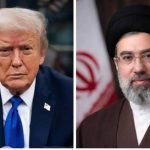
Donald Trump has said a Tuesday deadline for Iran to accept a deal remains final, sharpening a crisis that has already pushed energy markets higher, intensified diplomatic pressure and raised fresh concern over the risk of a broader Middle East conflict. Speaking on April 6 at the White House, the US president said Tehran had made what he described as a significant move towards peace, but added that it was not enough to avert possible military escalation.
Trump’s warning appeared to centre on two linked demands: a deal over Iran’s nuclear posture and the reopening of the Strait of Hormuz, the narrow waterway that carries roughly a fifth of global oil consumption. He signalled that failure to comply by Tuesday night could trigger far heavier strikes on Iranian infrastructure, language that has alarmed diplomats and humanitarian agencies because of the implications for civilian facilities and regional commerce.
Tehran has so far rejected the latest ceasefire framework, insisting that any halt in fighting must lead to a permanent settlement rather than a temporary pause. Reports from multiple outlets indicate Iran has set out conditions including stronger guarantees against renewed attacks, while resisting pressure to accept what it sees as one-sided terms. That gap between Washington’s deadline-driven approach and Tehran’s insistence on a wider settlement has left mediators struggling to narrow differences before the cut-off set by Trump.
The standoff comes against the backdrop of a conflict that has entered its fifth week and widened beyond military targets into economically sensitive infrastructure. Reuters and AP both reported that mediation efforts involving Pakistan, Egypt and Turkey have produced proposals for a 45-day ceasefire and follow-on talks, but no breakthrough has yet emerged. Trump said he still believed a deal was possible, even as his administration paired that message with threats of far more destructive action.
Defence Secretary Pete Hegseth reinforced the hard line, saying even heavier strikes could follow if diplomacy failed. Trump went further, suggesting Iran could be “taken out” if the deadline passed unmet, a formulation that underscored the administration’s attempt to use overwhelming pressure while keeping negotiations nominally alive. Such rhetoric has deepened fears that the next 24 hours could determine whether the crisis shifts back towards bargaining or lurches into a wider regional war.
Iranian officials have answered with threats of broader retaliation. Public statements reported on Monday warned that any new wave of attacks would draw a more severe response, and Tehran has shown little sign of yielding under open-ended military coercion. That posture reflects both domestic political pressures inside Iran and the strategic value of the Strait of Hormuz, which remains one of the world’s most critical energy chokepoints. Any prolonged disruption there would reverberate far beyond the Gulf, hitting importers across Asia and Europe and complicating inflation trends already troubling central banks.
Oil traders have been watching every turn of the confrontation. Reuters reported that the Hormuz route handles about 20 per cent of global oil flows, giving Iran powerful leverage even as it faces superior military force. The market impact has been immediate: higher crude prices, increased freight risk and renewed questions over the resilience of supply chains tied to Gulf production. For energy-consuming economies, the danger is not only a price spike but a sustained period of uncertainty if military threats harden into attacks on infrastructure or shipping lanes.
Humanitarian and legal concerns are also moving closer to the centre of the story. The president of the International Committee of the Red Cross, Mirjana Spoljaric, warned on April 6 that the rules of war must be respected both in words and in action, stressing that threats against critical civilian infrastructure and nuclear facilities should not become normalised. Her remarks did not single out one side alone, but they landed as Trump was publicly defending the use of coercive language tied to bridges, power plants and other core assets.
Also published on Medium.
Follow Arabian Post
Select Arabian Post as your preferred source on Google and MSN News for trusted business news and Arab politics and updates.