

U.S. President Donald Trump has started breaking all conventions about abiding by international laws b h announcing the U.S. government’s sanctions against the International Criminal Court (ICC) taking the plea that the ICC is biased against the U.S. and Israel. Donald Trump launched sanctions against the global body, which is seen as a vital last resort to prosecute powerful individuals accused of atrocities including war crimes and genocide.
Set up more than two decades ago to serve as an impartial and incorruptible body that had the heft to take on criminals – from militant warlords to heads of state – the ICC has found itself under attack from Washington at a time when it is investigating shocking violence in Gaza.
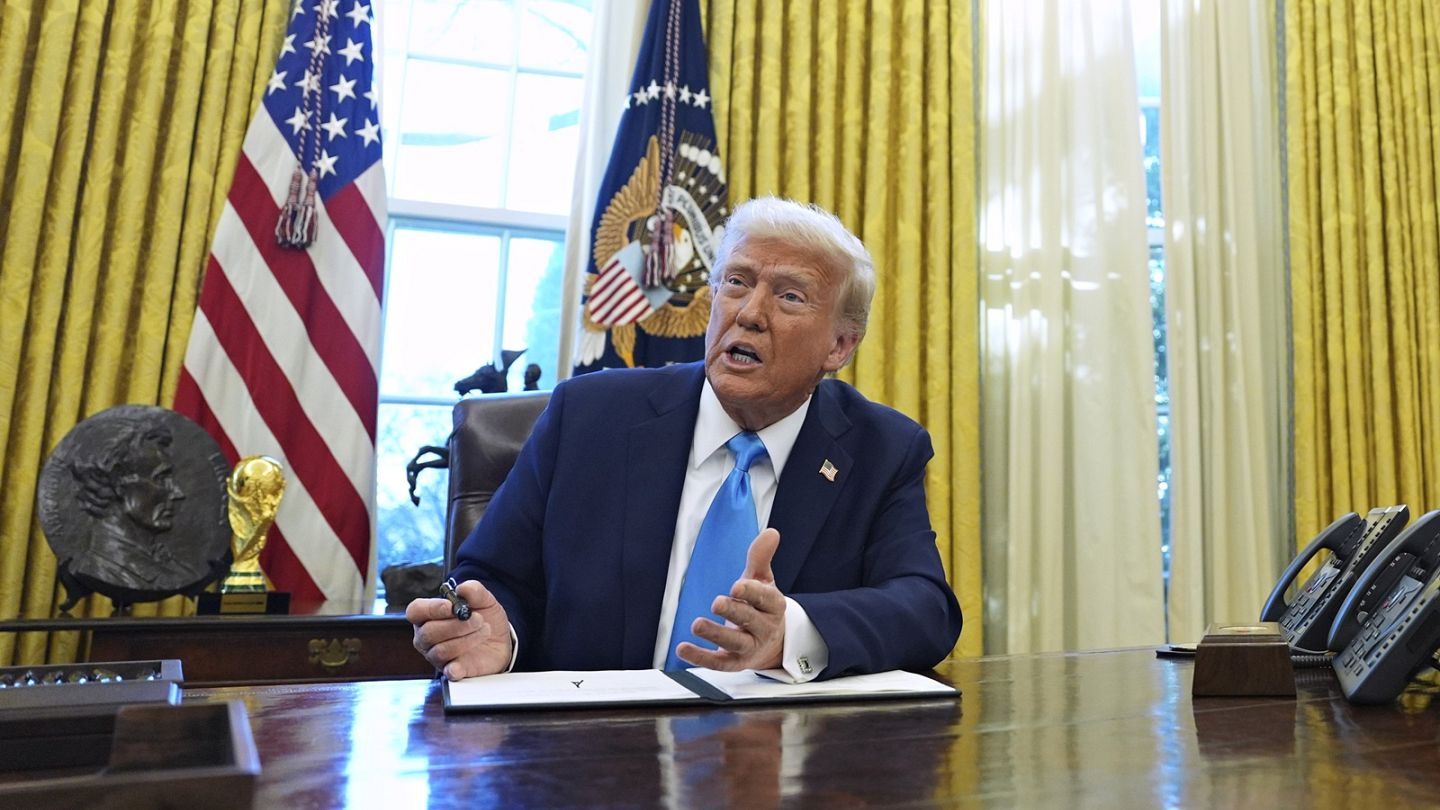
The US president signed an executive order on Thursday authorising aggressive economic sanctions against the ICC and travel bans on its staff, accusing the court of “illegitimate and baseless actions” targeting the US and its ally Israel. Trump’s order cited an ICC-issued arrest warrant for Benjamin Netanyahu for alleged war crimes relating to the Gaza war as a reason for the decision. Netanyahu visited Washington this week and praised Trump as Israel’s “greatest friend”.
The US has not yet disclosed who will be sanctioned under the order, but four sources with knowledge of the situation said the ICC’s British chief prosecutor, Karim Khan, is the first and only individual to be targeted so far. Responding to the order on Friday, the ICC called on its 125 state parties to stand against the sanctions, describing Washington’s move as an attempt to “harm its independent and impartial judicial work”.
Seventy-nine countries – including Brazil, Canada, Denmark, Mexico and Nigeria – released a joint letter that warned sanctions would “increase the risk of impunity for the most serious crimes and threaten to erode the international rule of law”.
Longtime US allies have found themselves at odds with Washington, while the head of a leading global rights group called it “vindictive”. The German chancellor, Olaf Scholz, said sanctions would “jeopardise an institution that is supposed to ensure that the dictators of this world cannot simply persecute people and start wars”. France said it would reaffirm its support for the ICC and mobilise with its partners so that the ICC could continue its mission. In London, a spokesperson for the UK prime minister, Keir Starmer, said Britain supported the independence of the court.
The European Commission president, Ursula von der Leyen, said the ICC gave “a voice to victims worldwide” and it “must be able to freely pursue the fight against global impunity”, while the main UN rights agency said Trump’s decision should be reversed.
In his order, Trump said the ICC had “abused its power” by issuing the warrants for Netanyahu and his former defence minister Yoav Gallant, which he claimed “set a dangerous precedent” that endangered US citizens and its military personnel. Netanyahu strongly applauded Trump’s move, calling it bold.
The ICC was established in 2002 to prosecute serious crimes committed by individuals when member states are unwilling or unable to do so themselves. While the US and Israel are not parties to the statute, their citizens can fall under its jurisdiction. Israel has other allies such as the UK, Germany and France who would be obliged to arrest Netanyahu if he were to travel to those countries.
The warrants for Netanyahu and Gallant were approved by a three-judge panel elected by state parties, and an arrest warrant has also been issued for the Hamas military leader Mohammed Deif, whose whereabouts is unknown. In 2021, the ICC ruled that it had jurisdiction in Palestine and could investigate crimes there, despite Israeli objections.
Amnesty International’s secretary general, Agnès Callamard, said Trump’s order “sends the message that Israel is above the law and the universal principles of international justice”. She said on Thursday: “Today’s executive order is vindictive. It is aggressive. It is a brutal step that seeks to undermine and destroy what the international community has painstakingly constructed over decades, if not centuries: global rules that are applicable to everyone and aim to deliver justice for all.”
After ICC judges issued the arrest warrants against Netanyahu and Gallant in November, the court braced itself for retaliatory moves by the incoming Trump administration. Officials at the court, fear the sanctions could pose an existential threat to the judicial body.
Emergency meetings were held on Friday among senior court officials to rapidly assess the implications of Trump’s order, which one official said had been written in such a way that it was “broad enough to be very disruptive for the court if [the US] wants it to be”.
Among the issues alarming the court is a requirement in the order that within 60 days the US Treasury submits to Trump the names of “additional persons” to be targeted with sanctions. ICC sources said this would hang over the court and create considerable uncertainty for its staff, operations and access to services it depends on to function.
Sanctions placed on Khan would severely hamper his day-to-day work at the court, former and current prosecution officials said. It is expected that Khan will have to be effectively debarred from certain cases and some of his staff. He would also be prevented from travelling to the US. In all, the sanctions have imposed some operational difficulties for the ICC which the global watchdog body has to deal with now on an emergency basis. (IPA Service)
Follow Arabian Post
Select Arabian Post as your preferred source on Google and MSN News for trusted business news and Arab politics and updates.



