Nasser told the Energy Intelligence Forum in London that the disruption represented the most serious energy supply shock of his career, warning that emergency stock releases could provide temporary relief but could not resolve a sustained mismatch between supply and demand.
Aramco’s president and chief executive said the company’s existing layers of resilience, including strategic storage abroad, spare production capacity, multiple crude grades, domestic gas storage and access to tanker capacity through Bahri, had helped it maintain deliveries. The company was now studying additional crude export routes and expanding the role overseas storage could play in covering short-term interruptions.
His warning came as Saudi Arabia restored flows through its East-West Pipeline, a crucial bypass linking oil-producing areas in the east with the Red Sea export hub of Yanbu. Energy Minister Prince Abdulaziz bin Salman said on Tuesday that operational capacity had returned to 5.8 million barrels per day after attacks forced a temporary shutdown last month. The pipeline can carry up to about seven million barrels a day.
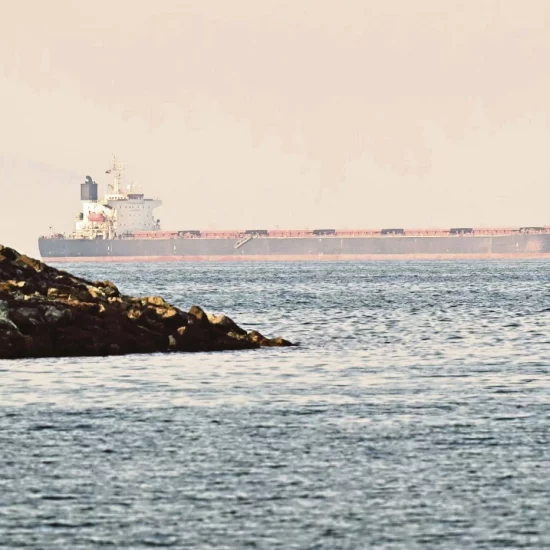
The route has assumed greater importance because it allows Saudi crude to avoid Hormuz, where shipping has remained exposed to attacks and severe disruption during the conflict involving the United States, Israel and Iran. Before this year’s upheaval, roughly a fifth of global petroleum liquids consumption passed through the strait, according to US Energy Information Administration data.
Nasser said the world entered the crisis with almost 10 billion barrels of oil stocks and had since lost nearly three billion barrels of gross oil supply, roughly half the crude and refined products that would normally have moved through Hormuz over the same period.
More than one billion barrels had been drawn from stocks to cushion the shortfall, he said, with most coming from onshore commercial inventories. He estimated that fewer than six billion barrels of commercial stocks remained and that most were not practically available to the market.
“The system is already straining,” Nasser said, describing the supply resilience cushion as “scarily thin”. Even after Hormuz fully reopens and confidence returns, rebuilding depleted inventories while continuing to meet consumption could take as long as two years, he said.
The strain is no longer confined to crude. Nasser said refined fuel prices had risen more sharply, underscoring the importance of whether energy can reach customers in the required form and location rather than simply whether sufficient resources exist globally.
Other industry executives at the London forum also pointed to transport constraints. Vitol chief executive Russell Hardy said about 12 million barrels a day of crude and two million barrels a day of refined products had been leaving the Middle East over the preceding seven to 10 days. Higher tanker costs and logistical bottlenecks nevertheless remained a major concern.
The US Energy Information Administration on Tuesday raised its fourth-quarter Brent crude forecast to an average $105 a barrel, citing lower global inventories and continuing Middle East supply disruptions. It said September Brent spot prices averaged $114 a barrel after attacks on regional oil infrastructure and tankers intensified pressure on supply.
Aramco’s search for additional routes would build on a system already designed to limit dependence on a single maritime chokepoint. Nasser said multiple export routes capable of being adjusted in real time reduced the danger that one blocked passage could paralyse supplies.
He also argued that strategic storage outside the kingdom had proved valuable during the crisis because barrels positioned nearer customers could bridge temporary transport interruptions. The company did not identify prospective new routes, storage locations, volumes or a timetable for any expansion.
Follow Arabian Post
Select Arabian Post as your preferred source on Google and MSN News for trusted business news and Arab politics and updates.