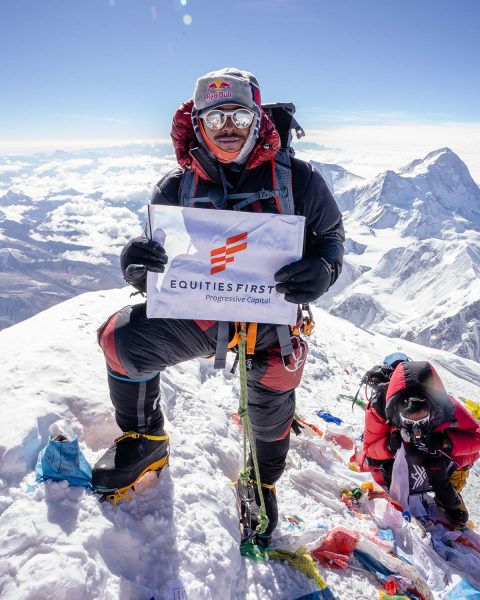
Elite Exped, which Purja co-founded, said the Nepal-born climber, widely known as Nimsdai, lost his life after the avalanche swept through the group on Thursday. The company also confirmed that other members of the international expedition had not survived.
Purja was leading a team towards the summit of the 8,047-metre Broad Peak when the avalanche struck between Camp Two and Camp Three. Tracking data indicated a sudden and severe loss of altitude at about 6,579 metres on the mountain’s west ridge, the route most commonly used by climbers.
The disaster is believed to have killed the entire expedition, although early accounts differed over whether the group comprised 10 or 11 people. The climbers included citizens of Nepal, Pakistan, Oman, the United States and China, along with another foreign national whose identity had not been publicly established.
Rescue teams supported by military helicopters, drones and experienced high-altitude climbers searched the mountain as deteriorating weather and difficult terrain limited access to the avalanche site. Several bodies were located and some were transported to Skardu, the main city in the Gilgit-Baltistan region.
Those confirmed among the dead included Pur Bahadur Gurung, also known as Yukta, and Nima Sherpa, both experienced Nepali climbers. Omani mountaineer Nadhira Alharthy and American climber Mallory Geis were also identified among the victims.
Alharthy was the first woman from Oman to reach the summit of Mount Everest. Geis was attempting her first 8,000-metre mountain in Pakistan. Pakistani climber Sohail Sakhi, a guide, geographer and high-altitude photographer, was also part of the expedition and had reportedly planned to make it his final major climb.
Communication with the team was lost after the avalanche. Initial signals from Purja’s satellite tracker briefly raised hopes that he might have survived because the device appeared to move after the first sharp descent. Search teams were sent towards the indicated location, but Elite Exped later confirmed his death.
The company described the loss as a moment of profound sadness and asked that the privacy of the climbers’ families and friends be respected. Tributes spread through the mountaineering community as climbers, adventurers and expedition organisers remembered Purja’s achievements and high-altitude rescue work.
Purja gained worldwide recognition in 2019 after climbing all 14 mountains above 8,000 metres in six months and six days. His Project Possible campaign dramatically reduced the previous completion time, which had stood at nearly eight years, and demonstrated the logistical and technical capabilities of Nepali climbing teams.
The record was later surpassed, but Purja’s achievement transformed his public profile and became the subject of the Netflix documentary “14 Peaks: Nothing Is Impossible”. He used the project to argue that Nepali climbers had long been denied recognition despite playing central roles in Himalayan expeditions.
Purja later joined an all-Nepali team that completed the first winter ascent of K2 in January 2021. The 8,611-metre peak, the second-highest mountain in the world, had remained the only 8,000-metre summit never climbed during winter.
A former Gurkha and member of Britain’s Special Boat Service, Purja served in the military for 16 years, including a decade with UK Special Forces. He was appointed a Member of the Order of the British Empire in 2018 for services to high-altitude mountaineering.
His career also included several widely praised rescue operations. During his 2019 campaign, he helped lead attempts to save climbers in distress on Annapurna and later assisted two people stranded above 8,000 metres on Kanchenjunga, giving them oxygen while abandoning part of his own expedition schedule.
Broad Peak, the world’s 12th-highest mountain, rises in the Karakoram range close to the Pakistan-China border. Although considered less technically demanding than neighbouring K2 on parts of its standard route, it exposes climbers to avalanches, unstable snow, falling ice, extreme altitude and rapidly shifting weather.
Follow Arabian Post
Select Arabian Post as your preferred source on Google and MSN News for trusted business news and Arab politics and updates.