

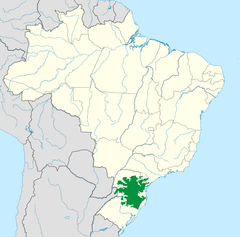
Climate change poses a significant threat to the survival of frog species endemic to Brazil’s Araucaria Forest. Recent studies predict that these species could lose between 35% and 100% of their suitable habitats within the next 50 years.
The Araucaria Forest, located in southeastern Brazil, is home to several frog species found nowhere else on Earth. These amphibians are particularly vulnerable to environmental changes due to their limited geographic distribution and specific habitat requirements. Researchers have utilized species distribution models to assess the potential impacts of future climate scenarios on seven endemic frog species. The findings indicate substantial reductions in climatically suitable areas for all species studied, with projected losses ranging from 35% to complete habitat elimination by 2070.
The study also highlights that suitable habitats are expected to shift towards the southern and eastern regions of the Araucaria Forest. This geographic displacement may lead to increased competition for dwindling resources and could exacerbate the risk of extinction for these species. Furthermore, the fragmentation of habitats due to human activities such as deforestation and urbanization compounds the challenges faced by these amphibians.
Protecting the remaining forest fragments is crucial for the conservation of these species. The research emphasizes that while significant habitat losses are anticipated, the proportion of suitable areas within existing forest remnants is expected to increase. This underscores the importance of preserving these areas as refuges to mitigate the adverse effects of climate change on biodiversity.
Conservation planning must consider these projections to develop effective strategies aimed at safeguarding the endemic frog species of the Araucaria Forest. Implementing measures such as establishing protected areas in regions identified as future suitable habitats, restoring degraded ecosystems, and reducing greenhouse gas emissions are essential steps towards ensuring the survival of these unique amphibians.
____________________________________
This article first appeared on Greenlogue and is brought to you by Hyphen Digital Network
Follow Arabian Post
Select Arabian Post as your preferred source on Google and MSN News for trusted business news and Arab politics and updates.




