

Arabian Post Staff -Dubai
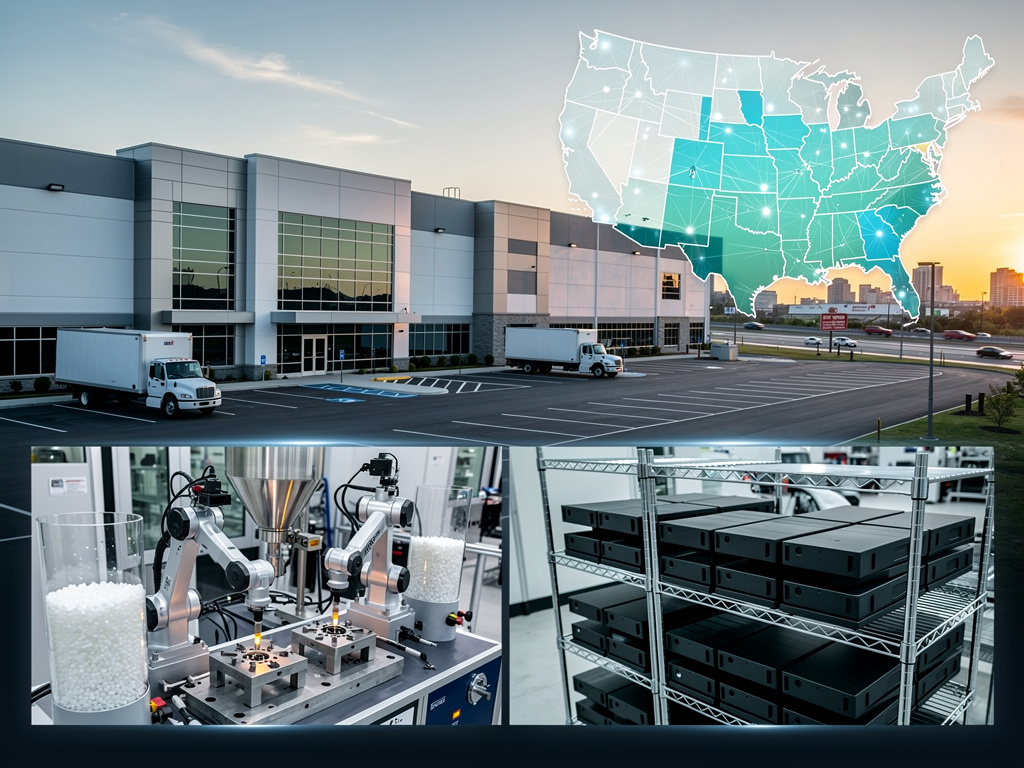
Foxconn will invest $173 million to build a consumer electronics manufacturing facility in Louisville, Kentucky, creating 180 jobs and marking another step in the contract manufacturer’s effort to expand its United States footprint as companies seek to rebalance global supply chains.
The facility, scheduled to begin operations in the third quarter of 2026, will focus on injection moulding, tooling and the production of key components used in consumer electronics. Company executives said the plant would support domestic manufacturing demand and align with a broader push by technology firms and policymakers to strengthen industrial capacity within the US.
State and local officials confirmed that the project has received approvals tied to job creation and capital investment benchmarks. Kentucky’s economic development authorities described the investment as part of a strategy to attract advanced manufacturing and reduce exposure to overseas supply disruptions that became evident during the pandemic and amid geopolitical frictions affecting global trade.
Foxconn, formally known as Hon Hai Precision Industry, is the world’s largest electronics contract manufacturer and a critical supplier to several major technology brands. While the company is best known for its vast manufacturing operations in China, it has been diversifying production across regions including Southeast Asia, Latin America and North America. The Kentucky plant adds to that network but on a scale that contrasts with earlier, more ambitious US plans.
The new facility is expected to employ engineers, technicians and production workers, with roles centred on high-precision manufacturing rather than large-scale assembly. Injection moulding and tooling are considered foundational processes in electronics production, supplying parts used across a range of devices. Industry analysts note that locating these processes closer to end markets can shorten lead times and reduce logistics costs, even if final assembly remains globally distributed.
Foxconn executives have framed the project as a “Made in America” initiative designed to support customers seeking domestic sourcing options. Several technology companies have been under pressure from governments and consumers to demonstrate resilience and transparency in their supply chains, particularly for components linked to critical infrastructure or sensitive technologies.
The Kentucky investment comes against the backdrop of Foxconn’s mixed history in the US. The company’s high-profile Wisconsin project announced in 2017 promised tens of thousands of jobs and billions in investment but was later scaled back significantly, leading to criticism from local communities and policymakers. That experience has made state governments more cautious, with incentives increasingly tied to verifiable outcomes rather than headline commitments.
In Kentucky, officials emphasised that the Foxconn deal is structured around realistic employment numbers and phased investment. The projected 180 jobs are modest by the standards of traditional manufacturing plants, but they reflect the capital-intensive and automated nature of modern electronics production. Wages are expected to be above the regional manufacturing average, according to preliminary workforce plans shared with state authorities.
For Foxconn, the move aligns with a broader recalibration of its global strategy. Rising labour costs in China, trade restrictions affecting technology exports, and growing scrutiny of cross-border dependencies have pushed manufacturers to adopt a “China plus one” or even “plus many” approach. The US has also introduced incentives aimed at encouraging domestic manufacturing, particularly in semiconductors and advanced electronics, although Foxconn’s Kentucky plant does not fall directly under federal chip subsidy programmes.
Supply chain experts say the investment reflects a pragmatic approach rather than a wholesale shift. Building a specialised plant focused on components allows Foxconn to serve US customers without replicating the scale of its Asian campuses. It also limits financial exposure while testing the economics of domestic production in a high-cost environment.
Local economic impact assessments suggest the project will have secondary benefits for suppliers, logistics firms and technical training providers in the Louisville area. Community colleges and workforce agencies have begun discussions with the company on skills development, particularly in precision tooling and materials processing.
Follow Arabian Post
Select Arabian Post as your preferred source on Google and MSN News for trusted business news and Arab politics and updates.




