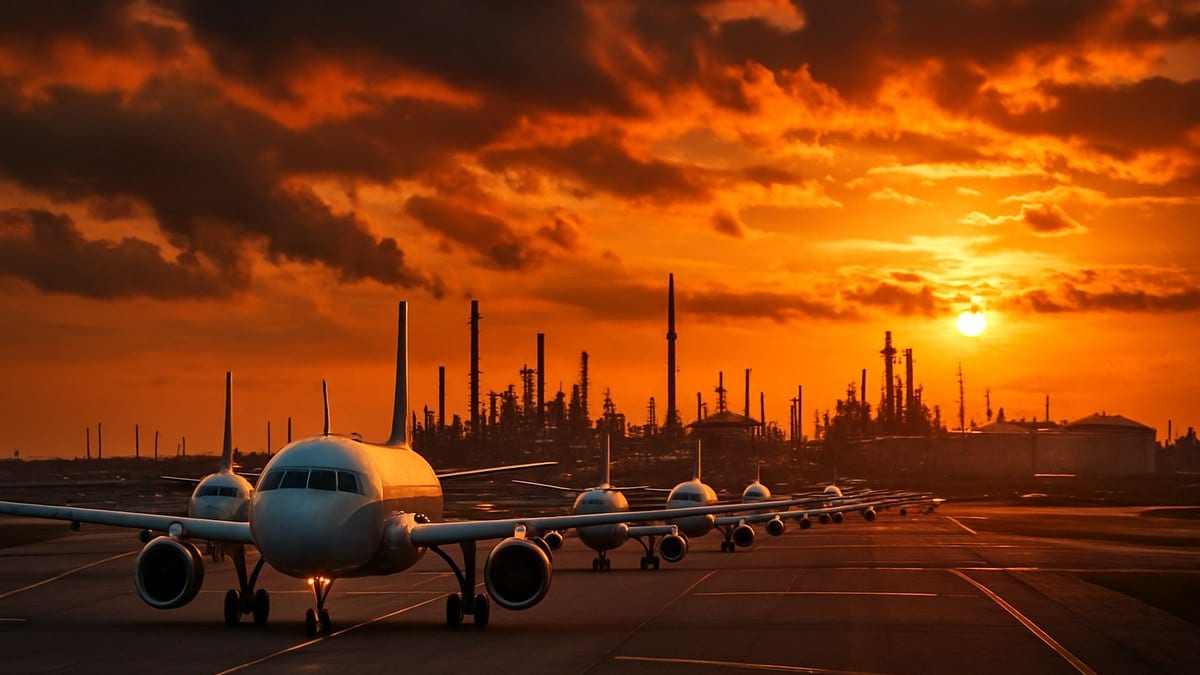
Germany’s airport operators have warned that a worsening aviation fuel squeeze could force airlines to cut services, push fares higher and leave millions of passengers facing disruption during the summer travel period.
Ralph Beisel, chief executive of the German Airports Association, said the pressure on kerosene supplies and prices had become a significant risk for the country’s aviation network. The association has cautioned that smaller airports, thinner routes and price-sensitive leisure services could be hit first if airlines are forced to reduce schedules to protect margins and conserve fuel.
The warning comes as Europe’s aviation sector faces a fresh cost shock from higher jet fuel prices, supply uncertainty and geopolitical disruption affecting energy flows. Germany, with major hubs at Frankfurt, Munich, Berlin and Düsseldorf, remains one of Europe’s most important aviation markets, but its recovery from the pandemic has lagged behind several neighbouring countries. Airport executives say any additional fuel-related squeeze could slow that recovery further and weaken regional connectivity.
The German Airports Association has indicated that, in a severe scenario, capacity at some airports could fall by as much as 10 per cent. Such a reduction would not mean millions of flights being cancelled, but it could affect millions of passengers through fewer departures, suspended routes and reduced frequencies. The impact would be most visible on routes where demand is weaker, margins are thin or fuel accounts for an unusually high share of operating costs.
Airlines are especially exposed because aviation fuel is one of their largest expenses, often ranking second only to labour. When prices rise sharply, carriers typically respond through fare increases, fuel surcharges, schedule trimming or a shift towards more profitable routes. Budget airlines, which depend on high aircraft utilisation and tight cost control, may find it harder to absorb prolonged volatility without cutting capacity.
Germany’s air travel market is already facing structural pressures. Aviation taxes, airport charges, security costs and labour expenses have made the country a more expensive operating base than several European rivals. Industry groups have repeatedly warned that carriers are deploying aircraft to markets where costs are lower and demand growth is stronger. That has left some German regional airports struggling to restore pre-pandemic route networks.
Fuel concerns add another layer of uncertainty. Europe normally relies on a mix of domestically refined jet fuel and imports, with global supply chains influenced by crude oil prices, refinery output, shipping conditions and political instability in key energy corridors. Disruption in the Middle East has sharpened worries over availability and price spikes, particularly because aviation fuel must meet strict specifications and cannot be substituted easily at short notice.
European regulators have moved to reassure airlines that operational flexibility exists, including the carefully managed use of alternative jet fuel specifications where appropriate. However, any adjustment requires coordination across airports, fuel suppliers, airlines and aircraft operators. Safety, storage, certification and communication across the supply chain remain essential, particularly at airports accustomed to standard Jet A-1 fuel.
For passengers, the most immediate consequence would be higher ticket prices on routes where airlines pass on fuel costs. Leisure travellers booking late, families flying during school holidays and passengers using regional airports could face the sharpest increases. Reduced capacity would also limit seat availability, making fares more sensitive to demand peaks.
Frankfurt and Munich, Germany’s two dominant international hubs, are better placed than smaller airports because they serve high-volume business, long-haul and connecting traffic. Yet even large hubs are not immune if airlines reduce marginal services or retime operations to manage fuel use and aircraft availability. Smaller airports could face sharper cuts because they depend more heavily on low-cost and seasonal routes.
Lufthansa, the country’s largest airline group, has already been managing higher operating costs while seeking to strengthen profitability across its network. Any sustained increase in fuel prices would complicate its planning for the summer and winter seasons, especially on long-haul routes where fuel burn is substantial. Other carriers serving Germany would face similar calculations as they decide where aircraft can generate the strongest returns.
The warning also carries economic implications beyond aviation. Airports support tourism, trade, logistics, conferences and regional employment. A weaker flight schedule can reduce visitor flows, limit business travel and make some regions less attractive for investment. German airport operators argue that the country’s competitiveness depends on reliable international air links, particularly as other European hubs compete aggressively for airlines and passengers.
Follow Arabian Post
Select Arabian Post as your preferred source on Google and MSN News for trusted business news and Arab politics and updates.