

Arabian Post Staff -Dubai
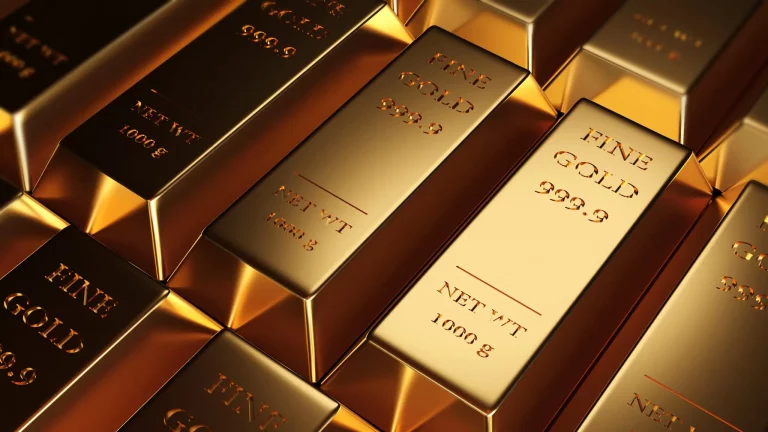
Gold surged beyond the $5,000-an-ounce mark on Monday, setting a fresh record as investors moved decisively into the traditional safe haven amid heightened geopolitical tensions and expectations that monetary policy in major economies will stay supportive. The rally gathered pace in early Asian trading, with spot prices climbing 1.79% to $5,071.96 an ounce by 0159 GMT after touching an intraday peak of $5,085.50. Futures in New York followed the move, with February delivery contracts rising the same margin to $5,068.70.
The jump underscores how forcefully bullion has reasserted its role as a hedge against uncertainty. Market participants pointed to a confluence of factors driving the advance, ranging from persistent geopolitical flashpoints and uneven global growth to shifting expectations around interest rates in the United States. Gold’s lack of yield has historically been a disadvantage during periods of high rates, but that dynamic has changed as investors increasingly anticipate easier monetary conditions over the year.
Prices have already gained more than 17% since the start of the year, extending a rally that saw the metal soar 64% through 2025. That performance has outpaced most major asset classes and reflects sustained demand from a broad set of buyers, including central banks, institutional investors and retail participants seeking portfolio protection. Analysts note that gold has benefited not only from fear-driven inflows but also from structural changes in reserve management and investment strategies.
Central bank buying has been a cornerstone of the upswing. Official sector purchases have remained robust, with particular attention on activity from China, where the People’s Bank of China has continued to add bullion to its reserves. December marked the fourteenth consecutive month of net purchases by the Chinese central bank, reinforcing a broader trend among emerging-market authorities to diversify away from traditional reserve currencies. Similar accumulation has been reported across parts of Asia and the Middle East, lending a steady underpinning to prices even during brief pullbacks.
Investment flows have also played a decisive role. Exchange-traded funds backed by physical gold have recorded strong inflows, reversing the pattern seen during earlier periods of rising yields when holdings were steadily drawn down. Fund managers say the renewed interest reflects a reassessment of risk as well as a tactical response to currency volatility. A softer US dollar has amplified the appeal of bullion for non-dollar investors, making the metal cheaper in local-currency terms and reinforcing demand.
Monetary policy expectations remain central to the outlook. Traders increasingly believe that the era of aggressive tightening by the US central bank is over, with attention turning to the timing and scale of possible rate cuts. Lower borrowing costs reduce the opportunity cost of holding gold, a dynamic that has historically supported higher prices. At the same time, persistent inflation concerns in several economies have kept alive the argument for holding assets that can preserve purchasing power over the long term.
Geopolitical developments have added urgency to these considerations. Conflicts in key regions, uncertainty over trade relationships and concerns about the resilience of global supply chains have all contributed to a more defensive posture among investors. In such an environment, gold’s perceived neutrality and liquidity have made it a preferred store of value, particularly during episodes of market stress when correlations between other assets rise.
The surge above $5,000 has prompted debate over how far the rally can extend. Some analysts caution that such rapid gains could invite bouts of profit-taking, especially if economic data surprise on the upside or if policymakers signal a slower path to easing. Others argue that the underlying drivers remain firmly in place, suggesting that any corrections may be shallow and short-lived. Physical demand from jewellery markets has shown signs of strain at elevated prices, but this has so far been outweighed by investment and official-sector buying.
Also published on Medium.
Follow Arabian Post
Select Arabian Post as your preferred source on Google and MSN News for trusted business news and Arab politics and updates.



