

Arabian Post Staff -Dubai
Fresh instability swept across the Middle East on Saturday after Iran reimposed restrictions on vessel traffic through the Strait of Hormuz and Israeli forces struck targets in Lebanon, denting market optimism that a broader easing of tensions was close at hand.
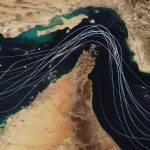
The renewed disruption came less than a day after signs of limited progress had lifted hopes for safer shipping through the narrow waterway and for diplomatic movement tied to a US-backed push for a wider settlement. Instead, shipowners reported that vessels in the area received broadcasts saying the strait was closed to maritime traffic, while at least one supertanker was said to have encountered gunfire, adding to confusion over whether any commercial passage could proceed safely.
Hormuz is one of the world’s most critical energy chokepoints, carrying a large share of globally traded crude and liquefied natural gas. Any interruption there reverberates far beyond the Gulf, affecting freight rates, insurance costs, refinery planning and energy prices from Asia to Europe. Traders had taken heart when convoyed tankers began moving again, but Saturday’s reversal underscored how fragile those expectations were.
Iranian state-linked messaging indicated that control of the waterway had returned to strict military management. That stance appeared to be tied to Tehran’s continuing dispute with Washington over restrictions on Iranian shipping, even as diplomatic contacts remained alive. President Donald Trump had pointed to what he described as constructive conversations and had signalled that a peace arrangement might be within reach, but the events of Saturday showed the gap between political messaging and conditions on the ground.
At sea, the practical effect was immediate. Some tankers that had looked set to transit changed course, while others remained cautious near the approaches to the strait. Shipping companies and charterers, already operating under heightened wartime risk, faced the prospect of another sharp rise in premiums and further delays. Industry data in the wider crisis has shown traffic through Hormuz running far below normal levels, with disruptions spreading from crude to refined fuels and gas cargoes.
The anxiety was compounded by developments on Israel’s northern front. Israeli attacks in Lebanon cast fresh doubt over a 10-day ceasefire framework announced earlier in the week to create space for talks toward a more durable arrangement. The ceasefire had been presented by Washington as a step that could help stabilise the region and support broader contacts involving Iran, Lebanon and Israel. But the continuation of military action made clear that the political track remains vulnerable to sudden reversals.
For energy markets, the combined effect of maritime uncertainty and renewed violence in Lebanon was to reinforce the view that no single announcement can yet restore confidence. Oil prices had fallen sharply on Friday after Iran said shipping could resume through Hormuz, reflecting hopes that supply risks might ease. Saturday’s developments challenged that assumption, reminding traders that the strategic waterway can reopen partially one day and fall back under threat the next.
Governments in Europe and the Gulf have been urging a fuller restoration of freedom of navigation. Britain’s foreign secretary, Yvette Cooper, said normal shipping operations had still not returned and warned that continued restrictions were damaging the world economy. Gulf producers, especially those dependent on Hormuz for exports, have strong reason to press for predictability, though some states such as Saudi Arabia and the UAE retain limited alternative routes that soften the blow.
Lebanon, meanwhile, remains caught between diplomacy and battlefield realities. The ceasefire formula never promised a complete strategic breakthrough; rather, it was designed as a short breathing space to enable negotiations. Israel’s insistence on maintaining operational freedom in parts of southern Lebanon and the unresolved role of Hezbollah meant the arrangement carried serious limitations from the outset. Saturday’s strikes highlighted how quickly those limitations can become exposed.
For Washington, the setback is awkward. Trump had presented the diplomatic effort as evidence that direct pressure and negotiation could begin unwinding a conflict that has stretched from Iran to Lebanon and placed global energy supplies under severe strain. Yet Tehran has made clear that it does not see maritime access, sanctions pressure and ceasefire terms as separate matters. As long as those files remain intertwined, each military incident risks feeding the next.
What emerges is a region still operating on a knife edge. The brief passage of tankers through Hormuz showed that a partial easing is possible under tight management, but the return of restrictions and reports of hostile fire demonstrated how quickly that window can shut. In Lebanon, the prospect of talks remains alive on paper, though events on the ground continue to undermine confidence that a lasting deal is close.
Also published on Medium.
Follow Arabian Post
Select Arabian Post as your preferred source on Google and MSN News for trusted business news and Arab politics and updates.




