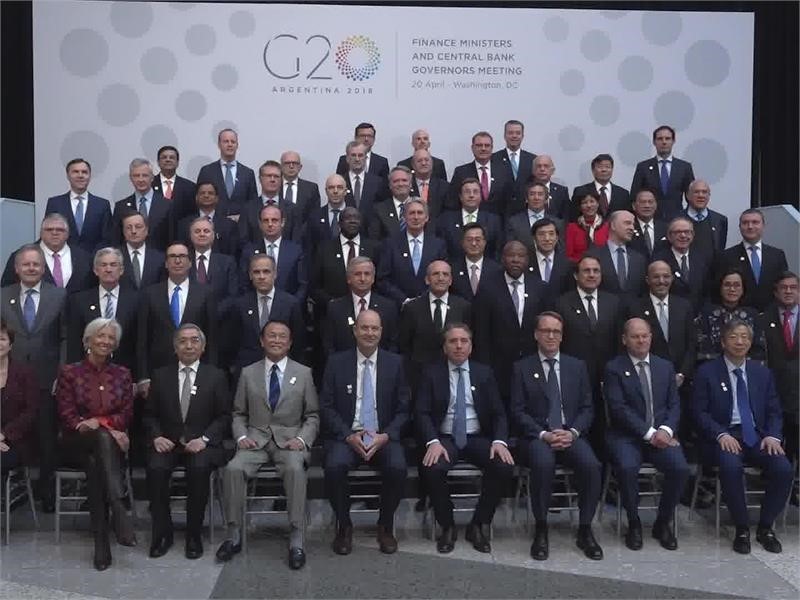
During the G20 Leaders’ Summit in Johannesburg, the Managing Director of the International Monetary Fund, Kristalina Georgieva, stated that the Fund expects the Group of Twenty major economies to place sustained emphasis on global debt vulnerabilities, particularly in developing nations. She warned that global public debt is projected to exceed 100 % of world GDP by 2029 without decisive action, and added that the IMF intends to continue pressing the G20 on this issue.
Georgieva highlighted that growth remains sluggish, debt levels are elevated and risks of a downturn “are there”. She cited data showing that emerging-market debt surged to more than US$109 trillion in the second quarter of 2025, underscoring the urgency of the challenge. Under her leadership, the IMF is intensifying collaboration with the World Bank to assist countries that face liquidity pressures even if their debt appears sustainable.
South Africa, which holds the G20 presidency this year, has elevated debt sustainability as a central pillar of its agenda. The country’s Reserve Bank governor, Lesetja Kganyago, noted that the debt burden is no longer confined to emerging markets but is “a problem in the developed economies as well”. He added that the Financial Stability Board, which reports to the G20, has elevated debt as a top-tier risk to financial stability.
Within this context, Georgieva called on nations to foster growth and job creation, and to improve access to technology as part of the debt-reduction strategy. She said: “You will see us continue to engage with the G20 … Please, this is a priority.” Her remarks indicate that the IMF is seeking to keep debt issues on the G20 agenda as the presidency shifts to the United States at the end of the year.
The Fund’s push is backed by recent policy work that shows increasing debt burdens combined with tightening global financial conditions have made refinancing more difficult for middle-income and low-income countries alike. In April 2025, Georgieva had already asserted that the IMF must take a more active role in sovereign-debt restructuring, pointing to a new “playbook” approved by the Global Sovereign Debt Roundtable to guide borrowing countries through complex debt processes.
Despite these efforts, critics note that progress on debt relief has been slow and uneven. Civil-society groups in Africa have urged deeper reforms to global restructuring mechanisms and criticised the G20 for insufficient action during South Africa’s presidency. The incoming US presidency has yet to provide clear commitment to this agenda which Georgieva described as crucial.
Analysts say the timing is significant. With global public debt set to surpass post-Second World War levels, and with growth prospects constrained by structural headwinds, the window for stabilising borrowing nations is narrowing. Georgieva’s emphasis signals a shift from treating debt as a peripheral concern to acknowledging it as a source of systemic risk affecting both developing and developed economies.
Follow Arabian Post
Select Arabian Post as your preferred source on Google and MSN News for trusted business news and Arab politics and updates.