

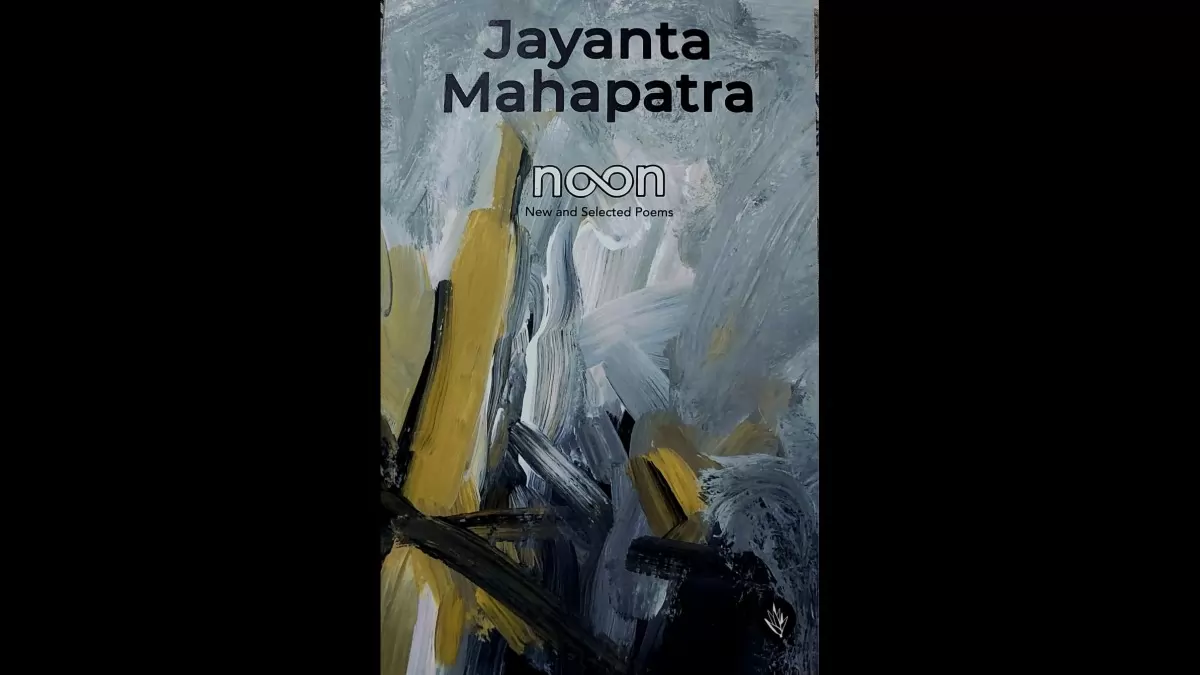
Time was when Cuttack was a city in Odisha whose resident’s footprints in the Indian literary scene were nothing home to write about. One of its residents, Jayanta Mahapatra, an Indian poet writing in English changed the notion and more.
To say that Mahapatra’s passing at the age of 95 in Cuttack on August 27 left the Indi literary scene poorer would be a cliche. Long before he was awarded Sahitya Akademi Award and was conferred a fellowship of the Akademi, he had emerged as a leading writer in English language.
It was a venue where only a handful of Indian poets had ventured at that time. Sarojini Naidu, A K Ramanujan, Nissim Ezekiel and Kamala Suriaaya are among those who have achieved this honourable distinction.
It was a cultural leap in a newly independent country from the shackles of a race who spoke in English, exploiting Indian land and labour to serve the ends of capital of an alien race. To continue to write in English about the heart and soul of India could have been construed as something unpatriotic.
That would have been harmful for the person and poetry of Mahapatra. But it was a different time and dispensation when ideas and ideologies freely flourished. The ’60s heralded a churn. Far away from Cuttack where Mahapatra lived and wrote, the scene of action of English writing in India had shifted to Bombay.
The boom town had not changed its name and soul. The likes of Nissim Ezekiel, Arvind Krishna Merhotra, R Parthadarsthi, Dom Moraes and Adil Jussawala were helming Bombay Poets and experimenting with literature in English.
A language of cosmopolitanism was evolving. If many Bombays came out of the penmanship of these helmsmen, Mahapatra, a worthy peer had something else to offer. His lines encapsulated loss and longing of individuals, impoverishment and despair of plagued people living in the heat and dust of the small towns of India.Mahapatra had captured the play of light and shade that in turn lit up and darkened the large landscape of Indian provincial life.
Critical and affectionate, Mahapatra’s gaze swept the entire Indian national scenes. It’s frailities and flowers came out in his lines warts and all. Old windows and dying men found place of honour in his poetry. So did obstinate prayers and a desire for freedom.
If Mahapatra did not care to carry his ideology in his sleeves, it was a quality which had not gone to sleep. His poetry was imbued with a ruminative political consciousness. It manifested itself in 2015 when Mahapatra returned his Padmasree Award. His act was in protest against the rising intolerance in his country.
Tolerance and humanism lay at the deep core of Mahapatra’s consciousness. He gave vent to his conscious writing poetry in English in which the patriot with the pen manifested himself. (IPA Service)
The post Jayanta Mahapatra Has Left A Lasting Legacy Of His Poems On Pain And Longing first appeared on Latest India news, analysis and reports on IPA Newspack.
Follow Arabian Post
Select Arabian Post as your preferred source on Google and MSN News for trusted business news and Arab politics and updates.



