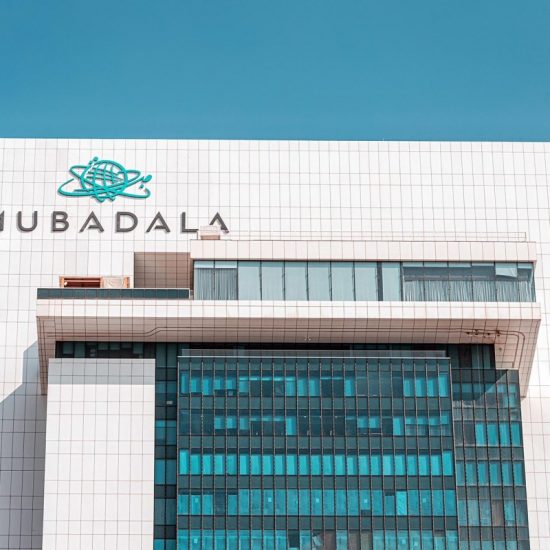
Arabian Post Staff -Dubai
The investment is tied to Caturus, the US energy platform developing the project in Cameron Parish, where construction can now proceed after a final investment decision. The plant is designed to produce 9.5 million tonnes of liquefied natural gas a year and is expected to begin operations in 2030.
Mubadala Energy, a wholly owned subsidiary of Mubadala Investment Company, already holds a 24.1 per cent stake in the Caturus platform, which combines upstream gas production with LNG export infrastructure. The company is also participating as an equity investor in the project financing, alongside Kimmeridge, CPP Investments, EOC Partners, funds managed by BlackRock and an Ares infrastructure fund.
Total commitments linked to the transaction have reached $21.25 billion across debt and equity, underscoring investor appetite for LNG assets with long-term contracted revenue. The overall project cost is estimated at about $12.5 billion, including financing fees, while engineering, procurement and construction spending is estimated at about $8.4 billion.
Commonwealth LNG is being positioned as an integrated “wellhead-to-water” business, a model that gives Caturus exposure to both natural gas production and liquefaction. That structure differs from many LNG terminals that operate mainly as tolling facilities, buying gas from producers and charging fees for processing and export.
The Louisiana facility has secured long-term offtake agreements with a group of large energy and commodity counterparties, including EQT LNG Trading, Glencore, Mercuria, PETRONAS and Aramco Trading. Those contracts are expected to support stable cash flows once the plant starts exports, with projected annual export revenue of more than $3 billion.
CPP Investments is contributing $1.2 billion to raise its total stake in Caturus to 31 per cent, including earlier investments. Kimmeridge, which built Caturus as an integrated gas platform, remains a central sponsor of the development. The financing also reflects broader institutional interest in LNG infrastructure at a time when power demand, industrial consumption and energy security concerns are reshaping global gas flows.
The project’s location on the US Gulf Coast gives it access to deep gas markets, shipping infrastructure and a growing cluster of LNG export terminals. Cameron Parish has become one of the key areas for US liquefaction development because of its proximity to pipeline networks, marine channels and established energy services capacity.
Commonwealth LNG’s design includes six liquefaction trains and equipment supplied by major industrial contractors. Technip Energies is the engineering, procurement and construction partner, while key equipment includes Baker Hughes mixed-refrigerant compressors powered by LM9000 gas turbines, Honeywell cryogenic heat exchangers and Solar Turbines Titan 350 gas turbine-generators. The facility will be able to load LNG carriers of up to 216,000 cubic metres.
Regulatory clearance has been a major factor in the project’s timeline. The development received final non-free trade agreement export authorisation from the US Department of Energy, clearing a key hurdle for sales to countries without free trade agreements with Washington. The project had earlier gone through federal environmental review and permitting processes required for LNG export infrastructure.
For Mubadala Energy, the transaction strengthens a gas-weighted international portfolio that already spans several markets. The company has been expanding beyond conventional upstream stakes into assets that offer exposure across the gas value chain, including exploration, production, processing and export-linked infrastructure.
The investment also aligns with Abu Dhabi’s wider strategy of balancing hydrocarbons, energy security and transition-linked opportunities. LNG continues to be viewed by many energy buyers as a flexible fuel for power generation and industrial use, particularly in markets seeking to reduce reliance on coal while maintaining grid reliability.
Demand expectations remain strong across Asia and Europe, although LNG developers face pressure from climate policy, construction inflation and competition from other suppliers. Buyers are increasingly seeking contracts that combine reliability, price visibility and flexible destination terms, while developers need long-term offtake to secure debt financing.
Also published on Medium.
Follow Arabian Post
Select Arabian Post as your preferred source on Google and MSN News for trusted business news and Arab politics and updates.