News related to
Abu Dhabi

Abu Dhabi — The Federal Authority for Identity, Citizenship, Customs and Port Security has introduced sweeping changes to the UAE’s visa regime, adding four new visit-visa categories tailored to specialists in artificial intelligence, entertainment, events, and cruise or leisure-boat tourism, while also rolling out humanitarian and widow/divorcee residence permits.

Under the new framework, the AI Specialist Visit Visa allows single or multiple entries, provided applicants submit a sponsorship letter from a recognised technology or AI institution. The Entertainment Visit Visa is intended for individuals engaging in licensed entertainment or gaming activities, while the Event Visit Visa covers attendance at festivals, exhibitions, conferences, sports, or cultural events, sponsored by public or private hosts. The Cruise & Leisure-Boat Visit Visa offers multiple-entry permits for travellers arriving via marine routes, on condition of submitting a detailed itinerary and engaging a licensed host in the tourism industry.

Alongside these targeted visit visas, the ICP now issues a Humanitarian Residence Permit, valid for one year, with possible extension under certain conditions. This permit is designed to assist individuals from countries experiencing conflict, natural disasters, or severe unrest. Notably, it can be granted without a guarantor or host, though it may be cancelled or voided if the holder departs the UAE. In exceptional cases involving relatives or in-laws, the authority may waive requirements like financial solvency or degree of kinship.

The revisions also extend protections to foreign widows and divorcees. A one-year renewable residence permit is available to foreign women whose UAE-based husband died or divorced, provided applications are submitted within six months. If the husband was a non-UAE national, eligibility depends on whether the woman held residency at the time, whether she has custody of children, and whether she was previously sponsored. Provisions for adequate housing and financial stability apply, and custody disputes will be adjudicated by a designated committee.

Revised rules for sponsoring friends or relatives now incorporate income thresholds: sponsors must earn at least AED 4,000 per month to sponsor first-degree relatives, AED 8,000 for second- or third-degree relatives, and AED 15,000 to sponsor friends. The updated system also introduces a structured schedule defining visit-visa durations and extension rules.

Other key visa reforms include tightening the Business Exploration Visa criteria and easing Truck Driver Visas—allowing single or multiple entries provided drivers are sponsored by licensed freight or transport companies and meet health, fee, and financial guarantee conditions.

In a statement, Major General Suhail Saeed Al Khaili, Director General of ICP, said the reforms emerge from “careful studies and forward-looking assessments” that considered global residency trends, client feedback, and the UAE’s strategic demands. He described the changes as intended to “meet the needs of customers while considering humanitarian and economic circumstances” and to drive technology, tourism, and economic diversification.

The Central Bank of the UAE and Dubai Finance today formalised an agreement to deepen collaboration in the development of the country’s capital markets, enabling Dubai to draw on the central bank’s infrastructure to issue dirham-denominated government bonds.

Khaled Mohamed Balama, Governor of the CBUAE, and Abdulrahman Saleh Al Saleh, Director-General of Dubai’s Department of Finance, signed the Memorandum of Understanding in Abu Dhabi before senior officials and assistant governors.

Under the pact, Dubai Finance gains access to the central bank’s systems and platforms to support bond issuance, while both parties commit to joint efforts in fintech, payment systems, and digital currency development. The agreement further encompasses capacity building, knowledge exchange and coordination in regulatory and infrastructural domains.

Balama described the partnership as “an important step toward advancing the country’s financial markets, supporting their growth, and ensuring their readiness to adapt to future changes.” He affirmed that the nation’s leadership is focused on promoting innovation and digitisation in financial services to boost private-sector participation and investor confidence.

Al Saleh said the MoU would help diversify the UAE’s investment tools and align capital market expansion with the vision of the country’s leadership. He emphasised the importance of collaboration with regulatory bodies at both federal and local levels to elevate the nation’s reputation as an investment hub.

The MoU aligns with broader moves by the central bank in strengthening financial infrastructure and market regulation. The central bank has recently advanced its “Financial Infrastructure Transformation” programme, which includes the rollout of the domestic card scheme Jaywan and development of a Central Bank Digital Currency, known as the Digital Dirham. The institution also introduced regulations on Open Finance platforms and has conducted stress tests affirming resilience in the banking sector under diverse macroeconomic pressures.

The UAE’s push to build robust capital markets fits into a regional trend of using debt instruments to broaden funding sources beyond oil and real estate. In December 2024, the CBUAE signed an MoU with the Hong Kong Monetary Authority to enhance cross-border debt issuance and settlement between the UAE and Asia, aiming to foster deeper connectivity between debt markets.

Analysts see the newly inked agreement as a mechanism to centralise the infrastructure layer of government debt issuance under one roof, avoiding fragmentation across emirates. Doing so could lower costs, standardise procedures, and deepen liquidity in domestic markets. It may also foster greater issuance activity from state and municipal entities.

Washington’s plan to sharply raise the cost of H-1B visas—the key route for skilled overseas professionals into the United States—has consequences far beyond immigration policy. It signals a potential reallocation of talent, capital and innovation that could redefine where the next wave of technology growth takes place. If the US prices out the world’s top engineers, data scientists and entrepreneurs, those individuals will gravitate toward regions offering […]

Sheikh Mohammed bin Zayed Al Nahyan received Sam Altman, chief executive of OpenAI, in Abu Dhabi on Saturday, where they engaged in talks designed to deepen AI collaboration between UAE institutions and OpenAI. The meeting concentrated on intensifying research cooperation, advancing practical AI applications, and aligning strategies to bolster the UAE’s integrated AI ecosystem. The UAE’s state media noted the partnership “aligns with the UAE’s ambition to […]

QNB Group has shifted its US dollar corporate payment operations in Qatar onto JPMorgan’s blockchain-based platform, enabling business clients to execute dollar payments within minutes, around the clock. The move marks a notable milestone in the uptake of decentralised ledger technology in mainstream banking.

The Doha-based lender will use JPMorgan’s Kinexys Digital Payments system to facilitate 24/7 USD transfers for its corporate clientele. Traditional banking rails, by contrast, typically operate during business days and may take several days to complete a transfer. The QNB–JPMorgan tie-up underscores the intensifying push by major financial institutions to modernise payment infrastructure.

Kinexys, previously known as JPMorgan’s payments and tokenisation arm, has seen growing traction across the Middle East and North Africa. QNB became one of the first banks in the region to adopt the system, following Saudi National Bank’s earlier deployment. The platform allows programmable payments, enabling banks to embed automated rules or compliance checks directly into settlement flows.

Under its new arrangement, QNB clients in Qatar will now enjoy significantly improved settlement speed and liquidity management. Instead of waiting for traditional cut-off windows, funds flow without interruption, reducing operational risk and improving cash-flow efficiency. Internally, the system allows QNB to manage its USD liquidity more dynamically across its branches and treasury operations.

JPMorgan’s wider strategy with Kinexys spans tokenised deposit accounts, cross-border settlements, and programmable payment capability. Earlier this year, the firm announced a GBP-denominated blockchain deposit offering, complementing its USD tokenisation efforts. JPMorgan has also piloted USD deposit tokens built on its Base blockchain in collaboration with institutional clients.

Across the MENA region, several leading banks have gone live on Kinexys. Commercial Bank of Dubai, First Abu Dhabi Bank and Bank ABC are among the adopters. Saudi National Bank currently uses the system for its U. S. dollar-denominated flows and plans to extend the infrastructure to large corporates in its domestic market.

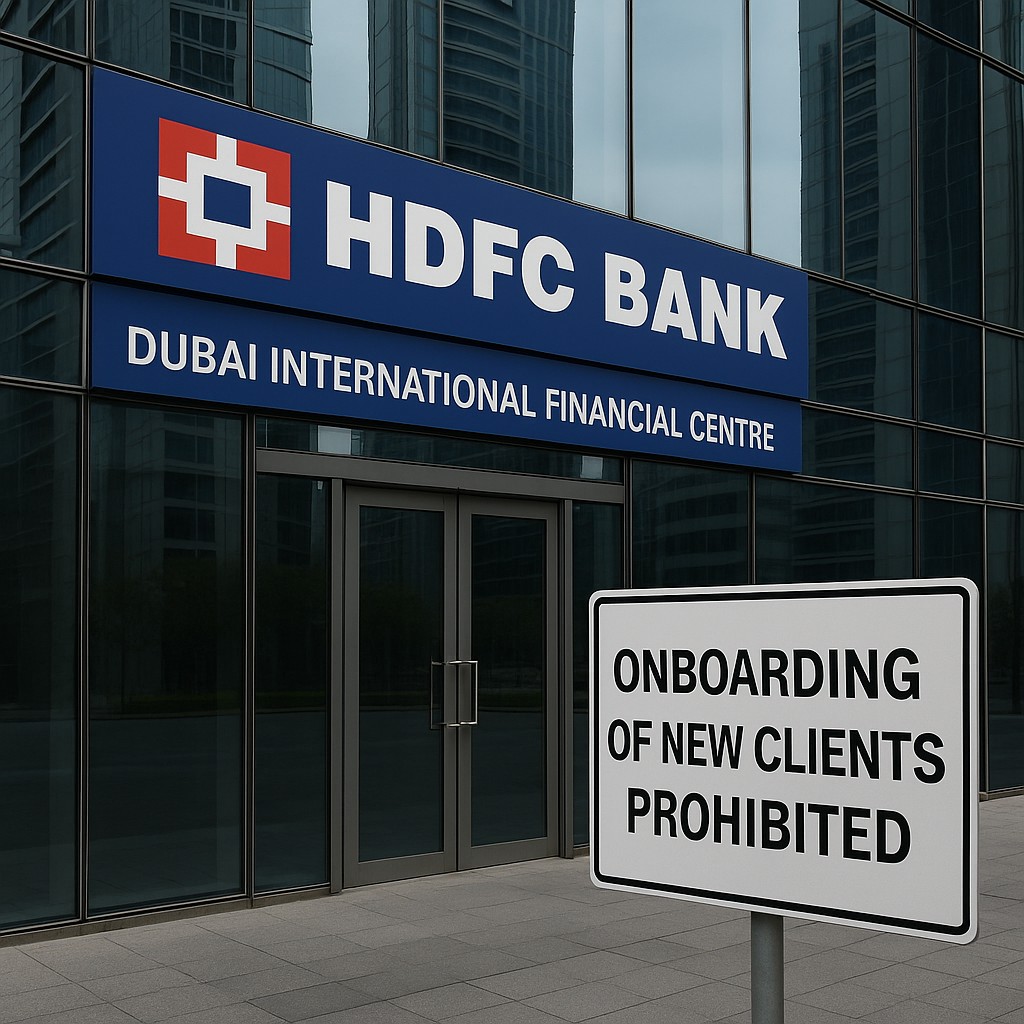
Dubai’s financial regulator has barred HDFC Bank’s Dubai International Financial Centre branch from soliciting, onboarding or servicing new clients, citing compliance lapses.

The order, issued by the Dubai Financial Services Authority and effective from 26 September, remains in force “until otherwise amended or revoked,” the bank stated. HDFC said it is taking steps to comply with the directive while engaging with the DFSA to address concerns.

HDFC clarified that the restriction does not apply to existing clients of the DIFC branch, nor to those who had already been offered services prior to the notice. As of 23 September, the branch had 1,489 customers, including joint holders.

According to HDFC, the bank does not expect this to materially affect its overall operations or financial position, noting that the Dubai branch’s business is not significant relative to its global activities.

The DFSA’s decision notice accuses the branch of servicing clients who were not properly onboarded, deficiencies in client onboarding processes, and other unspecified compliance shortcomings. The prohibition extends to advising on financial products, arranging deals, extending credit, custodial services, and financial promotions for new clients.

Analysts point to a backdrop of scrutiny over HDFC’s role in selling risky instruments—particularly Credit Suisse additional tier-1 bonds—to retail investors in the UAE. Those clients accused the bank of misclassification and inadequate risk disclosures. Investor accounts allege that KYC records were manipulated to designate them as “professional clients,” a requirement under DIFC rules for high-risk products.

Some UAE-based investors welcomed the DFSA’s move but urged stronger action, stating the suspension of new client intake is a limited measure given potential damage already done.

HDFC has a broader international presence including representative offices in Abu Dhabi, Kenya, London and Singapore, and branches in Bahrain and Hong Kong. The bank faces parallel scrutiny in India regarding related sales practices, prompting investigations by Indian enforcement agencies.

As the DFSA and HDFC engage in remediation talks, markets will closely watch whether the regulator escalates sanctions or lifts the ban after compliance is demonstrated.

Dubai police have announced an extensive set of security measures and entry restrictions for spectators attending the Asia Cup 2025 final between India and Pakistan at the Dubai International Cricket Stadium. Violations of the rules could trigger fines of up to Dh30,000 and imprisonment under federal law governing sports venues.

Every seat for Sunday’s showdown has been sold, with organisers confirming a full capacity of 28,000 spectators. With the historic match being the first final between these arch-rivals in Asia Cup history, expectations of heightened emotions have driven authorities to step up security preparations.

The police directive mandates that attendees arrive at least three hours before the start and that each ticket admits a single entry—re-entry will not be allowed. All spectators must enter through gates assigned by organisers, follow instructions from stewards and security staff, and park only in specified areas. Any departure from the stadium during the match will forfeit re-entry.

The list of prohibited items is comprehensive. Fireworks, flares, laser pointers, and any flammable or hazardous materials are banned outright. Sharp objects, weapons, toxic substances, remote-controlled devices, large umbrellas, camera rigs, tripods, selfie sticks, and unauthorised photographic equipment are also barred. Flags, banners, or placards without official approval, pets, bicycles, skateboards, scooters, glass items, and outside food or drink are disallowed. Smoking or carrying any item that could endanger public safety will attract penalties.

Under the Federal Law on the Security of Sports Facilities and Events, the penalties range from Dh5,000 to Dh30,000 for breaches such as entering the pitch, carrying banned items or misbehaving. More severe violations — including throwing objects, abusive or racist language — may lead to fines in the Dh10,000 to Dh30,000 range or imprisonment for up to three months.

Multiple specialised police units and surveillance teams will be deployed around the stadium. Authorities have urged full cooperation from fans to allow the match to proceed without incident. The Events Security Committee is jointly monitoring crowd movement, traffic, and stadium access.

On the transport front, traffic congestion is expected to peak along Al Khail Road, Sheikh Mohammed bin Zayed Road, Hessa Street, Umm Al Suqeim Street, and via routes through Al Barsha, Dubai Motor City and surrounding neighbourhoods. Alternate routes such as Umm Al Suqeim Street or Al Fay Road via Sheikh Mohammed bin Zayed Road are being recommended, especially for motorists approaching from the south.

Parking zones P1 to P4 at the stadium are allocated, and overflow areas in Dubai Motor City and Dubai Studio City will provide shuttle services. Some park-and-ride facilities near Mall of the Emirates and First Abu Dhabi Bank Metro stations will function, connecting visitors to the venue via feeder services and taxis.

Dubai police have also issued multilingual advisories to reach a broader cross-section of fans. Authorities emphasise that the cooperation of spectators will be crucial to preserving a safe environment and ensuring that the focus remains on the cricketing spectacle.

Advertisements

A surge of new initiatives is underway across the UAE ahead of the upcoming global heart-health campaign, as health authorities intensify efforts to curb cardiovascular risks among residents. The Ministry of Health and Prevention is urging citizens to monitor blood pressure and cholesterol levels, adopt healthier diets and exercise regimens, and steer clear of tobacco, underscoring that cardiovascular disease remains the leading cause of death globally. Officials […]

A widespread veil of fog has prompted the National Centre of Meteorology to raise red and yellow alerts across several emirates, with parts of Abu Dhabi reporting visibility under 1,000 metres and road users urged to exercise extreme caution.

Fog enveloped numerous regions across the UAE, including Al Dhafra, Ghiyathi, Yaw Al Nadhrah, Baynounah and Um Al Ashtan, as well as parts of Dubai, resulting in variable speed limits on key highways and frequent warnings from traffic authorities. In Abu Dhabi, electronic signboards are being used to dynamically adjust permissible speeds in response to shifting visibility. Authorities also issued repeated reminders to follow traffic signals and stay alert to sudden changes in road conditions.

The NCM forecast clear to partly cloudy skies for the day, but cautioned that humidity levels would rise overnight, which may cause fog formation to persist into early Monday morning in inland and coastal areas. Winds are expected to be light to moderate, occasionally gusting to 40 km/h over sea areas. Sea conditions are likely to remain slight to moderate in the Arabian Gulf, becoming rough toward the western zones, while the Gulf of Oman is expected to stay relatively moderate.

Temperature highs for the day are projected to reach around 40 °C in Abu Dhabi and Dubai, while overnight lows may dip to between 25 °C and 31 °C, further elevating the risk of condensation and mist formation by dawn. Humidity is set to reach levels as high as 90–95 percent, especially in coastal zones.

Abu Dhabi Police, in a public advisory, urged motorists to keep lights on, maintain safe following distances and heed variable speed signs. They reiterated that foggy patches may develop unpredictably along inter-emirate and rural routes. Traffic safety officers are being stationed at vulnerable corridors to assist drivers and manage flow.

Abu Dhabi raised $1 billion from a three-year bond sale at 3.625 per cent, about 10 basis points over U. S. Treasuries, and simultaneously issued $2 billion in a 10-year tranche at 4.25 per cent, 18 basis points over Treasuries, drawing a combined order book of over $16 billion. The Reg S senior unsecured bonds will be rated AA by S&P and Fitch, matching the issuer’s credit […]

Abu Dhabi-based XRG P. J. S. C. has finalised its acquisition of an 11.7 percent equity interest in Phase 1 of the Rio Grande LNG project in Brownsville, Texas, marking the company’s first natural gas investment in the United States. The purchase was made through a joint-venture structure involving Global Infrastructure Partners, an investment vehicle affiliated with BlackRock. Phase 1 of Rio Grande LNG is one of […]

Abu Dhabi — The Strategic Directions Committee of the UAE Research Programme for Rain Enhancement Science has completed a midterm site visit to Mohamed bin Zayed University of Artificial Intelligence, assessing progress on its Cycle 5 project “Identification of Clouds’ Microphysical Seedability in an Actionable Manner.” Led by Prof. Daniel Rosenfeld of the Hebrew University of Jerusalem, the initiative is executed in partnership with the National Centre […]

Abu Dhabi is marketing a three-year and a 10-year US dollar Reg S/144A bond offering, aiming to capitalise on robust investor demand and reinforce its global funding outlook. The three-year tranche is pitched at approximately 40 basis points over US Treasuries, while the longer 10-year issue is offered at around 55 bps.

By mid-morning in Dubai, books had swelled past $10 billion, excluding joint lead manager interest, with slight tilt toward the 10-year line. The bonds will be senior, unsecured and rated AA/AA by S&P and Fitch, matching the issuer’s prevailing Aa2/AA/AA credit standing. Listings are planned in both London and Abu Dhabi.

Investors see this transaction as a test of global appetite for Gulf sovereign credits amid a cautious backdrop of moderate US interest rates and evolving geopolitical risk. Despite volatility in energy prices and external debt markets, Abu Dhabi’s strong fiscal and balance sheet metrics underpin confidence in its sovereign name. The credit ratings assigned reflect the emirate’s resilient fiscal policy, substantial hydrocarbon reserves, and large sovereign wealth fund buffers.

Structurally, the Reg S/144A setup allows the issuer to access both non-US and US institutional investor pools. Regulation S permits offers outside the United States, while Rule 144A enables sales to qualified institutional buyers within the US, offering dual reach while maintaining issuance flexibility. The base offering circular explicitly restricts transfers and resales to be compliant with those regimes.

Observers note that the pricing levels—40 bps for three years and 55 bps for 10 years over Treasuries—are ambitious but not unprecedented within Gulf sovereign borrowing. Prior precedent includes a multi-tranche Abu Dhabi sovereign bond of $5 billion in April 2024, which achieved strong oversubscriptions and favourable pricing benchmarks. That deal underlined investor appetite for Gulf issuers with strong credit credentials.

Market participants closely monitor skew and order distribution between tenors. That the books are marginally skewed toward the 10-year suggests appetite for duration, perhaps reflecting yield scarcity in core markets. Should the order book widen further, the issuer may flex uncertainty concessions or tighten spreads modestly before final pricing. Co-ordinating banks are likely adjusting intermediate guidance as allocations firm.

Analysts flag that appetite for Gulf sovereign issuance is tempered by global headwinds: tighter US credit spreads, sticky inflation, and competition from other supranational and sovereign issuers. Some international investors may demand additional premium for regional or geopolitical exposures. Yet Abu Dhabi’s entry with a dual-tranche issuance signals intent to extend its credit curve, deepen investor relationships, and enhance liquidity in its sovereign bonds.

The listings in London and Abu Dhabi are intended to enhance secondary market trading, improve visibility to European and global investors, and cement Abu Dhabi’s status in global bond markets. The London listing, especially, provides access to a deep pool of international fixed income investors and a regulatory framework well understood by global asset managers.

Abu Dhabi’s real-estate sector recorded its most powerful half-year showing to date, with transaction values climbing sharply to AED 54 billion. The newly published inaugural market report by the Abu Dhabi Real Estate Centre signals a turning point in transparency and market discipline in the emirate. The ADREC report shows residential unit sales reached AED 25 billion in the first six months, marking a 38 per cent […]

Dubai’s engineering and construction powerhouse ALEC Holdings PJSC has fixed its IPO share price between AED 1.35 and AED 1.40, opening subscriptions for a 20 percent stake in the company. The offering will feature 1 billion existing shares, valuing the company at AED 6.75 billion to AED 7 billion at the time of listing. The subscription period began on 23 September and will close on 30 September […]

Abu Dhabi’s Presight and investment company Shorooq have introduced a $100 million fund called Presight–Shorooq Fund I to back artificial intelligence start-ups worldwide. The fund, which is hosted in the Abu Dhabi Global Market, combines both capital investment and access to infrastructure to help scale promising ventures. The fund targets start-ups at early and growth stages developing in areas such as AI/ML, smart cities, energy, fintech, AR/VR, […]

Abu Dhabi’s real estate market posted a 42 percent leap in value of property deals during the first half of 2025, with total transaction values reaching AED 54 billion. Residential unit sales were a major contributor, rising by 38 percent to AED 25 billion. The number of transactions climbed 25 percent to 15,578 deals over the same period.

Population growth in the emirate—specifically crossing four million residents in 2024—has intensified demand for housing, boosting both apartment and villa/town-house sectors. Apartment prices jumped 14 percent year-on-year in Q2, while villa and townhouse prices rose by 11 percent. Premium properties now account for 57 percent of apartment sales value, more than double their share last year. Saadiyat Island saw the highest apartment values per square metre, while Ramhan Island led villa/town house prices.

Economic expansion has underpinned the property market upswing. The non-oil sector increased by 6.2 percent, making up 54.7 percent of Abu Dhabi’s gross domestic product, which grew 3.8 percent to about AED 1.2 trillion. Real estate development continues apace, with master-planned communities like Al Hudayriat, Balghailyam in Yas Island, Mamsha Gardens and Saadiyat Lagoons fuelling supply.

Supply still trails demand. Existing residential inventory stood at approximately 400,000 units at mid-2025, while projections suggest that by 2028, the supply will grow by 4.6 percent annually, adding roughly 64,000 new units. Developers such as Aldar have released a number of high-value projects: town houses at Al Deem, Fahid Beach Residences, The Beach House, and the Waldorf Astoria Residences on Yas Island together pulling in billions of dirhams in sales.

Abu Dhabi’s Technology Innovation Institute and Nvidia have signed an agreement to establish the Middle East’s first joint laboratory dedicated to artificial intelligence and robotics. The new facility, known as the TII-NVAITC Joint Lab for AI and Robotics, will be located at TII’s headquarters. Its mandate is to push forward next-generation AI models, robotics platforms and humanoid technologies. The lab combines TII’s strength in applied research with […]

UAE’s construction sector is projected to reach US$ 130.8 billion by 2029, up from US$ 107.2 billion in 2024, as government-led projects and developmental pipelines drive a sustained growth trajectory of about 4% annually. Construction makes up 62% of all future pipeline projects across the Emirates, dwarfing the contribution from transport, power and water. Among construction subsectors, mixed-use projects lead the pipeline with about 42%, followed by […]

VFS Global has launched a $2 billion-equivalent term loan facility, securing markedly tighter pricing for its seven-year dollar and euro tranches. The USD portion of $1.010 billion is priced at 250 basis points above the Secured Overnight Financing Rate, about 50bps lower than initially suggested. The euro tranche, amounting to €850 million, carries a spread of 275bps over Euribor, which represents a tightening of around 25bps from […]

Abu Dhabi Securities Exchange has listed the Boreas Solactive Quantum Computing UCITS ETF under the ticker QUANTM, offering investors exposure to 25 companies pioneering quantum computing technologies. This marks the first thematic ETF of its kind on ADX, and joins 16 other ETFs already trading on the platform. The new fund tracks the Solactive Developed Quantum Computing Index, representing firms active in hardware, software & algorithms, and […]

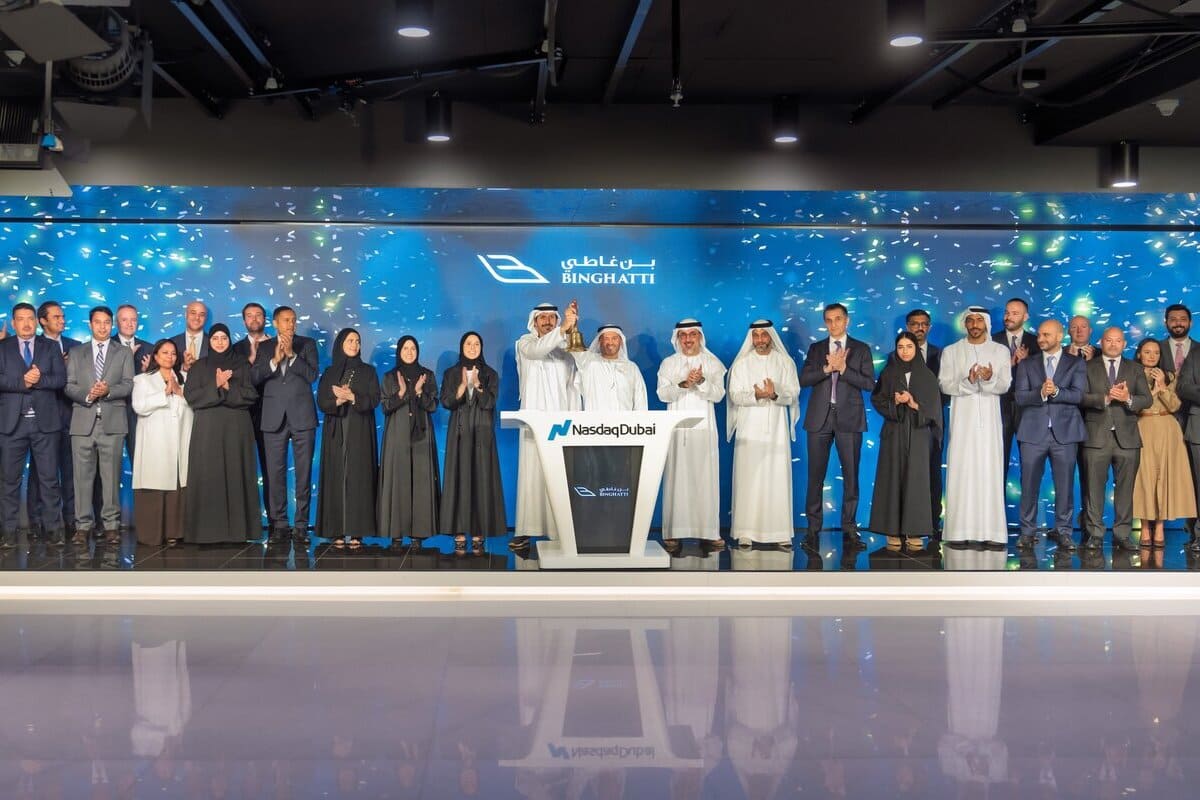
Binghatti Holding Limited has appointed a slate of banks to lead its first USD Reg S senior unsecured three-year green sukuk under its $1.5 billion Trust Certificate Issuance Programme. The developer, rated Ba3 by Moody’s and BB- by Fitch with both outlooks stable, has kick-started global investor calls and fixed income meetings. The mandate names Abu Dhabi Islamic Bank, Dubai Islamic Bank, Emirates NBD Capital, JP Morgan and Mashreq as Joint Global Coordinators; Abu Dhabi Commercial Bank, Ajman Bank, Arqaam Capital, Crédit Agricole CIB, First Abu Dhabi Bank, RAKBANK, Sharjah Islamic Bank and Warba Bank will act as Joint Lead Managers and Joint Bookrunners.

The green structuring is overseen solely by Mashreq, with DNV, based in Oslo, providing the Second Party Opinion on Binghatti’s Green Financing Framework. The issuance will make use of Binghatti Sukuk 2 SPC Limited under its wider Trust Certificate Issuance Programme.

Binghatti’s credit profile strengthened earlier this year when Moody’s assigned it its first ever corporate family rating of Ba3 with a stable outlook, citing its strong market position in Dubai’s luxury real estate sector, a vertically integrated model, low leverage, strong liquidity and disciplined cost controls. Shortly after, Fitch upgraded its long-term issuer default rating to BB- from B+, also citing its resilient growth, liquidity position and ability to self-fund projects through internal cash flows.

The developer’s previous sukuk issued under the same Programme—a five-year senior unsecured benchmark in August—was priced at a profit rate of 8.125%. That issuance attracted over USD 2.5 billion of orders, making it oversubscribed about five times and confirming significant demand from global and regional investors. That sukuk was dual listed on the London Stock Exchange and Nasdaq Dubai.

Abu Dhabi has finalised a major agreement to enforce greater transparency in crypto-asset taxation by signing the Multilateral Competent Authority Agreement under the Crypto-Asset Reporting Framework. The deal mandates automatic exchange of tax-related data on crypto transactions across jurisdictions, aligning the UAE with rising global norms on financial disclosure. The Ministry of Finance confirmed that CARF will start operating in the UAE in 2027, with the first […]

Abu Dhabi sovereign wealth fund Mubadala is exploring a full exit from its Turkish operations with Getir, which would include its delivery, financing and car-rental units, say people familiar with the matter. It is in advanced negotiations to offload Getir Arac, the car-rental arm, to Turkish firm Tiktak. Other units, including Getir Finans and the main delivery business, are also under consideration for sale.

Mubadala is Getir’s largest shareholder and obtained controlling interests across Getir’s Turkish subsidiaries in 2021 and 2024. The fund’s deliberations follow an ongoing dispute with the founders of Getir over how the company should be restructured. The founders resisted Mubadala’s plans, describing some actions by the fund as an “illegal coup”, and launched legal challenges in the Netherlands and elsewhere. The courts have, in some instances, sided with Mubadala.

Talks on Getir Arac are said to be well-advanced, although Tiktak has declined to comment. Meanwhile, in the delivery business, U. S.-based DoorDash has been identified as one of the potential buyers, among others. The details of ownership stakes in each Getir unit—delivery, financing, car rental—remain unclear. Mubadala has not offered public comment on these possible divestments.

Getir’s financial trajectory has weakened since its peak valuation of approximately $12 billion in 2022. The company expanded rapidly during the pandemic across several Western European markets and into North America, only to withdraw from those operations as demand waned and operational costs rose. As part of restructuring, non-core businesses were intended to be separated from profitable local grocery delivery operations.

VISHNU RAJA
RYO YAMADA
HITORI GOTOH
IKUYO KITA