News related to
Abu Dhabi

The GCC Financial Markets Committee has unveiled the GCC Exchanges Unified Investor Relations Guideline 2025, aimed at elevating transparency and investor confidence across Gulf capital markets. Chaired by the Saudi Exchange, the framework aligns investor-relations practices with global norms while sharpening communication standards and disclosure protocols throughout the region. Member exchanges—including the Abu Dhabi Securities Exchange Group, Dubai Financial Market, Bahrain Bourse, Muscat Stock Exchange, Qatar Stock […]

Grovy Developers has unveiled plans to present its newest luxury project at the International Real Estate & Investment Show, to be held at the Abu Dhabi National Exhibition Centre from 12 to 14 September. At the event, Grovy Developers Spotlights Smart-Tech Real Estate will detail investment opportunities in the increasingly vibrant UAE property sector, with Abhishek Jalan, chief executive, offering insights into real estate’s financial appeal amid […]

Passenger traffic at airports across the UAE surpassed one billion between 2015 and 2024, with aircraft movements exceeding 6.4 million during the same interval, driven by strategic planning and expansion across the aviation sector, the Federal Competitiveness and Statistics Centre reported. The country also emerged as the global leader in air transport quality and ranked among the top ten worldwide across five additional air performance indicators, underlining its position as a premier aviation hub.

Data from the Centre reveal that annual passenger numbers climbed from 114.8 million in 2015 to 147.8 million in 2024, marking the underlying foundation for cumulative traffic exceeding one billion passengers. Meanwhile, aircraft movements rose sharply, culminating in more than 800,000 operations in 2024 and taking the ten-year total past 6.4 million flights.

These gains coincide with the UAE’s top global ranking in air transport quality and inclusion among the top ten in five further air-related indicators, as noted in the Centre’s analysis.

The escalation of aviation activity reflects the UAE’s broader aviation transformation. The General Civil Aviation Authority emphasises that the UAE now operates a dense, globally connected network, with twelve certified airports, 100 heliports, and a web of bilateral air agreements linking to over 300 destinations worldwide. In 2024 alone, the UAE recorded over one million air traffic movements and continued to lead globally in international passenger traffic and seat capacity.

Dubai International Airport remained the busiest airport globally for international passengers in 2024, registering more than 92 million passengers and 440,000 aircraft movements, and handling 2.2 million tonnes of cargo.

Abu Dhabi’s Zayed International Airport, renamed in February 2024, handled nearly 29.5 million passengers and recorded 249,747 aircraft movements, reinforcing the dominance of UAE airports in the regional aviation landscape.

These milestones underscore how UAE aviation achieves unprecedented growth, advancing capacity, connectivity and performance standards to global leadership.

The Federal Competitiveness and Statistics Centre attributes these successes to forward-looking directives and investment, positioning the aviation sector as a cornerstone of economic sustainability. The enhancements bolster not only passenger and cargo mobility but also broader economic diversification goals, tourism development, and the UAE’s growing prominence as a global transport hub.

As the morning light kisses the glazed curtain wall of the Burj Khalifa over the Persian Gulf, and the evening breeze of Doha whispers against the dome of the Museum of Islamic Art, a practice team named “Weihai Yangxing” from Weiyang College of Tsinghua University is measuring the lands of the Middle East with their footsteps and building bridges of cooperation through dialogue. From August 14 to 24, […]

Aldar has unveiled plans to deliver the UAE’s first Tesla Experience Centre on Yas Island, comprising a purpose-built showroom, service centre and delivery hall integrated into one state-of-the-art facility. Spanning more than 5,000 sqm of leasable area, the development aims to offer an elevated customer experience while boosting operational efficiency and reinforcing Tesla’s long-term growth strategy in the region. The complex will feature 170 dedicated parking spaces […]

eToro Group Ltd is poised to pursue bolder acquisitions after securing a substantial liquidity base, according to one of its co-founders. At the Ambrosetti Forum in Cernobbio, Italy, Ronen Assia, executive director and co-founder, confirmed that the firm “has cash and cash equivalents of around $1.2 billion at the end of the first half of the year, with a cash position of $988 million, with no debt.” He added: “We’re looking to do more ambitious stuff involving acquisitions,” emphasising that eToro aims to broaden both asset classes and its geographic footprint.

eToro’s deliberate pivot into more aggressive mergers and acquisitions comes on the heels of its listing on Nasdaq in May 2025, where it raised $620 million in its initial public offering. The company’s robust cash war-chest endows it with flexibility to explore new verticals and markets in a dynamic fintech landscape.

Beyond financial strength, eToro is deepening its product offering. The platform recently rolled out tokenisation and artificial intelligence tools targeted at retail investors, along with expanding its global reach. Meanwhile, preliminary selected business metrics for July and August reveal continued operational momentum: assets under administration rose to $19.7 billion, funded accounts approached 3.69 million—both reflecting high year-on-year growth—while crypto trading volumes surged by nearly 50 percent.

The company’s healthy balance sheet is grounded in a successful IPO and product innovation. In Q1 2025, eToro reported $736 million in cash, cash equivalents, and short-term investments, alongside growth in user accounts and assets under administration. The firm also expanded its trading products, launching options in the UK and futures in Europe, while diversifying geographic access to include exchanges in Abu Dhabi and Hong Kong.

This marks a clear signal that bold acquisitions are on eToro’s horizon—a phrase that captures the firm’s evolving strategic ambition and its capacity to act decisively in a competitive market.

The timing of this announcement is significant. Mergers and acquisitions within fintech and crypto sectors have become tools for scale, innovation, and regulatory navigation. With its substantial liquidity and no leverage, eToro may look to acquire firms offering complementary capabilities—whether in tokenisation, AI-driven trading, wealth management, or regional expansion.

Ronen Assia’s stance highlights both intent and preparedness. The expressed goal to take on “more ambitious” deals indicates a readiness to move beyond smaller bolt-ins, aiming instead for transformative moves that could reshape the firm’s product and regional scope. The emphasis on adding asset classes and locales suggests potential targets might include firms with niche offerings or solid footprints in under-penetrated markets.

At a time when many fintech companies are consolidating or recalibrating amid macroeconomic shifts and evolving regulation, eToro’s proactive posture sets it apart. With backing of a strong balance sheet and public market credibility, the platform is well placed to capitalise on strategic M&A opportunities as they arise.

Net profits for banks listed across the Gulf Cooperation Council surged to an unprecedented $16.6 billion in the second quarter, marking the second straight quarter of gains and a sequential increase of roughly 3.7 %, with year-on-year growth at a robust 9.2 %, according to Kamco Invest. This performance was driven by broadly higher revenues and a lower cost-to-income ratio that more than compensated for a rise in impairments. Lending activity remained resilient, underpinned by strong economic fundamentals and a pipeline of projects in the region.

Banks across the GCC achieved strong growth, with net profits rising 10.3 % year-on-year to $16.6 billion in Q2 2025, according to the latest Kamco Invest analysis. The sequential increase of about 3.7 % was fuelled by a broad-based rise in revenues, while a leaner cost-to-income ratio offset the impact of elevated impairments. Lending growth persisted, reflecting healthy demand and continued economic momentum.

Abu Dhabi led regional outperformers as its banks posted aggregate Q2 earnings of $3.2 billion—a 23.1 % rise compared to the year before. First Abu Dhabi Bank stood out with a 29.4 % surge in quarterly net profits to $1.5 billion, supported by stronger non-interest income and lower impairment charges. Abu Dhabi Commercial Bank and Abu Dhabi Islamic Bank also delivered solid gains, buoyed by elevated interest and fee income.

Dubai’s banks, by contrast, experienced a contraction: aggregate city-listed earnings fell by 6.4 % to $3.2 billion, weighed down by increased impairments at major lenders such as Emirates NBD. Some resilience came from Commercial Bank of Dubai, which posted a 15.4 % rise, alongside a surge in real-estate and utilities profits—Emaar Properties and DEWA among the top performers.

Among other GCC markets, Q2 net profits for Oman-listed banks were around $1 billion, while those in Qatar also posted gains, contributing to the overall strength in the banking sector.

The headline figure—$16.6 billion in quarterly profit for GCC banks—captures the scale of the region’s banking sector resilience. This strong performance highlights how GCC banks post record-high quarterly profits, powered by sustained credit growth and operational efficiencies even amid higher impairments.
—

Advertisements

Arabian Post Staff -Dubai Deal volumes across the Middle East hit 271 in the first half of 2025, up from 228 a year earlier, defying a 9 per cent contraction in global M&A activity. The region owes this strong performance to sovereign capital, regulatory reforms, and strategic investments in high-growth sectors. Middle East M&A Volume Climbs Amid Global Decline now captures the robust upswing. Driving this growth […]

The Environment Agency – Abu Dhabi unveiled the EAD Avatar at the Abu Dhabi International Hunting and Equestrian Exhibition 2025, held at the Abu Dhabi National Exhibition Centre from 30 August to 7 September. This AI-powered initiative aims to revolutionise public interaction with environmental information, offering a lifelike digital interface that bridges cultural authenticity with technological innovation.

Developed in collaboration with Accord Business Group, the EAD Avatar introduces two digital personas, Souheil and Dana, designed to reflect Emirati heritage. Fluent in both Arabic and English, these avatars provide real-time, interactive communication, delivering accurate, AI-generated responses drawn from verified data sources. This approach ensures that users receive reliable information on environmental topics, enhancing public understanding and engagement.

Ahmed Baharoon, Executive Director of Environment Information, Science and Outreach Management at EAD, highlighted the significance of the launch, stating, “By merging cultural authenticity with cutting-edge AI, we are enhancing how the community interacts with EAD and transforming how they understand and connect with the environment.” The avatars’ natural voice modulation, facial expressions, and body language contribute to a more human-like interaction, fostering trust and encouraging deeper engagement.

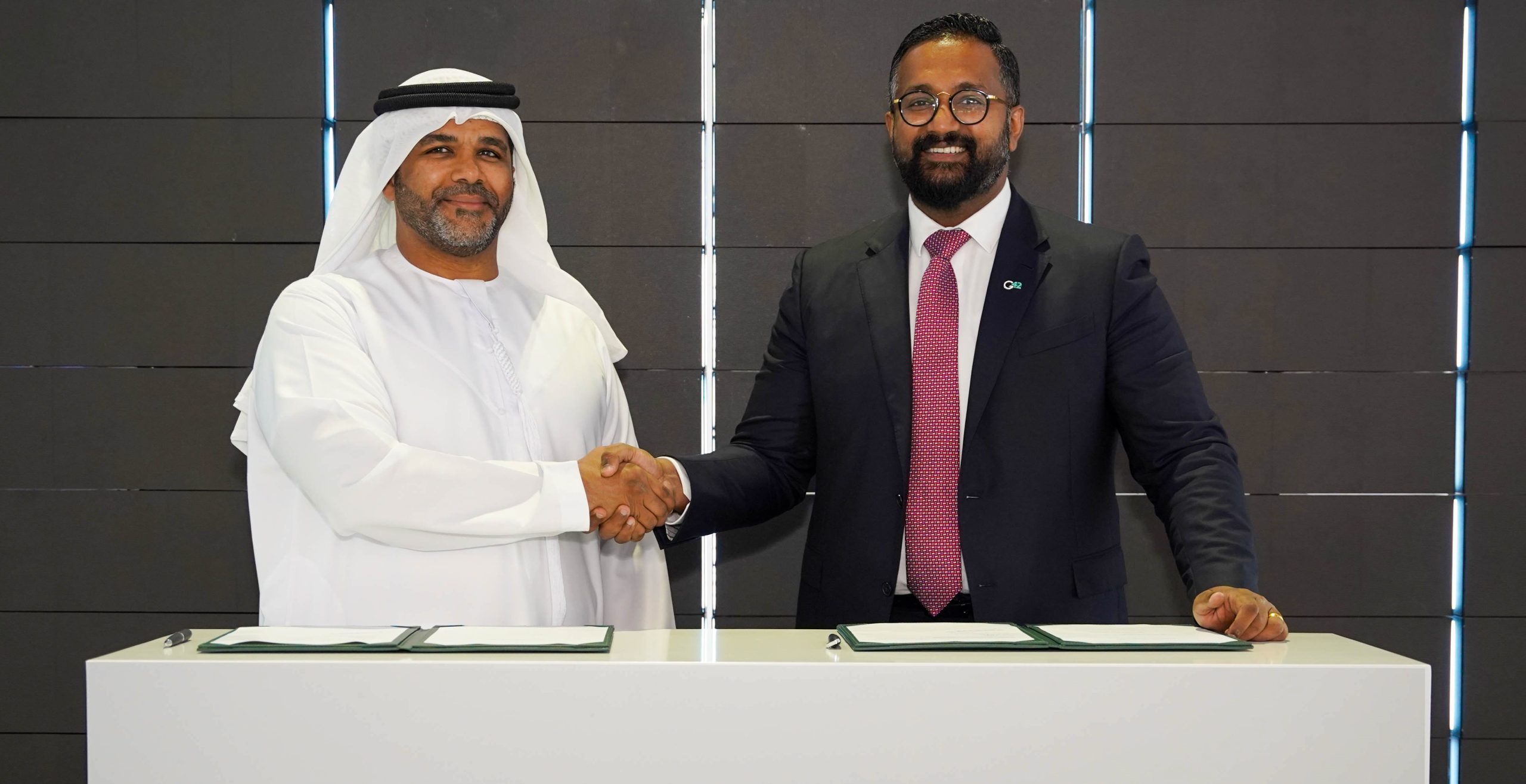
Abu Dhabi’s G42 is offering 2 % of its shareholding in its subsidiary, Presight AI, to institutional investors through an accelerated book-build, aiming to raise slightly more than $100 million. The transaction will reduce G42’s holding in the analytics group from 70.5 % to 68.5 %, while retaining majority control. First Abu Dhabi Bank and Jefferies are acting as joint global coordinators and joint bookrunners, with International Securities serving as joint bookrunner.

Demand for the placement has been strong, with books reportedly fully covered ahead of finalisation. Settlement is expected around 10 September 2025, following final terms being set by 4 September. G42 has also committed to a 180-day lock-up period before any further sale of its Presight shares.

The strategic purpose behind G42 lowers Presight AI stake via ABB is to broaden and institutionalise Presight’s investor base, enhance liquidity, and strengthen its case for inclusion in the FTSE Emerging Market Index. Greater free float and international institutional ownership would increase trading activity and appeal to passive investment funds.

Presight AI, which listed on the Abu Dhabi Securities Exchange in 2023, has posted strong financials through 2025. Its share price has risen by approximately 67 % year-to-date, closing recently at AED 3.47. In the first half of 2025, organic revenue grew by 33.5 %, supported by new domestic contracts. In the second quarter, group net profit rose by nearly 8 % to Dh77 million, with revenue up by over 53 % to Dh523.9 million. International markets now contribute 26.8 % of revenue, up from just 4.9 % a year earlier.

G42 group CFO Ricky Thirion described Presight as “a critical pillar of the G42 ecosystem and a cornerstone of our Intelligence Grid offering,” noting that its performance reflects consistent growth and strong leadership.

Regionally, secondary offerings like this one are gaining traction. In 2025, follow-on sales across the Middle East have raised roughly $3.7 billion, surpassing IPO proceeds—a sign of deepening market maturity.

The placement’s proceeds will go entirely to G42, with no dilution or impact on other shareholders or Presight’s operations.

Abu Dhabi’s G42 has therefore engineered a measured recalibration of its ownership in Presight AI—G42 lowers Presight AI stake via ABB—while securing capital, expanding its shareholder base, and positioning the company for broader market inclusion and visibility.

Abu Dhabi state oil giant ADNOC criticised the European Commission’s antitrust investigators for issuing what it described as excessive and intrusive information demands in their examination of its €14.7 billion bid for Covestro. The company cautioned that such regulatory pressure could endanger the takeover. Under the EU’s Foreign Subsidies Regulation, the Commission is scrutinising whether ADNOC benefited from unfair advantages—such as an unlimited UAE government guarantee and […]

Abu Dhabi National Oil Company has entered an agreement with RIQ to secure over $500 million in risk coverage across the next ten years. The AI-driven reinsurance platform, backed by International Holding Company, will work closely with ADNOC to structure capital-efficient protection tailored to complex operational, climate-related and specialty risks using advanced modelling and AI-augmented underwriting. ADNOC Secures $500 Million AI-Driven Reinsurance Pact embodies this forward-looking collaboration […]

Arabian Post Staff Dubai has again claimed first place in the Savills Executive Nomad Index 2025 as the most sought-after destination for executive nomads worldwide, while Abu Dhabi holds second place for the second year running. Dubai’s dominance stems from its unmatched airline connectivity and comprehensive amenities, with Dubai Maintains No-1 Spot as Executive Nomads’ Top Choice capturing the essence of its appeal. The index, evaluating 30 […]

Astana International Exchange and Abu Dhabi Securities Exchange have activated a direct connection between their central securities depositories, enhancing post-trade infrastructure and extending investor access across markets. The move, under the October 2021 memorandum of understanding that brought AIX into the Tabadul digital hub, expands on the existing Tabadul network and enables fully operational CSD-to-CSD communication.

The newly established arrangement builds on Tabadul’s digital trading network, which launched in mid-2023 when AIX formally joined and began enabling bilateral trading with ADX. Tabadul, introduced in 2022, operates on a mutual market access model, facilitating cross-exchange trading across member markets.

Under the framework established in October 2021, AIX had integrated into Tabadul, paving the way for today’s deeper integration via its direct CSD link with ADX.

Assel Mukhanova, chief executive of AIX, welcomed the formalisation, noting that this will bring tangible benefits to participants through more efficient trading corridors and deeper cross-border investment flows. Abdulla Salem Alnuaimi, group chief executive of ADX, emphasised that the direct CSD connection supports capital markets accessibility, post-trade connectivity, and opens new avenues for both global and regional investors.

This development underscores a strategic commitment from both exchanges to deepen connectivity, bolster liquidity, and accelerate regional capital market integration. By complementing the stronger ties forged through Tabadul, the new ADX–AIX direct CSD link strengthens market access for issuers and investors alike.

Abu Dhabi will host the BRIDGE Summit from 8 to 10 December 2025 at the ADNEC Centre, uniting heads of state, media executives, policymakers, technologists and content creators in an ambitious bid to redefine the global media landscape. Announced in Washington by Abdulla bin Mohammed bin Butti Al Hamed, chairman of the National Media Office, alongside Dr Jamal Mohammed Obaid Al Kaabi, director-general of the NMO, the summit pledges to foster dialogue, innovation and sustainable growth across the sector. Attendance is expected to exceed 5,000 participants, underpinning its status as a global media landmark.

Preparatory efforts have extended worldwide. In June, a roundtable in London convened Al Hamed and Al Kaabi with media experts during London Tech Week to reinforce the summit’s commitment to transparency, accountability and cross-sector collaboration in an increasingly digital era. In Asia, the BRIDGE roadshow landed in Shanghai, following stops in New York, London and Osaka, each event contributing insights to shape the summit’s agenda. A mission to Seoul in August further advanced partnerships with technology and media firms, including I-ON Communications on AI and data storytelling; Dentons on regulatory frameworks; Lotte Caliverse on immersive media; and SM Entertainment on cultural collaboration. These discussions cemented shared goals around content credibility, technology ethics and investment in creative startups.

The BRIDGE Summit is embedded within a broader ecosystem spearheaded by the National Media Office. Alongside the summit lies the BRIDGE Foundation, a non-profit body dedicated to empowering media professionals, funding research and supporting startups. This aligns with the UAE’s pursuit of media as a force for societal development and economic progress. A recently published fact sheet outlines the summit’s six thematic zones—Academy, Diplomacy, Forum, Marketplace, Impact and Spotlight—designed to foster skills, policy engagement, tech innovation, social impact and cultural exchange across a three-day programme.

AI and ethics feature prominently among the summit’s themes. Organisers emphasise human values in storytelling amid accelerating digital disruption and algorithmic influence. Al Hamed has characterised media as a humanitarian force that must uphold integrity and cohesion, not merely chase clicks. The summit will address responsible AI’s potential and pitfalls, ethical journalism, and media business models fit for the digital age.

Beyond content and tech, BRIDGE seeks to bridge policy and practice. With roundtables and forums designed to foster international dialogue, policymakers, creators and academics will collaborate on frameworks that safeguard credibility while embracing innovation.

The summit’s global scope is reflected in its steady itinerary of international engagements. From Washington to London, Shanghai to Seoul, each stop has contributed regional perspectives and partnerships that will inform the summit’s structure, themes and participant networks.

ADNOC Logistics and Services plc has secured strong institutional backing through a $317 million placement of approximately 222 million shares—equivalent to about 3 percent of its issued capital—with demand reaching seven times the offering, ranking among the region’s most heavily oversubscribed secondary share sales. The transaction lifts ADNOC L&S’s free float from 19 percent to 22 percent, significantly enhancing trading liquidity and widening its appeal to institutional […]

Abu Dhabi’s Hub71 has just onboarded its most AI‑centric cohort yet, inviting 26 startups that have collectively raised more than USD 223 million—marking the highest funding milestone in the initiative’s history, a testament to growing investor confidence and Abu Dhabi’s elevated position in the global AI landscape. The majority of this intake—over eighty per cent—are AI‑driven ventures focused on tackling high‑impact challenges across HealthTech, FinTech, and ClimateTech. Their arrival not […]

A $2.62 billion, 10‑year credit facility has been secured by Khazna Data Centres, underwritten by a consortium led by Abu Dhabi Commercial Bank and First Abu Dhabi Bank, providing a substantial boost to the company’s strategy for regional and global expansion. The funds are earmarked to accelerate build‑out of high‑capacity data hubs across the Middle East and North Africa, with a clear focus on supporting high‑demand, AI‑intensive infrastructure. […]

EU antitrust authorities have pressed pause on the investigation into Abu Dhabi National Oil Company’s €14.7 billion takeover of Germany’s Covestro, granting the European Commission extra time to collect detailed information on the transaction. Authorities have set a decision deadline of 2 December 2025. The deal, agreed last October, stands as ADNOC’s largest-ever acquisition and one of the most significant foreign takeovers within the European Union by a […]

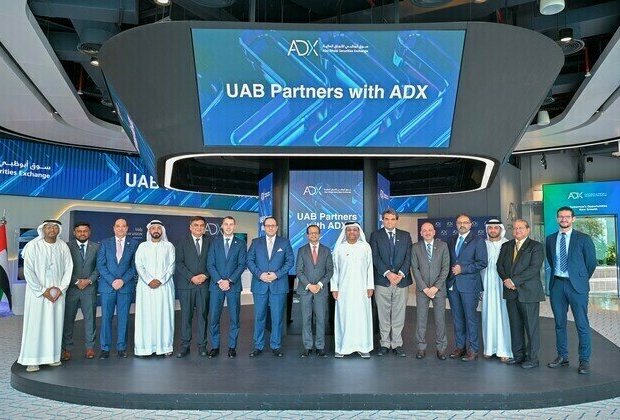
United Arab Bank has formed a strategic alliance with Abu Dhabi Securities Exchange to enable its customers to subscribe for upcoming IPOs through the bank’s digital channels or ADX’s eIPO Investor Portal. This arrangement aims to simplify the process of accessing capital markets, offering a secure and intuitive experience to investors.

At a ceremony held at ADX’s headquarters in Abu Dhabi, the agreement was formalised in the presence of Abdulla Salem Alnuaimi, Group Chief Executive Officer of ADX, and Shirish Bhide, Chief Executive Officer of UAB, alongside senior officials from both organisations.

This collaboration is designed to strengthen UAB’s wealth management proposition by embedding investment opportunities within its digital ecosystem. Customers will now be able to access IPO applications directly via UAB’s mobile application, replacing previously cumbersome procedures with streamlined, guided pathways that enhance transparency and usability.

According to Shirish Bhide, this partnership reflects the bank’s dedication to innovation and long-term value creation. By integrating investment services within UAB’s digital channels, customers gain more inclusive access to the UAE’s capital markets. Abdulla Salnuaimi added that this initiative reaffirms ADX’s aim to enhance the investor experience by collaborating with leading financial institutions and advancing digital solutions.

The move aligns with UAB’s broader digital transformation strategy, as demonstrated by prior efforts such as launching RegPRISM, an AI-powered regulatory intelligence platform developed with Smarbl to improve compliance and operational efficiency.

Further underpinning UAB’s financial robustness is its first-quarter 2025 performance. The bank reported a 49 per cent year-on-year increase in net profit—rising to AED 102 million—driven by growth in assets, loans, Islamic financing, and investments. Capital adequacy remains solid, with a CET1 ratio of 12.6 per cent and a total capital adequacy ratio of 17.1 per cent. Non-performing loans saw improvement from 4.8 per cent to 3.4 per cent, with coverage at 118 per cent.

These financial strengths were in part bolstered by a rights issue completed earlier, which raised around AED 1.03 billion and strengthened UAB’s capital position.

ADX, for its part, continues to pursue innovation in financial market infrastructure. In July, it collaborated with First Abu Dhabi Bank and HSBC to launch the Middle East’s first DLT-based digital bond, reinforcing its frontier role in tokenised finance.

Through this latest agreement, UAB and ADX are promoting a more integrated, accessible investment landscape—blending digital banking and capital markets participation in a manner that could redefine customer expectations and market engagement.

Sobha Realty, the Dubai-based luxury developer rated Ba2 by Moody’s and BB by S&P, is advancing plans to issue its inaugural green, US dollar‑denominated, Regulation S benchmark sukuk under its established USD 1.5 billion trust issuance programme. The five‑year, fixed‑rate, senior unsecured sukuk offering carries a stable outlook from both agencies. The firm has shifted from tapping into conventional capital markets toward the growing sustainable finance segment. Preparing to launch […]

Etihad Airways has stressed it has no set timetable for a public listing, affirming that its $20 billion expansion over the coming decade can be financed from within.

The airline’s chief executive, Antonoaldo Neves, confirmed it is prepared for an initial public offering, yet the decision remains with its shareholder—Abu Dhabi’s sovereign wealth fund, ADQ. He stated that “the time has not come yet”, emphasising that Etihad can self‑fund its next phase of growth.

Neves traced the shift in strategy to ADQ’s acquisition of Etihad in October 2022, which ushered in a focus on organic growth and strengthened regional connectivity through Abu Dhabi, rather than continuing merger or acquisition activity.

Passenger demand continues to rise, with traffic up 17 percent year‑on‑year and load factors climbing to 88 percent—up from 86 percent a year earlier. Despite a slowdown during the Israel-Iran conflict, bookings rebounded fully by the end of July, demonstrating robust consumer interest.

Etihad’s fleet exceeds 100 aircraft, spanning both Airbus and Boeing models. In May, the airline placed a major order with Boeing for 28 wide‑body jets—including 777X aircraft destined to replace its Airbus A380s after 2030. Neves also revealed plans to supplement fleet expansion via secondhand aircraft and lessor sourcing.

This public statement builds upon a broader narrative unfolding over the past year. Etihad reported profitability in 2022 and 2023—92 million dirhams and 525 million dirhams respectively—after years of losses. The airline has been enhancing transparency, governance, and operational efficiency, eliminating underperforming routes and returning grounded aircraft to service.

Earlier projections had flagged a possible IPO no earlier than 2025, allowing Etihad to bolster its financials before a listing. Speculative growth targets under its “Journey 2030” strategy include expanding to over 125 destinations and substantially growing its fleet.

Other commentary from February 2025 suggested Neves intended to float a stake of up to 20 percent on the Abu Dhabi stock exchange, possibly valuing the airline at $5 billion, and underscored his readiness for a float—though final approval again resides with ADQ.

Throughout this period, Etihad has forged strategic alliances. A landmark joint venture with China Eastern Airlines will coordinate schedules and revenues on selected routes from 2025, the first such pact between Middle East and Chinese carriers. Additionally, the airline has broadened its network through expanded service offerings to emerging and mid‑distance markets, positioning Abu Dhabi as a strategic travel hub.

A team led by Khalil Ramadi at NYU Tandon and NYU Abu Dhabi has unveiled a swallowable, wireless capsule designed to emit light inside the gut, allowing nerve cells to be activated without surgery—a development poised to transform gastrointestinal research and therapy.

The capsule, known as ICOPS, represents a remarkable leap in non‑invasive bioengineering. It employs optogenetic technology, by which specific neurons are genetically modified to respond to light. Once the target cells become light‑sensitive, patients can ingest an LED‑equipped capsule that, when powered externally, delivers precise stimulation to regions of the gut. This allows researchers to observe and influence neuronal circuits involved in digestion with a level of control previously limited to invasive approaches.

ICOPS stands out for its battery‑free design. It receives power wirelessly via magnetic induction from an external transmitter, enabling a compact, rodent‑scale form factor suitable for testing in freely moving animals. Crafted entirely via in‑house 3D printing—micro‑LEDs and custom coils included—this capsule avoids more expensive and restrictive cleanroom fabrication techniques.

Early animal trials suggest ICOPS can target neural circuits governing critical physiological functions, offering potential new avenues for treating gut motility disorders such as gastroparesis, where the stomach fails to empty properly. Simultaneously, the ability to stimulate region‑specific neural activity may trigger metabolic and hormonal responses, hinting at applications in metabolic disease and eating disorder therapies.

ICOPS is part of a broader research portfolio pioneered by Ramadi. Earlier innovations include FLASH, an electroceutical capsule that delivers electrical stimulation to modulate hunger‑related hormones, and IMAG, which uses magnetic fields to track pill location through the gut.

Adoption of ICOPS could revolutionise how scientists study the gut’s ‘second brain’—a vast, complex neural network fundamental to bodily control but historically difficult to study in its natural state owing to the invasive nature of previous optogenetic techniques.

Materials innovation plays a central role in this advancement. By eliminating the battery and using magnetic induction, the capsule remains small and unobtrusive. Its 3D‑printed construction offers scalability, making further adaptation for varied experimental models feasible.

Looking ahead, the implications for human healthcare are significant. The precision offered by ICOPS could enable therapies targeting select neural circuits within the gut, offering fine‑tuned interventions far more sophisticated than current broad‑spectrum prokinetic or antikinetic drugs. Furthermore, the platform may evolve to provide electrical stimulation or even deliver drugs directly to targeted gut regions.

That said, the path to clinical use remains lengthy. At present, ICOPS has demonstrated efficacy in rodent models. Transition to human clinical trials may take a decade or more, as researchers must navigate regulatory approval, safety testing, and scalability concerns.

Still, the research has drawn attention across scientific and media outlets, from Gulf News dubbing it a “Light Pill” capable of unlocking gut‑brain secrets to technical summaries highlighting how light‑activated capsules are revolutionising understanding of gut‑brain interactions.

Behind the innovation is a multi‑disciplinary team including Mohammed Elsherif, Rawan Badr El‑Din, Zhansaya Makhambetova, Heba Naser, Rahul Singh, Keonghwan Oh, Revathi Sukesan, Maylis Boitet, and Sohmyung Ha, working together across divisions at NYU Abu Dhabi and NYU Tandon. The project has benefited from funding awarded by NYU Abu Dhabi and Tamkeen through the CENTMED research centre.


Linkin Park have confirmed their return to Abu Dhabi with a performance at Etihad Arena, Yas Island, on Tuesday 20 January 2026—tickets open for Live Nation’s general sale at 12 pm Gulf Standard Time that day. Presales for Linkin Park Underground community members, including Legacy and Passport Plus members, begin on Monday 1 September, with Live Nation presales running from 2–4 September, ahead of the general public sale […]

VISHNU RAJA
RYO YAMADA
HITORI GOTOH
IKUYO KITA