News related to
Abu Dhabi

The Abu Dhabi Securities Exchange has marked its 25th year, standing today as one of the world’s top 20 stock markets by market value. Founded in 2000 with just 12 listed companies, the exchange now hosts more than 200 securities, carries a market capitalisation in excess of AED 3 trillion and counts 1.2 million investors drawn from over 200 nationalities. This milestone comes as the ADX embarks […]

Abu Dhabi-listed NMDC Energy PJSC has opened a new branch in Taiwan and established a commercial office in Shanghai as it taps deeper into the Asian energy services market and seeks to strengthen its upstream supply-chain links. The company confirmed the Taiwan branch and Shanghai office during its latest expansion move. The move follows NMDC Energy’s award of a US $1.136 billion engineering, procurement and construction contract […]

A collaboration between the Technology Innovation Institute and Space42 will deliver the first space-to-ground quantum-communication network in the United Arab Emirates, signalling a significant step in national cyber-security strategy. The partnership, unveiled at the Dubai Airshow, brings together TII’s advanced research into Quantum Key Distribution and Space42’s satellite infrastructure to form a sovereign system capable of ultra-secure data transfer between orbiting platforms and terrestrial stations. TII and […]

First Abu Dhabi Bank has mandated a group of global and regional banks to arrange investor calls on Wednesday, 19 November, signalling the preparation of a benchmark USD-denominated Additional Tier 1 capital issuance. The Abu Dhabi-based lender, rated Aa3 by Moody’s and AA- by both S&P and Fitch, is targeting a fixed-rate, resettable perpetual instrument with a non-call six-year structure, expected to be rated Baa3 by Moody’s, subject to market conditions.

FAB has appointed Abu Dhabi Commercial Bank, Barclays, Emirates NBD Capital, itself, HSBC and Standard Chartered Bank as joint lead managers and bookrunners for the issuance, reflecting a strong syndicate backing. According to institutional-market briefings, the period of investor calls is intended to gauge pricing, demand, and issuance size ahead of launch.

This move marks FAB’s first benchmark AT1 issuance in approximately five years and comes as the bank seeks to bolster its capital buffer amid evolving regulatory expectations. Market-specialist commentary notes that such securities serve a dual purpose: providing permanent capital that counts towards Tier 1 regulatory ratios while offering issuers the flexibility of a call option after a set period — in this case six years — to redeem, subject to certain conditions.

FAB’s prior issuance of a senior green bond earlier this month — a €850 million deal priced at mid-swaps plus 70 basis points after opening at plus 100 basis points — underlined its readiness to access capital markets. That deal illustrated investor appetite for the bank’s funding instruments and the bank’s willingness to tap diverse instruments and jurisdictions. The proposed AT1 issuance broadens FAB’s capital-raising toolkit further.

In assigning an expected rating of Baa3 by Moody’s for the proposed issue, the bank is effectively targeting the lowest investment-grade category from that agency for this level of instrument. Such ratings reflect the subordinated nature of AT1 securities; they rank lower than senior debt in the creditor hierarchy and often incorporate features such as coupon discretion and loss-absorption mechanisms — factors that carry higher credit risk for investors compared to senior bonds.

Emerging-markets commentators note that demand for Gulf-region AT1 securities has been relatively scant over the past year as investors have weighed macro-economic headwinds, rising interest-rate environments and regulatory adjustments. The Gulf region’s total primary issuance of bonds and sukuk for the first quarter of the year was reported at USD 51.5 billion, down from USD 55.5 billion in the same period a year prior; within this, financial-institution capital instruments formed a subset of activity. Nevertheless, select banks continue to tap issuance windows that align with investor sentiment.

For FAB, the timing appears strategic: the bank’s common equity Tier 1 ratio stands at 13.7 per cent — a figure comfortably above its internal threshold of 13.5 per cent but lower than the 14.3 per cent recorded a year earlier. This suggests room for issuing capital-absorption securities like AT1 to reinforce buffers without triggering market concern. Regulatory changes also loom: UAE banks are due to face a 50-basis-point increase in the counter-cyclical buffer next year, which will raise total capital requirements and heighten the capital-management imperative.

Investor calls scheduled on 19 November are expected to cover structuring options, timing of launch, target size and investor syndication. Initial market commentary anticipates that FAB may aim for a headline size in the region of USD 750 million — consistent with its last AT1 benchmark in 2020 — although precise sizing will hinge on demand and market dynamics.

The joint bookrunners assemble a strong global footprint: Barclays, HSBC and Standard Chartered provide global investor access while Emirates NBD Capital and Abu Dhabi Commercial Bank offer regional distribution strength. That reflects FAB’s dual aim of tapping both GCC-based and international institutional investors. Market observers believe that if oversubscription builds, pricing could tighten relative to initial guidance and the syndicate may consider increasing sizing accordingly.

The developer behind the world-famous skyscraper in Dubai has acquired a 12th-century fortress in the rolling hills of Umbria and laid out a vision for one of Europe’s most opulent destination resorts. Mohamed Alabbar, founder of Emaar Properties, confirmed the purchase of Castello di Antognolla for around US $55 million and disclosed plans to invest as much as US $145 million further, bringing the total commitment to […]

Abu Dhabi-based aerospace engineering firm Sanad Aerotech has reported a substantial increase in its order backlog and rapid expansion into new engine platforms as airlines face global supply-chain constraints in engine manufacturing. The company disclosed that its backlog rose by 5 billion UAE dirhams to more than 38 billion dirhams as of end-June, driven by heightened demand from carriers struggling to secure engine availability. Sanad, backed by […]

Abu Dhabi based investment firm Lunate has escalated its global ambitions after deploying roughly US$13.5 billion and signalling plans to raise even larger funds for 2026 launches. Founded in 2023 and backed by the emirate’s investment ecosystem, Lunate raised about US$17 billion in 2024 for its flagship funds and has invested around 80 per cent of that amount, according to individuals familiar with its operations. The firm […]

Advertisements

Global alternative asset manager KKR & Co. has inaugurated a new office within the Abu Dhabi Global Market financial district, marking a significant expansion of its Middle East footprint. The office will be led by Julian Barratt‑Due, Managing Director and Head of Middle East Investing at KKR, with David Petraeus serving as Chairman of KKR Middle East, reinforcing the firm’s commitment to the region.

KKR’s decision underscores its confidence in Abu Dhabi as a gateway for global capital targeting the Gulf region. With assets under management totalling around US$720 billion, the firm already operates hubs in Dubai’s DIFC and Riyadh and views ADGM as a strategic next step.

The Abu Dhabi office aims to enhance KKR’s capacity to serve institutional clients and invest in a range of sectors including infrastructure, technology, and alternative assets across the Gulf. The move aligns with the firm’s broader strategy of partnering for long-duration assets in the region, as evidenced by its acquisition of a minority stake in ADNOC Gas Pipeline Assets LLC and investment commitments in the data centre platform Gulf Data Hub.

Abu Dhabi’s appeal lies in its stable economic foundations, regulatory clarity via ADGM’s common-law framework, and its ambition to become a major global financial centre. ADGM emphasised that KKR’s arrival reflects the city’s expanding role in the global investment ecosystem.

From KKR’s perspective, the firm has stated that the new presence will enable closer collaboration with regional partners and enhance responsiveness to market opportunities. The leadership structure signals that KKR is aiming for a long-term, on-the-ground commitment rather than a passive regional representation.

This move comes amid a broader industry trend of asset managers shifting focus toward the Gulf region. Firms such as PGIM have previously opened offices in ADGM, responding to abundant regional capital, favourable tax regimes, and dynamic infrastructure programmes.

Investors highlight that the Gulf markets are undergoing structural transformation, driven by diversification away from hydrocarbon dependence, growth of digital economies and infrastructure modernisation. KKR’s investments in energy and data-centre platforms illustrate how global managers are aligning with those shifts.

For Abu Dhabi, the addition of a major player like KKR bolsters its ambition to attract global financial services and alternative-capital players. ADGM’s track record of rising company registrations and assets under management suggests the jurisdiction is gaining momentum.

However, experts caution that competition is intensifying: neighbouring hubs such as Dubai and Riyadh are also targeting global managers, meaning KKR and similar firms will need to demonstrate differentiated value-propositions to win deal flow and client mandates. Some analysts note that while large sovereign wealth funds in the region remain dominant allocators, attracting third-party capital remains a challenge.

Operationally, establishing a local hub brings costs, regulatory obligations and talent-acquisition hurdles. While KKR cites its established regional presence and leadership under Petraeus and Barratt-Due as advantages, execution will be scrutinised by investors seeking measurable regional capital deployment and returns.

In the context of broader global asset-management dynamics, the Gulf real-assets market offers long-term, low-yield, inflation-hedged opportunities—an appealing counterbalance to the high-rate, equity-valued portfolios that dominate Europe and North America. KKR appears to be positioning itself to capture that shift, reinforcing its global expansion strategy.

A pact between SkyGrid and High Lander has been signed at the Dubai Airshow 2025 to construct a framework for advanced air-mobility operations in the United Arab Emirates, focusing on integrating crewed and uncrewed aerial vehicles. The memorandum of understanding calls for development of airspace management ecosystems, digital operations for electric vertical take-off and landing aircraft and cargo drones, vertiport planning and cybersecurity protocols. SkyGrid, headquartered in Austin, Texas, acts as a third-party service provider for advanced air mobility operations, while High Lander offers unmanned traffic-management and drone-fleet-management solutions. The deal is part of the UAE’s ambition to position Abu Dhabi as a hub for next-generation aviation services.

Under the agreement the firms will jointly assess “Advanced Air Mobility Supporting Operational Environments” to develop technology road-maps and regulatory frameworks that facilitate scalable AAM operations. The collaboration targets areas including airspace integration, enabling vertiport infrastructure, securing digital operations and ensuring safe coexistence of crewed and uncrewed aircraft. SkyGrid chief executive Jia Xu said the alliance “represents a significant milestone in shaping the digital foundation of Advanced Air Mobility in the UAE and across the Middle East”. High Lander’s chief executive Alon Abelson commented that the environment in the UAE, supported by major aerospace players, constitutes “the perfect environment to demonstrate how automation, data-driven management and cross-industry collaboration can transform the future of air mobility”.

Analysis of this partnership places it amid a broader global push for uncrewed traffic-management systems and urban or regional air-mobility networks. Industry research shows that UTM ecosystems are considered vital for the safe scaling of commercial beyond-visual-line-of-sight drone operations. A 2024 readiness index issued by the Global UTM Association named both companies among participants in task forces shaping digital airspace adoption worldwide. That makes this UAE-based partnership a concrete step from theoretical planning to operational readiness.

The UAE’s Economic Vision 2030 describes diversification into technology, aerospace and transport as key pillars. The SkyGrid–High Lander partnership explicitly links with these goals, signalling industry-scale intentions rather than pilot programmes alone. By creating a unified operational blueprint, regulators and operators in the Gulf region may be asked to adapt their air-space classification, licensing and infrastructure regimes. Implementation will still depend on national aviation regulator approvals, air-traffic-management integrations, and standards alignment with international frameworks.

Despite the ambition, challenges remain. Data-sharing protocols across crewed and uncrewed systems must meet stringent safety and cybersecurity standards. Vertiport infrastructure—dedicated landing and take-off sites for eVTOL vehicles—is still nascent globally and will require investment and spatial planning, especially in congested urban zones. Moreover, global certification regimes for eVTOLs and unmanned systems are evolving; regulatory uncertainty may slow deployment. Analysts caution that while the Gulf region offers less airspace congestion than some metropolitan centres, integration of new aircraft types must still ensure separation from traditional air-traffic flows.

The Middle East’s aviation market is poised for an extraordinary expansion, according to Airbus’s Global Market Forecast 2025. The region, currently experiencing rapid economic growth and a surge in travel demand, is expected to see its in-service fleet more than double over the next two decades. The forecast reveals that the fleet will increase from 1,480 aircraft in 2024 to 3,700 by 2044, driven by both the […]

The launch of the UAE’s Financial Inclusion Strategy has been hailed as a pivotal move in advancing economic access for all, not only within the country but also across the broader Middle East and North Africa region. Ousmane Dione, Vice President for the World Bank’s MENAAP region, underscored the significance of the initiative, framing it as a transformative step that will set a precedent for further developments in financial inclusion.

Speaking at the MENA Leaders’ Summit on Financial Inclusion in Abu Dhabi, Dione expressed his enthusiasm for the UAE’s leadership in this area. He noted that the nation’s decision to launch a comprehensive financial inclusion strategy demonstrates its forward-thinking approach, which aligns with global objectives of promoting equal economic opportunities. The event, organised by the Central Bank of the UAE in collaboration with the Arab Monetary Fund and the World Bank, served as a forum for regional leaders to exchange insights on tackling the challenges that hinder financial access in the MENA region.

The UAE’s initiative seeks to enhance financial services for underserved and unbanked populations, including women, low-income households, and small businesses. This strategy is in line with global efforts to bridge the financial inclusion gap, particularly in emerging economies where a significant proportion of the population remains excluded from formal financial systems.

Dione’s remarks highlighted the importance of creating an inclusive financial ecosystem that enables individuals and businesses, regardless of their background or income level, to access essential financial services. The UAE’s strategy addresses several key areas, including expanding digital payment systems, enhancing financial literacy, and ensuring the accessibility of financial services to remote and underserved communities.

The summit, which brought together leaders from across the MENA region, was a significant step towards addressing the region’s financial inclusion challenges. Many countries in the MENA region still face considerable hurdles in achieving universal financial inclusion, such as limited access to banking infrastructure, low levels of financial literacy, and insufficient regulatory frameworks to support digital finance innovations.

A key topic of discussion at the summit was the role of digital technologies in fostering financial inclusion. Mobile banking, digital wallets, and blockchain-based financial services were identified as critical enablers of inclusive financial systems. These technologies provide a means for individuals who lack access to traditional banking services to participate in the financial ecosystem, empowering them to save, borrow, and invest in their futures.

In his comments, Dione acknowledged that while progress has been made in several MENA countries, significant challenges remain. He emphasised the need for continued collaboration among governments, financial institutions, and technology providers to overcome barriers to financial access. The World Bank has committed to supporting regional efforts to enhance financial inclusion, providing technical expertise and financial resources to initiatives like the UAE’s strategy.

The UAE’s leadership in this area reflects its broader ambitions to position itself as a regional and global leader in financial services. Over the years, the country has invested heavily in developing its financial infrastructure, becoming a hub for banking and fintech innovation. The launch of the Financial Inclusion Strategy is a natural extension of these efforts, aiming to ensure that the benefits of economic growth are more equitably distributed.

One of the notable aspects of the UAE’s strategy is its focus on women’s financial empowerment. Women in the MENA region have historically faced significant barriers to accessing financial services, with factors such as cultural norms and limited financial literacy often preventing them from participating fully in the economy. The UAE’s strategy includes targeted measures to increase women’s participation in the financial system, recognising that empowering women is crucial for driving broader economic growth and development.

The event in Abu Dhabi also underscored the growing importance of regional cooperation in tackling financial inclusion challenges. Leaders from various MENA countries exchanged best practices and discussed ways to harmonise regulatory approaches to digital finance. The World Bank’s involvement in the summit highlights its commitment to supporting the region’s efforts to build more inclusive financial systems.


Abu Dhabi has taken a significant leap in transport innovation with the launch of a new category for modular smart vehicles. This category, developed by the Integrated Transport Centre, an affiliate of the Department of Municipalities and Transport, marks a global first. These vehicles are capable of reconfiguration, allowing their individual modules to connect or separate based on specific operational requirements. This development was revealed during the […]

The Abu Dhabi Investment Authority is reportedly exploring the option of reducing its stake in the Qatari telecommunications giant Ooredoo QPSC. According to sources familiar with the matter, the sovereign wealth fund is considering raising between $500 million and $600 million through the sale of part of its holdings. ADIA currently owns approximately 10% of Ooredoo, a stake valued at around $1.26 billion. While the sovereign wealth […]

Investcorp Capital, a prominent Abu Dhabi-listed alternative investments firm, has acquired the US-based Kanawha Scales & Systems, marking a strategic move to broaden its services sector portfolio. The acquisition, which was arranged by Investcorp, comes at a time when the company looks to strengthen its presence in the industrial services space. Although the financial details of the deal have not been disclosed, ICAP has highlighted the significance […]

First Abu Dhabi Bank, one of the UAE’s largest financial institutions, has successfully priced its EUR 850 million benchmark Regulation S green bond, marking a significant achievement in the sustainable finance space. The bond, set with a five-year maturity and a coupon of 3.1201%, highlights the growing appetite for green debt amid a surge in environmental-conscious investment. The issuance, which was rated Aa3 by Moody’s and AA- […]

Abu Dhabi’s state-owned oil giant, ADNOC, has received a conditional nod from the European Commission for its 14.7 billion euro acquisition of the German chemicals firm Covestro. The approval, granted on Friday, hinges on ADNOC adhering to specific commitments outlined by the Commission, including modifying its articles of association and sharing Covestro’s sustainability-related patents with competitors in certain areas.

The deal represents ADNOC’s strategic push into the global chemicals market, marking a significant expansion beyond its traditional oil and gas operations. Covestro, a leader in high-performance plastics and other chemical products, has long been a key player in the European industrial landscape. This acquisition could give ADNOC greater access to advanced materials used in various sectors, including automotive, construction, and electronics.

In its ruling, the European Commission emphasised that ADNOC’s commitment to altering its corporate structure and making proprietary technologies available to others in the field of sustainability is crucial to maintaining competitive conditions in the European market. The deal, which was first announced earlier this year, is contingent upon ADNOC meeting these demands to ensure no harm to competition in the chemical and sustainability markets.

The approval came after several rounds of regulatory scrutiny, including concerns over potential monopolistic effects in certain segments of the chemicals industry. However, ADNOC’s willingness to adapt its operational framework and engage in collaboration with other market players ultimately paved the way for the European Commission’s greenlight.

The Commission’s conditional approval also reflects the growing importance of sustainability within corporate transactions. By requiring ADNOC to share Covestro’s patents, the EU is ensuring that the intellectual property crucial to advancing eco-friendly and sustainable technologies does not remain under the control of a single entity. This step is seen as a way of fostering innovation and preventing market consolidation that could stifle progress in critical sectors like renewable energy and environmental protection.

ADNOC’s acquisition of Covestro aligns with its broader strategy to diversify its business interests and strengthen its presence in high-value industries. The company has been increasing its investments in chemicals and other non-oil sectors in recent years, as it seeks to become less reliant on fossil fuels amid the global push for cleaner energy sources. For ADNOC, acquiring a major chemical manufacturer is an opportunity to leverage its substantial financial resources and access new markets for its products, particularly in Europe, which has a strong demand for advanced materials.

The deal is also seen as a win for the UAE’s broader economic vision, which aims to position the country as a global leader in sustainable development and innovation. ADNOC’s willingness to share Covestro’s sustainability patents is part of its commitment to contributing to the global fight against climate change, which is increasingly a focal point for both the public and private sectors.

While the conditional approval is a significant step forward, the acquisition is far from complete. ADNOC must now comply with the European Commission’s stipulations, which could include more detailed negotiations with competitors and stakeholders in the sustainability sector. It is expected that the full regulatory process will take several months before the deal can be finalised.

Covestro, for its part, stands to benefit from ADNOC’s financial backing and expertise in the chemicals sector. As a global leader in the production of polyurethanes and polycarbonates, the company is well-positioned to expand its reach and scale its operations, particularly in emerging markets where demand for high-performance materials is growing rapidly. ADNOC’s financial strength, coupled with Covestro’s established market position, could create a powerful synergy capable of driving innovation and expanding the companies’ collective influence in the global chemicals market.

Abu Dhabi’s largest lender, First Abu Dhabi Bank P. J. S. C., has priced a €850 million benchmark five-year Regulation S green bond carrying a coupon of 3.1201 per cent, underlining its growing role in sustainable finance. The offering, which drew strong investor demand, was set at 70 basis points over the five-year euro swap rate.

The bank holds credit ratings of Aa3 from Moody’s Investors Service and AA- from both Standard & Poor’s and Fitch Ratings, each with a stable outlook. This backing supports its ability to tap international debt markets effectively. The green bond marks one of the largest single-issuance Euro-denominated sustainable financings in the Gulf region this year.

FAB’s issuance follows a growing trend of Gulf-region banks seeking to align capital-markets activity with environmental, social and governance criteria. According to the bank’s Sustainable Finance Framework, the institution has targeted USD 135 billion in sustainable and transition finance by 2030, increasing the ambition by 80 per cent in 2023. The framework also embeds ESG review and classification for every debt and equity instrument issued by the bank.

Market analysts interpret the strong pricing as a signal of investor appetite for high-quality, sustainability-labelled debt from the Gulf. One observer noted that the tight spread and size of the issue reflect “a vote of confidence in both FAB’s credentials and the region’s green financing prospects”. The bank’s previous issuance in the sustainability-linked debt space included a USD 750 million five-year “low carbon energy” bond issued under its EMTN programme, which was the first of its kind globally by a financial institution to use proceeds for nuclear power generation refinancing. This earlier transaction set a precedent for innovation in the sustainable debt market.

Proceeds from the new green bond will be allocated exclusively to projects that meet FAB’s classification criteria under its Sustainable Finance Framework — namely activities aligned with energy efficiency, renewable energy, sustainable water management and other eligible categories across multiple geographies. The bank reports prior projects spanning the UAE, United States, Africa and France.

The issuance also comes as regulatory and investor scrutiny of use-of-proceeds and impact reporting increases. Financial-markets participants point to the need for transparency in how green bonds deliver outcomes and stress the importance of robust external review. FAB has published annual reporting on its sustainable finance commitments, including an ESG and Sustainable Finance Committee responsible for eligibility assessment of transactions.

Notably, the gulf region remains under-penetrated in labelled green and sustainability debt relative to global averages, creating potential for growth. The International Capital Markets community highlights the importance of high-grade regional issuers entering the market to build reference benchmarks and deepen liquidity. The strong pricing achieved by FAB could encourage other Gulf-based banks and corporates to pursue green or transition debt under credible frameworks.

FAB’s move also dovetails with the UAE government’s strategic push towards a net-zero economy and diversified financing of infrastructure and low-carbon projects. The financial sector’s role in supporting the transition has been emphasised by regulators as critical. By issuing a large-scale, euro-denominated green bond, FAB is signalling both to regional peers and global investors that it is aligning capital-markets strategy with sustainable development objectives.

That alignment is more than symbolic. The debt raised carries a fixed coupon of 3.1201 per cent over five years, offering investors in the euro market exposure to high-quality credit while contributing to thematic portfolios linked to climate and sustainability. For FAB, the cost of funding appears favourable in a period of elevated global yield levels and refinancing risk for many borrowers. The balance between cost and labelled-finance credentials suggests the deal was executed with strong timing and investor positioning.

A delegation from Abu Dhabi’s infrastructure authority wrapped up discussions in Singapore with seven strategic memoranda of understanding aimed at accelerating urban development and smart-city infrastructure. The Abu Dhabi Projects and Infrastructure Centre signed accords with Singapore’s leading construction, engineering and architectural firms to bring advanced modular construction, digital twin technology and sustainable delivery models into a US$54 billion + project pipeline.

The agreements involved Singapore entities such as BCA International, Surbana Jurong, Meinhardt Group, Singapore Institute of Architects, CPG Corporation, Tech Onshore MEP Prefabricators and RSP Architects. Collectively they span built-environment excellence, urban master-planning, engineering consultancy, design collaboration, infrastructure solutions and prefabricated Mechanical, Electrical and Plumbing systems.

Representatives from the Abu Dhabi side included His Excellency Eng. Maysarah Mahmoud Salim Eid, Director General at ADPIC; His Excellency Jamal Abdullah AlSuwaidi, Ambassador to Singapore; Eng. Khulood Al Marzouqi, Acting Executive Director of Infrastructure Regulation & Support at the Abu Dhabi Department of Municipalities and Transport; and Eid Alobeidli, Director of Musataha & Public-Private Partnerships at the Abu Dhabi Investment Office. On the Singapore side, figures such as Kelvin Wong of BCA International and Tiah Nan Chyuan of the Singapore Institute of Architects joined the talks alongside over 400 industry-leaders.

The roadshow, branded under the Abu Dhabi Infrastructure Summit International Roadshow framework and hosted in partnership with Enterprise Singapore and the UAE-Singapore Business Council, showcased Abu Dhabi’s public-private-partnership frameworks, regulatory incentives and capital-project delivery models, while spotlighting Singapore’s global expertise in digitalised construction and sustainable design.

Among the key trends emerging is a strong emphasis on modular construction and design-for-manufacture-and-assembly methods. The Singaporean partners bring capabilities in integrated digital delivery and prefabricated MEP systems which Abu Dhabi is keen to deploy across large-scale urban districts, residential developments and mixed-use master-plans. Eng. Eid described Singapore as “the pinnacle of smart-city innovation and advanced construction methodologies” and said the step sets “concrete pathways for Singaporean expertise to contribute to Abu Dhabi’s ambitious infrastructure agenda”.

The pipeline includes more than US$54 billion in planned infrastructure across Abu Dhabi, signalling opportunities for joint ventures, co-investment and technology transfer. The partnership framework aims to elevate not only individual projects but to build an integrated ecosystem of digital-innovation, sustainability and efficient delivery models. Eid Alobeidli of ADIO emphasised that Abu Dhabi is “developing an integrated ecosystem that leverages world-class infrastructure, digital innovation and proven PPP delivery models to accelerate… transformation into a future-ready global capital.”

From the Singapore side, Heng Teck Thai of BCA International noted that the collaboration “reinforces Singapore’s commitment to global built-environment excellence” and underlined the use of the Green Mark framework as a basis for promoting sustainable and energy-efficient developments in Abu Dhabi and beyond.

The two-day event featured detailed presentations of Abu Dhabi’s major project opportunities, developers’ pipelines and open B2B networking sessions that connected Abu Dhabi stakeholders with Singaporean firms. Site-visits were also conducted, including a tour of Surbana Jurong’s campus and a modular-construction facility by Teambuild ICPH in Singapore, illustrating the hands-on dimension of the partnership potential.

With the formal agreements in place, attention now shifts to the operational phase of collaboration: how Singapore-based firms will transfer technology, how Abu Dhabi will adapt regulatory frameworks for fast-track project delivery and how both sides will structure co-investment and risk-sharing in major infrastructure programmes. Analysts note that successful execution will depend on aligning regulatory regimes, intellectual-property frameworks and local content strategies to maximise the benefits from global-local partnerships.

Observers point to the Gulf–ASEAN axis as gaining momentum in infrastructure cooperation, as the Abu Dhabi-Singapore tie-up could serve as a model for other Gulf states seeking to tap Singapore’s expertise in urban planning, sustainability and smart-technology integration. The signalling effect may help unlock further foreign-direct-investment flows into Gulf infrastructure markets and enhance cross-regional knowledge exchange.

Abu Dhabi-based Aldar Properties has enhanced its asset portfolio with the acquisition of two prime industrial and logistics properties from a subsidiary of AD Ports Group for a total of 570 million dirhams. The deal, which includes two Grade A assets, underscores Aldar’s strategy to diversify and strengthen its recurring income base, especially within the logistics and industrial sectors.

The assets, situated in Khalifa Economic Zones, include one property leased to Noon, a prominent e-commerce platform, which operates a state-of-the-art fulfilment centre, and another property rented to Emtelle, a manufacturer of fibre optic solutions for the telecoms industry. The acquisition not only adds significant value to Aldar’s real estate holdings but also reinforces its presence in the rapidly growing logistics sector, which has seen increasing demand due to the boom in e-commerce and telecommunications.

Khalifa Economic Zones, a key business hub in Abu Dhabi, offers strategic connectivity and is home to various global companies. The two acquired properties represent institutional-grade assets, expected to generate stable and long-term income streams. The properties are located in one of the UAE’s most dynamic areas for industrial and logistical operations, enhancing the appeal of this acquisition for Aldar. The agreement further highlights KEZAD’s growing prominence as a central location for leading global players in e-commerce and technology sectors.

Aldar’s decision to expand its holdings in the industrial space is aligned with its ongoing strategy of diversifying its income sources. The company has steadily been growing its portfolio of income-generating assets, focusing on sectors such as residential, retail, and now industrial logistics. This acquisition forms part of Aldar’s broader investment strategy to optimise its portfolio, positioning itself as a key player in sectors that offer resilient, long-term returns.

With the rise in demand for logistics properties, particularly those catering to e-commerce businesses, Aldar’s move to acquire these assets is timely. Noon’s use of the space as a fulfilment centre aligns with the UAE’s expanding e-commerce sector, which has experienced significant growth, further accelerated by the pandemic. Similarly, the Emtelle facility contributes to the growing telecom sector, driven by the need for fibre optic solutions as digital transformation progresses across the region.

This transaction reflects a broader trend of increasing institutional investment in industrial and logistics real estate, a sector seen as highly resilient due to the ongoing digital transformation and e-commerce boom. Aldar’s acquisition strategy mirrors regional and global shifts towards securing high-quality, long-term investments in key infrastructure sectors.

The deal marks a key milestone for Aldar as it looks to strengthen its foothold in Abu Dhabi’s industrial property market. By adding these Grade A assets, the company not only boosts its portfolio but also positions itself to benefit from future growth in logistics, telecommunications, and e-commerce sectors, which are expected to continue expanding in the coming years.

K2’s AutoGo and Baidu’s Apollo Go have joined forces to revolutionise the autonomous vehicle landscape in the UAE, marking a significant milestone in the development of Abu Dhabi’s smart mobility vision. Under this collaboration, the companies plan to expand their autonomous fleets, aiming for hundreds of driverless vehicles on the roads by 2026. This initiative forms a key part of Abu Dhabi’s broader strategy to implement advanced […]

Abu Dhabi National Hotels, a leading hospitality investment and management company in the UAE, has made a significant move into Ras Al Khaimah’s burgeoning luxury real estate sector. The company has officially announced the launch of The Residences at Nasim Al Bahr, part of the prestigious Luxury Collection Resort & Spa located on Al Marjan Island. This waterfront development is valued at Dhs3 billion and represents a major step for ADNH in diversifying its portfolio to include high-end residential properties.

Designed to offer an elevated living experience, The Residences at Nasim Al Bahr combines contemporary architectural design with premium amenities, setting a new standard for luxury in the region. The project is poised to cater to a growing demand for exclusive residential options in Ras Al Khaimah, which is rapidly becoming a sought-after destination for affluent buyers looking for both tranquillity and luxury living close to nature and world-class leisure offerings.

Located in one of the most picturesque areas of Ras Al Khaimah, the development aims to integrate seamlessly with its surroundings while providing residents with unparalleled access to the resort’s vast amenities, including a luxurious spa, gourmet dining options, and recreational facilities. The residential complex is part of a wider trend in the UAE, where demand for upscale properties, particularly those offering a mix of leisure and residential facilities, has surged in recent years.

The development is not only a milestone for ADNH but also a reflection of the broader trends shaping the UAE’s real estate market. The emirate of Ras Al Khaimah has long been known for its pristine landscapes, including its beaches, mountains, and desert terrain. As a result, luxury developments, particularly those offering panoramic views and exclusive features, have become increasingly popular among investors, both locally and internationally.

According to industry experts, the success of this development hinges on its ability to cater to an increasingly sophisticated clientele seeking privacy, comfort, and luxury in a serene environment. This move into Ras Al Khaimah comes as part of ADNH’s strategy to tap into the growing demand for luxury properties that cater to high-net-worth individuals and families seeking to invest in the UAE’s most prestigious residential locations.

Ras Al Khaimah has witnessed notable growth in its real estate sector in recent years, thanks to a series of strategic initiatives by the local government to promote the emirate as a hub for both tourism and high-end residential developments. The launch of The Residences at Nasim Al Bahr comes at a time when the UAE’s northern emirates are gaining increasing attention from investors, further diversifying the real estate landscape beyond the traditionally dominant markets of Dubai and Abu Dhabi.

This project also complements the UAE’s broader ambition to expand its luxury tourism and hospitality sectors, positioning itself as a global leader in high-end living and leisure experiences. The addition of The Residences to the portfolio of the Luxury Collection Resort & Spa is expected to attract a diverse range of international buyers, who are increasingly looking beyond the major urban centres for exclusive and private residences.

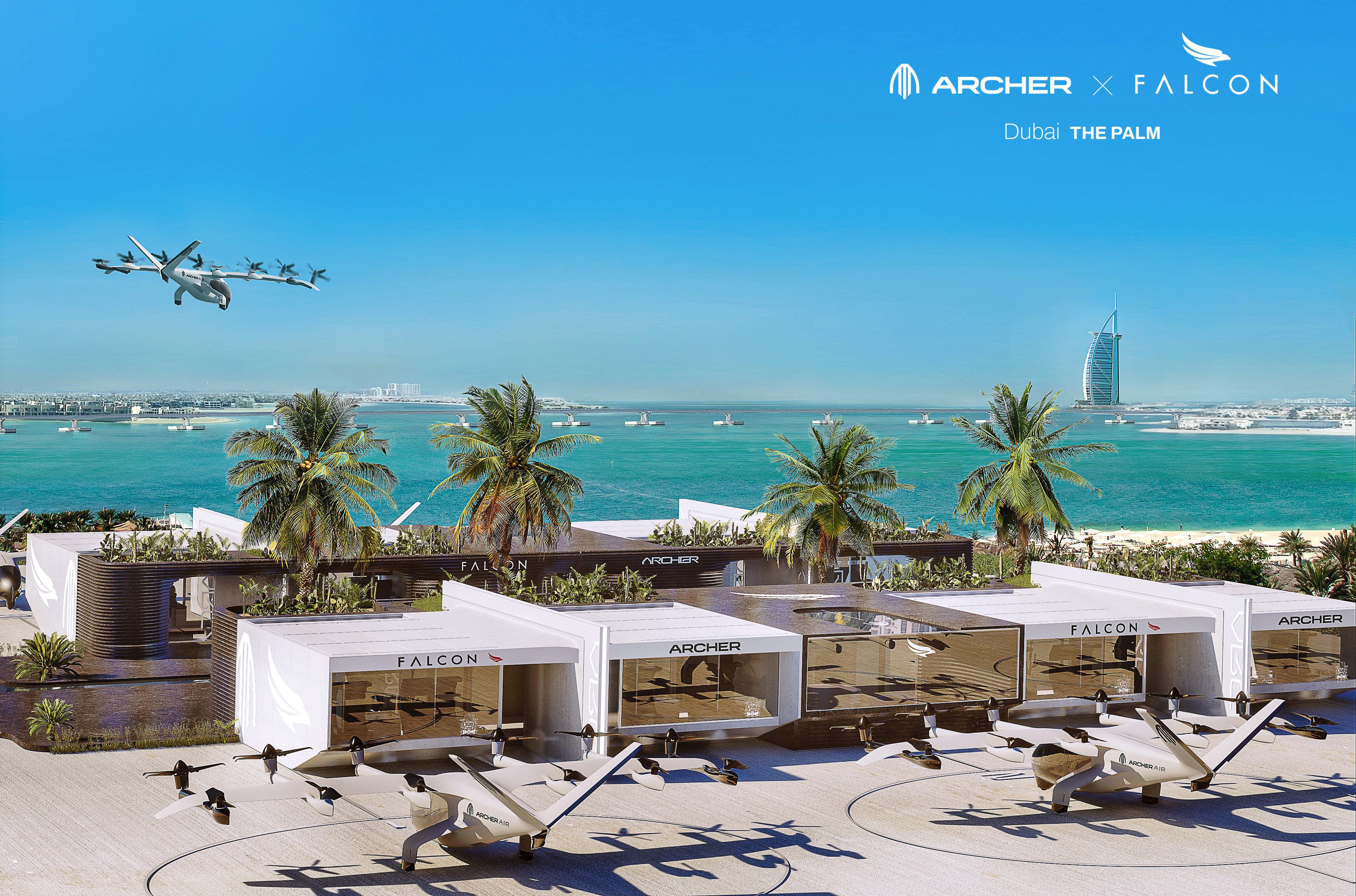
Abu Dhabi has made a significant stride in advancing its ambitions to be a global leader in smart and sustainable mobility with the launch of the first vertiport network in the emirate. This initiative, developed through a collaborative effort involving the Abu Dhabi Investment Office, the General Civil Aviation Authority, the Integrated Transport Centre, a division of the Department of Municipalities and Transport, and Abu Dhabi Airports, is aimed at laying the foundation for the integration of advanced air mobility technologies.

The launch of the vertiport network is a critical component of Abu Dhabi’s broader strategy to enhance its transport infrastructure, paving the way for the introduction of new, innovative transportation solutions. As part of the emirate’s push towards innovation and sustainability, the vertiports will serve as key hubs for electric vertical take-off and landing aircraft, which are expected to revolutionise both passenger and freight transport.

This move comes under the framework of the Smart and Autonomous Vehicle Industries cluster, a key element of the emirate’s economic diversification strategy. The SAVI cluster aims to foster innovation across a range of technologies, with a particular focus on creating a robust ecosystem for smart and autonomous transport solutions. The vertiport network is positioned as a crucial development within this ecosystem, enabling Abu Dhabi to become a testing ground for the integration of AAM technologies.

The first vertiport network will offer the necessary infrastructure to support the take-off, landing, and maintenance of advanced air mobility vehicles. These vehicles are anticipated to play an essential role in reducing congestion and providing environmentally friendly alternatives to traditional modes of transport. The network’s design ensures that it is adaptable to accommodate a wide range of eVTOL aircraft, which will play a pivotal role in the city’s future transport mix.

The initiative is aligned with Abu Dhabi’s long-term goals of transforming into a global hub for cutting-edge technologies and sustainable practices. As part of the Emirate’s sustainability drive, the focus on air mobility is not only about enhancing transport solutions but also about reducing the environmental footprint of traditional transportation. The eVTOL aircraft, with their zero-emissions technology, are an important step in aligning with the broader vision of sustainability and reducing reliance on fossil fuels.

Abu Dhabi’s commitment to leading the way in smart mobility is also reflected in its support for autonomous vehicles. As part of its efforts to integrate autonomous technology into its transport infrastructure, the emirate is working towards creating a fully connected and smart transport network. This includes the deployment of autonomous taxis and buses alongside the introduction of electric air vehicles.

The collaboration between ADIO, GCAA, DMT, and ADA exemplifies the strategic approach taken by Abu Dhabi’s leadership in bringing together public and private sector stakeholders to accelerate innovation. These partnerships are crucial in creating a seamless regulatory and infrastructural environment to enable the development and deployment of advanced transport technologies. The comprehensive regulatory framework being developed will ensure that the new air mobility solutions are safe, secure, and sustainable, providing a clear path forward for the industry.

International Holding Company, a prominent Abu Dhabi-based conglomerate, has posted significant financial results for the first nine months of 2025, driven by operational efficiency and a diversified investment portfolio. The company reported a 32.3 per cent increase in revenue, which reached Dhs84.6 billion, compared to the same period last year. The impressive growth in revenue was accompanied by an 8.3 per cent rise in net profit, which […]

Lendlease Global Commercial REIT, a real estate investment trust listed in Singapore, has secured a major acquisition, purchasing a 70% stake in Singapore’s Paya Lebar Quarter mall. The deal, valued at $679 million, sees the Singapore-listed trust take ownership of a significant portion of the property from the Abu Dhabi Investment Authority. The acquisition comprises 70% of the total issued units in the PLQM Trust, which owns […]

VISHNU RAJA
RYO YAMADA
HITORI GOTOH
IKUYO KITA