News related to
Abu Dhabi

Abu Dhabi National Energy Company PJSC and Emirates Water and Electricity Company have completed a Dh3.6 billion financing and development agreement for the Al Dhafra Power Plant, marking a significant expansion of dispatchable power capacity aimed at supporting the emirate’s fast-growing data centre sector. The project underlines Abu Dhabi’s strategy of pairing digital infrastructure growth with firm, utility-scale energy assets as demand from artificial intelligence, cloud computing […]

Abu Dhabi Government has enacted a sweeping overhaul of its human resources framework, introducing legislation that redefines how the public sector hires, develops and rewards its workforce of more than 25,000 employees. The 2026 Human Resources Law, which takes effect on 1 January 2026, is positioned by policymakers as a cornerstone reform aimed at making the government an employer of choice while embedding meritocracy across all levels of service.

Officials say the law marks a decisive shift away from traditional tenure-driven systems towards performance-based employment, aligning public sector practices with international standards followed by leading governments and multinational organisations. By prioritising capability, outcomes and continuous development, the framework seeks to attract high-performing professionals, retain specialist talent and strengthen institutional efficiency as Abu Dhabi advances its long-term economic and social ambitions.

Under the new legislation, recruitment and promotion will be governed by transparent, merit-based criteria designed to ensure fairness and competitiveness. Vacancies are to be filled through processes that assess skills, experience and demonstrated results rather than length of service alone. Career progression pathways have been formalised, providing employees with clearer expectations on how performance, leadership potential and expertise translate into advancement.

Compensation and benefits have also been recalibrated to enhance competitiveness with the private sector and global public institutions. The law introduces a more flexible benefits structure that can be adapted to different professional categories, recognising the need to attract scarce skills in areas such as digital transformation, policy design, financial oversight and advanced technical roles. While base pay structures remain regulated, performance-linked incentives are expected to play a larger role in recognising exceptional contribution.

Training and professional development form a central pillar of the reform. The legislation mandates structured learning pathways aligned with organisational needs and individual career plans, reinforcing the principle that advancement is tied to continuous capability building. Government entities are required to invest systematically in upskilling, leadership development and succession planning, ensuring that talent pipelines are sustained internally rather than relying heavily on external recruitment.

The law also introduces clearer frameworks for performance management and accountability. Employees will be assessed against defined objectives linked to institutional priorities, with evaluations feeding directly into promotion, development opportunities and, where necessary, corrective measures. This approach is intended to foster a culture of results, collaboration and innovation across departments.

Labour relations and employee wellbeing are addressed through updated provisions governing work arrangements, leave policies and workplace conduct. Flexible working models are expanded to reflect evolving expectations around productivity and work-life balance, while safeguards are strengthened to ensure fairness, inclusivity and professional integrity. Disciplinary procedures have been standardised to provide due process and consistency across government entities.

From a governance perspective, the reform centralises strategic oversight of human resources while allowing operational flexibility at entity level. This balance is designed to maintain uniform standards across the public sector while enabling departments to respond to their specific workforce needs. Digital systems are expected to support implementation, enabling data-driven workforce planning and more accurate measurement of performance outcomes.

Policy analysts view the legislation as part of a broader regional trend in which Gulf governments are modernising civil service frameworks to support economic diversification and competitiveness. Abu Dhabi’s approach stands out for its emphasis on measurable performance and its explicit effort to position public service as a destination for top-tier talent rather than a default career choice.

Business leaders and human capital specialists note that the success of the law will depend on consistent execution and cultural adoption. Embedding meritocracy requires not only new rules but also managerial capability to assess performance objectively and provide constructive feedback. The transition period in 2026 is therefore expected to involve extensive training for line managers and human resources professionals.

United Arab Emirates authorities said they would withdraw remaining military personnel from Yemen, citing operational considerations and safety concerns, a move that underlines shifting dynamics within the Saudi-led coalition as the conflict enters another uncertain phase. The announcement followed a flare-up in tensions with Saudi Arabia over the conduct and coordination of military operations in the war-torn country, according to officials familiar with the matter. The UAE […]

Arabian Post Staff -Dubai Abu Dhabi National Energy Company PJSC, known as Abu Dhabi National Energy Company PJSC, and Emirates Water and Electricity Company have finalised a 3.6 billion dirham agreement for the Al Dhafra Power Plant, marking a significant addition to Abu Dhabi’s generation capacity and underlining continued investor confidence in the emirate’s regulated utilities framework. The transaction centres on a long-term project financing structure in […]

Abu Dhabi Global Market, the international financial centre of the capital, has crossed a defining threshold as it enters its second decade, announcing the onboarding of 11 major global financial institutions that together manage more than $9 trillion in assets. The expansion has lifted total assets under management on its platform to about $746 billion, up sharply from $635 billion a year earlier and roughly $450 billion […]

Arabian Post Staff -Dubai Abu Dhabi sovereign investor ADQ has closed a $5 billion five-year syndicated term financing deal in the Greater China region, strengthening its liquidity while broadening access to Asian capital markets at a time of shifting global funding dynamics. The transaction marks one of the largest offshore syndicated loans secured by a Middle East sovereign-backed investor this year and reflects sustained appetite among Asian […]

Taraf, the real estate arm of Yas Holding, has entered a strategic development partnership with Masdar City to deliver Fay Hills, a 153-acre residential masterplan positioned at the centre of Abu Dhabi’s flagship sustainable urban district. The project reflects a broader shift in the capital’s property market towards low-carbon living, wellness-focused design and long-term community planning. Located within Masdar City, Fay Hills is planned as four interconnected […]

Advertisements

  President His Highness Sheikh Mohamed bin Zayed Al Nahyan held talks with American entrepreneur Elon Musk, focusing on advances in artificial intelligence and emerging technologies and how cross-border collaboration can accelerate innovation with practical benefits for societies and economies. The meeting underscored Abu Dhabi’s ambition to position itself as a global hub for advanced technology while engaging with influential private-sector leaders shaping the future of AI, […]

Arabian Post Staff -Dubai   Abu Dhabi-based Modon Holding PSC has entered the United States residential property market through a new joint venture to build a 54-storey tower on the Hudson waterfront, marking a strategic push by the developer to diversify earnings and deepen exposure to mature, dollar-denominated real estate markets. The company said it has partnered with US developer Related Companies and Jersey City firm Panepinto […]

Abu Dhabi-based developer Modon Holding has awarded a Dh5 billion main construction contract for two large residential communities on Hudayriyat Island, underlining the pace of high-end housing development in the capital’s waterfront corridor. The award covers Nawayef East and Nawayef West and involves the delivery of 735 luxury villas, the company disclosed in a filing to the market. The projects sit within the Nawayef master plan on […]

Arabian Post Staff -Dubai Abu Dhabi National Oil Company has finalised a $2 billion green financing facility backed by the Korea Trade Insurance Corporation, strengthening its funding base for lower-carbon projects as it seeks to align hydrocarbon operations with long-term energy transition goals. The facility, structured under ADNOC’s Sustainable Finance Framework, is earmarked for eligible investments across the company’s upstream, downstream and chemicals businesses, including emissions-reduction technologies, […]

Abu Dhabi Global Market has entered its second decade with a sharp acceleration in global financial activity, announcing the addition of 11 major international financial institutions whose combined assets under management exceed $9 trillion, a move that underscores the centre’s rapid ascent as a leading global hub for asset management. The influx lifts total assets managed within ADGM to about $1.27 trillion, a steep rise from $635 […]

ADQ and the Gates Foundation have announced a partnership aimed at scaling the responsible use of artificial intelligence and education technology to improve learning outcomes for children across sub-Saharan Africa, marking one of the most ambitious cross-sector efforts to apply advanced technology to foundational education systems in the region.

The agreement was unveiled on the sidelines of Abu Dhabi Finance Week during a visit to the UAE by Bill Gates, chair of the Gates Foundation, underscoring the growing role of Abu Dhabi-based sovereign investors in global development initiatives that extend beyond traditional infrastructure and capital deployment.

At its core, the partnership seeks to blend ADQ’s experience as a sovereign investor focused on critical infrastructure and global supply chains with the Gates Foundation’s long-standing work in education, health, and technology-driven development. The collaboration is designed to accelerate the deployment of AI-enabled tools that support teachers, personalise learning, and strengthen education systems while addressing concerns around data privacy, equity, and long-term sustainability.

ADQ–Gates alliance targets AI-powered learning systems as governments and development agencies look for scalable solutions to persistent gaps in literacy, numeracy, and teacher capacity across sub-Saharan Africa. Despite progress in school enrolment over the past two decades, learning outcomes across much of the region continue to lag global averages, with large disparities between urban and rural areas.

Officials familiar with the partnership say the focus will extend beyond hardware or software procurement. Programmes are expected to prioritise teacher support platforms, curriculum-aligned digital content, and AI-driven assessment tools that can function in low-bandwidth environments. Emphasis is also being placed on building local capacity so that education ministries and institutions can manage and adapt systems without long-term dependence on external providers.

The Gates Foundation has invested heavily in education technology across Africa, backing initiatives that use data analytics and adaptive learning models to improve classroom instruction. Its approach has increasingly shifted towards ensuring that digital tools complement teachers rather than replace them, a principle that is expected to guide the collaboration with ADQ.

For ADQ, the partnership aligns with a broader strategy of deploying capital and expertise into sectors that underpin economic resilience and human development. While the Abu Dhabi-based group is widely known for investments in ports, logistics, food security, and energy, it has expanded its scope to include technology-driven solutions with global impact, particularly in emerging markets.

Bill Gates, speaking during his visit to Abu Dhabi, highlighted the transformative potential of AI when applied responsibly to education systems under strain. He noted that advances in machine learning and language models can help teachers tailor lessons to individual students and identify learning gaps early, provided the technology is designed with clear safeguards and local realities in mind.

Education specialists caution that AI adoption in low-income settings carries risks if implemented without adequate oversight. Challenges include uneven access to electricity and connectivity, limited digital literacy among educators, and the potential for algorithmic bias when systems are trained on data that does not reflect local contexts. The partners say governance frameworks and pilot-based rollouts will be central to mitigating these risks.

The collaboration comes at a time when African governments are under pressure to modernise education systems while managing tight budgets and rapidly growing school-age populations. Multilateral lenders and philanthropic organisations have increasingly encouraged public–private partnerships to bridge funding and expertise gaps, particularly in technology deployment.

Abu Dhabi Finance Week has become a platform for such announcements, reflecting the emirate’s ambition to position itself as a hub for global capital addressing development challenges. ADQ’s involvement signals a model in which sovereign investors participate not only as financiers but as strategic partners shaping long-term outcomes.

People briefed on the initiative say initial programmes will focus on a select group of countries, working closely with education ministries to align AI tools with national curricula and policy objectives. Over time, successful models could be adapted across the region, with lessons shared among participating governments.

The Gates Foundation has previously stressed that technology alone cannot fix systemic issues in education, such as overcrowded classrooms or shortages of trained teachers. As a result, the partnership is expected to integrate AI solutions with broader reforms, including teacher training and data-informed policymaking.


Abu Dhabi Future Energy Company, known as Masdar, has withdrawn from a consortium seeking to take ReNew Energy Global private, bringing the proposed buyout of the Nasdaq-listed renewable power producer to an abrupt end and sending a fresh signal about the challenges facing large-scale clean energy transactions. ReNew disclosed the development in a filing to the US Securities and Exchange Commission, confirming that the investor group will […]

Mubadala Investment Company and Bain Capital have completed the acquisition of Service Logic, a major provider of commercial heating, ventilation and air-conditioning services, marking a significant private equity investment into North America’s building services sector. The transaction, announced on Wednesday, transfers ownership from Leonard Green & Partners and positions the company for an accelerated expansion phase under joint sponsorship by the Abu Dhabi-based sovereign investor and the […]

Arabian Post Staff -Dubai Hotel occupancy across the UAE climbed to 79.3 per cent during the first ten months of 2025, underlining the sector’s sustained momentum as visitor flows, air connectivity and investment continue to reinforce the country’s position as a global tourism hub. The figure marks an increase from 78 per cent a year earlier and places the UAE among the strongest performers both regionally and […]

Abu Dhabi-listed Two Point Zero Group has moved to full ownership of fintech platform Maseera, completing the acquisition of the remaining minority stake and consolidating its position in the fast-growing digital finance space. The transaction marks another step in the group’s strategy of scaling consumer-facing financial services across the Middle East and North Africa through tightly integrated platforms. Two Point Zero confirmed that its subsidiary, E Point […]

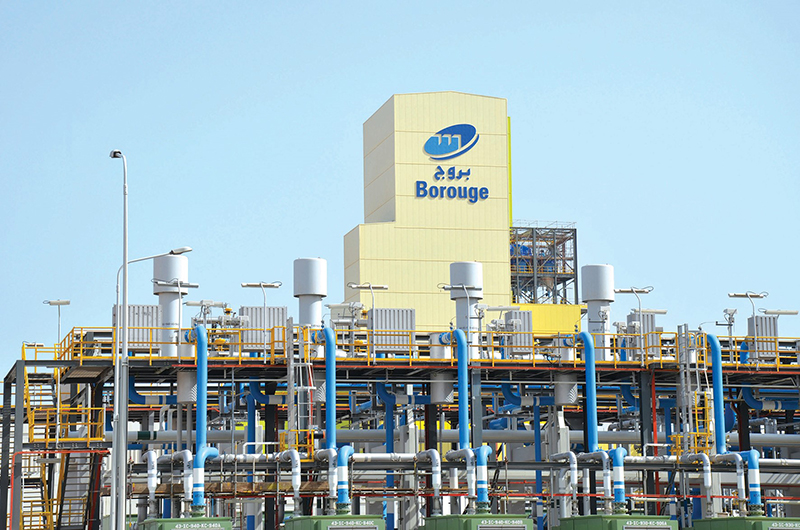
Borouge Plc has been included in the FTSE ADX Dividend Stars Index, a new benchmark launched by Abu Dhabi Securities Exchange in December 2025 that is designed to spotlight companies with a sustained record of dividend distributions, underlining the petrochemicals producer’s position as a core income stock within the local market.

ADX said the FTSE ADX Dividend Stars Index is the first income-focused index of its kind in the region, created to meet growing demand from investors seeking predictable cash returns alongside exposure to liquid, large-cap equities. The index brings together 17 companies that collectively accounted for more than 70 per cent of total cash dividends paid by ADX-listed firms during 2025, highlighting its role as a barometer for dividend strength across the exchange.

Borouge’s inclusion reflects its established dividend policy and scale within the Abu Dhabi market. The company, which produces polyolefins for infrastructure, energy, automotive and packaging applications, has been a consistent dividend payer since listing and is among the exchange’s most actively traded stocks by both institutional and retail investors. Its presence in the index places it alongside leading financial, energy and utility companies that dominate cash returns on ADX.

For market participants, the creation of the FTSE ADX Dividend Stars Index represents a strategic shift in how income strategies can be implemented in the Gulf. Until now, dividend-focused investors relied largely on individual stock selection or broader market indices that did not explicitly weight for income stability. By concentrating on dividend history and payout consistency, the new benchmark offers a clearer framework for portfolio construction aimed at long-term yield.

ADX officials have positioned the index as part of a broader effort to deepen the exchange’s product suite and attract international capital. Abu Dhabi has steadily expanded its market infrastructure through the introduction of sectoral indices, derivatives, exchange-traded funds and sustainability-linked products. An income-focused index is intended to complement these offerings by appealing to pension funds, insurers and asset managers with mandates tied to regular distributions.

Borouge’s operational and financial profile has supported its standing as a dividend anchor stock. The company benefits from integrated feedstock arrangements and proximity to key growth markets in Asia, the Middle East and Africa. Its production base in Ruwais, combined with access to Borouge 4 expansion capacity, has strengthened cash generation, even amid volatility in global petrochemical pricing cycles.

The company’s dividend record has also been closely watched in the context of broader consolidation within the Abu Dhabi energy and industrial ecosystem. Strategic alignment with major shareholders has emphasised balance sheet resilience and shareholder returns, factors that are central to index eligibility criteria focused on payout sustainability rather than short-term yield spikes.

The FTSE ADX Dividend Stars Index methodology places weight on historical dividend payments, liquidity thresholds and free-float considerations, ensuring that constituents are both investable and representative of income generation on the exchange. By capturing more than two-thirds of all dividends paid on ADX during the year, the index underscores the concentration of cash returns among a relatively small group of large, established issuers.

Market analysts note that such concentration can work to the advantage of income investors by reducing volatility and enhancing predictability, while also posing questions about diversification within dividend strategies. The index structure addresses this by capping individual weights and maintaining sector balance, allowing exposure to financial services, energy, utilities and industrials without over-reliance on a single name.

For Borouge, index inclusion may translate into incremental demand from passive and semi-passive investment products tracking the benchmark. Fund managers often use newly launched indices as the basis for exchange-traded funds or structured products, potentially increasing liquidity and reinforcing valuation support for constituent stocks.

Middle Eastern crude markets have shown clear signs of weakening as traders and refiners grapple with mounting concerns that regional supply is exceeding demand, adding pressure to an already fragile global oil balance. Pricing indicators closely watched by physical traders point to softer buying interest from Asia, where refiners face ample alternative supplies and uncertain consumption growth. One of the most telling signals has been the narrowing […]

Kuwait has moved to deepen its role in Gulf maritime trade after the Kuwait Ports Authority said it signed a memorandum of understanding with Abu Dhabi Ports Group to develop and operate the container terminal at Shuaiba port under a concession agreement. The arrangement places a major state-backed ports operator from Abu Dhabi at the centre of a facility that has long served as a backbone of Kuwait’s seaborne commerce, signalling a shift towards international partnerships to modernise ageing infrastructure and boost competitiveness.

The memorandum outlines a framework for collaboration that could see Abu Dhabi Ports Group involved in terminal operations, capacity upgrades and efficiency improvements at Shuaiba, subject to regulatory approvals and the finalisation of commercial terms. While financial details have not been disclosed, officials described the understanding as a step towards unlocking investment, technology transfer and operational expertise at Kuwait’s oldest port, which has faced mounting pressure from larger and more automated hubs elsewhere in the region.

Shuaiba port was established in the 1960s and remains a critical gateway for imports and exports despite growing competition from newer facilities along the Gulf. The port covers a total area of about 2.2 million square metres and has 20 berths, according to data published by the Kuwait Ports Authority. Its container terminal includes a storage area of roughly 318,000 square metres, making it a significant asset in a country that relies heavily on maritime trade for food, consumer goods and industrial inputs.

Officials familiar with the discussions said the focus of the partnership would be on improving berth productivity, reducing vessel turnaround times and expanding container-handling capacity to meet shifting trade patterns. Kuwait’s logistics sector has faced challenges linked to congestion, limited automation and slower clearance processes compared with regional peers. Partnering with an experienced international operator is seen as a way to narrow that gap without placing the entire investment burden on the state.

Abu Dhabi Ports Group has expanded rapidly beyond the UAE over the past few years, building a portfolio that spans ports, terminals, maritime services and logistics corridors across the Middle East, Africa and South Asia. Its strategy has centred on long-term concessions and joint ventures that integrate port operations with industrial zones and inland logistics. The Shuaiba memorandum aligns with that approach, offering access to a mature but under-optimised port in a strategically located market.

For Kuwait, the agreement reflects a broader policy push to diversify the economy and improve infrastructure efficiency as part of long-term development plans. While the country has invested heavily in oil and gas facilities, progress in logistics and transport has been slower, partly due to regulatory complexity and limited private-sector participation. Bringing in a regional operator with a track record in terminal modernisation could help accelerate reforms that have proved difficult to deliver through public investment alone.

Industry analysts note that container volumes in the Gulf are increasingly concentrated at mega-ports with deep drafts, advanced cranes and integrated digital systems. Smaller or older ports risk being sidelined unless they upgrade or specialise. Shuaiba’s location near industrial zones and population centres gives it an advantage, but sustaining that position requires capital spending and operational know-how. The proposed concession model would allow Kuwait Ports Authority to retain ownership while delegating day-to-day operations to a specialist partner.

The memorandum also carries geopolitical and commercial significance. Closer cooperation between Kuwait and Abu Dhabi in maritime infrastructure adds to a growing web of Gulf logistics partnerships aimed at strengthening regional supply chains. As global trade routes adjust to disruptions in other corridors, Gulf ports are competing to attract transshipment traffic and value-added services. Collaboration rather than rivalry is increasingly seen as a way to enhance resilience and bargaining power with global shipping lines.

Abu Dhabi-based International Holding Company has increased its ownership in Invictus Investment Company to about 40 per cent after acquiring an additional 17.5 per cent stake in a transaction valued at roughly Dhs420m, signalling a deeper strategic alignment between one of the region’s largest conglomerates and a global commodities trading platform. The investment was executed through the purchase of about 196 million shares in a major block […]

Arabian Post Staff -Dubai Middle Eastern crude markets are showing growing signs of strain as supply from the region appears set to exceed demand, reinforcing a broader softening trend in global oil fundamentals that has pressured benchmark futures and physical differentials. One of the clearest indicators has been the steady erosion in the premium of Abu Dhabi’s Murban crude over Brent. That spread, closely tracked by traders […]

Abu Dhabi’s Festival of Health 2025 opened with government officials and community leaders urging citizens and residents to adopt healthier lifestyle habits as part of a broader strategy to transform public health culture across the emirate. The multi-week event, organised by the Department of Health – Abu Dhabi in partnership with the Abu Dhabi Public Health Centre, spans three weekends and more than 140 activities designed to engage families, young people, older adults and people of determination in movement, nutrition, sleep and mental wellbeing. The opening ceremony was attended by Mansoor Ibrahim Al Mansoori, Chairman of DoH, and Dr Rashed Al Suwaidi, Director General of ADPHC, underscoring the initiative’s profile within Abu Dhabi’s health agenda.

Officials expect more than 30,000 visitors to participate as the festival moves from Hudayriyat Island in Abu Dhabi city to Madinat Zayed Public Park in Al Dhafra and concluding at Al Jahili Park in Al Ain later this month. Each location has been transformed into vibrant activity zones with free entry but online registration encouraged to support wider public health objectives. Programming includes group exercise sessions, nutrition workshops, sleep pattern awareness installations and mental wellbeing activities, blending education with entertainment to make prevention-oriented habits more accessible.

The festival is one of the first major activations under the Healthy Living Strategy, a multi-year plan approved by His Highness Khalid bin Mohamed bin Zayed Al Nahyan, Crown Prince of Abu Dhabi and Chairman of the Abu Dhabi Executive Council, that aims to integrate healthier choices into everyday life for all members of society. By embedding the event within this framework, authorities are emphasising a shift from reactive healthcare to proactive prevention, seeking to reduce the long-term burden of chronic diseases through community engagement and accessible wellbeing initiatives.

Central to the strategy and the festival’s approach is the Sahatna health app, which will be used to track attendance and engagement at activities, along with metrics such as steps taken by participants. Officials have suggested that analysing these patterns could yield insights into where improvements in infrastructure or targeted interventions might be most effective, particularly in districts with higher rates of obesity or lower levels of physical activity. By linking digital health data with on-the-ground community participation, authorities aim to create a feedback loop that strengthens future public health planning.

Public and private partners have played a significant role in shaping the festival’s offerings. Strategic collaborators include PureHealth, Sakina, the Department of Municipalities and Transport, Abu Dhabi Sports Council, Modon, Al Ain Farms, Agthia, Burjeel Cancer Institute, Nestlé and AstraZeneca, among others. Community partners such as Special Olympics UAE, Active Abu Dhabi and the Department of Community Development have contributed to inclusive programming, ensuring that activities are accessible and relevant to diverse segments of the population. A broad range of sponsors and supporting entities further reinforce the event’s capacity to connect health education with tangible experiences that encourage behaviour change.

Interactive elements have been central to the festival’s appeal, with “City Moov Challenge” digital experiences and family-oriented games offering incentives to embrace physical activity and cognitive engagement. Cooking demonstrations aimed at demystifying nutrition and practical sessions on sleep hygiene seek to translate scientific guidance into everyday routines. Presenters and health educators are focusing on achievable adjustments rather than restrictive frameworks, reflecting a broader public health ethos that small, consistent changes can cumulatively improve wellbeing.

Community response has been noticeable, with families and individuals of varied age groups attending fitness sessions, mindfulness workshops and educational talks. Many visitors have highlighted the festival’s family-friendly atmosphere and the value of practical demonstrations that show how health knowledge can be applied beyond the event. For some, the festival serves as an entry point into longer-term lifestyle adjustments, with participants citing intentions to maintain routine physical activity and better sleep habits after attending.

Officials have emphasised that the festival is not a standalone effort but part of a continuum of preventive public health measures across the emirate. Throughout the year, ADPHC’s programming promotes regular health screenings, physical activity and community education as integral to reducing risk factors associated with non-communicable diseases. This aligns with global trends in public health that prioritise prevention and holistic wellbeing over episodic treatment, recognising the economic and social benefits of healthier populations.

Chinese autonomous driving companies are accelerating plans to deploy self-driving taxi fleets across the Middle East, betting on strong government backing, advanced urban infrastructure and public openness to new mobility technologies to turn pilot projects into commercial services. Dubai has emerged as a key entry point. The Roads and Transport Authority issued its first autonomous driving trial permits in September, allowing Pony. ai, WeRide and Baidu’s Apollo […]

VISHNU RAJA
RYO YAMADA
HITORI GOTOH
IKUYO KITA