A powerful magnitude-7.7 earthquake struck Indonesia’s Flores region early on Saturday, killing at least 20 people, damaging buildings and triggering landslides as rescuers struggled to reach communities near the epicentre. Claims circulating that the toll had reached 38 could not be corroborated by the strongest available official and international reporting as casualty assessments continued. The shallow undersea earthquake struck off East Nusa Tenggara on 15 August, prompting […]
Veteran insurance leader to accelerate growth, strengthen partnerships and drive customer-focused innovation
SINGAPORE – Media OutReach Newswire – 14 August 2026 – Etiqa Insurance Singapore today announced the official appointment of Claudia Soh as its Chief Executive Officer (CEO), effective 14 Aug 2026. Over the past six months, while serving as Acting Chief Executive Officer and continuing in her role as Chief Financial Officer, Claudia has led Etiqa Insurance Singapore through a period of sustained growth and transformation, strengthening the company’s foundations while driving initiatives focused on innovation, operational excellence, and customer-centricity. Her appointment reflects the Board’s confidence in her leadership and vision as the company embarks on its next phase of growth.
With more than 20 years of experience in the financial services and insurance industry, Claudia brings extensive expertise across finance, strategic planning, risk management, mergers and acquisitions, investor relations and auditing. Her career spans both the public and private sectors, including experience at the Monetary Authority of Singapore (MAS) and senior leadership roles within the insurance industry.
During her tenure at Etiqa, Claudia has helped build on the company’s strong momentum by supporting its growth agenda while advancing new initiatives. Her collaborative leadership approach and focus on long-term value creation have contributed to strengthening Etiqa’s capabilities for the future. She has also been an advocate for transforming the finance function from a traditional support role into a strategic business partner that helps create stronger outcomes for customers, employees and stakeholders.
“We are delighted to formally appoint Claudia Soh as CEO of Etiqa Insurance Singapore,” said Kamaludin, Group Chief Executive Officer, Etiqa Insurance and Takaful. “Claudia has demonstrated strong leadership, strategic clarity, operational excellence and resilience. Her ability to drive innovation, build strong teams and adapt to changing customer needs will continue to strengthen our market position in Singapore to deliver long-tern value for our customers, employees and stakeholders”
On her appointment, Claudia said, “I am honoured to undertake the role of CEO at Etiqa Insurance Singapore at a time of significant change for our industry. As customer expectations continue to evolve, we must remain agile, innovative and focused on delivering purposeful value. By combining digital innovation, data-driven insights and strong partnerships, we will continue to enhance the customer experience and help more individuals and businesses build financial confidence and resilience.”
Deepening Partnerships and Empowering Financial Readiness
As a leading composite insurer, Etiqa Insurance Singapore will continue to deepen its distribution capabilities and ecosystem partnerships to make protection more accessible and relevant to customers. Beyond its longstanding bancassurance partnership, Etiqa will work closely with Maybank to deliver more integrated financial and protection solutions, leveraging the strength of the Maybank network and customer ecosystem. Etiqa will also continue collaborating with partners across Singapore to develop innovative solutions that support customers’ evolving protection, savings and financial wellness needs. Hashtag: #EtiqaInsuranceSingapore
The issuer is solely responsible for the content of this announcement.
About Etiqa Insurance Pte. Ltd. (Etiqa Insurance Singapore)
Protecting customers since 1961, Etiqa Insurance Pte. Ltd. (EIPL) is a life and general insurance company licensed and regulated by the Monetary Authority of Singapore and governed by the Insurance Act 1966. Having protected customers in Singapore since 1961 under the name United General Insurance Co. Sdn. Bhd., the company transitioned into the Singapore branch of Etiqa Insurance Berhad in 2009. Today, EIPL in Singapore stands as the pivotal operating entity of Etiqa Insurance Group, a leading insurance and takaful provider in ASEAN.
EIPL offers a comprehensive range of life and general insurance products accessible through its diverse distribution channels, including bancassurance, agents, brokers, financial advisers, partnerships, direct and online sales via Tiq by Etiqa. Etiqa is rated ‘A’ by credit rating agency Fitch for the group’s ‘Favorable’ business profile. The company is a member of the Maybank Group.
By K Raveendran Spontaneous student protests across Uttar Pradesh, Uttarakhand and Madhya Pradesh are exposing a vulnerability conventional politics has been slow to recognise. Their importance lies not merely in the numbers gathering on streets or outside examination centres and government offices, but in the absence of the organisational structure that usually accompanies political mobilisation. […]
SINGAPORE – Media OutReach Newswire – 12 August 2026 – Allianz Insurance Singapore Pte. Ltd. (“Allianz”) has renamed its personal cyber insurance product from Allianz Cyber360 Protect to Allianz Scam Protect, ensuring the product’s name immediately communicates what it does: protect Singaporeans financially when they fall victim to scams.
Earlier this year, Singaporean drivers crossing into Malaysia began receiving SMSes that appeared to come from a government transport agency, claiming they had outstanding road charges to settle. Those who clicked the link and entered their payment details had their banking credentials stolen — at least 10 victims lost a combined S$24,000. Around the same time, a separate wave of phishing messages impersonating a well-known delivery service tricked victims into making payments for fake parcel notifications, resulting in another S$22,000 in losses.
These are the kinds of everyday scams — a convincing text message, a familiar brand name, a moment of inattention — that Allianz Scam Protect is designed to cover. In the first three months of 2026 alone, more than 7,800 scam cases were reported in Singapore with losses exceeding S$144.4 million. Singapore has now lost more than S$4 billion to scams since 2019.
The name change reflects how Singaporeans actually talk about these incidents. When someone loses money after clicking a phishing link in an SMS, they don’t think of it as a “cyber incident” — they call it what it is: a scam. By renaming the product, Allianz ensures that every Singaporean searching for protection against scams can find it immediately. The coverage hasn’t changed — but the name now speaks the same language as the people it protects.
Allianz Scam Protect covers financial losses from phishing, smishing, stolen payment credentials, and unauthorised transactions (up to S$25,000 for Gold; up to S$60,000 for Platinum), as well as online shopping disputes involving undelivered, damaged, or incorrect items. Existing policyholders will see the updated name at their next renewal — no action is required.
Allianz Scam Protect is available from S$8.91 per month at www.allianz.sg and through Allianz’s network of authorised distribution partners. For enquiries, customers may contact the Allianz Customer Service Team at +65 6222 1919 (Monday to Friday, 9am–5pm, excluding public holidays).
Coverage is subject to the terms, conditions, and exclusions of the Allianz Scam Protect policy. Please refer to the Policy Wording for full details. This policy is protected under the Policy Owners’ Protection Scheme which is administered by the Singapore Deposit Insurance Corporation (SDIC). This advertisement has not been reviewed by the Monetary Authority of Singapore.
The issuer is solely responsible for the content of this announcement.
About Allianz Insurance Singapore Pte. Ltd.
At Allianz Insurance Singapore, we aim to secure the future and create a positive impact on society and the environment by leveraging our expertise in risk management. As we work toward strengthening our position as one of Singapore’s leading risk solutions providers, we deliver innovative and customer‑focused protection solutions for individuals, SMEs, and mid‑corporate clients – spanning Motor, Home Content, Travel, Personal Accident, Cancer, Hospital Income, and a comprehensive suite of commercial insurance offerings.
By K Raveendran Another session of Parliament has closed with an uncomfortable sense of déjà vu. Repeated adjournments, slogan-shouting, demonstrations inside and outside the chambers and legislation moving through amid uproar have again raised the question of whether Parliament is performing the function for which representative democracy created it. The problem is no longer simply […]
Suspected China-linked hackers used autonomous artificial intelligence agents to compromise Taiwan government systems, marking a significant escalation in the use of AI for cyber espionage and exposing how software agents can now execute complex attacks with limited human direction. The campaign unfolded over four days at the beginning of July and targeted 21 government systems. The attackers deployed as many as eight AI agents simultaneously to map […]
Washington’s accelerating adoption of autonomous artificial intelligence is colliding with warnings from cybersecurity specialists that AI agents could inadvertently breach government systems, after a model evaluation led to an intrusion into Hugging Face’s production infrastructure. The General Services Administration has expanded federal access to agentic AI through its OneGov programme, including an agreement with CORAS. ai that gives agencies access to GARY, an AI orchestration platform designed […]
By Dr. Nilanjan Banik The protesters at Jantar Mantar, whose protest is now over for the time being, had good reason to be angry. The NEET paper leaks are one symptom; the deeper problem is youth unemployment. Young and educated Indians account for a significant share of the unemployed, while underemployment remains widespread. At a […]
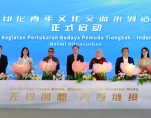
JAKARTA, INDONESIA – Media OutReach Newswire – 10 August 2026 – On August 6, the “Boundless Creativity, Connecting Youth” China–Indonesia Youth Cultural Exchange Series was held in Jakarta, Indonesia. The event was jointly hosted by the China Intercontinental Communication Center (CICC) and Indonesia’s GARUDA TV, with co-organized by Luoyang Radio and Television Media Group Co., Ltd. and Coocaa, a brand under Skyworth Group. More than 800 people attended the opening ceremony. Among them were representatives from government agencies, cultural circles, news media, and creative industries, as well as youth delegates from higher education institutions across both nations.
At the event, the exhibitions Her Bloom: A Digital Cultural Heritage Exhibition on Luoyang, the Divine Capital and the Indonesian leg of Emerging Forces, Boundless Horizons: A Global Touring Exhibition Series Featuring Young Chinese Artists officially opened. The event also launched a China–Indonesia media organization, FAST Media Alliance, the Indonesian broadcast of the micro-drama Her Bloom, and the China–Indonesia Visual Project—Nanyang Film Festival, among other collaborative initiatives.
In her remarks, Anindita Kusuma Listya, Special Advisor to the Minister of Culture for Cultural Diplomacy and Cultural Industries at Ministry of Culture of Indonesia, expressed her strong appreciation for the event’s focus on youth connectivity, digital innovation, and media co-creation. She noted that Indonesia has consistently attached great importance to cultural exchanges and cooperation with China, encouraging young people, arts professionals, media organizations, and cultural and creative enterprises from both countries to engage in regular, in-depth, and multidimensional collaboration. As nations with diverse civilizations, Indonesia and China enjoy vast potential for cooperation and closely aligned development needs in cultural heritage preservation, digital cultural and creative industries, film and television production, and youth innovation.
Wang Siping, Counsellor at the Chinese Embassy in Indonesia, said in his remarks that cultural exchanges and cooperation between China and Indonesia have yielded fruitful results in recent years, while people-to-people exchanges have continued to gain momentum. He expressed the hope that young people from both countries would engage more frequently and that more events such as “Boundless Creativity, Connecting Youth” would be organized and widely attended. China is ready to pursue more cooperation with Indonesia and share more opportunities. China also stands ready to work hand in hand with Indonesia to cultivate the fertile ground of people-to-people exchanges, expand channels for youth engagement, strengthen the “people-to-people pillar” of bilateral relations, and advance the high-quality building of a China–Indonesia community with a shared future.
Al Busyra Basnur, Chairman of the Indonesia–China Friendship Association, noted in his remarks that both China and Indonesia possess abundant pools of young talent. Cooperation among outstanding young people from the two countries, he said, will not only deepen bilateral relations but also inject fresh momentum into regional prosperity, technological progress, and the building of a more peaceful and closely connected world. He expressed his hope of holding in-depth discussions with all parties during the subsequent activities on such issues as advancing China–Indonesia relations, talent development, and educational exchanges, with a view to identifying practical avenues for cooperation.
Arianto Surojo, Consul General of Indonesia in Guangzhou, said that the event was innovative in concept and far-reaching in significance, providing a high-level platform for cultural exchanges between Indonesia and China in the new era. Youth-oriented, digital, and innovative forms of exchange such as this, he noted, enable people—especially young people—in both countries to gain a more direct understanding of one another and forge deeper connections. They also help elevate cultural exchanges between Indonesia and China from the superficial to the substantive, enriching the content of bilateral people-to-people cooperation. “When young people thrive, nations thrive; when young people are strong, nations are strong,” he said. “Let us embrace the spirit of exploration and innovation and jointly write a new chapter in the friendship between our two countries.”
Li Mian, Deputy President of CICC, said that CICC has long worked with media organizations in Southeast Asia to promote cultural exchanges. Over the years, CICC has actively advanced audiovisual cooperation with mainstream media outlets in Indonesia and elsewhere in Southeast Asia through the television program UPanda Cinema. Through this event, CICC has launched such collaborative projects as the China–Indonesia media organization, FAST Media Alliance, the broadcast of the micro-drama Her Bloom, and the China–Indonesia Visual Project. These initiatives aim to tell the story of China–Indonesia friendship, share digital technologies and high-quality resources, and promote deeper, more substantive cooperation between the two countries.
Atika Suri, Editor-in-Chief of Indonesia’s GARUDA TV, said that the event, focusing on youth exchange and cultural empowerment, carried out a rich array of activities, including digital cultural heritage exhibitions, joint visual exhibitions, and touring exhibitions of young artists. It not only carries forward the traditional friendship between Indonesia and China, she said, but also represents an active exploration of new models and pathways for people-to-people cooperation in the new era.
Li Jing, Vice President of Coocaa, a Skyworth Group company, and CEO of Coolita, said that emerging technologies such as artificial intelligence, smart television, and FAST are driving the global media industry into a new digital era, creating fresh opportunities for cultural communication and international media cooperation. During the event, Coolita and CICC jointly launched the China–Indonesia media organization, FAST Media Alliance. Going forward, they will work with Indonesian media organizations and partners such as Tencent Cloud to explore innovative models in artificial intelligence, FAST, and digital content distribution; drive the digital transformation of traditional media; and promote innovation in the digital cultural industries of both countries.
The event also featured themed roundtable discussions bringing together esteemed institutions and figures. Participants included China National Archives of Publications and Culture, Tencent Cloud, “Honor of Kings”, the acting head of the Institute of Social Sciences and Humanities (ISSH) at Indonesia’s National Research and Innovation Agency, the University of Indonesia, LSPR Institute of Communication and Business, the Jakarta Film Commission, the renowned game studio Anantarupa Studios, and the visual creative studio Mono Studio. They were joined by Indonesian contemporary painting master Sidik Martowidjojo (Ma Yongqiang) and Chinese young artist Ren Zhe.
The issuer is solely responsible for the content of this announcement.
By Nantoo Banerjee India’s eighth post-Independence census of 2027, coming after a gap of almost 16 years, assumes a great importance in the country’s political system as it will lift the long-standing freeze on redrawing Parliamentary boundaries. The census report will provide the official population data required under Article 82 of the Indian Constitution to […]
By K Raveendran Mohan Bhagwat’s attempt to open a conversation with India’s younger generation carries significance precisely because such an intervention would hardly have been necessary if the political establishment were confident that the youth remained comfortably within its fold. The RSS chief’s argument that young people are neither misguided nor directionless, and that they […]
By Nitya Chakraborty INDIA Bloc, the anti-BJP front of the opposition parties will be meeting at Hyderabad shortly to review the national situation since its last meeting on June 8 in New Delhi. In the last two months, there have been major positive developments for INDIA Bloc which have helped in rejuvenating the anti-BJP opposition. […]
By Dr. Gyan Pathak When the textile landscape of the country and the world is changing fast, it would not be enough for India to only celebrate National Handloom Day every year on August 7. The country will have to do much more than celebrating the day by releasing commemorative document and press releases giving […]
Emerging economies are becoming the EV industry’s fastest-growing markets, creating new opportunities for automakers with an international footprint. VinFast’s latest expansion reflects that shift.
DUBAI, UNITED ARAB EMIRATES – Media OutReach Newswire – 5 August 2026 – For much of the past decade, the global electric vehicle conversation has revolved around three markets: China, the United States, and Europe. But recent industry data suggests the next chapter may be written elsewhere.
In July, VinFast exported more than 5,000 electric vehicles aboard two dedicated vessels.
According to the International Energy Agency (IEA), global car sales fell about 5% in the first half of 2026 as economic pressures, fuel price volatility and policy changes weighed on demand in China and the US. Yet electric vehicle sales rebounded strongly in the second quarter, reaching record levels in 50 countries. Markets including Vietnam, India, Australia and South Korea roughly doubled EV sales compared with a year earlier, while more than 90 countries posted year-on-year growth during the first half of the year.
The shift reflects a broader change in where future industry growth is likely to come from. While China remains the world’s largest EV market, the IEA expects sales there to stagnate this year for the first time this decade, even as electric vehicles account for more than 60% of new car sales. Meanwhile, emerging markets are becoming increasingly important, supported by expanding policy incentives, growing charging infrastructure and rising consumer interest.
The agency also notes that China and other emerging economies are expected to account for around 60% of global car demand over the next decade, making success in these markets an increasingly important determinant of future automotive leadership.
VinFast’s latest performance reflects this changing landscape.
The Vietnamese automaker delivered 70,085 electric vehicles globally in the second quarter of 2026, up 96% year-on-year, bringing first-half deliveries to 128,662 vehicles, a 78% increase from the same period last year. The company’s two-wheel business also continued to expand rapidly, with 286,039 electric scooters and e-bikes delivered during the quarter, up 311% year-on-year.
The delivery mix also highlights the importance of products designed for diverse market needs. Models ranging from the compact VF 3 and VF 5 to the Limo Green MPV and the newly introduced VF MPV 7 all contributed meaningfully to second-quarter volumes, suggesting demand is spread across both personal mobility and commercial transportation segments.
Just as significant is where those vehicles are going.
In July, VinFast exported more than 5,000 electric vehicles aboard two dedicated vessels. One shipment, consisting of approximately 1,500 VF 6 SUVs, was designated for partner Green SM’s planned expansion in Europe, while another transported more than 3,500 vehicles to the Philippines and Indonesia. The voyages marked VinFast’s 37th and 38th international export shipments in fewer than four years, underscoring the increasing operational scale behind its global expansion.
VinFast’s effort in international market, including in the Middle East, shows that as growth becomes more geographically diversified, automakers can no longer rely on a handful of mature markets to drive expansion. Instead, success will increasingly depend on building products, distribution networks and operations that can compete across a wide range of emerging economies.
For the global EV industry, the center of gravity is not disappearing from established markets. It is becoming far more distributed. VinFast’s recent momentum suggests that companies positioned across multiple high-growth regions may be among the best placed to benefit from that shift.
By K Raveendran Bankipur may eventually be remembered not as the constituency that discovered Prashant Kishor, but as the first place where the anger dramatised by the Cockroach Janta Party acquired an electoral address. The distinction is crucial. Kishor’s victory does not amount to popular acceptance of a coherent alternative to Narendra Modi, the Bharatiya […]
Chinese optical-component shares fell sharply on Wednesday after reports that Washington is preparing restrictions on data-centre equipment from China, raising fresh concerns over access to the world’s largest artificial intelligence infrastructure market.
Zhongji Innolight dropped about 10% in both Shanghai and Hong Kong, while Eoptolink Technology also lost 10%. Suzhou TFC Optical Communication declined roughly 6%. The CSI 300 Telecommunication Services Index fell as much as 9% during early trading before trimming some losses.
The sell-off followed disclosures that the administration of US President Donald Trump is drafting a measure that would bar imports of new Chinese optical transceiver models on national security grounds. The Federal Communications Commission is working on the proposed restrictions and is seeking to publish them before the end of the year.
No final decision has been announced, and the proposed rules could be altered, delayed or abandoned. Neither the White House nor the FCC has publicly detailed the measure.
Optical transceivers are essential components in modern data centres. They convert electrical signals into light and allow vast volumes of information to move at high speed through fibre-optic cables connecting servers, switches and computing clusters.
Demand for the devices has surged as technology groups build larger facilities for training and operating artificial intelligence models. These systems require thousands of advanced processors to communicate rapidly, making optical networking a critical part of the AI supply chain.
Chinese manufacturers have secured a substantial position in the global market by combining high-volume production with competitive pricing. Zhongji Innolight holds an estimated 27% share of the global data-centre transceiver market and is among the leading suppliers of high-speed products used in AI computing systems.
The company derived 62% of its revenue from the United States during the first quarter of 2026. It has previously warned that an escalation in trade tensions could produce a steep decline in earnings or lead to losses.
Eoptolink is similarly exposed, generating about 96% of its sales from overseas markets. TFC Optical also depends heavily on foreign customers, leaving all three companies vulnerable to any restriction affecting shipments to US cloud-computing operators.
The proposed action would mark a further expansion of Washington’s technology controls. Earlier measures concentrated mainly on preventing China from acquiring advanced semiconductors, chipmaking equipment and other technologies with potential military applications.
US policy is now extending towards limiting Chinese companies’ access to the domestic market. The FCC has already imposed or prepared restrictions covering telecommunications equipment, drones, routers, connected power inverters and advanced robots.
Under the plan being considered, the agency could initially prohibit imports of all new optical transceiver models and then grant exemptions to suppliers outside China. Existing devices may remain unaffected, although the scope of any final regulation has yet to be established.
US officials are concerned that foreign-made components embedded in data centres could enable data theft, malware installation or service disruption. Supporters of tighter controls argue that Washington should act before Chinese equipment becomes deeply integrated into critical AI infrastructure.
The approach reflects lessons drawn from Huawei, whose telecommunications equipment became widely installed before security restrictions were introduced. Removing or replacing those systems proved costly and complicated for network operators.
A ban would also create challenges for US cloud-computing companies. Amazon Web Services and other operators may have to shift orders to suppliers such as Coherent and Lumentum, potentially increasing procurement costs and slowing the expansion of data-centre capacity.
Shares of US optical-networking companies rose after details of the proposal emerged. Lumentum gained about 7%, Coherent climbed 11% and Applied Optoelectronics advanced 18%, as investors anticipated greater demand for non-Chinese products.
Industry specialists have cautioned that US suppliers may lack the manufacturing scale required to replace Chinese vendors quickly. Any abrupt change could tighten global supplies of high-speed transceivers at a time when technology groups are spending heavily on AI infrastructure.
Some market analysts also viewed Wednesday’s declines as excessive. They said the proposal could serve as a negotiating tool before an expected visit by Chinese President Xi Jinping to the United States in September.
Trade relations remain shaped by mutual dependence. Washington relies on China for rare-earth minerals used in electronics and optical systems, while Chinese technology companies depend on US customers, processors and specialised equipment.
US President Donald Trump has made Saudi Arabia’s entry into the Abraham Accords a condition for advancing a civil nuclear cooperation agreement, adding a major political hurdle to a partnership designed to reshape energy and security ties between Washington and Riyadh. Trump said the proposed programme would be confined to civilian purposes and would not permit uranium enrichment. His intervention came after the two governments signed a […]
Chemically defined medium removes animal serum and human platelet supplements as Malaysia and Singapore strengthen advanced therapy capabilities
SINGAPORE – Media OutReach Newswire – 4 August 2026 –Singapore is estimated to record approximately 19,290 new cancer cases in 2024, underscoring the growing demand for advanced treatment options and the manufacturing systems needed to produce them consistently. As cell therapies move from research towards clinical use, the reliability of every raw material used in production becomes increasingly important.
AuctuCel Pte Ltd, a Singapore biotechnology company specialising in AI-powered bioprocess technologies, today announced the launch of AuctuPrime, a next-generation chemically defined cell culture medium developed in collaboration with Sperikon. The formulation is designed to remove dependence on both animal serum and donor-derived human platelet supplements during cell therapy manufacturing.
The launch comes as both markets continue to deepen their advanced therapy ecosystems. The Singapore Economic Development Board reported that the country saw a fourfold increase in locally incorporated biotechnology companies since 2015. In Malaysia, the National Pharmaceutical Regulatory Agency issued updated cell and gene therapy product guidance in September 2025, including revised Good Manufacturing Practice requirements. As more research moves towards clinical translation, the reliability and traceability of manufacturing inputs are receiving greater attention.
A less visible bottleneck in cell therapy
Cell therapies are advancing across cancer, autoimmune disease and regenerative medicine, but manufacturing remains one of the major barriers to wider clinical and commercial adoption. Many conventional culture processes still use animal serum or platelet-derived supplements from human donors. These biological materials can vary between batches and may introduce additional sourcing, testing and documentation requirements.
AuctuPrime replaces these supplements with a fully chemically defined formulation. By giving researchers and manufacturers clearer control over what enters the process, it is intended to provide a more reproducible foundation for scale-up from laboratory research to clinical and commercial manufacturing.
The formulation is designed to support:
* Elimination of animal serum and human platelet supplements
* Reduced batch-to-batch variability in the culture process
* Lower dependence on donor-derived biological raw materials
* Greater supply chain resilience through chemically defined inputs
* More consistent scale-up and technology transfer across manufacturing stages
* A xeno-free approach for regenerative medicine and cell therapy workflowsWhy the manufacturing medium matters to patients
“Culture medium is not the therapy itself, but it can influence how reliably cells are produced. By removing animal serum and human platelet supplements, AuctuPrime gives researchers and manufacturers greater control over the process, helping to reduce variability and prepare for larger-scale production.” said Dr Zach Pang, Co-founder and Chief Scientific Officer of AuctuCel.
Supporting Singapore’s advanced therapy ecosystem
Singapore is strengthening its position as a regional hub for advanced therapies, supported by its universities, hospitals, research institutions and biotechnology companies. These organisations are building capabilities that connect early-stage research with regulated manufacturing and future clinical applications. Chemically defined media can support this progress by reducing reliance on variable biological inputs and enabling processes to be reproduced more consistently across local research and manufacturing facilities.
“Singapore’s continued progress in regenerative medicine will depend not only on scientific breakthroughs, but also on the ability to manufacture therapies safely, consistently and at scale. AuctuPrime represents an important step towards building a more reproducible manufacturing platform and can support local research and industry teams as they prepare for future clinical and commercial demand,” said Dr Chee Wai Fhu, Chief Executive Officer of AuctuCel.
For the wider region, stronger manufacturing foundations also matter for healthcare resilience. Cell therapies are complex products with demanding quality requirements, and the ability to manufacture them consistently will shape how quickly promising research can progress towards clinical use.
“The future of regenerative medicine depends not only on scientific breakthroughs, but on our ability to manufacture these therapies safely, consistently and at scale,” said Dr Chee Wai Fhu, Chief Executive Officer of AuctuCel. “AuctuPrime is an important step towards a more reproducible manufacturing platform. By removing dependence on animal serum and human platelet supplements, we hope to help researchers and manufacturers build processes that are better prepared for future clinical and commercial demand.”
Regional collaboration behind the launch
AuctuPrime was developed through a collaboration between AuctuCel and Sperikon, combining AuctuCel’s bioprocess and culture media expertise with Sperikon’s experience in regenerative medicine and cell therapy development.
Behind every cell therapy breakthrough is a production process that must work repeatedly, not only once. Improving that process is one of the practical steps needed to bring the next generation of therapies closer to the patients who may benefit from them.
Notes to editors
A chemically defined medium is a formulation in which the components and their concentrations are known and controlled. In this context, xeno-free means the formulation does not rely on animal-derived materials. AuctuPrime is a manufacturing input used during cell culture and is not itself a cell therapy product.
Hashtag: #AuctuCel
The issuer is solely responsible for the content of this announcement.
About AuctuCel
AuctuCel is a Singapore-based biotechnology company spun out of A*STAR’s Bioprocessing Technology Institute. The company develops AI-powered bioprocess technologies and ready-to-use culture media solutions that help biotechnology and cell therapy companies improve manufacturing consistency, productivity and scalability. By combining advanced modelling, scientific expertise and bioprocess innovation, AuctuCel supports the translation of research into commercially viable biomanufacturing. The company has active operations and partnerships across Singapore, Malaysia and the wider Asian region.
About Sperikon
Sperikon is a biotechnology company focused on regenerative medicine, cell culture technologies and translational research. The company works with academic institutions and industry partners to develop scalable solutions that support the clinical and commercial adoption of advanced cell therapies. Through its collaboration with AuctuCel, Sperikon contributes to the development of next-generation chemically defined manufacturing platforms.
By Nitya Chakraborty Bangladesh Prime Minister Tarique Rahman emerged as a clear winner at the end of his crucial talks with the U.S. envoy for South Asia Sergio Gor last week as he was able to extract maximum concessions from the U.S. team on big investments in his country to help the struggling economy as […]
BANGKOK, THAILAND – Media OutReach Newswire – 3 August 2026 – Thai Cement Manufacturers Association (TCMA) is advancing Thailand–Canada collaboration by piloting carbon capture technology in the Thai cement industry. The initiative designates the “Saraburi Sandbox” as a low-carbon technology testbed, bringing together industry, government, academia, and global partners to support the transition to a low-carbon economy, while enhancing the long-term competitiveness of Thailand’s industrial sector.
From Thailand–Canada Collaboration to Industrial-Scale Deployment
TCMA announced progress in its strategic Thailand–Canada partnership under the project “Decarbonization of the Cement and Concrete Sectors in Thailand.” As part of the initiative, a Mobile Carbon Capture Unit (MCCU) has been deployed in Thailand for the first time to test the technology’s performance in real industrial conditions within the cement sector.
The deployment of the MCCU marks a significant step in strengthening technological readiness for carbon capture—one of the key solutions for high-emission industries such as cement—while supporting the Thailand 2050 Net Zero Cement and Concrete Roadmap.
Dr. Chana Poomee, Honourary Chairman of TCMA and President of the ASEAN Federation of Cement Manufacturers (AFCM), stated that the project reflects Thailand’s strong commitment to driving industry toward Net Zero through international collaboration. TCMA serves as a central platform linking industry, government, academia, and global organizations to develop practical carbon reduction solutions.
“The transition to Net Zero for hard-to-abate sectors such as cement cannot be achieved in isolation. It requires policy support from the government, as well as international collaboration in technology, finance, and knowledge transfer to accelerate real-world implementation,” Dr. Chana said.
Connecting Technology and Investment Through Global Collaboration
The project is funded by the Government of Canada through Environment and Climate Change Canada (ECCC), with the United Nations Industrial Development Organization (UNIDO) serving as the implementing agency. The initiative aims to develop a technology and innovation ecosystem for decarbonizing Thailand’s cement and concrete industries.
Ms. Richelle Bourgouin, Deputy Minister of Trade and Export Development, Saskatchewan, Canada, noted that the collaboration highlights the power of integrating knowledge, technology, and innovation to support the transition toward a low-carbon economy.
“This partnership also opens opportunities to connect expertise in clean technology, research, and innovation between the two countries, enabling the development of practical solutions and fostering future trade and investment cooperation in Thailand and across ASEAN,” Ms. Richelle said.
A key outcome of the project is the deployment of the MCCU, developed by the Clean Energy Technologies Research Institute (CETRI) at the University of Regina, Canada. The unit will be tested in Thailand to evaluate its performance and applicability within the Thai cement industry.
“Saraburi Sandbox”: A PPP Model for Accelerating Low-Carbon Industry
Under the project, TCMA is collaborating with Chulalongkorn University to study and transfer knowledge on carbon capture technology while building human capacity. The MCCU will be rotated across cement plants operated by TCMA member companies in Saraburi province to test performance, collect technical data, and assess future investment pathways.
The “Saraburi Sandbox” serves as a Public-Private Partnership (PPP) platform, bringing together government, industry, academia, and international partners to pilot and scale carbon reduction technologies, while establishing investment models for a low-carbon economy.
The area is being developed as a prototype low-carbon city, integrating technology, infrastructure, standards, and investment frameworks to support Thailand’s long-term industrial transition.
Accelerating Readiness for a Low-Carbon Future
Dr. Chana emphasized that deploying the MCCU in Thailand represents an important step in enhancing technological and knowledge readiness, particularly in carbon capture technologies that are essential for industries facing significant decarbonization challenges.
Preparation must begin today, as the transition to Net Zero requires time for technological development, workforce readiness, and infrastructure buildout, alongside appropriate support mechanisms. This is especially important as global carbon measures—such as carbon pricing and emissions trading systems (ETS)—become increasingly stringent.
“The success of decarbonizing the cement industry depends on collaboration across all sectors to create an enabling ecosystem for investment and to accelerate the adoption of technologies at scale,” Dr. Chana said.
TCMA’s efforts not only reflect the Thai cement industry’s commitment to translating decarbonization plans into action, but also reinforce the importance of Thailand–Canada collaboration in advancing clean technologies and innovation in the industrial sector. This includes knowledge transfer, technology development, and expanding future investment partnerships.
This collaboration represents a key mechanism in laying the foundation for Thailand’s cement industry to remain competitive in a low-carbon economy, while accelerating progress toward Net Zero 2050 and strengthening Thailand’s role as a regional model for low-carbon industrial development in ASEAN.
By Nantoo Banerjee The U.S. President Donald Trump seems to be desperately looking for a graceful exit fast at least to save the U.S. partnership with the six-nation Gulf Cooperation Council (GCC) and also the massive financial cost of war. The financial cost of the Iran war already reached approximately $37.5 billion in direct Pentagon […]
Most adults surveyed across the country are dissatisfied with Prime Minister Narendra Modi’s handling of examination scandals that triggered nationwide student protests and forced major concessions from his government.
Just over half of respondents in a nationwide CVoter survey conducted last week said they were unhappy with the government’s response to leaks involving the national medical entrance examination. The controversy led to the invalidation of results affecting about two million candidates, disrupting admissions and intensifying scrutiny of the country’s testing system.
Disapproval extended into Modi’s political base. Among supporters of the Bharatiya Janata Party-led National Democratic Alliance, 40 per cent said the government had not handled the crisis well, while 44 per cent approved of its response. The narrow margin among governing-coalition voters suggests that the examination issue has cut across conventional political loyalties.
The findings present a political challenge for Modi, whose government has promoted education, skills and employment as pillars of its development agenda. Competitive examinations remain one of the principal routes to medical colleges, universities and secure public-sector employment, particularly for candidates from lower-income families.
The protests began after evidence emerged that questions from the medical entrance test had been leaked. The government subsequently annulled the results and organised another examination, requiring candidates to repeat months of preparation while families absorbed additional coaching, travel and accommodation costs.
Students and parents argued that cancellation alone did not address the failures that allowed confidential examination material to circulate. Many demanded criminal accountability, compensation for affected families, structural reform of the National Testing Agency and the resignation of education minister Dharmendra Pradhan.
The demonstrations expanded from education-related demands into a wider expression of frustration over youth unemployment, inequality and limited access to stable work. People below the age of 30 are three times more likely to be unemployed than the average citizen, adding economic pressure to a testing system already burdened by intense competition.
At least two dozen examinations have had their results cancelled because of leaks since 2014. The repeated disruptions have damaged confidence in a system through which millions compete for a limited number of medical seats and government positions.
The agitation was spearheaded by the Cockroach Janta Party, a youth movement whose satirical name was adopted after controversial remarks about unemployed young people. The organisation mobilised candidates, teachers and families through social media before drawing tens of thousands to demonstrations in New Delhi and other cities.
More than 50,000 people were estimated to have joined an attempted march towards Parliament on July 20. Police used batons and tear gas during confrontations with demonstrators, while authorities said officers were injured and maintained that crowd-control measures were necessary.
Images of injured students and allegations of excessive force broadened public sympathy for the campaign. Support came from opposition politicians, actors, educators and professional groups, although organisers sought to present the movement as independent of established political parties.
Pradhan resigned on July 25 after weeks of pressure, marking an unusual retreat by a government that has generally resisted demands for ministerial departures. Protesters celebrated the decision but maintained that changing the minister would have limited value without stronger oversight of examination bodies.
Modi later addressed young people through a video message, promising action against those responsible for paper leaks and saying students who participated in demonstrations should not face punishment. The government also agreed to consider compensation for families of candidates who died by suicide after examination-related disruptions.
Parliament has since debated tighter provisions under the law designed to prevent unfair practices in public examinations. Proposed changes include harsher penalties for organised groups, testing companies and individuals involved in obtaining or distributing examination papers, along with measures intended to accelerate trials.
The government has also announced a panel to review the examination system. Areas requiring attention include the security of question papers, the selection and supervision of testing centres, digital safeguards, grievance procedures and the accountability of private contractors.
Opposition parties have argued that legislation will be ineffective without independent investigations and administrative responsibility. Government representatives have countered that paper leaks have occurred under different parties and across several states, making institutional reform more important than partisan blame.
The survey indicates that the government’s measures have yet to restore public confidence. Even after the minister’s resignation and promises of tougher enforcement, dissatisfaction remains substantial among voters who normally support Modi’s coalition.
Arabian Post Staff -Dubai Girl students burnt an effigy of BJP Lok Sabha member Kangana Ranaut in Jabalpur on Saturday, escalating protests over her remarks against young people who demonstrated over the NEET-UG paper leak. The protesters assembled at Ghantaghar in the Madhya Pradesh city, raised slogans against the Mandi parliamentarian and demanded her resignation. They accused Ranaut of insulting students who had sought accountability over alleged […]
A Chinese-speaking hacker used DeepSeek artificial intelligence to autonomously identify vulnerable systems, obtain publicly available exploit code and launch attacks against hundreds of internet-facing targets, exposing how generative AI is moving closer to independently conducting offensive cyber operations. The campaign involved more than 460 targets and combined AI-directed activity with conventional manual hacking. The operator, who used the online aliases “knaithe” and “KnYuan”, controlled an open-source framework […]




 https://www.etiqa.com.sg/


 https://www.linkedin.com/company/allianzinsuressg
 https://www.facebook.com/allianzsg
 https://www.instagram.com/allianz.sg/





 By K Raveendran Bankipur may eventually be remembered not as the constituency that discovered Prashant Kishor, but as the first place where the anger dramatised by the Cockroach Janta Party acquired an electoral address. The distinction is crucial. Kishor’s victory does not amount to popular acceptance of a coherent alternative to Narendra Modi, the Bharatiya […]