News related to
Arabian Post Special

In today’s fast-paced world, keeping your space impeccably clean takes time and effort. Bookaclean is an innovative cleaning platform that makes cleanliness simple, reliable, and effortless. More than just a cleaning company, Bookaclean represents a new philosophy of care — for your home, your time, and your peace of mind.  It combines advanced technologies, environmentally friendly products, and the work of experts to provide a new standard of […]

Branded residential developments in the Middle East and North Africa are now capturing a larger share of global signings, with standalone projects set to make up 45 per cent of the regional portfolio—well above the global average of 36 per cent.

Data from Global Branded Residences shows that the MENA region now accounts for 36 per cent of new global branded residence signings, outstripping traditional hubs such as North America, Europe and Asia. The region currently has 99 completed branded residences and 241 under development, representing 13 per cent of existing global supply and 25 per cent of the pipeline. The UAE leads with 201 projects, followed by Saudi Arabia and Egypt.

Dubai remains the most active city globally, with nearly 160 branded developments either completed or in the pipeline—surpassing markets like Miami, London, and New York. The breakdown in MENA shows that 31 per cent of completed branded residences are standalone, while 51 per cent of the pipeline comprises standalone projects. This shift indicates broader confidence among developers in models unlinked to hotel operations.

Fashion and lifestyle brands are playing an increasingly prominent role in driving the shift away from purely hospitality-anchored residences. In MENA, fashion labels account for 51 per cent of non-hotel branded projects—nearly double the global average of 26 per cent. Non-hotel brands now represent 30 per cent of the regional pipeline, up from 24 per cent among completed schemes. In effect, branded residences in the region are diversifying beyond hotels into lifestyle, design and luxury branding.

Fairmont is poised to be the largest operator in the region, with 19 schemes across completed and pipeline stages. New entrants include jewellery brand De Grisogono and hospitality/lifestyle brand Nobu.

Globally, the branded residences sector has expanded rapidly over the past decade. The total number of schemes globally stands at 1,746—779 completed and 967 under development. Across this global portfolio, hotel brands still dominate, accounting for 79 per cent of projects. However, standalone branded residences—those without hotel attachments—are projected to rise from about 8 per cent of the world’s projects to 12 per cent over time.

Broadly, the market is seeing several converging trends. Buyers are increasingly willing to pay a premium—often 20 to 35 per cent or more—for branded units over comparable non-branded luxury real estate, citing consistency of design, service, and long-term resale value. Developers, in turn, see branding as a differentiator that supports stronger pricing, absorption rates and margins. In fast-growing wealth markets, branding provides credibility and global marketing reach.

Asia Pacific has also moved into the spotlight. GBR has formally launched operations in APAC, targeting markets such as Thailand, Vietnam, India, Malaysia and emerging resort destinations. The firm forecasts that branded development projects in APAC may more than double, with the region evolving into one of luxury real estate’s fastest growing markets.

Nevertheless, challenges remain. Aligning brand partnerships with regional regulatory, legal and operational frameworks is complex. Delivering consistent service quality over time, especially in newer locations with less mature hospitality infrastructure, is no small task. In denser branded markets, developers must differentiate amenities, design and buyer experience to avoid commoditisation.

Abu Dhabi National Oil Company announced that its six publicly traded subsidiaries will distribute AED 158 billion in dividends through to 2030, nearly doubling the AED 86 billion cumulative payout since the first listing in 2017.

The announcement came during ADNOC’s inaugural Investor Majlis in Abu Dhabi, where the group underscored its commitment to shareholder returns and transparent governance. The dividend programme is subject to customary approvals and will provide long-term visibility to investors across its diversified portfolio of listed entities.

ADNOC’s six listed companies currently account for more than AED 550 billion in market capitalisation on the Abu Dhabi Securities Exchange and represent nearly 40 percent of the annual dividends distributed on the market. Under the new plan, three additional entities—ADNOC Distribution, ADNOC Gas, and ADNOC Logistics & Services—will join ADNOC Drilling in issuing quarterly dividends.

Dr Sultan Ahmed Al Jaber, ADNOC’s Managing Director and CEO, also serving as UAE Minister of Industry and Advanced Technology, described the dividend target as a “landmark step” adding clarity to the group’s capital return path. He stated the move would “enhance value” for citizens, residents, and partners, and reaffirmed ADNOC’s focus on cost discipline, efficiency and growth.

Each listed unit announced specific dividend floors and policy reforms. ADNOC Drilling set a cumulative floor of AED 25 billion by 2030, representing a 26 percent minimum return over the period. ADNOC Gas pledged a target of AED 90 billion, with dividends moving to a quarterly basis from 2025 onward. ADNOC Logistics & Services raised its guidance to AED 8.1 billion for 2025–2030 and intends to adopt quarterly distributions from the third quarter of 2025.

Other units will also tighten their dividend structures. ADNOC Distribution expanded its dividend policy through 2030 and targets cumulative returns exceeding 30 percent over the 2025–2030 period. Borouge affirmed a dividend floor for 2025 and envisaged a payout ratio of 90 percent of net profit in future years. Fertiglobe flagged interim dividend payments and share buybacks for 2025 to support yield.

Beyond dividends, ADNOC disclosed key developments across its upstream, LNG and petrochemical segments. ADNOC Gas has secured a long-term feedstock agreement worth AED 147 billion with its Ruwais LNG facility. Over 80 percent of project capacity is under contract. The group also reported that the merger of its petrochemical assets with OMV—that is, combining Borouge and Borealis into Borouge Group International —remains on course for completion in Q1 2026. Financing for the transaction, valued at AED 56.6 billion, is in place and synergies of at least AED 1.8 billion annually have been identified.

Earlier this year, ADNOC transferred its stakes in several listed subsidiaries—namely Distribution, Drilling, Gas and Logistics & Services—to its wholly owned investment arm, XRG, via off-market moves. The transfers, completed or pending regulatory clearance, were explicitly stated not to affect operations, leadership or dividend policies. Control remains with ADNOC via its 100 percent ownership of XRG.

Analysts view the dividend pledge as a strategic signal in a more competitive capital-raising environment. It strengthens the case for long-term investor confidence, especially amid global volatility in energy markets and shifting sector dynamics. Some warn, however, that such large commitments require careful balance with capital expenditure demands, especially for exploration, decarbonisation and upstream expansion to meet rising regional energy and gas demand.

ADVERTISEMENT

Arabian Post Staff -Dubai The Central Bank of the United Arab Emirates has boosted its gold reserves by about 32 percent in the first eight months of 2025, pushing the total value to AED 30.329 billion by end-August — a figure not seen before. The bank’s gold holdings stood at AED 22.981 billion at the close of December 2024. Between July and August alone, the value increased […]

Binance founder Changpeng “CZ” Zhao has publicly rejected Forbes’ assertion that his net worth is $87.3 billion, calling the figure “baseless and wildly overstated.” The dispute highlights ongoing tensions over the valuation of wealth tied to cryptocurrency assets, where transparency and methodology remain contested. Forbes placed Zhao near the top of its billionaire rankings, asserting that his holdings in Binance and related digital assets justify the $87.3 […]

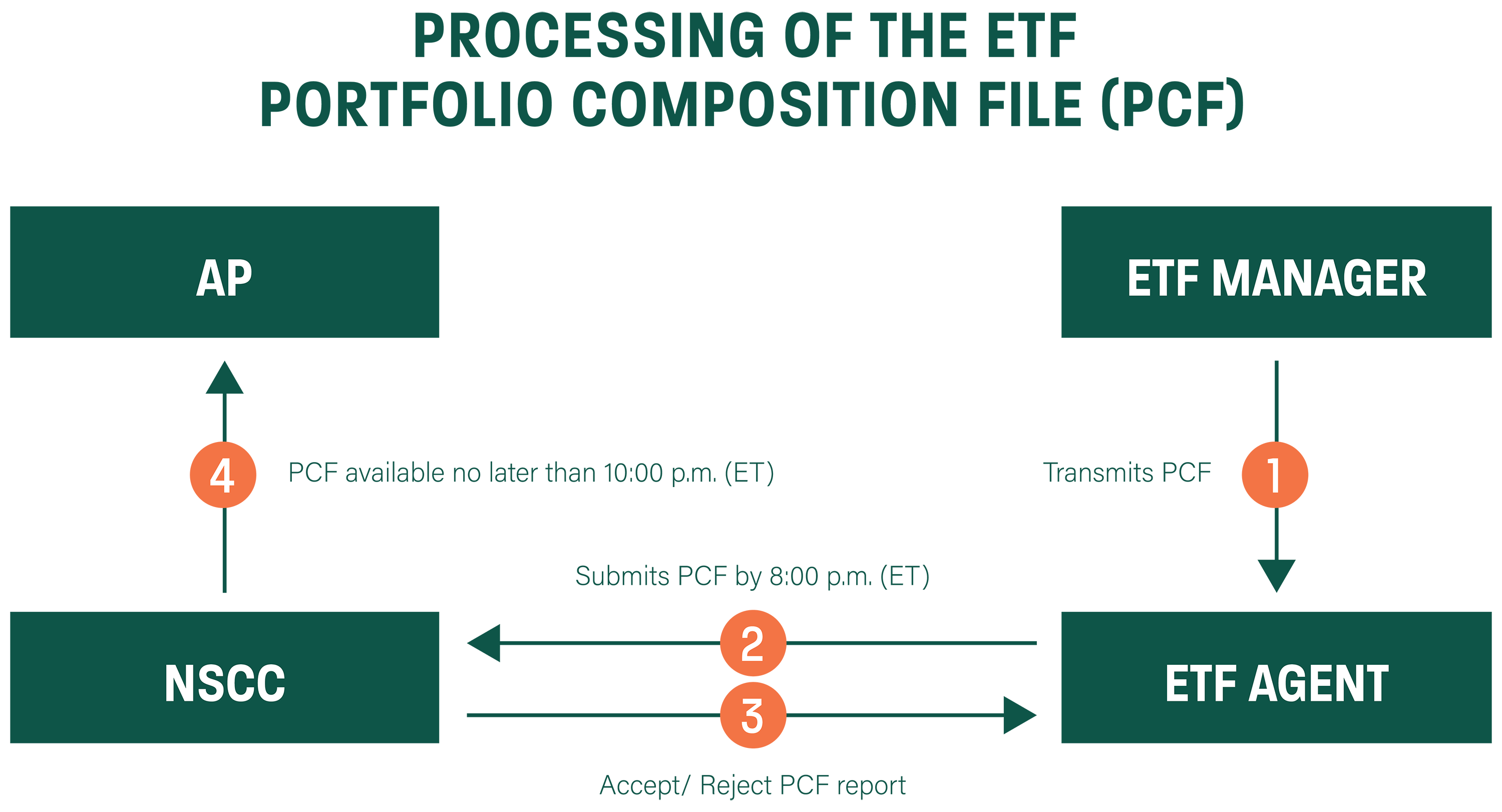
A proposed ETF tracking the TRUMP meme coin has appeared on the Depository Trust & Clearing Corporation’s system — an infrastructural step that signals intent, though it falls short of regulatory approval.

Canary Capital, which filed an S-1 registration with the U. S. Securities and Exchange Commission for the ETF, now sees its TRUMP Coin fund listed in DTCC systems alongside other altcoin ETF candidates. The DTCC listing enables clearing and settlement readiness should approval arrive.

Analysts view the development as a technical milestone. Bloomberg ETF specialist Eric Balchunas observed that once a ticker appears on DTCC’s eligibility file, it rarely retracts — underscoring the forward momentum for the product. Nonetheless, he and others caution that DTCC inclusion is procedural and does not guarantee SEC consent.

Canary’s filing proposes that the ETF would offer exposure to the price dynamics of TRUMP token without requiring investors to self-custody the asset. To cover transaction costs inherent in the blockchain architecture, the filing permits the fund to hold up to 5 percent in Solana’s native token SOL, although it will not treat SOL as a core investment.

The TRUMP coin is a Solana Program Library token whose market value hinges heavily on political sentiment, community engagement and volatility rather than fundamental utility. Critics have raised concerns about the blending of political interests with speculative finance, warning of conflicts of interest and reputational risks to the broader crypto ecosystem.

This development coincides with DTCC’s addition of other altcoin ETFs — namely Fidelity’s Solana ETF and Canary’s XRP and Hedera funds — to its eligibility files. These moves have injected renewed optimism into altcoin ETF markets, though all such listings still await the SEC’s green light.

Momentum for altcoin ETFs has accelerated since spot Bitcoin and Ethereum funds gained approval. Still, the SEC has kept other proposals on ice, deferring decisions and delaying rulings. The regulator’s patience underscores the risk-management pressures it faces in balancing innovation and investor protection.

Canary’s TRUMP ETF filing follows earlier efforts by Trump Media & Technology Group, which has sought SEC approval for a suite of thematic “Truth Social Funds” ETFs covering areas such as energy, infrastructure and American icons.

Advertisements
ADVERTISEMENT

Demand for Regulated Forex Brokers Grows for UAE Investors Trade247, a broker firm based in Dubai and regulated by the UAE’s Securities and Commodities Authority as well as the Financial Services Commission of Mauritius, has introduced its technology geared towards what it calls “complete multi-asset trading,” which covers forex, equities, indices, commodities, precious metals, energy products, and digital currencies, in which they identify the current trend of […]

By Nitya Chakraborty Just forty eight hours within the external affairs minister Dr. S Jaishankar’s candid statement that Trump has to respect red lines drawn by India at trade talks, Indian officials joining China, Russia, Taliban government of Afghanistan and even Pakistan denouncing President Trump’s bid to take over Bagram air base in Afghanistan, is […]

The article India’s Opposition To Trump Bid To Take Over Bagram Airbase Has Special Significance appeared first on Latest India news, analysis and reports on Newspack by India Press Agency).

Jamf launched its 16th annual Jamf Nation User Conference in Denver, unveiling a bold expansion of its device management platform with new AI tools, a richer API ecosystem and automated updates driven by declarative device management. The three-day gathering at the Colorado Convention Center brings together Apple IT administrators, security professionals and developer partners to explore the next era of enterprise Apple management. Jamf CEO John Strosahl […]

ADVERTISEMENT

Oil markets climbed modestly on Wednesday as traders digested OPEC+’s decision to raise production by only 137,000 barrels per day from November — a figure widely viewed as cautious and aimed at managing oversupply pressures. Brent crude gained about 0.7 per cent to $65.93 a barrel, while US West Texas Intermediate added 0.8 per cent, reaching $62.24.

The measured increase is part of an ongoing tug-of-war between easing supply fears and softening demand estimates. Analysts argue that the restrained hike helped calm immediate market jitters about a flood of new barrels entering global markets. At the same time, the surge in output from non-OPEC producers—especially the United States—is tipping the scale toward a heavier supply environment.

The U. S. Energy Information Administration raised its 2025 forecast for domestic oil production to a record 13.53 million barrels per day, up from earlier projections. That upward revision intensifies concerns that global inventories could swell, placing downward pressure on prices. The EIA warns that crude inventories may build further, potentially squeezing prices in the coming months.

OPEC+ has signalled a cautious approach. The bloc’s members, including Saudi Arabia and Russia alongside six others, opted for incremental supply additions rather than aggressive increases. The decision underscores a balancing act: securing market share without triggering a disruptive oversupply.

Some market watchers believe the group is constrained by internal capability limits and the risk of destabilising the market. Only about 75 per cent of the targeted 2.7 million bpd raise since April has actually materialised, as certain member states struggle to meet output goals. Meanwhile, signs of macro slowdown and tepid fuel demand, especially in Asia and Europe, loom as headwinds.

Large oil majors are already adjusting strategies to navigate the tighter margins. Chevron, ExxonMobil, BP, Shell, and TotalEnergies are implementing cost cuts, trimming share buybacks, and streamlining operations to preserve balance sheets. Oil prices under $65 are straining profitability across the sector, particularly for producers with high breaking-even costs. Shell, for instance, has taken a $600 million impairment hit tied to biofuel and remediation operations in Europe.

In Argentina, falling oil revenues threaten the government’s ambitious economic plans centred on energy exports. Output at the country’s Vaca Muerta formation peaked in August but has shown signs of deceleration due to weaker global pricing and elevated costs. Local industry sources warn that strapped fiscal conditions and foreign-exchange restrictions are discouraging further investment.

Futures markets also reflect a state of tension. The structure remains sensitive to signals that either reassure or alarm about supply and demand balances. Traders are closely watching upcoming US inventory data, geopolitical developments affecting Russian shipments, and demand dynamics from China. Some analysts regard the cautious output hike as a temporary reprieve, with the risk that a sharper fall may take prices into the $50–$60 range if oversupply intensifies.

The International Energy Agency projects a potential surplus of 3.3 million barrels per day in 2026, even if current output levels persist — a scenario that would further test OPEC+’s capacity to contain downside. In contrast, OPEC’s internal modeling suggests a smaller deficit under the same conditions, reflecting wide divergences in forecasting assumptions. Investors and policymakers now wait for signs of demand resilience or fresh supply shocks, both of which could dictate whether oil stabilises in the $60s or slips further.

Arabian Post Staff -Dubai Abu Dhabi-based PureHealth Holding has finalised the acquisition of a 60 percent stake in Hellenic Healthcare Group, valued at €800 million, in a move that places HHG’s full equity valuation at around €1.3 billion. This deal represents a major step in PureHealth’s plan to build a globally connected, innovation-driven healthcare platform from its base in the UAE. PureHealth will acquire its majority stake […]

By Sushil Kutty Rare minerals included lots of ores, this was something we were taught in school and we learned about stone age, copper age and iron age, the last of which remains to this day the most basic of minerals, out of which was born steel and the term steely strength, like in ‘Superman […]

The article Pakistan Is The Dearest To Trump In Asia As Islamabad Exports Rare Earth Minerals appeared first on Latest India news, analysis and reports on Newspack by India Press Agency).

Edgecore Networks will reveal its latest open infrastructure solutions at the OCP Global Summit in San Jose and GITEX Global in Dubai, with demonstrations of next-generation AI, networking, and compute platforms designed to ease deployment and boost performance.

The Taiwanese firm plans four flagship showcases: new Tomahawk 6–based data centre switches, a proof-of-concept for co-packaged optics, its Nexvec™ turnkey AI solution, and an upgraded Nous infrastructure controller offering composable compute management. The exhibitions will take place during the week of 13 October: at the OCP Summit from 13–16 October and at GITEX from 13–17 October.

Edgecore emphasises that the Tomahawk 6 switches can deliver more than 100 Tbps of bandwidth, supporting AI cluster demands with low latency and high density. The company adds that its CPO concept demonstrates integration of optical elements directly into switch silicon, reducing power and footprint. Its Nexvec™ offering is a pre-validated stack combining open networking with GPU compute, while Nous enables dynamic allocation of GPU, memory and compute resources.

Mingshou Liu, President of Edgecore, is quoted as saying that as AI workloads accelerate, simplifying deployment is crucial, and that the firm seeks to lead in the open infrastructure community with turnkey and scalable offerings.

Edgecore’s push comes at a time when hyperscale data centre operators are under pressure to manage burgeoning AI compute demands without ballooning costs or power draws. Industry trends point to co-packaged optics, disaggregated architectures, and composable resource frameworks as priorities for the next wave of infrastructure evolution. At the OCP Summit, the AI HW/SW co-design and open systems tracks will explore modular compute, memory architectures and photonic interconnects for AI clusters.

In parallel, GITEX Global has become a high-stakes stage for showcasing AI infrastructure, especially in the UAE’s drive to scale AI capabilities and attract global tech investment. With over 45 editions, the event draws global vendors and governments presenting AI, semiconductors, networking, and startup innovation. Edgecore’s presence signals its intention to engage key markets in the Middle East, where data centre growth, AI deployment, and regional cloud expansion are strong levers.

Edgecore is not alone in spotlighting AI infrastructure at these events. Major networking suppliers, chip vendors, and cloud players are expected to present competing solutions, particularly around optical integration, disaggregation, and hardware-software co-design. Observers will closely track how well Edgecore’s offerings stack up in power efficiency, interoperability, and ease of deployment.

Within its broader strategic frame, Edgecore continues to emphasise open, standards-based infrastructure. Its public messaging highlights disaggregated networking, composable compute, and software-defined manageability. The timing of product demonstrations at both OCP and GITEX gives the company a dual audience of deeply technical integrators and regional enterprise buyers.

At the OCP Summit, Edgecore’s participation also coincides with evolving community priorities—AI, sustainability, modular compute, and photonics interconnect are central tracks. During the event, Edgecore’s representative Tim Zhou will present on simplifying large-scale “agentic AI” deployments in a session scheduled for 16 October.][5])

ADVERTISEMENT

MetaMask is rolling out a new on-chain rewards programme that will allocate more than $30 million worth of LINEA tokens during its first season, offering “special benefits” to long-time users and bridging the move with the launch of its own token.

The wallet’s parent, Consensys, confirmed over the weekend that this initiative is not merely a farming scheme but a dedicated rewards system aimed at recognising consistent user engagement. The rewards package will include referral bonuses, incentives denominated in mUSD, exclusive partner rewards, and early token access. MetaMask emphasised that the campaign is built to reward habitual on-chain activity, not speculative intervention.

LINEA, the native token of Consensys’ Layer 2 network, was launched in September via a token generation event distributing roughly 9.4 billion tokens. By tying the MetaMask rewards system to LINEA, the firm aims to channel wallet activity toward its own roll-up infrastructure. The rewards plan positions MetaMask not just as an interface but as an active participant in building the Layer 2 ecosystem.

Joseph Lubin, CEO of Consensys and co-founder of Ethereum, described the rewards drive as a step toward redefining the MetaMask experience. He stated that the programme is a “genuine method of regularly giving back to our community” and stressed that long-time users—whom the team terms “OGs”—will receive priority consideration. This linkage is also viewed as a precursor to the upcoming MetaMask token, tentatively known as MASK, which Lubin first publicly referenced in September.

The broader strategy links three core components: MetaMask’s wallet, the mUSD stablecoin, and the LINEA network. The mUSD token, issued by Bridge, reportedly has a circulating supply of nearly $88 million. Participation in the rewards scheme is expected to stimulate usage across these components: swapping, bridging, stakes, and portfolio activity within MetaMask.

While the announcement lays out the broad contours of the rewards campaign, it leaves critical details unspecified. MetaMask has not yet revealed eligibility criteria by jurisdiction, and no clear anti-Sybil or bot-prevention measures have been announced. The absence of such safeguards has drawn scrutiny from observers concerned about gaming of reward systems.

Community reaction on X has been mixed. Some users welcomed the move as a long-awaited monetisation of loyalty, while others questioned whether the structure might favour larger holders or those in jurisdictions with favourable access. Some pointed to past programs in the crypto space that allowed special participants to disproportionately benefit.

Arabian Post Staff -Dubai Goldman Sachs lifted its December 2026 gold price forecast from $4,300 to $4,900 per ounce, citing strength in Western exchange-traded fund inflows and sustained central bank purchases. Gold’s spot price hovered around $3,960 per ounce early on Tuesday, having earlier touched an intraday high of $3,977.19. Goldman analysts expect central banks—particularly in emerging markets—to continue diversifying foreign-exchange reserves into gold, with forecast average […]

Robinhood’s platform is showing no signs of disruption after earlier reports emerged of a service breakdown affecting user access to its trading tools.

The company’s official status portal now declares “All Systems Operational,” even as its legacy status page has been retired. Meanwhile, independent monitors such as StatusGator and Uptime report no active outages.

Accounts of platform failure surfaced earlier today, with multiple users posting screenshots of login failures, trading delays and “app frozen” errors. Robinhood’s support centre responded with standard troubleshooting advice: update the app, check network connectivity, and switch to cellular data if needed.

Analysts and platform watchers say the timing of such incidents often elevates anxiety in retail trading communities, particularly when broader market volatility is feeding uncertainty. Past disruptions at Robinhood have been linked to temporary liquidity shifts and skewed price responses in thinly traded stocks. A study published in a financial markets journal suggests that outages on digital trading platforms tend to reduce order imbalances—but only until normal service resumes.

The brokerage has faced similar failures before, most notably during the meme-stock frenzy and other high-volume trading periods. In 2020, service breakdowns prompted class-action lawsuits, claiming users lost money because orders could not be processed. The company later agreed to settle those lawsuits and paid penalties to state regulators.

Regulators have continued to scrutinise Robinhood’s operations. In March, the company agreed to pay $29.75 million to settle a FINRA probe over inadequate supervision, lax anti-money laundering controls, and failures in handling order execution policies. Under that settlement, $26 million is assigned as a fine and $3.75 million as customer restitution. The firm did not admit wrongdoing.

Market observers say this backdrop intensifies scrutiny over any glitch at Robinhood. Trust in digital brokerages hinges on uninterrupted service, especially for retail investors who often enter or exit positions during sharp market moves.

Robinhood recently announced moves to expand in the UK, directly challenging legacy platforms like Hargreaves Lansdown and AJ Bell. Its planned British entry includes proposals for a no-fee stocks and shares ISA and prediction market offerings, pending discussions with the UK’s Financial Conduct Authority.

Internal sources suggest the company is investing heavily in backend resilience and redundancy to mitigate future downtime risks. Whether today’s incident will spur formal review or regulatory inquiry remains to be seen.

ADVERTISEMENT

Teams at GITEX Global 2025 in Dubai will put liquid-cooled AI laptops under extreme thermal stress, testing whether advanced cooling systems can uphold sustained performance in one of the world’s harshest climates. Omnix International’s HOT Systems division, in partnership with PNY, will unveil a lineup of AI workstations, liquid-cooled laptops and the new HOT Guard monitoring suite, aiming to prove that these machines can maintain stability in high ambient temperatures.

At the heart of the exhibit is the challenge posed by regional heat: daytime temperatures in Dubai frequently exceed 40 °C, while indoor exhibition halls still pose cooling constraints. For high-performance AI workloads—particularly those involving CAD, BIM and machine learning—thermal throttling can cripple throughput. HOT Systems claims its integrated cooling and hardware optimisation can circumvent that performance drop. The accompanying HOT Guard software will monitor temperatures, fan and pump behaviour and security in real time on site.

Liquid cooling is no novelty in high-density server enclosures, but applying it in portable form factors presents a tougher engineering problem. In data centres, the shift from air to liquid systems has accelerated because conventional cooling struggles to keep up with power densities above 10–15 kW per rack. Liquid systems offer reduced power use, higher thermal headroom and often reclaimed waste heat reuse. But translating that to mobile form demands compact and robust fluid paths, efficient pumps, and risk control against leakage.

Advances in chip cooling are reinforcing that liquid systems represent more than a marginal improvement. Microsoft engineers have developed a microfluidics cooling technique that embeds coolant channels within the silicon substrate itself, enhancing heat removal efficiency at the chip level. That suggests future AI hardware may increasingly rely on liquid solutions at a micro scale.

Regional data centre operators are already embracing the shift: Khazna Data Centres, active across the UAE, has rolled out the country’s first liquid-cooled AI data centre and is developing more AI-optimised campuses. The move reflects recognition that standard cooling infrastructure cannot scale profitably with AI workloads.

Technical design choices behind liquid cooling include direct-to-chip systems, which place cold plates atop CPUs or GPUs, and immersion cooling, where liquid envelops hardware. The former is more suited for modular, retrofit deployments; the latter can offer full heat removal but introduces maintenance and material challenges, especially for localised devices. A recent review in AI systems architecture emphasises single-phase direct cooling as a flexible compromise for power levels below extreme thresholds, though it demands high reliability in fluid delivery and sealing.

Within the exhibition context, the HOT Systems demo will likely emphasise sustained throughput rather than peak benchmarks. The company plans real-world workflows—such as rendering, simulation and AI model inference—to demonstrate how the cooling system maintains clock speeds under load. PNY’s involvement underlines the reliance on qualified memory, GPUs and driver support, ensuring that thermal gains translate into usable computing stability.

End-users in architecture, media, engineering and AI fields are closely watching such developments. If heat throttling can be mitigated in this climate, portable AI rigs could expand in markets previously constrained to air-conditioned labs. But adoption depends on how well the solutions resist failure under harsh dust, vibration and heat cycles inherent to Gulf environments.

Unlocking Africa’s Growing Payment Corridors for UAE Enterprises UAE now has a payment partner that unlocks Africa’s growing economic opportunity Verto today announced its official launch in the UAE. With over $25 billion processed annually for clients such as Unilever, and Maersk, the company’s platform is designed to address the unique challenges of cross-border payments between UAE and emerging market currency corridors (particularly in Africa), offering businesses […]

By Nitya Chakraborty Indian foreign policy makers have at last showing some mature understanding of the geopolitics of the post-Trump.2 months if the external affairs minister Dr. S Jaishankar’s observations at the concluding session of Kautilya Economic Conclave in New Delhi on Sunday, are any indication. The minister was quite candid in explaining the complexity […]

The article EAM Jaishankar Is Right: Trump Has To Respect India’s Red Lines appeared first on Latest India news, analysis and reports on Newspack by India Press Agency).

Dubai has issued Law No. of 2025 to regulate the professional practice of engineering consultancy firms, forbidding unlicensed operations and introducing a tiered classification system.

Under the law, no individual or office may conduct consultancy across fields such as architectural, civil, mechanical, electrical, chemical, geological or coastal engineering in the emirate without proper authorisation. Firms must hold a valid trade licence, register with Dubai Municipality, and submit detailed disclosures regarding their licensed scope, classification, and technical staff credentials.

A unified electronic platform, to be integrated with “Invest in Dubai,” will centralise firm registration, classification, issuance of competency certificates, and updates to consultancy qualifications.

A permanent “Committee for the Regulation and Development of Engineering Consultancy Activities” will be established under the law, chaired by a Dubai Municipality representative and comprising stakeholders from relevant authorities, tasked with overseeing implementation and resolving sectoral disputes.

The legislation classifies eligible firms into several categories: local Dubai-based companies; branches of UAE-based consultancies with at least three consecutive years of experience; branches of foreign consultancies with at least ten years of global experience; joint ventures between local and foreign players with at least a decade of consultancy track record; advisory offices led by registered engineers with a decade of experience; and engineering audit offices providing third-party evaluations.

Firms are barred from operating beyond their licence scope, hiring unregistered engineers or subcontracting to unlicensed entities. Violations can attract fines up to AED 100,000, stricter penalties for repeat breaches, suspension, downgrading classification, removal from the registry, licence cancellation, or revocation of professional certificates. Affected parties may file appeals within 30 days and decisions must be issued within 30 days, communicated within five working days.

Existing regulations under Local Order No. 89 of 1994 and its amendments will remain effective until new implementing regulations are issued, provided they do not conflict with the new law.

Consultancy firms and staff will have one year from the law’s effective date to regularise their status; extensions may be granted, and expired registrations can be renewed by committing to full compliance.

Dubai’s move mirrors the emirate’s broader legal recalibration of the infrastructure sector. In July 2025, Law No. 7 of 2025 was enacted to regulate contracting activities, consolidating prior laws and mandating registration, classification, subcontracting oversight and ethics codes across construction and engineering services. The new consultancy law can be seen as a complementary measure to ensure that consultancy services feeding into contracting projects meet defined quality and governance standards.

Industry stakeholders have expressed cautious optimism about the changes. Some consultancy firms believe the law will reduce unfair competition by eliminating unlicensed operators, thus raising standards overall. Others warn of compliance costs, especially for smaller local consultancies that may struggle to meet classification thresholds or hire adequately certified staff.

Regional and international firms see opportunity in the rule clarity and the potential to compete more transparently. Observers expect the new digital registry and classification framework to influence government procurement and tenders by favouring higher-ranked consultancies.

Strong demand and constrained inventory have pushed Dubai’s residential rents upward for several years. However, multiple indicators now suggest that 2026 will bring slower growth—perhaps even declines—in many segments of the market.

Headline figures already point to a deceleration. Yearly rental growth across residential properties in Dubai fell to about 8.5 percent by May 2025, down from 14.3 percent at the start of the year and 21.1 percent a year earlier. The long-term rental sector is under pressure as new supply enters the market: in the second quarter of 2025, long-term rental contracts fell 6.3 percent year on year, new contracts dropped nearly 8.9 percent, and overall rents declined 12.9 percent in quarterly comparison.

Analysts attribute the cooling largely to a surge in forthcoming housing supply. Some 150,000 new homes are expected to be completed between 2025 and 2027, representing a stock increase of nearly 20 percent in many parts of the market. Fitch Ratings projects residential property values could pull back by as much as 15 percent during late 2025 and into 2026, citing that the volume of handovers will likely outpace demand.

In the mid- and affordable segments, the impact may be most visible. Experts expect that communities with heavy handovers—such as Jumeirah Village Circle, Al Furjan, Dubai South, and surrounding areas—will experience downward pressure on asking rents. Nevertheless, prime areas like Downtown Dubai and Palm Jumeirah are forecast to continue seeing double-digit rent growth, buoyed by scarcity and sustained demand for luxury housing.

A tale of two markets is emerging. In central, premium sectors, landlords maintain leverage, while suburban and emergence zones will offer more negotiation room for tenants. Springfield Properties’ chief executive, Farooq Syed, observes that the large transaction volume and development pipeline into 2026 will provide tenants greater choice—especially in the apartment segment. Cushman & Wakefield Core’s head of research, Prathyusha Gurrapu, describes the trend as “clear signs of stabilisation,” especially outside the top-tier districts.

Beyond supply and demand dynamics, shifts are occurring in tenant preferences. Short-term and flexible lease arrangements continue to gain popularity, particularly among transient professionals and investors seeking yield. In Q2 2025, short-let occupancy remained strong—AirDXB, a key player in Dubai’s short-term rental market, achieved 90 percent occupancy compared to citywide averages around 63 percent. Technology trends are also creeping into real estate: blockchain-based platforms are being tested to automate rent payments and maintenance workflows.

On the investor side, yields remain attractive. Knight Frank reports residential yields are holding in the 5–7 percent range for apartments and 4.5–6 percent for villas and townhouses. But concerns are rising about overleveraged speculative investment, especially in lower-end segments. The Financial Times recently noted that many flippers—investors hoping to resell properties quickly for a profit—are already struggling to offload unfinished units as competition mounts.

Regulatory efforts may also temper volatility. Dubai’s Real Estate Regulatory Agency continues to push for transparency and consistent valuation practices, while the broader Dubai Land Department is moving toward digital registration and enhanced oversight. For tenants, the requirement to declare all occupants in Ejari contracts—an enforcement step introduced in 2025—tightens accountability in co-living arrangements.

Macro-economic fundamentals still support the market, albeit with caution. The emirate’s population passed 3.8 million in 2025, reflecting steady migration and growth—fuelling housing demand. Moreover, Dubai continues to attract global capital, drawn by tax benefits, infrastructure, economic diversification, and a relatively stable environment across the Gulf region.

Pressures are evident however. UBS’s 2025 index flagged Dubai at “bubble risk,” warning that rapid appreciation may not be sustainable without moderation. If large-scale oversupply hits the market at once, correction cycles may deepen in specific micro-markets.


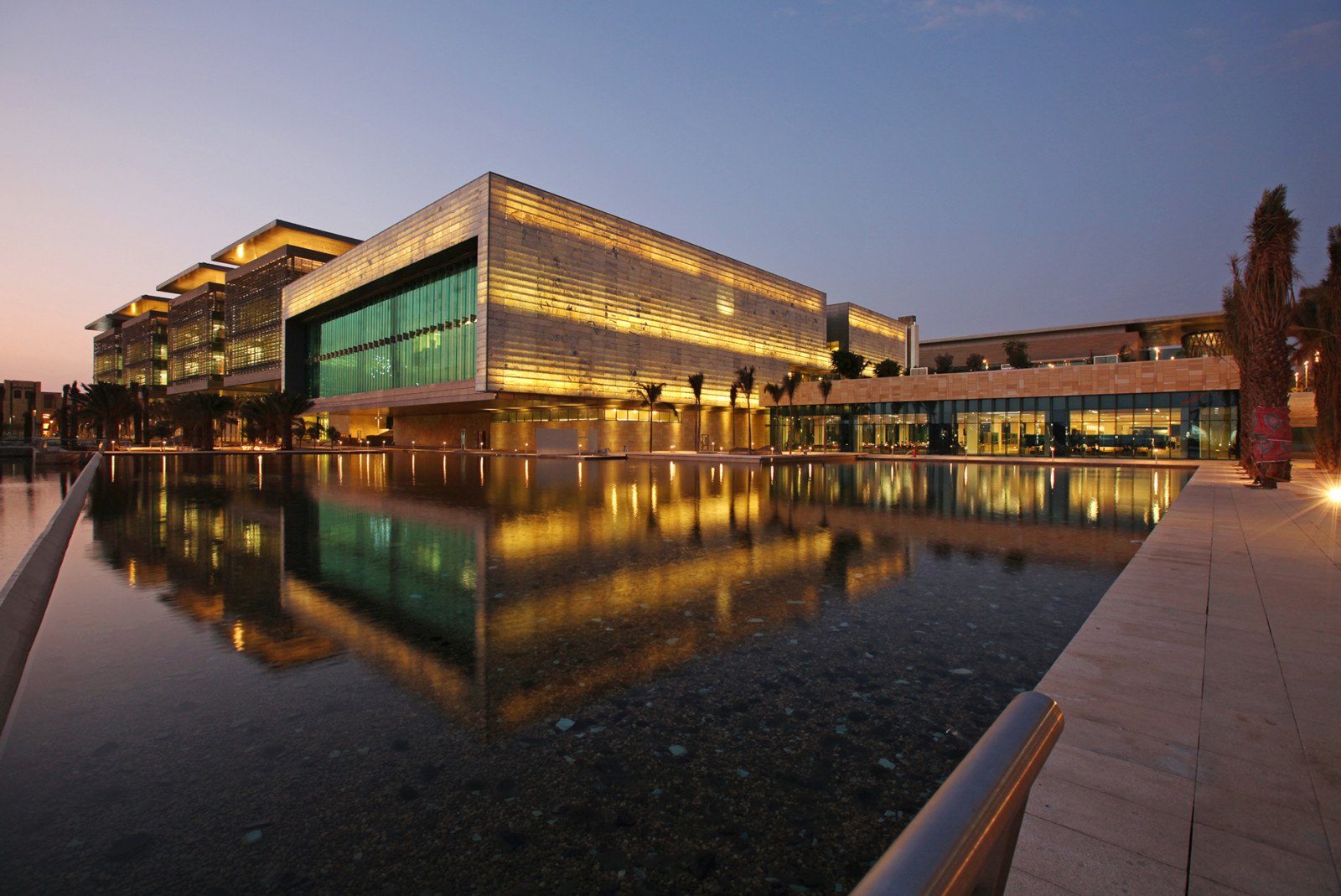
Jeddah — King Abdullah University of Science and Technology has initiated the KAUST Mathematics Competition, a national contest designed to identify and nurture top mathematics talent among students in Grades 8 through 11 across Saudi Arabia. The competition invites both Saudi nationals and residents studying in the Kingdom’s schools to test themselves on challenging topics such as algebra, number theory, combinatorics and geometry.

Phase One of KMC will take place as a two-hour elimination exam at eight regional centres. Students in the junior stream will face 24 multiple-choice questions, while those in the senior stream will tackle 30 multiple-choice items. From that round, the top 200—split evenly between junior and senior tracks—will advance to the final phase. That final round, conducted at KAUST over three days in April, will require written answers to six problems. KAUST will bear the costs of travel, lodging and meals for finalists. The participation fee is set at 100 Saudi riyals per student.

KAUST’s rationale for KMC aligns with its broader talent development mission: to foster advanced thinking skills and attract gifted students into STEM pathways. The competition also offers attractive incentives: cash awards, enrolment in KAUST Academy programmes, and a prize for first-place winners in each track — admission to a summer mathematics camp hosted jointly by KAUST and the University of Cambridge.

KAUST’s pre-university programmes, especially its Science Research School Initiative, already train middle and high school students for international Olympiads. SRSI’s mandate includes preparing students in mathematics, chemistry, physics, informatics and biology through intensive on-campus training. Students in grades 6 to 12 benefit from the training, and many go on to represent Saudi Arabia in global contests. KAUST also partners with other institutional programmes focused on gifted education.

The decision to launch KMC complements an existing competitive ecosystem. The KFUPM Mathematics Olympiad, for instance, has long been held for secondary school students at multiple centres across the country. That contest historically serves as a pipeline to select candidates for the International Mathematical Olympiad. Meanwhile, Saudi youth continue to perform strongly at regional contests: in the 29th Junior Balkan Mathematical Olympiad held in North Macedonia, six Saudi students won two gold, two silver and two bronze medals.

By K Raveendran It was a week of contradictions for India’s image on the world stage, marked by a curious interplay of critique, affirmation, and manoeuvring. Rahul Gandhi, in his address at Columbia University, painted a picture of India that was dark and distressing, describing the country’s democratic decline in sweeping terms. At the same […]



The article A Week Marking The Worst And Best For India On Global Stage appeared first on Latest India news, analysis and reports on Newspack by India Press Agency).

VISHNU RAJA
RYO YAMADA
HITORI GOTOH
IKUYO KITA
Social Media Auto Publish Powered By : XYZScripts.com