News related to
Bitcoin

Ethereum’s value slipped beneath the psychologically and technically significant $4,000 mark today, intensifying fears that the second-largest cryptocurrency may be entering a deeper correction. On Binance, ETH dipped to $3,988.89, down almost 8 per cent in 24 hours.

The abrupt drop triggered widespread liquidations, especially among leveraged positions. On-chain liquidation trackers show nearly $188 million in crypto was liquidated in just one hour during the sharp move.

Persistent macroeconomic headwinds, alongside renewed U. S.–China trade tensions, appear to have compounded selling pressure. The Nasdaq and other equity benchmarks also suffered, amplifying risk aversion among crypto investors.

Technical analysts now view the breakdown below $4,000 as a turning point. From a charting perspective, the fall invalidated previously bullish setups such as bull flags, leaving Ethereum exposed to further downside. One analyst cautioned that extended weakness could push ETH toward the $3,750 to $3,500 zone if pivotal support fails.

Support between $4,200 and $4,300 had held in recent sessions, but now that zone is under siege. Should it collapse, the stage may be set for a retest of $3,900 or lower. Traders are watching whether buyers will defend this corridor or capitulate.

Despite today’s plunge, some investors see accumulation underway. Ethereum’s total on-exchange supply has declined to a nine-year low, with large holders withdrawing ETH from exchanges—an indicator that long-term confidence may still remain intact.

Longer term, expectations remain cautiously optimistic. Standard Chartered recently raised its year-end target for ETH to $7,500, citing heightened institutional adoption and increasing use of the Ethereum network in stablecoin and DeFi infrastructures. Meanwhile, Citigroup offers a more conservative forecast of $4,300 by end-2025, warning that current prices may be more sentiment-driven than fundamentals-rooted.

Major upgrades on Ethereum’s roadmap could yet shift sentiment. Among them: the Glamsterdam upgrade, which integrates enhanced proposer-builder separation. However, a fresh academic study warns of a “free option” risk under high volatility, whereby builders may cancel committed payloads without penalty—posing challenges to network liveness during stress.

In the short term, analysts are split. Some argue that the slide is a healthy reset before ETH resumes an uptrend, provided support zones hold. Others say the breach of $4,000 suggests a loss of momentum strong enough to spark a deeper correction.

Crypto markets are already exhibiting signs of strain beyond Ethereum. Bitcoin is under pressure as well, and risk assets broadly are being squeezed by mixed macro data and higher real-interest rates. Some strategists say the crypto pullback could morph into a broader derisking wave unless fresh catalysts emerge.

Looking ahead, observers point to a few key variables: whether ETH can reclaim and sustain above $4,500; whether buyers will step in at $4,200–$4,300; and whether the network upgrades can deliver tangible improvements to gas, scalability, and decentralisation.


Luxembourg’s Intergenerational Sovereign Wealth Fund has placed 1 per cent of its assets into Bitcoin exchange-traded funds, making it the first sovereign fund in the Eurozone to adopt such exposure. The move was unveiled during the presentation of the 2026 national budget by Finance Minister Gilles Roth.

Under a new investment mandate approved in July 2025, the FSIL is authorised to allocate up to 15 per cent of its portfolio into alternative investments, including private equity, real estate, and digital assets. The 1 per cent allocation to Bitcoin ETFs reflects a cautious approach: the fund avoids direct crypto holdings to limit custody and operational risk.

At present, the fund’s total assets are estimated between €700–900 million, with the Bitcoin allocation amounting to about €7–9 million. Bob Kieffer, Director of the Treasury, described the sum as a symbolic yet measured step. He noted that given FSIL’s mission and structure, the 1 per cent level “strikes the right balance while sending a clear message about Bitcoin’s long-term potential.”

Advocates argue the allocation signals growing institutional acceptance of digital assets within sovereign portfolios. Critics caution that Bitcoin’s volatility may be ill-suited for public-sector funds. Some observers contend that 1 per cent is negligible in impact yet potent in signalling. The fund’s leadership anticipates that monitoring performance will shape future adjustments within the 15 per cent limit.

Luxembourg’s decision departs from the pattern of European states owning Bitcoin only through seizure or law-enforcement action; here, the allocation is proactive and policy-based. Analysts place the development in the context of Luxembourg’s ambition to serve as a crypto and fintech hub under the European Union’s Markets in Crypto-Assets regime. Already hosting numerous crypto firms, Luxembourg aims to reinforce credibility by integrating digital assets into sovereign investment strategy.

Other European institutions have taken indirect exposure paths. Norway’s sovereign fund has gained crypto-linked exposure through equities, while some central banks in Finland and the Czech Republic have expressed interest in digital assets. The Luxembourg move may prompt broader rethinking of asset allocation norms among state funds.

FSIL’s strategy places the Bitcoin position in ETFs rather than direct holdings, a choice intended to manage custody risk and improve regulatory oversight. The law permitting cryptocurrency exposure came amid internal policy debates, with critics warning of reputational and financial risk in volatile markets. Kieffer acknowledged that “some may argue that we’re committing too little too late; others will point to the volatility and speculative nature of the investment.”

Luxembourg’s financial regulator, the Commission de Surveillance du Secteur Financier, has adapted rules governing virtual assets and alternative funds, creating a regulatory backdrop conducive to this experiment. The fund will continue to invest primarily in bonds and equities, with the digital assets portion complementing a diversified portfolio.

Analysts at JPMorgan are forecasting that U. S. spot Solana exchange-traded funds will attract only about $1.5 billion in net inflows during their first year, substantially lagging behind the inflows seen in Ethereum-linked ETFs. The expectation comes even as the U. S. Securities and Exchange Commission is widely seen as poised to approve multiple Solana ETF applications in the days ahead.

JPMorgan’s projection, led by Nikolaos Panigirtzoglou, rests on multiple concerns, chief among them the weakening on-chain activity of Solana and investor fatigue in the altcoin space. The firm estimates that the figure could fall below $1.5 billion if headwinds intensify, noting weak demand in CME Solana futures markets and stiff competition from diversified crypto index funds as key constraints.

Network metrics underscore that caution. Daily transaction volume on Solana has dropped to approximately 64 million, down nearly 50 percent from its July peak, a sign that user and developer usage may be waning. Some analysts suggest that capital is rotating toward rival chains such as BNB Chain and toward broader index products, rather than concentrated bets on Solana itself.

Bitwise Asset Management, one of the prominent ETF hopefuls, has updated its application to include “staking” in the fund’s name and set a sponsor fee of 0.20 percent—among the lowest for crypto ETFs. The amendment also promises a waiver for the first three months and for up to $1 billion in assets under management, a signal of aggressive positioning against peers.

Other applicants include VanEck, 21Shares, Franklin Templeton, Grayscale, and Fidelity, whose applications carry staggered decision deadlines ranging from October through April 2026. Following the SEC’s adoption of a generic listing standard for digital-asset ETFs, certain filings have been restructured to comply with the revised framework—though a handful were asked to withdraw or amend submissions.

The regulatory picture is complicated by the ongoing federal government shutdown, which has forced the SEC to operate with a skeletal staff and slowed processing of registrations and rule changes. Observers warn that even if the SEC signals approval, practical listing and launch may be delayed until staffing returns to normal levels.

Market sentiment, however, appears largely bullish on the regulatory outcome. Prediction markets and analysts now price the probability of Solana ETF approval at 90 to 99 percent, citing precedent from the Bitcoin and Ethereum cases and the existence of a CME futures contract as enablers.

The cryptocurrency market has experienced a sharp downturn, with over $100 million worth of positions liquidated in the past 60 minutes. This sudden plunge has sent shockwaves through the sector, with both retail and institutional investors facing severe losses. The volatility underscores the unpredictable nature of the crypto landscape, where prices can fluctuate wildly, often within short time frames.

At the heart of the market’s rapid decline is a combination of factors that have rattled traders. A significant sell-off in major cryptocurrencies, including Bitcoin and Ethereum, has triggered a cascade of liquidations. This activity typically occurs when leveraged traders are forced to sell off their positions to meet margin calls, further driving down prices. The market has seen a surge in such sell-offs following a series of adverse market signals, including regulatory concerns, broader economic factors, and macroeconomic events affecting global financial markets.

The recent downturn comes at a time when cryptocurrency markets have already been under pressure from tightening financial conditions across the globe. Inflation concerns and rising interest rates have led to reduced liquidity in many sectors, including digital assets. Cryptocurrency, which is often seen as a high-risk investment, has been particularly vulnerable to these shifts. With investors pulling back and re-evaluating their portfolios, volatility has surged, and cryptocurrencies have taken a substantial hit.

Market analysts have pointed to several factors contributing to the liquidity crisis. Firstly, the ongoing regulatory scrutiny in key jurisdictions has heightened concerns over the long-term viability of certain digital assets. In the United States, lawmakers have continued to debate how to regulate cryptocurrencies, with some seeking stricter oversight, which could have a dampening effect on investment. Meanwhile, in Europe, the regulatory landscape has been evolving, with the European Union moving forward with legislation designed to increase transparency in the crypto sector. These developments have raised uncertainty about the future of cryptocurrencies as a legitimate financial asset.

Bitcoin, the largest cryptocurrency by market capitalisation, has been trading below key support levels, which has triggered massive sell-offs. Technical analysis indicates that the price has dipped significantly, prompting traders to take precautionary measures and close their leveraged positions to avoid further losses. Ethereum, the second-largest cryptocurrency, has followed suit, showing similar signs of weakness. The price action of both major coins has been exacerbated by the liquidations themselves, creating a feedback loop that deepens the market’s downward spiral.

Traders in the cryptocurrency space are no strangers to high volatility, but such rapid and significant liquidations highlight the risks of excessive leverage. Leverage, which allows traders to borrow funds to increase their exposure to a particular asset, can amplify both gains and losses. While it has the potential to increase returns during a rally, it can be equally damaging in a downturn, leading to forced liquidations when assets fall below a certain threshold.

The crisis in the cryptocurrency market also serves as a reminder of the growing role of institutional investors, who are increasingly active in the space. While their presence has brought more legitimacy to the market, it has also introduced new dynamics. Many institutional investors now utilise leverage and sophisticated trading strategies, contributing to the market’s overall volatility. The presence of institutional money means that market movements can be magnified, especially when large positions are liquidated in a short time frame.

State Street Corporation, a global asset management firm managing over $5.1 trillion in assets, has announced a significant shift in investment strategy, revealing that 60% of institutional investors plan to expand their allocations in Bitcoin and other cryptocurrencies. This move marks a notable change in the traditionally cautious stance of institutional investors toward digital assets.

The Boston-based firm’s latest report sheds light on the growing momentum in the crypto market, despite its historically volatile nature. The increase in institutional interest comes amidst an evolving regulatory landscape and a heightened focus on digital assets as an emerging class of investments. State Street’s research found that institutional investors, especially pension funds, endowments, and family offices, are increasingly viewing cryptocurrencies as viable long-term assets rather than speculative investments.

The surge in interest is partly driven by the evolving understanding of blockchain technology and its potential to revolutionise various industries. Many institutional investors, once sceptical of cryptocurrencies, are now integrating digital assets into their portfolios as part of a broader diversification strategy. State Street’s report highlights that over the next two years, the shift towards Bitcoin and crypto could lead to a more balanced investment portfolio for many institutional players.

One of the key drivers of this shift is the increasing recognition of Bitcoin as a store of value, akin to gold. With inflationary pressures persisting in traditional markets, many institutional investors are seeking alternative assets that offer the potential for significant returns, coupled with a hedge against inflation. In fact, Bitcoin’s rise over the past few years has been compared to the gold rush, attracting both institutional and retail investors keen on capitalising on its perceived scarcity.

The report highlights the rising number of crypto-friendly regulatory frameworks being developed globally. Governments and regulators in key markets, including the US and Europe, are progressively aligning with the crypto industry’s growth. Recent regulatory clarity is expected to further boost institutional confidence, providing a more stable environment for investors. This shift in regulatory attitudes signals a broader acceptance of digital currencies in the financial system.

The institutional appetite for cryptocurrencies is being encouraged by the increasing number of crypto-focused financial products. Bitcoin futures, exchange-traded funds, and custodial services have become more accessible, offering institutional investors a secure and regulated pathway into the crypto market. Major players like BlackRock and Fidelity have already launched Bitcoin ETFs, catering to the rising demand for digital asset exposure.

Despite the optimistic outlook, challenges remain. The volatility of cryptocurrencies, the risk of regulatory changes, and concerns over security are factors that continue to cause hesitation among some institutional investors. However, the growing presence of crypto in mainstream finance is undeniably reshaping perceptions and broadening the scope of opportunities within the digital asset space.

State Street’s survey also highlighted a shift in the broader financial ecosystem. As crypto adoption increases among institutional investors, the traditional financial sector is also ramping up efforts to integrate blockchain technology into its operations. From clearing and settlement systems to cross-border payments, blockchain is beginning to be recognised for its potential to enhance efficiency and transparency in financial transactions.

Griffin Gaming Partners has acquired the mobile-publishing arm of Playdigious from Fragbite Group for €10.5 million, with Fragbite retaining rights to 90 per cent of net revenue from Playdigious’s PC titles. The transaction is structured on a cash-and-debt-free basis, according to company statements. The acquisition hands Griffin control over Playdigious’s mobile licensing and porting operations, while Fragbite maintains a financial stake in its PC-focused publishing arm, Playdigious […]

Since its arrival in September 2025, the XPL token has drawn attention as the fulcrum of Plasma’s stablecoin-first blockchain vision. The network, engineered to process high-volume stablecoin transfers with minimal friction, stakes much on XPL’s design, distribution, and incentive architecture. A close look at how the token functions, how it has been received in markets, and what early ecosystem moves suggest reveals both promise and pitfalls.

XPL is conceived as the backbone of network security, transaction operations, and ecosystem growth. Under Plasma’s model, validators will stake XPL to secure the network under the PlasmaBFT consensus protocol, earning rewards in return. Meanwhile, the token also acts as the medium for executing non-basic transactions and participating in governance-like decisions tied to ecosystem programs. In that sense, XPL parallels Bitcoin’s role on the Bitcoin network and Ether’s role on Ethereum, though with nuances shaped by Plasma’s stablecoin orientation. The team states that its architecture deliberately ties token mechanics to campaign-driven incentives designed to migrate traditional financial flows onto its rails.

From a distribution perspective, Plasma launched with a fixed supply of 10 billion XPL. Ten percent was allocated to a public sale, while 40 percent was reserved for ecosystem and growth initiatives. At mainnet beta, 8 percent of the total supply was unlocked to support initial liquidity, partner incentives, and launch integrations. The remainder—particularly allocations for team, investors, and long-term contributors—follows graded vesting schedules to temper sudden sell pressure. In the public sale design, non-U. S. participants’ tokens were fully unlocked at launch, while U. S. participants face a 12-month lockup. This dual-track unlocking scheme aims to balance inclusion and capital discipline.

The tokenomics also include a built-in inflation schedule and fee mechanics intended to contain supply pressure. Initial validator rewards are targeted around 5 percent per annum, with planned reductions over time toward 3 percent baseline. Meanwhile, the protocol supports a form of fee burn inspired by EIP-1559; as transaction usage scales, some portion of fees will be removed from supply, offsetting inflation. The combined effect is intended to sustain staking incentives without runaway dilution. Another technical feature is Plasma’s “paymaster” system, which allows standard USDT transfers to carry zero fees, subsidized by the protocol itself. That mechanism reduces the necessity for every user to hold XPL merely to pay gas, lowering adoption friction.

Market reception to XPL turned dramatic almost immediately. At launch, the network held more than USD 2 billion in stablecoin liquidity across over 100 DeFi protocols. Within 24 hours of trading, XPL surged by over 50 percent in some reports—a mark of speculative demand meeting limited immediate circulating supply. Some early buyers from the public sale reportedly reaped significant multiples, even as Plasma distributed bonus tokens to pre-deposit participants regardless of purchase. At peak, XPL reportedly hit above USD 1.50 before retracing to levels around USD 0.90 to USD 1.10. Observers estimated its fully diluted value approaching USD 8–10 billion, reflecting soaring expectations baked into launch pricing.

Yet that market euphoria also exposes structural tensions. The disparity between circulating supply and total supply creates a potential “float risk”—many tokens locked under vesting may exert downward pressure as unlocks commence. The timing and pacing of those unlocks will test whether early demand can be sustained under growing supply. Furthermore, while the paymaster model reduces friction, it also transfers the burden of fee subsidies to the protocol’s reserves. If usage scales unpredictably, that subsidy cost could challenge sustainability unless fee revenue or ecosystem yield compensates.

Another variable is how decentralized and secure the validator structure becomes. The strength of PlasmaBFT relies on meaningful decentralization and active participation. If validator concentration remains high or slashing risks are unevenly applied, token holders may question whether XPL truly underpins a secure, trust-minimized system. The use of reward slashing somewhat mitigates direct capital loss risk, but critics argue it may weaken incentives for strict validator discipline.

Beyond core mechanics, XPL’s ecosystem deployment matters. Early integrations offer a glimpse: Plasma granted XPL funding to Clearpool to support PayFi, a stablecoin‐settled credit infrastructure. That move reflects a play to establish secondary use cases—credit rails, yield protocols, merchant flows—that could entrench XPL usage beyond staking and fees. Meanwhile, Binance’s announcement of a 75 million XPL airdrop tied to its HODLer program signals aggressive token distribution into retail investor hands. That distribution may expand user base but also risks speculative churn.

On the regulatory front, XPL must navigate emerging scrutiny. Since stablecoins straddle monetary and securities domain, a blockchain built entirely around them invites questions about oversight and compliance. To date, Plasma has employed jurisdictional filtering, KYC onboarding, and cautious distribution to U. S. investors, but scaling into global payments heightens exposure. If major jurisdictions impose stricter rules on stablecoin issuance or transfer, XPL’s value proposition may face constraints or require adaptation.

Advertisements

Portuguese quantum computing firm Quantica Tech has revealed a new digital currency, Quantic Bitcoin, engineered to resist attacks from future quantum computers. The project rests on a proprietary “Quantum Interoperability” protocol designed to allow conventional blockchains and quantum‐era architectures to communicate and co-operate.

BTCQ is intended to preserve Bitcoin’s proof-of-work consensus but replace vulnerable cryptographic signatures with algorithms that conform to NIST-approved post-quantum standards. In transitional phases, the system runs quantum algorithm emulation on classical hardware—enabling development without immediate dependence on quantum hardware. Quantica has also introduced tiered fractional units, named Photons, Quarks and Bosons, to mirror Bitcoin’s Satoshi model at microtransaction scale.

The announcement reflects intensifying concern within cryptographic and blockchain communities about quantum threats to existing systems. Shor’s algorithm, for instance, is capable of undermining widely used public-key schemes, such as ECDSA, that secure most cryptocurrencies today. A literature review of quantum impacts on blockchain estimates that, although scalable quantum machines remain a work in progress, the threat horizon is accelerating, pushing many in the industry to preemptively explore quantum-safe alternatives.

Quantica says its interoperability protocol enables smart contracts in languages such as Solidity, Rust, Plutus and Vyper to invoke quantum layer functions through external script calls. The firm claims it has already shared the initial design of that protocol with the scientific community, though specific cryptographic details remain withheld. Plans are in place to issue Simple Agreements for Future Tokens in late 2025 and conduct a pre-sale of the token units ahead of public launch. The company is also working in parallel on related projects—Quanticacoin, USDT-Q and Q-Solana—to extend its quantum-capable ecosystem.

BTCQ joins a growing number of blockchain initiatives adopting quantum-resistant techniques. The Quantum Resistant Ledger, for example, has long leveraged XMSS to offer protection against quantum attacks, and many networks have begun integrating lattice-based or hash-based post-quantum cryptography.

Still, implementation and security challenges loom. Recent academic analysis warns that purely algorithmic guarantees do not suffice; side-channel attacks and hardware vulnerabilities may undermine post-quantum schemes if not carefully addressed. Analysts caution that the “harvest now, decrypt later” risk remains active: encrypted data captured today may be decrypted when quantum capabilities mature.

Market reception has been cautious. Many observers view Quantica’s claims as ambitious, given the dearth of open cryptographic proofs or independent audits so far. Some see the project as an early bet on quantum transition rather than an immediate substitute for existing value chains. Others argue the broader utility of quantum-resistant assets will depend heavily on regulatory frameworks, interoperability standards, and community adoption.

Quantica’s announcement arrives against the backdrop of intensifying activity in quantum and cryptographic infrastructure. Hardware vendors and research institutions are racing to scale error correction, qubit coherence and interconnects. Meanwhile, financial and security firms are preparing migration strategies for sensitive systems. Among commercial players, SEALSQ has unveiled hybrid cryptographic hardware intended to safeguard blockchain systems and IoT devices against quantum attacks.

Quantica has positioned BTCQ’s development as a shift from theoretical readiness to pragmatic construction. The firm contends it can build bridges between classical chains and quantum systems without heavy disruption to existing protocols. Early access via SAFTs and token presales aim to bootstrap an ecosystem of developers and enthusiasts.

A proposed ETF tracking the TRUMP meme coin has appeared on the Depository Trust & Clearing Corporation’s system — an infrastructural step that signals intent, though it falls short of regulatory approval.

Canary Capital, which filed an S-1 registration with the U. S. Securities and Exchange Commission for the ETF, now sees its TRUMP Coin fund listed in DTCC systems alongside other altcoin ETF candidates. The DTCC listing enables clearing and settlement readiness should approval arrive.

Analysts view the development as a technical milestone. Bloomberg ETF specialist Eric Balchunas observed that once a ticker appears on DTCC’s eligibility file, it rarely retracts — underscoring the forward momentum for the product. Nonetheless, he and others caution that DTCC inclusion is procedural and does not guarantee SEC consent.

Canary’s filing proposes that the ETF would offer exposure to the price dynamics of TRUMP token without requiring investors to self-custody the asset. To cover transaction costs inherent in the blockchain architecture, the filing permits the fund to hold up to 5 percent in Solana’s native token SOL, although it will not treat SOL as a core investment.

The TRUMP coin is a Solana Program Library token whose market value hinges heavily on political sentiment, community engagement and volatility rather than fundamental utility. Critics have raised concerns about the blending of political interests with speculative finance, warning of conflicts of interest and reputational risks to the broader crypto ecosystem.

This development coincides with DTCC’s addition of other altcoin ETFs — namely Fidelity’s Solana ETF and Canary’s XRP and Hedera funds — to its eligibility files. These moves have injected renewed optimism into altcoin ETF markets, though all such listings still await the SEC’s green light.

Momentum for altcoin ETFs has accelerated since spot Bitcoin and Ethereum funds gained approval. Still, the SEC has kept other proposals on ice, deferring decisions and delaying rulings. The regulator’s patience underscores the risk-management pressures it faces in balancing innovation and investor protection.

Canary’s TRUMP ETF filing follows earlier efforts by Trump Media & Technology Group, which has sought SEC approval for a suite of thematic “Truth Social Funds” ETFs covering areas such as energy, infrastructure and American icons.

Fight Fight Fight LLC, the company behind the TRUMP memecoin, has launched a capital-raising campaign of at least $200 million with ambitions that could scale up to $1 billion to establish a dedicated digital asset treasury that would accumulate holdings of the token, according to people with knowledge of the matter.

The undertaking is led by Bill Zanker, a long-time promoter and Trump ally, and signifies one of the most aggressive attempts yet to stabilise a creator-driven token through internal backing. The funds would be deployed primarily to purchase TRUMP tokens from the open market, an effort to shore up price and signal confidence in what has become a volatile asset.

TRUMP, launched just before Donald Trump’s second inauguration, operates on the Solana blockchain under two joint issuers—Fight Fight Fight LLC and CIC Digital—together controlling 80 percent of its total supply. The public tranche was released in January 2025, and the token rapidly gained speculative traction before encountering steep declines.

Insiders caution that the fundraising process is ongoing and not guaranteed to succeed in full. They also note that structuring such a treasury around a politically branded memecoin carries substantial market, regulatory and reputational risks.

Cryptocurrency analysts observe that the move is consistent with broader trends in 2025: increasingly, token issuers are creating “treasury models” to backstop flagging price action. Yet few of those are tethered so explicitly to a political figure or narrative, making the TRUMP case unique.

The token’s price trajectory has been volatile. After peaking earlier in the year, it has fallen sharply—losing more than 80 percent of its value from highs—attracting scrutiny about its speculative nature and sustainability. Meanwhile, TRUMP maintains strong social media backing and occasional high-visibility events, such as a dinner hosted by Trump in May for top token holders, which had triggered a notable price bump.

In June, plans were floated by the issuer to launch an “Official Trump Wallet” to facilitate trading and custody, but disputes emerged with World Liberty Financial. Those tensions underscored internal complexity and fragmented control within the broader Trump crypto ecosystem.

Analysts underline that for the treasury plan to have long-term impact, it must go beyond buybacks. Critics argue that stockpiling tokens may serve only short-term price support, lacking sustainable utility or integration into broader infrastructure. There is a risk that concentrated control over token issuance and vesting schedules could invite regulatory scrutiny or undermine confidence among external investors.

Institutional curiosity is emerging: Canary Capital Group has reportedly filed paperwork with U. S. regulators to launch a spot ETF tied to TRUMP. Yet the Securities and Exchange Commission’s cautious posture toward meme coins, and obstacles in listing a futures-based derivative market, could impede progress.

The broader Trump-adjacent crypto strategy has already stretched into multiple verticals. Trump Media & Technology Group announced a $2.5 billion initiative to build a bitcoin treasury, and World Liberty Financial has launched a $1.5 billion self-buy programme in its own token, WLFI. In that case, about half the funding is to be in WLFI itself, with the rest directed to debt settlement and resale.

BlackRock’s iShares Bitcoin Trust has overtaken all other funds in its suite to become its most profitable exchange-traded product, generating approximately $244 million in fee revenue over the past year, analysts estimate. Its assets under management are approaching the $100 billion mark, driven by massive capital inflows into the spot Bitcoin ETF space.

IBIT has pulled in surging investor interest, with around $970 million flowing into it in a single trading session — the largest share of the $1.2 billion that U. S. spot Bitcoin ETFs collectively attracted that day. The fund now sits about $2.2 billion short of the $100 billion milestone, a level it is on track to cross more rapidly than any ETF in history.

That speed is notable: IBIT has amassed nearly $98–$100 billion in under 435 days, compared to Vanguard’s flagship S&P 500 ETF, which required over 2,000 days to reach the same threshold. This acceleration reflects investor appetite for regulated, exchange-traded access to digital assets.

BlackRock’s fee structure — currently 0.25% of AUM on IBIT — means that each incremental inflow directly boosts revenue. Analysts Eric Balchunas and James Seyffart have identified IBIT as now bringing in more income than long-established heavyweights in BlackRock’s portfolio, such as the iShares Russell 1000 Growth ETF and iShares MSCI EAFE ETF.

The inflow pattern underscores a broader shift. Since the U. S. Securities and Exchange Commission authorised spot Bitcoin ETFs in January 2024, the category has seen multiple single-day inflows exceeding $1 billion. In several past instances, such inflow spikes have coincided with short-term peaks in Bitcoin’s price, raising questions among market watchers whether these are signs of a turning point.

Bitcoin itself has responded: it pushed past $125,000 this month, buoyed by demand for regulated crypto exposure and safe-haven demand amid macroeconomic pressures. This run-up in price further amplifies IBIT’s appeal, because asset growth happens both through net inflows and valuation gains on its holdings.

BlackRock is also deepening its Bitcoin product strategy. It has filed to create a Bitcoin Premium Income ETF, which would generate yield by selling covered call options on Bitcoin futures — a move aimed at appealing to yield-focused investors seeking regulated crypto exposure. BlackRock has avoided entering the altcoin ETF arena for now, focusing its efforts on Bitcoin-linked products where regulatory clarity is more established.

Still, the meteoric rise of IBIT carries risks. Fee compression remains a structural challenge across the ETF industry, and competitors are poised to launch rival crypto products. The volatility inherent in Bitcoin could reverse gains sharply. Moreover, regulatory shifts — whether through tax treatment, disclosure mandates, or limits on crypto exposure — could reshuffle the competitive landscape.

A dramatic wave of forced liquidations has swept the crypto derivatives market, with around $160 million in long positions closed automatically in just 60 minutes. The event underscores the fragility of leverage-driven trading in volatile markets.

Data from major derivatives platforms points to sudden upward swings in key assets—chiefly Bitcoin and Ethereum—as the trigger. When prices move sharply against leveraged long positions, margin protocols step in to liquidate them to prevent further losses, compounding price moves in the process.

According to platform-level monitors, the lion’s share of the liquidation volume was concentrated in large longs on Bitcoin, with estimates suggesting individual trades as big as $8–10 million being liquidated in one go. Ethereum longs also saw heavy hits, as speculators betting on further upside were forced out. Metrics such as open interest and funding rate imbalances spiked just before the cascade, signalling a regime shift in market sentiment.

Insiders point to a cluster of cascading margin calls amplified by tight funding conditions. Some hedge funds and high-leverage retail positions lacked sufficient buffers against rapid price swings. As each liquidation pushes prices further, it creates a feedback loop that forces more delinquencies. Traders on social media flagged what they called “liquidation cascades” targeting illiquid zones and stop-loss clusters—areas where multiple orders are programmed to execute in close proximity.

Several trading desks observed that for every $1 million in liquidation, the price impact was amplified by slippage and widened spreads, particularly on derivatives contracts with low depth. One senior derivatives strategist remarked that the aggressiveness and sudden clustering of these liquidations suggest algorithmic triggers—bots scanning for vulnerable clusters and executing en masse.

The timing aligned with fresh macro data that hinted at stronger-than-expected economic indicators, which lifted risk appetite broadly and boosted crypto flows. Simultaneously, institutional participants monitored rising retail inflow indicators—such as large deposits moving on-chain into exchanges—which can foretell directional stress. With leverage high and positions tightly wound, the market was primed for this flush.

This is not the first time such mass liquidations have occurred. In mid-September, more than $149 million of crypto positions were liquidated within an hour, nearly all from longs, with a top single order of $9 million on a leading platform. That event and the current one both reflect how fragile leveraged markets are when macro sentiment shifts sharply.

Market watchers are parsing whether this is a short-term squeeze preparatory move or part of a deeper regime change. Some argue it clears out weak hands and sets the stage for fresh momentum. Others warn that forced liquidations may just be the start of a larger reversal, as residual leverage and alignment of hedge-fund strategies make markets prone to repeat stress.

On-chain and order-book signals are under scrutiny. Rising Token flows from wallets to exchanges, shifts in funding curves, and concentrated seller clustering in spot markets might shape the near-term path. Some algorithms already have “sniffers” for these stress events built in; in days following a liquidation cascade, trading volumes and volatility tend to stay elevated.

BitMine Immersion Technologies has disclosed crypto and cash holdings amounting to $13.4 billion, with 2,830,151 ETH tokens forming the bulk of its position, according to its latest statement.

The company’s portfolio also includes 192 Bitcoin, $113 million in “moonshot” equity investments such as Eightco Holdings, and $456 million in unencumbered cash, positioning it as one of the largest public crypto treasuries by ETH exposure.

BitMine’s ETH stash represents roughly 2 percent of total Ethereum supply, underscoring the firm’s aggressive accumulation strategy. In its announcement, the company reaffirmed its ambition to reach a “5 percent alchemy” threshold—i. e., to hold 5 percent of ETH’s total circulation.

Thomas “Tom” Lee of Fundstrat, chairman of BitMine, framed ETH as the “premier choice” for its reliability, 100 percent uptime, and alignment with institutional and AI adoption in blockchain infrastructure. He argued that as Wall Street and AI increasingly anchor on the blockchain, Ethereum offers structural advantage.

The disclosed holdings mark a dramatic acceleration in BitMine’s pivot from bitcoin mining toward becoming a major Ethereum treasury vehicle. The firm claims it now leads all publicly traded companies in ETH holdings, and ranks second globally in treasury scale behind Strategy, Inc.

Investors and markets responded swiftly to BitMine’s disclosures and related developments. In July, shares soared following a regulatory filing revealing that Peter Thiel’s Founders Fund had taken a 9.1 percent stake in the company, making him its largest known institutional shareholder. That news helped drive BitMine’s stock to near-record intraday gains.

Analysts view the firm’s strategy as part of a broader trend: smaller-cap crypto and blockchain firms are increasingly diversifying beyond bitcoin into ETH-focused treasury allocations. BitMine’s velocity of accumulation and the high liquidity of its stock have drawn comparisons to Michael Saylor’s bitcoin strategy at MicroStrategy.

Regulatory and market timing factors may amplify or constrain BitMine’s ambition. The U. S. SEC’s evolving posture toward digital asset teams—including Project Crypto and the so-called “GENIUS Act” proposals—could shape the framing of Ethereum as a mainstream institutional asset, or alternatively intensify scrutiny of crypto treasury holdings.

Sceptics point to concentration risk and valuation vulnerability. Holding such a large share of a single token leaves BitMine exposed to ETH price swings, smart contract risks, network upgrades, and macro-crypto sentiment downturns. As the firm presses toward its 5 percent goal, it will also face growing attention from regulators, market participants, and the Ethereum community around centralisation concerns.

Still, BitMine’s approach stands out for its bold scale and speed. The company argues that the “power law benefits” favour large holders of ETH, and that a discount between ETH price and its future utility—particularly under rising AI and blockchain convergence narratives—makes accumulation compelling.

A GoMining-commissioned survey of over 700 Bitcoin holders across North America and Europe reveals that 77 percent of respondents have never engaged with any BTCFi platform. Only around 8 percent say they actively use BTCFi services for lending, staking or yield generation.

The data exposes a striking contradiction: while the BTCFi sector is receiving strong investment and attention, its reach among actual Bitcoin holders remains minimal. Over 65 percent of those surveyed could not name a single BTCFi protocol, pointing to a significant awareness gap in the industry. Roughly 40 percent of respondents say they would allocate less than 20 percent of their Bitcoin to DeFi products—underscoring cautious attitudes steeped in mistrust or lack of comprehension.

GoMining CEO Mark Zalan argues the survey reflects a mismatch in product design: “There’s an enormous appetite for these opportunities, but the industry has built products for crypto natives, not for everyday Bitcoin holders.” He cautions that BTCFi platforms must prioritise simplicity, trust and education over technical sophistication if they are to attract a broader base.

Despite limited adoption, interest in BTCFi is not absent. Some 73 percent of respondents express a desire to earn yield on their Bitcoin through lending or staking, while 42 percent would like access to liquidity without selling. Yet for now those desires largely remain theoretical.

The survey publication coincides with a sharp rise in BTCFi venture capital activity. Data from industry trackers show that in the first half of 2025, funding to Bitcoin-related infrastructure, custody, and DeFi projects reached US$175 million, spread across 32 funding rounds—20 of which targeted consumer-facing applications. Total value locked in BTCFi has also climbed, hitting US$6.6 billion by mid-2025, up from modest levels just a year earlier.

Industry analysts see this as a pivotal moment. BTCFi is theoretically well-positioned: Bitcoin holders collectively control over US$1 trillion in assets, and unlocking even a small portion into yield markets would shift capital flows substantially. But bridging the adoption chasm requires more than protocol robustness—it demands user trust, transparent security models, and intuitive onboarding.

Several projects are experimenting with custodial BTCFi models that reduce user friction, essentially merging decentralised finance with familiar wallet experiences. These hybrids aim to lower the barrier to entry for mainstream holders who are wary of self-custody risks. Others are focusing on streamlined education and marketing campaigns to bring awareness of BTCFi’s value proposition to non-tech audiences, rather than relying exclusively on high-end technical features.

Skeptics argue the reliance on Ethereum’s DeFi archetype may be a poor fit for Bitcoin’s more conservative base. BTCFi protocols often demand bridging, wrapping or interacting with smart contracts—actions that alienate users comfortable with simpler vehicles like ETFs and custodial wallets. A portion of Bitcoin holders remain risk-averse by nature, preferring regulated, custodial holdings and avoiding experimental protocols.

Some in the industry suggest a phased approach: target early adopters first, establish trust metrics, then gradually roll out to mainstream holders. Others urge a revisit to design philosophy itself: ensuring BTCFi can deliver yield, liquidity and composability while behaving in a way Bitcoin users find intuitive and safe.

Stock market information for Bitcoin
Bitcoin is a crypto in the CRYPTO market.
The price is 122782.0 USD currently with a change of 1997.00 USD from the previous close.
The intraday high is 123928.0 USD and the intraday low is 119360.0 USD.

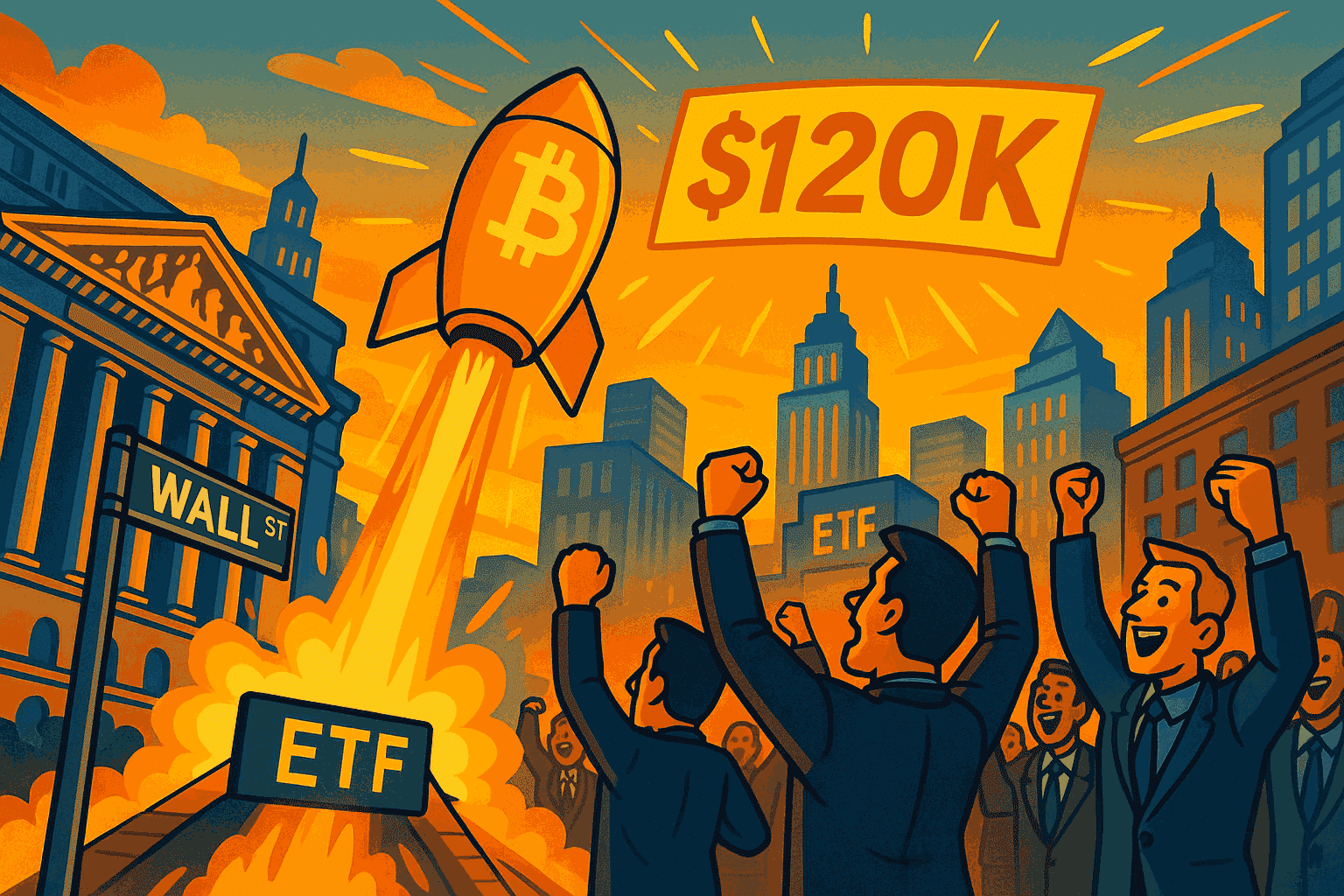
Bitcoin cleared the $120,000 mark on Friday, marking its strongest move in months as inflows into U. S. spot Bitcoin exchange-traded funds and fears of U. S. political gridlock spurred investor appetite.

The sharp rally saw Bitcoin rise toward levels not seen since August, with price action driven by mounting demand from institutional channels and growing speculative interest in its safe-haven appeal. Observers link the surge to accelerating purchases via ETFs, as well as elevated yields on derivative positions betting on further strength.

Citigroup this week trimmed its year-end Bitcoin forecast to $133,000, citing headwinds from a strengthening U. S. dollar and weak gold prices, while lifting expectations for Ethereum to $4,500 on the back of increasing inflows. The contrasting moves reflect a recalibration of expectations amid shifting capital flows in crypto markets.

Analysts tracking ETF inflows suggest that institutional adoption remains the catalyst for upward momentum. Bitwise reiterated a $200,000 target for Bitcoin in 2025, emphasising sustained demand from endowments, corporates, and sovereign treasuries. Meanwhile, Coindesk’s mid-year forecast placed a $150,000–$160,000 range as a probable zone should monetary policy ease.

Technical indicators show the path is not without resistance. Price models project a critical threshold at $117,000–$120,500: surpassing it decisively would confirm a bullish breakout, while failure to hold could trigger pullbacks toward $110,000 or lower support zones. Analysts caution that leveraged long positions may be vulnerable to liquidation should sentiment cool.

On-chain data shows accumulation by so-called “whales” has intensified over recent weeks, reinforcing the theory that major players are driving the advance. Machine-learning forecasting studies underscore that low, high, and opening price series remain the most informative variables for trend prediction, though the authors note models still struggle with sudden macro shocks.

MicroStrategy, a prominent corporate Bitcoin holder, has slowed its acquisitions. Its latest SEC filing disclosed a modest $22 million purchase, significantly down from earlier, more aggressive buys. That shift reflects a degree of caution in managing dilution risk and capital allocation.

Around the political landscape, speculation over a potential U. S. government shutdown elevated demand for non-traditional assets, while weak private sector job data has stoked hopes of a future rate cut by the U. S. central bank. Market participants are watching whether rate expectations shift further in favour of growth-assets like Bitcoin.

Markets across the crypto derivatives space are on edge as Bitcoin and Ethereum options worth approximately $4.33 billion enter settlement today, setting the stage for heightened volatility in the near term.

On the Deribit platform, Bitcoin dominates the expiries, with about $3.5 billion notional value scheduled for settlement in roughly 30,200 contracts. Its put-to-call ratio stands at 1.23, suggesting more downside protection bets than bullish wagers. The so-called “max pain” level — the strike price at which the greatest number of contracts expire worthless — is pegged at $114,000, close to current trading levels and potentially acting as a magnet for price movement.

Ethereum’s portion comprises about $806.75 million, across 177,398 contracts, with a put-to-call ratio near 0.99, indicating a more balanced bias among traders. Its max pain is estimated at $4,500, just beneath recent market trading ranges.

Derivatives analysts caution that expiries of this size tend to exert short-term pressure on price behaviour, particularly as market makers and institutional actors roll, hedge or unwind positions ahead of settlement. In many past cycles, price action has gravitated toward max pain levels in the hours leading up to expiry.

Volatility expectations are reinforced by elevated implied volatility in both Bitcoin and Ethereum options markets. Some trading desks point to a compression of liquidity around strike clusters and warn that even modest directional flows may trigger outsized price swings.

Some market strategists argue that Bitcoin’s bearish tilt reflects growing hedging demand after price consolidation above major resistance zones. Meanwhile, Ethereum’s near-neutral PCR hints at structural hedging and profit-taking rather than outright directional bets.

Macro factors could amplify sensitivity. With markets digesting central bank policy signals, inflation indicators and equity market drift, crypto derivatives flows may act as a conduit for correlation shocks. That makes expiry day risk not purely technical but potentially reactive to broader sentiment shifts.

Earlier this month, a near-identical expiry event saw $4.3 billion in options settle, with BTC positioning yielding shortterm downside pressure and ETH holding more firmly near its pricing bands. That expiry foreshadowed a larger $18 billion BTC options expiry scheduled for 26 September, intensifying speculation on whether today’s event will prime momentum.

Market watchers are watching order-book depth near the $114,000 and $4,500 levels, as sharp absorption or rejection there may offer clues to directional bias post-expiry. In the absence of sustained trend breaks, much of the post-settlement period could hinge on whether institutions successfully reestablish exposure rather than exit.

Traders are also navigating strategy choices: rolling forward, closing positions, or rebalancing via delta hedges. The interplay of those flows may create forks in volatility—in which the first few hours post-expiry see directionless chop before a stronger move emerges.

Citi has revised its cryptocurrency outlook with a bold projection that Bitcoin will reach $181,000 within the next 12 months, while lowering its year-end 2025 target to $133,000 amid macro headwinds. The bank’s analysts emphasise that sustained inflows from exchange-traded funds and institutional adoption will serve as the key drivers behind this forecast.

In its latest note to clients, Citi outlined a base case assuming roughly $7.5 billion of inflows into Bitcoin through ETFs and corporate digital treasuries. In its bullish scenario, that figure could accelerate, boosting the upper bound estimate to $156,000 by year-end 2025. On the other hand, if recessionary pressures intensify, the bear case puts Bitcoin as low as $83,000.

Citi trimmed its near-term outlook slightly, revising the 2025 year-end Bitcoin target downward from $135,000 to $133,000. The bank cited factors such as a stronger U. S. dollar and softer gold prices as constraining forces even as demand remains intact. Ethereum’s forecast was upgraded: the bank now expects it to close 2025 at $4,500 and rise to $5,440 over 12 months. The increased optimism for Ethereum stems from its yield-producing features, staking potential and growing institutional interest.

These adjustments came amidst a backdrop of accelerating ETF inflows across asset classes. U. S.-listed ETFs have now amassed roughly $917 billion this year alone, following on from a record $1.1 trillion in the prior year. Bitcoin‐linked ETFs such as BlackRock’s IBIT have contributed meaningfully to that tally, while ETFs offering derivative strategies or income-oriented profiles have also drawn substantial capital.

Market commentators point out that ETFs offer a more accessible, regulated path for institutional investors and financial advisors to gain crypto exposure. That ease of entry, combined with the liquidity and scale of Bitcoin as the “digital gold” play, underpins Citi’s conviction that Bitcoin remains poised to absorb a disproportionate share of new capital entering the crypto sector.

Still, Citi emphasises that its bullish scenario depends heavily on flow continuity. Should macro conditions deteriorate—whether through tighter monetary policy, weaker risk appetite, or geopolitical stress—those inflows could slow or reverse. In such a scenario, Citi’s downside targets become relevant.

Other analysts echo a cautiously bullish tone. Some foresee Bitcoin reaching $160,000 to $200,000 by year-end, citing seasonal patterns and regulatory tailwinds, especially developments in U. S. crypto policy. Others warn that high valuations and volatility could invite sharper pullbacks if sentiment weakens.

The tension between macro headwinds and structural drivers is particularly evident in Ethereum’s case. Unlike Bitcoin, Ethereum supports staking and decentralized finance activity, making it more sensitive to adoption metrics and usage growth. Citi believes that those features make Ethereum increasingly appealing to yield-seeking institutions, especially as its ecosystem matures.

Crypto markets have responded positively to the outlook. Bitcoin has recently moved past $120,000 levels, reaching two-month highs, while Ethereum’s price has also climbed steadily. Some of this momentum, analysts say, appears driven by ETF allocations and strong demand from institutional flows.

A wave of investor appetite lifted the combined market cap of the top 15 public bitcoin miners to $58.1 billion in September, up from $41.6 billion in August and nearly three times the March low of $19.9 billion. That gain vastly outpaced bitcoin’s six-month rise of 21 per cent.

Iris Energy delivered a standout return of +624 per cent, while Applied Digital jumped +345 per cent and Cipher Mining rallied +321 per cent. Other strong performers included TeraWulf, Hut 8 and Bitfarms, up between +179 and +280 per cent; Riot Platforms added +147 per cent, HIVE rose +133 per cent, and Core Scientific gained +105 per cent. Even industry heavyweights such as CleanSpark, Bitdeer and Mara Holdings posted returns well above bitcoin’s own gain.

The bullish momentum coincided with accelerating pivots by mining firms into high-performance computing and AI infrastructure. Cipher Mining secured a 10-year colocation deal with AI cloud provider Fluidstack worth $3 billion, supported by $1.4 billion in backing from Google for lease obligations in return for share warrants. This deal boosted investor confidence and underscored the strategic shift beyond raw bitcoin mining.

Analysts note that miners with credible AI/HPC pivots posted average gains of roughly 57 per cent over the past month, significantly beating more traditional or “pure-play” miners. Those gains also outstripped bitcoin’s roughly 9 per cent rise in the same period.

At the same time, the bitcoin network’s hash rate jumped 9 per cent month on month, reaching an average of about 1,031 exahashes per second. That increase intensified competition and compressed margins: daily block reward revenue fell 10 per cent, and gross profit dropped 17 per cent compared to August.

Although elevated valuations reflect renewed investor faith in the mining sector, concerns about sustainability persist. The widening gap between equity valuations and operating revenues prompts questions about whether mining operators can sustain growth amid rising electricity costs, regulatory risks and hardware supply constraints.

Several firms are doubling down on their diversification efforts. Iris Energy has expanded into cloud services, while Core Scientific is pushing deeper into enterprise AI hosting. TeraWulf recently announced multi-year AI hosting contracts backed by Google and leased deployment capacity across its sites.

The cryptocurrency market saw more than US$330 million of short positions liquidated over a 24-hour span, reflecting mounting pressure on traders betting on a downturn in Bitcoin and Ethereum. Liquidations of this magnitude underscore the fragility of leveraged positions amid sudden price swings.

Data compiled from derivatives analytics shows that the bulk of the liquidations struck bears — traders who had placed bets that the prices of BTC and ETH would fall. While precise exchange-level breakdowns vary across analytics platforms, the overall magnitude points to a sharp reversal in market dynamics.

The liquidation wave was triggered as both Bitcoin and Ethereum posted upward moves, igniting what appears to be a short squeeze — a market condition where rising prices force short-sellers to cover positions, further accelerating the rally. On-chain volume and open interest metrics surged, suggesting that traders were forced to exit leveraged bets en masse.

Ethereum stood out in the mix: analysts attributed a substantial portion of the liquidated shorts to ETH derivatives. The second-largest cryptocurrency has often been more volatile in these situations, and its recent upward momentum inflicted considerable pain on those betting against it. The pressure on short positions flowed into Bitcoin markets as well, although to a lesser degree.

The exchange derivatives arena—spanning platforms such as Binance, Bybit and OKX—saw divergent stress levels. Some exchanges reported that short liquidations exceeded those of longs by a wide margin, suggesting that hedged strategies and aggressive shorting were particularly vulnerable during the surge. In several cases, individual orders topping tens of millions of dollars were forcibly closed.

Market analysts caution that such events can create feedback loops. Forced liquidations push prices higher, inflicting further losses on lagging short sellers, which in turn intensifies the rally. At the same time, elevated funding rates and reduced liquidity become major risks for momentum traders and institutional participants.

Macro and sentiment factors are believed to have played contributory roles. Speculation around easing monetary policy, stronger demand for risk assets, and renewed interest from institutional crypto funds have been cited by analysts as underlying catalysts. In particular, expectations that interest rates may soften have fuelled investor appetite for higher-volatility assets like Bitcoin and Ethereum.

Nevertheless, this kind of volatility also invites skepticism. Some market watchers warn that forced liquidations of this scale may not reflect genuine organic demand but rather mechanical stress in overleveraged market segments. The question is whether the rally can sustain itself once all forced short covering has played out.

Vanguard, the formidable asset manager overseeing over $9 trillion in assets, is reported to be preparing to permit its U. S. brokerage clients access to crypto exchange-traded funds offered by third parties, marking a notable departure from its previously cautious stance.

According to insiders, the firm has initiated internal evaluations and external consultations as demand from clients for exposure to digital assets has intensified. The move would not involve Vanguard issuing its own crypto products, but rather offering access to selected ETFs managed by external providers.

Vanguard’s transformation of its policy comes amid evolving regulatory signals. The Securities and Exchange Commission has recently approved a generic listing standard designed to streamline the approval process for new ETFs, including those that track cryptocurrencies. That change is credited with spurring wider institutional interest in crypto products.

At the centre of speculation is Vanguard’s CEO, Salim Ramji, who played a pivotal role in the development of BlackRock’s Bitcoin ETF. While Ramji has publicly reiterated that Vanguard has no immediate plans to launch proprietary crypto products, his background has heightened expectations that the firm’s strategic direction may be shifting.

Industry observers note that Vanguard’s entry into the crypto ETF space could provoke competitive pressures. Firms such as BlackRock and Fidelity have already embraced digital asset offerings; BlackRock’s Bitcoin ETF has attracted substantial inflows since its launch. This push by Vanguard suggests it is seeking to retain client engagement and not fall behind in the financial innovation race.

Despite momentum, significant uncertainties remain about the roadmap. There is currently no public timeline for the rollout, no confirmation on which crypto ETFs may be made available, and little clarity on eligibility criteria or platform integration. Some sources caution that regulatory, operational and compliance hurdles could delay or scale back the plans.

Sceptics argue that Vanguard’s caution is warranted. The inherent volatility of crypto markets, ongoing regulatory scrutiny, and custody risks for digital assets represent real challenges. For clients accustomed to Vanguard’s historically conservative and low-cost approach, the shift may raise questions about risk exposure and fee structures.

Still, proponents contend that the move is a logical evolution. With growing client appetite for digital exposure and a maturing ecosystem of regulated crypto products, access via established financial infrastructure may help reduce barriers and integrate crypto more deeply into mainstream investing.

Bitcoin’s price has flirted with the $115,000 mark, only to pull back and settle into a tight range between about $108,750 and $112,000 as buying momentum weakens. Traders and analysts now await a decisive move in either direction to signal the next major trend.

After a breakout attempt stalled just above $115,000, liquidity cooled and buyers began to step aside, according to on-chain data and sentiment analysis. The 30-day momentum index on CryptoQuant dropped to –2 per cent from +1 per cent earlier in the week, underlining a loss of conviction behind the rally. The price action now shows descending highs, suggesting bulls are losing early ground. Resistance sits in the $111,000–$112,000 zone; only a sustained move here could re-ignite upward pressure. Failure to defend support around $108,600 could expose the market to a slide toward $106,000–$105,000.

Technical analysts point to a pattern of consolidation following the failed breakout above $115,000. While buyers attempted to push through, they lacked follow-through, leaving the market stuck in a neutral to slightly bearish posture. Axel Adler, whose work with CryptoQuant is cited in analyses, observed that sellers are stepping in at lower highs, limiting upside attempts. Market structure is now tilted toward volatility unless fresh demand emerges.

Institutional behaviour adds nuance. Whale wallets—those holding between 100 and 1,000 BTC—have accumulated roughly 65,000 BTC in recent sessions, bringing their aggregate holdings to an all-time high of about 3.65 million BTC. That accumulation suggests structural demand remains under the surface. At the same time, analysts note that technical indicators like moving averages have formed bullish signals—for instance, a “golden cross” between the 50-day and 100-day exponential moving averages on shorter timeframes is seen as supportive. Some forecasts even project a path toward $150,000 should momentum revive.

Macro drivers are also in focus. ETF inflows in the United States are injecting liquidity into the market and are widely regarded as a catalyst for continuation moves. Bitcoin has reclaimed its 100-day moving average, which had acted as resistance and is now a support anchor. RSI readings have turned positive, and the broader sentiment has shifted from outright bearish to cautiously optimistic as institutional capital flows reappear.

Still, not everyone is confident. Some analysts argue that despite price strength, the upside is structurally vulnerable. A technical review on Seeking Alpha has rated Bitcoin a “Sell” over the next 12 months, citing weaker momentum and divergence as signals that gains may not sustain without external catalysts.

Crucially, macroeconomic uncertainty looms. Market bets converge around expectations of U. S. Federal Reserve interest rate cuts in the final quarter. Should stimulus emerge, risk-assets including Bitcoin might rally; if inflation surprises or central banks hold firm, volatility could reverberate downward.

Metaplanet has added 5,268 Bitcoin to its treasury, lifting its total holdings to 30,823 BTC—a stash now worth roughly $3.5 billion. The move marks another aggressive step in the company’s ambition to dominate corporate Bitcoin accumulation.

The Tokyo-listed firm disclosed the latest purchase via its analytics platform, citing an average cost per coin in the range of $116,800. With this transaction, Metaplanet fortifies its position among the largest public Bitcoin treasuries globally. The company has previously disclosed a 5,419-coin buy earlier in September.

Metaplanet’s strategy, initiated in 2024 when it shifted from hotel and media operations into a Bitcoin-heavy treasury model, has relied heavily on capital raises and issuance of equity linked instruments. In early September, shareholders green-lit a plan to issue up to 550 million new shares overseas—raising about ¥130.3 billion —with proceeds earmarked in part for further BTC accumulation. Eric Trump, who serves on Metaplanet’s advisory board, was present at the meeting and took part in a fireside chat session.

The company projects bold long-term goals: by 2026, it aims to reach 100,000 BTC, and by late 2027, to hold 210,000—about 1 percent of total Bitcoin supply.

Despite its crypto focus, Metaplanet’s stock performance has been volatile. Since mid-June, the share price has fallen sharply—losing over 50 percent—reflecting investor concern over dilution risk, weak revenue fundamentals, and compressed valuation premiums compared to its Bitcoin holdings.

Analysts caution that Metaplanet’s heavily leveraged approach leaves it vulnerable. Should Bitcoin’s price fall, the firm could see large mark‐to-market losses or face funding constraints if markets turn against inflows. Still, Metaplanet argues its “Bitcoin yield” metric—growth in BTC per share—aligns incentives for equity holders to back continued accumulation.

The company also is diversifying its strategy. It has launched a U. S.-based subsidiary in Miami to manage derivatives and income-generation business lines, and is developing digital platforms rooted in Bitcoin.

Bitcoin miners now hold approximately 1.8 million BTC, down from about 2.5 million in 2019—a shift that signals diminishing influence over the market and illustrates their evolving role in the ecosystem.

At their peak influence, miners were among the few entities controlling large pools of newly minted coins. Over time, however, many mining operators have adopted a business-like approach: periodically selling part of their mined yield to cover operational expenses, upgrade hardware, and manage liquidity. Those sales dilute their concentrated sway over supply movements.

On-chain data indicates miner outflows have shrunk sharply. CryptoQuant reports daily outflows dropped from 23,000 BTC in early 2025 to about 6,000 BTC in the most recent windows, with no extreme outflow days since February. Transfers from miner addresses to exchanges remain subdued, reinforcing the trend.

Despite dips in miner revenue—for example, daily earnings fell to about US$34 million in June—there is no evidence of forced liquidations. Instead, many miners are accumulating reserves while selectively monetising operations.

Publicly listed mining firms are increasingly decoupling their revenue streams from pure blockchain activity. CleanSpark, for instance, expanded a $100 million crypto-backed credit facility tied to its Coinbase holdings, with plans to fund growth across energy infrastructure and compute assets. Meanwhile, Cipher Mining struck a 10-year colocation deal with AI‐cloud provider Fluidstack, which could generate up to $3 billion in revenue over time and repurposes its infrastructure toward high-performance computing.

These developments reflect a broader industry evolution. With Paul’s halving in April 2024 slashing block rewards in half, miners now balance hash power growth against diminishing direct coin yield. To survive and scale, many operators are diversifying into hosting, AI, carbon credits, and “mining-as-a-service” models.

Smaller miners are under intense pressure. Rising energy costs, grid constraints, and compliance burdens marginalise those without scale or access to cheap power. Major operations are increasingly concentrated in jurisdictions with deregulated energy markets or surplus renewable capacity.

From a market impact perspective, miners’ strategic behaviour brings both stability and constraints. On one hand, their reduced dominance helps prevent supply shocks triggered by sudden bulk sales. On the other, their periodic selling still exerts friction on price rallies. Analysts suggest that sophisticated off-exchange OTC arrangements increasingly cloak miner sales, making their impact less visible but persistent.

Digital asset treasury firms, which raise capital to accumulate crypto assets on their balance sheets, are being reimagined by market analysts as possible long-term powerhouses akin to Berkshire Hathaway. Ryan Watkins, co-founder of Syncracy Capital, argues that the more successful of these firms—currently seen by many as speculative vehicles—could evolve into permanent capital engines that deploy resources, build operating businesses, and influence ecosystem governance.

These treasury firms already collectively manage over $105 billion in crypto holdings, across assets such as Bitcoin, Ethereum and others. Watkins emphasises that the largest winners will be those that transition from mere accumulation into diversified operations across staking, lending, infrastructure and enterprise investment.

The model diverges from traditional crypto “hoard and hope” strategies. Rather than simply acting as passive holders, Watkins projects that top-tier treasury companies will adopt a hybrid role: asset manager, growth investor, and operational builder. In his view, they may eventually resemble conglomerates that deploy capital into promising ventures, fund ecosystem projects, and re-invest profits strategically.

Some firms already reflect parts of this shift. MicroStrategy remains a benchmark, having raised capital through equity and convertible debt to purchase Bitcoin. As of mid-2025, dozens of public and private entities have announced intentions to create treasury arms or adopt treasury strategies. Firms are expanding beyond Bitcoin into Ethereum, Solana and other networks, seeking yield diversification.

A newly announced example is AVAX One, backed by Anthony Scaramucci and Hivemind Capital, which aims to raise $550 million to acquire AVAX tokens and expand into fintech and insurance acquisitions on the Avalanche network. This signals growing appetite for treasury firms to enter adjacent sectors and integrate vertically.

At the same time, regulatory and ethical challenges loom. Critics warn that some treasury firms may disguise self-dealing as capital deployment, favouring projects in which insiders hold undue influence. Without rigorous governance, the line between strategic investment and insider enrichment can blur.

Regulatory scrutiny is also emerging: authorities like the U. S. Securities and Exchange Commission and FINRA have initiated probes into suspicious trading around announcements by publicly traded firms adopting crypto treasury plans, seeking to determine whether some investors benefitted from non-public disclosures. Meanwhile, treasury entities face pressure to provide transparency in reserves and audit practices, especially as they reassure investors about balance sheet integrity.

VISHNU RAJA
RYO YAMADA
HITORI GOTOH
IKUYO KITA