News related to
Commodity

Oil prices rose as investors reacted to the prospect of a resolution to the US government shutdown, bolstered by optimism that a deal could bring an end to the ongoing stalemate. The increase in oil prices follows two consecutive weeks of declines, as market participants await key data that could provide more clarity on global supply and demand dynamics. Brent crude surpassed $64 per barrel, while West […]

A fresh platform launched by the startup SolarLedger is aiming to reshape how clean-energy data is processed and verified by introducing what it describes as a “green energy operating system” that embeds robust security features and market interfaces. At the heart of the offering are distributed-ledger and Internet-of-Things tools designed to automate the generation, trading and auditing of solar and other renewable-energy flows. According to the company’s statements, the system incorporates cryptographic tools such as zero-knowledge proofs and multi-signature verification to bolster data authenticity and traceability.

SolarLedger’s solution addresses growing concerns in green-finance and energy markets about the reliability of datasets underpinning asset-backed claims, such as renewable-energy certificates or carbon credits. By running real-time tracking of generation, storage, trading and settlement, the platform aims to reduce friction in peer-to-peer energy transactions and enhance transparency for smaller producers who have lacked access to institutional channels. This comes at a moment when distributed energy generation is expanding rapidly but remains under-represented in traditional electricity markets.

From a market-participant perspective, SolarLedger’s architecture is being pitched as transformative. It enables solar modules and storage systems not only to supply power but also to act as tradeable units with embedded provenance metadata. Smart-contract modules match producers and consumers, while traceable certificates of origin claim to be issued as each kilowatt-hour is generated. The firm states that its system eliminates much of the manual reconciliation and trust-layer overhead that currently slows clean-energy transactions, thereby unlocking new income streams for distributed generators.

On the technical side, the platform’s use of zero-knowledge proofs is particularly noteworthy. ZKPs allow one party to prove a fact is true without revealing the underlying data. This is increasingly recognised in academic literature as a potent tool for privacy-preserving validation in decentralized systems. In SolarLedger’s case, the firm says it uses ZKPs to validate meter-data reports and audit logs without exposing granular user or asset-level details. Complementing this, the system applies multi-signature verification — requiring multiple authorised parties to validate transactions — to further enhance trust in each asset’s lifecycle.

Emerging trends in the broader energy-tech space amplify SolarLedger’s relevance. Analysts observe that decentralised energy systems—particularly rooftop solar, microgrids and battery storage—are growing faster than transmission-interconnection frameworks in many regions. Traditional centralised electricity markets were built at a time when generation was large-scale and top-down. By contrast, distributed-generation assets today face barriers to participation in wholesale or retail markets, often due to information asymmetry, latency in settlement, and limited trust among counterparties. SolarLedger aims to bridge that gap by enabling smaller producers to join trading ecosystems on more flexible and transparent terms.

However, important challenges remain across regulation, interoperability and scalability. While SolarLedger cites pilot testing and proof-of-concept deployments, wide-scale adoption will require alignment with local grid-code legislation, energy-market rules, and national certification schemes. Integration with existing utilities and regulatory frameworks may prove complex, particularly in jurisdictions where grid operations and energy trading are tightly regulated. Furthermore, the academic literature on ZKP implementation cautions that although ZKP offers strong privacy and integrity gains, the complexity and computational overhead can be non-trivial — especially when applied to high-frequency data environments.

Another key player to watch in this space is Powerledger, an Australian blockchain-energy-software company which has built peer-to-peer energy-trading platforms and environmental-commodity tracking solutions. Its experiences highlight the twin challenges of scaling and commercialising such platforms in multiple jurisdictions. SolarLedger will need to demonstrate not just technical readiness but also market-acceptance, cost-competitiveness and regulatory compliance if it is to capture a meaningful share of the decentralised-energy-market value chain.

Beijing’s decision to eliminate a longstanding value-added tax offset for gold retailers marks a significant shift in policy, poised to raise domestic prices and influence global supply dynamics. From November 1 the Ministry of Finance announced that firms selling gold acquired from the Shanghai Gold Exchange or processed from it may no longer deduct VAT when disposing of the metal, whether in raw bars, coins or jewellery. […]

Gulf states are emerging as influential players in digital assets, with governments across the region intensifying efforts to regulate cryptocurrencies, tokenisation and Web3 innovations. A growing number of jurisdictions are introducing licensing frameworks for virtual asset service providers, stablecoin regimes and asset-tokenisation structures, signalling a shift in strategy from reactive oversight to proactive design.

The Central Bank of the United Arab Emirates has introduced a Payment Token Services Regulation that obliges issuers, distributors and custodians of payment tokens to maintain full reserve backing, undergo mandatory licensing and meet robust anti-money-laundering and cybersecurity standards, thereby positioning the UAE as a regulatory pioneer in the region. Across the region, countries such as Bahrain and Saudi Arabia have developed layered digital-asset frameworks, with Bahrain’s central bank among the earliest movers and Saudi launching fintech sandboxes and pilot token-asset schemes under its Vision 2030 plan.

Market data underline these developments. Analysis shows that between July 2023 and June 2024 the Middle East and North Africa region handled some US$338.7 billion in on-chain crypto value, accounting for approximately 7.5 per cent of global transaction volume. Institutional flows dominate: about 93 per cent of value transferred in the region came in amounts of US$10,000 or more.

Several regional platforms have obtained new licences under this regulatory push. The region’s first licensed crypto-asset service provider, Rain Financial Inc., has expanded its services under licence from both Bahrain’s regulator and Abu Dhabi’s ADGM-FSRA. In Bahrain, over 50 firms including nearly half focused on digital-assets are in discussions to establish operations under the Central Bank’s regime.

The tokenisation of real-world assets is gaining traction, with banks and global institutions exploring issuance of token-backed bonds, real estate and commodity-linked tokens. According to consultancy research, tokenisation could add as much as US$230 billion annually to MENA-region GDP. Major international exchanges and asset-managers are establishing footholds: for instance, the global exchange Binance uses the UAE as its regional base and has obtained a licence under Dubai’s Virtual Assets Regulatory Authority.

Despite this momentum, the region faces challenges. Implementation remains uneven: regulatory capacity across jurisdictions varies, local consumer-protection rules are still emerging and cybersecurity vulnerabilities in wallet providers and exchanges pose material risk. Energy-use and environmental impacts of crypto-mining have also drawn regulatory scrutiny: in one Gulf city, electricity consumption fell by over fifty per cent after enforcement of mining curbs.

Taxation and corporate-governance issues are also under development. In Saudi Arabia individuals currently pay no capital-gains tax on crypto, though businesses may face up to 15 per cent tax with corporate income taxed at 20 per cent plus a 2.5 per cent zakat levy. Given the youth-skewed demographics of Gulf markets and high smartphone penetration, regulators see digital-assets as both a diversification lever and a conduit to broader fintech innovation.

For global crypto and Web3 players the Gulf region offers a combination of clear regulation, large capital pools and government-driven ambition. However firms must navigate rigorous licensing conditions, reserve-backing rules, AML frameworks and evolving governance standards. The regulatory focus on stability and consumer protection underscores that the region expects digital-asset innovation to be embedded in mainstream finance rather than existing outside it.

Cape Town — South Africa’s agricultural exports to the United States rose sharply in the second quarter of 2025, hitting US$161 million and marking a 26 per cent year-on-year increase despite the imposition of heavy tariffs by the U. S. administration. The growth is attributed to strong harvests and increased shipments of high-value produce, but concerns linger over how sustainable the trend is given the trade headwinds. […]

Tokyo’s financial regulator is advancing a proposal that would permit domestic banks to directly invest in cryptocurrencies such as Bitcoin and operate crypto exchanges, marking a significant shift from earlier restrictions. The Financial Services Agency is set to present its plans to the Financial System Council—an advisory body to the prime minister—later this month.

Under the existing regime promulgated in 2020, Japanese banks have been effectively barred from acquiring and holding digital assets for investment purposes, owing to concerns about volatility and financial-stability risk. The new regulatory blueprint would align crypto asset holdings by banks with traditional financial instruments such as stocks and government bonds, while introducing capital and risk-management requirements tailored to the asset class.

According to data cited by the FSA, Japan’s crypto account holdings have climbed past 12 million as of February 2025—a roughly 3.5-fold increase over five years. The surge in retail interest is growing pressure on regulators to provide greater clarity and institutional-grade infrastructure. Amid this backdrop, the proposed reforms aim to usher in a more integrated digital-asset ecosystem under the purview of regulated financial institutions.

The FSA’s initiative encompasses three key pillars: Firstly, banks would be authorised to purchase and hold unbacked crypto assets for trading or investment, subject to strict internal controls and exposure limits.  Secondly, bank groups may register as licensed “cryptocurrency exchange operators,” effectively allowing them to offer trading and custody services in-house rather than relying solely on third-party platforms.  Thirdly, the FSA plans to shift oversight of digital assets from the current Payment Services Act regime into the Financial Instruments and Exchange Act framework, thereby affording crypto the same legal mould as securities.

Banking groups in Japan are already responding. Three of the country’s largest financial institutions—Mitsubishi UFJ Financial Group, Sumitomo Mitsui Financial Group and Mizuho Financial Group—have announced a joint plan to issue a yen-pegged stablecoin for corporate settlements, signalling a broader shift into digital assets.

Supporters of the reforms argue that allowing regulated banks to engage with crypto assets will bolster investor protections, improve custody and transactional infrastructure, and widen market access. “This reform will treat cryptocurrencies similar to other investible asset classes under bank supervision,” noted one industry analyst. However, sceptics caution that the volatility of cryptocurrencies remains elevated and that exposure must be managed carefully to prevent end-user or systemic risk.

Regulatory design will therefore place a heavy emphasis on limiting banks’ direct holdings of digital assets relative to their capital base, imposing heightened disclosure and governance mandates. One working-group paper recommends that banks maintain separate risk-allocations and stress-testing frameworks for crypto, akin to those used for foreign-exchange or commodity trading desks.

The tax and legal context are also evolving. Japan is preparing to introduce a flat 20 % capital-gains tax on crypto assets as part of its 2025 reforms, and certain tokens are slated to be reclassified as securities under the FIEA. These measures are designed to reduce uncertainty for institutional participants and global investors seeking regulated exposure to digital assets.

Market participants appear cautiously optimistic. Some regional banks are exploring pilot custody services for institutional clients, while fintech firms anticipate greater collaboration with mainstream banks as eligibility expands. On the flip side, legacy concerns persist: past hacks and exchange failures have left regulators and consumers wary of governance failures and inadequate transparency.

CME Group has launched its first physical base in the Middle East with an office at the Dubai International Financial Centre, to serve as its hub for the region under a licence from the Dubai Financial Services Authority. Sharif Jaghman, relocated from London, will head the new Middle East and Africa operations. The move follows a 16 per cent rise in average daily trading volumes from the […]

Advertisements

By K Raveendran Oil prices fell to their lowest level in five months on Tuesday, continuing a slide that has gathered pace over the past several weeks. The benchmark Brent and West Texas Intermediate crude futures have both dipped significantly, erasing much of the year’s earlier gains. In stark contrast, gold has soared to an […]

The article Gold Feeds On Oil’s Misfortune; One Hits The Roof, The Other Down In The Dumps appeared first on Latest India news, analysis and reports on Newspack by India Press Agency).

Tether CEO Paolo Ardoino has asserted that only Bitcoin, gold and land will endure as reliable monetary instruments as fiat systems unravel. He framed those three assets as hedges against systemic collapse and said they will outlast any rival currency, reflecting Tether’s ongoing pivot from pure stablecoin backstop to diversified asset allocator.

Speaking during appearances at Bitcoin 2025 and in media interviews, Ardoino has emphasised that Tether will continue to channel a portion of its profits into Bitcoin accumulation and expand gold exposure. He described gold not merely as a relic but as a “natural Bitcoin” and strategic complement to digital reserves. Ardoino also dismissed claims that Tether was liquidating Bitcoin to fund gold purchases, suggesting any shifts in allocation are incremental and disciplined.

Tether’s balance sheet already demonstrates the alignment between rhetoric and action. As of mid-2025, it held around US$8.93 billion in Bitcoin and US$8.72 billion in precious metals, alongside the core swathe of U. S. Treasury allocations. Ardoino has disclosed that gold assets reside in a Swiss vault, underlining both security and the company’s intent to position gold holdings more prominently. His remarks come amid reports that Tether has held discussions with gold mining and royalty firms as part of a broader commodity strategy.

The company’s asset diversification bid is playing out amid intensifying regulatory clarity. With the U. S. Senate having passed the GENIUS Act—legislation meant to regulate stablecoins—Ardoino is charting Tether’s path to compliance while preserving its global reach. He has portrayed the bill as presenting “high but fair” standards for reserve disclosure and anti-money laundering. While it is branded as beneficial to onshore issuers like Circle, Ardoino contends Tether’s offshore structure can adapt via comparable systems or U. S.-based subsidiaries.

Tether is not simply a passive holder of assets. Ardoino has also announced the company’s ambition to become one of the world’s largest Bitcoin miners by year-end, arguing that supporting network security reinforces the value of its reserve holdings. He claimed that while direct Bitcoin investment can outpace mining returns in many scenarios, mining offers strategic hedging benefits. Tether is preparing to open-source its Bitcoin Mining Operating System to enable broader participation in the network, potentially lowering barriers to entry for smaller mining operators.

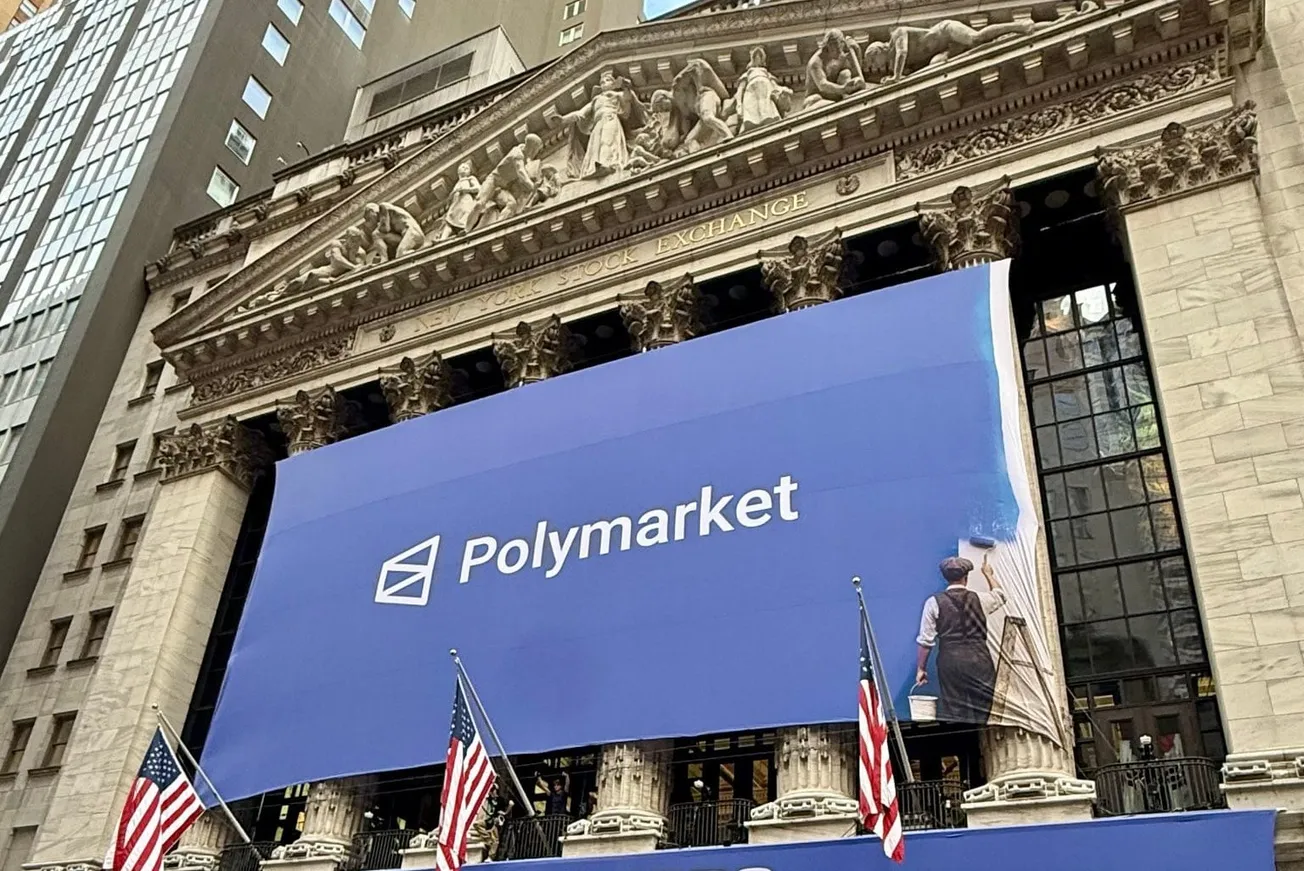
Intercontinental Exchange, which owns the New York Stock Exchange, is committing up to $2 billion in Polymarket, valuing the event-prediction platform at about $8 billion before the investment. ICE will serve as a global distributor of Polymarket’s event-driven data and will collaborate on tokenisation and related infrastructure.

Polymarket is gearing up for its return to U. S. markets following a multi-year regulatory hiatus. The firm acquired QCEX, a derivatives exchange and clearinghouse with CFTC licensure, for $112 million, enabling it to operate under U. S. regulation. The Commodity Futures Trading Commission has granted a no-action letter for event contracts, clearing a path for U. S. users to trade again.

Born in 2020 under the leadership of CEO Shayne Coplan, Polymarket permits users to wager on outcomes by purchasing “Yes” or “No” tokens. The market price implies a probability. Winning tokens settle at $1, while losing ones expire worthless. All trades occur via peer-to-peer smart contracts built on the Polygon blockchain.

Polymarket saw a surge in profile during the 2024 U. S. presidential campaign, when trading volume on election markets surpassed $3 billion. Its probability signals have since been picked up by mainstream outlets and financial analysts as indicators of public sentiment and forecasting.

ICE’s strategic investment reflects growing institutional interest in prediction markets. With control over NYSE infrastructure and deep data capabilities, ICE aims to monetise sentiment analytics and integrate such signals alongside traditional financial indicators. ICE has maintained that the investment will not materially affect its 2025 financials.

Coplan has acknowledged the significance of the tie-up, saying the partnership “marks a major step in bringing prediction markets into the financial mainstream.” Jeffrey Sprecher, ICE’s CEO, praised the union as an alignment between legacy market infrastructure and next-generation decentralised finance innovation.

Observers suggest that navigating regulatory risk is central to Polymarket’s success. Its three-year exit from U. S. users followed a 2022 settlement with the CFTC over unregistered derivatives operations. That settlement barred U. S. users from accessing the platform, and investigations into U. S. usage had been a cloud over the company. With the regulatory clearance and ICE backing, Polymarket is now executing a comeback in the U. S. domain.

Polymarket also attracted backing from 1789 Capital, a venture fund backed by Donald Trump Jr., which joined its advisory board earlier this year. Kalshi, a peer prediction market, won a favorable court ruling against the CFTC last year, setting precedents that influence Polymarket’s legal and operational landscape. The broader industry is watching closely, as the success or failure of this bet by ICE may signal whether prediction markets can transition from niche crypto tools to mainstream financial instruments.

Shayne Coplan, born in 1998 and a former dropout from New York University, is now recognised as the youngest self-made billionaire under the Bloomberg index following the deal. His trajectory illustrates the accelerating nexus among finance, tech and speculative market platforms.

DP World has struck a joint venture with Tashkent Invest, a firm under the Tashkent City Administration, to build and manage a multimodal logistics terminal in the Yangi Avlod Special Industrial Zone in the Yangihayot district on the outskirts of Tashkent. Under the deal, DP World will own 85 percent of the venture and Tashkent Invest will contribute 15 percent. The overall investment across three phases is […]

Matein Khalid Gold is in its most spectacular bull run since 1976-1980, when prices rocketed from $91 to over $800 an ounce. The current cycle found its floor near $1,800 in late 2022, as the Powell Fed’s rate-hike campaign peaked and Washington froze $300 billion in Russian reserves in response to the invasion of Ukraine. “Dr Auric” now trades at just over $4,000 an ounce – a perfect vindication of […]

Silver prices have surged to an all-time high of $49.57 per ounce as of October 8, 2025, marking a significant milestone in the precious metals market. This unprecedented surge is attributed to a confluence of factors, including escalating geopolitical tensions, economic uncertainties, and a robust demand for safe-haven assets.

The rally in silver prices mirrors a broader trend in the precious metals sector, with gold also reaching record levels above $4,000 per ounce. Investors are increasingly turning to these assets as a hedge against inflation and financial instability. The U. S. Federal Reserve’s anticipated interest rate cuts have further bolstered the appeal of non-yielding assets like silver and gold.

Analysts note that silver’s ascent is not solely driven by investor sentiment. The metal’s industrial applications, particularly in solar energy and electric vehicles, have seen a significant uptick. The International Energy Agency projects that silver demand from the solar sector will continue to rise, driven by the global push towards renewable energy sources.

Market dynamics also play a crucial role in silver’s price trajectory. The London Bullion Market Association reports a tightening in silver supply, with inventories reaching historic lows. This supply-demand imbalance has intensified competition among investors, pushing prices higher.

In India, silver prices have mirrored global trends, with rates reaching ₹1.57 lakh per kilogram in major markets. The surge has been fueled by increased demand during the festive season and a growing interest in silver as an investment vehicle. The Reserve Bank of India has noted a rise in silver-backed exchange-traded funds, reflecting a shift in investor preferences.

Despite the bullish outlook, experts caution about potential market corrections. The Commodity Futures Trading Commission has observed increased volatility in silver futures markets, indicating heightened speculative activity. Investors are advised to exercise caution and consider the long-term fundamentals of silver as an investment.

Sub-Saharan Africa’s gross domestic product is now projected to grow by about 3.8 percent in 2025, up from 3.5 percent in 2024, as inflation moderates and foreign exchange markets stabilise across many nations. The updated outlook emerges from the latest “Africa’s Pulse” report by the World Bank, which highlights a more favourable macroeconomic backdrop enabling central banks to ease policy constraints and stimulating consumption and investment. The […]

Greenlogue/AP A global analysis commissioned by Transport & Environment and conducted by Cerulogy reveals that biofuels now generate 16 percent more carbon dioxide emissions than the fossil fuels they are intended to replace. The finding throws into sharp relief the risks of scaling up crop-based biofuel programmes ahead of the COP30 climate summit in Belém, Brazil. The study includes emissions not only from cultivation, harvesting and processing, […]

Ahmad Assiri Gold has done it. Gold has reached the long-awaited $4,000 per ounce mark, a level that carries psychological and symbolic significance. This moment represents a powerful and sustained rally that began with a breakout from a lengthy consolidation phase in early September, evolving into a pivotal chapter for the market and the yellow metal. Since that breakout, gold has risen by 16%, while attempts at […]

The Central Bank of Kenya reduced its benchmark lending rate by 25 basis points today, bringing it down to 9.25 per cent, in its eighth consecutive cut as consumer inflation remains firmly within allowable limits. The move comes as Kenya’s inflation for September stood at 4.6 per cent year-on-year, slightly up from 4.5 per cent in August, but still well inside the central bank’s target band of […]

Arabian Post Staff -Dubai Chinese automakers have revived a barter-style trade with Iran, sending semi-assembled vehicles in exchange for containers of copper and zinc that feed China’s non-ferrous metals sector. This swap, involving no traditional cash payments, emerges as a creative workaround amid the constraints of sanctions and currency pathways. Every few months, a facility on the Yangtze churns out engines and chassis, which are sent to […]

South African equities climbed to unprecedented levels on Thursday, driven by buoyant momentum in mining and financial sectors. The benchmark FTSE/JSE All-Share Index rose past its prior peak, cementing the capital market’s status as one of the continent’s top performers this year. The rally has been underpinned by a strong commodity backdrop: iron ore, platinum, and gold all posted gains, boosting mining stocks across the board. The […]

London-based CoinShares, a leading European digital asset manager with about US$10 billion in assets under management, has struck a deal to acquire FCA-regulated Bastion Asset Management. The transaction, which must clear approval from the UK Financial Conduct Authority, is intended to bolster CoinShares’ actively managed crypto offerings and accelerate its push into the US institutional market.

Under the agreement, Bastion’s strategies, quantitative team and leadership, including CEO Philip Scott and CIO Fred Desobry, will be integrated into CoinShares. Bastion is known for deploying market-neutral and systematic investment strategies tailored for institutional clients. The acquisition allows CoinShares to complement its existing passive exposure products with alpha-oriented solutions.

CoinShares is already positioning for expansion across the Atlantic. It is in the process of going public in the United States via a definitive business combination with SPAC Vine Hill Capital Investment Corp, valuing the firm at roughly US$1.2 billion on a pro forma basis. CoinShares currently holds a dominant 34 percent share of the EMEA crypto ETP market and ranks as the fourth largest global digital asset ETP manager after BlackRock, Grayscale and Fidelity.

With Bastion’s integration, CoinShares aims to fuse its Investment Advisor registration in the US with new actively managed strategies targeting institutional investors. By combining quantitative alpha models with its distribution infrastructure, the firm seeks to differentiate itself from both traditional asset managers entering the crypto space and crypto-native infrastructure providers.

Jean-Marie Mognetti, CEO and Co-Founder of CoinShares, described the acquisition as closely aligned with the firm’s goal of offering comprehensive digital asset solutions to its global clientele. Bastion’s team brings extensive expertise: Fred Desobry has over 17 years’ experience in systematic investing and quantitative research; Philip Scott brings more than 25 years in financial services.

The acquisition takes shape against evolving regulatory backdrops. In Europe, CoinShares recently secured Markets in Crypto-Assets authorisation for its French subsidiary, making it the only continental European asset manager to hold all three major regional licenses. The US regulatory environment is also shifting: the Securities and Exchange Commission’s adoption of generic listing standards for commodity-based exchange traded products is shortening approval timelines from roughly 240 days to 75 days. This regulatory clarity is viewed as conducive to faster rollout of actively managed crypto funds.

The city-state’s employers have set a striking pace as they head into the final quarter of 2025: a Net Employment Outlook of 45 per cent signals that nearly three in five organisations expect to expand their workforces. That optimism comes amid shifting global headwinds, structural reforms, and a rising demand for specialised talent.

The ManpowerGroup Employment Outlook Survey canvassed 525 UAE employers across sectors to assess hiring intentions. A positive balance of 45 per cent means that those anticipating workforce increases outnumber those expecting reductions by nearly half. This figure places the UAE among the world’s more aggressive labour markets, especially given challenges such as global trade uncertainty, rising automation, and fluctuating commodity prices.

This projected hiring boom is not evenly distributed. The strongest demand lies in transport, logistics and automotive, energy and utilities, and consumer goods and services. These sectors appear ready to leverage infrastructure projects, green energy transitions, and regional consumption growth. Meanwhile, the information technology sector is showing solid demand at +48 per cent, reflecting sustained digital transformation pushes.

Driving much of this confidence is corporate expansion: 40 per cent of participating firms cited scaling operations as their primary reason for hiring. Another 28 per cent pointed to pivoting business models and growth into new areas. In addition, nearly 30 per cent of respondents acknowledged that talent shortages—and competition for specialised skills—are influencing recruitment strategies.

Yet the buoyant sentiment is tempered by caution. Roughly 10 per cent of employers still expect to trim staff, particularly in roles vulnerable to automation or in sectors facing structural disruption. Around 15 per cent responded that they will hold staffing constant, prioritising internal upskilling over external recruitment. In interviews, some HR executives noted that while they want to hire aggressively, wage inflation, geopolitical uncertainty, and regulatory shifts may prompt them to phase recruitment over several quarters.

Regional and global context strengthens the UAE’s position. In the third quarter of 2025, the UAE recorded a world-leading NEO of +48 per cent. That marked a standout alignment with its long-term growth strategy, and the Q4 figure of +45 per cent suggests sustained momentum rather than a cyclical spike. Elsewhere, the global average NEO stood at +24 per cent during Q3 — placing the UAE’s outlook nearly double the global benchmark.

Analysts view this hiring optimism as part of a broader strategy to reposition the UAE as a knowledge-economy hub. Recent government initiatives have focused on advanced manufacturing, artificial intelligence, sustainability, and logistics corridors. These programs have triggered demand not only for engineers and technicians but also for data scientists, sustainability consultants, and cross-disciplinary professionals. In one corporates sector round-table, a senior UAE CEO observed that “the competition for deep tech talent is global, and we must offer not just pay but opportunity, stability and a pathway for growth.”

Labour authorities are also aligning policies with employer needs. New visa frameworks, targeted Emiratisation programmes, and regulatory incentives for R&D investment are being synchronized with workforce forecasts. At the same time, the UAE’s PMI for non-oil activity has held above the expansion threshold, underlining demand growth across private sectors and supporting hiring intent.

However, potential headwinds remain significant. Global supply chain disruptions, slowing demand in key export markets, and monetary tightening in major economies could dampen growth. Employers may delay or scale back hiring plans if external pressures intensify. Some labour economists warn of mismatches between skills supplied locally and those demanded, especially in emerging fields.


U. S. regulators have approved Grayscale’s Digital Large Cap Fund conversion into an exchange-traded fund that will hold multiple cryptocurrencies in a single product. The fund will allocate more than 70% to Bitcoin and about 17% to Ether, with the remainder distributed among XRP, Solana, and Cardano.

The Securities and Exchange Commission adopted new generic listing standards for commodity-based spot crypto ETFs, allowing exchanges such as NYSE Arca, Nasdaq, and Cboe BZX to list qualifying funds without bespoke approval filings. These rules cut the maximum approval time from several months to as little as 75 days.

Grayscale Investments will be the first asset manager to launch a multi-crypto ETF under this framework. The GLDC product offers regulated exposure through traditional securities structures, permitting investors to access these broad crypto assets in a single fund rather than holding individual tokens. GLDC had existed before as an investment product but lacked ETF status until this regulatory shift.

Industry analysts consider this a pivotal moment for the broader digital asset market, extending beyond the earlier wave of Bitcoin-only or Ether-only products. The decision formalises recognition by regulators that crypto portfolios comprising major altcoins may be viable under oversight and regulatory expectations. It also reflects growing institutional demand for diversified exposure as volatility remains high among lesser-known tokens.

Some market participants caution that, despite its multi-asset nature, the heavy weighting toward Bitcoin and Ether means the fund’s performance may still be strongly driven by those two assets. Questions remain about how XRP, Solana, and Cardano portions will perform in different market environments, and how liquidity, custody, and valuation will be managed for the less dominant tokens.

On a global scale, the Gulf might not be the gambling hotbed we see in North America and Europe. However, it is a growing market in an area of the world where there is plenty of investment and capital. Obtaining and maintaining trust in any industry is tricky, but in the world of casino gaming, where there’s an international market, multiple cyberthreats and dozens of operators looking […]

Nasdaq has mandated that listed companies obtain shareholder approval before issuing new shares to acquire cryptocurrencies, and must disclose fuller justifications and risk assessments for large-scale crypto purchases.

The exchange’s enhanced oversight aims to guard investors, particularly retail traders, from underestimating the high volatility and speculative nature of cryptocurrencies. Companies must now explain why they are buying substantial amounts of crypto and articulate the associated financial, regulatory and market‐risk implications.

Under the new requirements, issued by Nasdaq earlier this month, firms proposing to issue equity to raise funds for crypto purchases must secure affirmative vote from their shareholders. Non‐compliance may result in trading suspension or delisting. Nasdaq is also tightening disclosure obligations: entities must show how much crypto they hold, the rationale for those holdings, and how they plan to manage the risks.

Architect Partners reports that over 120 US‐listed companies have announced plans to raise more than US$130-billion this year for cryptocurrency acquisitions, nearly 100 of which are listed on Nasdaq. Many of these firms have adopted “crypto-treasury” strategies—allocating a significant portion of their balance sheets to digital assets. Some high-profile companies have already attracted scrutiny for the size of their holdings and for the effects on shareholder dilution.

Nasdaq justifies the changes by citing investor protection. Wholesale accumulation of crypto assets can dramatically affect stock price volatility. There is concern that some retail investors may not fully grasp how crypto’s price swings, regulatory uncertainty or tax treatment risk hurting returns, or causing losses.

Critics worry the new rules could slow innovation or deter companies considering crypto exposure. Companies accustomed to quickly buying digital assets may face delays because shareholder voting cycles are time-consuming and costly. Some argue that imposing blanket rules could punish well-prepared firms that already maintain strong governance, transparency, and risk controls.

Regulators such as the US Securities and Exchange Commission and the Commodity Futures Trading Commission have been increasing pressure on exchanges and firms around crypto disclosures, anti‐fraud measure and governance. Nasdaq’s move aligns with broader regulatory momentum in financial markets toward more oversight of firms with substantial crypto exposure.

VISHNU RAJA
RYO YAMADA
HITORI GOTOH
IKUYO KITA