Just in:
Bankrupt Indian Business Barons Mostly Live Life King-Size // Microsoft restores cloud services after gateway software failure // Over 360 electricity distribution professionals meet in Seoul for CIRED’s first major event in the Asia-Pacific region // ASEAN adopts binding pact on regional digital commerce // Bitcoin rebounds after weekend plunge wipes billions from cryptocurrencies // Danone expands consumer insight capabilities to accelerate nutrition innovation through Southeast Asia R&I Application Lab upgrade // Google identifies autonomous AI systems conducting vulnerability attacks // Pink Economy report puts equal rights at the heart of Thailand’s road to Bangkok WorldPride 2030 // Govt offers talks to protesting teachers after CM signal // Ayara Kamala Reveals a Refreshed Vision for Wellness in Phuket // Takaichi exchanges greetings with Chinese minister at Manila summit // Row over Sabarimala toilet disruption // Dubai airport passenger traffic drops 28.1% amid conflict // Mubadala and Centerbridge secure £1.17bn Canaccord wealth agreement // Ramayana triggers high tourist traffic to Jatayu rock centre // Bora Group 3Q26: Revenue and Net Income Expansion Continues U.S. Manufacturing and Biologics Footprint Complete; Margin Expansion to Follow as Utilization Improves // EU levies definitive duties on five steel suppliers // ADQ Aviation raises Abu Dhabi Aviation holding to 71.61% // Regulator demands answers on controversial power deal // Hong Kong schedules Gulf-Asia investment forum for 2027 //

News related to
Commodity

Shipping through the Strait of Hormuz remained severely restricted on Tuesday as vessel movements stayed in single digits, while another ship was struck by an unidentified projectile and diplomatic efforts to ease the US-Iran confrontation remained deadlocked. Preliminary ship-tracking data showed six commodity vessels crossed the waterway on Monday, three entering the Gulf and three leaving. That was only a modest increase from the weekend and remained […]

Arabian Post Staff -Dubai A 60-day window for the United States and Iran to negotiate a durable peace agreement has expired without a breakthrough, leaving the Strait of Hormuz dispute unresolved and military and economic pressure intensifying across the Gulf. The deadline was part of an interim framework agreed in June after months of conflict. It was designed to halt fighting, restore commercial navigation through the Strait […]

The UAE has strongly condemned Iran over attacks on two ADNOC-affiliated vessels travelling through the Strait of Hormuz, describing the strikes as a serious violation of international maritime rules and a threat to regional and global energy security. The vessels were attacked on the evening of Thursday, August 13, while transiting the strategically important waterway. No crew members were injured and the situation aboard the ships was […]

Tether is expanding its asset-tokenisation business into Saudi Arabia, beginning with institutional real estate as the stablecoin group deepens its move into blockchain-based financial infrastructure beyond its core USDT franchise. The company’s Hadron platform will provide the technology needed to issue and manage tokenised property assets for institutional investors. Riyadh-based First Data will serve as issuer and market operator, while fintech company BKN301 will connect the system […]

Tether’s gold-backed digital asset XAU₮ has received Shariah compliance certification, widening its potential use among Islamic banks, institutional investors and individuals seeking digitally accessible exposure to physical bullion. The certification was issued by Amanah Advisors, an Islamic finance consultancy led by scholar Mufti Faraz Adam. It found that the token’s structure complies with core Islamic finance principles, including real ownership of an underlying asset, transparent backing and […]

Canary Capital’s spot Hedera exchange-traded fund has expanded regulated access to HBAR through Nasdaq, giving investors exposure to the cryptocurrency without requiring digital wallets, private keys or direct custody arrangements. The Canary HBAR ETF, trading under the ticker HBR, is the first US-listed spot fund dedicated to Hedera’s native token. The product began operations on October 27, 2025, and started trading on Nasdaq the following day after […]

XRP entered August trading near $1.06, with investors weighing strong institutional demand against fading expectations that US lawmakers will pass landmark cryptocurrency legislation before the congressional recess. The token remains about 71% below the record of roughly $3.66 reached in July 2025, when regulatory optimism and expectations of exchange-traded fund approvals drove a sharp market advance. Its subdued price has prompted debate over whether institutional accumulation is […]

Advertisements

Arabian Post Staff -Dubai Abu Dhabi National Oil Company will change the benchmark used to determine official selling prices for all its crude grades from November 1, replacing Murban futures with prompt-month Platts Dubai pricing. The overhaul will cover Murban, Das, Umm Lulu and Upper Zakum crude. ADNOC will announce a premium or discount for each grade against Dubai quotes during the month before the cargo is […]

Oil prices headed for their strongest monthly advance in years on Friday as the war involving the United States and Iran disrupted Middle Eastern supplies, raised shipping costs and intensified concerns over the security of global energy routes. Brent crude was on course to gain about 21% in July, despite falling by more than $1 to around $88 a barrel during early trading. West Texas Intermediate slipped […]

Russia has moved closer to opening a regulated cryptocurrency market while Washington struggles to complete its own digital-asset framework, creating a sharp contrast between state-controlled certainty in Moscow and political deadlock in the United States. The State Duma approved legislation governing cryptocurrency trading in its second and third readings on July 21. The measure must complete the remaining constitutional steps, including consideration by the Federation Council and […]

Ship traffic through the Bab el-Mandeb strait has fallen to its lowest daily level in months after Houthi attacks on Saudi oil infrastructure heightened fears that another major Middle East energy corridor could become unsafe for commercial vessels. Only 11 commodity-carrying ships crossed the narrow waterway on Sunday, vessel-tracking data showed. The passage links the Red Sea with the Gulf of Aden and serves as a vital […]

Arabian Post Staff -Dubai The United States and Iran have halted attacks for a second consecutive night, creating a fragile opening for diplomacy after nearly two weeks of escalating strikes around the Strait of Hormuz. US forces carried out no reported air strikes against Iran during the weekend after 13 straight nights of operations aimed at missile sites, coastal positions and other capabilities used to threaten commercial […]

Arabian Post Staff -Dubai Abu Dhabi Global Market has recognised Tether Gold as an Accepted Spot Commodity, opening the way for licensed financial firms in the centre to provide regulated services involving the gold-backed digital token. The designation covers XAU₮, issued by Tether through its commodities business. Each full token represents ownership of one fine troy ounce of physical gold allocated from a London Good Delivery bar […]

Infostealer malware is giving ransomware operators a faster route into corporate networks by supplying stolen passwords, browser cookies and authentication tokens that can defeat conventional identity controls. The growing trade in “stealer logs” has turned infections on individual computers into a dependable source of access for organised cybercrime groups. Criminals can search the harvested data for corporate email addresses, virtual private network credentials, cloud accounts, remote desktop […]

Cryptocurrency markets face renewed volatility as an Ethereum developer warns that expectations surrounding the United States’ CLARITY Act could trigger a deeper sell-off if lawmakers fail to deliver the regulatory breakthrough already anticipated by traders. Econar, a long-time Ethereum builder and commentator, said digital assets could stage only a limited rise as speculation about the legislation intensifies. Failure to pass the bill could then push prices below […]

Arabian Post Staff -Dubai DP World has agreed to develop and operate two new terminals in Fujairah under a 50-year concession, expanding the UAE’s cargo-handling capacity and creating a deep-water gateway with direct access to the Gulf of Oman. The agreement in principle with Fujairah Ports Authority covers the Al Rugaylat container and multi-purpose terminal and the Dibba General Cargo terminal. The projects will be developed in […]

US President Donald Trump’s phased tariff plan for imported generic medicines has given drugmakers two years to strengthen American manufacturing while raising questions over costs, supply security and the future competitiveness of India’s pharmaceutical exports.

Trump announced that generic drugs entering the United States would remain free of import duties until August 1, 2028. A tariff of 100% would then apply for one year, followed by a 200% levy from August 2029. The proposed schedule extends Washington’s pharmaceutical reshoring campaign beyond patented and branded medicines, which were targeted earlier.

India faces the greatest exposure because the United States is its largest pharmaceutical export market. Drug exports to the country were valued at about $9.7 billion in 2025, representing roughly 38% of total pharmaceutical shipments worth $25.8 billion.

The policy nevertheless does not automatically remove the price advantage enjoyed by manufacturers such as Sun Pharmaceutical Industries, Dr Reddy’s Laboratories, Aurobindo Pharma, Cipla, Lupin and Zydus Lifesciences. Many generic medicines produced in India are priced seven to 10 times below branded alternatives, leaving room for some products to remain competitive even after steep duties.

A medicine imported for $10 would cost $30 after a 200% tariff, excluding distribution and retail charges. It could still undercut a branded equivalent priced at $70 or $100. The calculation is less favourable for commodity generics, where several manufacturers compete on narrow margins and buyers demand the lowest possible price.

Generic medicines account for more than 90% of prescriptions dispensed in the United States but less than 13% of prescription-drug spending. That imbalance reflects their importance to American healthcare as well as the pressure placed on manufacturers by pharmacy chains, wholesalers, insurers and purchasing organisations.

The United States imported pharmaceutical products valued at about $213 billion in 2025. Finished medicines sold in retail packaging, including generic products, accounted for about $94.1 billion. Replacing those imports would require extensive investment, specialised workers, regulatory approvals and dependable supplies of active pharmaceutical ingredients.

Building a pharmaceutical plant can take several years. Companies must install production lines, validate manufacturing processes and secure approval from the US Food and Drug Administration before commercial sales begin. Each medicine may also require separate technical submissions and inspections, complicating attempts to shift large portfolios within the two-year exemption period.

Several major drugmakers have already established manufacturing or research operations in the United States, providing limited protection against future tariffs. Companies may expand those facilities, acquire local plants or transfer selected high-volume products while continuing to manufacture lower-margin medicines overseas.

The tariff could affect businesses unevenly. Manufacturers with specialised generics, injectable drugs, inhalers and complex formulations may have greater pricing power. Producers dependent on crowded categories such as basic tablets and capsules could face heavier pressure because customers can switch suppliers more easily.

Shares of leading pharmaceutical companies fell after the announcement, with some declining by more than 3% during Wednesday’s trading. The reaction reflected concern over long-term earnings rather than an immediate change in export conditions, as the duty-free window remains open for two years.

Implementation is also uncertain. Trump disclosed the schedule through a social-media statement, but no detailed executive order or customs framework had been issued. The administration must still clarify whether exemptions will be available for companies building factories, medicines facing shortages, critical hospital products or imports from countries covered by trade agreements.

Industry participants are expected to seek exclusions for essential medicines, arguing that tariffs could raise treatment costs and deepen shortages. The American generic-drug market has already faced supply disruptions linked to plant closures, quality failures and unsustainable pricing. Higher import costs could encourage some manufacturers to withdraw products rather than invest in additional capacity.

Washington’s strategy also faces a supply-chain constraint beyond finished medicines. A large portion of the active ingredients and chemical intermediates used by global manufacturers originates in China. Moving final production to the United States without diversifying those inputs would provide only partial protection against overseas disruption.

Drugmakers in India now have until August 2028 to adjust their production networks, negotiate with customers and identify medicines capable of absorbing higher duties. Expansion into Europe, Africa, Latin America and other regulated markets could reduce dependence on the United States, although none offers comparable scale.

The UAE and Andhra Pradesh have moved a planned food-processing partnership into the implementation stage, opening talks on investments, agricultural technology, export infrastructure and more resilient supply chains.

More than 32 companies from the UAE and India joined a business forum organised by the UAE Food Cluster and the Andhra Pradesh government. The gathering brought food producers, agricultural businesses, logistics operators and technology companies together to identify projects across manufacturing, farming, seafood, cold storage and distribution.

The forum, held under the theme “Building Strategic Partnerships Across Value Chains”, coincided with a visit by a UAE economic delegation led by Minister of Economy and Tourism Abdulla bin Touq Al Marri. Andhra Pradesh Chief Minister N. Chandrababu Naidu, senior state officials and representatives of the Andhra Pradesh Economic Development Board also attended.

A memorandum of understanding signed by the UAE Food Cluster and the state’s Economic Development Board provides a framework for investment, trade, innovation and institutional cooperation. It covers sustainable production, value-added manufacturing, technology transfer, knowledge exchange and business missions.

The agreement also advances plans for a UAE-backed food cluster in Andhra Pradesh, an initiative discussed during Naidu’s meeting with Al Marri at the World Economic Forum in Davos in January. The proposed cluster is expected to connect farms, processors, cold-chain operators, ports and overseas buyers through integrated commercial networks.

Initial work will focus on building value chains for mangoes, bananas and cocoa, three products in which Andhra Pradesh has established production and export strengths. UAE-based Floor Masters International has proposed investing ₹100 crore in a food-processing facility at Gangadhara Nellore in Chittoor district.

The company, which supplies products to about 25 countries, plans to use the facility as an export base. The proposal is the first identified investment under the broader partnership and could serve as a test case for subsequent projects involving Emirati businesses.

Discussions at the forum covered seafood, aquaculture, dairy products, poultry, pulses, horticulture, food sourcing and distribution. Companies also examined cold-chain systems that could reduce spoilage between farms, processing centres, ports and retail markets.

Andhra Pradesh’s long coastline, commercial ports, agricultural output and links to Gulf markets have made the state a potential supply base for UAE food businesses. Stronger maritime connections could shorten delivery times while providing producers with access to consumers across West Asia and other markets served through UAE logistics networks.

Naidu presented opportunities in horticulture, aquaculture and food processing, while promoting Rayalaseema as a future horticultural centre. The state is seeking public and private investment in irrigation, storage, packaging, processing and branding to raise the value of agricultural production rather than relying mainly on raw commodity sales.

Andhra Pradesh accounts for 15.6 per cent of the country’s fruit production and leads nationally in crops including papaya, cocoa, tomato, coconut and oil palm. It is also a major producer and exporter of chillies, bananas, seafood and aquaculture products.

The state allocated ₹1,223.86 crore to horticulture and allied departments in its 2026–27 budget. Its plans include expanding commercial horticulture, supporting micro-irrigation and developing West Godavari as a cocoa hub. Nearly 120,000 tonnes of bananas are exported annually, highlighting the potential for additional sorting, packaging and processing capacity.

For the UAE, the partnership supports a strategy of securing diversified and commercially sustainable food supply channels. The country has built an ecosystem covering farming, manufacturing, imports, distribution, food technology and logistics, but remains dependent on overseas supply for much of its consumption.

The UAE Food Cluster, launched two years ago, connects more than 2,000 businesses across production, processing, distribution and innovation. The wider national food sector includes more than 10,000 companies and over 38,000 farms, alongside tens of thousands of registered food-related trademarks.

Al Marri and Naidu also discussed cooperation in tourism, hospitality, infrastructure and knowledge-based industries. Emirati companies are assessing coastal tourism projects and logistics opportunities, indicating that the food initiative could form part of a wider investment relationship with the state.


BlackRock’s spot Bitcoin exchange-traded fund held about 733,500 tokens valued at more than $47.5 billion on July 15, cementing its position as the dominant regulated Bitcoin investment product in the United States. The latest official portfolio data differs slightly from a widely circulated social media claim that the iShares Bitcoin Trust held 734,762 Bitcoin worth $47.1 billion. Holdings change each trading day as authorised participants create or […]

Arabian Post Staff -Dubai DMCC and the Botswana Stock Exchange Group have signed an agreement to connect Botswana’s commodity producers with Dubai’s trade, finance and logistics network, creating a new commercial corridor between Gaborone and the emirate. The memorandum of understanding will establish what the organisations describe as Africa’s first multi-commodity sister-hub trading corridor. It is intended to widen international market access for Botswana’s diamonds, copper, coal, […]

Arabian Post Staff -Dubai Gemcorp Capital has completed a $20 million Shariah-compliant structured financing in Saudi Arabia, marking the emerging-markets asset manager’s first direct lending transaction in the kingdom. The financing has been extended to SILQ, a Saudi financial technology platform that provides procurement, payment and funding services to small and medium-sized enterprises. The transaction gives Gemcorp an initial foothold in a market where growing companies often […]

Interpol has announced 5,811 arrests and the interception of $293 million in illicit assets following a sweeping operation against cyber-enabled fraud across 97 countries and territories. Operation First Light 2026 targeted social engineering scams and related money laundering networks between January 15 and April 30. Authorities identified more than 142,000 victims, analysed 152,808 cases and blocked 31,014 bank accounts linked to suspected criminal proceeds. The China-funded operation […]

Polymarket has filed regulatory applications that could allow its United States prediction-market business to offer margin trading, a major step towards introducing leveraged event contracts to American customers. The applications were submitted to the National Futures Association on July 3 through PM Derivatives LLC. They seek registration as a futures commission merchant, membership of the industry regulator and approval to operate as a swap firm. Coming Home […]

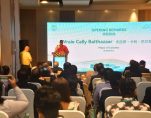
COLOMBO, SRI LANKA- Media OutReach Newswire – 9 July 2026 – On July 4, 2026, the cultural exchange event Encounter & Insight: Dialogue Between Ningbo, China and Colombo, Sri Lanka took place in Colombo.

On July 4, 2026, the cultural exchange event Encounter & Insight: Dialogue Between Ningbo, China and Colombo, Sri Lanka took place in Colombo.

Separated by thousands of miles, the two millennia-old port cities reconnected, leveraging their ports as a bond and cultural exchanges as a cohesive force to hold in-depth talks on integrated port-city development and bilateral economic and trade connectivity.

This cross-Indian Ocean dialogue echoes the ancient Maritime Silk Road while charting a brand-new outbound development path. As a pivotal starting port of the ancient Maritime Silk Road, Ningbo is building a new global trade landscape powered by smart manufacturing.

A thousand years ago, merchant vessels from Mingzhou Port set sail southward loaded with Yue Kiln celadon porcelain, passing through Ceylon to deliver Oriental crafts across the Indian Ocean coasts. Precious gemstones and spices traveled the same sea route back to regions south of the Yangtze River, laying the groundwork for the earliest cultural exchange between the two ports through trade. Today, the cargo carried by giant cargo ships has undergone a dramatic transformation. Beyond traditional daily necessities, intelligent equipment, digital home appliances and industrial robots now dominate shipments.

Official statistics show that Ningbo’s exports of intelligent equipment, including mechanical arms and industrial robots, hit 440 million yuan in 2025, surging more than 40% year-on-year. From January to May this year, Ningbo’s exports of mechanical and electrical products maintained steady growth, reaching 247 billion yuan, a 4.1% year-on-year increase and accounting for 58.0% of the city’s total export volume. The new energy foreign trade sector saw explosive growth, with exports of new energy vehicles, lithium batteries, and photovoltaic products jumping 138.4% year-on-year, with electric vehicle exports skyrocketing 215.9%. Smart manufactured goods are continuously expanding the scope of Ningbo’s foreign trade.

Complementing the Colombo forum, an exhibition highlights Ningbo’s outstanding going-global enterprises and their products, vividly illustrating the profound shift in Ningbo’s trade structure.

Alongside time-honored Maritime Silk Road staples such as celadon porcelain and silk, Ningbo’s smart manufactured products—including AI translation glasses, intelligent outdoor gear and digital small home appliances—occupy prominent display spaces across the venue. In Sri Lanka, Ningbo smart water meters are widely adopted nationwide, while handheld cooling fans and intelligent kitchen appliances have entered ordinary households.

Leveraging Colombo Port’s transshipment advantages, massive volumes of Ningbo smart manufactured goods are distributed onward to Europe, the Middle East and beyond. What Ningbo exports today is no longer mere commodities, but a complete outbound solution integrating technology, brand value and after-sales services.

Faced with mounting challenges including homogeneous global market competition and rising trade barriers, Ningbo’s manufacturing sector has abandoned the old model of low-cost OEM production, relying on intelligent transformation to consolidate its competitive edge in overseas markets.

Over more than a decade of digital transformation efforts, Ningbo has achieved full digital upgrading of all industrial enterprises above designated size. A large number of local factories have built unmanned black-light workshops and flexible production lines, escaping vicious price competition through continuous technological iteration. Represented by five specialized, sophisticated, distinctive and innovative enterprises dubbed Ningbo’s “Five Little Tigers”—famous for their core proprietary technologies, including highly sophisticated visual inspection equipment, heat-resistant materials, sun-proof coatings, puncture-proof materials and self-drilling fasteners—these niche manufacturers have developed differentiated technical routes and full-spectrum production capacity, cementing irreplaceable competitiveness for Ningbo smart manufacturing on global markets.

Beyond trade expansion, Ningbo has built a supporting cultural communication system to ensure “products go global, accompanied by local culture”.

The launch of Sri Lanka’s first “One-Meter Cultural Space” cultural station during the Colombo event marks a tangible milestone of Ningbo’s go-global initiative. Built on enterprises’ overseas outlets, these miniature cultural exhibition halls integrate intangible cultural heritage crafts, urban stories and smart products, enabling overseas clients to experience cutting-edge manufacturing while gaining insight into Ningbo’s profound cultural heritage.

During the twin-city story-sharing session, Ningbo entrepreneurs based in Sri Lanka and local designers blending Chinese and Sri Lankan aesthetics shared stories of bilateral exchanges. Economic and trade ties have evolved into a bond for people-to-people communication, bridging divides in cross-cultural trade.

From Tang-dynasty celadon porcelain sailing across the Indian Ocean to intelligent equipment shipping to every corner of the globe, Ningbo, the ancient Maritime Silk Road port, has preserved its enduring gene of openness. Where exchanges once relied purely on commodity trade, today smart manufacturing underpins a stable, diversified and high-value-added global trade network.

The Ningbo-Colombo dialogue stands as a vivid microcosm of this transformation: the port still links lands and seas, yet the core of its trade has undergone a full intelligent upgrade.

Rooted in its historical legacy as a key Maritime Silk Road hub, Ningbo has consolidated its industrial foundation through a decade of digital development, expanded global market reach via worldwide port networks, and softened trade cooperation through cultural exchanges. This brand-new outbound shipping route forged by smart manufacturing has not only reshaped the city’s foreign trade landscape, but also delivered a replicable port-city development model for Chinese manufacturing to go global.

Hashtag: #NingboSmartManufacturing #MaritimeSilkRoad #GlobalTrade

The issuer is solely responsible for the content of this announcement.

VISHNU RAJA
RYO YAMADA
HITORI GOTOH
IKUYO KITA