News related to
Commodity

The Securities and Exchange Commission is developing a standardised framework that would allow token-based exchange-traded funds to list directly on exchanges, without requiring individual Rule 19b‑4 filings. The initiative, still in early stages, would set eligibility criteria—such as specific thresholds for market capitalisation, trading volume and liquidity—to determine which tokens qualify for streamlined launches.

This approach echoes previous SEC moves: in 2016, actively managed ETFs gained generic listing access under Rule 19b‑4, bypassing lengthy approval processes. Exchanges such as NYSE, Nasdaq and Cboe laid the groundwork by integrating uniform listing standards for index-based and active ETFs, paving the way for this token-focused evolution.

In May, Nasdaq formally proposed Rule 5703 to facilitate generic listing of multi-class ETFs, provided they align with Rule 6c‑11 and relevant exemption orders—allowing shares to debut without SEC review per fund. Similarly, Cboe sought generic listing permission for commodity-based ETFs to enable immediate options trading once criteria are met. The current SEC effort extends that logic to the burgeoning field of digital asset tokens.

Nasdaq has suggested the SEC adopt consistent standards for spot crypto ETPs under the 1933 Act, arguing that futures-based equivalents have already benefited from generic listing systems. This dovetails with mounting interest in regulated spot token funds, evidenced by amendments to listings such as Solana ETFs by issuers including 21Shares and Bitwise.

Under the envisaged standard, exchanges would apply objective, measurable thresholds—minimum market cap, daily volume and liquidity—to lists of token ETPs. Meeting these thresholds would allow issuers to bypass the full Rule 19b‑4 paperwork and associated months-long wait. Exchanges would retain responsibility for ongoing surveillance, as required by Section 19b‑4, ensuring investor protection and market integrity.

Stakeholders believe the move could vastly reduce time-to-market and cut legal and administrative costs. Industry analysts have highlighted that current Rule 19b‑4 reviews often delay ETF launches by months, even years. Exchanges argue that objectively defined generic standards provide predictability and efficiency—benefits that appear essential in digital asset markets known for rapid innovation.

Critics caution, however, that token assets may present unique compliance and market-risk considerations. Spot crypto markets, for instance, remain vulnerable to manipulation, price fragmentation and regulatory uncertainty. Ensuring adequate surveillance and governance, they warn, is material to the standard’s success.

To address this, exchanges plan to build in monitoring mechanisms, adaptation of surveillance regimes, and safeguards to delist or suspend tokens that fail to maintain standards. Similar models have been applied to options on commodity ETFs and multi-class ETF shares, suggesting a tested regulatory infrastructure.

The SEC’s token-ETF framework is likely to include consultation with market participants and exchanges, incorporating feedback from recent proposals such as Nasdaq’s push for spot crypto ETP generic listing. Legal advisors emphasise the importance of clear, data-driven criteria to withstand Rule 19b‑4’s statutory requirement for investor protection.

Key players expected to benefit include token issuers, established asset managers entering crypto, and intermediaries seeking to offer exchange-traded token exposure. Streamlined listing could also encourage institutional investors to enter the token market with confidence, potentially increasing adoption and liquidity.

Within the regulatory community, observers note that the SEC is mindful of its 2024 approval of spot Ether ETFs via individual 19b‑4 forms; a broader listing standard could expand this success to a wider array of digital assets. Meanwhile, pending amendments relating to token staking in ETFs—such as those Cboe filed in March—underscore the growing diversity within crypto-linked products.

As deliberations progress, industry and legal experts are analysing possible criteria thresholds, surveillance protocols, and whether the framework will initially apply only to spot token ETPs or extend to futures and hybrid products. Exchanges appear to favour a phased approach, beginning with established tokens that already meet basic listing requirements.

Australia’s earnings from mining and energy exports are set to decline over the coming years, with rising gold revenues unable to fully offset weak demand and price falls in iron ore, liquefied natural gas and coal. Government projections show a fall from A$415 billion in 2023–24 to A$385 billion in 2024–25, and further to A$352 billion by 2026–27. The Office of the Chief Economist highlights that surplus global supply—particularly in […]

The U.S. dollar has slumped by more than 10 per cent year‑to‑date, marking its most severe first‑half decline since the mid‑1980s, as global investors pull back from dollar‑denominated assets amid doubts over U.S. economic policy and rising interest in alternatives such as cryptocurrencies.

Institutional investors across Europe and Asia are leading a broad sell‑off. European pension funds and insurers have slashed dollar‑asset exposure to levels unseen since 2022, primarily through equity divestment, while Asian bondholders have been unwinding fixed‑income positions.

Market watchers identify multiple bearish drivers: weakening Federal Reserve credibility under the spectre of political interference, dovish statements signalling potential rate cuts, and concerns over President Trump’s tariff posture and mounting debt. These factors have undercut confidence in the dollar’s role as the premier global reserve asset.

Declining yields on U.S. Treasuries have narrowed their appeal, prompting asset shifts toward Europe and emerging markets and feeding a broader investor rotation away from dollar‑centric investments. Cash strategists at Bank of America report that the net underweight position on the dollar is the most significant in two decades, signalling widespread repositioning.

Despite periodic reprieves, market technicals remain weak. The ICE U.S. Dollar Index, trading around the high‑90s, broke key support levels, triggering technical patterns that suggest further downside unless a strong reversal emerges.

The dollar’s weakness is also fueling a surge in alternative assets. Cryptocurrencies like Bitcoin have rallied, with analysts highlighting an inverse correlation to the dollar’s performance. Gold and select equities in Europe and Asia have benefited from the reallocation of capital.

Echoes of the mid‑1980s Plaza Accord era are notable, when coordinated efforts led to a sharp devaluation of the dollar. However, experts caution that the current environment reflects deeper structural trends: geopolitical uncertainties, shifting reserve currency strategies, and Asia’s growing role in capital flows.

Some analysts argue that short‑term technical bounce possibilities exist, especially if U.S. economic indicators outperform or geopolitical tensions rekindle risk‑off flows. Yet, the prevailing consensus points to a prolonged adjustment period, as “short dollar” bets remain deeply entrenched among fund managers.

The dollar’s slide has implications beyond currency markets. Weaker dollar conditions typically ease financial constraints for emerging economies with dollar-denominated debt, support commodity prices, and influence global trade balances. Conversely, U.S. consumers may experience elevated import costs.

Attention now shifts to key catalysts: upcoming Fed commentary, U.S. inflation and employment data, and whether the administration proceeds with proposed tariffs or investment taxes that could further unsettle international investor sentiment.

Polymarket, the world’s largest blockchain-based prediction market platform, is on the verge of completing a funding round exceeding $200 million that would value the company at over $1 billion. The strategic investment reflects growing investor confidence in forecasting platforms as tools for real-time insights and market intelligence.

The company, founded in 2020 by Shayne Coplan and headquartered in New York, has previously secured $70 million across Series A and B rounds led by General Catalyst, Founders Fund, alongside participation from Ethereum co-founder Vitalik Buterin. That capital helped Polymarket scale its operations offshore, particularly following regulatory setbacks in the United States, where it withdrew services under pressure from the Commodity Futures Trading Commission.

Sources indicate the new investment round will build on these foundations, raising upwards of $200 million and propelling Polymarket into unicorn status with a valuation north of $1 billion. Those close to the transaction describe a diverse syndicate of venture capital firms, strategic investors and high-profile figures from the crypto and financial sectors, though official names are yet to be disclosed.

Polymarket’s appeal lies in its novel combination of decentralised finance, crowd-sourced wisdom and smart contract automation. The platform allows participants to trade on real-world events—ranging from elections and policy outcomes to entertainment and economic indicators—by buying and selling shares reflective of outcome probabilities. Transactions occur using USDC on Polygon, ensuring on-chain settlement and transparency.

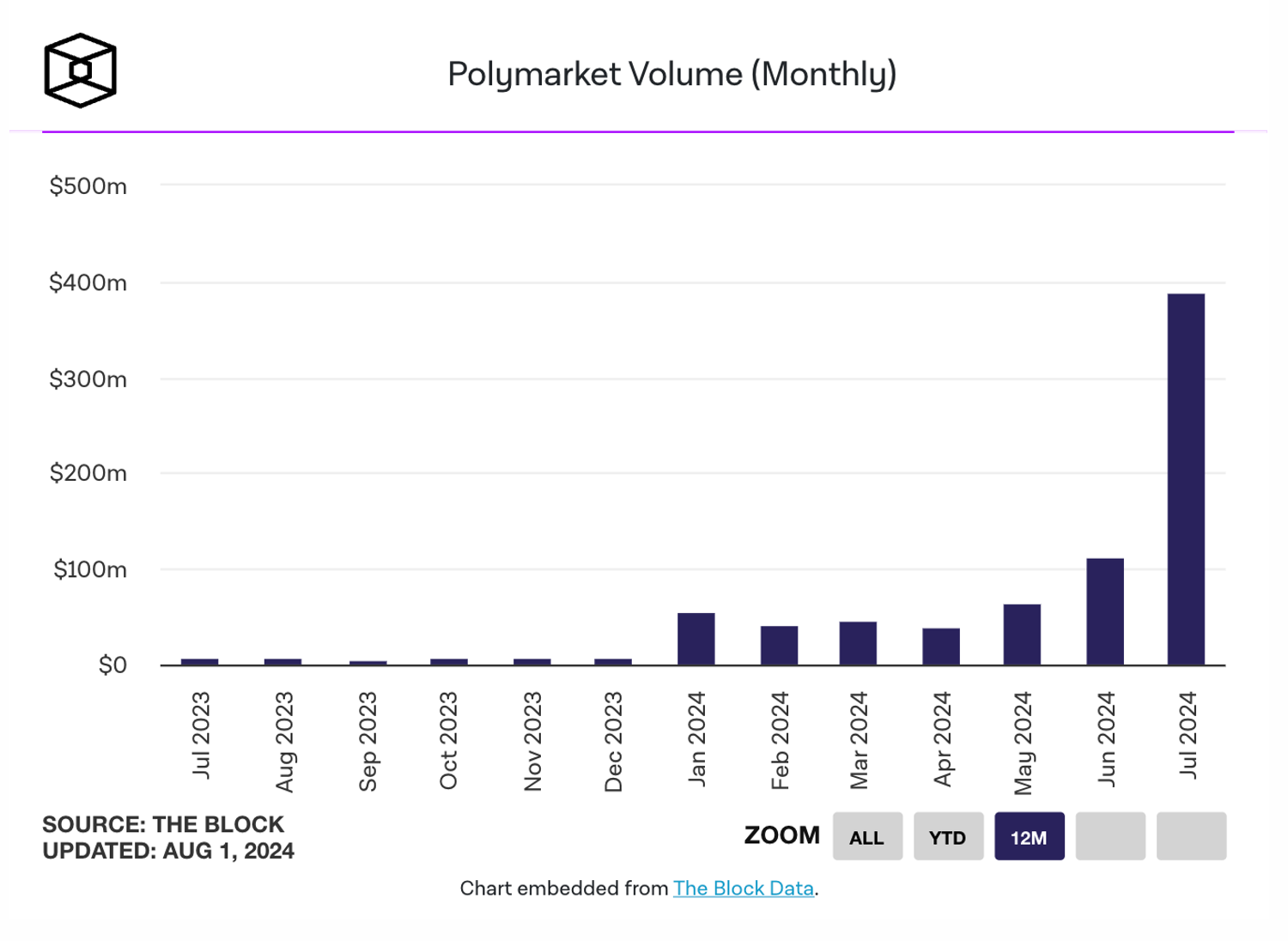
Trading volumes attest to the platform’s influence. In August 2024 alone, Polymarket processed approximately $472 million in trades, with political markets—especially those related to the US presidential election—accounting for nearly $1 billion in wagers by November 2024. Peter Thiel’s Founders Fund highlighted its trust in Polymarket’s market intelligence: “checking Polymarket when breaking news happens has become a habit”.

That compelling performance comes amid regulatory headwinds. Polymarket has barred US users since reaching a settlement with the CFTC in early 2022, which included a US$1.4 million fine and the appointment of former CFTC chairman J. Christopher Giancarlo to its advisory board. These changes aimed to address compliance concerns as the platform expanded internationally. More recently, the FBI reportedly raided Coplan’s home in autumn 2024 as part of an investigation into whether US-based activity violated these agreements.

Despite these challenges, Polymarket has continued to deepen its appeal. Ethereum co-founder Vitalik Buterin has publicly supported the broader application of prediction markets, terming them pioneers in “Info Finance,” an area he believes can enhance journalism, governance and scientific transparency. Polymarket’s data is now cited within Bloomberg’s Terminal services, offering institutional investors fresh analytical layers based on global betting dynamics.

The potential $200 million funding round is expected to include an allocation of token warrants enabling investors to participate in a future token issuance by Polymarket. Earlier reporting by CoinDesk and The Defiant in late 2024 highlighted a $50 million interim funding plan tied to a utility token offering, intended to integrate with or supplant the UMA oracle dispute-resolution system. That mechanism would allow users—or token holders—to validate market outcomes, an evolution that could expand Polymarket’s governance and on-chain autonomy.

Market observers view this token strategy as a logical advancement. Rising volumes and user engagement on election forecasts have revealed limitations in relying solely on external oracles; introducing a native token could decentralise verification and cement Polymarket’s position in the governance of its own markets.

Emerging trends suggest Polymarket is transitioning from an insurgent, crypto-native prediction exchange to a mainstream information infrastructure. Its user base now spans political analysts, financial professionals and retail traders. The recent partnership with X integrates Polymarket’s probabilistic feeds into social media dynamics, allowing users to access market sentiment in real-time alongside breaking news.

Yet questions over regulatory alignment remain. The CFTC is reportedly examining off-shore platforms that permit US bettor access, and lawmakers are considering broader prohibitions on event-based derivatives. The fallout from the 2024 FBI inquiry adds a layer of legal uncertainty, even as Polymarket navigates regulatory environments in Europe and Asia, where its platform has faced access restrictions from gambling regulators in Belgium, Poland, Singapore and France.

As Polymarket nears completion of its landmark funding round, it stands at a crossroads defined by opportunity and scrutiny. A valuation exceeding $1 billion would underscore investor conviction in its model, but unlocking the full potential of prediction markets may depend as much on regulatory clarity as on capital infusion.

U.S. President Donald Trump has announced a “complete and total” ceasefire between Israel and Iran, set to begin within hours, marking what he described as the end of a 12‑day war. The plan envisages Iran initiating a 12‑hour ceasefire, followed by a reciprocal Israeli hiatus, concluding with a full cessation of hostilities.

Trump’s statement on his social media platform outlined a phased process: Iran will commence the ceasefire after winding down its final missions, followed by Israel 12 hours later, and after 24 hours the war will be declared over. He praised both nations for their “stamina, courage, and intelligence” and characterised the agreement as a significant step towards lasting peace.

The announcement follows a dramatic escalation in regional tensions. Israel launched military strikes on Iranian nuclear facilities in response to Iran’s uranium enrichment activities. Tehran retaliated by firing up to 14 missiles at the U.S.-operated Al Udeid Air Base in Qatar. While 13 were intercepted and one deviated off course, no U.S. personnel were harmed—a fact President Trump described as a “very weak response.”

Despite global concerns over escalation, including warnings from France and other Western capitals, market responses have remained muted. Oil prices dropped approximately 7% in anticipation of de‑escalation, while equity markets posted modest gains.

Though the ceasefire announcement has generated optimism, it remains unverified by Israeli or Iranian leaders. As of now, neither government has publicly confirmed their commitment to the arrangement. Al Jazeera noted the absence of official statements from both sides.

The U.S. role in brokering this agreement highlights Trump’s assertive posture. He denied prior suggestions that France’s Emmanuel Macron had brokered such a deal, countering that the ceasefire plan was “much bigger than that.” Analysts warn that trust between Israel and Iran remains fragile, requiring robust verification mechanisms and potentially third-party monitoring to sustain the fragile peace.

European diplomats, including those from France, Germany and the UK, have previously urged for de‑escalation after U.S. strikes, facilitating a clash of diplomacy and military brinkmanship. Trump has also floated the prospect of regime change in Iran under the slogan “Make Iran Great Again,” sparking concerns about the endgame and durability of U.S. involvement.

In Washington, debate has emerged regarding U.S. aims. Trump’s advisors say the administration does not seek regime change, yet the use of the slogan and his rhetoric suggests otherwise. Critics warn that pushing Iran into further isolation could spark domestic instability in Tehran.

Regions across the Gulf remained on high alert during the conflict. Airspace closures in Qatar, Bahrain, and Kuwait affected international travel. Qatar has since reopened its skies following coordination with regional authorities. Countries in the region—Saudi Arabia, the UAE, and France included—expressed deep concern and reinforced calls for dialogue and restraint.

Security analysts note that the potential for a broader conflagration, particularly in the Strait of Hormuz, persisted until the ceasefire announcement. Iran’s parliamentary body had discussed strategic deterrents, including the possibility of closing the strait, a move that could severely disrupt global oil supplies. The upcoming hours will be decisive in determining whether the ceasefire is respected or if underlying tensions reignite.

The absence of casualties on either the U.S. or Israeli side contrasts with reported losses in Iran and Israel. Israeli strikes reportedly killed several hundred Iranians, including Revolutionary Guard members, while Iran was testing its limited retaliatory capabilities.

Infrastructure damage in both nations has been notable though not crippling. On the Iranian side, Tehran’s Evin prison and Revolutionary Guard sites bore the brunt of Israeli air raids; on the Israeli side, civilian infrastructure has remained largely intact, shielded by missile defence systems such as Iron Dome.

Stock markets and global commodity prices will closely monitor the ceasefire’s implementation. Should it hold, analysts suggest stability may regain foothold and prices may further retreat. However, any violation could push markets back into turmoil.

Diplomatically, Europe appears keen to reaffirm diplomatic channels. The EU and UN are reportedly preparing statements urging verification and offering mediation. Russia and China have also urged parties to uphold the ceasefire and avoid widening the conflict.

The next 24 hours are critical. The phased ceasefire hinges on mutual restraint and credible enforcement measures. U.N. observers or allied forces may be deployed to Tehran and Tel Aviv to verify compliance. Confirmation of Iran’s opening of its airspace and Israel’s military stand‑down orders will be key signals.

Toyota Motor Corp has confirmed that it will increase the prices of selected Toyota and Lexus models sold in the United States by an average of US $270 and US $208 respectively, with the changes taking effect in July 2025. The pricing adjustment comes as part of Toyota’s standard price‐review cycle, the company emphasised, rather than a direct response to the higher US import tariffs on vehicles and auto […]

KUALA LUMPUR, MALAYSIA – Media OutReach Newswire – 21 June 2025 – Crude oil, which is arguably the world’s most important commodity, is on everybody’s mind right now. The flared up conflict in the Middle East is increasing risks of a major oil supply shock, potentially pushing the price of ‘black gold’ into the stratosphere and completely derailing the global economy. In this article, Octa, a global […]

Advertisements

Oil markets surged on Tuesday and Wednesday as escalating military exchanges between Iran and Israel sparked investor anxiety. Brent crude futures climbed approximately 2.1 per cent to $74.79 a barrel by 12:02 GMT, while US West Texas Intermediate settled near $73.19—following intraday swings exceeding 2 per cent gains and drops. The gains were driven by soaring geopolitical concerns after Israel bombed Iran’s South Pars gas field—shared with Qatar—igniting a fire that prompted Iran […]

Fitch Ratings upgraded Ghana’s long‑term foreign currency sovereign rating from “restricted default” to “B‑” on 16 June, accompanied by a stable outlook. The move reflects substantial progress in debt restructuring after the West African nation normalised relations with a large majority of its external commercial creditors. Ghana’s economy endured its most severe crisis in decades, driven by collapses in its cocoa and gold sectors. The government’s proactive restructuring […]

Markets across the Gulf and beyond plunged on Friday following a sharp military escalation after Israel struck Iranian nuclear and military sites, triggering drone counter‑attacks by Iran and a broader risk‑off reaction among investors.

Dubai’s benchmark index tumbled 5.1%, its steepest single‑day loss since May 2022, while Abu Dhabi’s dropped 3.5% before paring losses. The rout extended into Israel, where the shekel slid as much as 3.5% against the dollar, with long‑dated Israeli bonds and select regional government debt also weakening.

Commodity markets mirrored investor anxiety. Brent crude surged over 6%, touching its highest level in nearly five months, as traders assessed the risk of supply disruptions through the Strait of Hormuz. Gold likewise rallied, reaching two‑month highs as capital flowed into safe‑haven assets.

Airline stocks were among the hardest hit. Air Arabia shares plunged more than 4%—some reports suggest nearly 8%—as carriers rerouted flights away from airspace over Iran, Israel, Iraq and Jordan. Regional exchanges in Riyadh and Doha were closed on Friday, with trading set to resume on Sunday amid anticipation of continued volatility.

The market shockwaves reverberated worldwide. Europe, Asia and US indices all registered dips: the S&P 500 dropped roughly 0.4% mid‑day, the Dow slipped nearly 1.8% and the Nasdaq around 1.3%, while Tokyo’s Nikkei and Hong Kong’s Hang Seng also declined.

Analysts warned that while markets historically absorb such shocks fairly quickly, the sustained threat of conflict brings inflation and growth risks. Chris Scicluna of Daiwa Capital Markets noted the initial oil spike “hasn’t been too extreme” but cautioned that a sustained rise toward US $80 oil would be problematic for central banks. Meanwhile, Tariq Kakish of FH Capital pointed out that geopolitical instability remains “the key factor affecting investors’ sentiments”.

Concerns centred on the Strait of Hormuz, which channels approximately one‑third of global seaborne oil, raising the potential for disruption. Demand for insurance on tankers in the Gulf surged, and traders remain on edge over possible Iranian retaliation targeting shipping or oil infrastructure. However, OPEC+ sources suggest that Saudi Arabia and others retain sufficient spare capacity and are monitoring the situation closely.

Financial markets also showed classic risk‑off behaviour: US Treasury bonds rallied even as yields ticked higher, reflecting investor concerns about energised inflation, as per Axios commentary. The dollar strengthened, while gold and the Swiss franc benefited from increased flight‑to‑safety demand.

In Asia, the ASX 200 slipped modestly, offsetting losses in financials and consumer sectors with gains in energy and mining stocks. In Mumbai, Reliance Industries’ shares fell nearly 1.8% as Brent crude surged past $75 per barrel amidst the tensions.

Political and economic analysts emphasise two themes: the possibility of an enduring inflation shock from energy price escalation, and the risk of prolonged conflict dragging in wider regional powers. While some argue Gulf states may help mitigate supply-side shocks via increased production, others highlight that even modest increases in oil prices could influence global inflation and central bank policy.

Despite the turbulence, multiple analysts noted past flare‑ups between Israel and Iran tended to cool within weeks, with markets rebounding once diplomatic pathways re‑opened. Yet this episode differs: it involves overt attacks deep into Iranian territory, targeting nuclear and ballistic infrastructure, and marking a new phase in the conflict. The outcome may recalibrate norms for military engagement in the region—and investor expectations alongside them.

Stock markets across Asia plunged as global investors rushed to safe-haven assets following a military strike by Israel on Iran’s nuclear and ballistic missile facilities, intensifying geopolitical tensions in the Middle East. U.S. equity futures dropped sharply, while commodity prices surged—fuelled by fears of supply disruption and escalating conflict.

Crude oil futures reacted violently, with Brent surging about 9 % to approximately US $75.36 per barrel and West Texas Intermediate climbing to US $74.20, both marking the largest daily gains in months. Goldman strategists and energy analysts attributed the spike to risk premiums linked to potential retaliation and threats to regional infrastructure, especially across the Strait of Hormuz.

Precious metals and defensive currencies were also swept up in the panic. Spot gold rose by around 1.5 % to trade near US $3,434 per ounce, inching closer to its April record peak of US $3,500. The Swiss franc strengthened by roughly 0.4 % to reach two‑month highs against the U.S. dollar, while the yen appreciated by about 0.3 %—classic indicators of risk-off sentiment.

Asia’s leading equity indices suffered notable losses: Tokyo’s Nikkei 225 fell between 1.2 % and 1.4 %, Seoul’s Kospi dropped about 1.1 %, and Hong Kong’s Hang Seng declined roughly 0.8 %. U.S. S&P 500 E‑mini futures and Nasdaq futures plunged between 1.7 % and 1.8 %, while Pan‑European STOXX 50 futures slid around 1.6 %.

In India, the Nifty 50 and Sensex tumbled approximately 1.2 %, with the oil and gas sector leading losses thanks to narrower refining margins and soaring crude prices. Stocks of Bharat Petroleum, Indian Oil Corporation and HPCL each shed between 3.5 % and 6 %. Airline stocks, already shaken by a recent Air India crash near Ahmedabad, declined further as travel costs and uncertainty weighed heavily.

Debt markets saw a flight to quality. U.S. Treasury bonds rallied, pushing the 10‑year yield down to around 4.31–4.35 %, its lowest in a month. Currency markets mirrored these moves: the dollar index rose around 0.5 %, while the euro and sterling retreated slightly.

Analysts suggested the next moves hinge on Iran’s response. Charu Chanana, chief strategist at Saxo, noted that if tensions ignite, safe-haven demand and commodity volatility will likely persist. Matthew Haupt from Wilson Asset Management described this as a “classical risk‑off move,” adding that duration and scale of Tehran’s likely response will shape market impact.

This episode compounds earlier market strains. The global economy already faces headwinds from volatile U.S. trade policy and high inflation, while negotiations over Iran’s nuclear programme have stalled. A planned sixth round of talks in Oman was overshadowed as military actions overshadowed diplomacy.

Market indicators suggest traders are swiftly reducing risk exposure ahead of the weekend. Tony Sycamore from IG forecast continued selling in equities, saying that prudent investors will likely trim positions until further clarity emerges.

Energy market strategists warned of wider contagion. According to Saul Kavonic of MST Marquee, unless Iran specifically targets major oil infrastructure, supply impact remains limited—but persistent unrest could be enough to constrain output and flow through the region.

WASHINGTON D.C, US – Media OutReach Newswire – 7 June 2025 – Vietnam’s Minister of Agriculture and Environment Do Duc Duy led a delegation of nearly 50 agencies, agribusinesses, and associations to the United States from June 2–6, 2025, to promote trade and increase imports of agricultural and timber products. The delegation held business dialogues in Iowa, Ohio, Maryland and Washington, D.C. MoU signing to purchase US […]

Cryptocurrency exchange Gemini, co-founded by Cameron and Tyler Winklevoss, has confidentially filed for an initial public offering in the United States, signaling a significant step toward entering public markets. The firm is collaborating with investment banks Goldman Sachs and Citigroup on the offering, according to individuals familiar with the matter. While the timeline and final decision remain pending, the confidential nature of the filing allows Gemini to prepare for a potential listing without immediate public disclosure.

This move follows the conclusion of a nearly two-year investigation by the U.S. Securities and Exchange Commission into Gemini’s operations. In February, Cameron Winklevoss announced that the SEC had closed its inquiry without recommending enforcement action, removing a significant regulatory hurdle. Additionally, Gemini settled a separate lawsuit with the Commodity Futures Trading Commission in January, agreeing to a $5 million penalty over allegations related to its 2017 bid to offer Bitcoin futures contracts.

Gemini’s decision to pursue an IPO comes amid a broader shift in the U.S. regulatory landscape under the current administration, which has adopted a more crypto-friendly stance. This environment has encouraged several digital asset firms, including Kraken and Circle, to explore public listings. Notably, the Winklevoss twins were among approximately 30 crypto executives who attended a White House summit focused on digital assets, reflecting the administration’s engagement with the industry.

Founded in 2014, Gemini has positioned itself as a regulated and secure platform for cryptocurrency trading and custody. The exchange operates in multiple global markets, including New York, Singapore, London, and Dublin. In late 2024, Gemini expanded its services to France in anticipation of new EU cryptocurrency regulations. The company has also diversified its offerings, launching products such as the Gemini Dollar stablecoin and acquiring the NFT platform Nifty Gateway in 2019.

Despite its growth, Gemini has faced challenges, particularly related to its Earn program, which allowed customers to lend crypto assets to the now-bankrupt lender Genesis. The program’s suspension in November 2022 led to approximately $940 million in customer assets being frozen. However, a rise in crypto prices has since enabled Gemini and Genesis to return over $2 billion worth of crypto to affected customers.

Elon Musk’s social media platform X has entered into a partnership with Polymarket, a cryptocurrency-based prediction market, enabling users to place bets on future events directly through the platform. This collaboration aims to integrate Polymarket’s forecasting capabilities with X’s user interface, allowing for real-time betting on topics ranging from political elections to economic indicators.

Polymarket, established in 2020, operates as a decentralized platform where users can wager on the outcomes of various events using cryptocurrency. The platform utilizes blockchain technology to ensure transparency and security in transactions. By partnering with X, Polymarket seeks to broaden its user base and bring prediction markets into mainstream social media usage.

Shayne Coplan, CEO of Polymarket, emphasized the significance of this partnership, stating that it represents a convergence of two platforms committed to truth-seeking and transparency. He highlighted that the integration would provide users with a more interactive and informed experience when engaging with current events on X.

The collaboration is set to introduce features that allow users to participate in prediction markets seamlessly within the X platform. This includes the ability to place bets on live events, access real-time data, and receive AI-generated insights to inform their decisions. The integration is designed to enhance user engagement by combining social media interaction with financial incentives tied to real-world outcomes.

Elon Musk has previously expressed interest in the predictive power of markets like Polymarket, suggesting that they can offer more accurate insights than traditional polling methods. By incorporating such a platform into X, Musk aims to provide users with tools that reflect collective intelligence and market-based forecasting.

The partnership also aligns with Musk’s broader vision of transforming X into a multifaceted platform that extends beyond traditional social media functionalities. By integrating financial services, content creation tools, and now prediction markets, X is positioning itself as a comprehensive digital ecosystem.

While the integration promises to offer users new ways to engage with content and events, it also raises questions about regulatory compliance and the potential for market manipulation. Polymarket has faced scrutiny in the past, including a $1.4 million fine from the Commodity Futures Trading Commission in 2022 for operating an unregistered derivatives trading platform. The company has since taken steps to restrict access for U.S. users and ensure compliance with relevant regulations.

As the partnership unfolds, both X and Polymarket will need to navigate the complex landscape of financial regulations, user privacy concerns, and the ethical implications of integrating betting mechanisms into social media. The success of this collaboration will depend on their ability to balance innovation with responsibility, ensuring that users can engage with prediction markets in a secure and informed manner.

The integration is expected to roll out in phases, with initial features becoming available to select users before a broader launch. Both companies have indicated that they will provide updates on the progress of the integration and any new features that become available.

Oil prices maintained stability following a notable rise as market participants reacted to constructive signals from high-level discussions between the United States and China. Brent crude hovered near $65 a barrel, positioning itself for a weekly advance that would mark its first since mid-May. Similarly, West Texas Intermediate settled close to $63, reflecting a cautious but optimistic outlook amid evolving geopolitical dynamics. The dialogue between President Donald […]

The debt burden across the Middle East and North Africa has escalated markedly over the last decade, with many governments relying heavily on borrowing to sustain public spending amid economic challenges. This growing fiscal strain, combined with an increasing dependence on external donor funding, has amplified the influence of foreign actors on both domestic policies and regional geopolitics, raising concerns about the long-term economic sovereignty of these […]

KUALA LUMPUR, MALAYSIA – Media OutReach Newswire – 5 June 2025 – May proved to be a rather challenging month for gold traders. XAUUSD, the primary financial instrument for trading gold, fluctuated in a relatively broad range between $3,120 and $3,435 per ounce (oz), but finished the month virtually unchanged, narrowly recording a fifth consecutive monthly gain. Although trading started on a bearish note, XAUUSD found support […]

Saudi Arabia is advocating for accelerated increases in oil production within the OPEC+ coalition, aiming to reclaim market share lost during past output cuts. The kingdom is reportedly pressing the group to raise supplies by more than 400,000 barrels per day for August and possibly September, signalling a clear shift in strategy amid evolving global energy demands.

The decision underscores Saudi Arabia’s intent to capitalise on high seasonal demand in the northern hemisphere summer months. By scaling back production curbs more aggressively, Riyadh seeks to boost revenue and solidify its influence over global oil markets as supply dynamics shift. This approach reflects broader geopolitical and economic calculations, especially as global economies adjust to fluctuating energy needs and the ongoing transition to cleaner energy sources.

OPEC+ has been managing oil supply carefully since 2020, following the severe demand shock caused by the pandemic and ensuing market volatility. Initial drastic cuts helped stabilise prices, but the alliance has gradually increased output to balance rising demand. Saudi Arabia, as the largest producer within OPEC+, holds substantial sway in determining the group’s production policies and has been central to managing these supply adjustments.

This move to hasten production hikes also coincides with concerns over emerging market demand and the possible impact of economic slowdowns in key economies such as China and Europe. Saudi officials appear confident that increased output will prevent rivals, including the US shale sector and other non-OPEC producers, from expanding their share amid tightening market conditions.

Industry experts highlight that Saudi Arabia’s push for faster supply growth may be aimed at pre-empting market share erosion by ensuring that OPEC+ remains the dominant supplier globally. Since mid-2022, the kingdom has carefully recalibrated its production to respond to volatile price trends and geopolitical uncertainties, including tensions in the Middle East and disruptions caused by sanctions on Russia.

The timing of the proposed output rise is critical. Summer months traditionally bring peak consumption due to higher energy needs for cooling in developed markets, which can drive up prices. Saudi Arabia’s intention to increase supply during this window suggests an effort to maximise returns while stabilising prices to avoid sharp fluctuations that could undermine consumer confidence and economic recovery.

Global oil markets remain sensitive to a variety of factors including inflationary pressures, currency fluctuations, and shifting consumer behaviour. While demand for fossil fuels is under pressure from environmental policies and the accelerating transition to renewables, oil remains a crucial commodity in the global energy mix. Saudi Arabia’s strategy to secure market share through supply management is thus seen as a pragmatic response to balancing short-term profitability with long-term market relevance.

OPEC+ member countries have historically struggled to reach consensus on output levels, with diverse national interests shaping negotiations. Saudi Arabia’s dominant position, reinforced by its vast production capacity and financial reserves, often allows it to influence group decisions. However, some members have expressed concerns about aggressive supply increases potentially undermining prices and fiscal stability.

The broader geopolitical landscape also plays a role in shaping OPEC+ policies. Tensions involving key players such as Russia, which holds a significant share in the alliance, and ongoing conflicts in the Middle East add layers of complexity to supply decisions. Riyadh’s leadership in pushing for larger hikes indicates confidence in managing these risks while maintaining its strategic goals.

Market analysts note that US shale producers have responded to higher prices by increasing output, albeit with some operational constraints. Saudi Arabia’s efforts to accelerate OPEC+ production are seen as a counterbalance to this trend, aiming to keep global supply within manageable limits and avoid price spikes that could trigger demand destruction or accelerate the shift to alternatives.

Saudi Aramco, the kingdom’s state-owned oil giant, plays a pivotal role in implementing the supply strategy. Its vast infrastructure, including refineries and export terminals, supports the planned output increases. Aramco’s ability to ramp up production rapidly without incurring excessive costs provides Saudi Arabia with a competitive edge in the global energy market.

Environmental considerations also influence production decisions. While the global push for net-zero emissions is intensifying, OPEC+ nations, led by Saudi Arabia, continue to argue for the essential role of oil in energy security and economic development. The kingdom is simultaneously investing in cleaner technologies and diversifying its economy to reduce dependence on hydrocarbons in the long term.

The interaction between Saudi Arabia’s production policy and global economic indicators remains closely monitored by investors and policymakers alike. Oil prices affect inflation rates, trade balances, and geopolitical stability, making OPEC+ decisions crucial beyond the energy sector. The kingdom’s assertive stance on output could signal a more proactive approach to managing these broader economic impacts.

Analysts emphasize that while Saudi Arabia seeks to regain market share, the volatility of global markets and uncertainties surrounding demand growth require cautious optimism. Supply increases must be balanced against potential oversupply risks, which could trigger price declines detrimental to all producers within OPEC+.

African countries face growing challenges in accessing international finance as global economic uncertainty and tightening monetary policies restrict foreign capital flows. Moody’s Investors Service has highlighted the urgent need for these nations to develop robust local debt markets denominated in their own currencies to mitigate risks associated with reliance on external funding. As global financial conditions tighten, foreign investors have become more cautious about exposure to emerging […]

KUALA LUMPUR, MALAYSIA – Media OutReach Newswire – 2 June 2025 – June 2025 is shaping up to be one of the most eventful months of the year for global markets. For traders, this means opportunity—but also volatility. The economic calendar is packed with macroeconomic data releases and central bank meetings, while geopolitical risks remain close to the surface. Beyond the usual inflation prints and interest rate […]

Tether’s USDT stablecoin has experienced significant expansion over the past year, with its market capitalisation rising by 37% to surpass $150 billion. Daily transfer volumes have increased by 90%, and the estimated user base has grown by 51%, according to CEO Paolo Ardoino.

These figures underscore USDT’s dominant position in the $238 billion stablecoin market, where it accounts for over 60% of the total market share. The surge in daily transfer volumes, now exceeding $90 billion, reflects heightened activity across both decentralised finance platforms and centralised exchanges.

The user base has expanded notably, with an estimated 46 million new wallets added in the first quarter of 2025 alone. This growth is attributed to increased adoption among retail and institutional investors seeking stable, dollar-pegged assets for trading and cross-border transactions.

Tether’s strategic initiatives have played a role in this expansion. The company’s acquisition of a 70% stake in Latin American agriculture and energy firm Adecoagro aims to integrate stablecoins into commodity trading, extending USDT’s utility beyond digital assets. This move aligns with Tether’s broader strategy to embed stablecoins into real-world financial ecosystems.

In terms of reserves, Tether has reported holding over $120 billion in U.S. Treasuries, positioning it among the largest holders globally. The company also holds more than 100,000 bitcoins and over 50 tons of gold, reinforcing its commitment to backing USDT with substantial assets.

Regulatory developments have also influenced Tether’s operations. The U.S. Senate’s advancement of the GENIUS Act, which introduces stricter oversight for stablecoin issuers, has prompted Tether to enhance its compliance measures. The act includes provisions for audits, prohibitions on yield offerings, and strengthened anti-money-laundering protocols.

The Commodity Futures Trading Commission has affirmed that crypto perpetual futures are allowed for trading within the United States, providing much-needed regulatory clarity to market participants and investors in the digital asset space. This confirmation signals a significant development in the regulation of cryptocurrency derivatives, which have previously operated in a somewhat ambiguous legal environment. The CFTC’s explicit stance is expected to bring greater legitimacy and stability to an increasingly popular segment of the crypto market, while also setting the tone for future regulatory frameworks.

Crypto perpetual futures, a type of derivative contract that allows traders to speculate on the price movements of cryptocurrencies without an expiry date, have gained widespread traction globally. Unlike traditional futures contracts with fixed settlement dates, perpetual futures enable continuous trading, providing liquidity and hedging opportunities that attract institutional and retail investors alike. However, their regulatory status has often been unclear, causing uncertainty among exchanges and traders, especially in the US, where regulatory agencies tend to apply stringent oversight to financial instruments.

The CFTC’s confirmation comes amid growing scrutiny of the broader cryptocurrency ecosystem, which has faced regulatory challenges regarding investor protection, market manipulation, and systemic risks. The agency clarified that perpetual futures on cryptocurrencies fall under its jurisdiction as derivatives products, which means platforms offering these contracts must comply with relevant CFTC rules and regulations. This includes registration requirements for exchanges, adherence to anti-fraud measures, and maintaining transparent market practices.

Market leaders in crypto derivatives, such as Binance.US, FTX , and CME Group, have actively developed or listed perpetual futures contracts, but the lack of a formal regulatory framework had limited broader institutional adoption. The CFTC’s clear position may pave the way for more exchanges to offer these products, potentially increasing market liquidity and fostering innovation. The move also aligns with the agency’s broader approach to fostering responsible innovation in the derivatives market while safeguarding investor interests.

Industry experts note that the CFTC’s position contrasts with the Securities and Exchange Commission’s approach toward cryptocurrencies, which is generally more cautious, particularly regarding spot trading and certain crypto tokens. The delineation between the two agencies’ jurisdictions has been a subject of ongoing debate, especially since the SEC considers many digital assets as securities, thus subject to more stringent rules. The CFTC’s focus on futures and derivatives, rather than spot trading, offers a clearer regulatory path for these instruments.

This clarification from the CFTC also coincides with increased legislative and policy interest in digital assets at both federal and state levels. Lawmakers have debated comprehensive crypto regulatory frameworks to unify the patchwork of existing rules and provide consistency for market players. The CFTC’s explicit statement on perpetual futures could serve as a foundation for such legislative efforts, informing standards that balance innovation with risk management.

The implications of this regulatory clarity extend beyond the immediate crypto derivatives market. Institutional investors, including hedge funds, asset managers, and pension funds, have expressed cautious interest in digital asset products but often cite regulatory uncertainty as a key barrier. With perpetual futures formally recognised by the CFTC, these market participants may feel more confident engaging in cryptocurrency markets, potentially unlocking fresh capital inflows.

At the same time, consumer advocates and regulatory observers remain watchful. The high leverage and volatility inherent in perpetual futures trading can pose significant risks to less experienced traders, raising concerns about potential losses and market manipulation. The CFTC’s mandate includes protecting market integrity and consumer interests, so its enforcement actions and rulemaking around these contracts will likely intensify to address these risks effectively.

Cryptocurrency exchanges operating within the US have welcomed the announcement, viewing it as a step toward harmonising regulatory oversight and reducing operational uncertainty. Many platforms have invested heavily in compliance infrastructure, knowing that robust regulatory approval is crucial for long-term sustainability and growth. The clear jurisdictional guidance from the CFTC provides a framework for exchanges to innovate within established legal boundaries.

Internationally, regulatory bodies are also grappling with the rapid evolution of crypto derivatives. Countries such as Singapore, Switzerland, and the United Kingdom have developed varying approaches to the supervision of perpetual futures and similar instruments. The US’s decision to permit these contracts under the CFTC’s regulatory umbrella could influence global standards, encouraging a more coherent international regulatory environment.

Financial analysts highlight that the integration of crypto perpetual futures into regulated markets may increase price transparency and reduce volatility over time. By bringing these products under official oversight, the CFTC enables enhanced surveillance tools and risk controls, potentially deterring manipulative trading practices that have plagued the crypto space.

This regulatory clarity comes as decentralised finance platforms continue to explore perpetual futures through automated protocols. While the CFTC’s ruling primarily affects centralised exchanges and traditional trading venues, it sets a precedent that could influence regulatory approaches to DeFi derivatives as well. Authorities are closely monitoring DeFi developments, which challenge conventional frameworks due to their borderless and algorithm-driven nature.

Industry voices underscore the importance of balancing innovation with prudent oversight. The CFTC’s confirmation reflects a broader shift towards integrating cryptocurrency markets into the mainstream financial system while managing systemic risks. The move is likely to spur further collaboration between regulators, industry stakeholders, and market participants to develop standards that protect users without stifling technological advancement.

This regulatory milestone arrives amid a period of consolidation and maturation in the crypto market. After years of rapid growth, speculative excesses, and high-profile failures, the sector is increasingly focused on compliance, institutionalisation, and sustainable development. The CFTC’s stance on perpetual futures underlines the evolving recognition that digital assets and their derivatives require clear, enforceable rules tailored to their unique characteristics.

Marine fuel sales at the Port of Fujairah climbed to their highest level in over a year in April, marking a second consecutive month of growth and reinforcing the port’s status as a key global bunkering hub. Excluding lubricants, total sales reached 669,378 cubic metres, equivalent to approximately 663,000 metric tons, according to data from the Fujairah Oil Industry Zone released by S&P Global Commodity Insights.

This performance represents a 4.6% increase over March’s 639,811 cubic metres and a 20.8% rise from February’s record low of 554,117 cubic metres. The rebound aligns with a broader recovery in global shipping activity and increased demand for marine fuels, particularly high-sulphur fuel oil , amid fluctuating oil prices and evolving environmental regulations.

HSFO sales at Fujairah experienced a significant uptick, rising 17.9% month-on-month to 168,140 cubic metres in March, and continued to show strength into April. This growth is largely attributed to the increased use of exhaust gas cleaning systems, or scrubbers, by shipowners seeking cost-effective compliance with the International Maritime Organization’s 0.5% sulphur cap. The price differential between HSFO and low-sulphur alternatives has made scrubber-fitted vessels more economically viable, driving demand for HSFO.

Despite the gains in HSFO, low-sulphur fuel oil remains the dominant marine fuel at Fujairah, accounting for approximately 67.3% of total sales in March. However, LSFO volumes have faced downward pressure due to increased competition from neighboring ports and fluctuating global supply chains. In April, LSFO sales totaled 442,392 cubic metres, down 13.9% year-on-year and 2.1% lower than in March.

The port’s strategic initiatives to diversify fuel offerings and invest in alternative energy sources are also influencing sales dynamics. In July 2024, FOIZ allocated 54,000 square metres of land for the construction of a biofuel processing plant, signaling a commitment to sustainable fuel solutions. The facility, developed in partnership with Bahrain-based Mercantile and Maritime Group, aims to produce B24 biofuel blends, which combine 24% fatty acid methyl ester with 0.5% sulphur marine fuel. These blends can reduce carbon dioxide emissions by 15–20%, aligning with the IMO’s decarbonization targets.

Fujairah’s position as the world’s third-largest bunkering hub remains solid, with 2024 sales totaling 7.6 million cubic metres, up 1.9% from the previous year. This growth outpaced China’s Zhoushan port, which reported 7.26 million tons in the same period. The increase in sales is attributed to higher refueling demand in the first half of 2024 and larger delivery volumes, as shipping disruptions elsewhere prompted more liftings at key bunker ports globally.

However, the port faces challenges, including competition from neighboring ports like Khor Fakkan and Jebel Ali, which have attracted some demand due to competitive pricing. Additionally, geopolitical tensions and global shipping uncertainties continue to impact fuel demand patterns. Despite these hurdles, Fujairah’s strategic location and ongoing investments in infrastructure and alternative fuels position it to adapt to the evolving maritime fuel landscape.

The port’s commitment to transparency and data sharing through partnerships with organizations like S&P Global Commodity Insights enhances its appeal to global traders and investors. By providing detailed inventory levels and sales data, Fujairah enables market participants to make informed decisions, fostering a more efficient and responsive bunkering market.

The US Federal Reserve has stopped sugar-coating it: stagflation is no longer a fringe fear. It’s a looming threat. Last week’s sharp warning from Chair Jerome Powell confirmed what many of us in the global financial community have anticipated for months. Slower growth, persistent inflation, and rising unemployment are converging in a way that should set off alarm bells for investors worldwide. Make no mistake—this isn’t an […]

VISHNU RAJA
RYO YAMADA
HITORI GOTOH
IKUYO KITA